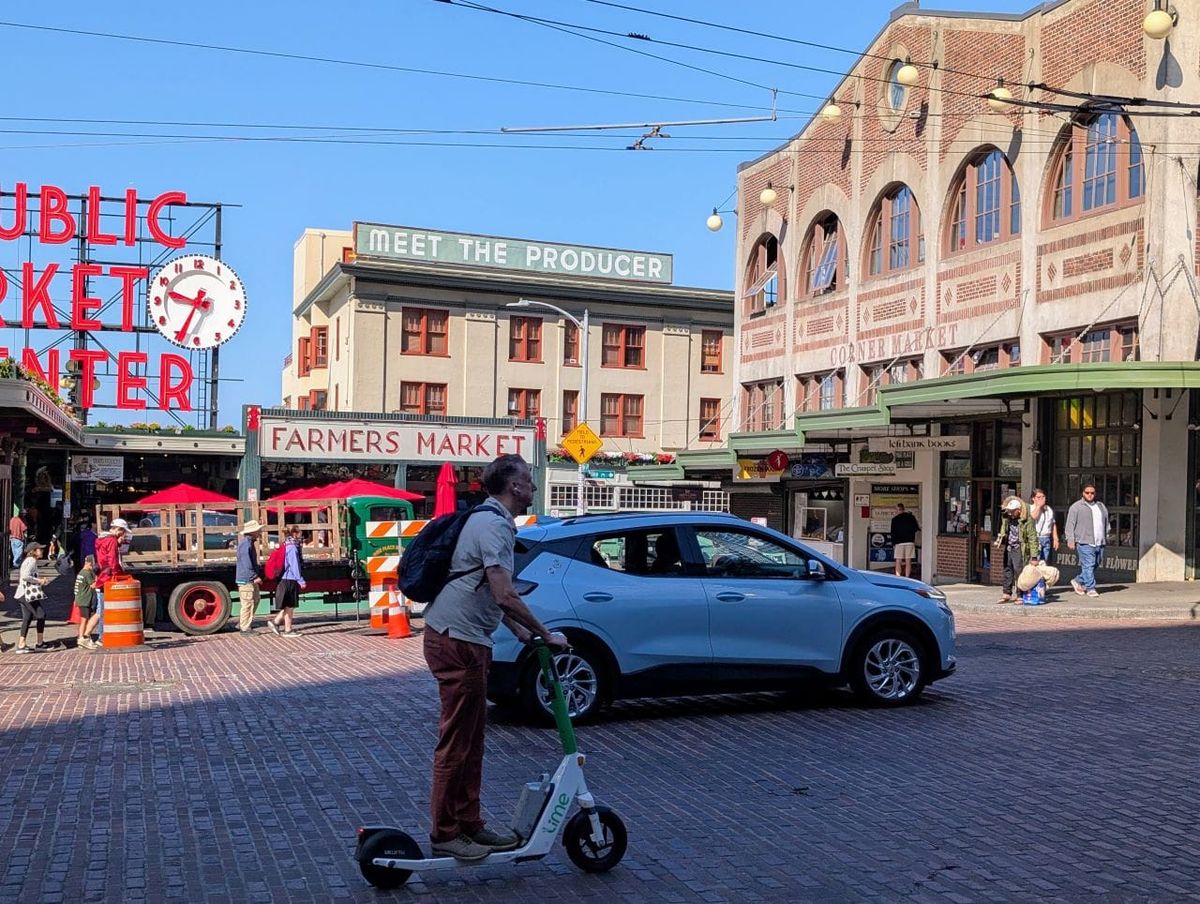
A Seattle Department of Transportation (SDOT) plan to add on-street bike and scooter corrals across Pioneer Square has been dramatically scaled back, a direct response to opposition to the idea from local business owners and neighborhood residents.
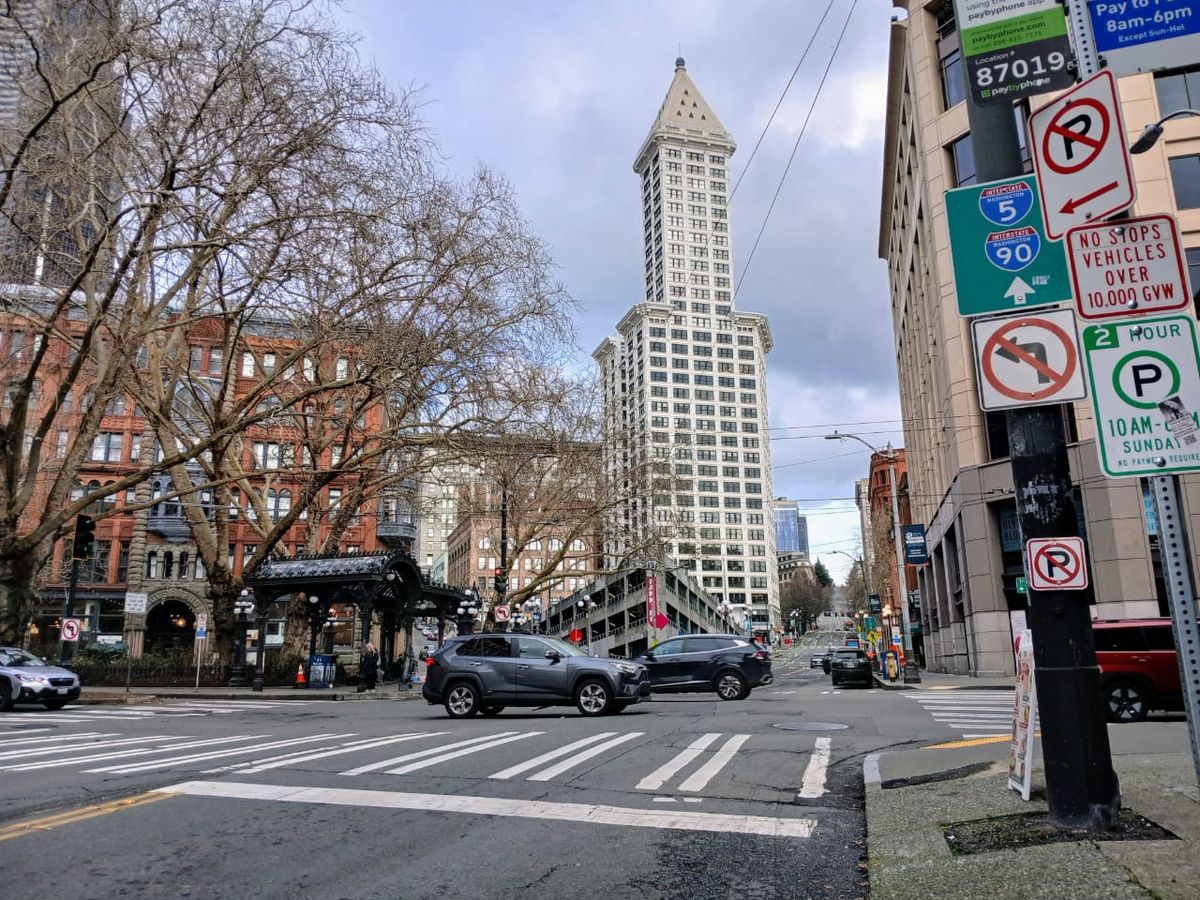
Initially, SDOT had been asking for approval from the Pioneer Square preservation board to install on-street corrals at 21 locations in the neighborhood by this summer, adding new parking spots for free-floating bikes and scooters ahead of the FIFA Men's World Cup while also improving pedestrian safety by maintaining sightlines at intersections. But that has now been reduced to just three, SDOT told The Urbanist this week. Instead, the department will install no-parking signs close to intersections, a treatment that is much less self-enforcing than a physical barrier like a bike corral.
In addition to the 21 on-street corrals, SDOT had proposed adding 7 off-street corrals to sidewalks in Pioneer Square, which still remain part of the proposal. Overall, the number of initial corrals would drop by approximately 64% – and that's if the preservation board ultimately does sign off in the coming weeks.
The initial plan would have only resulted in the removal of one to two legal parking spaces across the entire neighborhood, but parking removal – along with aesthetic concerns related to any changes to Pioneer Square's historically designated streetscapes – ultimately caused the major retreat.
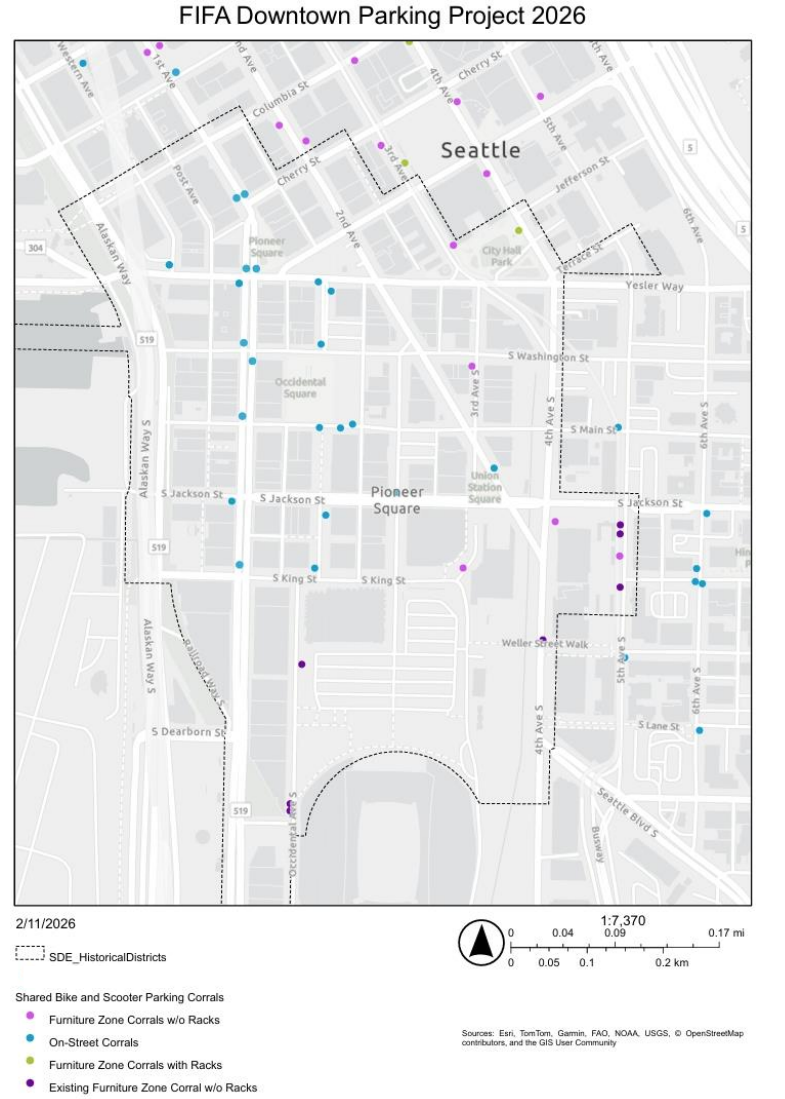
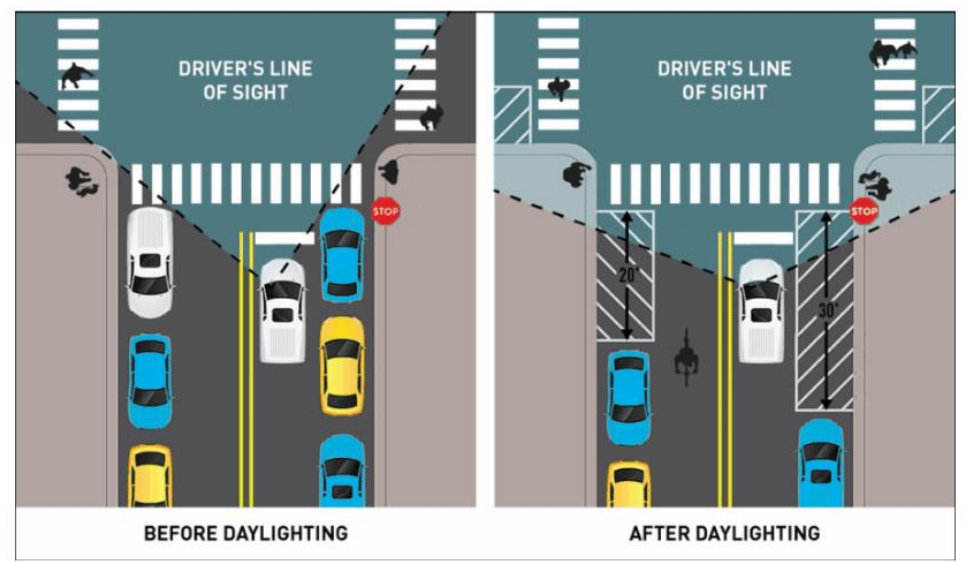
The corrals, a result of collaboration between SDOT's micromobility team and its Vision Zero team, are being installed across the city in an effort to encourage free-floating bike and scooter share users to park their bikes in areas that aren't blocking pedestrian access. And when installed immediately adjacent to an intersection – where it's already illegal to park, but where spotty enforcement means drivers regularly do – they can help ensure that pedestrians and people on bikes remain more visible to drivers.
But the project was dealt a big blow after the neighborhood's main business advocacy group, the Alliance for Pioneer Square, came out opposed.
"This is a historic and architecturally distinct neighborhood with unique physical constraints, land use patterns and daily activity levels that differ from other Seattle neighborhoods," Anahi Bendeck, the Alliance's Urban Design and Planning Manager, said during a preservation board meeting earlier this spring. "The proposal relies heavily on utilizing the same treatments, materials, design that is being deployed citywide, without sufficient modification to reflect the neighborhood's historic context or the actual lived conditions."
Specific businesses that had their concerns noted for the record included Magic Mouse Toys, which would have seen three corrals installed outside their First and Yesler location, and Friend Museum, which would have seen one corral added across the street.
"I don't believe the current plan is right for the specifics of Pioneer Square – the crosswalk and scooter corrals are two distinct problems and need separate solutions that are specific to Pioneer Square," Ali Weber, one of the co-owners of Friend Museum, wrote in an Instagram post in February. "[I]t feels like it panders to an event that will come and go and also to the sports crowd, but not the day-to-day businesses, neighbors and office workers who are trying to keep pioneer squares [sic] economy open and growing."
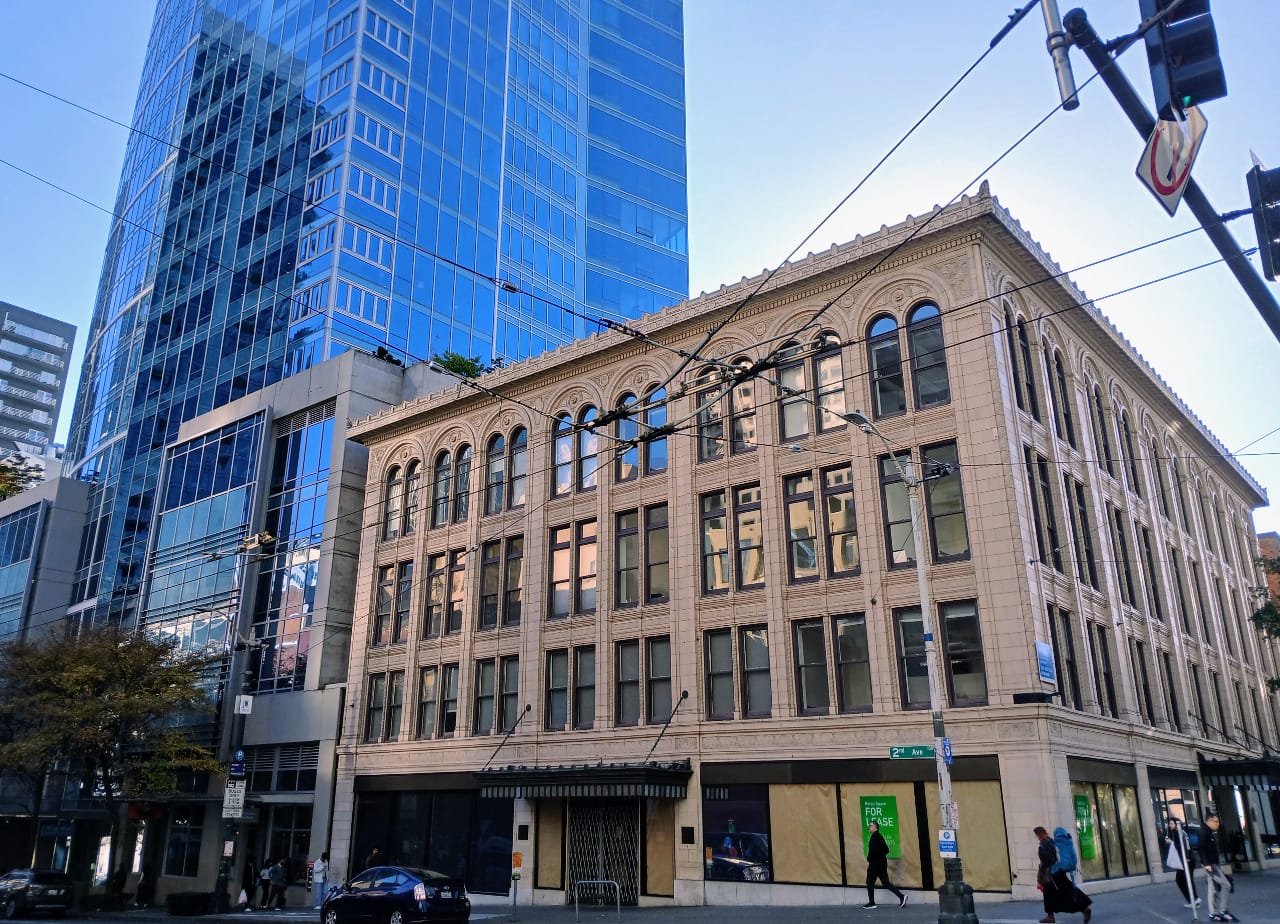
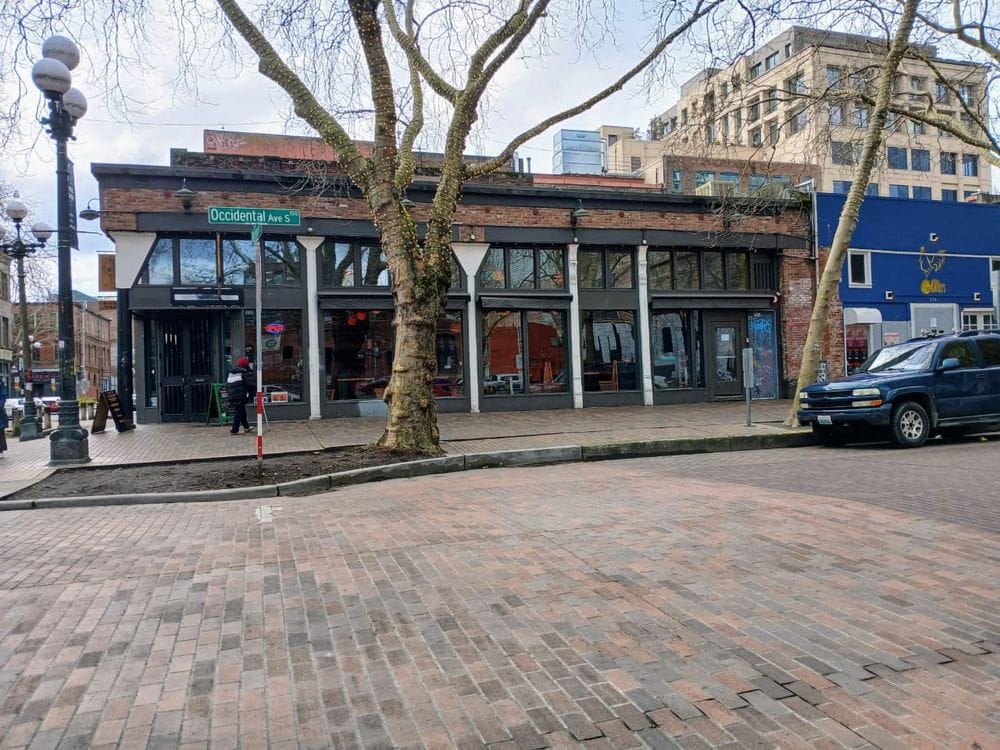
As a designated historic district, the Pioneer Square preservation board is required to give approval for any changes to exteriors of buildings within the district, in addition to changes in public areas like streets and parks. The guidelines that the board applies to those changes often add costs, regularly turning a project that would be de rigueur in another neighborhood into a bespoke custom product for Pioneer Square. An example: King County Metro's RapidRide shelters along the waterfront are a unique color, a direct response to feedback provided by the preservation board.
SDOT framed its change of course to adding no-parking signs instead as a pivot rather than a retreat.
"Transportation safety is our top priority, and we are not going to wait to make these intersections safer. Intersection daylighting is a proven way to enhance safety and reduce crashes by preventing people from parking in places that block other drivers’ view of oncoming traffic and people crossing the street," SDOT spokesperson Ethan Bergerson told The Urbanist.
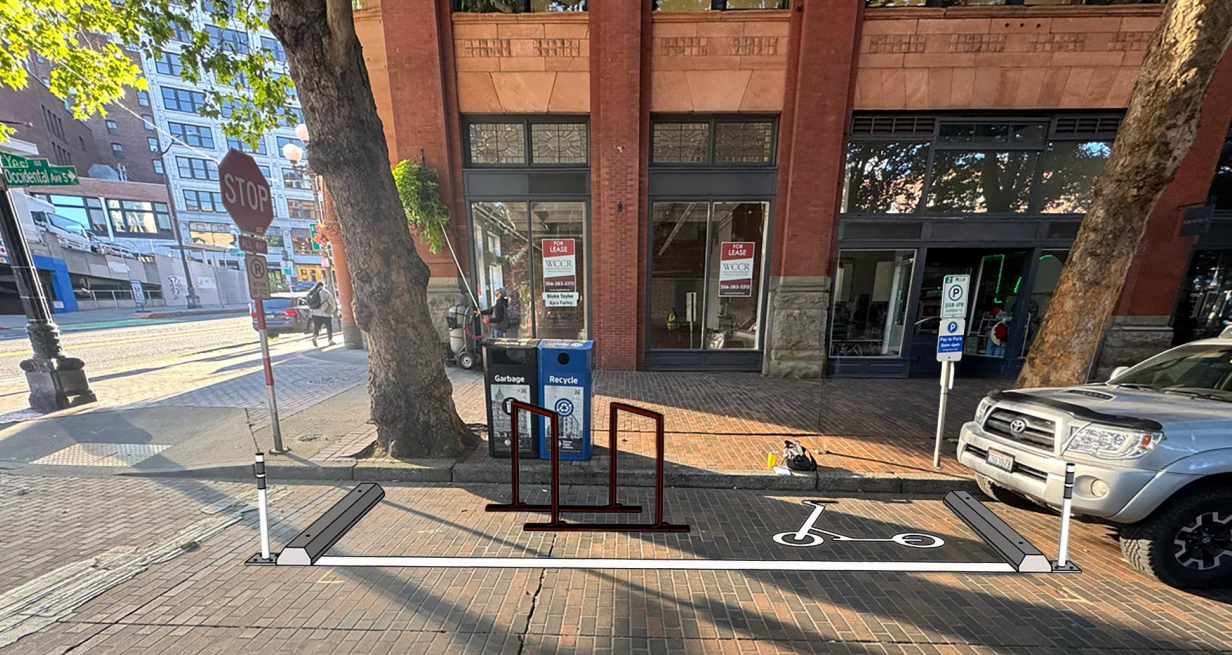
"As this work happens, we are also continuing to work towards an agreement with the Alliance for Pioneer Square and the Pioneer Square Preservation Board to build more bike and scooter corrals. As an initial step, we have submitted an updated application to the Preservation Board with a refined list of corral locations," Bergerson continued. "This includes the same number of corrals located on the outer edge of the sidewalk, and a small list of corrals in the street to demonstrate how beneficial they can be. We will monitor and evaluate the effectiveness of these corrals as we continue to discuss the other potential locations.
Whether the board is okay with keeping all of the off-street corrals – which occupy pedestrian space rather than illegal parking spaces – remains to be seen, but the fact that all of those have remained in the plan despite a supposed focus on aesthetics is telling.
The Urbanist is a nonprofit newsroom powered by reader support. Become a member, get perks, and support local journalism.
Even the timeline for advancing the revised plan remains unclear. SDOT had been set to attend the preservation board's next meeting on April 29, but did not make it onto the agenda due to the number of other items being considered. If the project gets delayed any more, it will likely be punted until after the World Cup halts work on construction projects across the city.
Even if it is, big changes are coming to Pioneer Square as part of this June and July's FIFA matches. On game days, the entire neighborhood will become a pedestrian zone for the better part of the day, with drivers only allowed to utilize First Avenue heading southbound. Bike and scooter users will be able to access staffed valet parking at locations to the north and south of Lumen Field, and will find that their vehicles slow automatically to 8 mph when entering any portion of the overall pedestrianized zone.
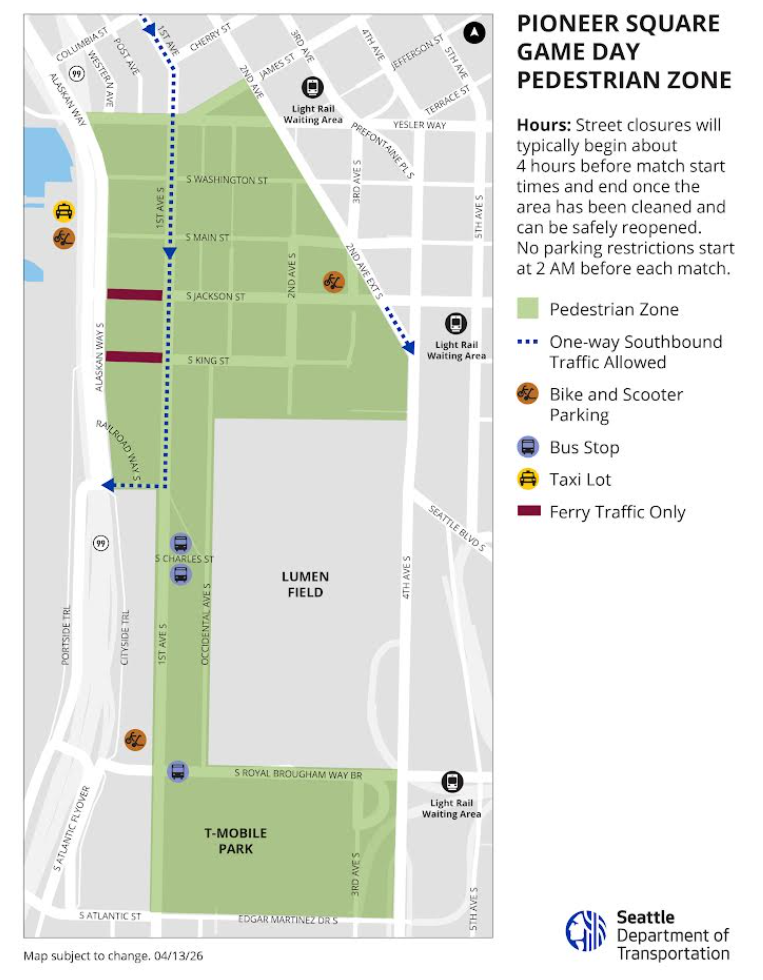
Many urbanists are surely hoping that a trial of pedestrianization across Pioneer Square could prove to be a proof-of-concept for creating a more people-oriented neighborhood full-time. But the travails of the proposed scooter corrals ultimately illustrates the difficulty of making headway when it comes to changes to the area's streets.
 Ryan Packer
 Doug Trumm