This week, the environmental justice group Got Green released a report detailing the unhealthy living conditions and maintenance issues that pervade Seattle Housing Authority’s (SHA) public housing.
According to the SHA inspection records obtained by Got Green, 95% of the units inspected between 2022-2023 had unaddressed maintenance issues, including problems with the electricity, plumbing, and major appliances. 61% were classified as having “health and safety issues,” which indicates more serious problems.
Looking at completed repairs, SHA’s records indicate that 67% of its households had to wait longer than 10 days for repairs. According to state law, 10 days is the longest amount of time landlords can take to make repairs, with some types of emergency repairs required to be addressed in either 24 hours or three days.
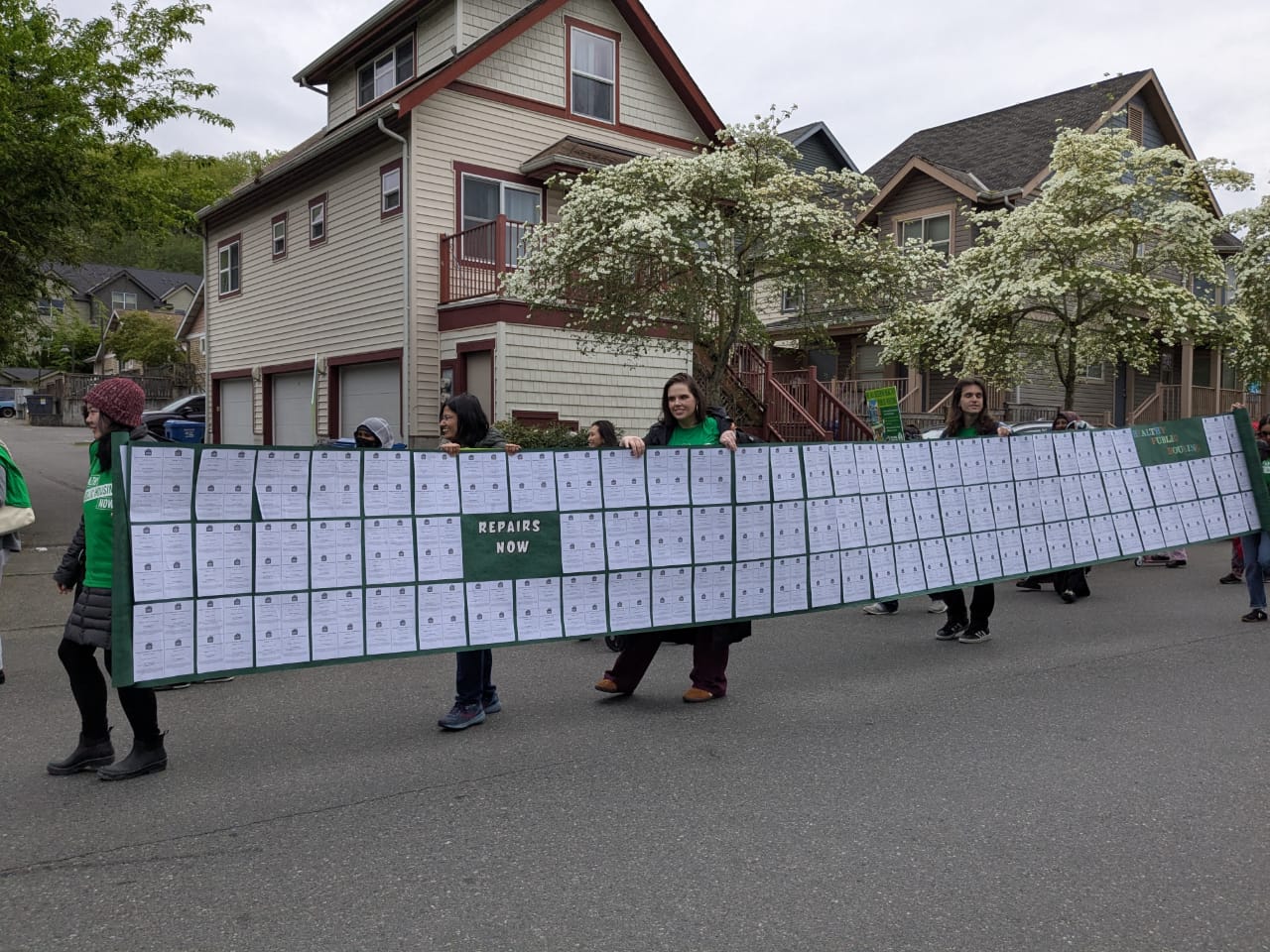
3,372 SHA households, out of 8,777 total, have incomplete repair requests, the majority of which have waited 100 days and some of which have been waiting for years.
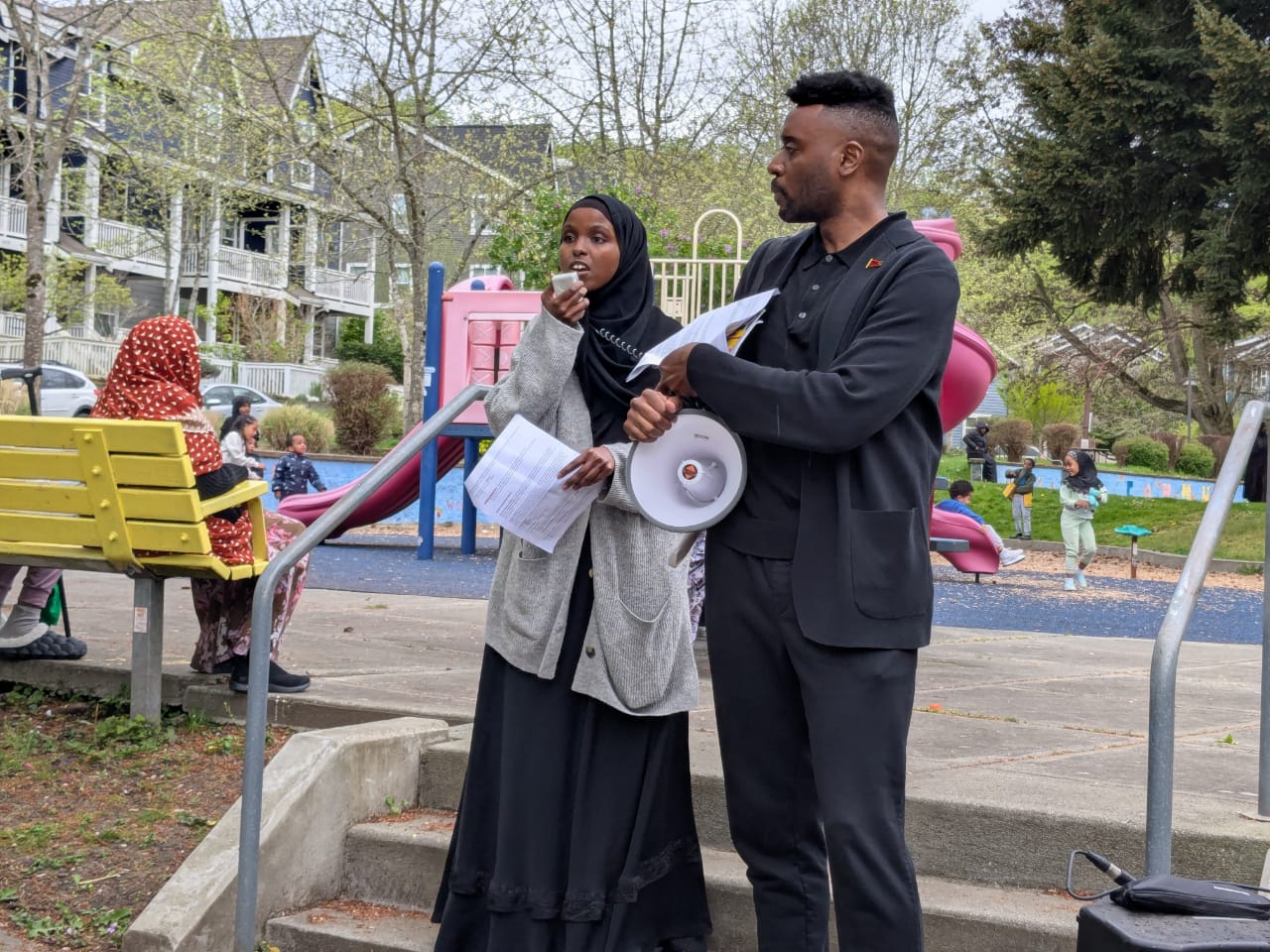
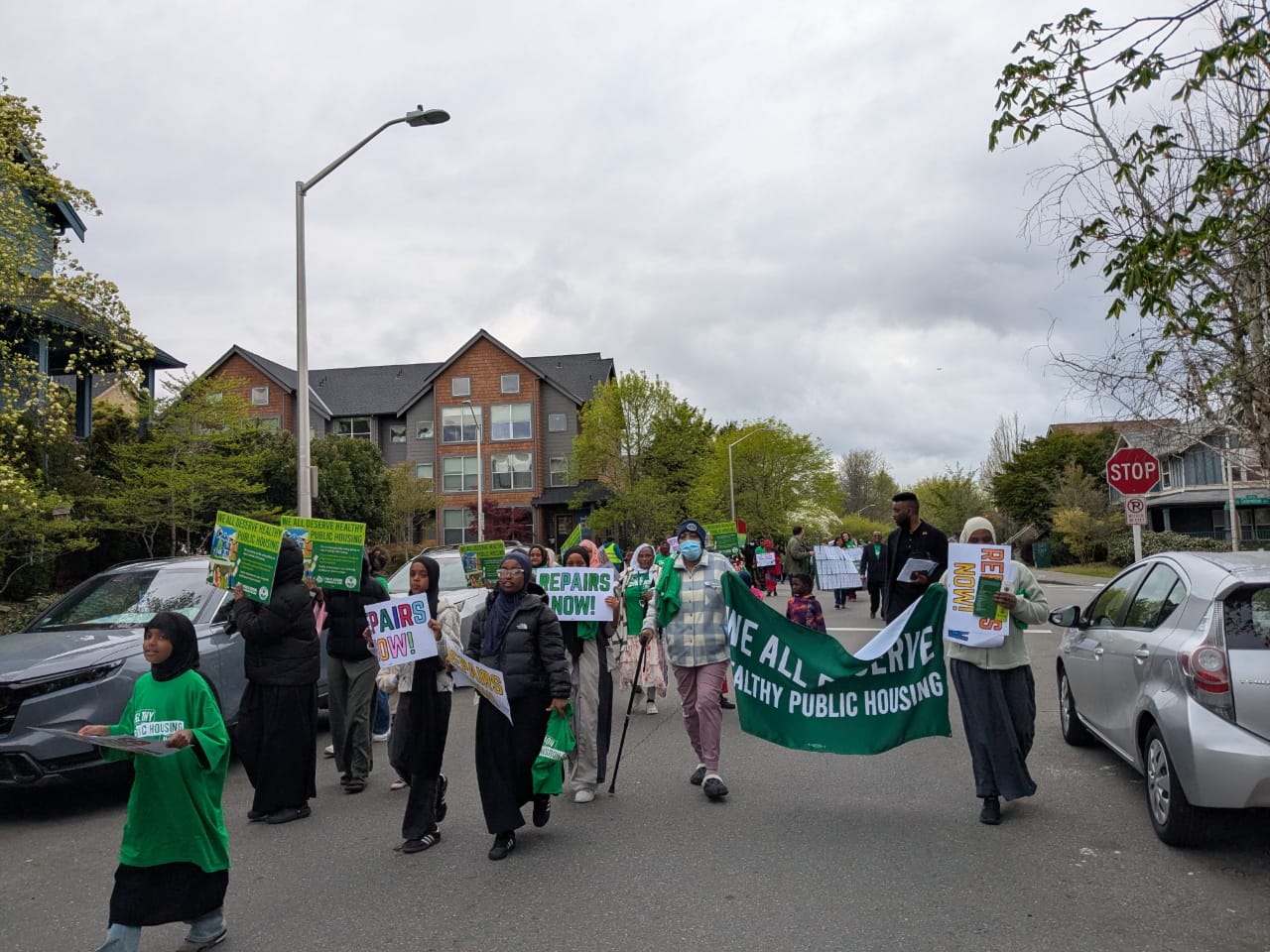
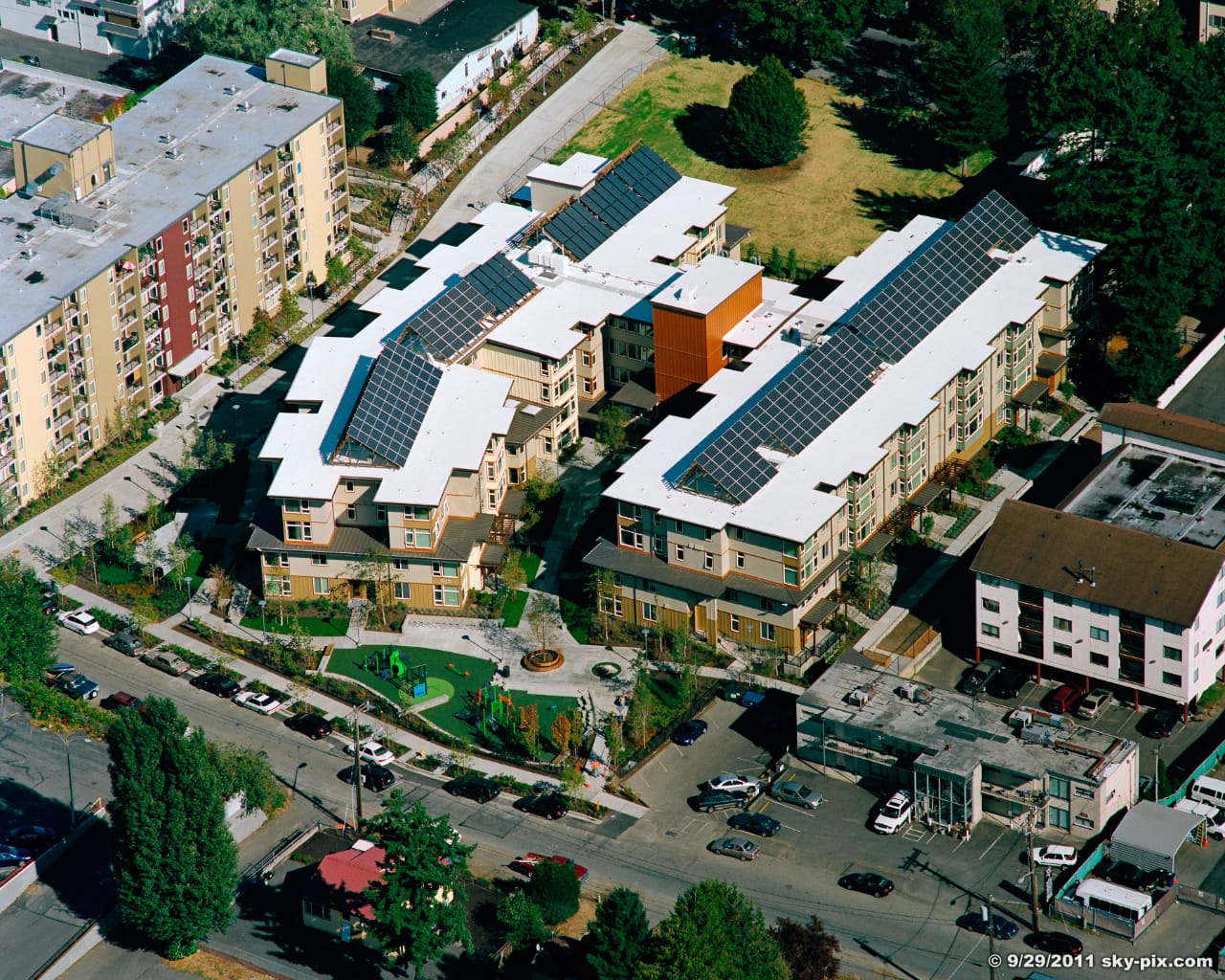
Got Green, helmed by new executive director Shaun Scott,, held an informational program and march on Tuesday at one of SHA’s properties, Rainier Vista, which is located in Columbia City. Children ran around the playground in the background as Rainier Vista tenants gathered to organize around their collective maintenance issues. Outside of his new day job, Scott also serves as a Washington State Representative for Legislative District 43.
“By not fixing the repairs that you have in each of your units, Seattle Housing Authority is breaking the law,” Scott told the crowd of tenants and their supporters. “State law is very, very clear that if you have a repair that needs to be completed, you should not be waiting any longer than 10 days to have that done.”
SHA is the largest affordable housing provider in the region, providing long-term low-income public housing. 96% of SHA households make 50% or less of Area Median Income, and 85% make 30% or less. Many people of color live in SHA properties, with 51% being Black/African and only 20% being White. As an independent public corporation, SHA is wholly separate from the City of Seattle, though the agency does regularly receive city funding.
Tenants typically wait a long time for a spot in SHA housing, with average waits ranging from 6+ months to live at Center West in Queen Anne, consisting mostly of studios, to 12+ years to live at Rainier Vista.
In the fall of 2023, Got Green began making public disclosure requests to SHA and to applicable Seattle City departments. In the spring of 2024, Got Green began canvassing five of SHA’s properties located in southeast Seattle, including Rainier Vista, to learn about common issues faced by the tenants. In addition, the King County Housing Advocacy Collaboration (KCHAC) shared their own findings with Got Green. All of this data was used to generate the final report showing the full extent of SHA’s maintenance issues.
SHA, responding to a request for comment on the Got Green report from The Urbanist, defended its maintenance program.
“The Seattle Housing Authority is committed to the safety and wellbeing of our residents. Completing repairs and maintaining the quality of our buildings is work we take seriously,” SHA wrote. “Since 2022, approximately 90% of our federally subsidized properties have received a passing score from HUD’s Real Estate Assessment Center, which provides an independent assessment of HUD-assisted housing. In 2025, SHA completed more work orders than it received, completing 74,000 maintenance requests across our properties, with emergency and urgent repairs prioritized across all communities.”
Scott credited tenants’ collective action last year for a recent uptick in SHA’s responsiveness to needed repairs in Rainier Vista.
“We know that when we try to address many of our issues that we have been facing in Seattle Housing Authority units–that could be a leaky faucet, it could be electricity that does not work, it could be heating or plumbing that needs to be fixed–when we try to fix these issues individually, the progress is slow, but when we try to fix these issues collectively, things move much faster than they would if we were acting as individuals, and that's why we're out here collectively,” Scott told the tenants. “Building power with one another as tenants is to show that power and to build that power.”
Unsafe living conditions
Got Green documented a variety of maintenance issues in SHA units, which included mold, floods, leaks, pests, exposure to the elements, plumbing issues, and structural damage. Personal stories in the report relay experiences with rats, moldy carpet, and persistent leaks.
Several tenants shared their stories at Tuesday’s rally.
“I have a story of my own where my family dealt with flooding a couple years ago, and in that event, a terrifying event, of course, we immediately called for maintenance and we spoke to SHA office staff,” said SHA tenant Asha. “We filed the work order and let them know it was an emergency. Unfortunately, emergency for us does not equate [to an] emergency for SHA. We later had maintenance come over and tell us that they were trying to find a team to check our roof to stop the flooding. It would take three or four years for them to keep telling us the same thing.”
The Urbanist is a nonprofit newsroom powered by reader support. Become a member, get perks, and support local journalism.
One woman spoke of an ongoing plumbing problem that involved feces coming out of her pipes, which she said SHA blamed on the tenants who lived above her. Unable to resolve the issue, she ultimately had to shut down her home business for safety reasons. She is currently suing SHA and has a court date at the end of the month.
Another woman spoke about leaks in her ceiling and a bad mold problem in her only bathtub, which hadn’t been resolved in 8 years.
Yet another was a mother whose children were sick, with a doctor asserting they were unsafe where they were living. She’s been waiting to move to a new unit since 2018.
Tenants underlined a lack of clear and respectful communication from SHA around their maintenance issues. Tenants talked about unclear repair timeframes, having to request the same repair multiple times in multiple ways, often with no response, and being told their maintenance issue wasn’t a priority.
“Tenants repeatedly expressed hopelessness and fear,” the Got Green report reads. “After experiencing SHA’s inaction for years, many tenants are resigned to expecting substandard conditions in subsidized housing. Tenants also expressed fear of what would happen to them if they vocalized any dissatisfaction to SHA.”
The Got Green report discussed the importance of future weatherization and decarbonization improvements at SHA properties as climate change’s impacts on communities continue to grow. Got Green suggested unhooking gas and electrifying units with heat pumps to move forward with decarbonization. For weatherization, their suggestions included additional insulation, air and water sealing, energy-efficient appliances, window and door upgrades, ventilation improvements, and removal of toxins such as mold and lead.
SHA told The Urbanist they have plans for future weatherization projects.
“We are also continuing the work to improve our buildings through local grants from the City and state to decarbonize and weatherize SHA properties,” SHA wrote. “That commitment is reflected in an extensive multi-year project we are planning across Rainier Vista, High Point and New Holly. This work will decarbonize and weatherize these properties through interior renovations and exterior upgrades, strengthening the quality and resilience of our communities.”
Tenant demands and an uncertain future
SHA’s public housing tenants are making four demands:
- For SHA to clear the repair backlog and complete all unfinished maintenance requests;
- For SHA to guarantee swift and response repairs in the future with a more accessible maintenance system;
- For SHA to treat its tenants with dignity and respect;
- For tenants to have bargaining power with SHA, with formal recourse to hold SHA accountable for maintenance issues and the maintenance system.
The Got Green report says data from SHA records from January 2016 - August 2025 indicates 6,475 incomplete work order requests as of August 2025.
The tenants are interested in banding together with SHA’s workers to get their demands met.
“There are some SHA workers I know, and I'm sure some of you know, a couple SHA workers who have treated us kindly, who have tried to take the time to empathize with us, but because they don't have the resources and they don't have the support due to the system that they work within, they cannot do their jobs effectively,” said SHA tenant Asha. “So this is a bigger conversation that tenants wish to have with SHA workers. Because together, we can win this fight for all of us.”
This push for better living conditions comes at a precarious time, with the Department of Homeland Security (DHS) targeting public housing residents in their immigration enforcement actions. In January, the U.S. Department of Housing and Urban Development (HUD) issued the “Cleaning House” order requiring all landlords of HUD-funded housing to verify the citizenship of their tenants using a new HUD report.
SHA did not answer The Urbanist’s question about the “Cleaning House” order, but their website says it is federal law that residents must declare if they are U.S. citizens or have eligible immigration status, with allowances made for mixed families where only some family members have eligible status.
“Many of the communities that have come out this evening are under a lot of pressure and scrutiny from the federal government,” Scott said at the rally. “We've seen the federal government divest from the social safety net, from cash assistance programs, from programs that many of us in our communities depend on, and right now, that situation is not made any better–as a matter of fact, it's made much worse–by all of us living with the day-to-day stress and the day-to-day pressure of not being safe in our own homes. Those federal policies that we've talked about are no less dangerous than the day-to-day lack of repairs that we have seen in many of the units in Seattle Housing Authority units.”
Federal HUD funding for public housing is also at risk of cuts. Funding for Emergency Housing Vouchers will cease at the end of 2026.
In a blog post dated February 14, 2026, SHA wrote, “Although we anticipate that reductions to funding for housing will be part of the federal budget, we won’t know the specific impact until Congress decides how money will be distributed through the appropriations process.”
The Got Green report hypothesizes that under increasing financial strain, public housing authorities like SHA are likely to allow their properties to fall into further disrepair or sell some of their public housing stock on the private real estate market to raise additional funds.
“A certain percentage of the Seattle Housing Authority's resources comes from the cities, some from foundational support,” Scott told The Urbanist. “And so we are prepared to take this campaign to City Hall, if that's what we need to do to get the funding that we need.”