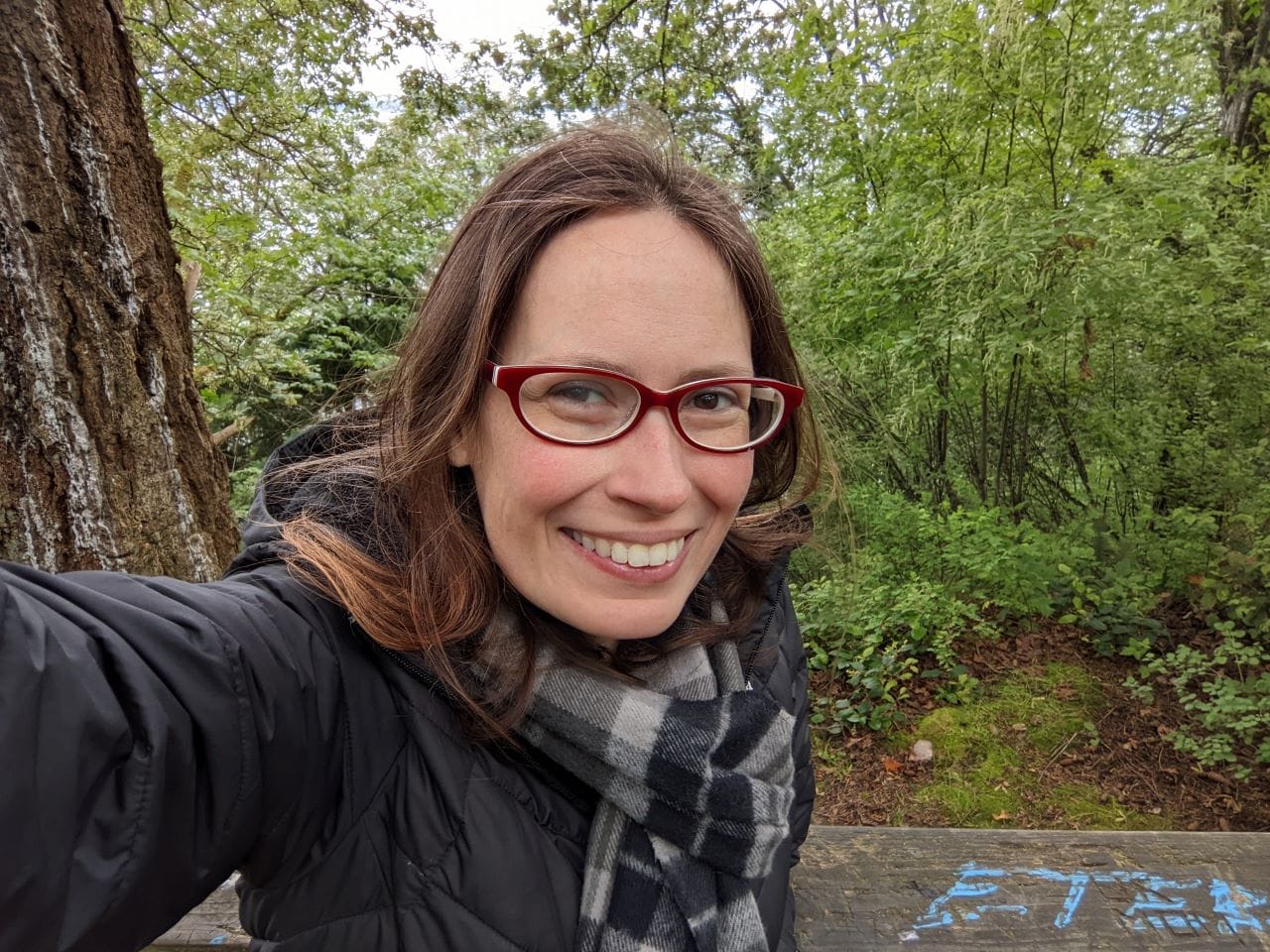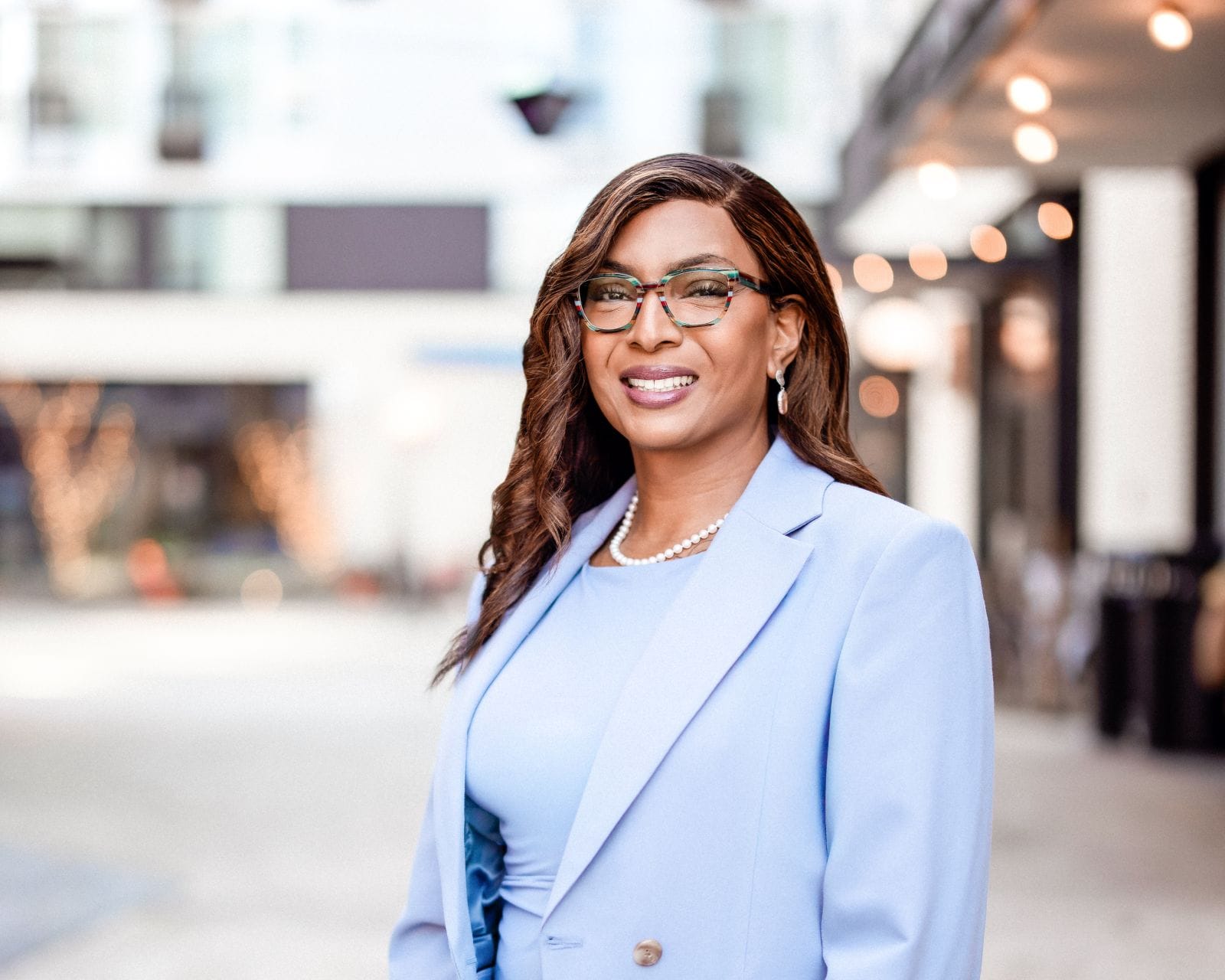
At the beginning of March, community organizer and Lavender Rights Project’s executive director Jaelynn Scott announced her run to fill the open 37th Legislative District seat in Washington State’s House of Representatives.
Should she win, Jaelynn Scott would be the first openly transgender person to serve in the state legislature. As a Black transgender woman seeking to make history, Scott said she would bring a different perspective to the issues facing the state, but ultimately would be fighting for all of the 37th.
“We have a significant amount of women and femme-identifying folks in the legislature, a larger Black caucus, I think, than we've ever had, and I think we're starting to see policies that are developed that represent our communities better, and we have a lot of work to do,” Scott told The Urbanist.
Late last year, Rebecca Saldaña announced she wouldn’t be running again for the Senate seat in the 37th LD in order to make a run for the King County Council. Rep. Chipalo Street decided he would try to make the jump over to the newly open Senate seat, leaving his 37th LD Position 2 House seat up for grabs.
So far, Scott is the only Democrat to declare for the open seat, with a looming filing deadline in mid-May representing the last chance for candidates to jump in. One candidate has filed as an independent, a college student named Evon McCorkle.
Scott decided to run as a response to what she called a crisis point, pointing to the federal administration’s attacks on communities of immigrants, LGBTQ folks, and people of color.
“It is our states that will be the best defense for our people, because we are not going to be able to get a lot done in Congress,” Scott said. “We need to shore up our states, and we need to hold the line in our states.”
Scott is originally from Mississippi and grew up in the South, steeped in Black Christianity and the Civil Rights Movement, in which some of her family participated. She received her Masters in Divinity in Boulder, Colorado, became an ordained Buddhist minister, and spent many years doing family education ministry with the Unitarian Universalist Church.
“I fell in love in particular with the 37th [Legislative District] and the opportunities that it offered, a community that is so multiracial, that is deeply rooted in feminism, built on a legacy of many different communities working together,” Scott said. “It shows up in a palpable way in the 37th, where you feel a welcome, almost a hug, into the sanctuary that is this place.”
In 2019, Scott began working at the Lavender Rights Project, which was at that time a legal aid organization for LGBTQ people. Under her leadership, the organization grew and expanded to focus on violence intervention in Black, trans, and feminist communities, including housing justice work, movement lawyering, and developing and lobbying for aligned policies.
The Urbanist is a nonprofit newsroom powered by reader support. Become a member, get perks, and support local journalism.
In the summer of 2020, Lavender Rights Project, as part of their decriminalization work, was able to play a role in negotiating a deal between Seattle and King County where Seattle didn’t use all their reserved jail space, and the County agreed to instead allocate that money for housing. Lavender Rights Project was later selected to run a building for King County’s Health Through Housing initiative, which provides permanent supportive and emergency housing. Located in Capitol Hill, Sharyn Grayson House opened last fall and provides permanent supportive housing and culturally competent services for LGBTQ and people of color.
“It's quite beautiful walking into that building and seeing the culture that community has brought and the joy in the faces of the residents in the building,” Scott said. “And it feels so queer, and it feels so community-centered, and every time I'm there, I don't want to leave.”
Scott recently served as a co-lead for Seattle Mayor Katie Wilson’s transition team in the policy area of “Standing Up for Our Values.”
The need for additional progressive revenue
Scott supports the millionaires’ tax recently passed by the legislature and is already thinking about how to prioritize how its new revenue will be spent, should the tax survive its legal challenges. More than half of the revenue is currently set to go directly to the state’s general fund, and Scott would prefer to see more of it allocated to specific items. That being said, she does support the increased eligibility for the Working Families Tax Credit funded by the tax and is interested in considering other cash relief programs.
Scott would like to see a reparations program funded by the millionaires’ tax, following the leadership of the Seattle King County African American Reparations Committee.
“The median income, my understanding for a Black family in Seattle, it's around $55,000, when we're looking at for White families, $120,000, Asian American families, $130,000. And that's a family of four, and so that is inexcusable,” Scott said. “And there's a long history and legacy of why Black families are sitting at that level. And we've never gotten an accounting for the impacts of redlining, of job discrimination and etcetera, and we need to build Black wealth. We need reparations, and we need it yesterday.”
Scott also supports the Well Washington Fund, a proposal that would have instituted a payroll expense tax at the state level, as well as a wealth tax. She thinks there could be a compromise on the estate tax, which was rolled back this session. And she’s interested in the idea of a corporate income tax for very large corporations.
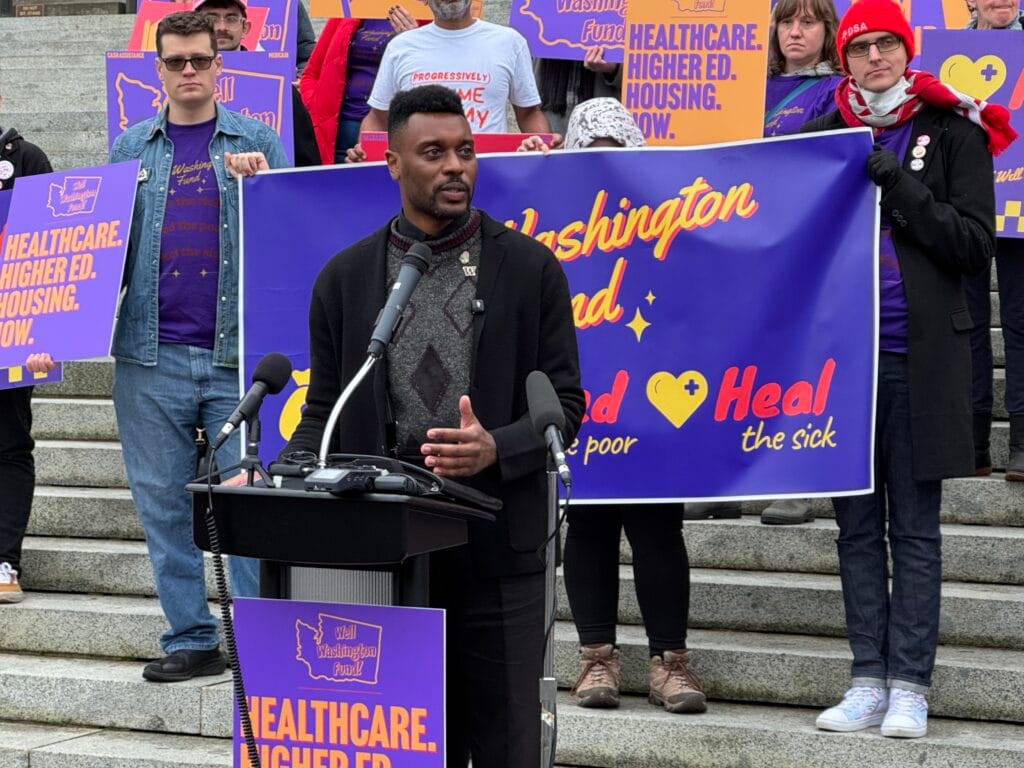
“We have to balance our tax code, but with that, as we're doing the progressive revenue, make sure that we're pulling back on sales tax and find some solution for the gas tax,” Scott said.
Displacement, education, and health care
Scott supports upzoning, affordable housing, transit-oriented housing, and social housing. She’d like to look for opportunities to support more affordable housing development opportunities for nonprofits such as Africatown and Chief Seattle Club.
Displacement is also an issue of concern for Scott, and she would support an expansion of eligibility for people trying to return to Seattle through its “right to return” anti-displacement policy.
“I'm so glad that Seattle is moving the needle forward, but we do need to consider displacement and potential anti-displacement mandates in place to prevent our communities from being further pushed out of Seattle,” Scott said.
Scott is committed to fighting for Sound Transit to have the funds they need to continue with light rail expansion and supports allowing the agency to issue 75-year bonds, expressing particular concern over the Graham Street infill station. That bonding bill came up short this spring, despite being among Sound Transit’s priority bills. She’d also like to see increased frequencies and reliability rates for bus routes and more safety ambassadors available for transit.
Washington State has a “paramount duty” to fund public education, and Scott said she takes this requirement very seriously. She’d like to fix the formula for special education funding and take a look at the formula that determines how much funding each school receives to ensure equitable investment.
In terms of childcare, Scott would like to start by increasing the utilization of Working Connections Child Care, which receives funding from the Fair Start for Kids Act. But she’s ultimately interested in a universal child care model, citing the program being rolled out in New Mexico.
“This is a deep investment in their community because they understand the impact on safety, on education outcomes of having good childcare, on the ability for equity and the ability for both parents to actually be able to achieve their own career dreams and career goals,” Scott said. “And so it is, I think, a reorientation that we need in the state of Washington to realize that we need to invest in childcare.”
Scott supported Senate Bill 5927 last session as an “easy win,” as it would have triggered the implementation of statewide universal health were Congress to act. Unfortunately, the bill stalled in the House. She wants to partner with Whole Washington and other stakeholders to consider how to fund universal healthcare for the state without a federal funding stream.
Scott spoke about the trauma and impact of lack of access to healthcare, particularly in the Black and trans communities.
“The only way we can actually guarantee health care that is gender-inclusive, that is truly accessible to all folks, to immigrant folks, to residents, to all folks, is if we develop out and build our own system,” Scott said.
Two conservative-funded anti-trans initiatives will be on the ballot in November: one regarding trans students participating in sports and one regarding parents’ rights, which would, among other things, guarantee parental access to student medical records. Scott opposed both of these initiatives.
“This is not a trans bill,” Scott said. “This is an overreach initiative by millionaires and billionaires and overreach by the [federal] administration trying to push their hateful values on Washingtonians.”
Scott supports transitioning to even-year voting and establishing a full-time state legislature in the future.
Public safety
The latest Seattle Police Officers Guild (SPOG) contract, approved by the Seattle City Council in December, failed to establish the independence of the Community Assisted Response and Engagement (CARE) team that was designed to provide civilianized behavioral health response in Seattle. Scott wants to introduce or champion a solution to what she deemed the “bureaucracy issue” that is preventing the civilian crisis response program from operating well in Seattle.
On the other hand, Scott doesn’t want to do anything that might undermine labor power in the state.
“If there's going to be a solution, we need to sit down and sort of redraw the whole thing from the perspective of labor, but giving CARE, and I think, any other statewide responses, the ability to self deploy, the ability to respond and go in when they need to go in, to not be subject to the whims of leadership in police forces, to be able to actually respond to the people that we need a loving and compassionate response for,” Scott said. “It is an equity issue, plain and simple.”
Rep. Shaun Scott (D-43rd, Seattle) already attempted this reform in 2025, and SPOG is notoriously tough at the bargaining table, so it’s unclear if new leadership at the city and state level will be able to move this forward.
Regarding surveillance, Scott thinks the new automated license plate reader bill is an improvement on the status quo but should have had a much shorter data retention period. She spoke about the importance of crime prevention in stabilizing communities, as compared to surveillance.
“We have to take seriously the threat of the federal administration on our bodies,” Scott said. “They're literally ripping families apart, literally picking us up on the street, masked, kidnapping on the street, and threatening, heavily threatening trans folks, right, and threatening anyone who comes here seeking abortion services and gender-affirming care services. They’re very serious about it.”
She raised the risk that expanded surveillance infrastructure could supercharge the federal government’s capacity for oppression.
“We need to ensure 100% that the tools that we're trying to use to protect our citizens aren't actually being used to track, imprison, deport our people,” Scott continued. “And if we can't do that, then we need to shut it down.”
In addition to carefully weighing surveillance risks, Scott supported last session’s bills prohibiting recent U.S. Immigrations and Customs Enforcement (ICE) hires from serving in state law enforcement agencies and fining the Northwest Detention Center if it doesn’t allow the state health department to make inspections.
Scott doesn’t want to be seen as the token trans candidate, seeing herself as a leader for the entire community.
“I want people to see that this is historic, and the importance of this history is that we're getting substantive representation and a particular perspective that we have never had before that intersects all of the needs–on affordability, on public safety–in a very particular way that will be beneficial for all of the 37th,” Scott said.
Visit Jaelynn Scott’s campaign website for more information.