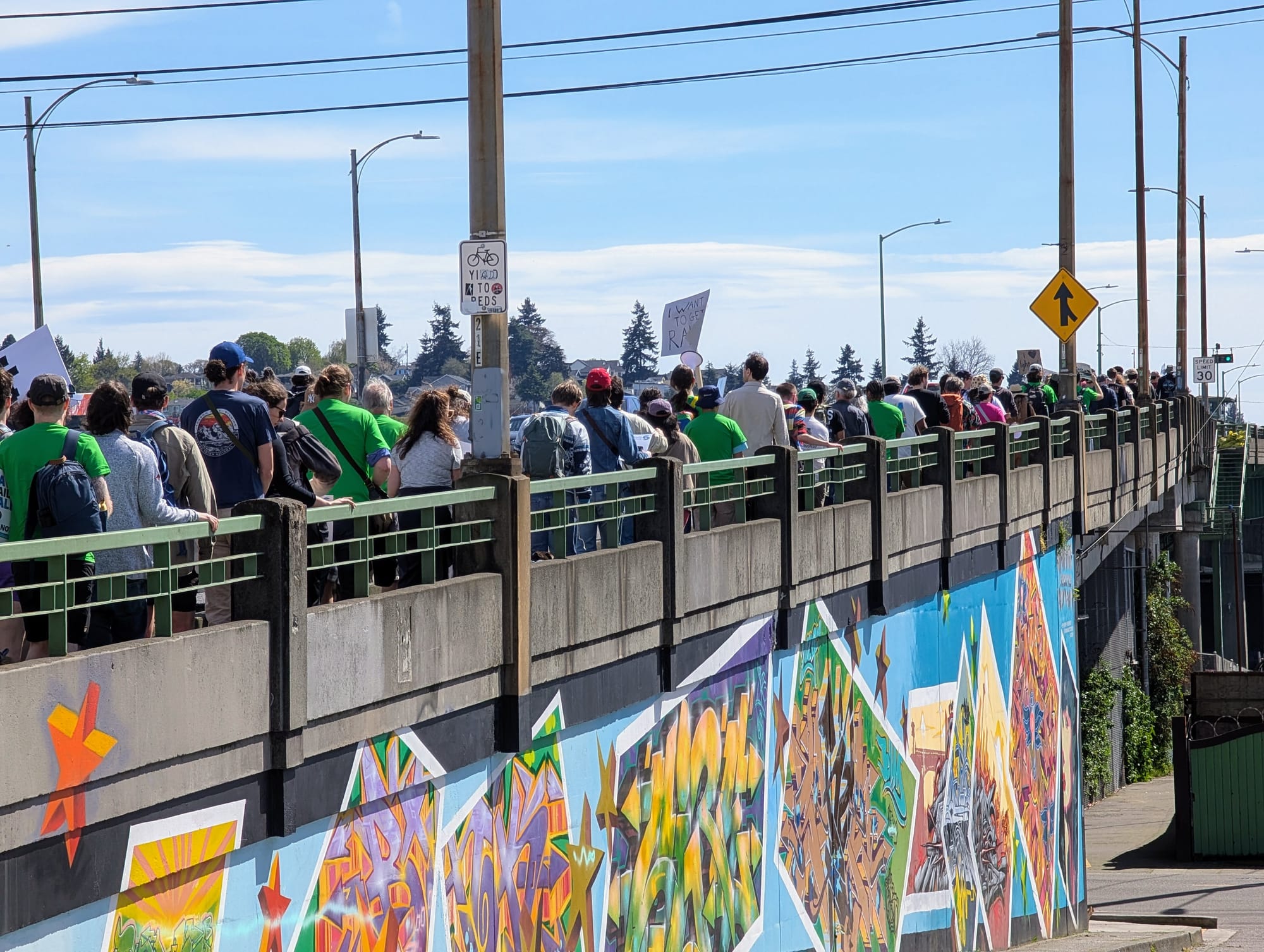
While on the chopping block and facing major light rail delays, Seattle's Ballard and Interbay neighborhoods made it clear at a rally Sunday they are not going down without a fight. Around 300 people turned out to Ballard's Gemenskap Park to hear speeches from political leaders and organizers before marching nearly four miles south along 15th Avenue to Smith Cove.
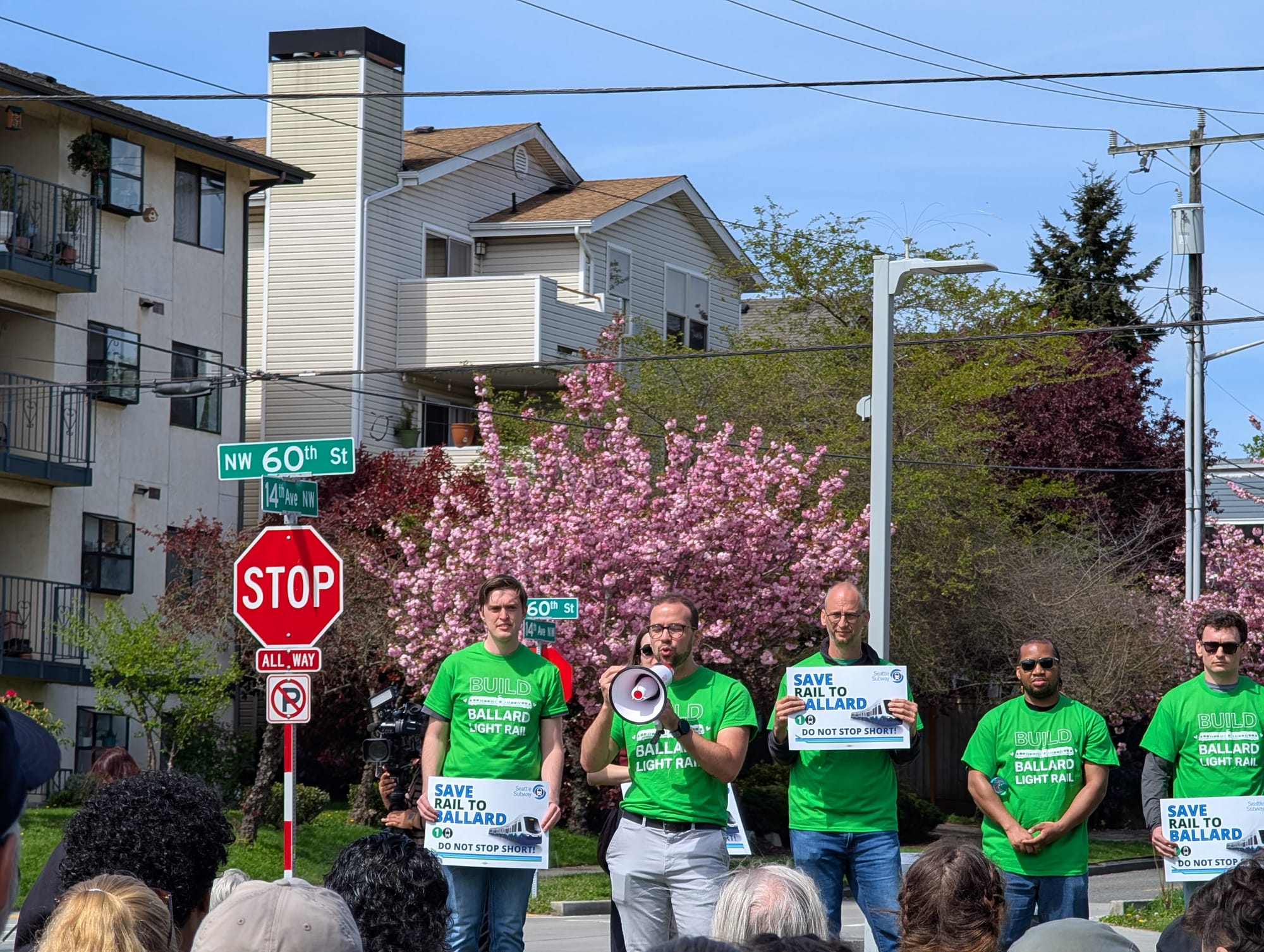
Citywide Seattle Councilmember Alexis Mercedes Rinck, King County Councilmember Jorge Barón (District 4), and State Senator Noel Frame (D-Ballard, 36th Legislative District) delivered speeches that fired up the crowd and underscored how hotly anticipated the light rail connection to 15th and Market Street is.
Seattle Councilmember Alexis Mercedes Rinck holds the megaphone. (Doug Trumm)
"I proudly represent the 20% of Seattle households who do not own a car and rely on a robust transit system to get them where they need to go. That is important for a healthy, vibrant city," Rinck said. "And just a few weeks ago, I joined alongside 217,000 people who showed up for the Crosslake [2 Line] Link connection. 217,000 people. Think about that. That's the second busiest day in Sound Transit history. People who have never ridden light rail before showing up. Because when you build it, people come. When you keep your promise, people show up. What this city feels like when transit actually works: it feels like freedom. It feels like belonging. It feels like we built something together that belongs to all of us."
A newly formed coalition called Save Ballard Rail organized the march and its leaders say they were shocked by the turnout, which was about triple what was expected. The group threw a kickoff rally at a Ballard brewery earlier this month, where they warmed up their talking points and rallying cries. Even with short notice, hundreds turned out Sunday.
King County Councilmember Jorge Barón and State Senator Noel Frame delivered speeches at the start of the April 19 march. (Doug Trumm)
With nine new stations connecting Ballard, Interbay, Seattle Center, South Lake Union, and downtown, Ballard Link light rail is projected to draw significant riders – 147,000 daily riders on the high end projection, the highest ridership in the Sound Transit 3 (ST3) package approved by voters in 2016. Unfortunately for advocates, it is also the most overbudget ST3 project. Last year, Sound Transit revealed that its earlier $12 billion estimate had swelled beyond $20 billion. Budget overruns for Ballard Link and other expansion projects are forcing the 18 members of the Sound Transit Board of Directors to rework the agency's long-term financial plan this spring.
The Urbanist is a nonprofit newsroom powered by reader support. Become a member, get perks, and support local journalism.
This spring, agency leaders have been signaling that truncating Ballard indefinitely is the route they're likely headed. Last week Sound Transit Board Chair Dave Somers said that's the only path forward he sees, while at a rally in Everett focused on keeping the Everett light rail extension moving ahead unabated to a 2041 grand opening. The agency had been hoping to open the entirety of the Ballard line in 2039 until running into this financial crisis.
Last month, Sound Transit published three cost-cutting scenarios that all entail deferring stations in Ballard and Interbay and not even projecting an opening date – in hopes the downtown and Uptown section of the line could advance largely on schedule, while the agency considers other cost-saving measures and revenue to advance the additional segment.
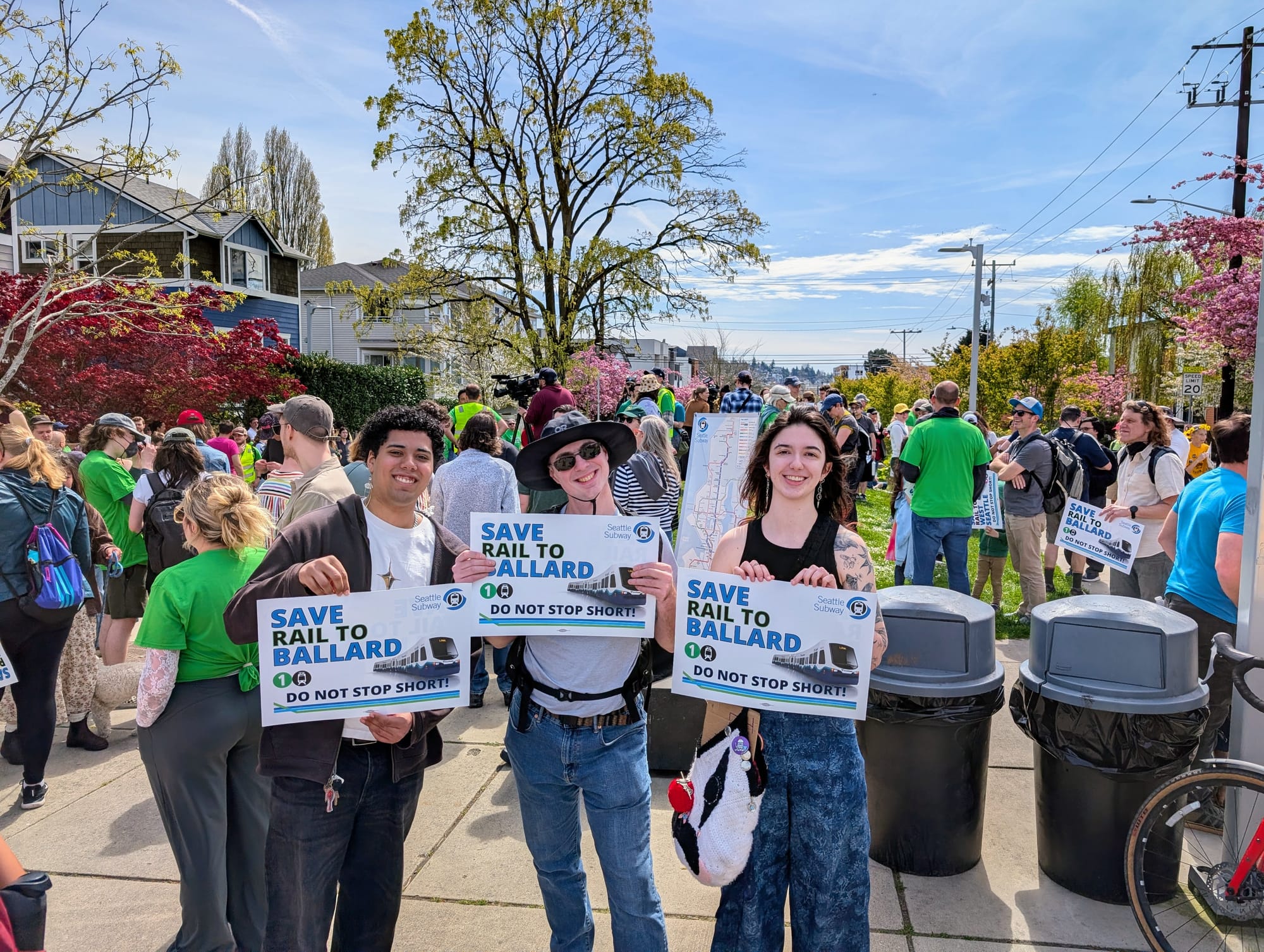
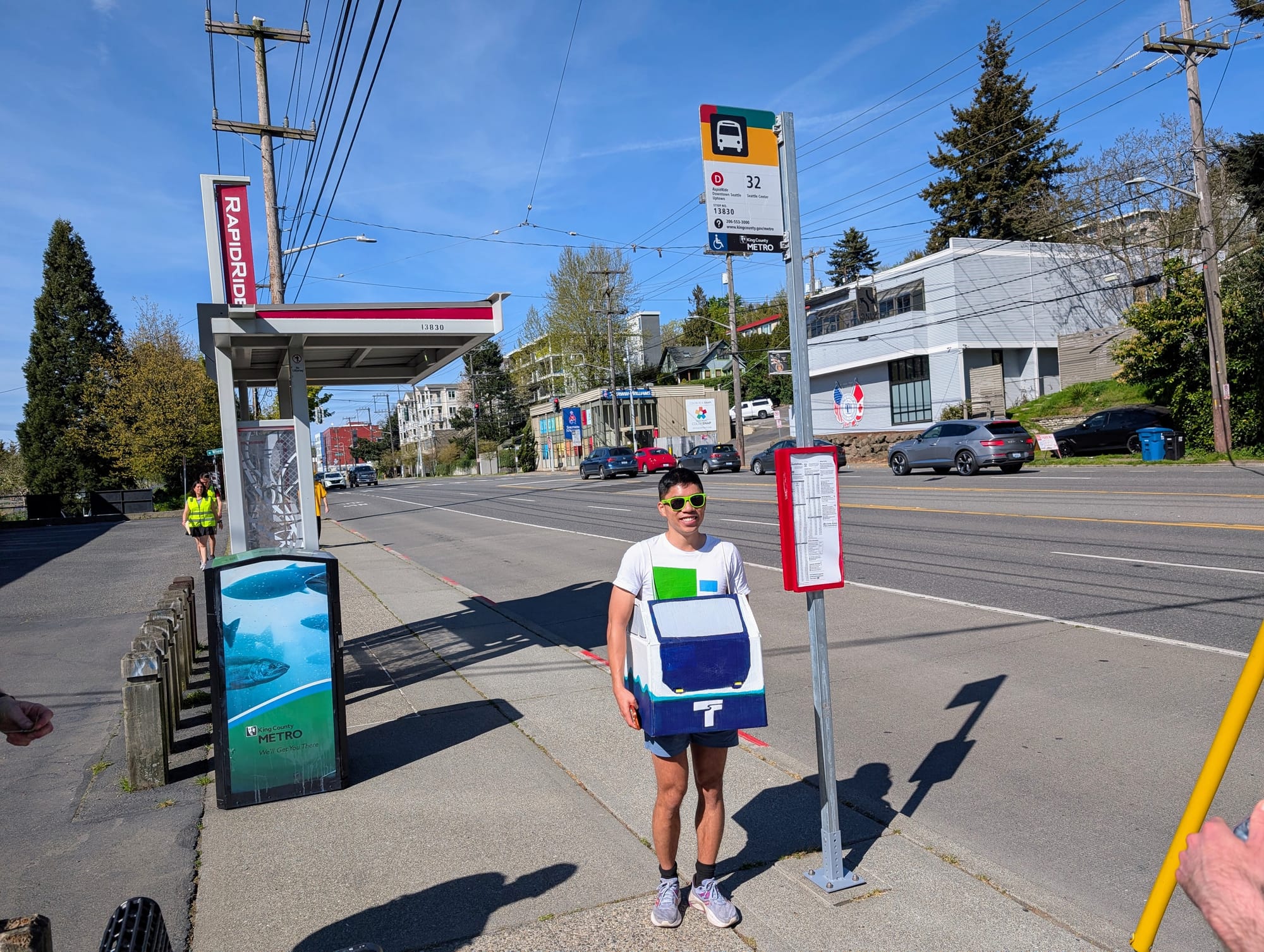
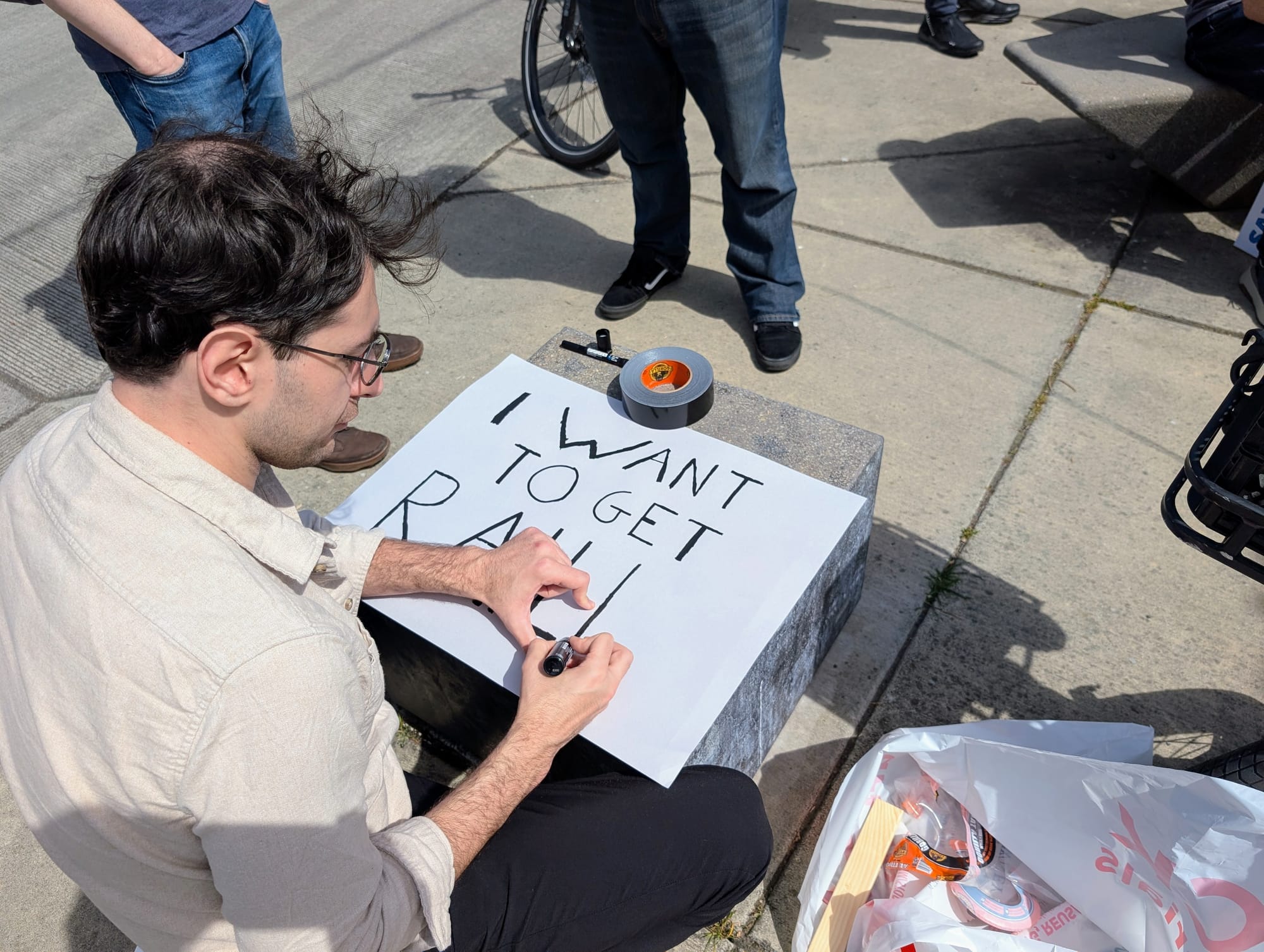
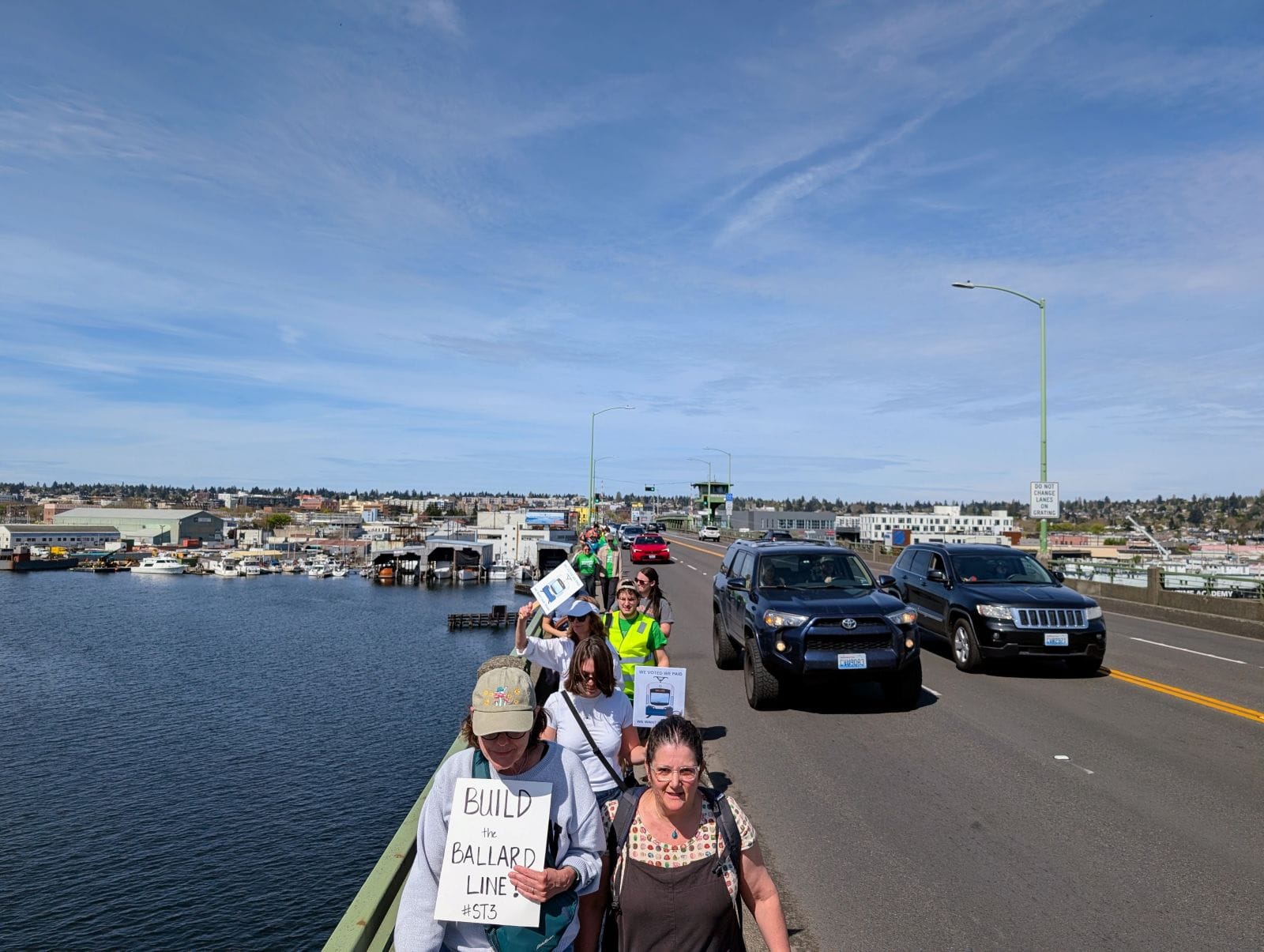
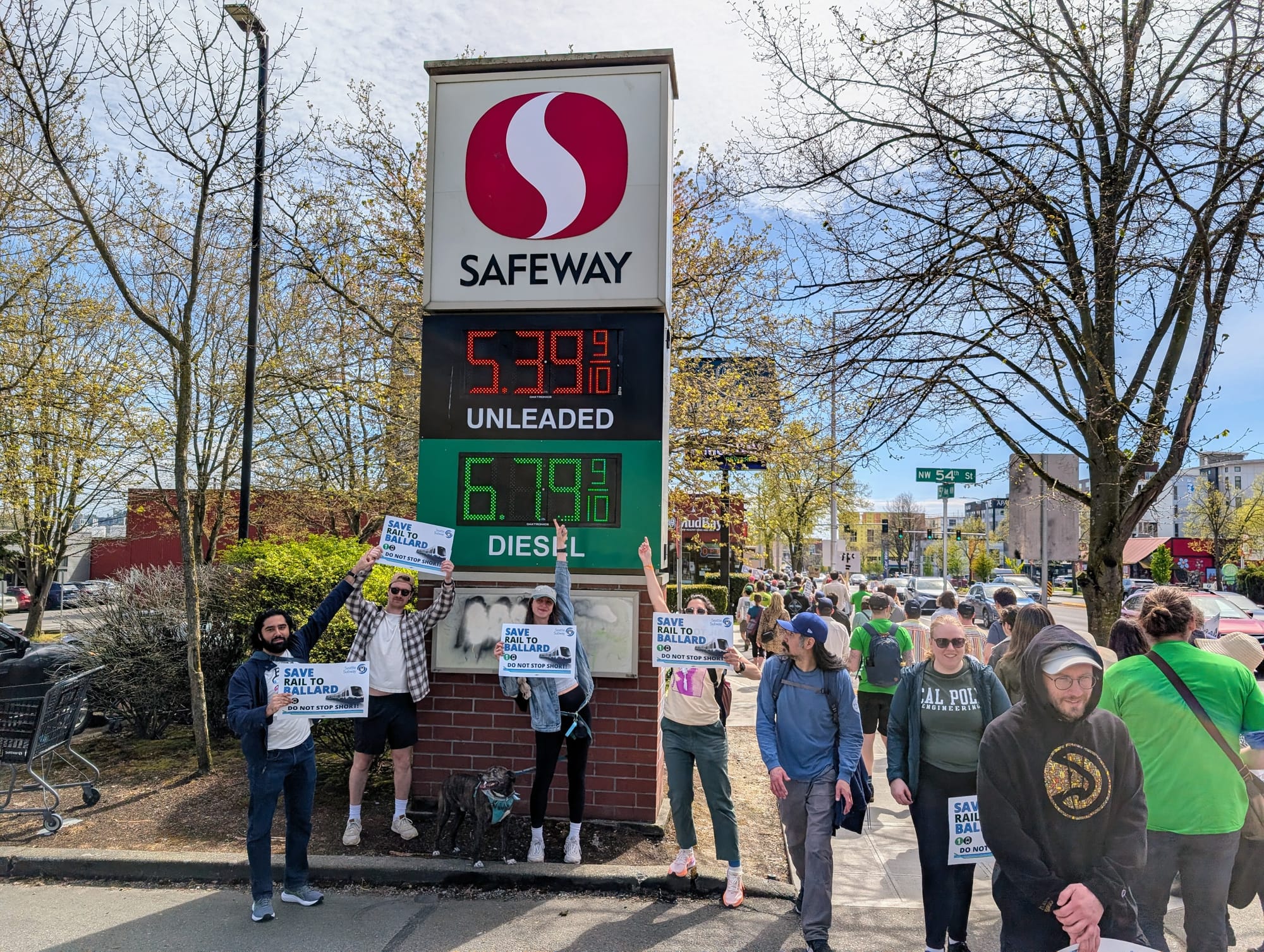
Rail advocates donned train-themed costumes or advocacy T-shirts and crafted witty signs for the four-mile march. (Doug Trumm)
Rinck and other transit advocates have argued abandoning Ballard would be a breach of trust and scorn a neighborhood that voted for ST3 in massive numbers back in 2016, helping the measure pass regionwide.
"Voters said yes. They said yes to light rail. Ballard said yes," Rinck said. "We've been paying higher sales taxes, property taxes, car tabs for a decade based on a promise, and now Sound Transit is drawing up plans to stop Ballard Link just short of the neighborhood that showed up for them. That is a breach of trust, and we are not going to let it stand."
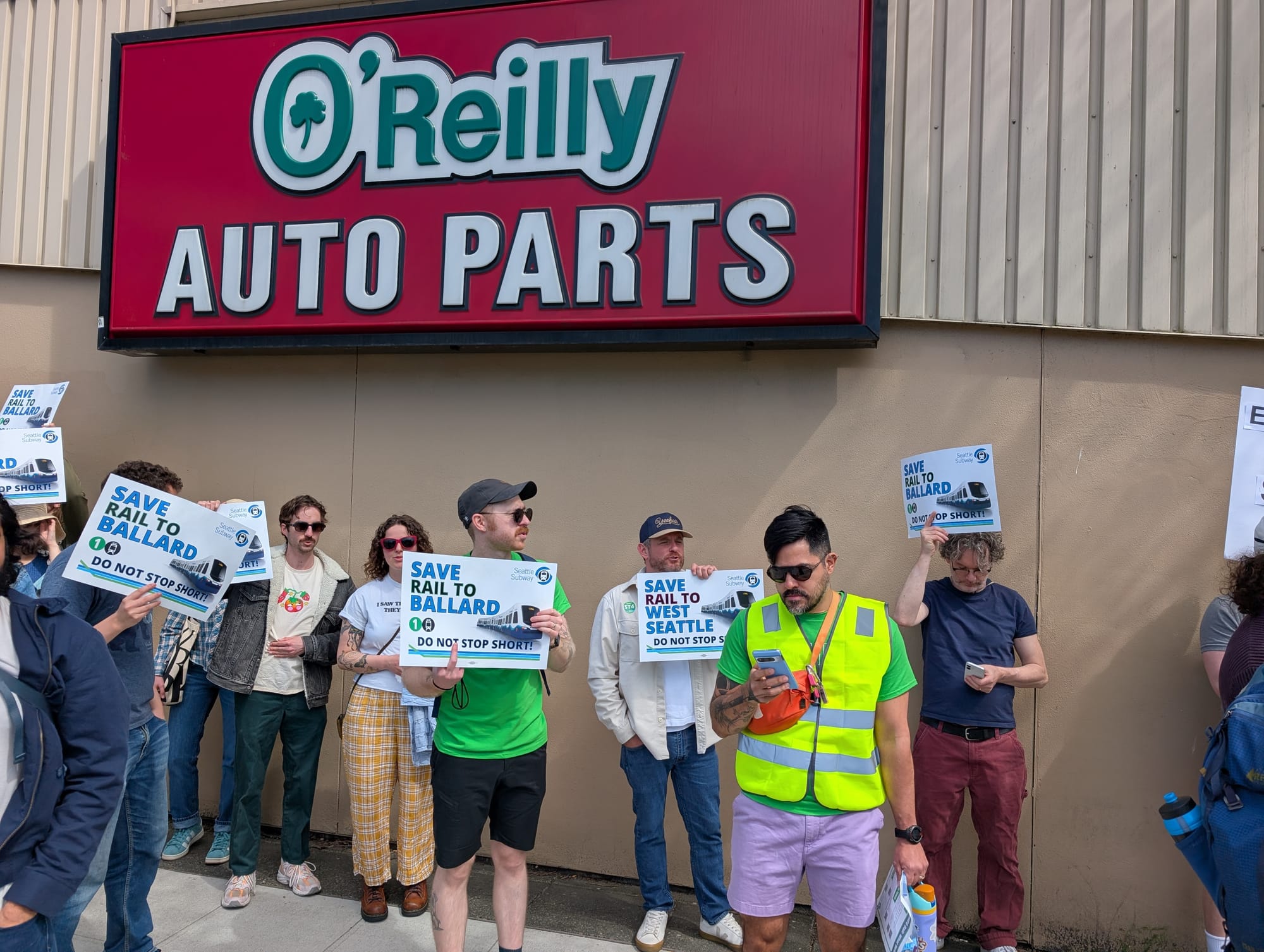
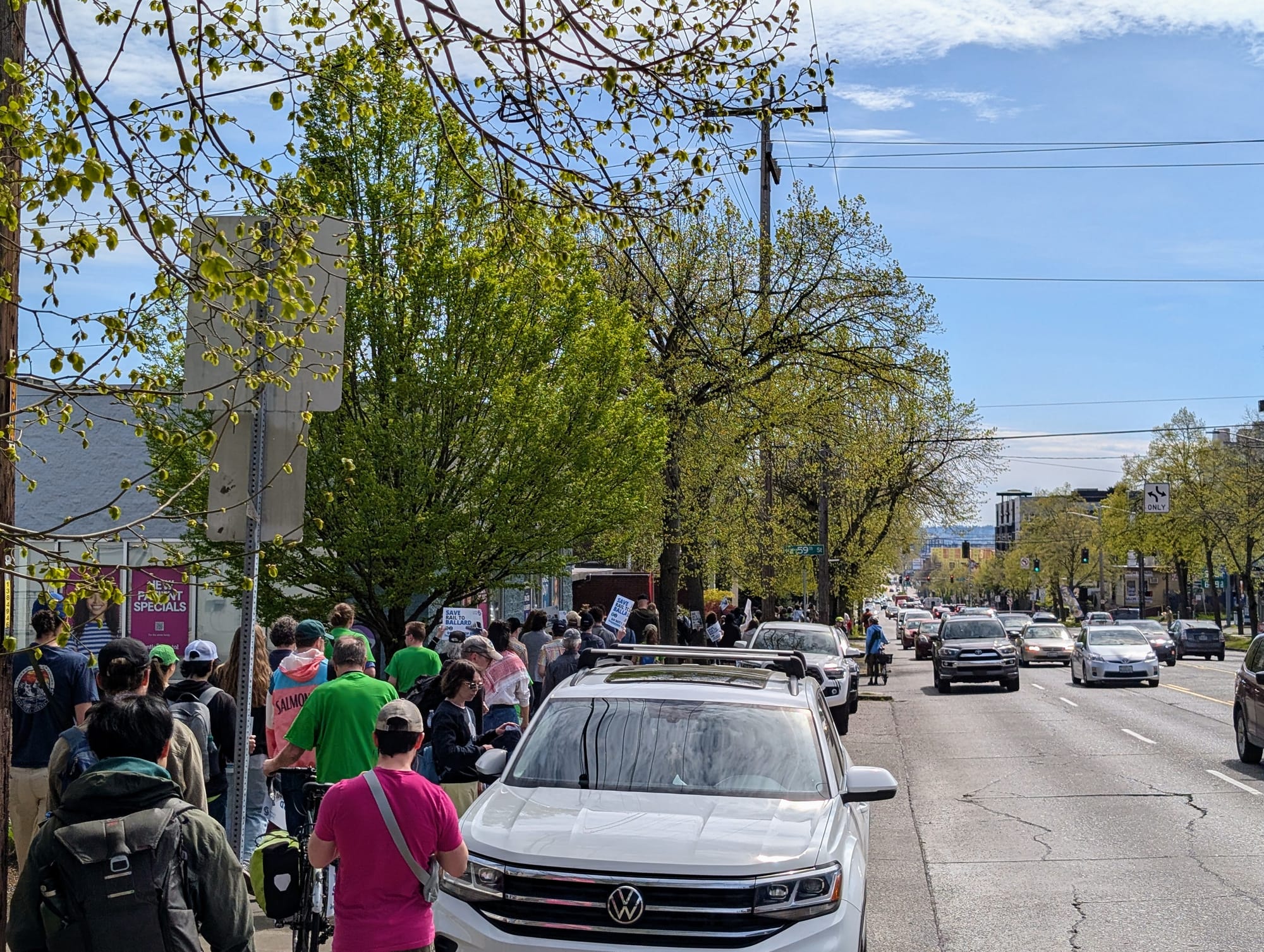
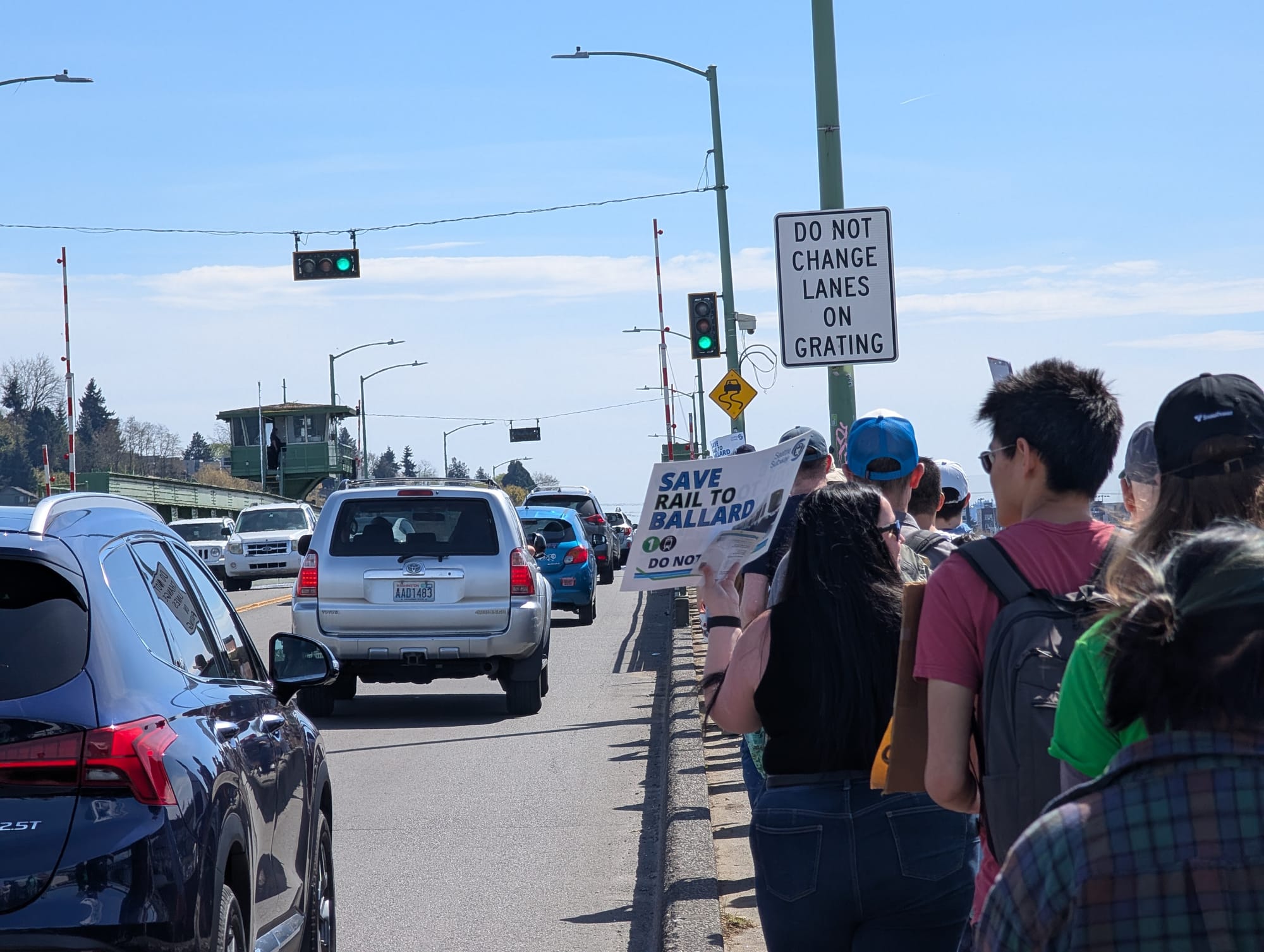
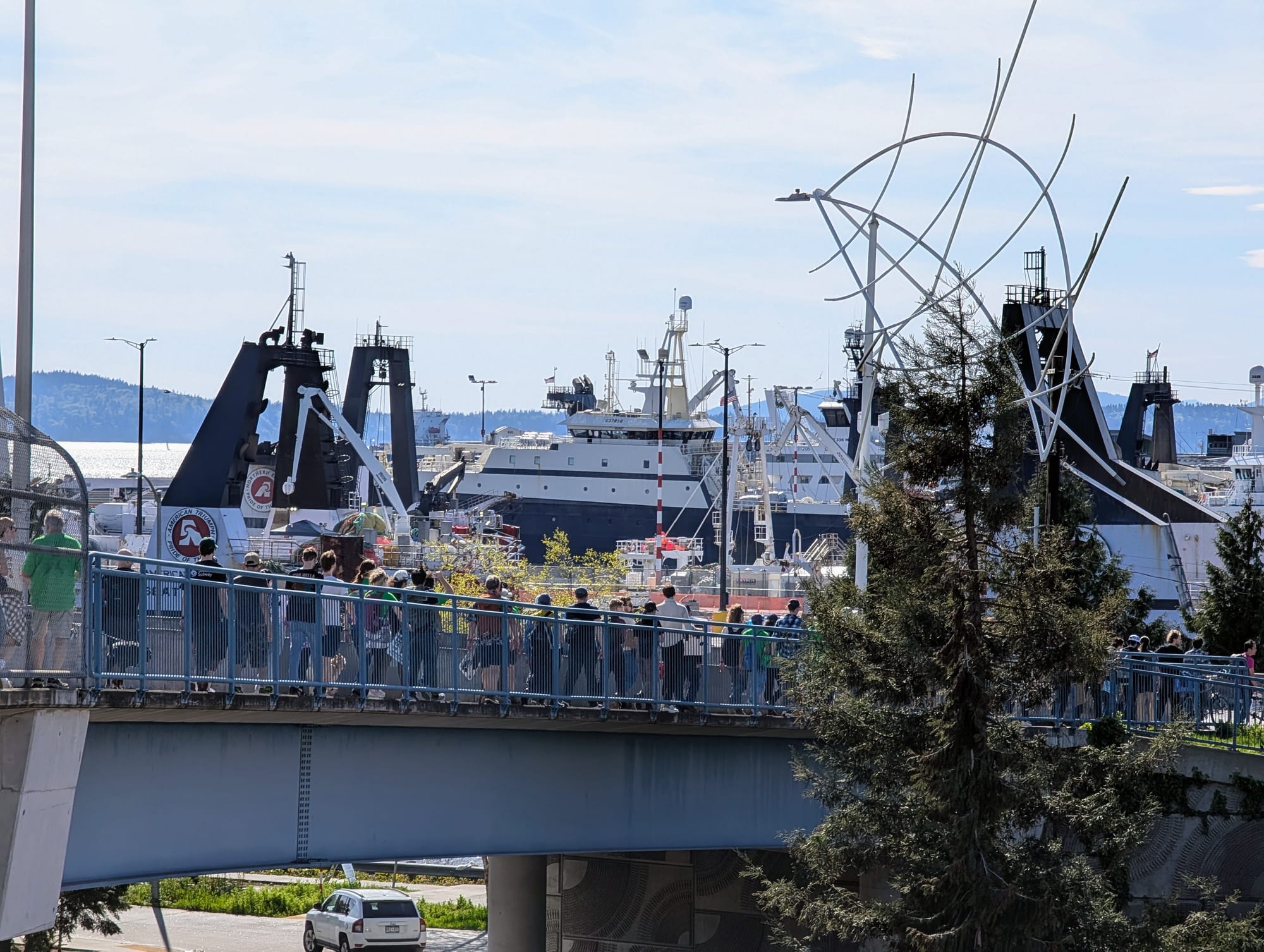
Marches received plenty of supportive honks from motorists along the route, as they crossed the Ballard Bridge and headed to Expedia Park. (Doug Trumm)
Councilmember Barón said the Seattle delegation across all levels of government is very aligned on saving Ballard.
"I think it's impressive that we have both city, county, state folks here, because we want to send a message to all the community that we are aligned and making sure that the light rail comes to Ballard," Barón said. "And I think Councilmember Rinck explained exactly why we need to make sure that happens, both because of the promise that was made and especially because the voters in this district voted, in some cases by over 90% for this project."
Seattle leaders argued Sound Transit would be wise to build where the ridership is. Neither Rinck nor Barón serve on the Sound Transit Board, but Seattle Mayor Katie Wilson and Councilmember Dan Strauss do. Strauss has been staunchly supportive, as a Ballardite himself. Wilson and Strauss sent supportive statements via surrogates but did not directly attend the march.
"We want to make sure that that trust is honored here, and also because when we're talking about where the money is best spent, it's actually right here," Barón said. "As Councilmember Rinck mentioned, we're going to see over 100,000 riders every day. When I saw that data, I was like, that's impressive. That's like a seventh of the city in one day moving through this corridor. That's the Ballard extension."
Getting ST3 back on track will likely require new revenue tools, and unfortunately Sound Transit came up short on a major one earlier this year when the Washington State Legislature failed to pass its requested 75-year bonding bill. The agency is sure to push the bill again in future sessions, but its failure means longer bond terms won't factor into this summer's financial realignment plan.
"When I was a young person, I always voted with my school district down in Clark County," Frame said. "I kept my voter registration at my parent's house. And I'll tell you when I changed my voter registration to Seattle: it was after we lost the Monorail vote. I realized I had lost an opportunity to make a big impact on the place where I live, and 20 years later, I'm here to say I'm gonna do everything in my power as your state senator to make sure that we honor this commitment to have light rail in Ballard."
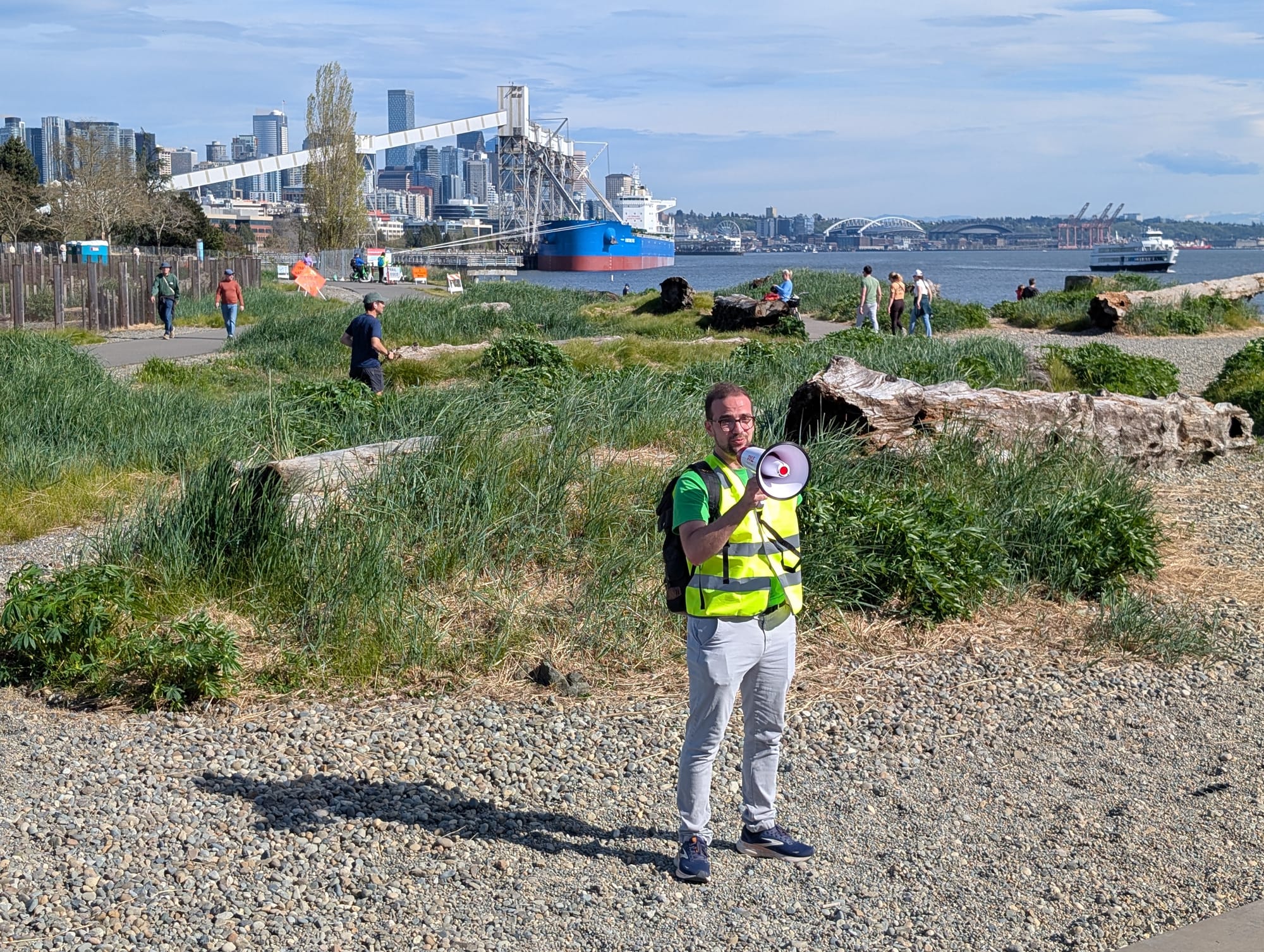
Ballard march organizer Carl Aslund gave one last speech as a group of still well over a hundred attendees arrived at the end of the march at the beach at Expedia, near the planned Smith Cove light rail station that might end up being the terminus of the line if Ballard is truncated. The other choice is Seattle Center, which would bring significant impacts to one of the city's biggest cultural hubs.
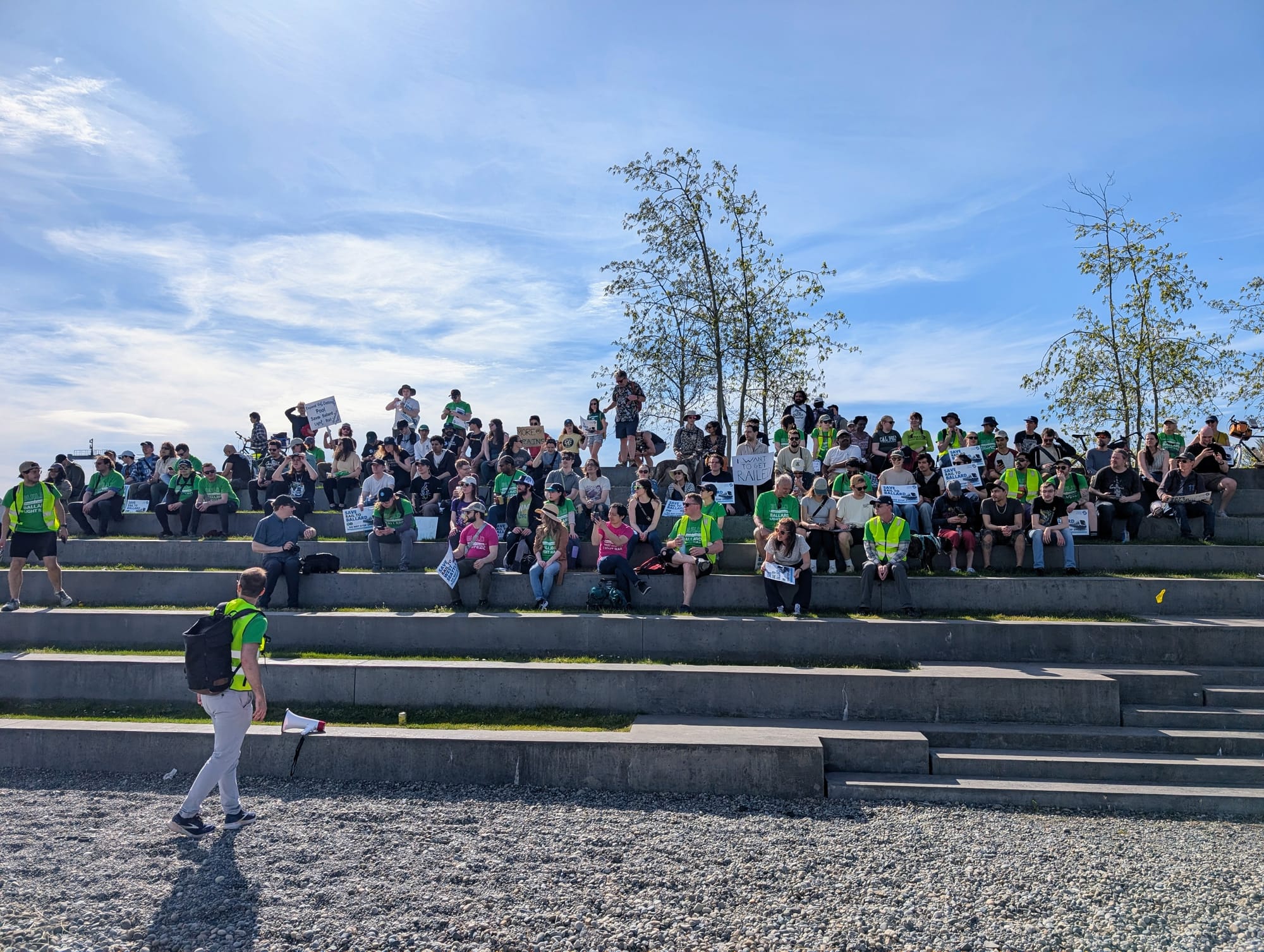
"We need a whole system, and Ballard is just part of that," Aslund said. " We need it. We need Ballard, but need West Seattle. We need Tacoma. Yes, we need Boeing Access Road. We need it all because we voted for all of it. We are paying for all of it. And with with all of us putting in the effort, doing our part, we will get it all."
 Doug Trumm