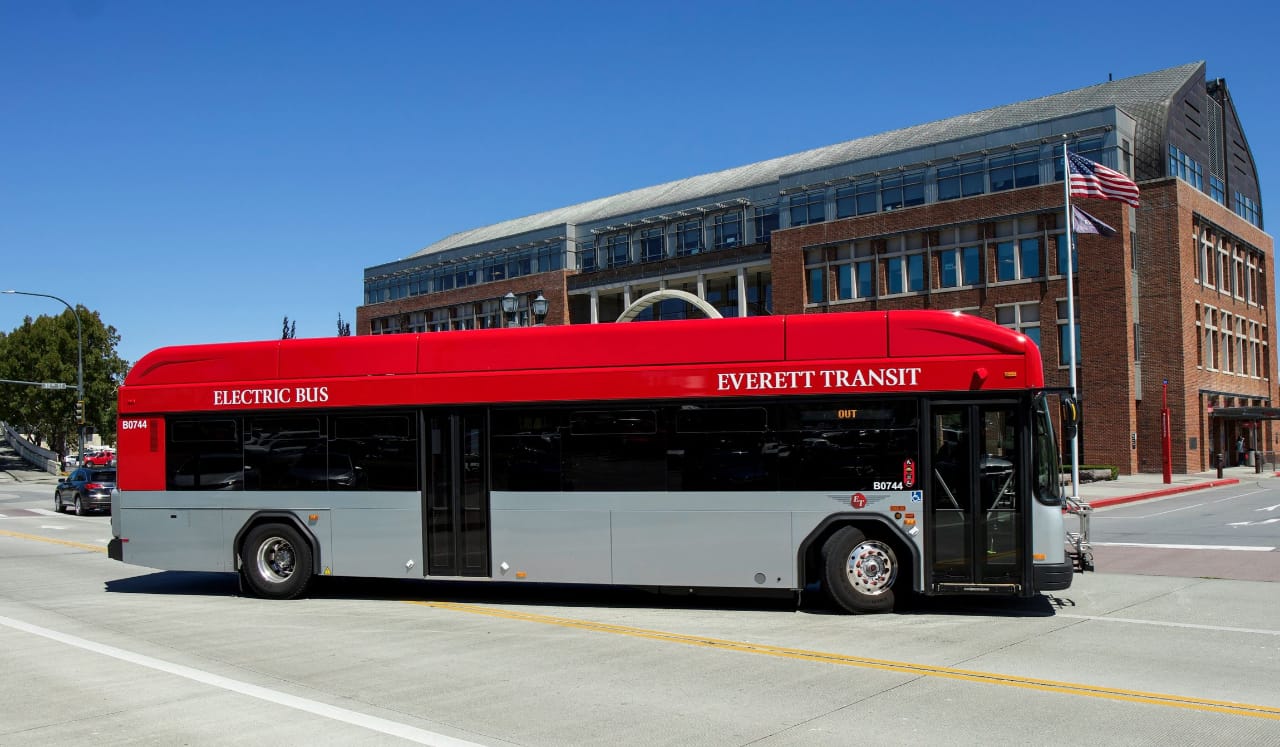
Snohomish County could soon have one fewer transit agency but much more bus service, after Community Transit and the City of Everett announced this week they're restarting talks to annex Everett Transit into the larger countywide transit agency. The move would double the amount of funding available for transit service within Everett, on top of eliminating redundant systems stemming from two separate transit agencies serving the city.
The idea of a merger has been floating around in Snohomish County for a long time, but a 2023 study made the potential benefits of annexation tangible. If both the Everett City Council and the Community Transit board ultimately sign off on the move, the dedicated sales tax stream going toward transit within the city would double from its current 0.6% to the 1.2% currently in place throughout the rest of the Community Transit taxing area.
According to that study, as reported at the time by The Urbanist's Stephen Fesler, an annexed Everett Transit could lead to a doubling of service levels within the city. That would likely translate an increase in the number of routes offering all-day service coming at least every 30 minutes from just three to 14 – a significant boost in the arm for local transit service across Washington's seventh-largest city. Where only three routes currently provide service until at least 9pm, that number could go up to 15 with consolidation.
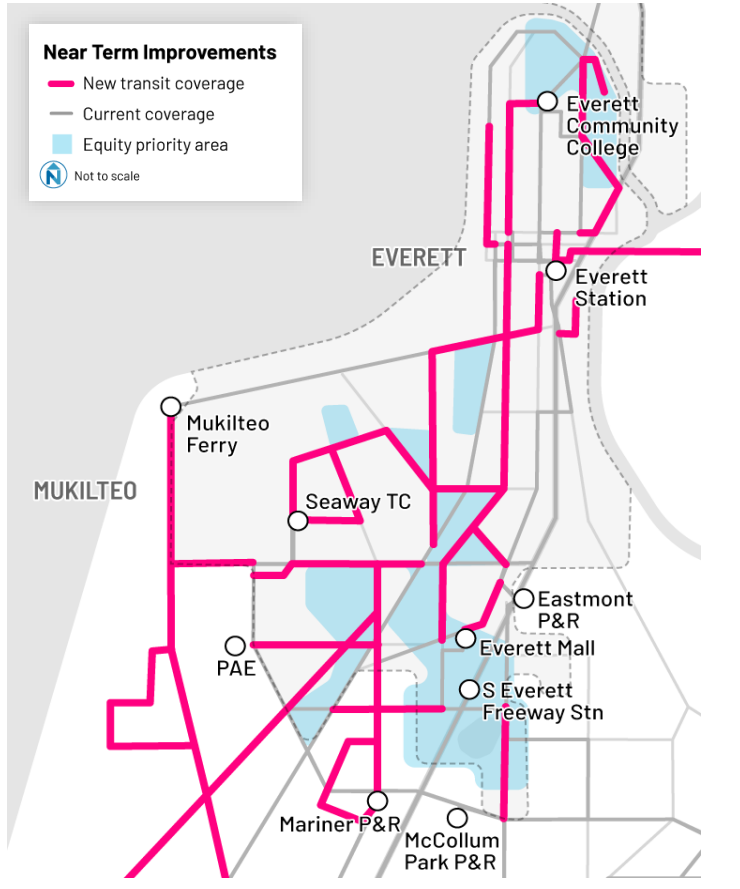
A joint press release sent Wednesday touted a future interlocal agreement (ILA) between Everett and Community Transit that will be developed over the coming months, with both the Everett City Council and the Community Transit board set to consider adopting that ILA this fall. Prior to 2025, annexation would have required a public vote of Everett residents, but a change to state law made that year will allow the use of an alternative ILA pathway.
“Through this annexation we can offer Everett residents more connections, more destinations and more frequent buses. We can provide shorter waits, with more service all day long and through the evening hours,” Community Transit CEO Ric Ilgenfritz said in a release timed with the announcement late Wednesday. “We are in a position to make travel smoother and easier between Everett and other destinations across Snohomish County and our entire region. Every current rider as well as every new rider we attract is someone who will experience access to faster and more frequent travel and more seamless connections.”
Community Transit already has significant service expansion plans, with an adopted long-range plan that calls for ridership to triple between 2019 and 2050, with growth in service largely focused on its Swift network, a counterpart to King County Metro's RapidRide, and the Zip shuttle microtransit system, which provides on-demand service across areas that lack fixed-route buses.
The Urbanist is a nonprofit newsroom powered by reader support. Become a member, get perks, and support local journalism.
Founded as a private electric streetcar system in 1893 that was later incorporated into Everett's city government in 1969, Everett Transit's continued independence is a bit of an anomaly statewide. Apart from the City of Seattle, which operates a two-line streetcar network and owns the assets of the Seattle Monorail, no other Puget Sound city operates its own transit system. Statewide, just five other cities operate their own transit systems, including Yakima, Union Gap, Selah, and Pullman.
Through partnership agreements, Community Transit has been serving Everett residents for decades at this point. The Swift Blue Line has been running to Downtown Everett since 2009, and now connects with the Sound Transit light rail network at NE 185th Street in Shoreline. The extension of light rail into Snohomish County has been a major boon for ridership on the overall Swift network, which also consists of the Green Line between Bothell and Seaway Transit Center in South Everett, and the Orange Line between Edmonds College and Mill Creek.
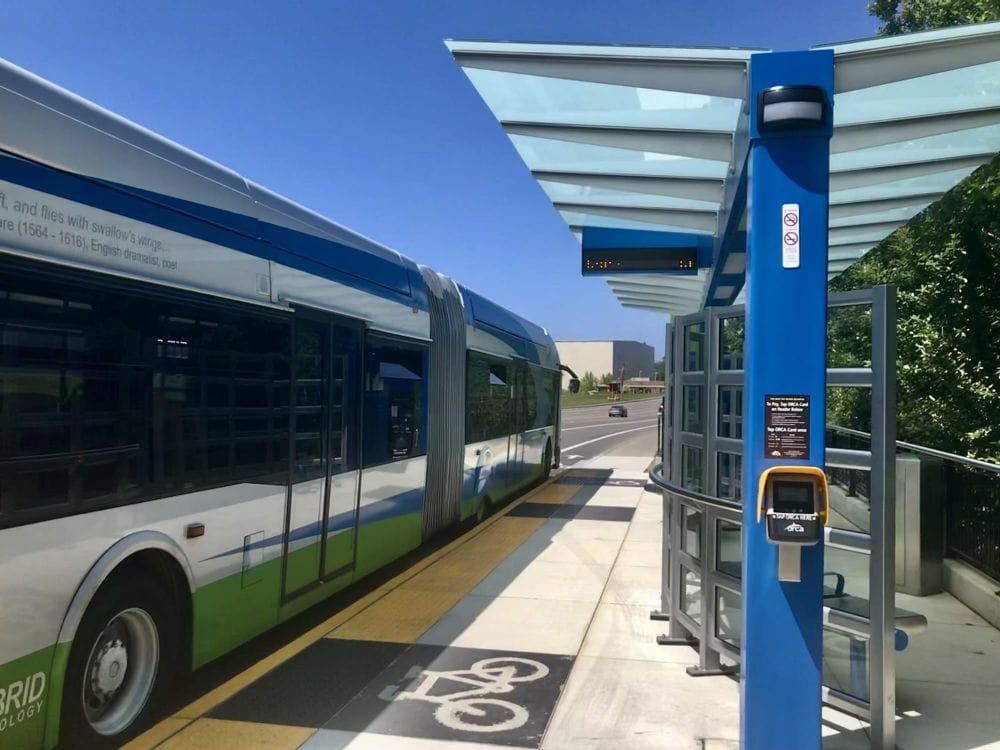
"Consolidation will make it easier for people to travel between Everett and existing Link light rail service in Lynnwood, and throughout the county. It will provide the local bus connections essential to support future light rail service in Everett,” Everett Mayor Cassie Franklin said. “The Sound Transit Board is currently debating the revised timeline for these once-in-a-lifetime Link investments in Everett. It’s now more important than ever to demonstrate to the Sound Transit Board that we’re ready to support a strong, regional transportation system that works in lockstep with Sound Transit’s network.”
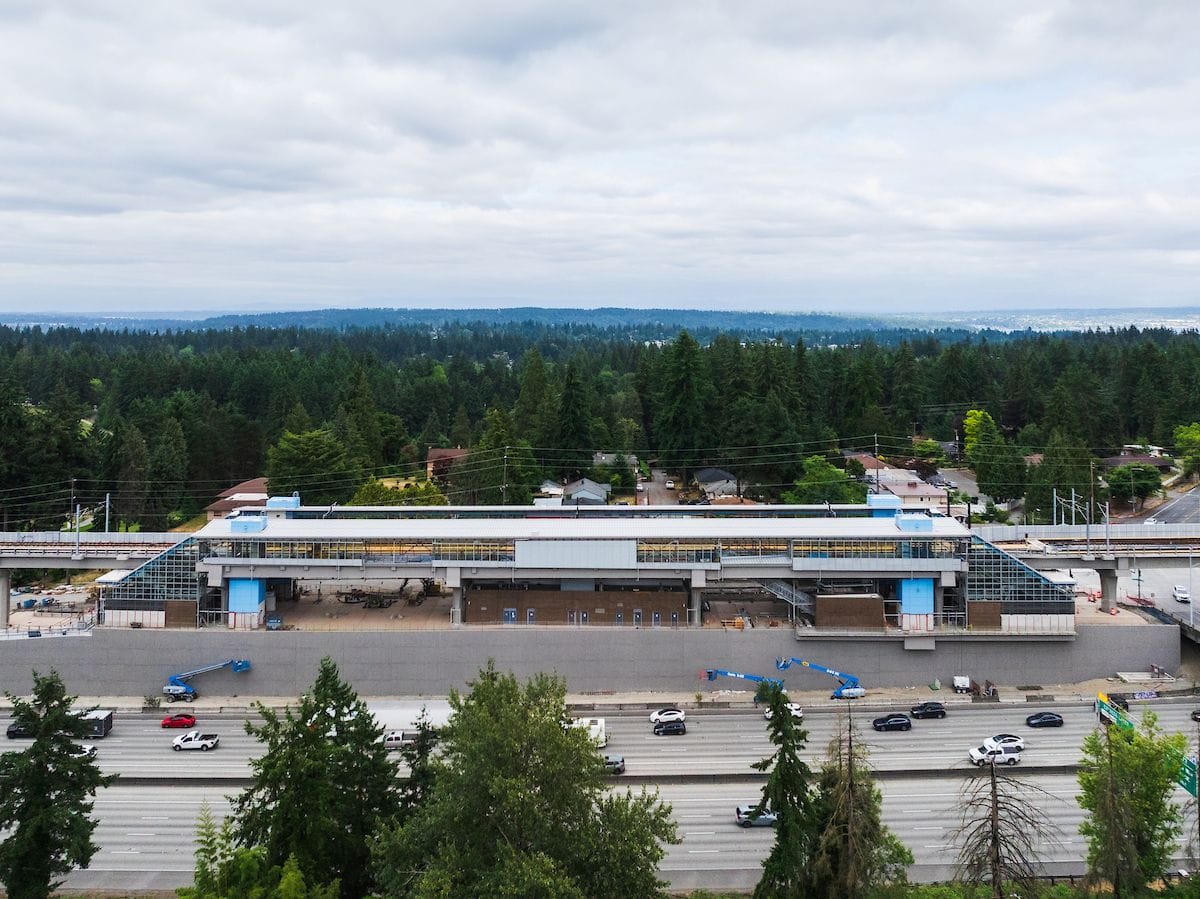
While other parts of the region could see delays completing their light rail extensions as Sound Transit works to close a $34.5 billion funding gap through 2046, Snohomish County seems relatively safe from those cuts. Momentum to "complete the spine" and bring light rail all the way to Everett Station is clearly on the county's side, and if that extension stays on track riders will be able to jump on trains by 2041.
If the pathway announced this week is seen through, those riders will have a lot of Community Transit buses waiting for them at the end of the line.
 Doug Trumm