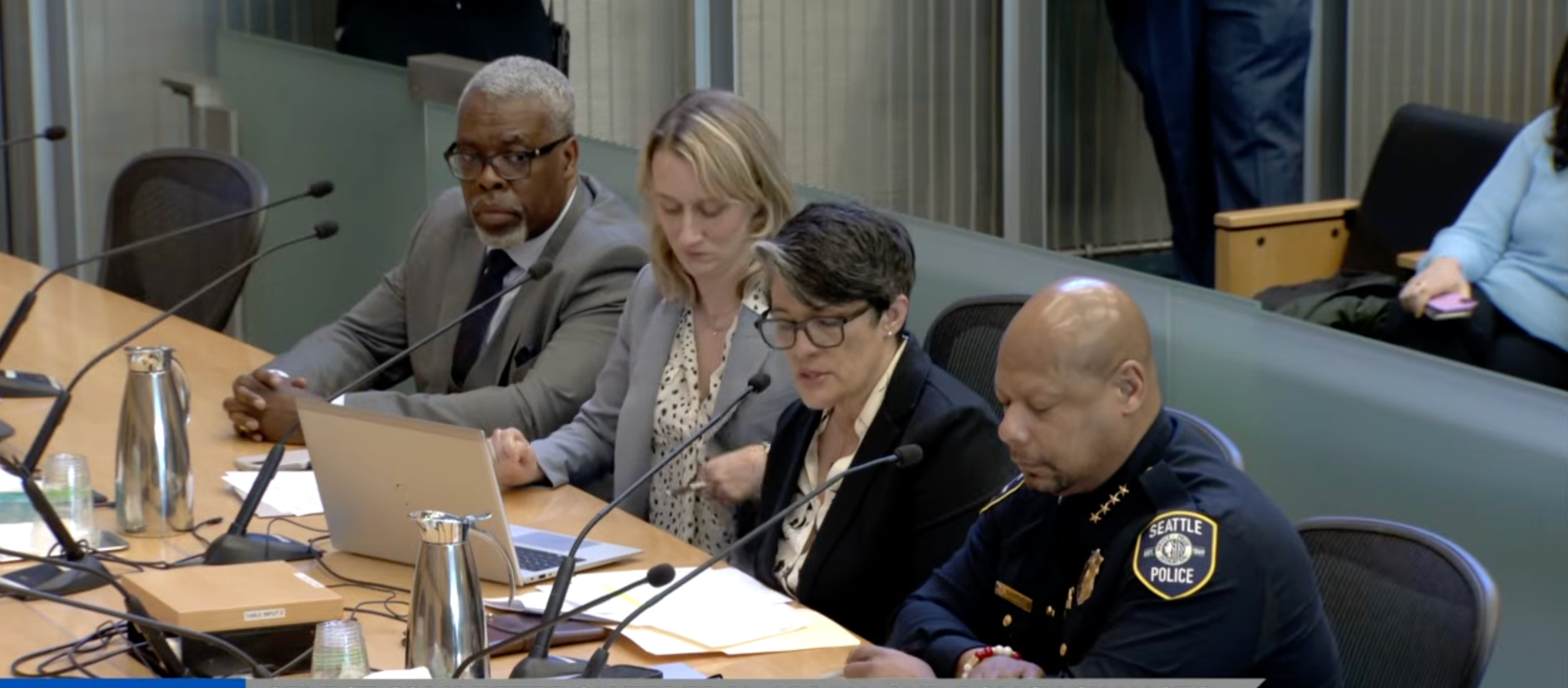
Last Thursday, the Seattle Police Department (SPD) delivered their report on federal immigration enforcement policies to the Seattle City Council’s Select Committee on Federal Administration and Policy Changes. While the report failed to directly address some of the questions it was commissioned to answer, it did highlight the limitations SPD faces in responding to U.S. Immigration and Customs Enforcement (ICE) overreach in Seattle.
“We are, however, navigating uncharted territory,” SPD Chief Shon Barnes said at the presentation last week.
Last fall, the city council unanimously passed a 2026 budget that included a statement of legislative intent (SLI) requiring the production of this report by March 1 of this year. Councilmember Alexis Mercedes Rinck was the prime sponsor of the SLI.
“I know I can't be alone when I say I hear from constituents almost every day about what is our city's response to the actions by this federal administration,” Rinck said at a budget meeting last October. “And over the past year, we have seen cities across the United States deal with the deployment of National Guard against their own people. It is essential that we have a plan and that the public know that we have a plan.”
The Urbanist's Spring Member Drive is in full swing, now with a website redesign and offering ad-free reading for donors! Take advantage of membership perks and support local journalism with a monthly donation.
The SLI asked SPD to discuss their implementation plan for two executive orders issued by then-Mayor Bruce Harrell regarding the city’s response to National Guard deployment and federal threats to immigration and refugee communities.
SPD began working on a directive to respond to these executive orders late last year. The previous mayoral administration circulated a draft for feedback in December.
Barnes issued a directive in mid-January outlining what SPD’s response to federal immigration enforcement would look like. Mayor Katie Wilson mentioned aspects of this directive in a press release outlining her administration’s response to federal immigration threats and overreach.
The directive specifies that SPD officers will respond to any 911 calls involving federal immigration enforcement with a patrol supervisor.
“When officers arrive, they will ensure, number one, that the scene is safe for everyone present, then provide medical aid to anyone that needs it,” Barnes said at the council presentation.
The directive also requires officers to document what’s taking place with body-worn and in-car cameras. While such footage could provide evidence showing federal agents’ misconduct, body camera footage has historically been used much more often to prosecute civilians.
Barnes said he was confident his officers could determine if an individual was pretending to be from a federal law enforcement agency through “respectfully requesting official identification when safe and feasible,” as well as looking up vehicle registration information and communicating directly with federal partners.
Barnes sent the directive to all members of the police department, and it was reiterated during roll call briefings. An internal system, called Power DMS, requires officers to acknowledge they have received and reviewed new policy directives.
The directive is clear in stating Seattle police officers should not assist in any federal immigration enforcement actions. However, it is also clear in saying that officers should not interfere with such actions. And as part of “peacekeeping,” officers are supposed to “address any collateral public safety impacts,” which would include the potential to police first amendment-protected protests against ICE and other federal immigration authorities.
Directive turning into policy
This directive is now in the process of being turned into SPD policy through an extensive stakeholdering process that the department expects to take two to three months. SPD plans to meet with the three accountability partners–the Office of Police Accountability (OPA), the Office of the Inspector General (OIG), and the Community Police Commission (CPC).
After meeting with the accountability bodies, SPD will meet with their labor partners to discuss the directive, which includes the Seattle Police Management Association (SPMA) and, most significantly, the Seattle Police Officers Guild (SPOG).
Last fall, SPOG’s former president, Mike Solan, went on the record in his “Hold the Line” podcast speaking with Aaron Schmautz, the president of the Portland Police Association. The men agreed during the podcast that if ICE officers called the local police departments for cover, they would go and assist them.
“We will be engaging our various stakeholders. I think that's very important,” Barnes said. “There were some that I talked to who thought that I went way too far with this, and some that I talked to that thought I did not go far enough.”
The Community Police Commission had the opportunity to respond to the draft directive back in December. Some of its feedback appears to have been incorporated into the final product.
“We raised concerns about language suggesting that officers should leave the scene when immigration agents are present,” the CPC’s Executive Director Emi Ameh told The Urbanist. “We recommended the opposite: that officers remain engaged, verify the identity and authority of agents, and request names, badge numbers, and the legal basis for any detention.”
However, not all of the CPC’s suggestions were incorporated into the directive.
“We also recommended that any policy clearly reflect SPD’s responsibility to protect constitutional rights and address potential criminal conduct, including false imprisonment, kidnapping, impersonation of a law enforcement officer, and unreasonable use of force, while also ensuring the policy aligns with Washington’s Keep Washington Working Act,” Ameh said.
Ameh said SPD has now shared a draft policy with all the accountability partners, asking for feedback this week. The CPC will also be meeting with SPD Chief Operating Officer Sarah Smith later in March to discuss their prior recommendations for the directive.
Smith, who served in Harrell’s administration as the deputy director of public safety, was hired by SPD this year to replace former chief operating officer Brian Maxey, who was fired the day after the November election. PubliCola reported that Smith’s salary is higher than Mayor Wilson’s.
The National Guard
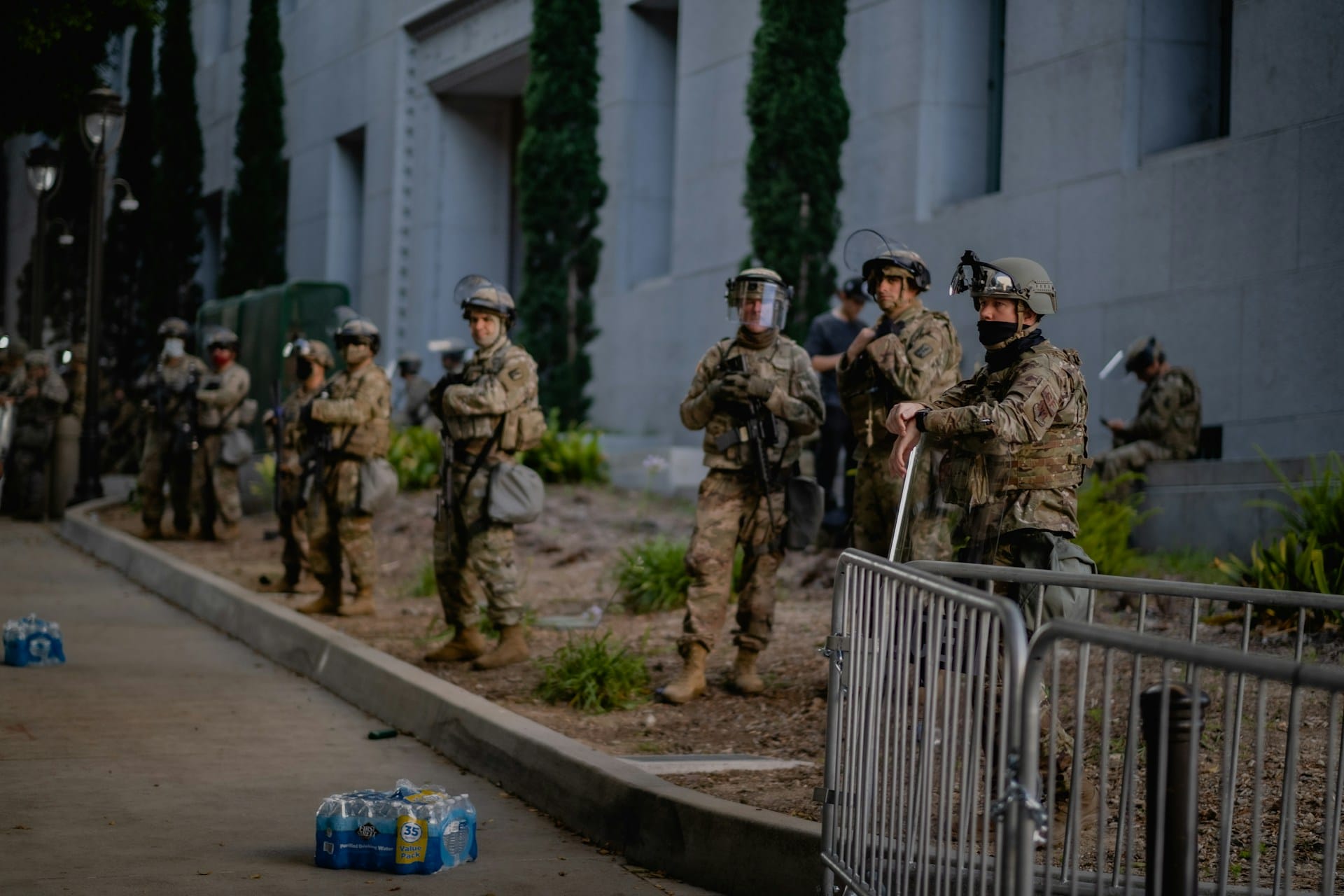
In addressing the possibility of the National Guard being deployed to Seattle to suppress protests and support federal immigrant agents, Wilson’s executive operations manager for public safety Alison Holcomb said the City’s first defense would be the Seattle City Attorney.
“The first and strongest defense that we have is City Attorney Evans and her team filing a lawsuit in the United States District Court for the Western District of Washington to stop the federal administration from unlawful, illegal, and abusive actions,” Holcomb said. “The mayor is closely coordinating with City Attorney Evans to support that work, and that includes coordinating with all of the City departments to, for example, provide declarations, sworn declarations, and affidavits that would support the factual statements that would be attached to such a claim.”
But Kettle warned that the possibility of military escalation in Seattle might not be stopped by legal actions.
“Lastly, I'll add, particularly because the SLI mentions it, that the National Guard, for those that think that because of the court ruling related to that issue, stand by, because that may take away the National Guard. But then that may necessitate then the President placing active duty service members on our streets.”
Questions about ICE and SPD
The budget SLI passed by council listed several specific questions about policies for officers and supervisors engaged in the following scenarios involving ICE officers:
- An ICE officer requesting immediate, on-scene assistance with an arrest or detention that ICE characterizes as enforcement against criminal activity;
- ICE officers requesting immediate, on-scene assistance with immigration enforcement operations that result in a need for peacekeeping activities such as crowd control or traffic management;
- ICE officers who use excessive force during an arrest or detention, such that an SPD officer becomes compelled to comply with the Washington state statute Peace Officer Duty to Intervene;
- Individuals who may or may not be actual ICE officers;
- ICE officers or officials who attempt to compel SPD assistance in securing physical evidence or sharing data captured during an ICE enforcement operation.
Neither SPD’s directive nor the report presented last week explicitly answer all these questions.
“I believe that there is no one-size-fits-all approach to every scenario we may discuss today, and that these concerns are that rigid and/or reactive decision making could lead to an unforced error,” Barnes told the council.
Holcomb did directly address the question of the Peace Officer Duty to Intervene, which was adopted into state law in 2021. This law requires officers to intervene if they witness excessive use of force and report the wrongdoing of any fellow officers. This law added onto a framework begun by the passage of I-940 in 2019, which required police officers to render first aid.
One of the questions in the SLI regarded the Duty to Intervene and how it would apply to interactions between local police officers and ICE agents.
“Seattle police officers all are sworn to uphold the state law making explicit their duty to intervene, and all of us here hope that the duty to intervene will prevent a tragedy like those we witnessed in Minneapolis from happening here” Holcomb said. “And we all need to be fair and reasonable in our expectations of Seattle's Police Department. Seattle police officers cannot obstruct federal agents from enforcing federal law. It is not clear how a Seattle police officer could anticipate and prevent the kinds of murders that we witnessed happen in Minneapolis. That said, it is clear that Seattle police officers have sworn themselves to uphold Washington State law, Seattle police policies and to intervene, to defend Seattle's residents and visitors from excessive force and to render aid.”
How exactly police officers would interfere with ICE agents in a scenario of excessive use of force was not discussed, and Holcomb’s statement does not provide a clear answer.
The first scenario on the list – how officers should respond when ICE requests help with a criminal arrest – was not discussed. The second scenario – how officers should respond if ICE requests help with activities classified as “peacekeeping” such as crowd control – appears to be covered by both the directive and Barnes’s own comments at the presentation.
“As Chief of Police, my decision-making matrix remain[s] grounded in the same core principles that guide every aspect of police work: peacekeeping, de-escalation, rendering medical aid, and the most thorough and transparent documentation of incidents possible,” Barnes said.
It is assumed that SPD would respond and police protests when requested to do so by ICE.
After bringing up the Cal Anderson counterprotest to a right-wing religious rally last year, Councilmember Bob Kettle expressed concern to Barnes that in policing protests against ICE, SPD officers could behave in such a way that “there could be some visuals that make it look like you're protecting one side over the other.”
In January, body camera footage was released from the counterprotest recording an officer saying, “We’re going in this time with guns blazing and all our pieces in place. We are past talking to people, we’re here to f--- people up now.”
Barnes insisted that SPD is neutral in protests, and will be completing several recommendations from the OIG arising from this particular counterprotest.
However, in such a highly charged national atmosphere and given SPD’s history of crowd control, such words might give concerned Seattleites scant comfort.
Rinck asked Barnes what would happen if an SPD officer chose to support immigration enforcement efforts or disclose information to ICE. Barnes said if this happened, the officer would be investigated by the OPA and could be placed on administrative leave. If the violation was sustained, Barnes would ultimately decide on what discipline that officer would face.
For now, SPD will work through their stakeholder process in developing the formal policy around these questions. Given the workplan, SPD might not be ready to present a final policy until summer.
“I do believe that people are watching Seattle,” Barnes said. “They're watching what we're going to do.”