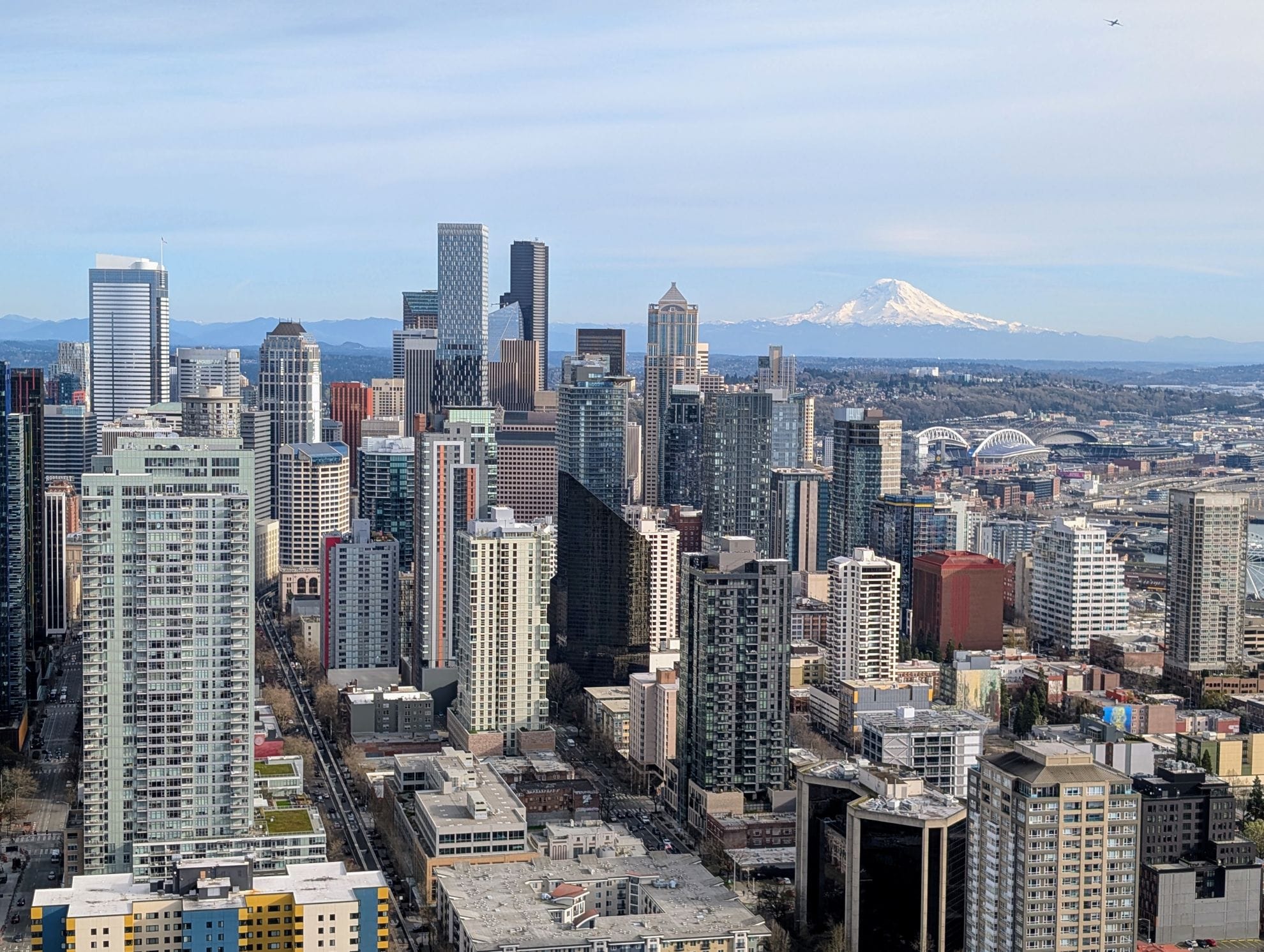
Seattle Mayor Katie Wilson told a packed room at the Housing Development Consortium (HDC) luncheon on Tuesday that she had breaking housing news. Namely, she would be take a "taller, denser, faster" approach, expanding the scope of the supplemental Environmental Impact Statement (EIS), which is needed to clear the way for upzones.
"So breaking news, we are going to basically revisit the original phases three and four plan to be far more aggressive with our timeline and scope," Wilson said. "This is really a housing acceleration plan. And so this basically looks at doing a new supplemental EIS with a more ambitious, inclusive scope of potential land use and zoning changes. So likely these will include zoning for more housing within walking distance to transit, not just along our busy arterial streets."
A press release on Thursday clarified that the mayor's approach would mean broader changes in upcoming Phase 3 rezone legislation, which they hope to pass in 2027. Previously, some of the bolder changes were tabbed for a Phase 4 that would have needed to wait for 2028 or later, since City planning staff would have been busy working on a less ambitious Phase 3.
Wilson's new Phase 3 plan appeared to be welcome news for the hundreds of officials and affordable housing professionals gathered in the Seattle Convention Center Summit Ballroom. Seattle's scarcity of multifamily zoning is just as much a hindrance to nonprofit builders as it is in the private sector, forcing builders to bid up the limited land set aside for apartments.
“We applaud Mayor Wilson’s commitment to moving Phases 3 and 4 of the Seattle Comprehensive Plan forward more quickly," HDC executive director Patience Malaba said in a statement. "Expanding housing near transit, strengthening neighborhood centers, and exceeding the baseline requirements of HB 1491 are critical steps to meet Seattle’s housing needs. HDC looks forward to working with the City and our members to help turn this accelerated vision into homes and thriving communities for all Seattle residents.”
The HDC luncheon was also the site of a big announcement from King County Executive Girmay Zahilay, who floated his plans for a countywide affordable housing levy, potentially on the ballot as soon as 2027.
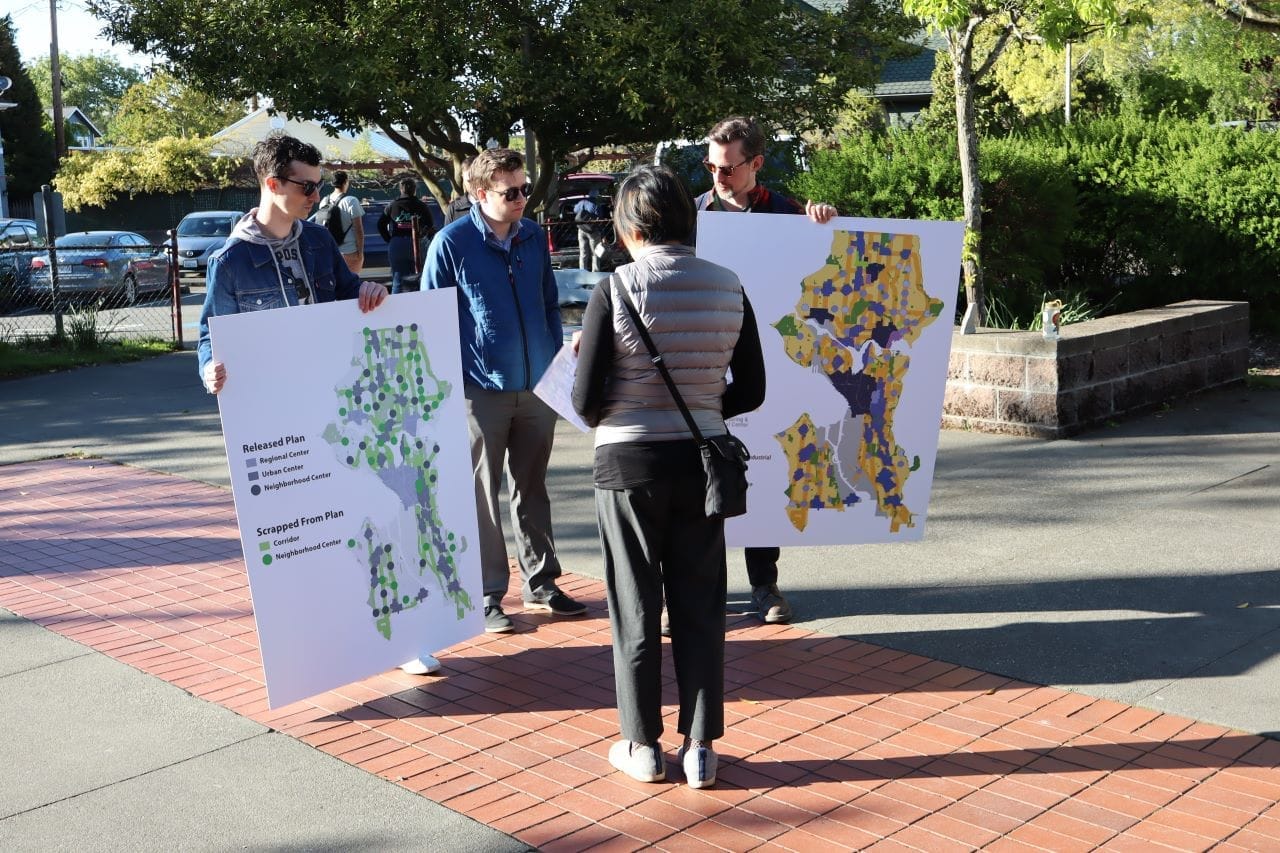
Wilson inherited the growth plan from former Mayor Bruce Harrell, who drew the ire of many urbanists and housing advocates when he trimmed an earlier list of 50 growth centers down to 30 and largely erased transit corridor rezones. The mayor's proposal shrunk these corridor from a five-minute walk of frequent transit to just the immediate half-block on the route.
Phase 1 of the Comprehensive Plan, largely implementing state middle housing mandates, was already completed and passed when Wilson took office, and Phase 2 – dubbed "centers and corridors" – was already well underway. Wilson opted to keep Phase 2 in motion so as not to force process delays to revise it. But she is pledging to go much bigger on Phase 3 than Harrell fathomed.

That might mean Phase 3 takes a bit longer, but the scope of the changes will be much expanded, under the mayor's vision.
On February 26, Office of Planning and Community Development (OPCD) Director Rico Quirindongo told the Seattle Planning Commission that the City would study expanding the scope of transit corridor upzones to two blocks in each direction. But it appears Wilson's vision goes beyond that, as The Urbanist first reported.
Councilmembers Eddie Lin (District 2), who chairs the Select Committee on the Comprehensive Plan, and Dionne Foster (Position 9) signaled support for Wilson's proposal, signing on to her press release with quotes. Like Wilson, Lin and Foster ran on expanding housing density and increasing access to walkable neighborhoods and won.
“We have heard from a wide coalition of businesses, labor, housing providers, neighborhoods, and environmental advocates,” Lin said. “The message is clear – go bigger and bolder, work with urgency, build the safe, accessible, affordable, walkable neighborhoods we all want. I look forward to working with Mayor Wilson, my colleagues on City Council, and community members to plan for a better Seattle.”
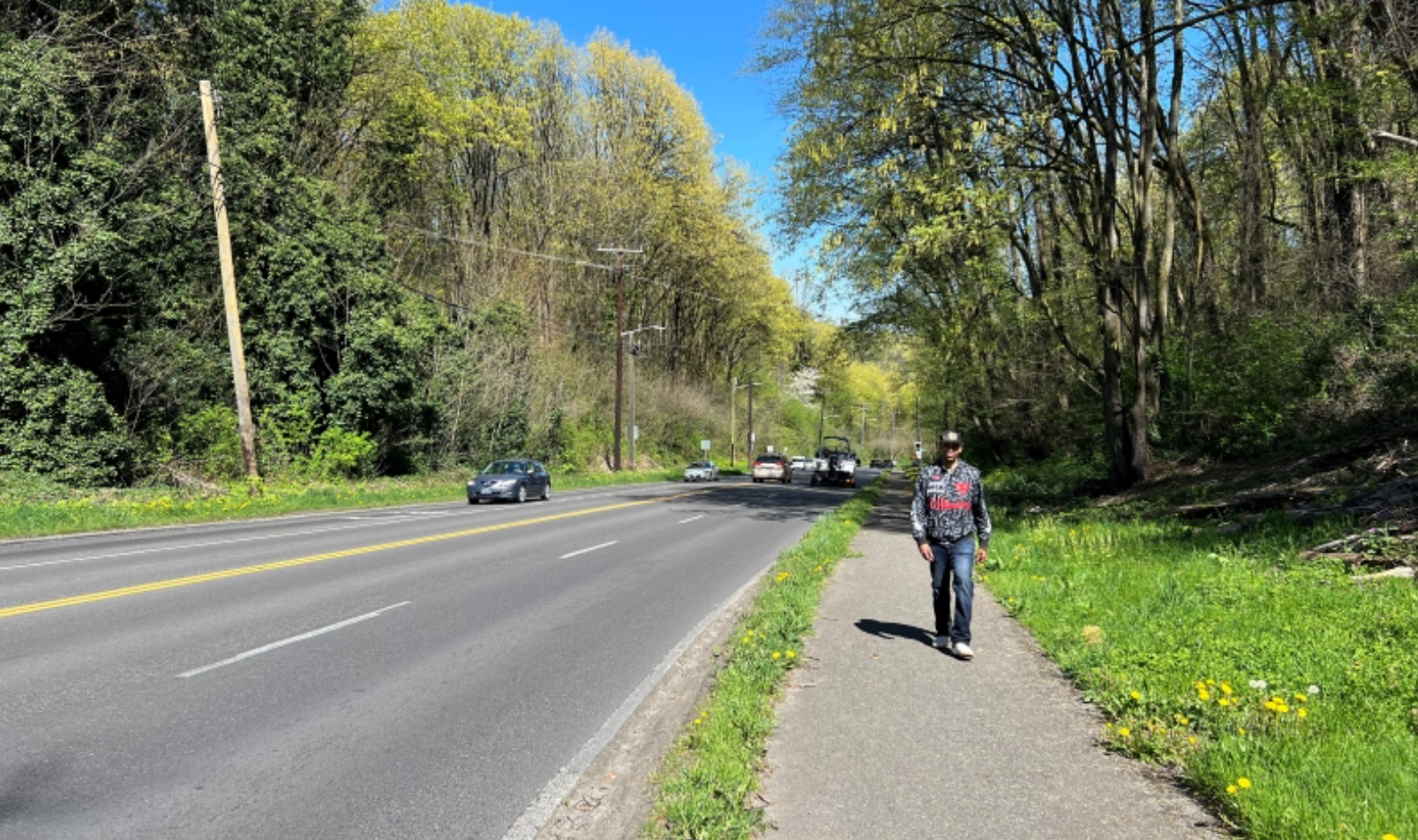
Foster highlighted the importance of letting families live off busy arterial roads, on streets where it would be safer for kids to play or travel. Seattle's traffic safety crisis has been most acute on wide roads with fast-moving traffic, like Aurora and Rainier Avenue – roads where the City's growth framework shunts the densest housing.
“I’m excited to see this announcement from the Mayor that will allow us to move at the speed necessary to meet the housing demand in our city and build neighborhoods that are walkable, thriving places to live," Foster said. "Accelerating the timeline for Phases 3 and 4, starting with a bolder SEIS scope, will give Council the tools to quickly address our housing crisis. In particular, pursuing wider transit corridors will mean more housing options for families to live within a short walk of our robust transit system, and in locations that are off of busy arterials."
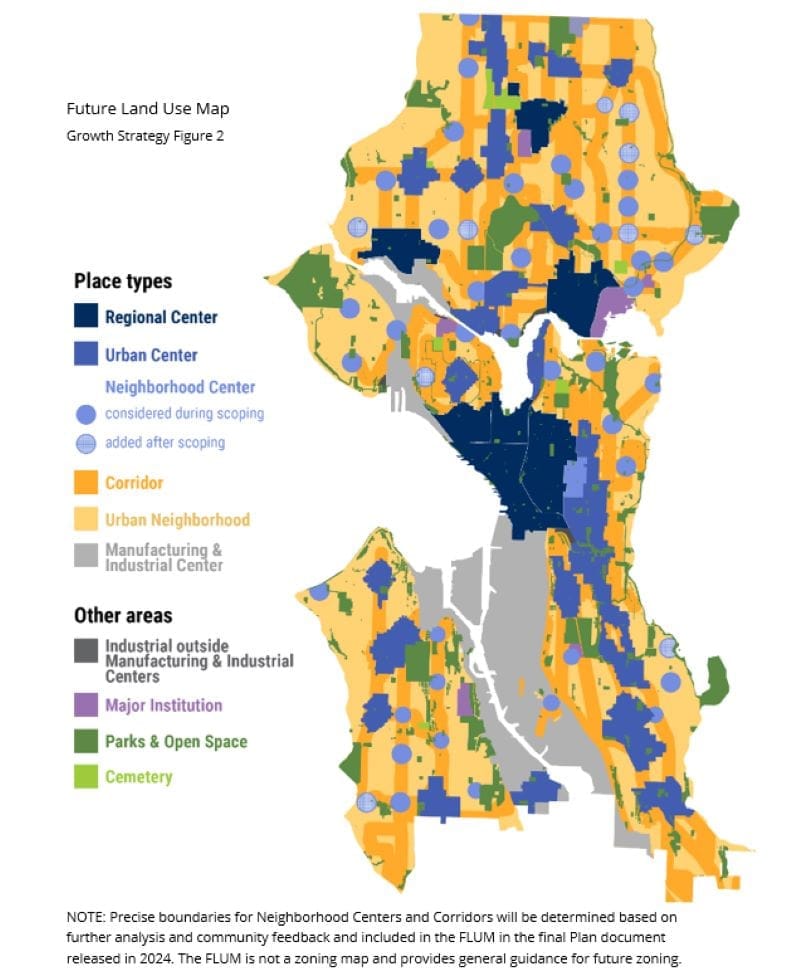
Wilson also said she was interested in adding more Neighborhood Centers than currently in the scope of the study, as first reported by PubliCola's Erica Barnett.
“I’m open to new neighborhood centers,” Wilson told PubliCola. “I certainly want to go back and consider the ones the previous administration cut out, and if there are additional ones that weren’t considered but made sense, I’m happy to consider that too. We’re going to do an efficient but hopefully effective stakeholder process to decide what we want the scope to be, but in general, my bias is to go big.”
The fact Wilson is a renter herself seemed to inform her greater openness to ending apartment bans in broader swaths of the city. While her mayoral predecessor lived in a four-million-dollar mansion near Seward Park, Wilson's family of three rents on Capitol Hill. That neighborhood was also her strongest base of support in last year's close election, propelling her to victory despite many politicos considering Bruce Harrell a lock for reelection one year ago.
"As a renter, I think this is very exciting, right? You don't have to live right along a busy, noisy, dirty street," Wilson said.
In a statement Thursday, Wilson said the policy shift was also about opening up amenity-rich neighborhoods to more people.
“We need to go taller, denser, and faster,” Wilson said. “To address our housing shortage, we’re planning for a city where everyone has the opportunity to live in a safe, welcoming neighborhood with access to jobs, services, and community.”
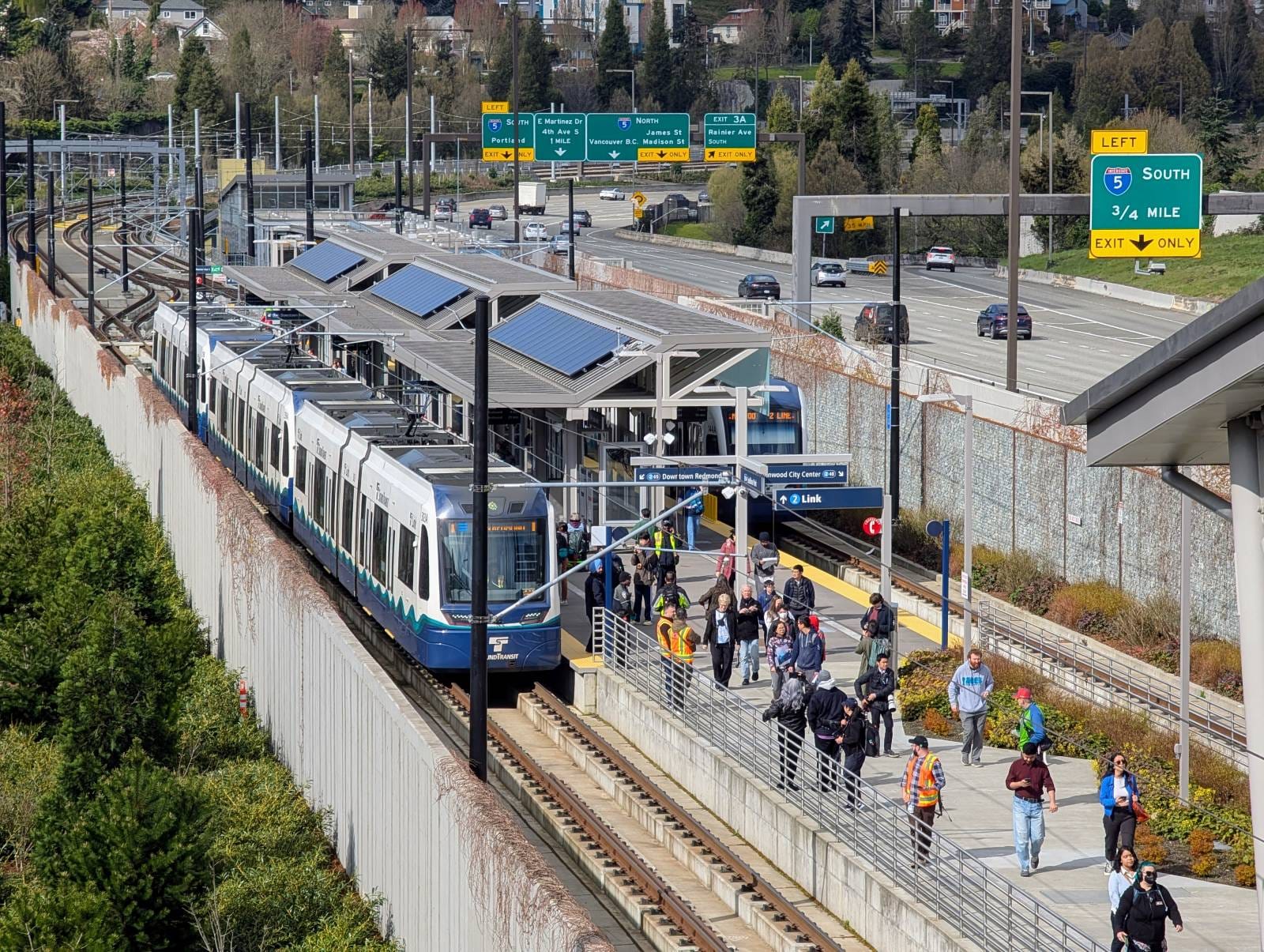
Some of the zoning changes will not ultimately be optional, after state lawmakers passed new "transit-oriented development" requirements in House Bill 1491, which will generally require apartment zoning within a quarter-mile of stops meeting the state's definition for rapid transit by 2029.
Wilson told PubliCola that her accelerated timeline to finish Phase 3 of the comp plan, the city should be able to “comply or exceed compliance with state law” before the state's 2029 deadline.
This is developing story. We'll update with more details if we hear back from OPCD.
 Doug Trumm
 Doug Trumm