A last-minute change would remove over 160 flex posts from Bremerton’s otherwise excellent 6th Street design.
The 20-year wait for Bremerton’s critical 6th Street ‘road diet’ is nearing reality. The City’s final recommended design is excellent, making smart design choices, improving crosswalks, and narrowing the four-lane street to three lanes — or three lanes to two. It would also be protected end to end, a first for Bremerton.
But in a last-minute memo, the City announced plans to remove 52% of plastic flex posts between downtown and the Charleston District, which excludes the part of the project where 6th becomes Kitsap Way. All bike protection would be removed downtown, and some flex posts are removed crossings nearest two elementary schools, where the protection is needed most.
The City claims the changes are needed to accommodate access for the Bremerton Fire Department (BFD) emergency routes. Its memo reiterates the need for “flexible post type bike lane physical separation,” with the big caveat of “excluding where the Bremerton Fire Department identifies emergency response concerns.” The department has interpreted this broadly to include where “…any physical separation installed would prevent vehicles from being able to pull to the curb with approaching emergency vehicles…”
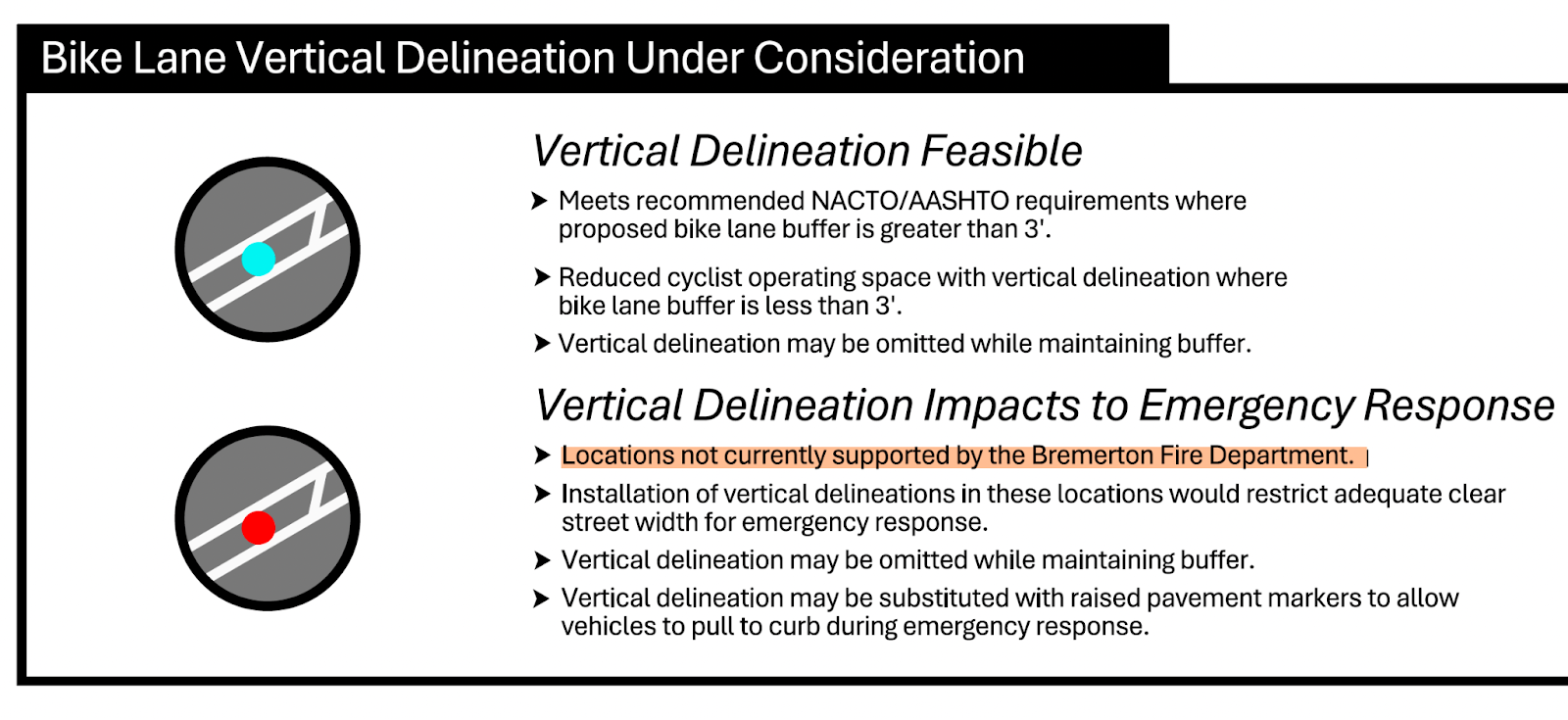
Approximately 168 flex posts would be removed from the ‘Concept Designs’ shared in September 2025, including 100% of the flex posts on the five blocks of 6th Street that pass through high-foot-traffic downtown. The two blocks surrounding 6th and Warren in downtown have the highest concentration of car-on-pedestrian collisions in Bremerton, and the human toll is real, including 10 car-on-pedestrian injury collisions since January 2020, one every seven months, according to the Washington State Patrol.
The downtown section of 6th Street is precisely the kind of high-stress location where protective infrastructure is most effective.
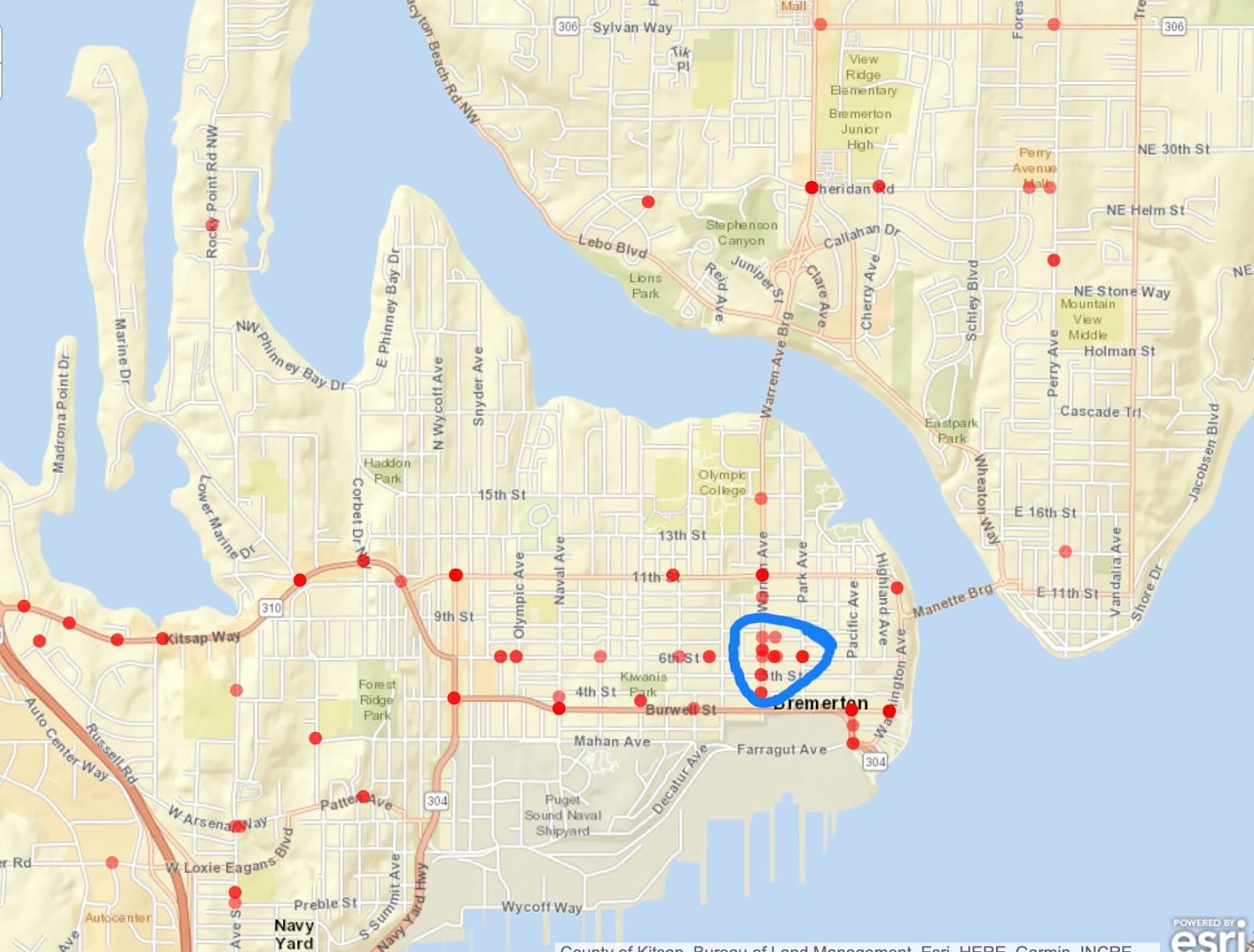
Further west on 6th, the City would remove all plastic flex posts from the intersection of 6th and Olympic, the closest 6th Street crossing to Naval Avenue Elementary School. The original design highlighted 6th and Olympic for additional street safety, with lighted pedestrian crossing signs and a mid-street traffic island. Flex posts would also be removed from 6th at Veneta, just steps from Our Lady Star of the Sea elementary school. Bremerton has no ordinances on ‘school zones’.
The City also plans to cut flex posts from 6th Street’s eastbound approach to Callow Avenue, in the heart of the pedestrian-oriented Charleston shopping district.
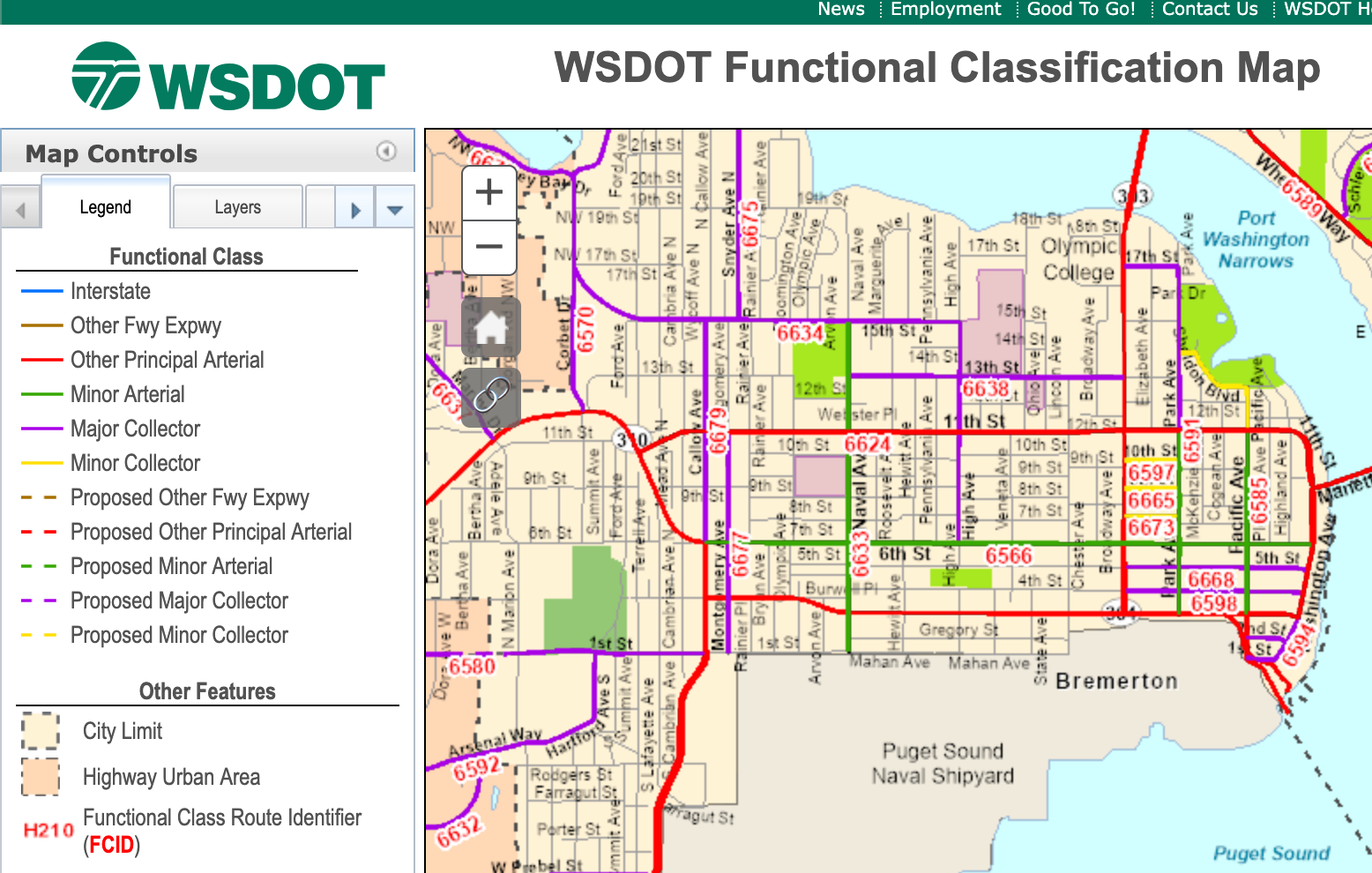
It’s worth noting that 6th Street is flanked by two alternative east-west routes for first responders, 11th Street, which is five blocks away and Burwell Street (SR 304), three blocks away. Both 11th and Burwell are classified as ‘Principal Arterials’, while 6th is a Minor Arterial and will likely be downgraded after the road diet. Emergency vehicles have two alternative routes, each within five blocks of 6th. Why BFD needs a third high-speed thoroughfare in this narrow section of Bremerton is left unexplained by the Wheeler administration.
Fire Depts and the ‘20-foot rule’
Like all urban fire departments, BFD has a critical job and absolutely must have unobstructed access on city streets. To ensure that access, cities follow best practices, like those found in the International Fire Code (IFC). Many cities, including Seattle, Bellevue and Bremerton adopted the IFC in lieu of writing its own fire code from scratch.
The IFC contains the ‘20-foot rule’ for ensuring streets maintain access for fire trucks: 503.2.1 Dimensions: “Fire apparatus access roads shall have an unobstructed width of not less than 20 feet (6096 mm).” Of course many streets in Bremerton violate the 20-foot rule, when both-side parked cars squeeze narrow residential streets. But streets classified as ‘arterial’ or ‘collector’ must maintain that width.
At no point would 6th Street be narrower than 21.5 feet, with all flexposts installed. And the five-block downtown section of 6th Street, for instance, has no fewer than 17 driveways and alleyways that cars can use to evacuate the street if emergency vehicles need to pass.
The City of Bremerton is claiming its fire trucks require more space than other cities and more than the IFC recommends. Never mind that missing flex posts attract delivery trucks and rideshare cars like flies on summer watermelon. Never mind that removing flex posts guarantees that average traffic speeds will increase or that pedestrians face longer street crossings.
The Wheeler administration has used this tactic before, to argue against street safety infrastructure. Late in the design process, they present highly technical information (logical fallacy: Appeal to Authority), which they claim trumps all other considerations. Late in the Warren Bridge design debate, the administration argued a 12-foot multimodal path made it impossible for under-bridge inspection trucks to maintain the bridge.
The fire chief and mayor believe they found a clever wedge issue: do you want bike lanes or do you support the life-saving first responders? But that’s a false choice. Bremerton can build protected bike lanes on 6th Street and still maintain the access, per International Fire Code, that BFD needs to do its important work.
BFD has an incredibly important job to do and the fire chief deserves a voice on street access for emergency vehicles. But there’s a lot of things on Bremerton streets that slow emergency responders: stoplights, parked cars, trash cans, Amazon trucks. Pitting bike lanes against emergency response is cynical and divisive.
Unprotected bike lanes are sexist
When Los Angeles built a protected bike on Spring Street, the number of women riding bikes on the street increased 100%, a League of American Bicyclists study found. New Orleans’ South Carrollton Avenue saw 115% more women after the new bike lane went in. Philadelphia saw a 276% jump with one protected bike lane project.
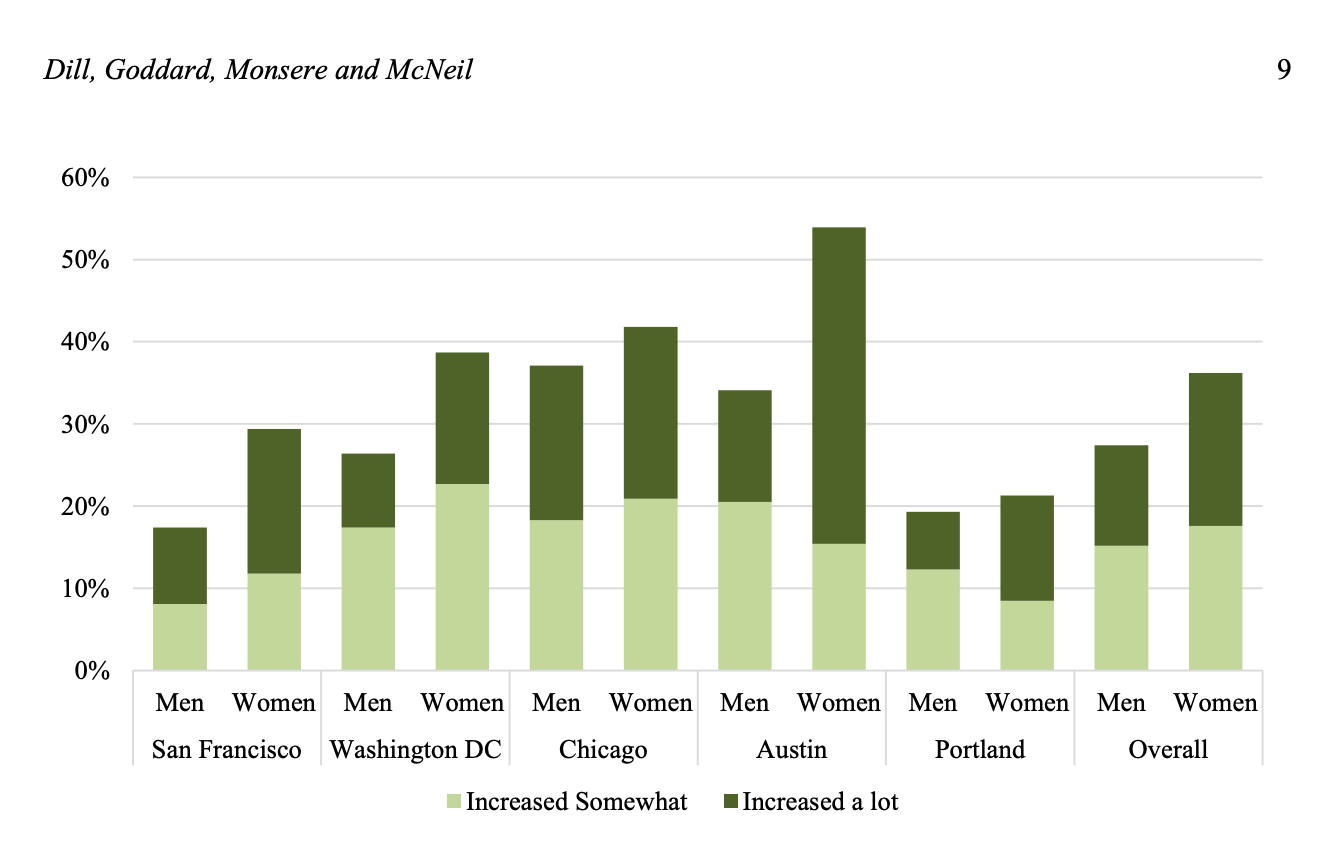
A five-city study by Portland State University showed that all genders appreciate protected bike lanes, but women more so, “…both men and women overwhelmingly felt that the lanes increased their safety… [but] women bicyclists… have significantly more positive associations with the protected lanes than men.”
In cities with high-quality bike infrastructure, like San Francisco, Washington DC and Philadelphia, women account for at least 33% of cyclists. In cities without bike infrastructure, fewer than 20% of cyclists are women. Your correspondent estimates that fewer than 15% of Kitsap Transit Fast Ferry bike-on passengers are women.
Protected bike lanes have been proven to benefit not just cyclists, but also reduce pedestrian injury and death. Protected bike lanes reduced pedestrian injuries by 61% in Toronto, 28% in Montreal, and bike and pedestrian fatalities fell 69% in Chicago.
Long awaited multimodal corridor
6th Avenue is critical to Bremeton’s nascent bike network. It’s the only east-west multimodal artery from Downtown, including the Shipyard and ferries, to all points west. First proposed in 2007, 6th Street is finally within reach. The 6th Street design presented in September isn’t perfect, but is damn good – protected end-to-end, which would be a first for any street in the city.
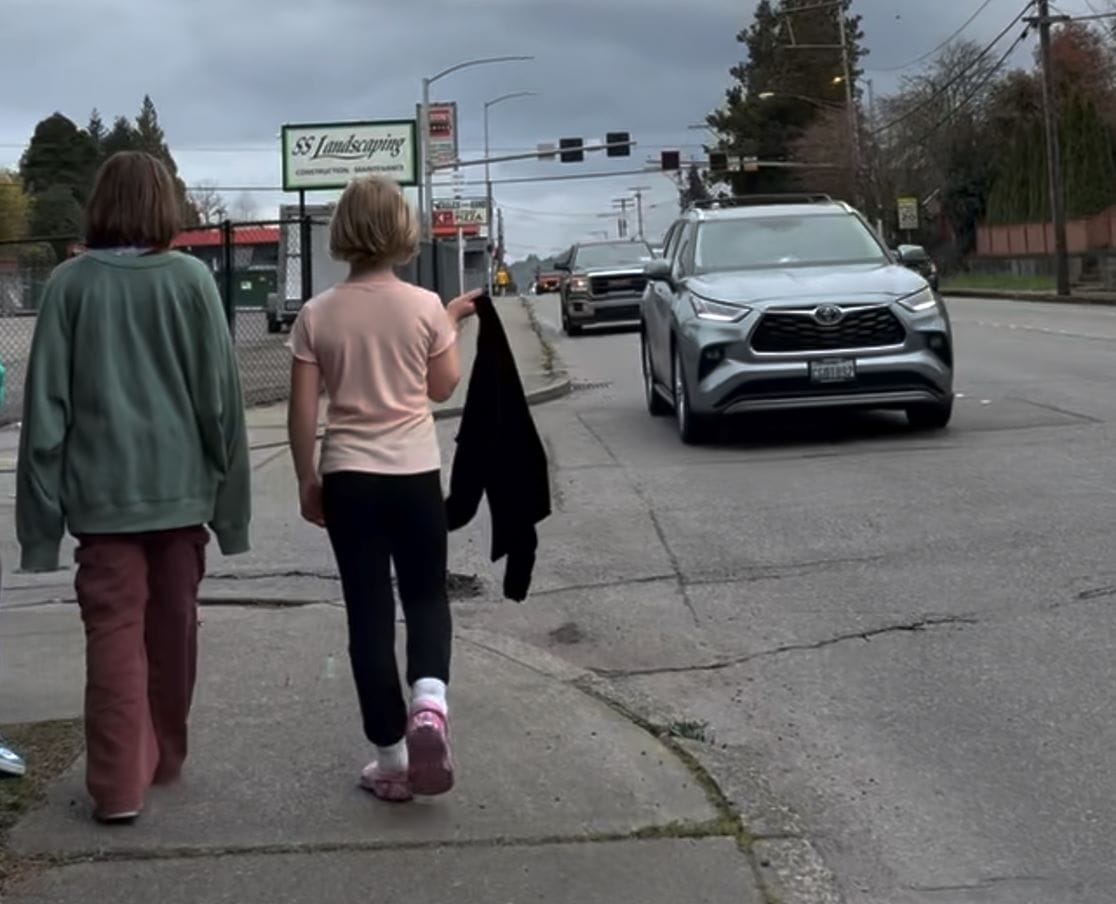
But the removal of hundreds of protective flex posts is a huge step backwards. Equally troubling is the backroom, last-minute veto by a City department.
Unless City Council overrides Mayor Wheeler, as their ‘power of the purse’ allows, Bremerton will set the precedent that any future bike lane may be downgraded, at the whim of emergency services, or the sewer department or for some other reason.
That bodes ill for Bremerton’s future bike network, which envisions bike lanes on several streets which share the same ‘Minor Arterial’ designation as 6th Street. Presumably critical streets like Lebo, Sheridan, Sylvan, Riddel, Perry and Upper Kitsap Way would be ineligible for bike protection. The City will decide after planning is complete.
Do a pilot project, Bremerton
Pilot projects are flexible tools for testing and learning what works on the street. Flex posts are very easy to remove, requiring no special equipment. Bremerton should fully protect 6th Street, then monitor closely for any problems the new infrastructure creates.
But Bremerton proposes the opposite: don’t build the protection, then may get around to it later: “Further design refinement and opportunities for additional bike lane physical separation (especially east of Warren Avenue) including use of other types of physical separation will continue to be evaluated.”
A city simply cannot learn if a design causes problems by not building it. Bremerton City Council has the authority to write an appropriation rider to the funding, to require that all planned flex posts be installed, on a pilot basis. Decisions to remove can be debated in the Public Works Committee. It would set an important precedent that – even in a Strong Mayor form of government, the elected officials closest to the people get a say in how their streets are built.
City Council debates 6th Street on February 4th, 5:30pm at Bremerton City Hall. Please encourage city council to retain all the physical protection on the new 6th Street bike lanes, by emailing city.Council@ci.bremerton.wa.us.