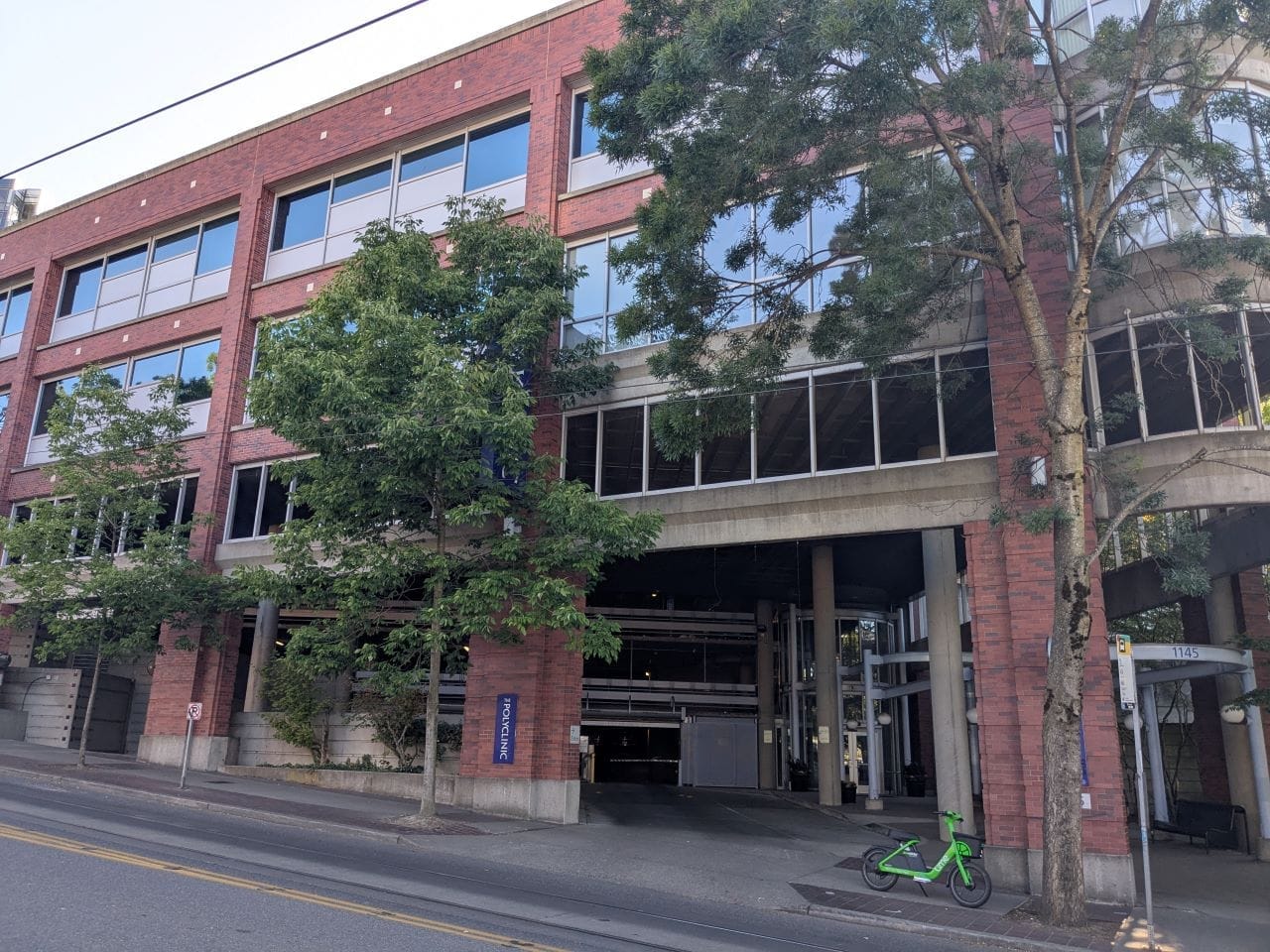
Last year, King County chose the site of Seattle’s new crisis care center, purchasing the old Polyclinic building on the corner of Broadway and E Union in Capitol Hill. Public records obtained by The Urbanist show strong resistance to the siting decision stemming from a small cadre of well-connected Capitol Hill landlords and business owners.
One group effort to resist the siting decision appeared to be led by Jill Cronauer, the Chief Operating Officer of Hunters Capital, a local real estate company, and Thomas Goldstein of Thomas Goldstein Associates, an executive search firm whose office is located in Chophouse Row in Capitol Hill. Hunters Capital operates about 300 residential units and 70 commercial properties on Capitol Hill.
Other people included in the emails between Cronauer, Goldstein, and City and County officials dated between June and August 2025 were representatives from:
- Liz Dunn from Dunn & Hobbes, which owns Chophouse Row;
- Kroger, which runs the QFC a block from the crisis center site;
- 4N Properties, which manages several properties in Capitol Hill, including one across the street from the QFC;
- Silver Cloud, a nearby hotel;
- Seattle Central College;
- Community Roots Housing; and
- Don Blakeney, the executive director of the U District Partnership.
Separately, Madrona Real Estate founder and principal Brad Augustine sent in his own strongly worded objections to the possibility of a crisis care center in Capitol Hill in May and June of 2025.
The crisis care levy, passed by King County voters in 2023 by 57%, enjoyed even stronger support in Seattle, where it garnered 73% of the vote. Voters from Capitol Hill approved the measure by an even larger 84%.
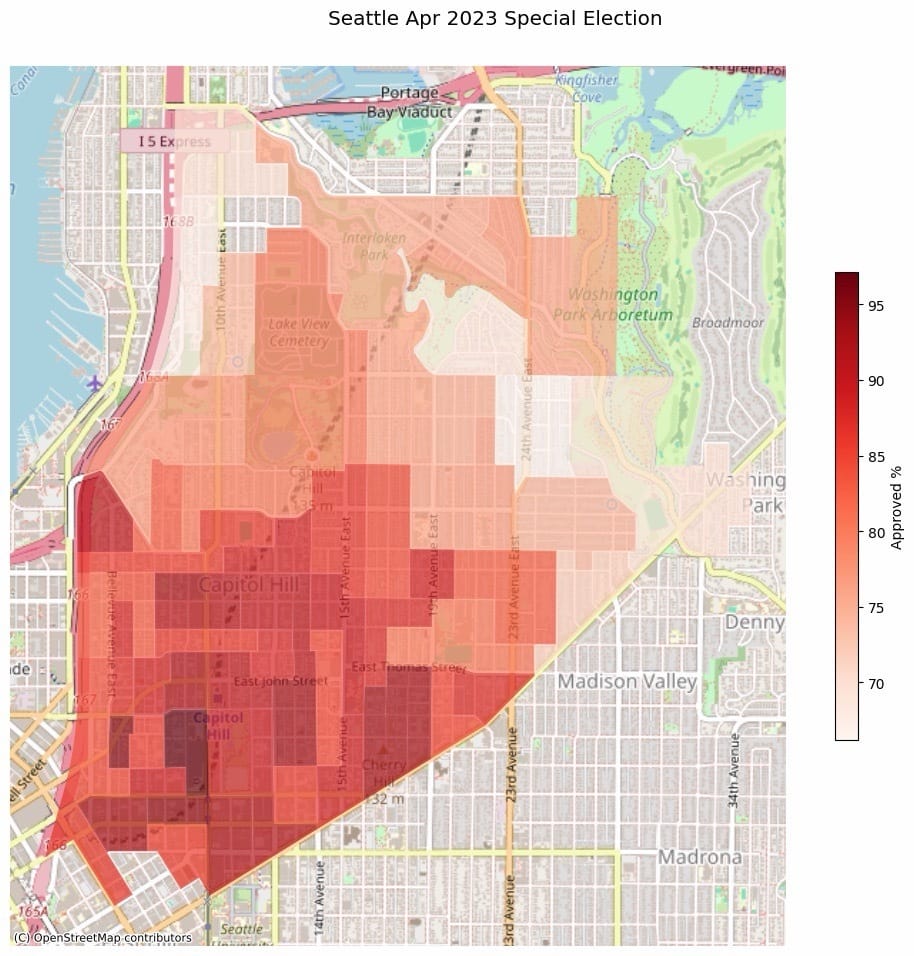
The crisis care levy was designed to fund the creation of five crisis centers for behavioral health disorders, including substance use disorder. Open 24/7, each center will have a walk-in urgent care, an observation lounge, and a short-term stabilization unit.
Connections Kirkland became the county’s first crisis care center, and the new one in Capitol Hill will likely be the second. The county is now working towards siting the final three centers, which will include one geared specifically to youth. The county is also planning to purchase the property from which Connections Kirkland operates.
The Capitol Hill building will have significant extra space beyond housing the new crisis care center.
“King County is currently exploring other potential uses for undesignated portions of the building,” said DCHS spokesperson Hannah Kurowski. “Initial considerations include leasing space and parking, but no decisions have been made. Optum continues to operate their clinic in the building.”
Property owners make voices known
The King County Department of Community and Human Services (DCHS) led many community outreach events around the siting of the Capitol Hill Crisis Center, including more than 40 presentations, 15 community conversations, and walking tours around the proposed site and at Connections Kirkland. The department also responded to survey questions and emails.
Nevertheless, local property and business owners reached out to the Mayor’s Office and Councilmember Joy Hollingsworth, whose District 3 includes Capitol Hill, complaining that outreach had been insufficient, that their questions hadn’t been answered, and that they objected to the project
Madrona Real Estate’s Brad Augustine wrote to Harrell and several members of his office to ask them to consider an alternative location for the center.
“If the King County Crisis Care Center is placed on Broadway & Union a block away from "ground zero" on the corner of Pike & Broadway where homelessness, drug usage and shootings and gunfire are a regular occurrence you will have put the final "nails in the coffin" towards reinvigorating and regrowing what was once a wonderful Urban Neighborhood,” Augustine wrote. “This action will be the end of Capitol Hill and Pike/Pine Urban Neighborhood as a desirable residential neighborhood forever.”
In an email sent a few weeks later to a DCHS employee, Augustine CC’d Harrell.
“Over my dead body will this Crisis Clinic be placed at the Polyclinic location yvithout [sic] an Environmental Impact Statement and much better community involvement and communication,” Augustine wrote. “As it stands now I expect a very big fight including a lawsuit from the neighbors and the greater Capitol Hill community.”
In June, Goldstein wrote to the City’s then-public safety director Natalie Walton-Anderson complaining about the proposed site in Capitol Hill.
“The Crisis Care Center would be the main drop-off point for law enforcement to bring individuals in mental health or substance use crises from across our City,” Goldstein wrote. “The County’s siting process has been opaque and wholly unresponsive to concerns about the Center's impact on the surrounding community. The County's so-called community engagement has consisted largely of lengthy presentations with minimal opportunity for meaningful public input.”
In early July, Cronauer wrote an email to City leaders saying she was receiving conflicting information.
“It would also be extremely helpful to establish clarity and consensus on how the crisis center is intended to operate, including the scope of services it can and cannot provide,” Cronauer wrote.
In an annotation to the above email, Ann Gorman, a senior policy advisor at the Seattle Human Services Department, questioned this assertion.
“It is puzzling to me that the scope of services is in question at this late date (walk-in clinic, observation unit for stays of up to 23 hours, crisis stabilization unit for stays of up to 14 days),” Gorman wrote. “DCHS typically includes this information in all of its presentations, though of course I have not attended the outreach events in question, and there is a lot more information available via the CCC web site.”
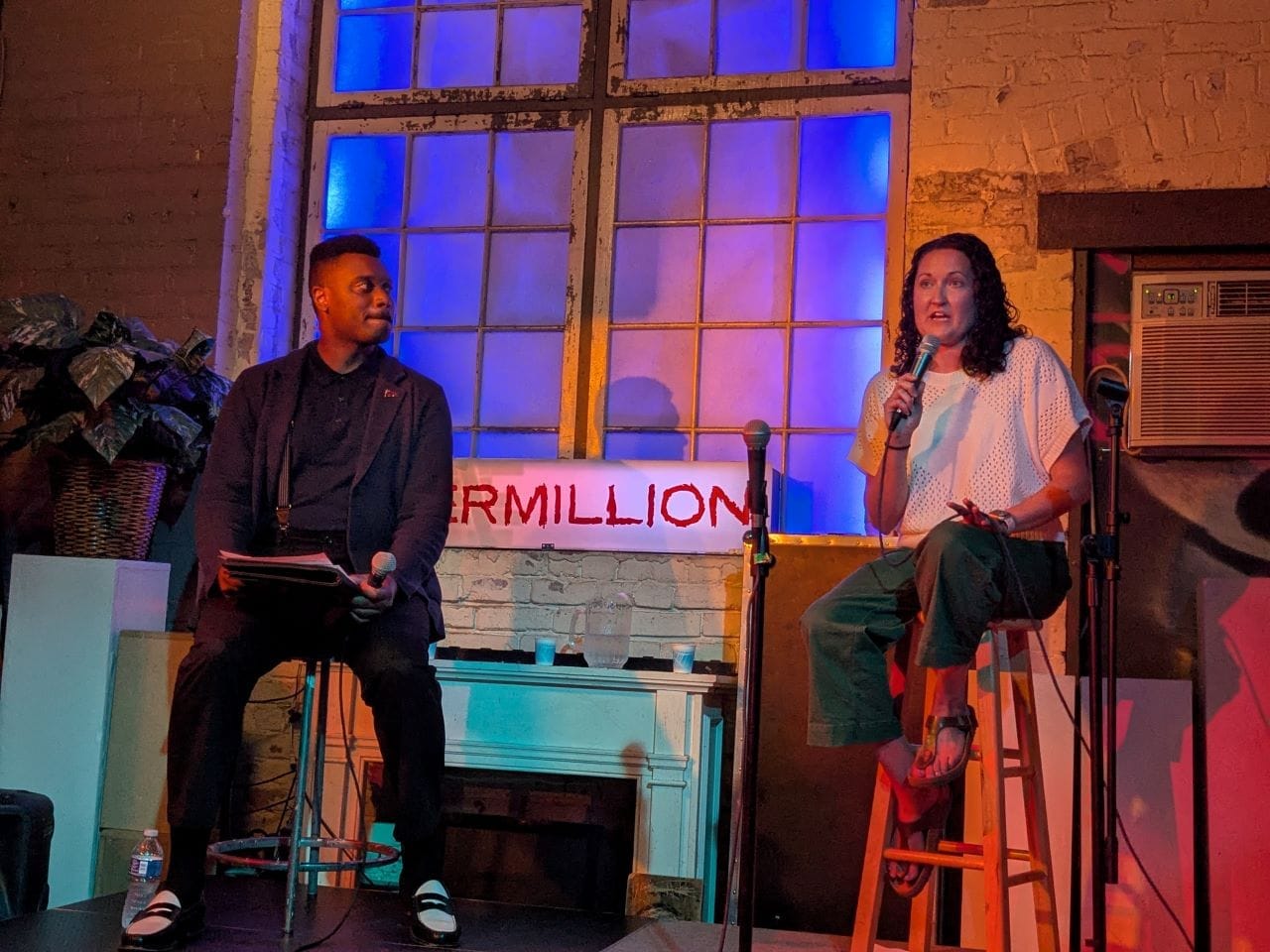
A July 31 email from Kelly Rider, who was the director of DCHS at the time, to Cronauer, Deputy Mayor Tiffany Washington, and Hollingsworth referenced a walking tour scheduled earlier in the month with Cronauer, Blakeney, and Chris Persons, then CEO of Community Roots Housing. Persons ended up canceling that tour.
“My goal throughout this process is to be transparent, accessible, and responsive to all interested community members and neighbors on Capitol Hill and First Hill. With that in mind, my team has accepted every invitation I have received to engage with community members over the past 3 months,” Rider wrote. “Through these conversations, we strive to balance the importance of listening and documenting community concerns with the opportunity to share context and provide clarification. Please know that my door is always open to all businesses and residents concerned about this site, so my department can identify the best path forward to respond to those concerns.”
In spite of DCHS’s community outreach efforts and the continued engagement of the Mayor’s Office, a group of property owners sent an email to the King County Council in early September asking them to pause the site selection process for 90 days in order for county councilmembers to have more time to conduct research into the matter. The email was signed by Goldstein and Dunn, as well as representatives from Fred Meyer/QFC, Hunters Capital, and 4N Associates.
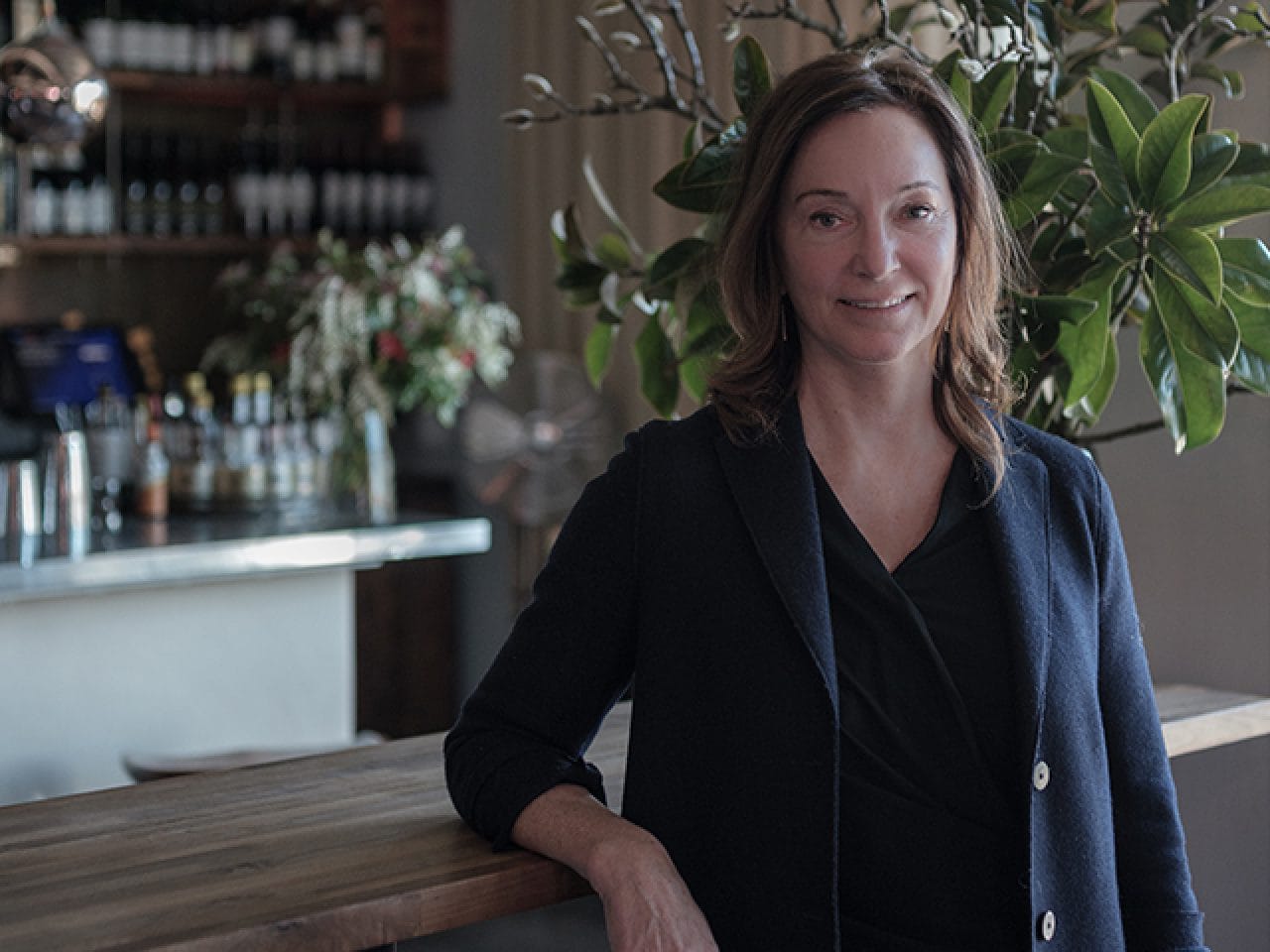
Later that fall, members of the business opposition testified in front of King County Council complaining about inadequate outreach.
“Community trust has been eroded by the lack of outreach,” Cronauer said at the council’s Budget and Fiscal Management committee meeting on September 10.
The Urbanist reached out to Cronauer but didn't receive a response by publication time.
“We haven’t done this right,” Goldstein testified at a Metropolitan King County Council meeting on October 11.
Goldstein immediately appeared to contradict himself, saying, “Chairman Zahilay, so many of your colleagues have made time for us for early morning walks, for walks up until 1am in the morning, to really look at what's happening on Capitol Hill. I encourage you to work with us to get it right.”
“My opinion, what happened is fraudulent," Augustine told The Urbanist.
Augustine objected to the decision made to exempt all crisis care centers from the State Environmental Policy Act (SEPA), which made it harder for the siting of the crisis center to be stopped. He said the King County Council didn’t have the information they needed before the vote.
Augustine was also concerned by the size of the building. Much larger than what is required for a crisis care center, he said it could allow the crisis care center to continue to grow into a bigger facility over time.
“The vast majority of what we heard aligns with voters’ support for the Crisis Care Center Initiative: People support this location and want a place to go and receive urgent behavioral health care,” DCHS wrote in their blog last fall.
Anita Peebles and Leigh Curl-Dove are pastors at Seattle First Baptist Church, which is located across Harvard Avenue from the new crisis center site. They wrote a Seattle Times op-ed in favor of the new center right before the final King County Council vote on the location in October.
“Urgent crisis care is for everyone — us, our family members, friends, colleagues, neighbors, and people we see experiencing a crisis in public,” they wrote. “By investing in places where people can go to receive care, like the Broadway Crisis Care Center, we can help them get the support they need when they need it. Having access to this kind of care will improve the well-being of our entire community.”
The power of moneyed interests
This isn’t the only time some of the same Capitol Hill property owners have tried to interfere with plans for public projects in the neighborhood.
Last fall, the Seattle Department of Transportation (SDOT) named Dunn & Hobbes, Madrona Real Estate, and Hunters Capital as being primary drivers of the decision to remove the bus lane on East Union Street west of 12th Avenue. SDOT backed away from the plan to remove the bus lane following the mobilization of transit riders determined to save it.
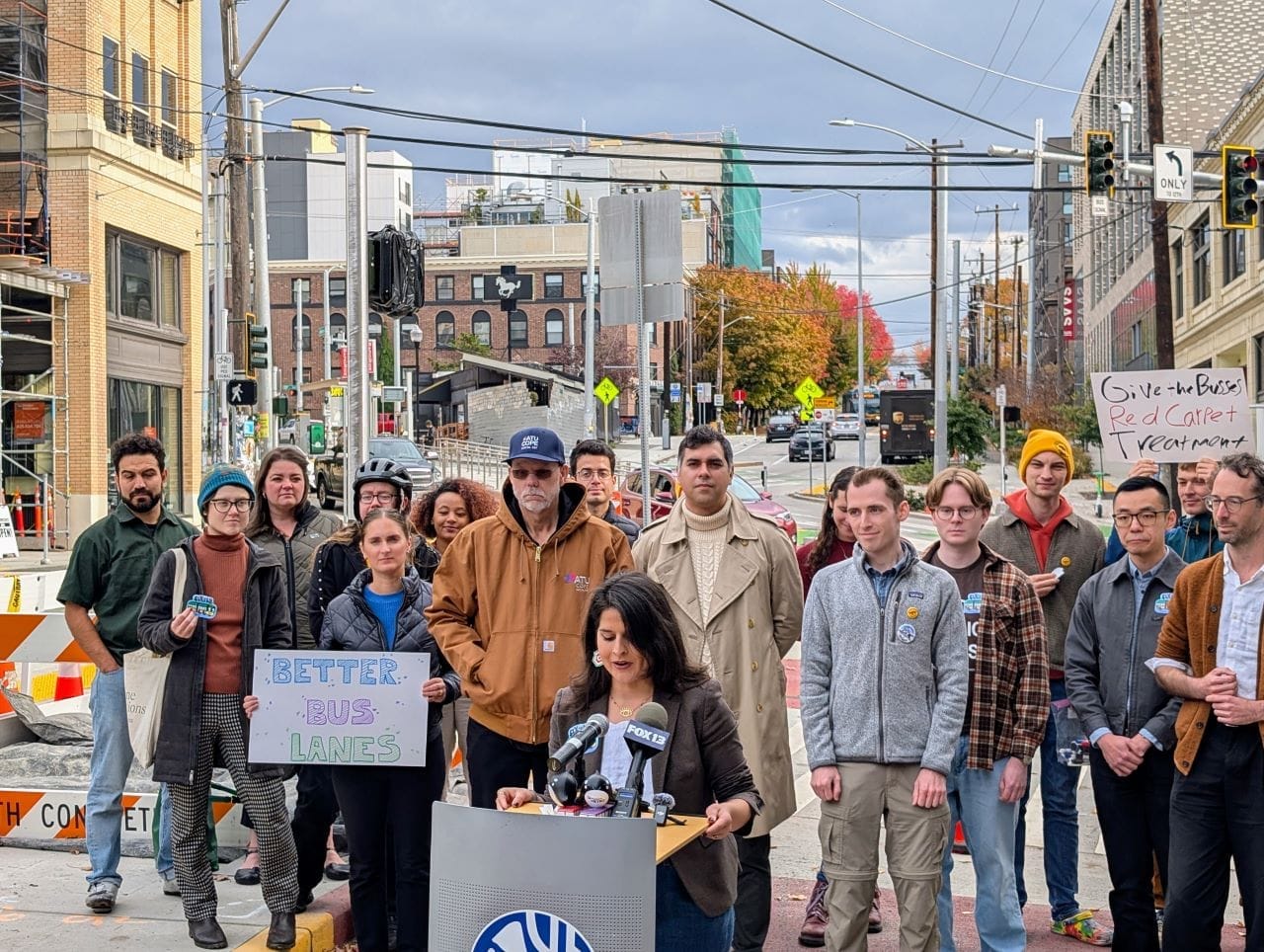
In the case of the Capitol Hill crisis care center, Hollingsworth appeared to take the concerns of property owners seriously.
In July, Hollingsworth wrote an email to many of the business interests listed above, as well as Washington and Rider, outlining the many areas “where county leadership and partnership are critical.” These included: therapeutic health services, regulation of illegal street vending, 24/7 neighborhood ambassadors for Capitol Hill and First Hill completely funded by the County, King County Sheriff patrols at Capitol Hill bus stations, and grocery store stability.
“We need an honest County commitment that the CCC will not exacerbate drug-related issues in the area,” Hollingsworth wrote.
In August, Harrell issued a letter of “conditional support” for the new crisis center location, outlining four specific requirements for the County to implement: a good neighbor agreement with the City; preparing an ongoing safe operations plan approved by the City, with opportunities for further review; completing an internal and external safety assessment with the Seattle Police Department and implementing any recommendations; and working with a six-person City-appointed community advisory group during the first year of the center’s operation.
“The advisory group will represent the interests of the surrounding community, work to alleviate safety and disorder concerns, and help the Center to achieve its mission,” Harrell wrote.
On December 18, soon before he left office, Harrell wrote an email identifying the members of the community advisory group, which he said had been chosen in partnership with Hollingsworth. These members include representatives from 4N Associates and developer Carmel Partners, as well as Scott McClellan, Vice President for University Affairs at the Seattle University, who previously served as George W. Bush’s press secretary.
Augustine wasn’t reassured by the concessions in Harrell’s letter. “I don’t believe [the neighborhood] is going to become the vision that all of us worked so hard for the last 20 years,” Augustine said.
The Capitol Hill crisis care center is not scheduled to open until the end of 2027 at the earliest, right in the middle of Mayor Katie Wilson’s term. Wilson said she supported the location of the Capitol Hill crisis center even before Harrell issued his letter of conditional support.
Correction: The scheduled opening of the Capitol Hill crisis care center was stated to be in 2029 in the original version. We regret the error.
 Doug Trumm
 Ryan Packer