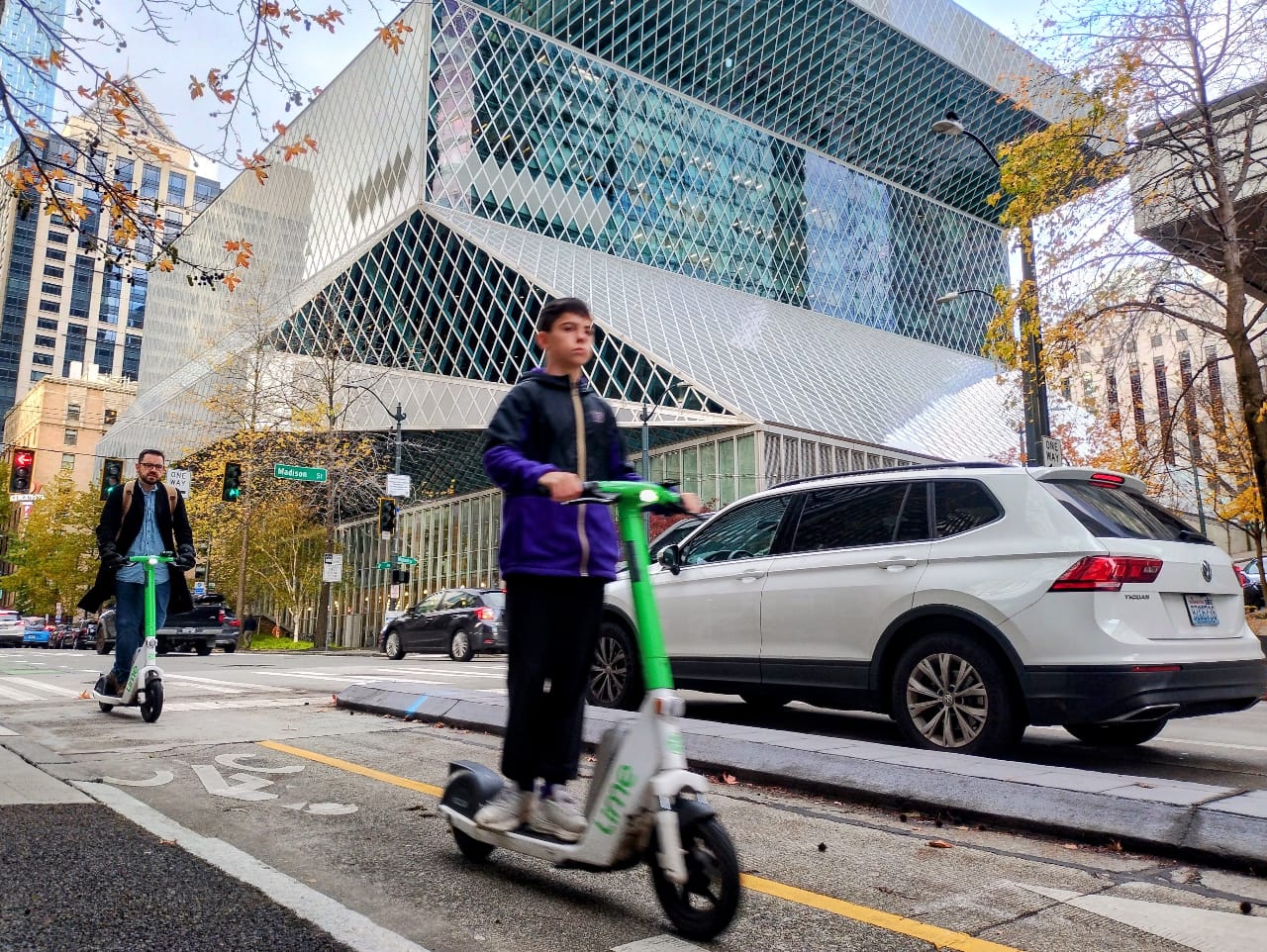
A prominent Seattle injury research center is advocating for changes to how e-scooter rentals are regulated, presenting recommendations last week that included a full nighttime curfew on the devices, along with better age verification. The recommendations come in response to increased rates of injuries from scooter users over recent years, particularly within cities where usage has spiked as Lime-operated bikes, scooters, and gliders have grown ubiquitous.
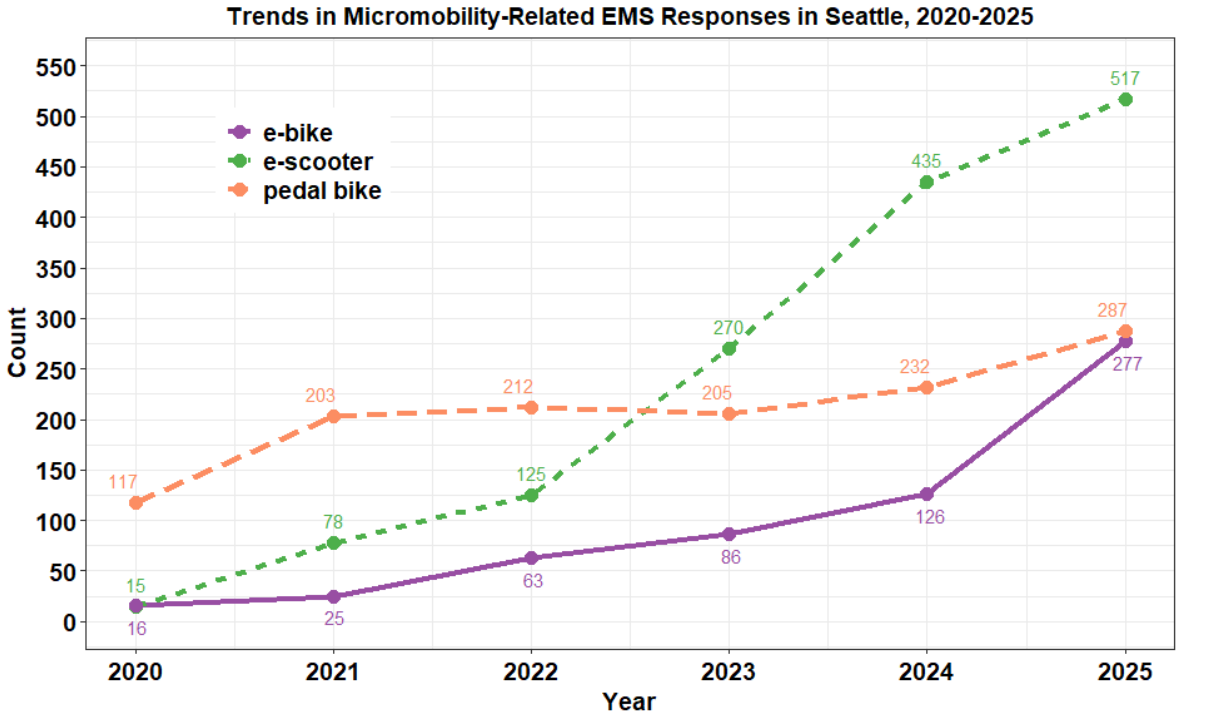
The data presented by Dr. Frederick P. Rivara of Harborview's Injury Research & Prevention Center shows a dramatic increase in e-scooter related emergency responses since the launch of Seattle's first free-floating scooter share program in 2020. In 2025, 517 emergency responses related to e-scooters were recorded citywide, the highest one-year total on file. That increase has occurred against a dramatic scale-up in overall usage, with Lime recording more than 10 million trips citywide across the same 12 months.
The King County Board of Health, which reviewed Rivara's data on November 19, has not yet acted on the recommendations, and hasn't put the issue of e-scooter safety on its future work plan.
When they do occur, e-scooter injuries can be devastating. A separate, newly-released study led by UW Medicine looking at 64 e-scooter riders treated at Harborview between 2020 and 2024 found that the median amount of lost time at work due to recovery time was two months, with 20% forced to change jobs as a result of their crash.
"This is a problem that all big cities that have these devices are really struggling with," Rivara said, citing a nearly decade-old study from Austin, Texas that found that e-scooter injury rates were roughly 175 to 200 times higher on a per-mile basis than trips in motor vehicles.
The dramatic recommendation for a 9pm to 5am curfew, made in coordination with Rivara's research partners Xinyao de Grauw and Stephen J. Mooney, comes from analysis of statewide surveillance data on bike and scooter usage. Compared to e-bike injuries, which tend to occur during commuting hours or at mid-day, e-scooter injuries are highly prevalent on weekend nights, according to the data.
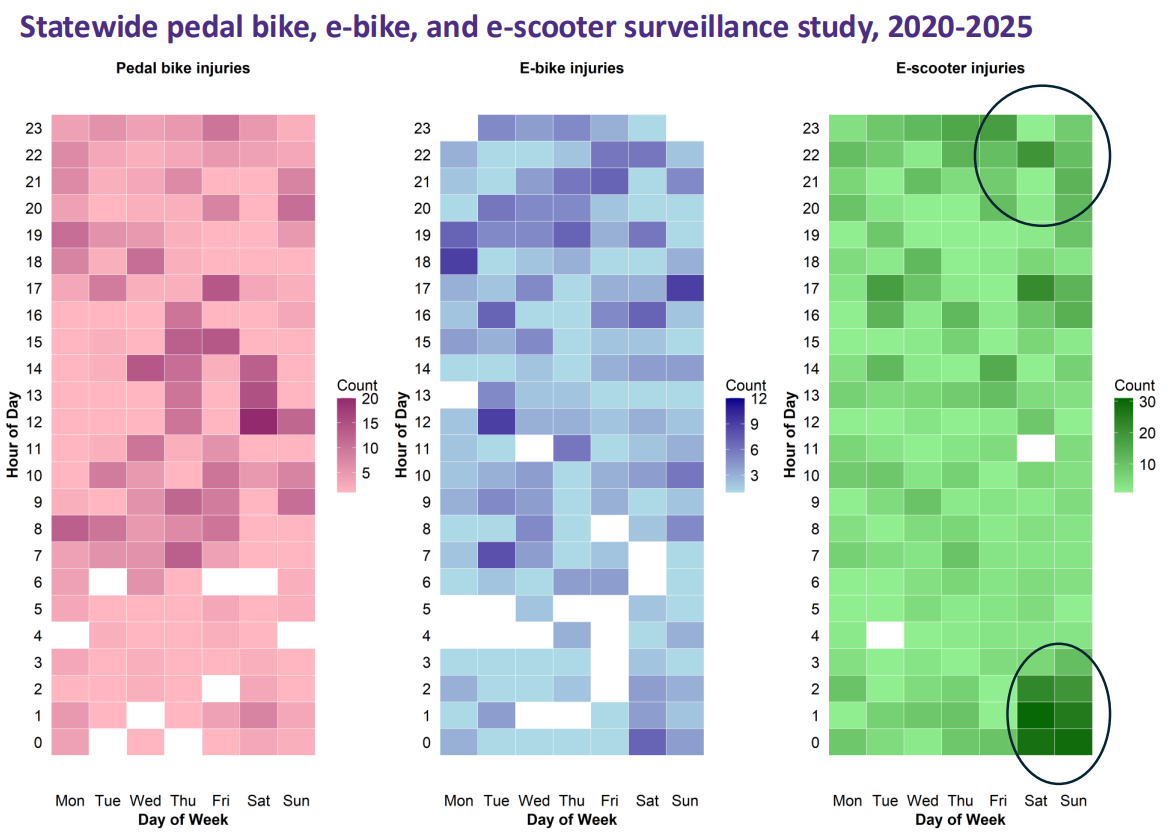
"The hours of the day are important, and that's why we are proposing a curfew at those times a day," Rivara said. "Overall, I think that 38% of the injuries from e-scooters are happening after 9 p.m."
Rivera pointed to two studies showing positive impacts from nighttime scooter curfews, one from Atlanta and one from Helsinki. In Helsinki, the curfew was only in effect on Friday and Saturday night from 12am to 5am, with significant restrictions on top speeds added during the overnight hours on other days. The result was a 39% decrease in injuries from one year to the next.
Atlanta's 9pm scooter curfew, implemented in 2019, showed much less clear results, and has been gradually scaled back to a current 2am to 4am curfew. A 2021 study on the changes did find a decrease in injuries, but its researchers labelled the decrease "not significant." What was seen in Atlanta, however, was a spike in vehicle usage, indicating that many e-scooter users had been using the devices to replace car trips. Average commute times shot up by around 10%, with travel times to stadium events such as soccer games increasing by almost 12 minutes per trip.
A discussion around trade-offs that could come with such a curfew was absent from Rivara's presentation, with potential issues around mobility impacts brushed aside as he asserted that such a curfew would have a "minimal impact on use of these devices for commuting."
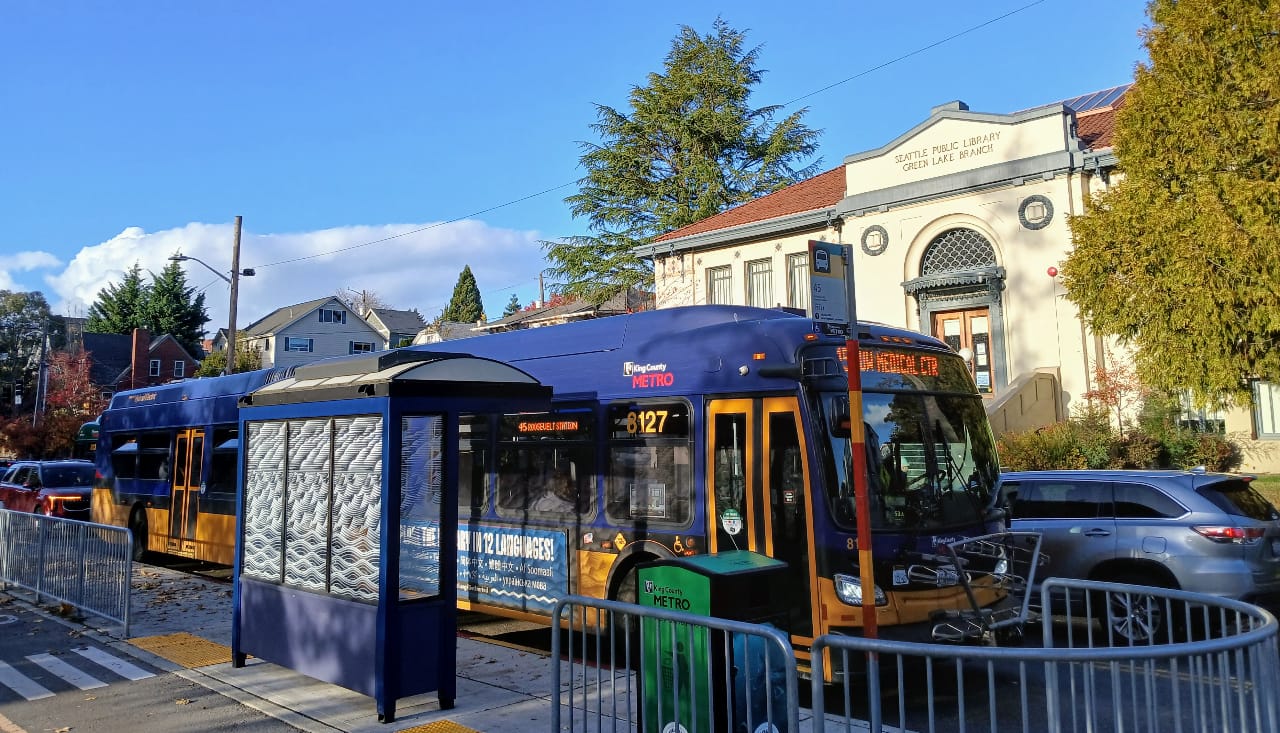
E-scooters are widely used across Seattle to bridge gaps in transit service, particularly later in the evening when such a curfew would be in effect. With only a limited number of buses running a full 24 hours and Sound Transit light rail service shutting off before 1 am, Lime often offers the easiest option for travel during those hours, including for workers in service industry jobs or with non-traditional working hours.
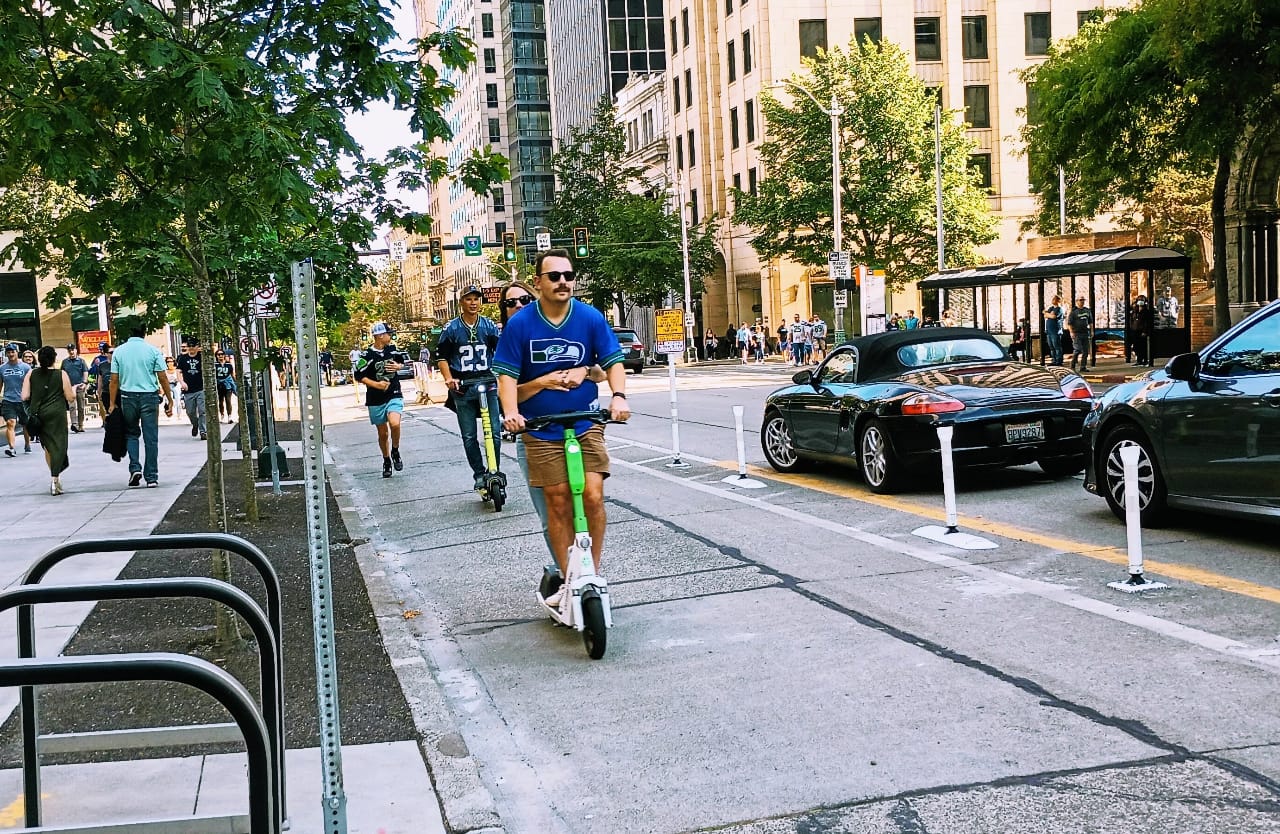
A curfew, especially one starting as early as 9pm, would be a dramatic change, and one that several members of the King County Board of Health pushed back on.
"Nine o'clock seems very early to eliminate the accessibility of these devices for people who are commuting. So I'd like your body of of experts to consider moving that curfew to a later time," said Katherine Gudgel, Director of Community Programs at HealthPoint, in comments that were echoed by Seattle Councilmember Dionne Foster.
"I think there's a lot of folks that work late that may use this, [I'm] especially thinking about folks in the hospitality industry," Burien Councilmember Hugo Garcia said.
Unsurprisingly, Lime isn't on board with the idea either.
"We don’t think a blanket 9 p.m. to 5 a.m. curfew is the right approach for Seattle. That’s an eight-hour restriction that would affect evening and early-morning commutes, including people working shifts that don’t fit a nine-to-five schedule," Parker Dawson, Lime's Senior Regional Lead of Government Relations for the Pacific Northwest, told The Urbanist. "Before taking away a transportation option for those hours, we need to understand who relies on it and what alternatives they actually have."
In a letter sent this week in response to the Board of Health presentation, Dawson noted that its incident rate per one million Lime rides in Seattle declined 26.6% between 2024 and 2025.
"We’ve heard from Seattle riders that Lime helps many of them with their commutes and everyday travel," Dawson continued. "Riders told us about getting home safely after missing the last bus and feeling safer riding home than walking alone at night. One described taking Lime home from the light rail station rather than waiting 30 minutes for a bus. Those experiences help explain how Lime complements transit: it makes the trip to or from a station easier and fills gaps when bus service is limited or has stopped for the night."
Rivara's recommendations also included more robust age-verification requirements for e-scooter rentals, given that Harborview's data shows that youth account for 15% of micromobility admissions seen at trauma centers. On that front, Lime points to age-verification requirements already in place when it comes to payment methods used on its app, which are supplemented by education campaigns. But overhauls in this area are likely to be much less controversial, with a bill introduced at the New York City Council just this month that would require more direct age verification for riders of CitiBike, the primary bikeshare provider in the Big Apple.
When it comes to an overnight curfew, however, a more convincing case may need to be made for such a significant overhaul of Seattle's existing e-scooter regulations, with Lime providing thousands of late night and early morning rides every single day. Turning that off would be much more complicated than simply hitting a switch, and likely lead to countless unintended consequences.
 Doug Trumm