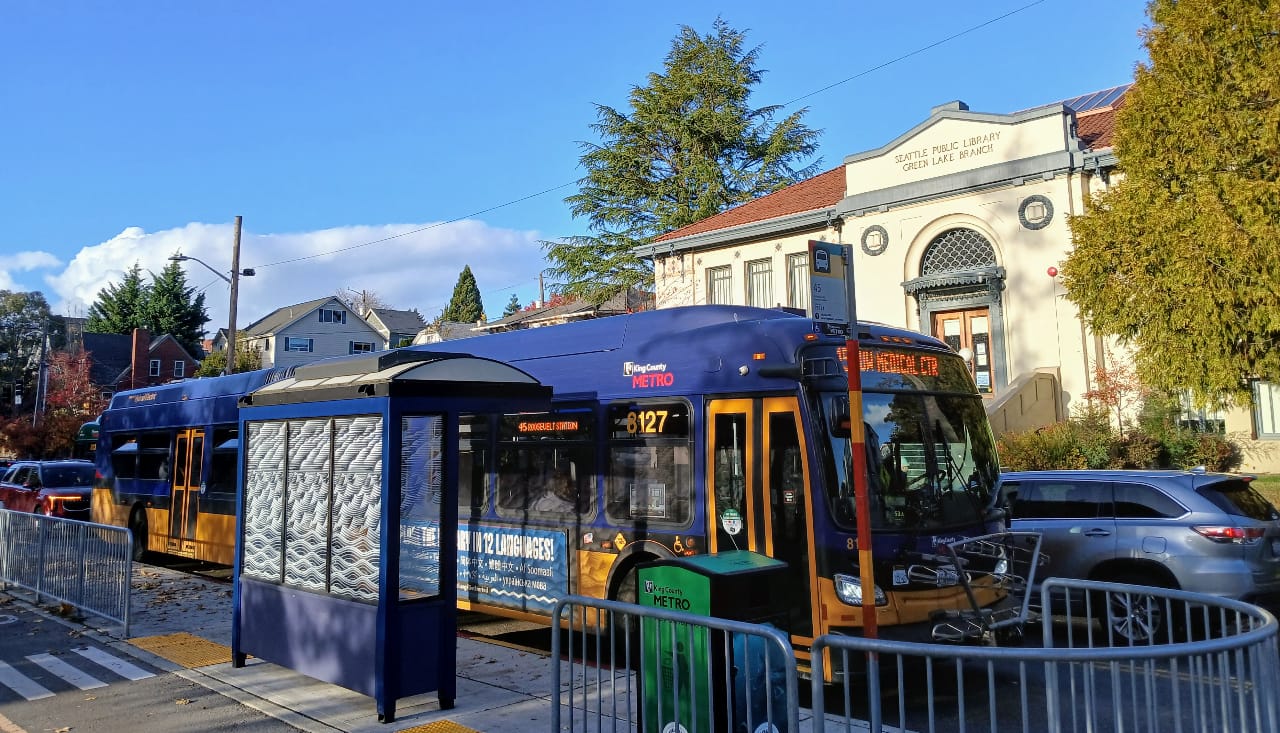
Seattle transit riders are set to wait longer for promised bus service increases, as King County Metro pushes back planned service restorations within the city that had been on deck for 2027. Over the course of the year, 114,000 hours of new bus service has been in the works for years as part of the agency's Covid-19 service recovery plan.
But now, that service won't hit the streets until 2028, King County Metro officials confirmed with The Urbanist this week.
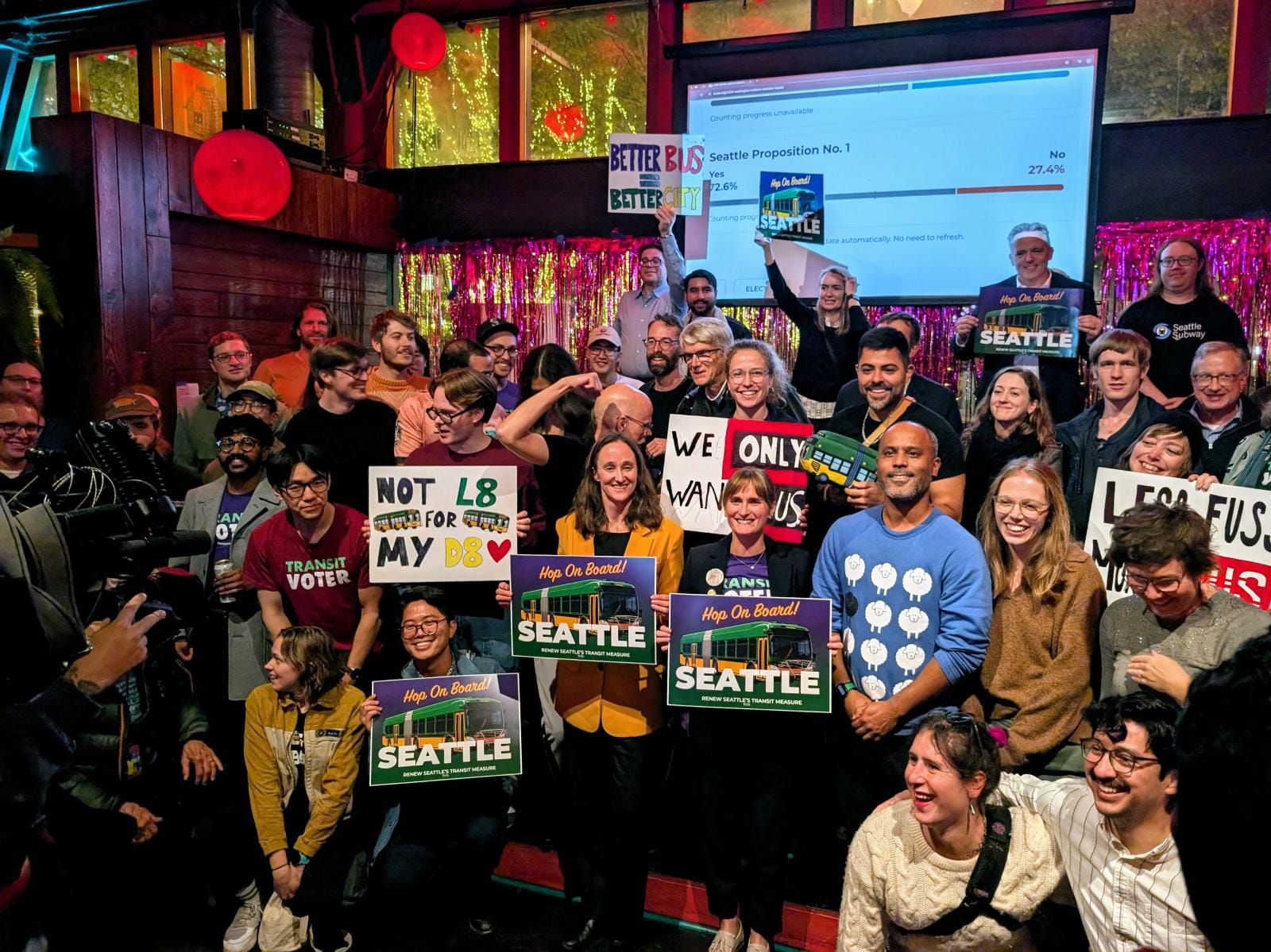
This Seattle service ramp-up is separate from increases planned thanks to the Seattle Transit Measure, which voters approved in a beefed-up form this month by a landslide 73%. Rather, the Seattle Service Recovery Project is set to look at routes that still remain suspended – mostly peak-only routes like the Route 15 to Ballard's Blue Ridge neighborhood and the Route 37 to Alki – and how to bring service back in those areas in a way that's more in alignment with the current vision for an all-day, frequent network across the city.
With service restorations already implemented in South King County, North King County, and on the Eastside, Seattle has remained on Metro's to-do list along with adjustments planned in Renton. But now the wait will be longer.
"Metro does intend to restore the full 114,000 hours of service in Seattle. However, we have had a shift in the timing of those hours," Katie Chalmers, Metro's Service Development Managing Director, told The Urbanist. "They were initially budgeted for 2027, but since the time that that budget was developed, we have shifted the project later."
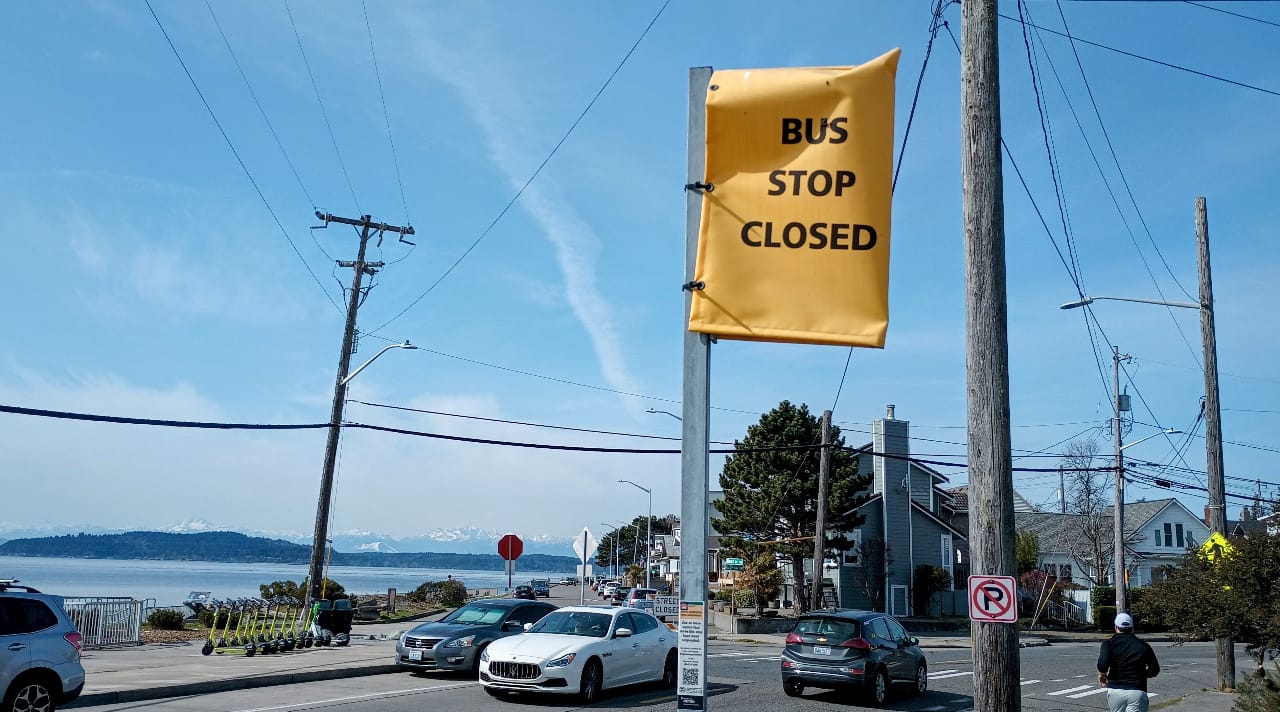
This delay will likely mean it takes longer to return to 2019-level bus service in Seattle, with Metro currently providing around 92% of the service hours that were provided seven years ago.
Chalmers said that implementing the Seattle Transit Measure – which will ramp up to an additional 95,000 service hours across the city – will be Metro's primary task in 2027, with engagement around which routes to invest in with the 114,000 hours set to kick off early next year.
"The Seattle Recovery Project would have looked really different if Prop 1 had been sized differently, or if it had not passed. So, together with the City of Seattle, we made the determination that we would shift the timeline later," Chalmers said. "We'll engage with the public and with the mobility board and others through the first half of next year, and we'll transmit an ordinance to the Council in early 2028, with most of the changes expected to happen in September 2028."
The delay to broader service restoration could lessen the sense of victory for transit advocates who fought for more funding, and didn't necessarily expect it to come at the expense of other planned service increases. Riders may prefer faster service restoration rather than two years of engagement and outreach process to dissect the particulars of the decision.
The Seattle Transit Measure hours set to roll out next year are likely to be on existing routes, beefing up all-day frequency in service of filling gaps particularly on nights and weekends.
In 2022, the Seattle Department of Transportation (SDOT) established an equity-centered "Investment Prioritization Methodology" in coordination with the City's Transit Advisory Board, a framework that is much more likely to prioritize areas in South Seattle and the Duwamish Valley.
A map shown to councilmembers this summer highlighted likely contenders for investments given the STM's passage, and no peak-only or suspended routes were shown.
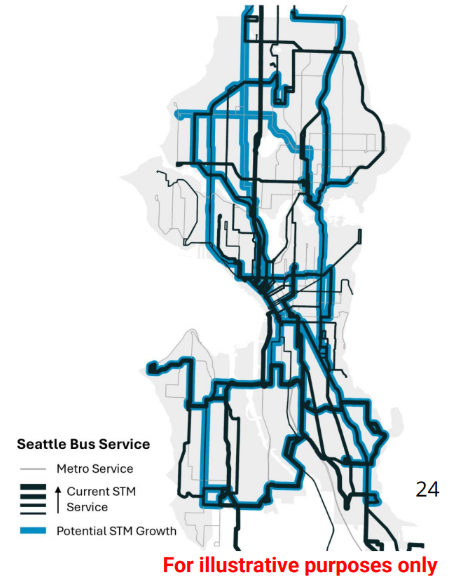
But some City leaders have been pushing for Metro to move more quickly to restore suspended service in underserved areas. A budget amendment put forward this month by Councilmember Dan Strauss (whose District 6 includes Ballard and Magnolia) would have squirreled away $2.5 million for the Route 15, along with the Route 17, which currently only runs four roundtrips every weekday up 32nd Avenue NW. Strauss referenced the above map in making comments in support of the amendment, which would mean that SDOT couldn't be able to tab the funding for any other corridors.
"SDOT slides themselves demonstrated that Ballard does not benefit from the same frequency that other parts of the city do, and what they didn't show was the travel times, which are comparable to traveling from downtown Seattle to Tacoma," Strauss said.
Strauss's statement isn't exactly true: Sound Transit's 594 bus takes around an hour to get from the start of its route in Downtown Seattle to Tacoma Dome during peak hours, while the D Line only takes around 35 minutes to reach 15th Avenue NW and NW Market Street.
"I wouldn't bring this amendment if it wasn't a regional growth center. If it wasn't a place where the city has chosen to put density but has chosen not to put the transit service that is comparable to other parts of our city," Strauss added.
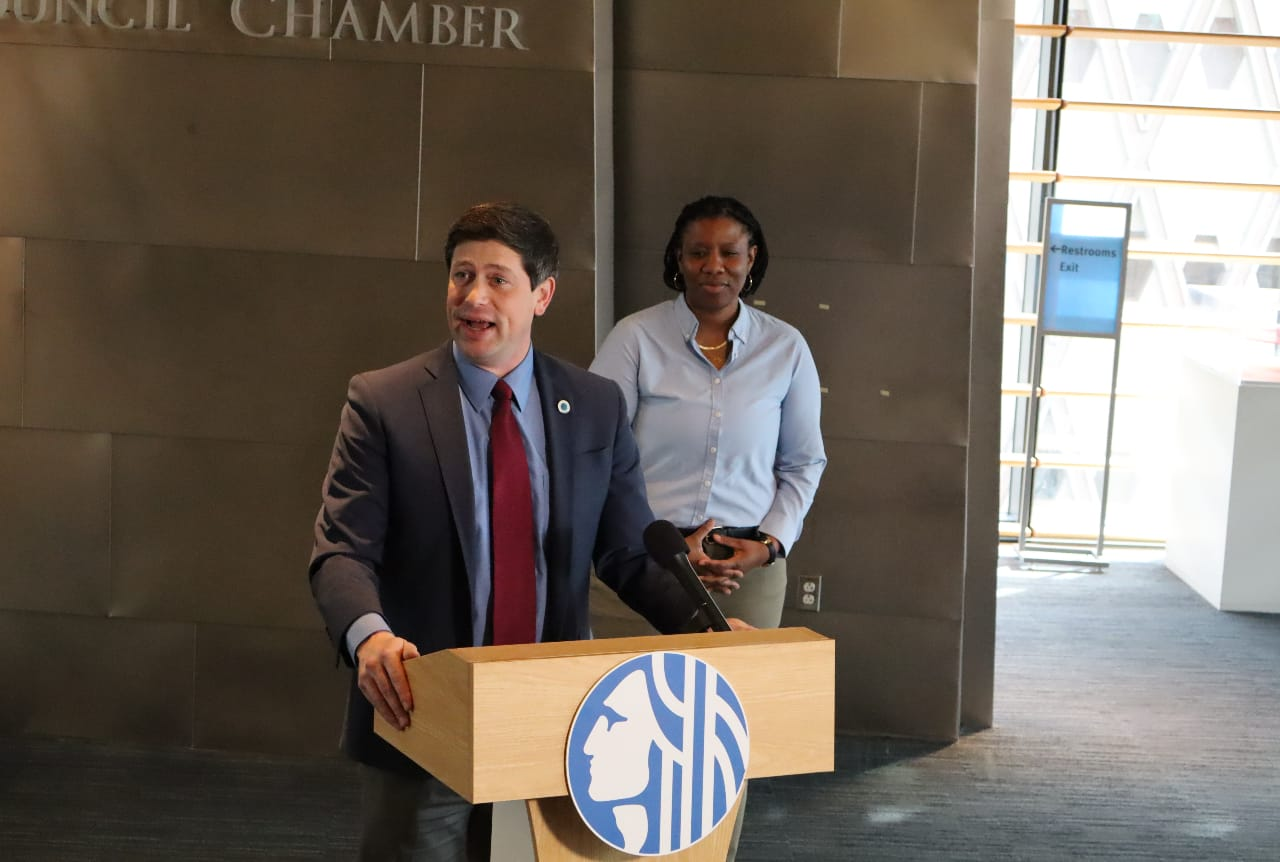
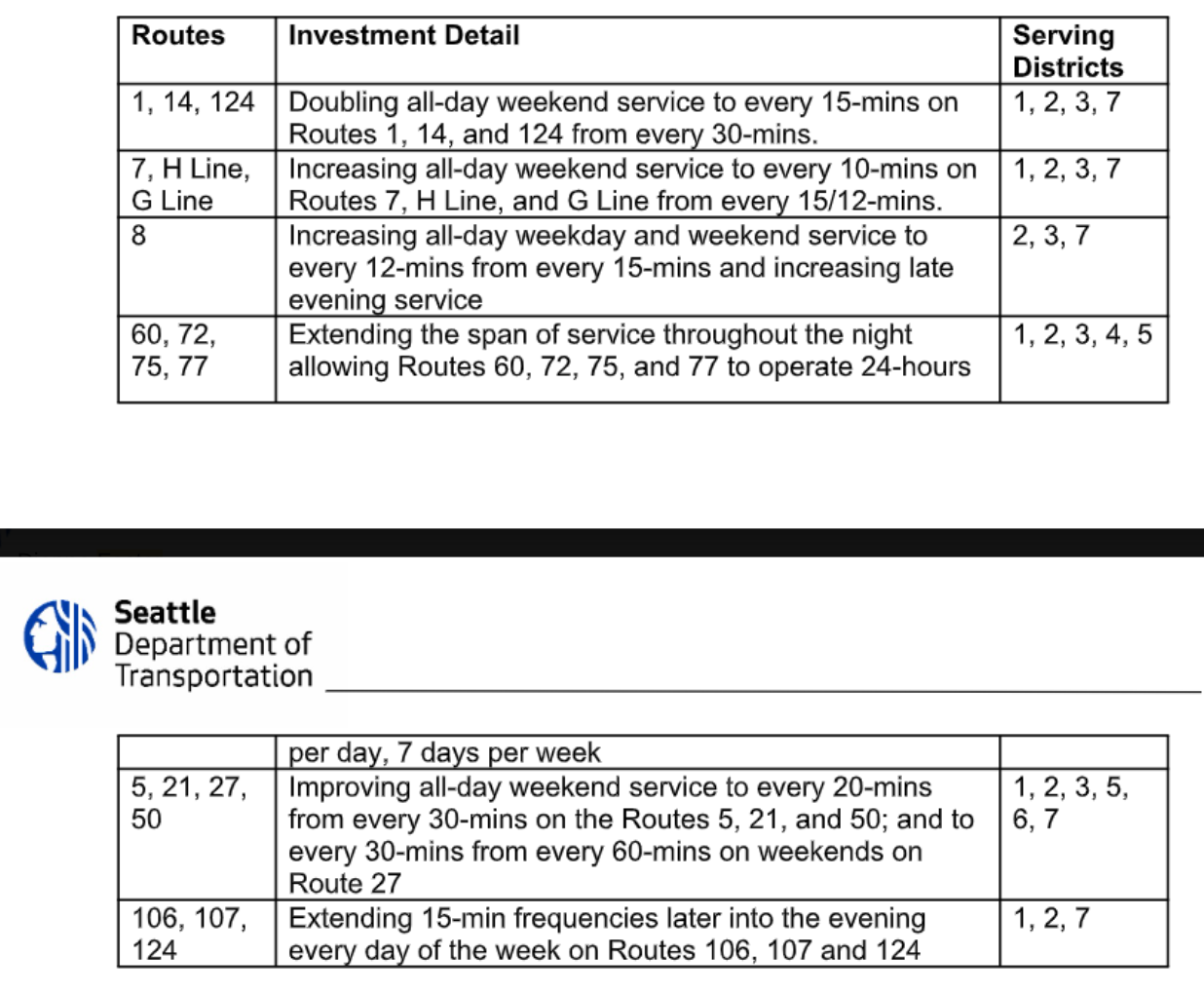
The amendment was defeated on a 3-6 vote, with Councilmembers Hollingworth and Kettle voting in favor. In speaking against, Councilmember Dionne Foster cited a memo produced by SDOT that outlined potential transit service investments that are likely to get STM funding, and which would otherwise be put on the back burner if Strauss's amendment passed. Notably, the list did not include any Ballard routes.
"Seeing routes in districts 1, 2, 3, 7, 4, 5 and 6, it feels to me like we are sort of putting that ahead of the work that the department needs to do," Foster said. "I think it's important that we have the [regional] transit centers as part of the prioritization criteria, but I don't believe that we should be provisoing this resource ahead of the county taking on their service realignment work."
Strauss's push isn't likely to go away, especially as he heads into reelection in 2027. But County Councilmembers are likely going to have opinions of their own on how transit investments should be made in their district. On Tuesday, the County Council approved an amendment from Councilmember Jorge Barón to its own budget that puts a hold on $4.16 million in funding to implement service changes next fall. That dollar amount is associated with 50,000 annual service hours.
Barón and Strauss's districts heavily overlap, with Barón also representing Queen Anne, South Lake Union, and Belltown – but their priorities may not.
"We've been patiently waiting since the pandemic and the restoration [of] service because our region has been the last one to get the restructure," Barón said earlier this month in committee. "Because our district has been, my district in particular, has been patiently waiting for years for this, and especially because of the Sound Transit decision earlier this year not to fund full construction to Ballard, there is an added level of interest and urgency in District 4 to make sure that that happens on the timeline that had been proposed before."
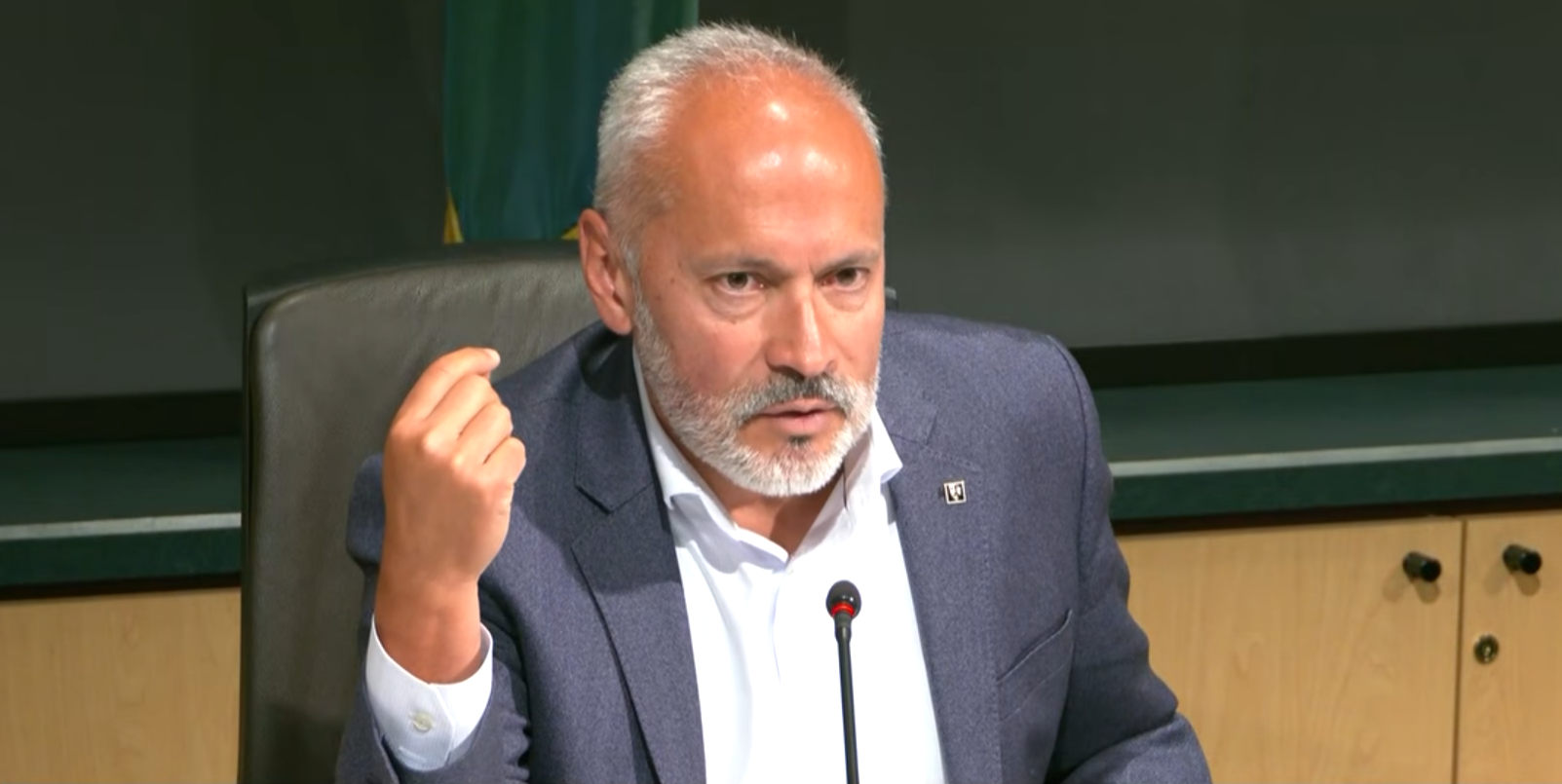
But Chalmers shied away from saying that Metro would be ready to put additional buses on the road by that timeline as part of the Seattle Service Recovery Plan.
"If by the point that we're making decisions for the fall, we are ready to add more service administratively, Metro can use those funds that are encumbered by the legislation. So, we do feel like we that, while we can't commit to that right at this moment, we feel like we are comfortable with that restriction. And we hear the strong interest in delivering as much service as possible quickly," Chalmers said. "We are just going to have to work through our engagement and figure out whether we want to go ahead and try and put some hours in in the fall, or we would hold the balance."
And then there's the issue of Metro's looming fiscal cliff, set to become evident in the early 2030s as the agency continues to draw down its financial reserves. Chalmers said that's not yet a part of the conversation around service restoration, which raises the question of being able to expand service without a clear long-term picture of how to maintain it.
"Right now, Metro's financial problem is several years out in terms of when we would be looking at planning to respond. There's a lot of different elements that could change the trajectory of Metro's finances," Chalmers said. "We have not begun any sort of specific service planning related to reducing the system, but it's definitely in our view as something we've got to be ready for. Right now, our commitment really is to see the service recovery through in Seattle and in Renton. These are commitments that we've made to our communities and to riders. So that is our immediate focus."
 Ryan Packer
 Doug Trumm