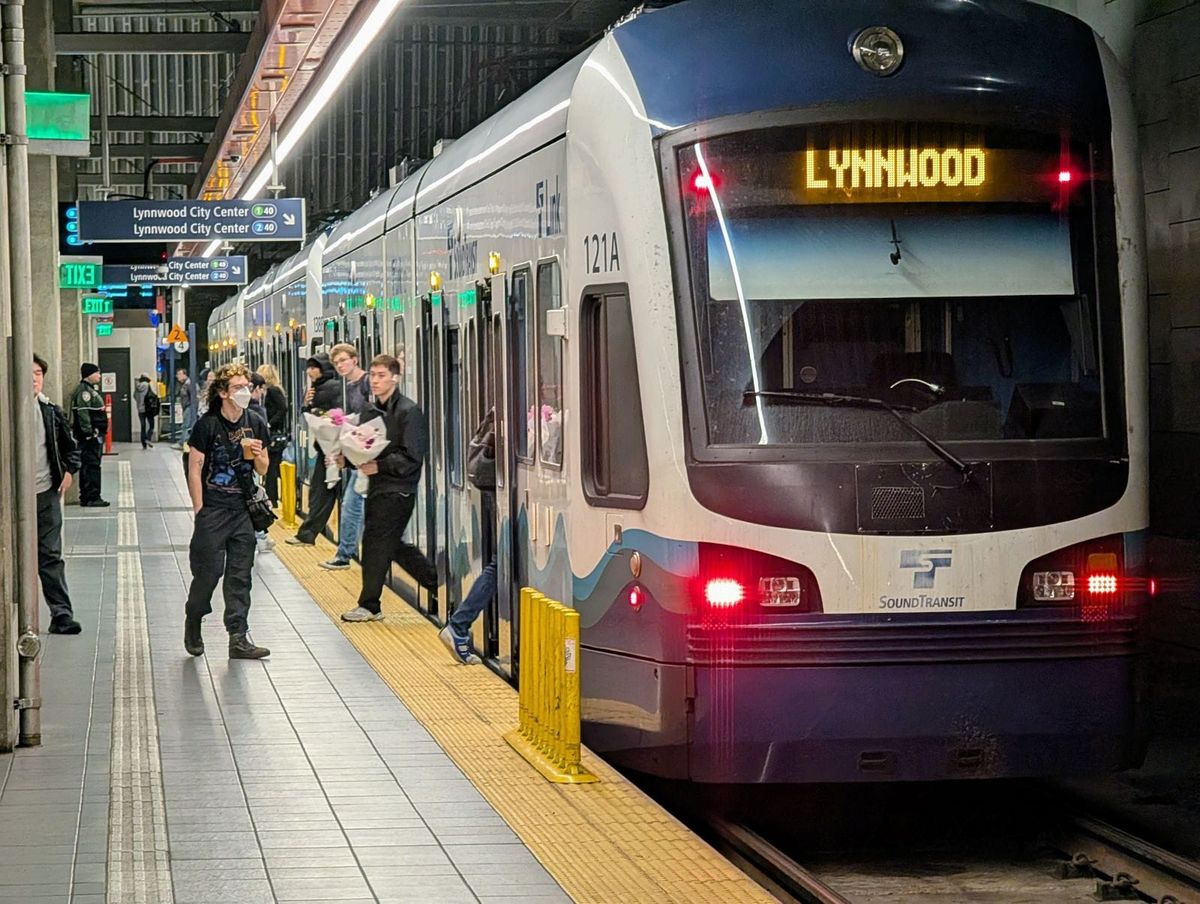
In leading transit systems around the world, shops and cafes are often integrated into the fabric of stations, with busier hubs even melding into full-scale shopping malls. That's decidedly not the case for the retail-scarce Sound Transit network or for most other agencies across the Seattle metropolitan area.
However, as Sound Transit has grown into the busiest light rail system in the United States, boasting more than 160,000 daily riders, policymakers are beginning to ask if it's time to change that. Sound Transit has implemented a few pilot programs, but a broader activation strategy could be on the horizon, potentially building out retail and community programming on a larger scale.
"Much of the work is still in early testing and pilot stages, but we are refining proof of concepts, and we do have an eye for wider expansions," Marie Olson, Sound Transit's executive director of rider experience and operations, told agency board members during a November 5 meeting.
Most of Sound Transit's early efforts at retail installations are located outside of Seattle, although Seattle (which is home to a majority of the region's light rail ridership) has seen a few temporary markets and festivals near its stations, as have some suburban stations.
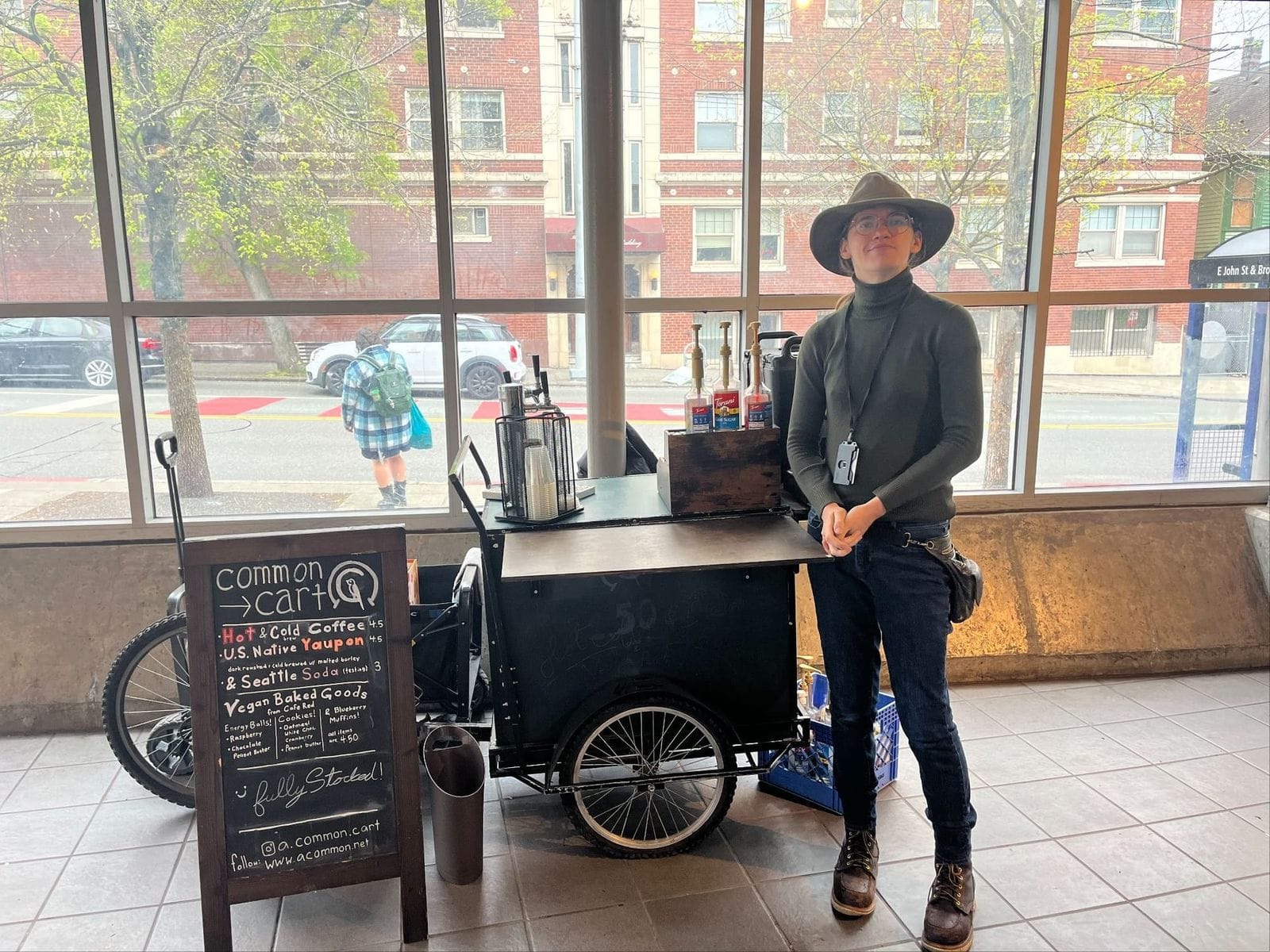
Early efforts at creating permanent retail at Seattle stations have failed to take root. One enterprising vendor pushed to open up a coffee cart at Capitol Hill Station, but ran into health code hurdles and general bureaucratic morass that forced them to close up shop, as The Urbanist reported in June. Capitol Hill remains one of Sound Transit busiest stations, so the opportunity remains once startup hurdles are cleared.
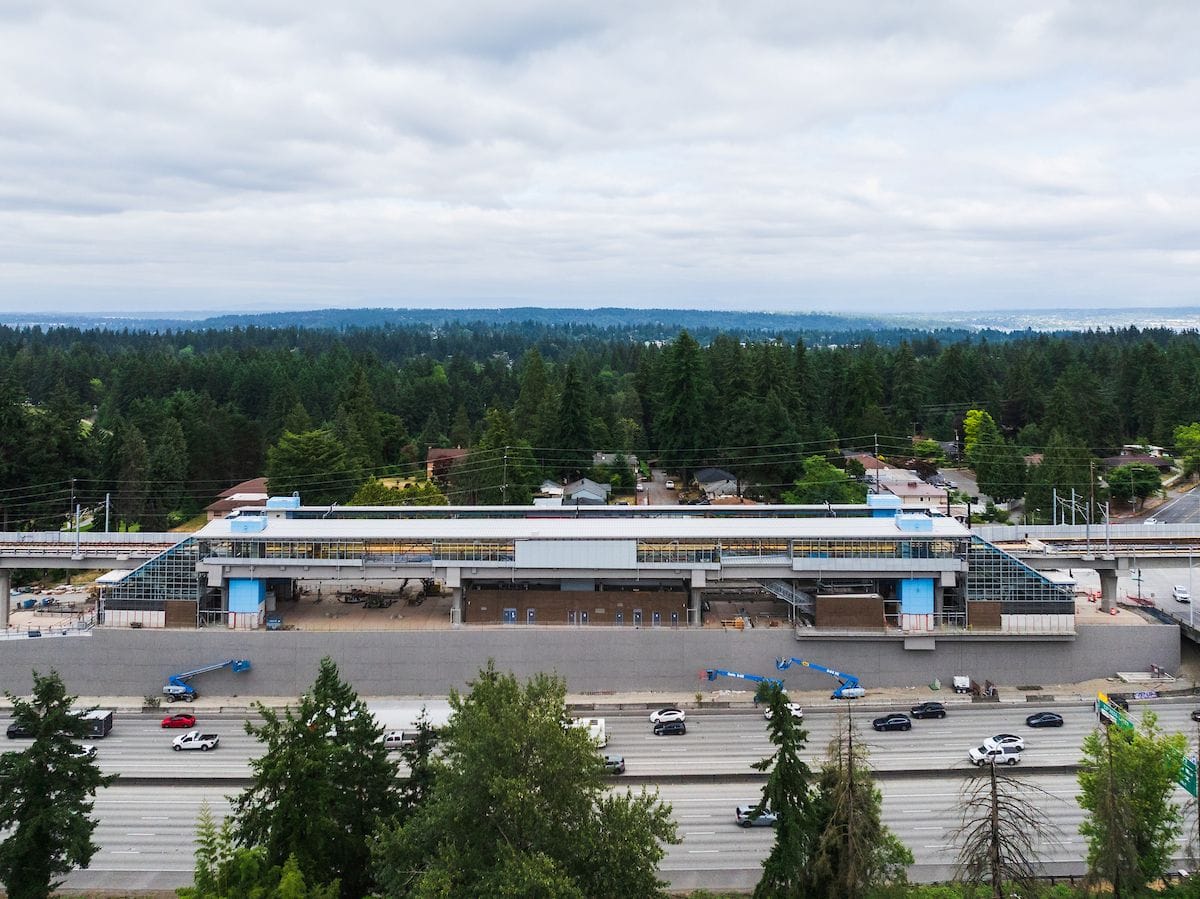
In 2022, Sound Transit welcomed a coffee shop before the neighboring Redmond Technology Station had even opened to light rail riders. At a presentation to the Rider Experience and Operations (REO) Committee on November 5, Marshall Foster, chief planning and development officer for Sound Transit, christened the project a success, pointing out that the Microsoft campus provides a built-in audience for the Dote coffee bar.
"Another interesting example is the Redmond Technology Station, where we have the Microsoft Coffee Bar," Foster said. "That's your more traditional, built-out brick-and-mortar retail space. I think we learned there that the power of having a built-in daily audience and market for retail is critical."
While Microsoft's Redmond HQ campus touts a headcount above 50,000, the light rail station next door is posting more modest figures, with just over 1,000 daily boardings. That's about a quarter of the boardings typically seen at a median 1 Line station, suggesting ample retail opportunities across the system. The modest ridership so far also hints that a good chunk of customers are visiting the coffee bar without riding light rail before or after.
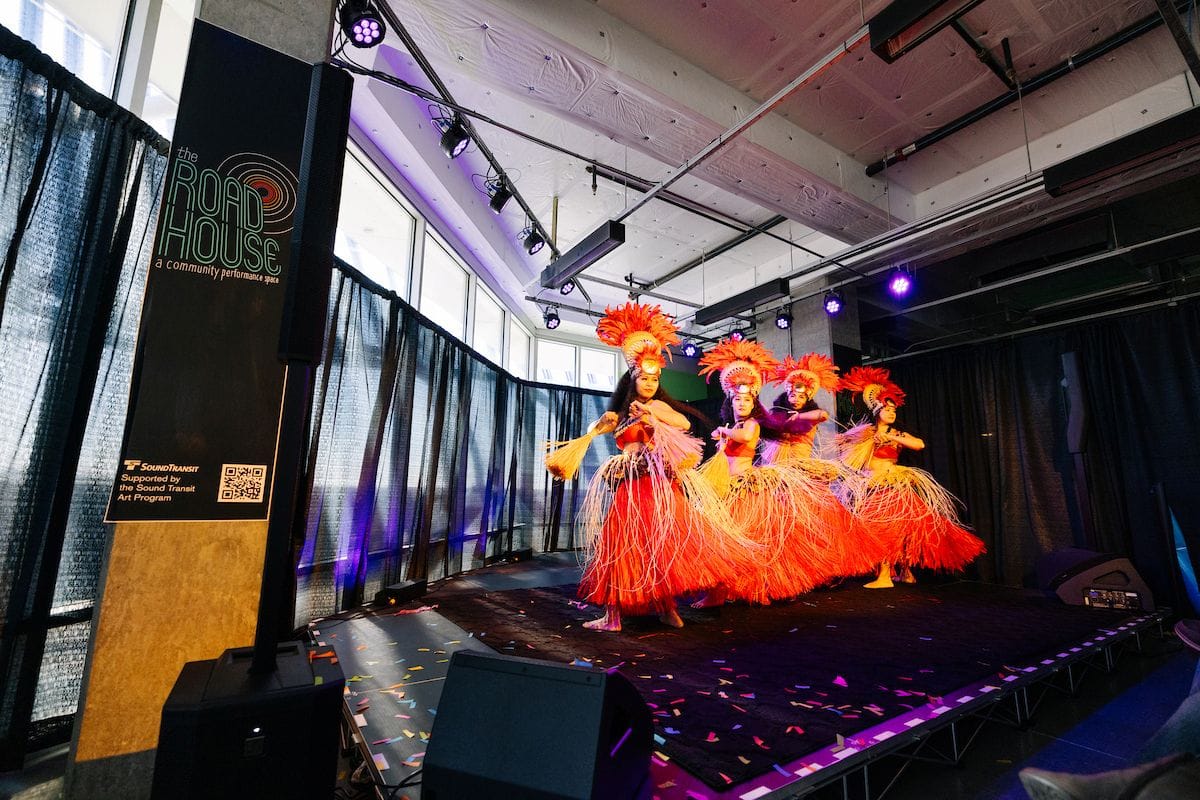
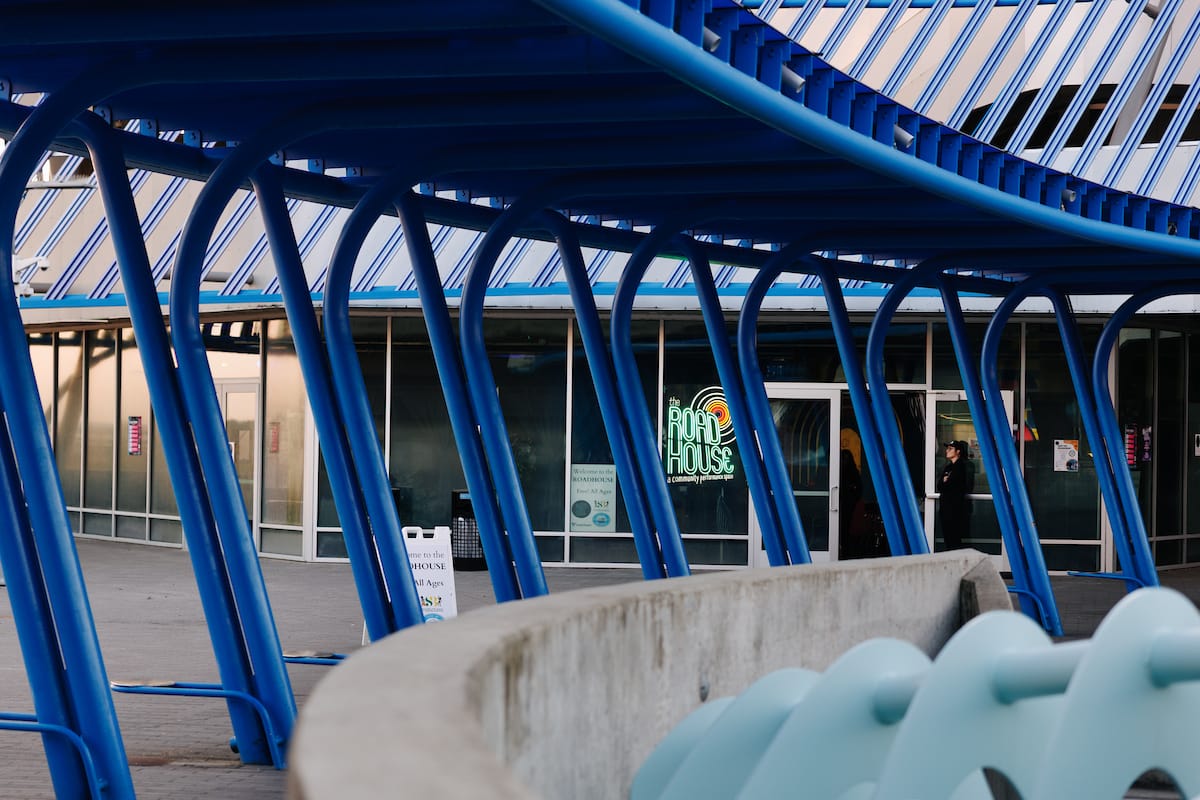
In 2023, the agency opened The Roadhouse in Angle Lake, serving as a community performance space. That endeavor followed a failed attempt at retail at the site, illustrating that issues with creating nearby storefronts aren't always on Sound Transit's end.
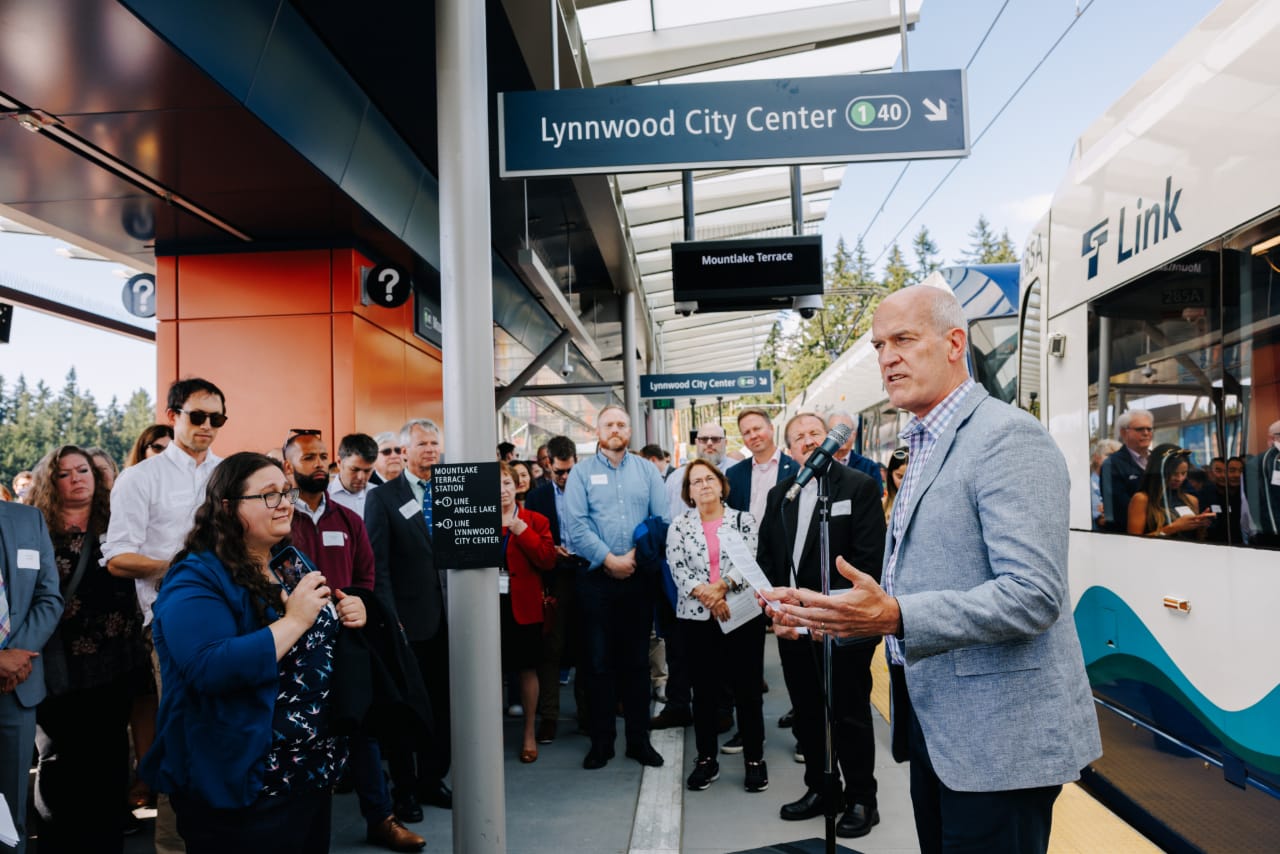
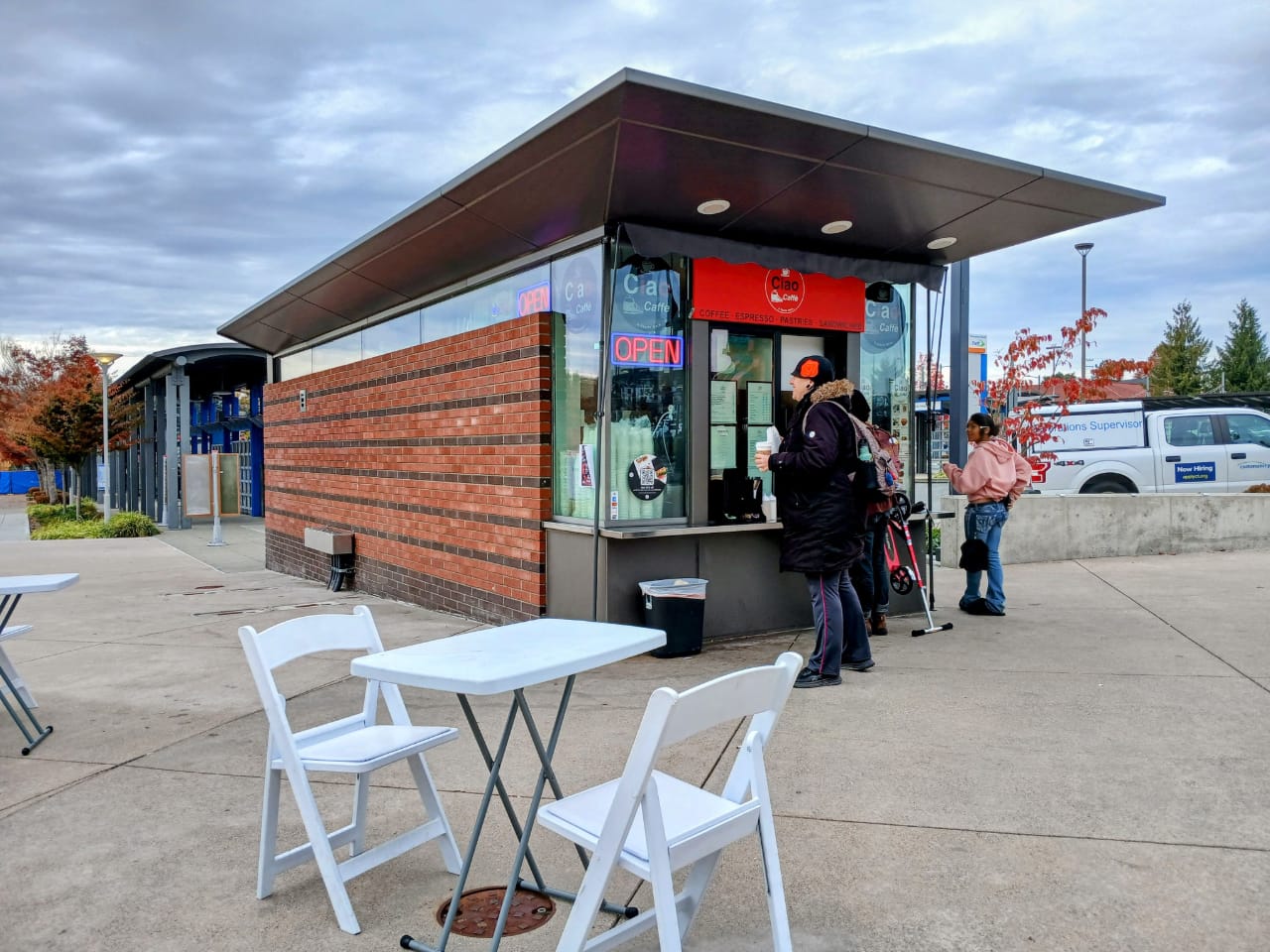
In 2025, a coffee shop opened at Lynnwood Station, and a hotdog stand recently set up shop at Federal Way.
"At Lynnwood City Center Station, we had a vacant space, which was purpose-built for a cafe-style vending, and we worked closely with Lynnwood and Snohomish Chambers [of Commerce]," Olson said. "We spread the word out to get solicitations. We also worked with the city of Lynnwood to get that word out. Caffe Ciao is in there now. They opened in the summer of 2025. Today they operate seven days a week, Monday through Friday, 5 am to 5 pm and Saturday and Sunday, 8 am to 3 pm. And they just renewed their lease for another two years."
Olson noted that Federal Way's hot dog stand is on a seven-month trial run.
"Our newest vendor [...] is Whatzz Up Dogg," Olson said. "[It] just opened this summer at Federal Way Downtown Station Plaza, and it's got a seven-month trial. It's a great spot, and it really brings that station to life if you've been out there."
Tacoma Councilmember Kristina Walker, who chairs the REO committee, agreed, saying the hot dog vendor "is the nicest, friendliest, most welcoming person ever, and he really has changed the energy at that station, I love it. So more of that. He's doing a great job."
Systemwide, riders have expressed strong interest in station retail, according to agency surveys.
"We did some survey work of our riders," Foster said. "We found that a little over 60% strongly wanted to see us bring more retail experiences into the station environment as part of their commute."
Sound Transit is looking at meeting that demand, where possible.
The next round of vending rollouts aim to put Seattle on the map, targeting the busiest station in the light rail system – Westlake – and the highest performing Eastside station, Bellevue Downtown. Westlake averages about 17,000 daily boardings, while Bellevue Downtown attracts around 2,500.
"Other pilots in the works include mobile coffee carts at Westlake mezzanine," Olson said. "We're also in the final stages of permitting a few beverage carts in the Bellevue Downtown Station. We're also scoping potential locations for vending machines at some stations. Initially, the three Federal Way Extension stations have good potential."
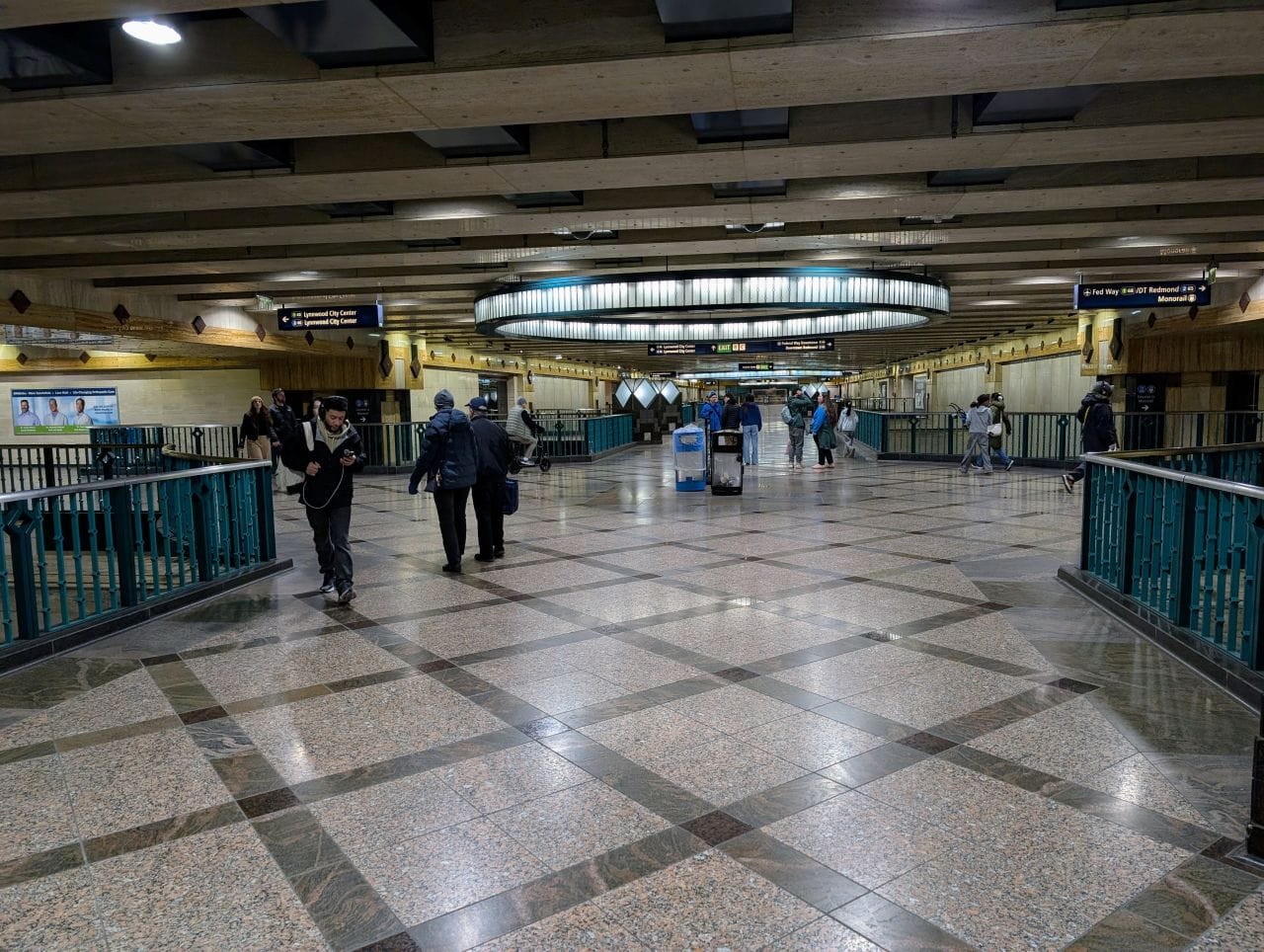
Westlake used to feature direct access to Nordstrom's department store from the mezzanine level, but that door has since been closed, with security cited as the reason. There is still a connection to Westlake Mall.
While the agency has been gradually rolling out pilot projects, staff has also been refining its broader vision for station activation. Foster pointed to hosting the FIFA World Cup and expanding the 2 Line across Lake Washington as watershed moments that pushed the agency to zoom out and look bigger picture about its longer term goals around retail and activation.
Earlier this year, as part of World Cup operations, Sound Transit set up an information booth in the former bus pass kiosk at Westlake, which had been turned into a security booth. Since then, the agency has kept the kiosk open.
"So, this is our strategic vision for station activation: We're striving to make each station reflective of the community in which it sits," Olson said. "Station activation will transform waiting and transitional spaces into engaging, welcoming, and community-centered environments that improve passenger experience."
The visioning work identified four pillars to station activation.
"Sound Transit is organizing station activations within four pillars that activate, engage, partner, and manage," Olson said. "Coffee carts, beverage vendors, farmers markets, food carts, pop-up retail, those will all be defined as 'activate' with an outcome of increased customer satisfaction and passenger comfort."
Sound Transit hosted 22 farmers markets this year at Angle Lake Station, Olson noted, with the help of African Community Housing and Development Ground, which organized the markets.
"Sound Transit is seeking an outcome of stronger emotional connection for passengers with their transit experience," Olson said. "Think live music, local artist features, arts and crafts, cultural celebrations. Sound Transit plans to continue to partner with local businesses and community organizations and artists."
The agency's "partner" pillar simply denotes an intent to increase partnerships with local businesses and community organizations and artists. Manage, meanwhile, was focused on crowd management during high-ridership events.
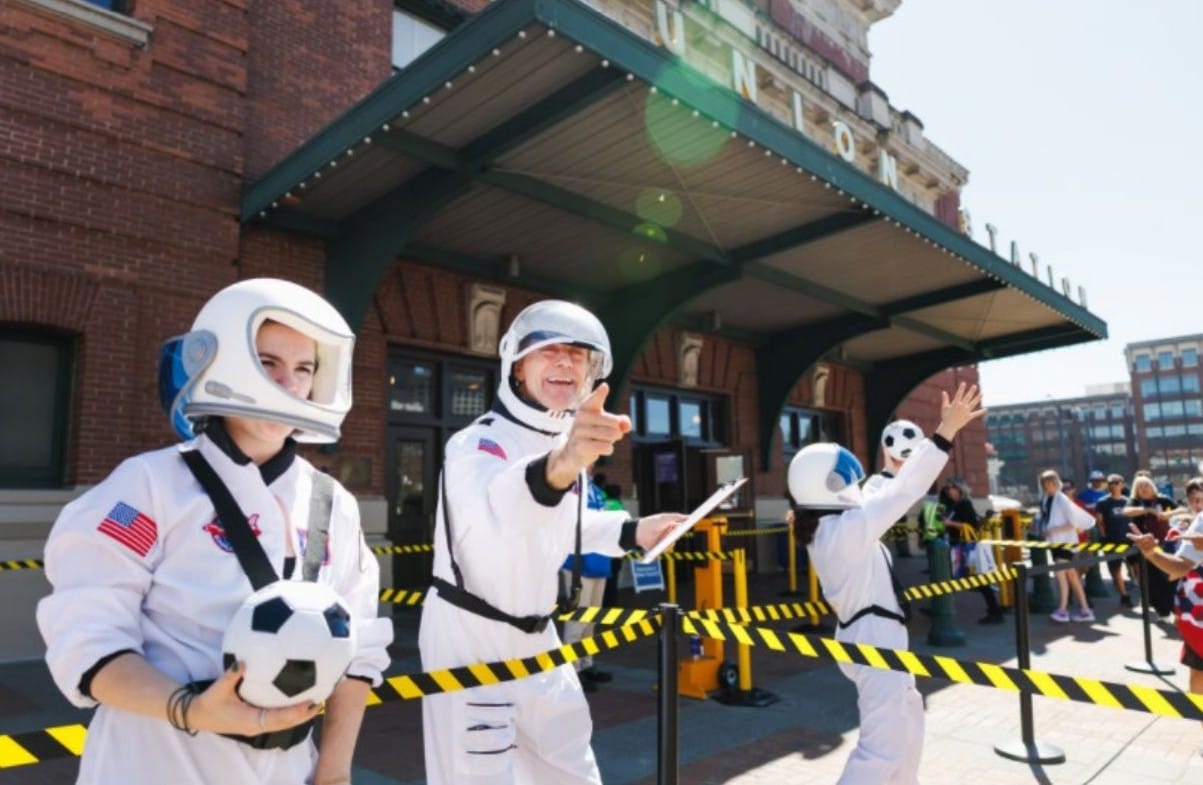
"The FIFA World Cup was held this summer. Sound Transit worked with over a dozen vendors to create programming at numerous stations downtown and across the system," Olson said. "Memorably, one of the most popular performances was the group that dressed up as astronauts and engage the crowds waiting to board the trains at International District Chinatown stations. These activities help create a festive atmosphere. They help the crowd spirits stay high, even when they were facing the long boarding times – great examples of implementing how we managed as a pillar of activation, integrating activities at stations to help manage the crowds."
Sound Transit has also advanced plans at Sounder stations and is considering Tacoma T Line streetcar stations. On the Sounder S Line, Auburn and Kent have retail as part of transit-oriented development projects. The staff presentation called out the five following early activation projects:
- Angle Lake Station – Roadhouse performance/community space (2023)
- Auburn Station (Sounder) – Ground-floor commercial (2002, leased to City)
- Redmond Technology Station –Microsoft Dote Coffee Bar (2022)
- Lynnwood Transit Center – Ciao Caffe (Opened Aug. 2025)
- Kent Station – Transit-supported retail development
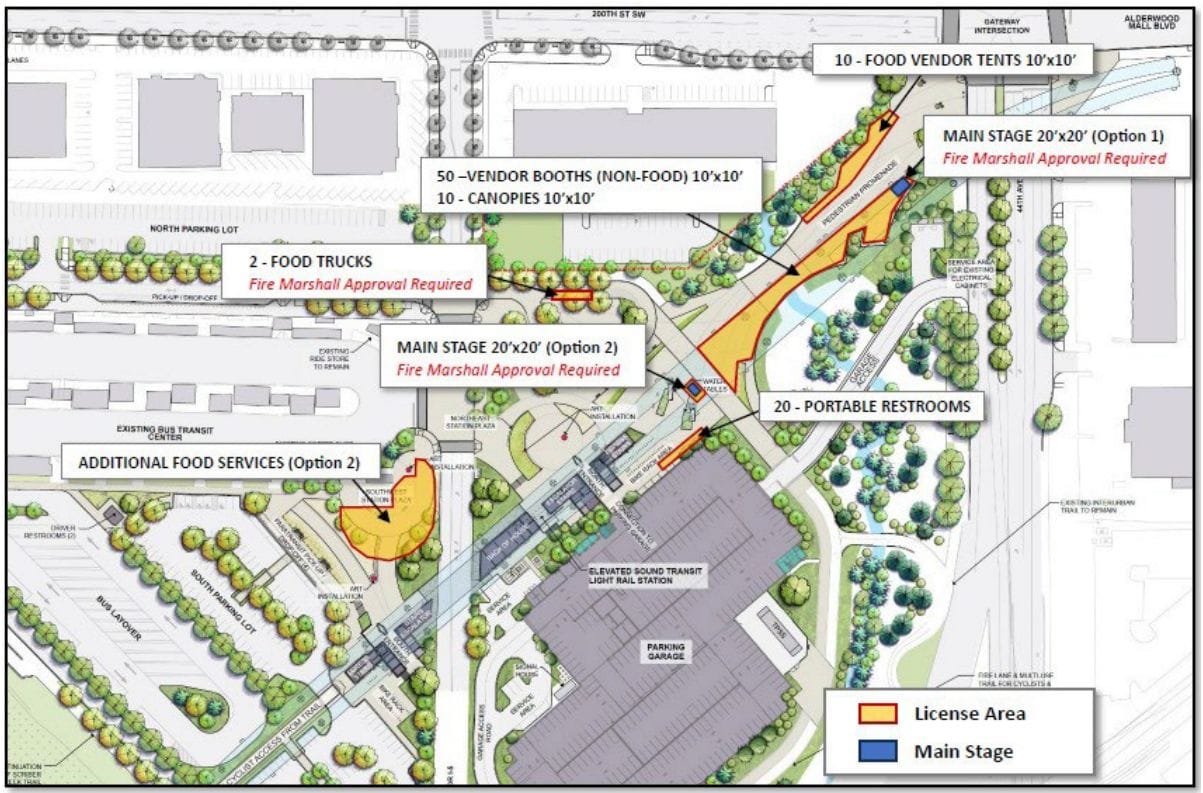
Through the first phase of study, Sound Transit also improved mapping of station areas, with an eye to making it easier to throw events, such as farmers markets or festivals on the premises. For example, staff slides featured a Lynnwood City Center Station map that called areas that would require fire marshal approval to stage for events, while recommending locations for a main stage, tents, portable restrooms, food trucks, and additional food services.
Based on its initial research, Sound Transit appears to be gravitating toward outsourcing the work of overseeing and/or designing the retail program to third-party contractors – which is a well-established pattern for an agency, with outside vendors also performing core functions like security, transit engineering, marketing, etc.
"One of the critical things is what is our management model?" Foster said. "Is this something Sound Transit manages itself like we do our system, or do we bring in industry expertise? In this case, I think we're leaning, based on the experience of our team and talking with other systems across the country, that we should potentially bring in some third-party partners who are experts in retail to help manage this component of our system."
Part of the obstacle to rolling out food service enterprises are health code requirements for bathrooms and sinks and other utilities and infrastructure that many stations lack, at least in the public portion of the station.
"Whether it's utilities or access to restrooms, the very specific requirements of Seattle King County Public Health around that and other public health agencies, that's critical work that we'll be doing as part of that next phase," Foster said, which he said they expected to return in 2027 to share with the board.
While the first two phases of Sound Transit's expansions have been completed with very few retail venues included in stations and limited opportunities to easily add them after the fact, Sound Transit 3 (ST3) projects are still in fairly early phases of design and present opportunities for retail and community spaces to be incorporated from jump. Of course, the catch is that ST3 projects are already under severe budgetary strain and could face pressure to avoid costs seen as tertiary or optional in order to ensure the projects make it across the finish line.
On the other hand, some have argued that rider comfort and basic amenities that improve it should not be treated as expendable and easily jettisoned. Retrofitting those amenities later could end up being more expensive in the long-run with less optimal outcomes possible when not designing stations for activation from the beginning.
King County Councilmember Claudia Balducci said that work to retrofit retail facilities into existing stations could in turn expand rider amenities for non-patrons by providing public bathrooms at more stations. Conversely, designing stations to have public bathrooms from day one is good not just for retail and festival opportunities, but also for the daily rider experience.
"I just want to add my voice to anything we can do to make the station areas more comfortable for our riders," Balducci said. "As we do longer term retail leases, particularly, I'm very supportive of us working with our partners to open those bathrooms to riders that exist for the purposes of whatever retail they may be doing."
 Sam Lynaugh
 Doug Trumm