The sports literati have spoken and Seattle has climbed to the top of the pack for World Cup host cities in the United States.
The Athletic ranked Seattle as the No. 1 stadium experience among FIFA Men's World Cup 2026 venues. Likewise, Sports Illustrated is a big fan of Cascadia, putting Vancouver, B.C. No. 1 and Seattle No. 2, noting the mild climate and walkable urban charm of both cities.
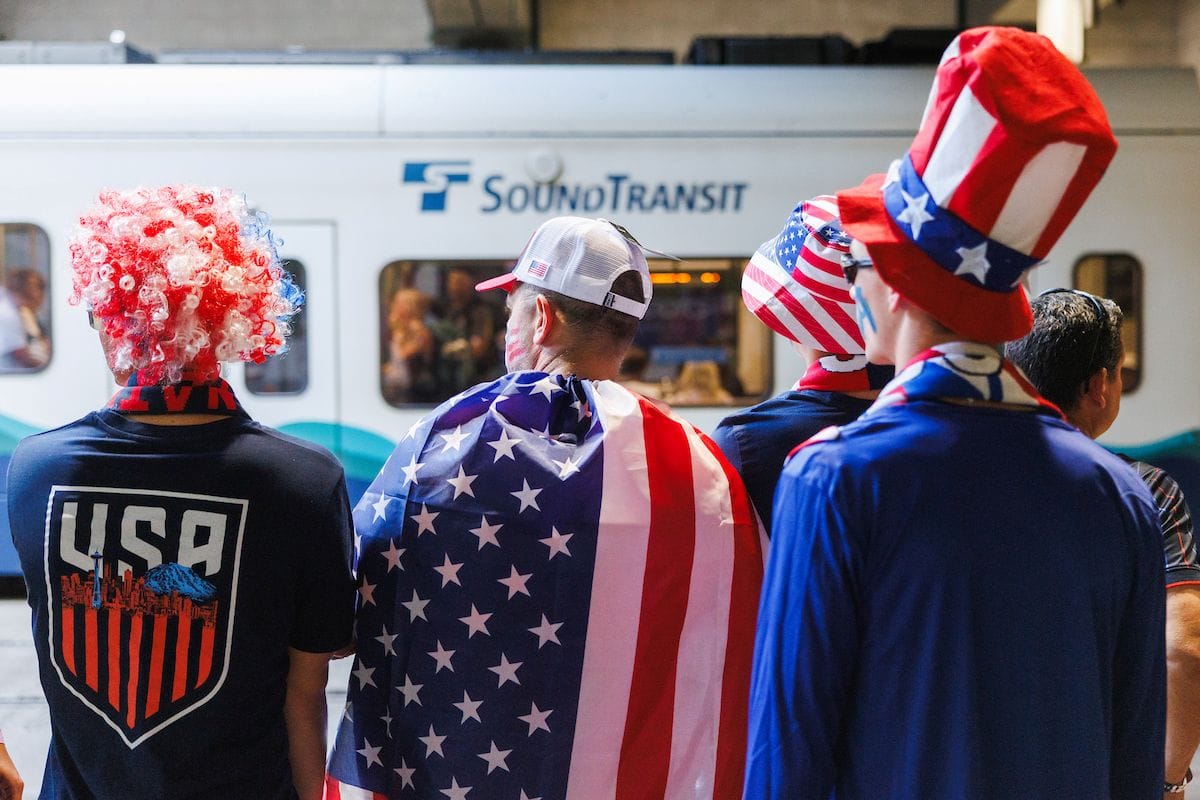
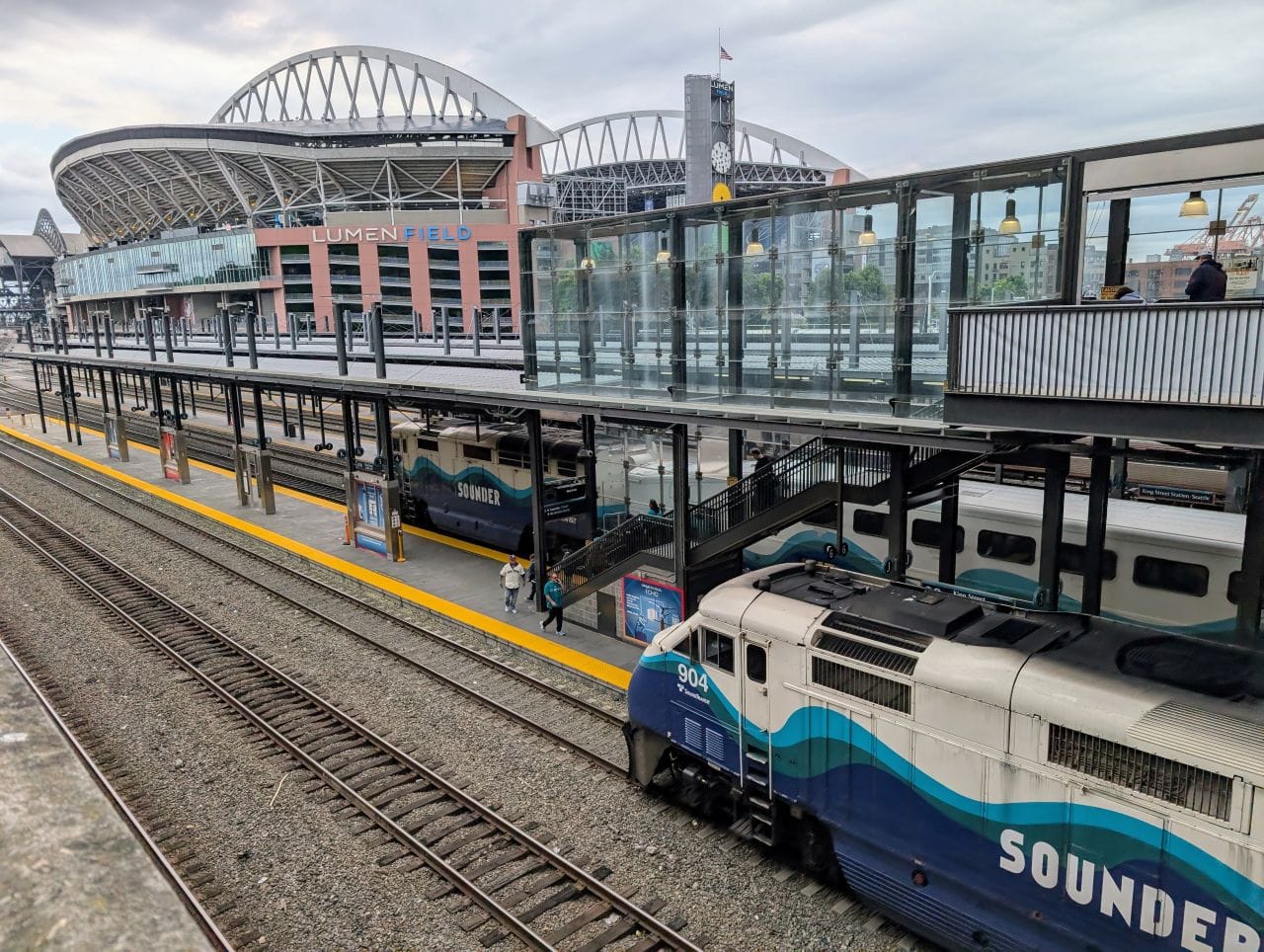
"Unlike many of its U.S. counterparts, Lumen Field sits within walking distance of the downtown core and is accessible by public transit," Sports Illustrated noted. "Situated next to T-Mobile Park, home to the MLB’s Seattle Mariners, the stadium district offers plenty of areas for fans to hang out before and after the game. [...] Tourists can also check out the famed Space Needle and the fish-throwing stalls of the Pike Place Market, which also features the world’s first-ever Starbucks."
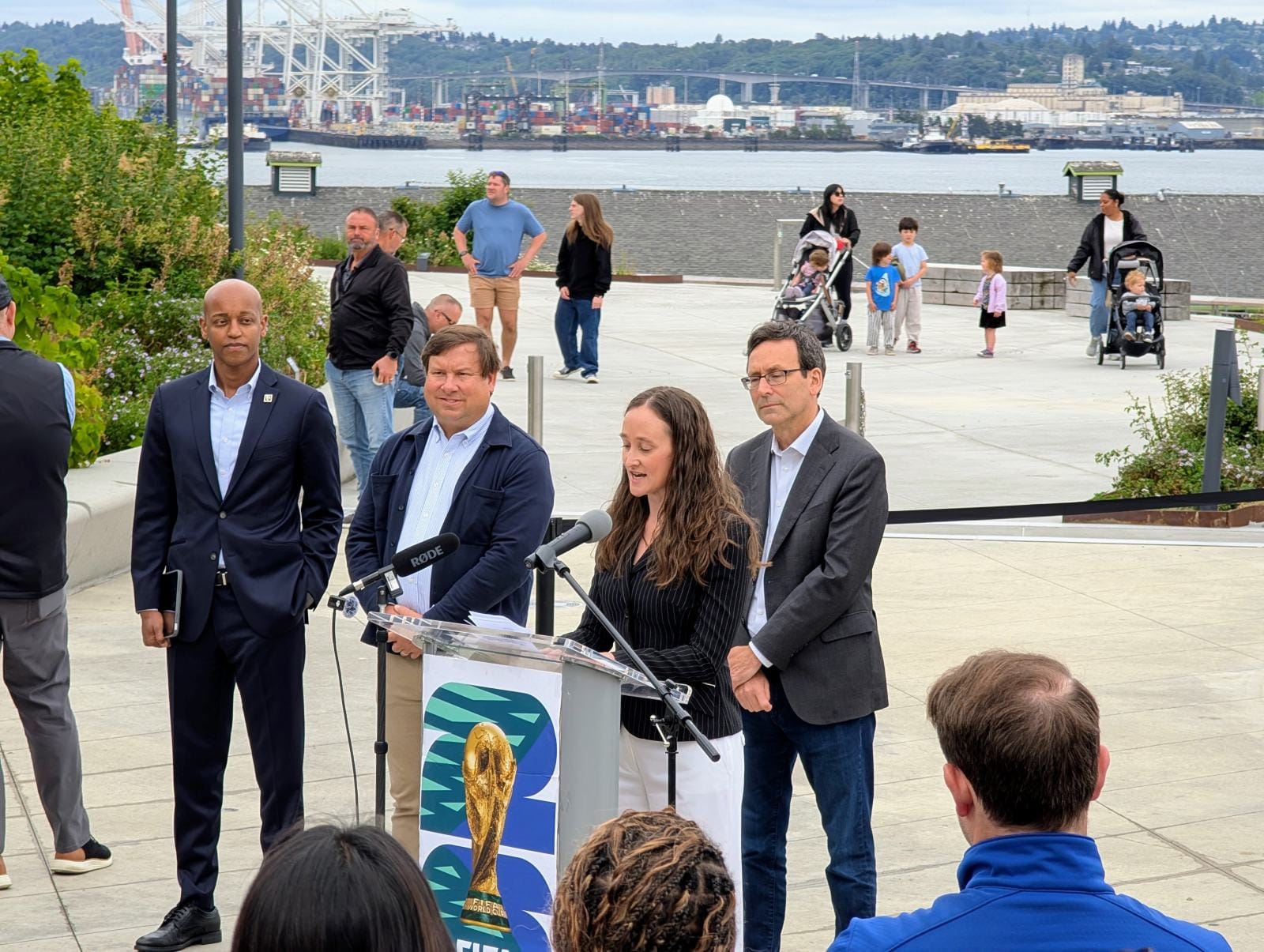
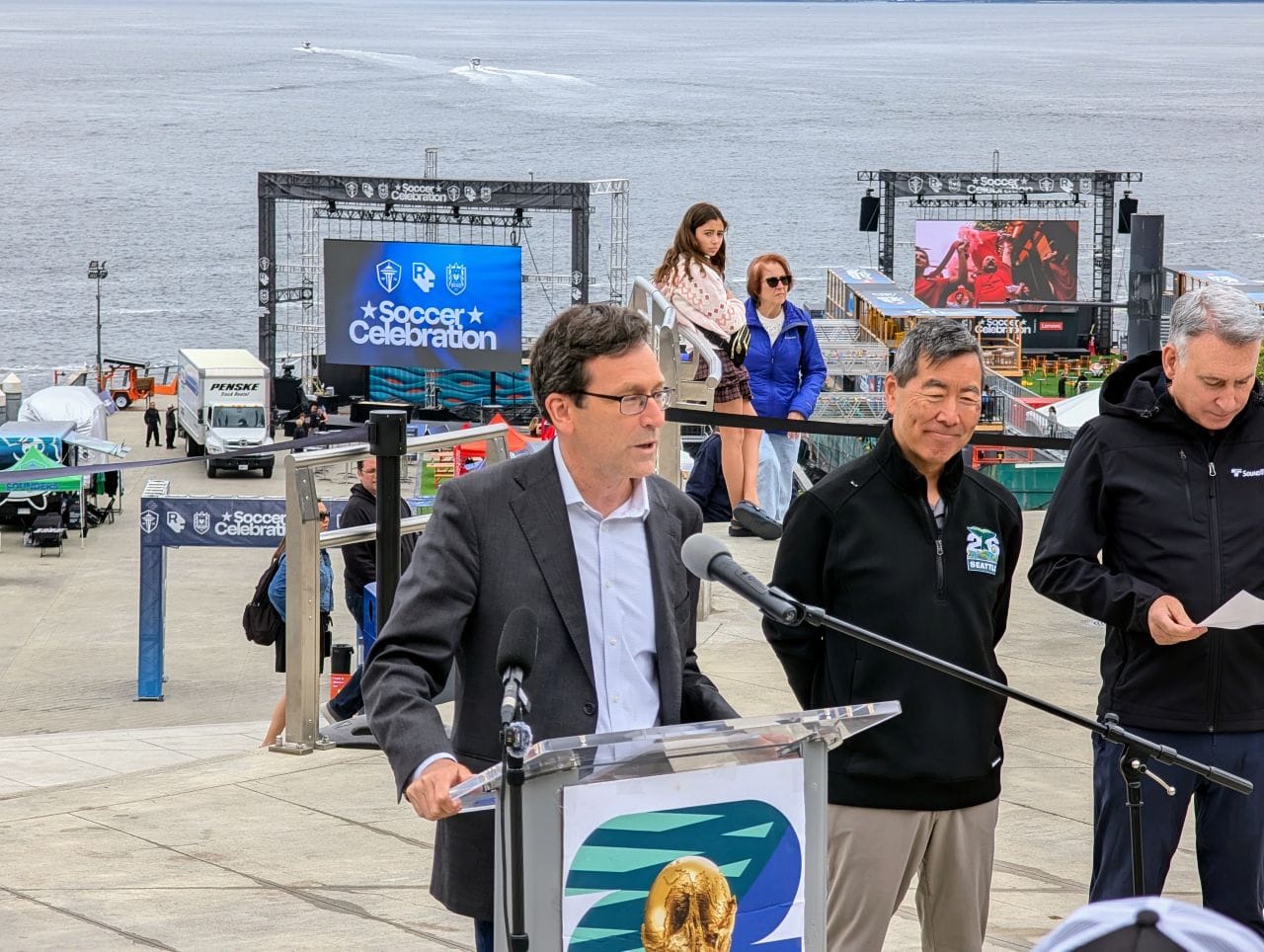
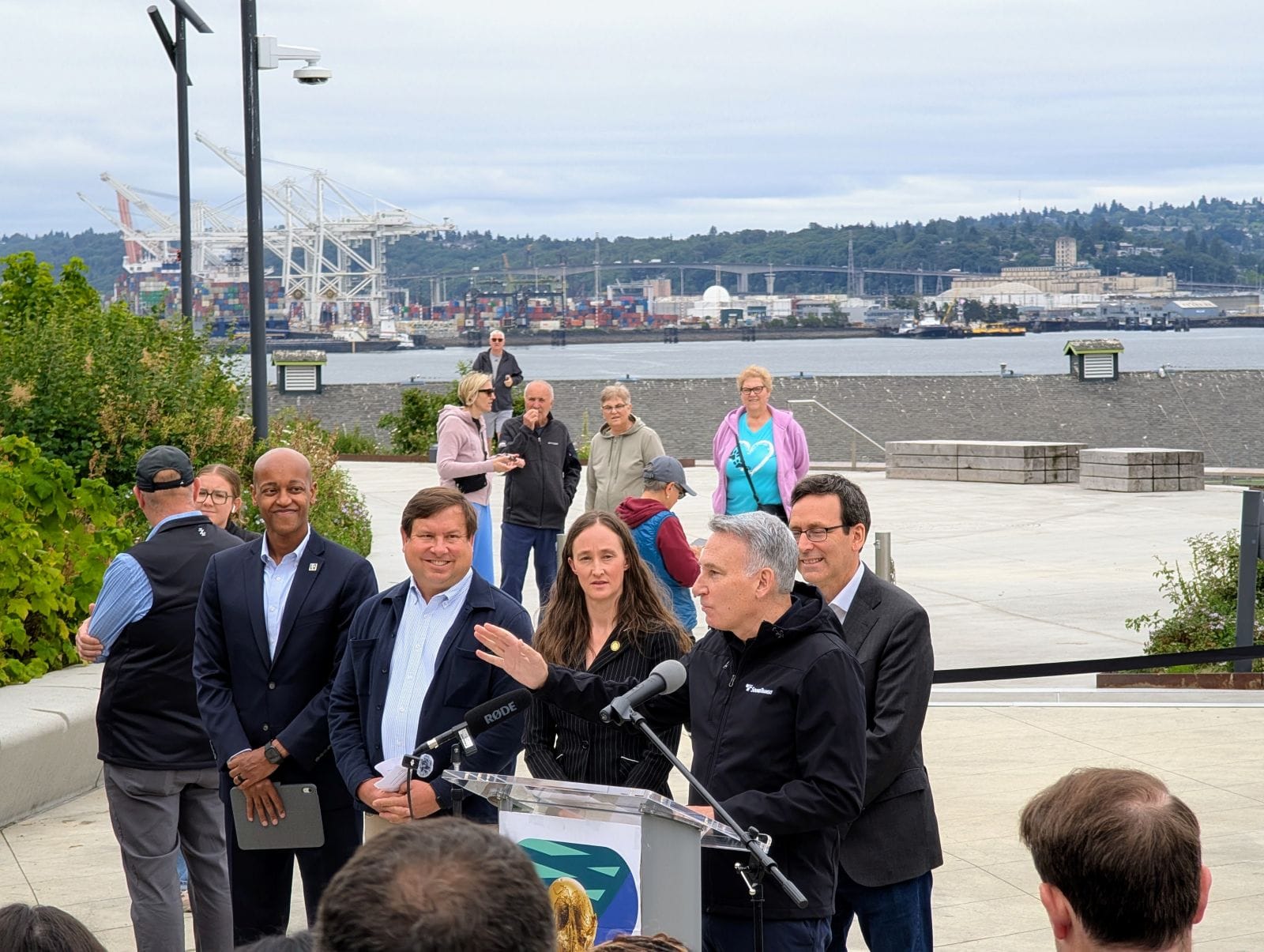
On Tuesday, Seattle's World Cup organizing committee threw a press event at Overlook Walk below Pike Place Market to trumpet their success. Governor Bob Ferguson led a contingent of officials giddy with World Cup fever and civic boosters riding an incredible high as Seattle shined on the international stage.
"We have heard from fans, players, and international media that Seattle has become one of the standout host cities of this tournament," Seattle Mayor Katie Wilson said. "That is a testament to years of planning, strong partnerships."
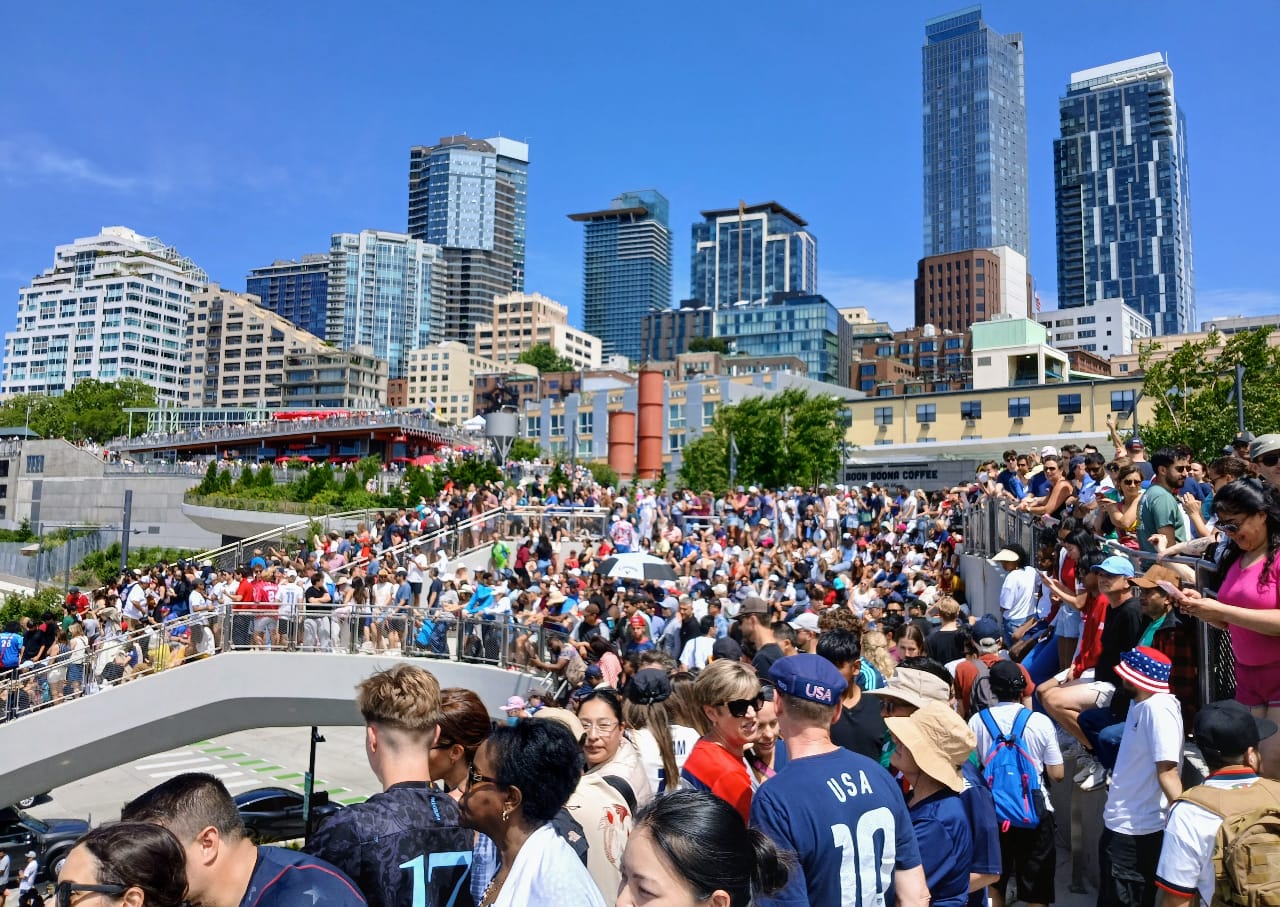
Wilson stressed that hosting World Cup festivities has injected the city with energy, and provided plenty of momentum to carry forward to make the city a better place to be for tourists and locals alike long after the dust has settled from this particular tournament.
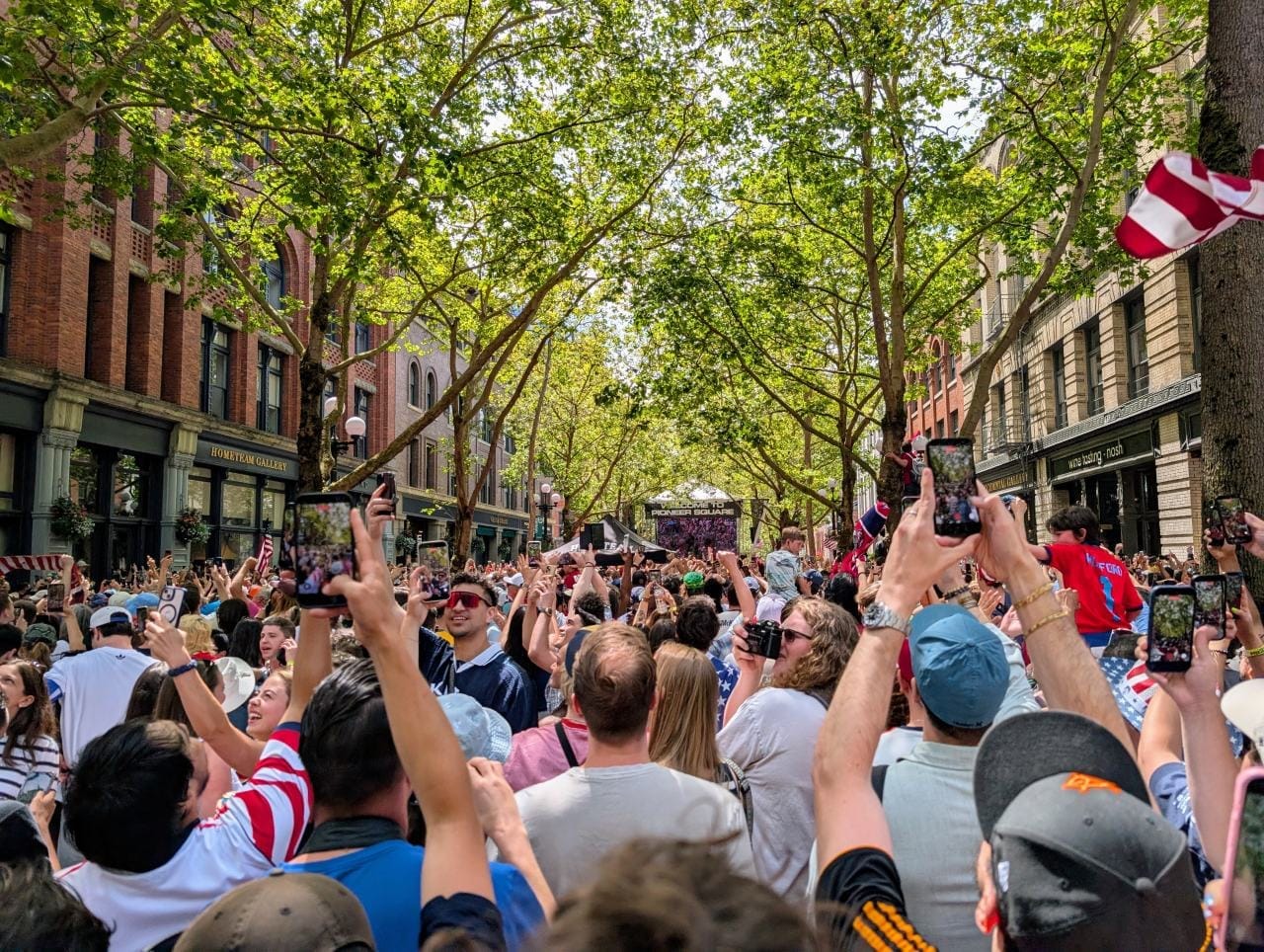
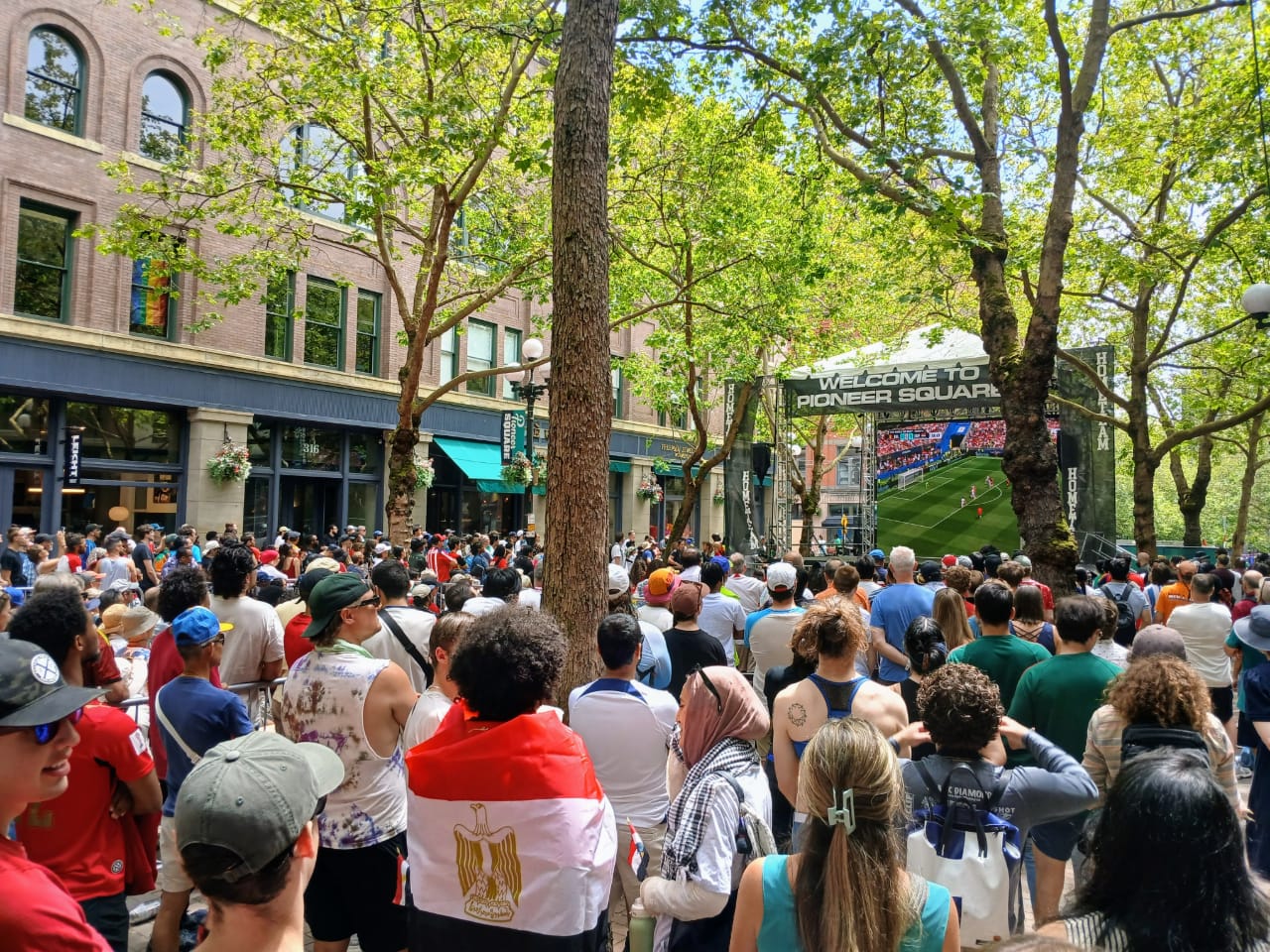
"Seattle has felt alive. You could see it in Pioneer Square, before the kickoff, at the waterfront, at the Seattle Center, downtown, across our neighborhoods," Wilson said. "Everywhere you looked, people were wearing jerseys, waving flags, gathering with friends and family, and celebrating together. There has been a real sense of joy throughout our city. One of the things that we've been most proud of is how the celebration has spread across Seattle. Instead of just one gathering place, we've created four official fan celebration sites, and have invited people to explore our different neighborhoods, support our local businesses, and experience more of what makes Seattle unique."
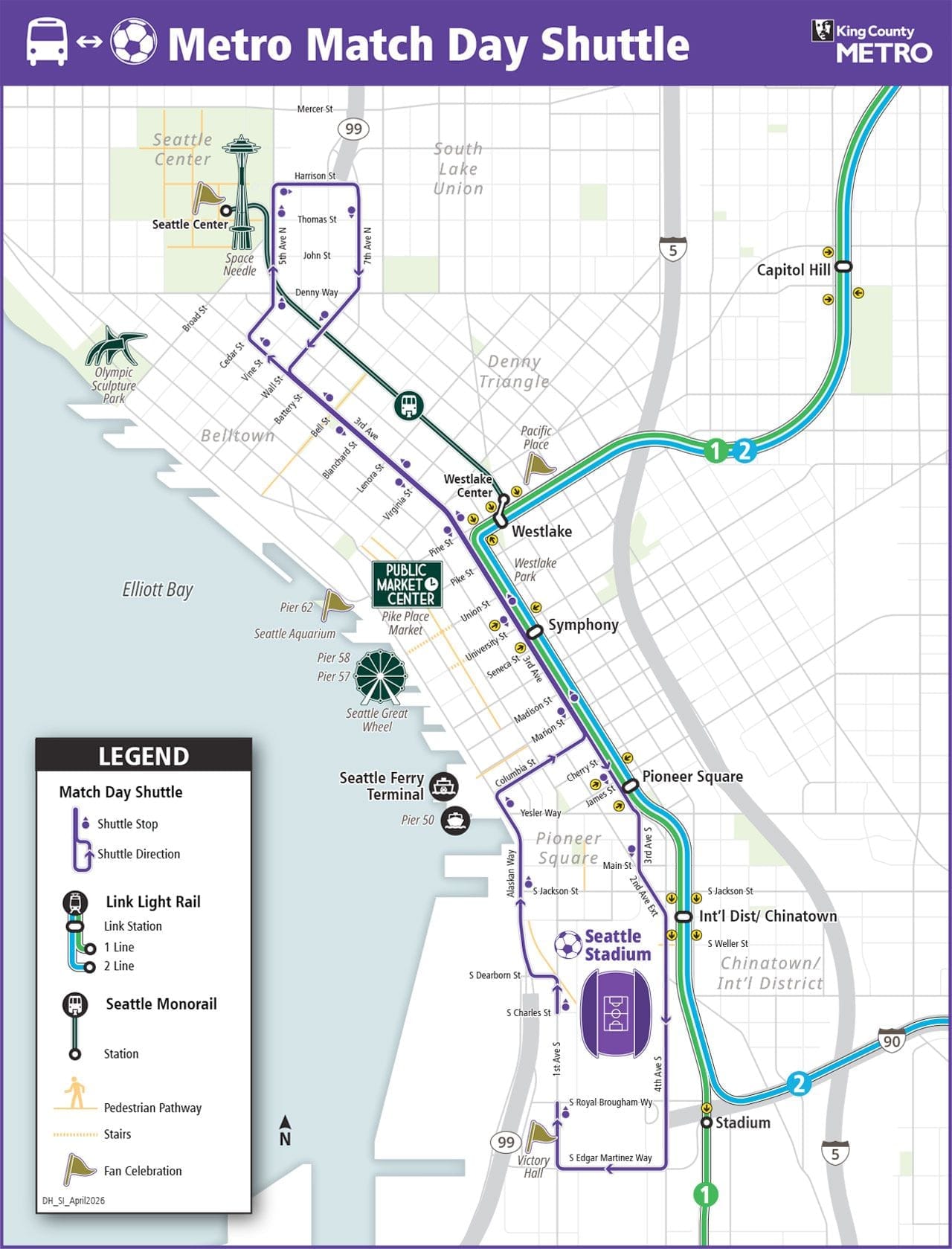
Seattle's official fan celebration sites included Pioneer Square, Seattle Center, Waterfront Park, and SoDo's Victory Hall, with a match day shuttle connecting them. Several more fan zones are spread out across the region.
King County Executive Girmay Zahilay said that energy is spilling out well beyond Seattle.
"Every single corner of King County has been buzzing," Zahilay said. "I was proud last Friday to enjoy Gather for Goals, which is the largest FIFA-approved watch party in unincorporated King County. It was happening in White Center, and fans were packing the streets. Our businesses were really experiencing the impact of that. I saw youth playing soccer and having fun. It's been just a really amazing thing to see across King County."
Seattle's standing out among its peers is partially an indictment of how other U.S. cities have designed their stadium districts. Most are marooned out in distant suburbs hemmed in by highways and parking lots. Bay Area's 49ers football stadium, converted to World Cup duties, is exiled in Santa Clara, a full 40 miles from San Francisco.
In those cities, the stadium is an isolated side trip, not a part of the urban fabric, integrated with a city's core attractions.
Fans leaving Seattle's stadium district can walk a short distance to eat and drink their way through Pioneer Square or the Chinatown-International District (CID), historic neighborhoods replete with restaurants and bars serving a huge variety of cuisine. They can explore a Seattle Waterfront that was massively upgraded after the city tore down the Alaskan Way Viaduct in 2019 and invested close to a billion dollars in the park that blossomed out of the rubble of the double-decker highway. From the waterfront, folks can meander up the iconic Overlook Walk to Pike Place Market, the city's top-rated tourist attraction and also a working market popular with locals. All in all, it's a vibe.
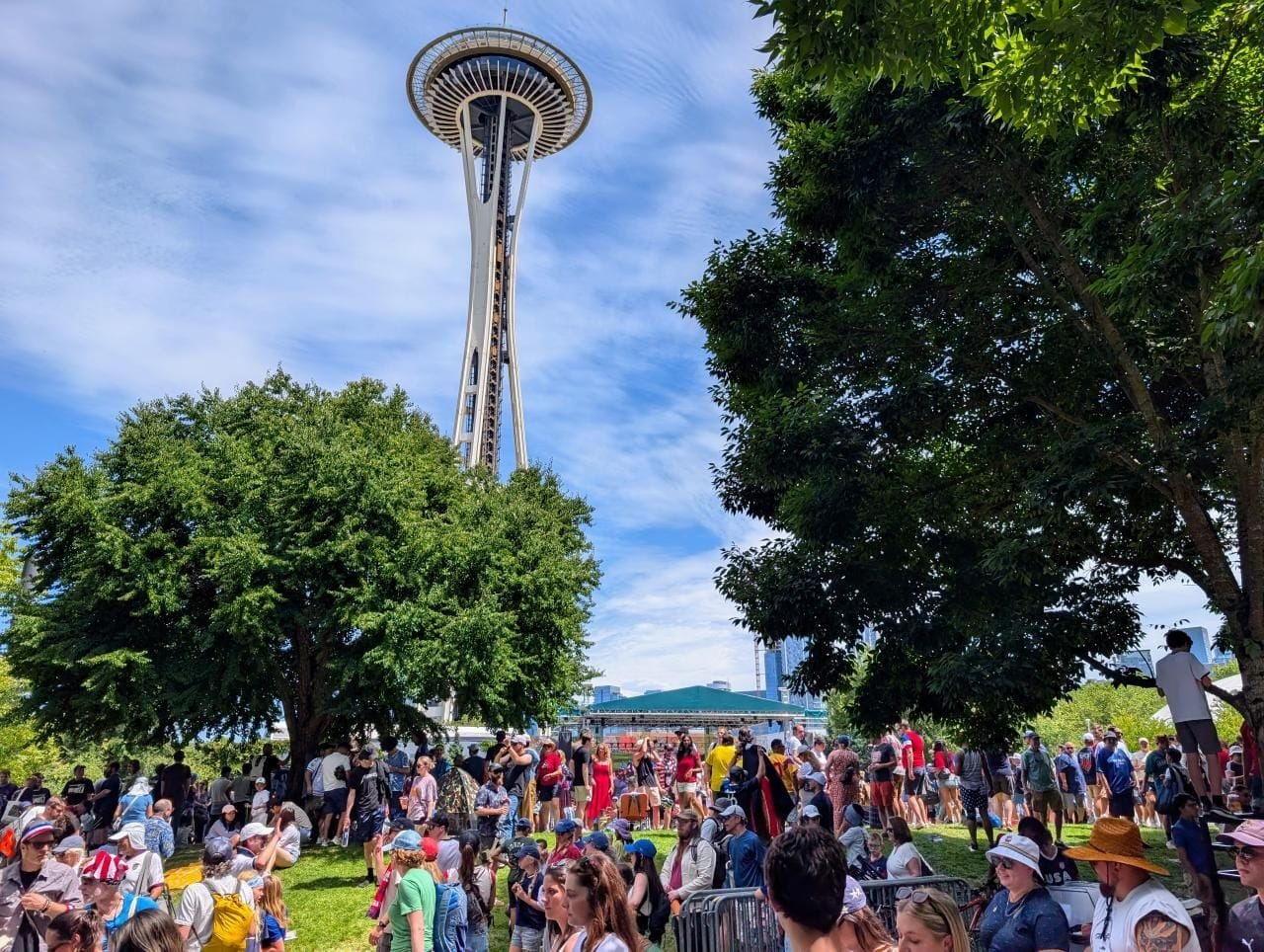
Peter Tomozawa, CEO of SeattleFWC26, the local organizing committee that planned Seattle's World Cup events, noted Lumen Field's urban location also makes ideal for pre-game marches.
"We held the largest march on record, the USA-Australia match," Tomozawa said. "We had 15,000 Americans screaming. We had 8,000 Australians stumbling. We had 23,000 marchers, that's one-third the stadium size marching. And now other cities have started to see how cool a march is, and so they're doing marches, but they don't have the authenticity that we do, right? They're marching through parking lots; we're marching through our city."
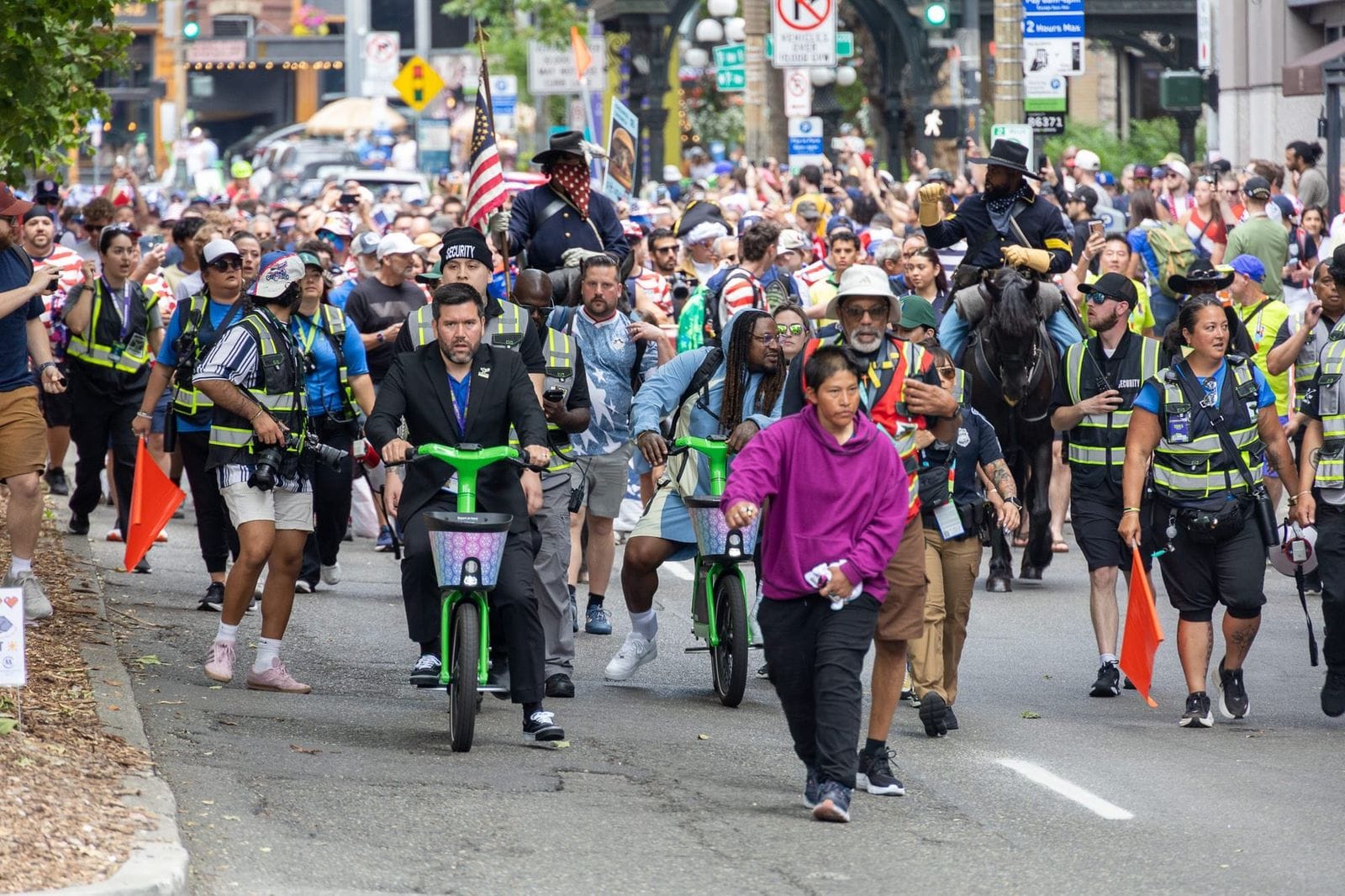
In her remarks, Friends of Waterfront Park Board Co-Chair Hewan Teshome said that Seattle invested in Waterfront Park to create moments like these.
“From the beginning, Waterfront Park was envisioned as Seattle’s front porch — a place where people could come together in everyday life and for the moments that define a city," Teshome said. "Seeing 85,000 people gather here on Juneteenth, as Seattle welcomed the world, was a powerful reminder of why public spaces matter. We built Waterfront Park for moments like this — and the city showed up.”
FIFA has bestowed the honor of hosting the final championship match to New Jersey, but several outlets have panned the choice. Despite being part of the broader metropolis of New York City, MetLife Stadium has limited, overpriced transit options and no walkable attractions in the vicinity.
"The home of the World Cup final is a nightmare to get to. MetLife Stadium sits in a converted swamp in New Jersey’s Meadowlands," Sports Illustrated's Ben Steiner wrote. "On public transit, trains are often overcrowded, and even then, fans have to make their way from Secaucus if they are staying in New York City. Tickets for those modes of transportation are also significantly higher than everyday prices, set at $98."
The Athletic described the Meadowlands as an isolated venue: "It is in an area that you visit for the game and nothing else."
Seattle chose a different way, and reaped the rewards.
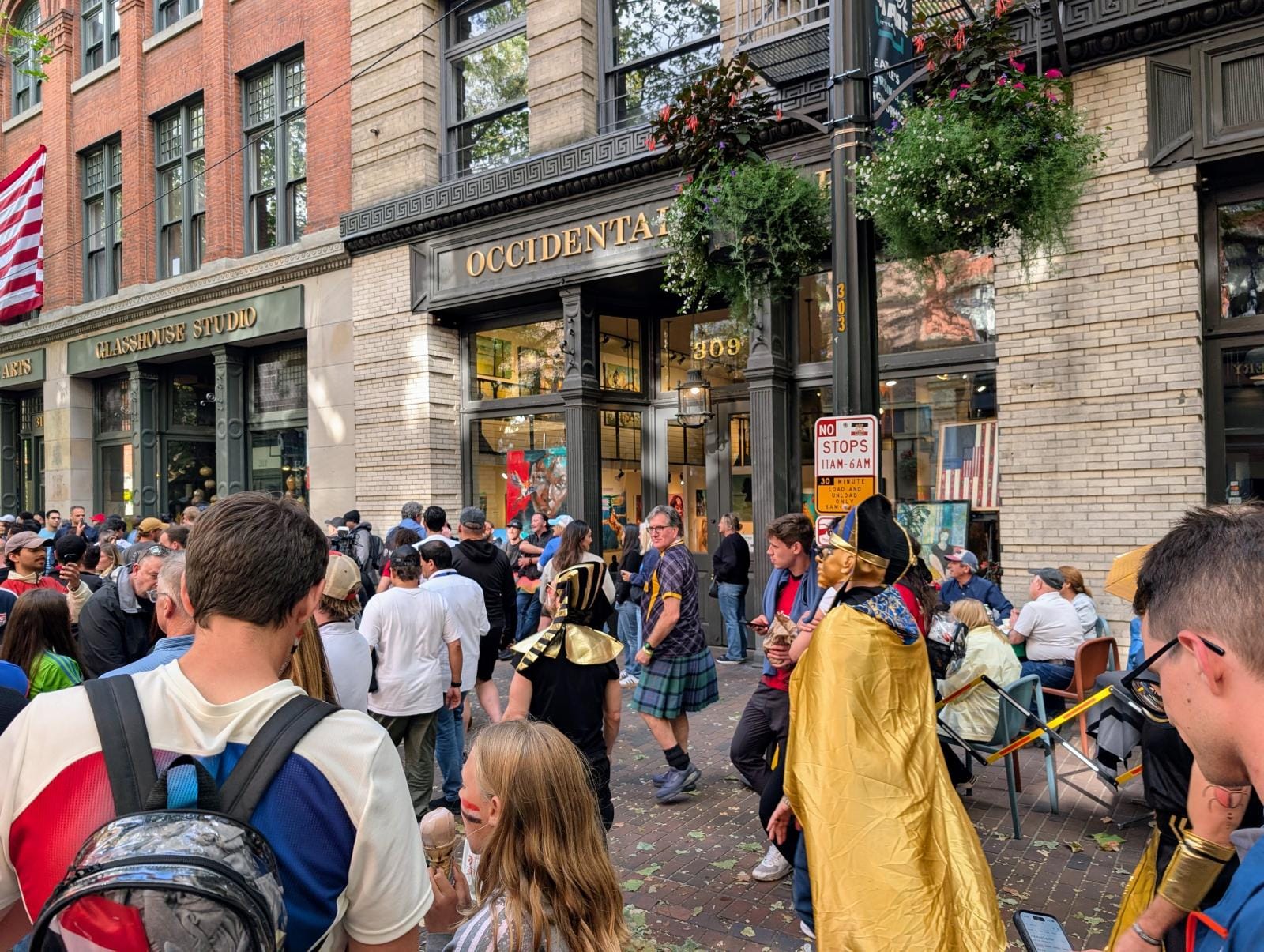
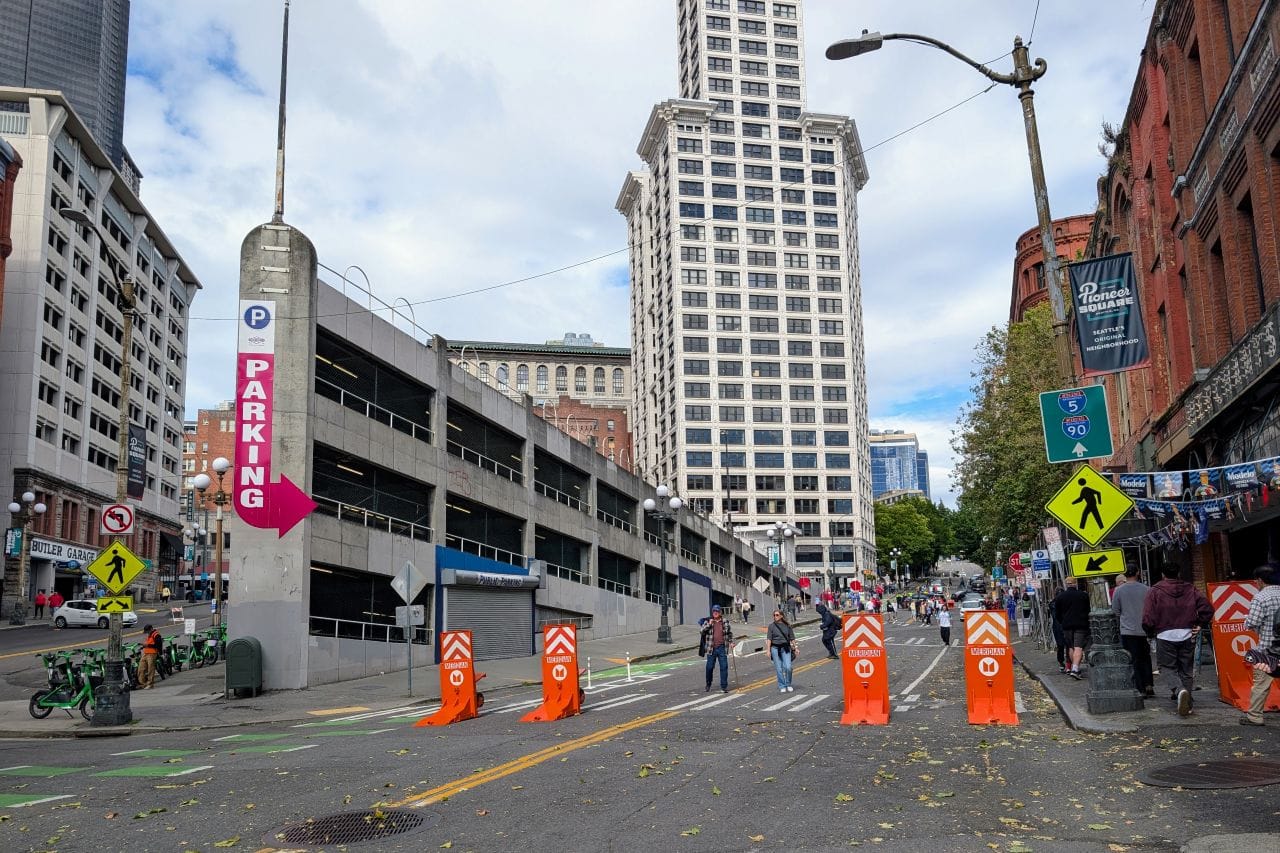
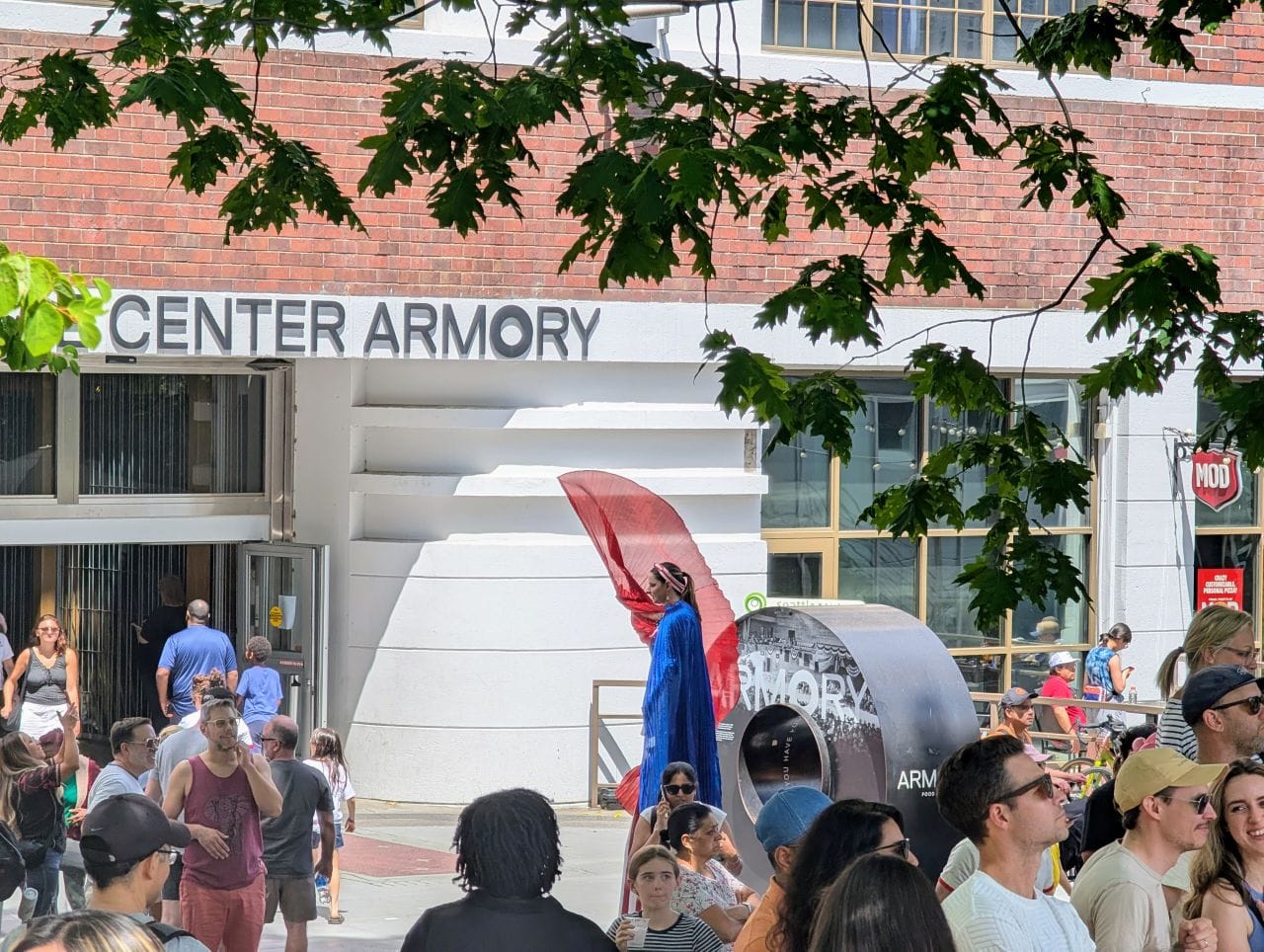
Some fans went all out on their costumes, including the Egypt fan in pharaoh garb on the left. (Doug Trumm)
"Seattle was also ranked the No. 1 U.S. host city for FIFA World Cup 2026 fans by Action Network’s Fan Experience Index, placing third overall among all 16 host cities across North America based on factors including accessibility, affordability, atmosphere, safety, weather and hotel access," Seattle's World Cup organizing committee noted in a Tuesday press release, which noted the city is turning to welcome new teams for its first knockout round match at Lumen Field on Wednesday, July 1 between Belgium and Senegal.
The city is also hosting a Round of 16 game on July 6, which could feature the U.S. team, if it prevails in a Round of 32 matchup with Bosnia on Thursday.
World Cup energy channeled through Seattle's urban infrastructure has also meant smashing records for light rail ridership, as Sound Transit CEO Dow Constantine noted, led by 280,000 boardings on June 19. Seattle also set a new highwater mark for scooter and bikeshare rides.
"Overall, the entire month of June will set a lot of records for the agency: five days above 200,000 boardings since we started the tournament, 229,000 boardings last Wednesday, the 24th, Bosnia versus Qatar, 233,000 boardings last Friday for Egypt and Iran," Constantine said. "And we are tracking toward our first ever 5 million boarding month. Our success in moving these historic volumes of riders is not an accident, is a result of years of planning, of years of preparation, of years of partnership."
Light rail is operating at six-minute headways late into the evening on match days, putting more trains into service than ever before.
"We've deployed the most train cars ever, 174 cars out on the tracks, and none of this would be possible without the dedication of thousands of our Sound Transit staff and our partners," Constantine said.
The organizing committee shared stats indicating a huge boom in foot traffic and business, especially on June 19 as Seattle hosted the much ballyhooed match between the U.S. and Australia.
"Pioneer Square recorded its highest single-day domestic foot traffic since the Downtown Seattle Association began recording numbers in 2019, welcoming 149,800 domestic visitors on June 19," the release noted. "[S]ome businesses reporting sales up to ten times a typical day, outperforming even Taylor Swift concert weekend."
Tuyen Than, executive director of the Chinatown International District Business Improvement Area, said business was up in the CID, too.
"On June 18 we broke a Guinness World Record. 830 people came to the CID, ate together, and set the record for the largest dim sum gathering ever, on a Thursday during another record high," Than said. "That kind of energy matters for small businesses, our residents, and the culture that keeps this district alive."
Seattle Channel covered the record-setting dim sum gathering in the CID.
Than pointed out that the economic benefits have not lifted all boats, with some areas farther from the stadium seeing little gain.
"But I want to be honest, the economic benefits have not been equal across all our neighborhoods," Than said. "We've seen a 10% increase in foot traffic overall, and post-match windows have been incredible, but that energy has been concentrated, and businesses further from the stadium corridor, like those in Little Saigon and the Central District, are not seeing that same lift, so I want everyone who discovered the neighborhood during the World Cup to keep coming back long after the final whistle, but also we need that same energy to reach every corner of the CID."
Some workers have also sought to push for a bigger piece of the pie, as Seattle revs up its economic engine. While most speakers sidestepped the subject, Wilson noted the "last-minute change in venue" and how picketing hotel workers were behind the decision.
"Union hotel workers, represented by Unite Here Local 8, are on strike at Embassy Suites downtown," Wilson said. "The hotel is located in the building in which we were scheduled to speak, and workers are currently picketing outside. I spoke with Governor Ferguson this weekend, and we agreed to change the press conference location. I have never and will never cross a picket line. I and my team have been in productive conversations with the workers and their union, with the hotel management company, Hilton, and the building owner, and I know that all parties are still seeking a constructive settlement. So, I'm hopeful that we can come together to celebrate a fair deal soon."
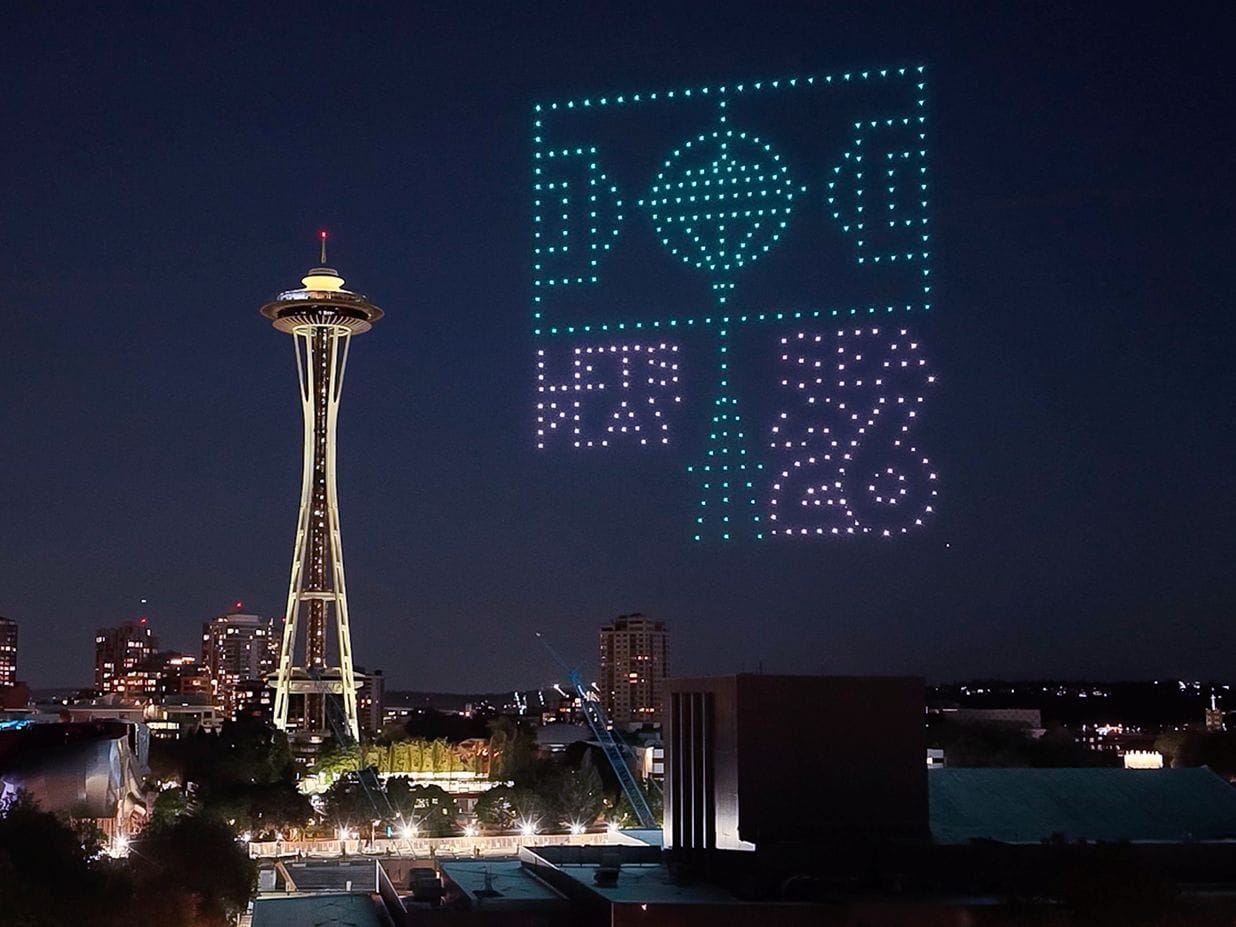
Visit Seattle's Executive Vice President of Sales and Marketing Kelly Saling hailed the success of the drone scoreboard that Seattle has rolled out.
"The drone scoreboard continues to get picked up countrywide, reminding people that this is the innovative and exciting city leading the way," Saling said. "We are generating seismic activity in the stadium, but also in making big waves with domestic and international media coverage. [...] For the drone scoreboard alone, we're estimating over 550 million earned media impressions so far."
With Seattle's various wins, its leaders are also thinking about what ideas to repeat or make permanent features.
"We're in this inflection point in Seattle, where we have a huge opportunity moving forward to keep the energy going," Wilson said. "How do we create more of these people-centered public spaces, give people reasons to come out, enjoy them? How do we activate our parks? How do we activate our neighborhoods? I think we can do a lot more of that. How do we continue the revitalization of downtown, make Seattle a great place to live, work, raise a family, build a business, and there's so many pieces to that. I think there's a huge sense of optimism right now, and I'm really looking forward to working with my team and working with partners across the city to figure out how we can make that happen."
When The Urbanist nudged Wilson to offer some examples of temporary World Cup activation projects that might be made permanent she floated Pioneer Square pedestrianization efforts.
"It's been really exciting seeing Pioneer Square come alive with this large pedestrianized area, and so I think it's just really exciting to think about moving forward," Wilson said. "What can we do to activate spaces like that, create more spaces where people have a reason to come and hang out and sit at a restaurant or a cafe, and I think I think there's a lot of potential."
Another activation idea Wilson floated: Seattle hosting the Women's World Cup in 2031.
"This absolutely sets us up to host more large events in the future," Wilson said. "Personally, I'll say I would love to host the Women's World Cup here in a few years... Seattle is both capable of hosting these large events, but also just as a fantastic destination that people want to come to and want to spend time in. It really does set us up for more."
Correction: The original version of this article incorrected stated a Women's World Cup would be happening in 2028. The next cup is 2027 in Brazil, and the Women's World Cup that Seattle could be in contention to host is in 2031.
 Doug Trumm