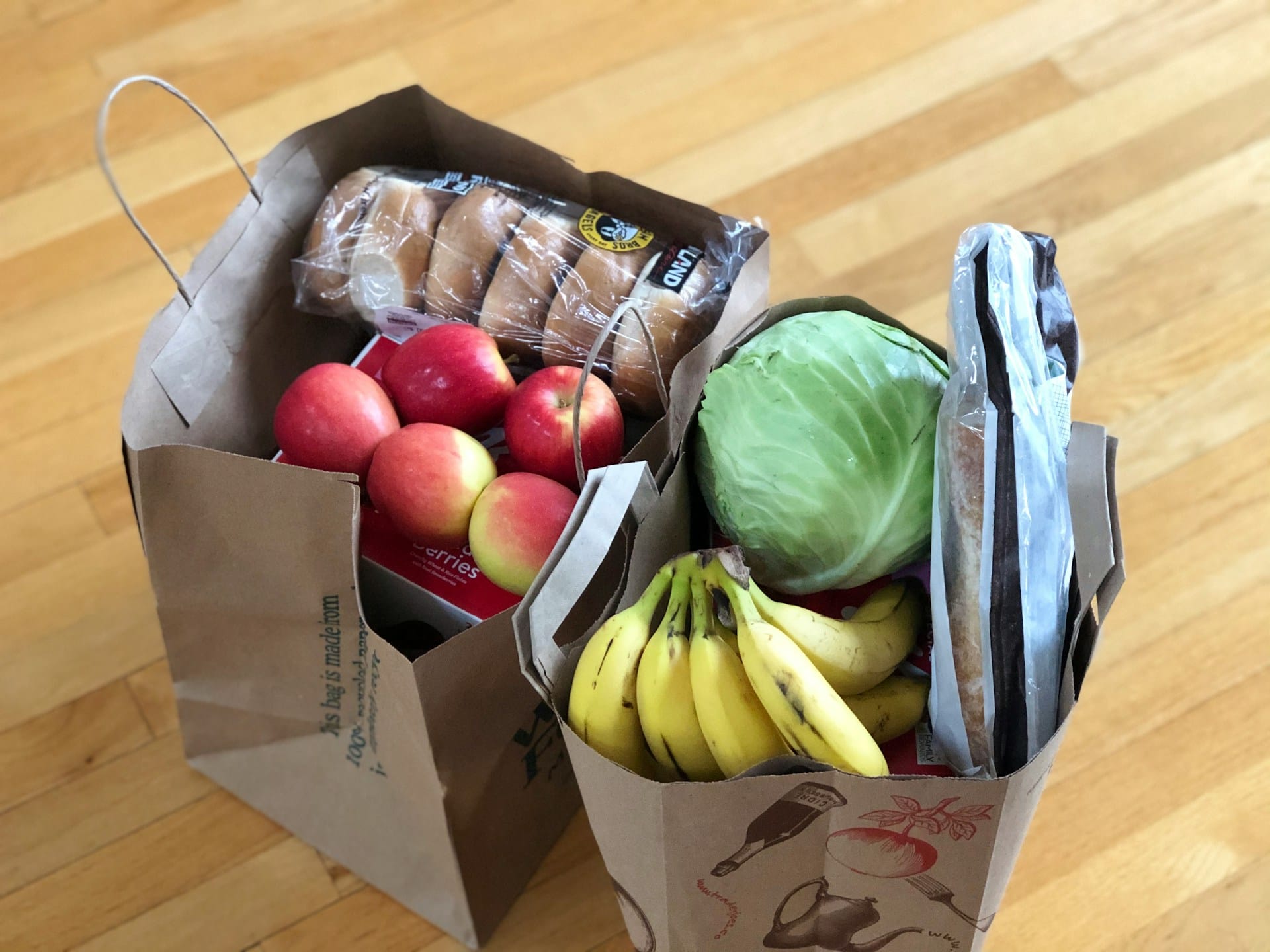
Seattle Mayor Katie Wilson is taking another swing to increase affordability for residents by championing an ordinance that would prevent large grocery companies from setting prices by using customers’ personal information.
A study by Consumer Reports made headlines last year when their investigation with Groundwork Collaborative found that Instacart was conducting algorithmic pricing experiments on unknowing customers with identical products sometimes being offered at different prices ranging as much as 23%.
Instacart maintains that they do not conduct surveillance pricing and have no intention in doing so in the future. But lawmakers have become increasingly interested in looking at how algorithms are being used to set the prices for basic goods.
As many consumers are facing increasing difficulty affording basic essentials, Wilson is taking aim at the practice of “surveillance pricing” or algorithmic price discrimination to ensure customers will be offered the same price for the same grocery product in the same store.
“As a city, Seattle welcomes innovation, and that also means that we need to think really hard about appropriate guardrails. And this legislation is an attempt to do just that, making sure that as grocery companies are moving into the realm of using personal information, that we are not letting that result in lack of fairness and transparency in grocery prices and higher prices for consumers,” Wilson told The Urbanist. “I think it's also something that the public appreciates in this moment, where there are so many spheres in which our personal information is collected and sold and packaged and resold and abused often without our knowledge or consent, and this is a landmark piece of legislation that attempts to address a practice that we know is happening, and that without appropriate action could begin happening on a much larger scale.”
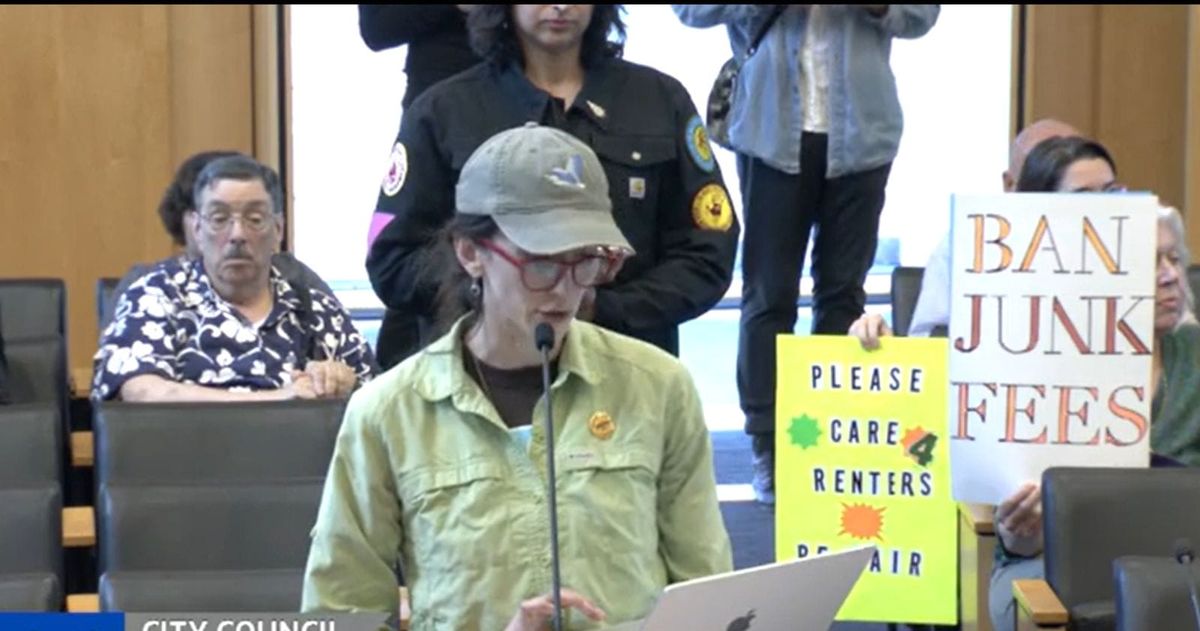
This new legislation comes in the wake of several affordability-related efforts from the Mayor’s Office so far this year, including a ban on certain junk fees for renters, a robust library levy passed by voters, universal free school meals starting this fall, and the Seattle Transit Measure going on the ballot this fall, which will boost service frequency on 10 to 15 bus routes.
In spite of recent tensions, the Mayor’s Office and the Seattle City Council are working together on this new fair pricing ordinance. Wilson, along with Councilmembers Alexis Mercedes Rinck and Dionne Foster, campaigned last year on a platform emphasizing their commitment to increasing affordability in Seattle, and now Rinck and Foster are co-sponsoring this legislation.
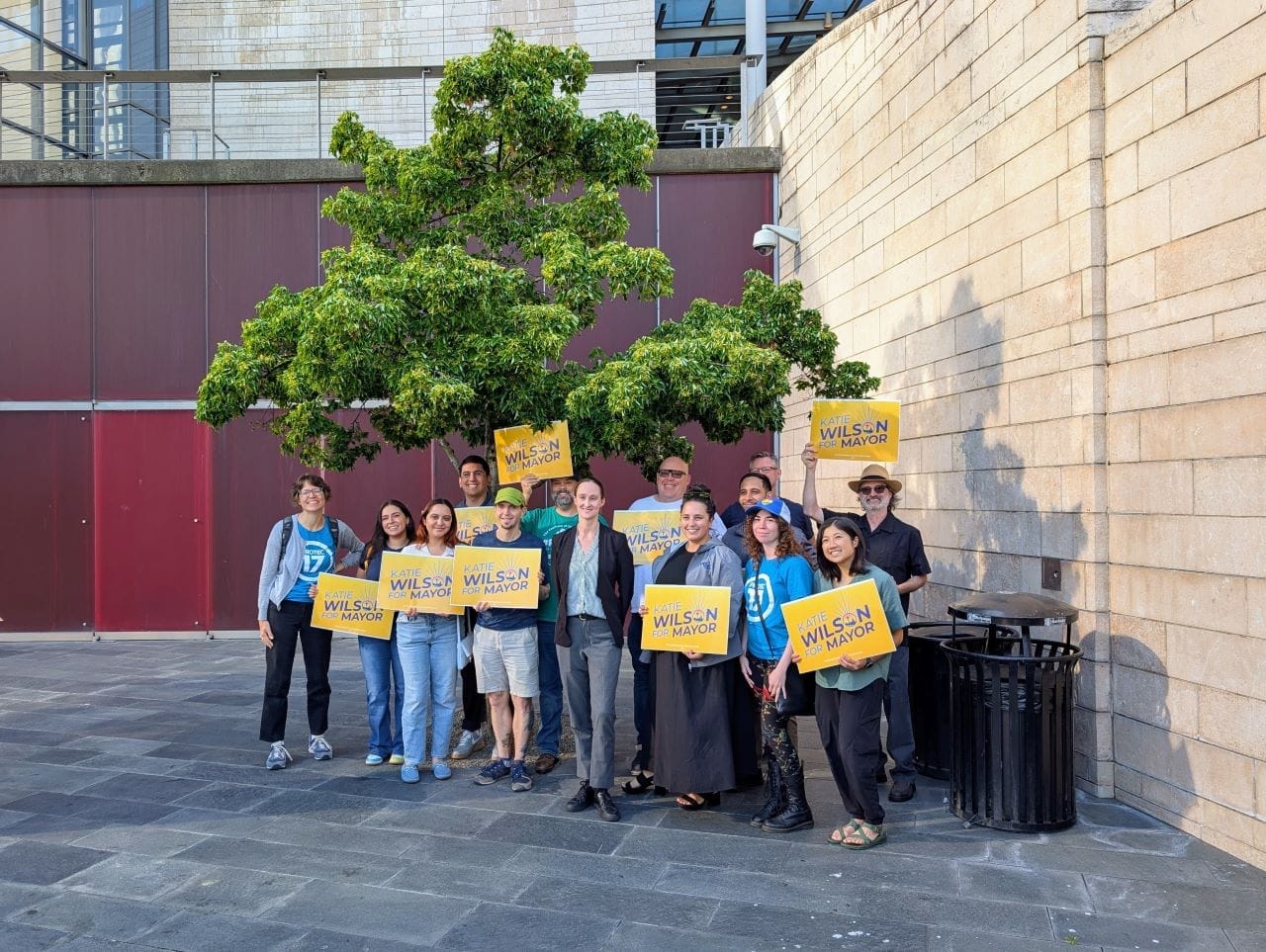
“It's been really amazing to be able to partner with [the Mayor’s Office], and they've done so much work across the development of the policy,” Rinck told The Urbanist. “I'm really proud of the work that's been done and very grateful to the Mayor's Office team and my team members for their careful work working with so many folks across industry and labor to get us to this draft legislation.”
The Mayor’s Office has been developing this legislation since the beginning of the year, when Wilson took office. If passed, this law would be the first of its kind implemented at the city level, with the potential to set the standard for cities across the country.
“We knew that if we were going to be putting something out there that was setting a new standard, it needed to be really thoughtfully constructed, both in the policy itself, but also in how we arrived at that policy,” Wilson said. “And so we did really extensive engagement with stakeholders on all sides.”
The Mayor’s Office engaged with a variety of local and national stakeholders, including labor organizations, consumer advocate groups, and the grocery industry, ranging from small independent grocers to large chain grocers and online retail giants.
“This was really in an effort to understand all of the concerns, all of the potential pitfalls, unintended consequences,” Wilson said. “Because we do want to preserve all the normal discounts that people know, and we don't want to have unintended consequences. And so we really did a lot of due diligence and made a lot of changes to the legislation as we went through this process in response to feedback from the grocery industry as well as from advocates.”
What the ordinance would do
Rinck became interested in surveillance pricing policy when a bill regulating the practice was introduced during this year’s legislative session in Olympia. When that bill died, Rinck knew she wanted to pursue something at the city level.
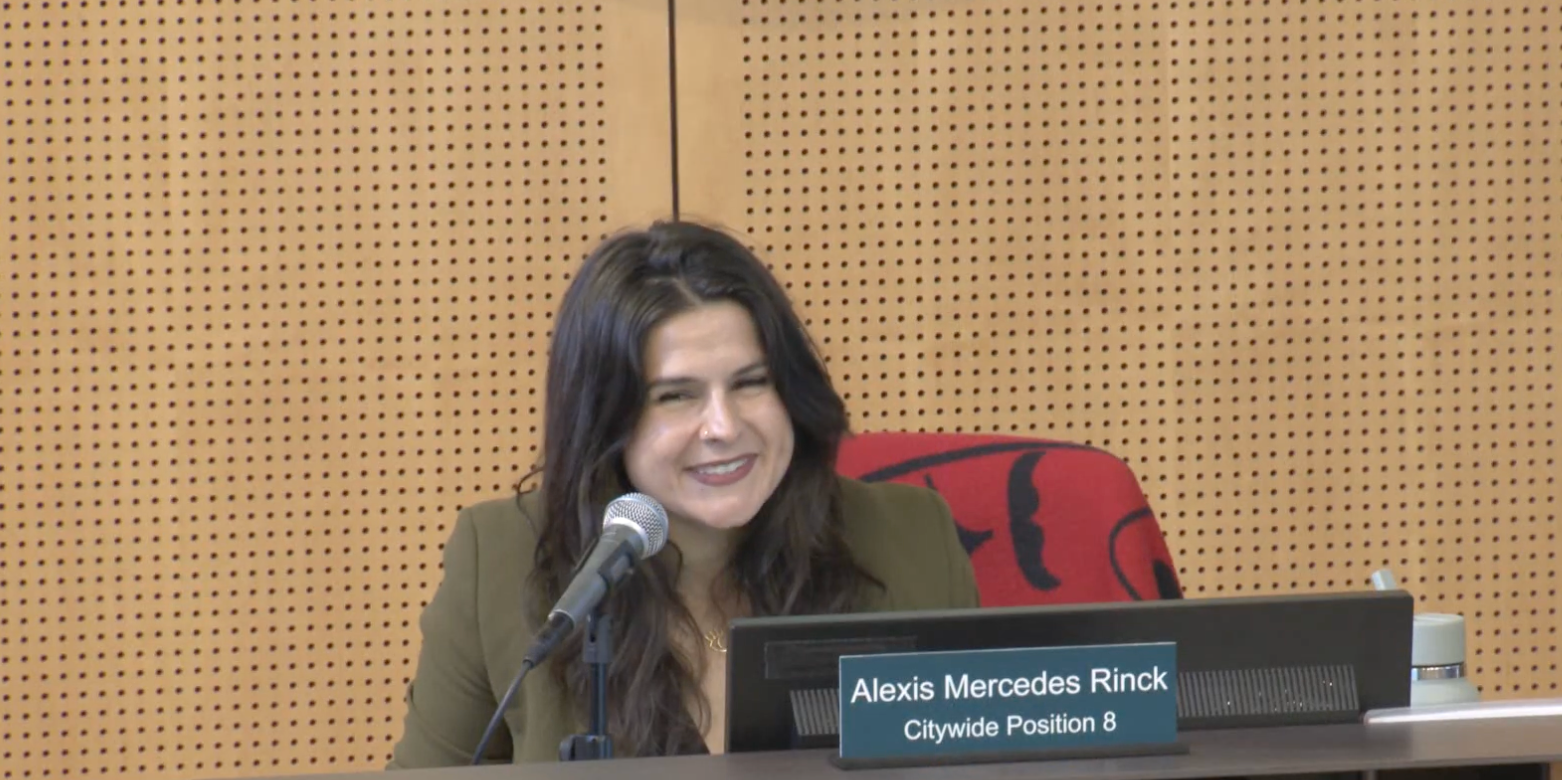
“Ever since the pandemic, I have certainly seen the steady rise in the cost of the groceries I'm buying, and when we're talking about the basics of what it means to have an affordable life here in Seattle, it boils down to housing, transportation, and food,” Rinck said. “We need to be using every tool in our toolbox to bring those costs down, and that means preventing the unnecessary price gouging that is happening at grocery stores and taking measures to try and limit really discriminatory practices that are hurting people's wallets. And so this is just one step that we can take to try and protect consumers and make groceries more affordable.”
Rinck pointed out that the city’s legislation differs from that discussed in Olympia in that instead of simply exempting loyalty and discount programs, it clearly lays out how these programs should operate in a way that doesn’t allow for the use of algorithmic price discrimination while protecting consumer benefits.
“The policy proposal that we've transmitted prohibits price setting based on personal information,” Kerem Levitas, a senior policy advisor at the Mayor’s Office, told a council committee last Friday. “So that includes information like race, gender, employment status, your activity online, your Google searches, and things like AI chatbot conversations. The second thing it does is we've been very intentional to make sure that it protects common discounts that we all know and appreciate, like the dollar off cucumbers or your shopper’s cart discounts.”
Levitas explained that personal information like demographic information, financial information, and interactions with the internet allows companies to identify a person’s “pain point,” the maximum price they will pay for a particular good. The Federal Trade Commission (FTC) released staff research summaries in early 2025 showing that personal data is being used to target individual consumers with different prices for the same goods.
The ordinance being considered in Seattle would target large grocery businesses with 20 or more locations, large mixed-use grocery businesses such as Target and Costco’s, and large delivery service providers like Amazon and Instacart. Small grocers with fewer than 20 retail locations globally, as well as corner stores and convenience stores, would not be covered by the ordinance. The restriction wouldn’t allow personal information to be used to set prices for grocery items, diapers, hygiene products, and over-the-counter medication.
The ordinance also contains a ban on using electronic shelf labels to set prices based on personal information. There are local reports of electronic shelf labels being installed in grocery stores in Capitol Hill and West Seattle, while Walmart is in the process of switching to nationwide use of the electronic labels.
The enforcement mechanism for the bill would be two-pronged. The Seattle City Attorney’s Office (CAO), led by City Attorney Erika Evans, would receive subpoena authority to investigate and prosecute civil violations of the law, while individuals would also be provided with a private right-of-action. The CAO would be able to recover any enforcement costs with a successful action.
“We all know it’s wrong to let an algorithm charge us more than our neighbor for food,” Evans said. “This legislation addresses deception like that, while explicitly preserving loyalty programs and group discounts. Using somebody’s purchase history in your store to highlight deals is fair game, but surveillance pricing using scraped data about the rest of their life is out of bounds. It’s a common-sense approach and I’m excited to help Seattle draw that line.”
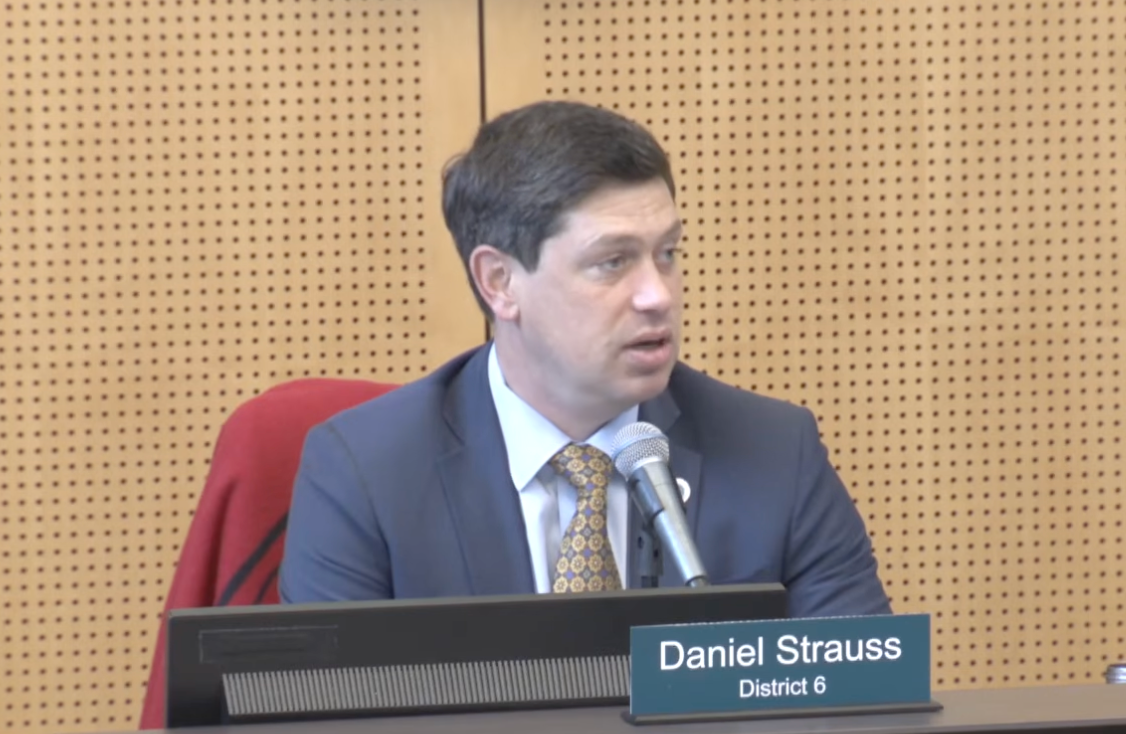
During the committee meeting, Councilmember Rob Saka asked to be added as a co-sponsor, although he appeared to suggest that use of algorithmic pricing by large grocery chains might be an accident, a claim that isn’t backed by evidence.
“I'm concerned about my constituents and my neighbors, as a Delridge resident, being charged more by large corporations who recognize that we have fewer options now, whether those increased prices are the direct result of intentional actions, or more likely than not, by unregulated algorithms running amok,” Saka said.
The ordinance would take effect on September 1, 2027 in order to allow the city’s Department of Finance and Administrative Services to do outreach and education about the law change and allow impacted businesses to make plans to come into compliance.
Resistance to the ordinance
The day before the ordinance was first discussed in council committee, many Seattleites received a text blast urging people to take action because “the Mayor & City Council could put our grocery rewards, coupons, and discounts at risk.”
Representatives from the Northwest Grocer Retail Association, TechNet, the Seattle Metropolitan Chamber of Commerce, Chamber of Progress, the Washington Technology Industry Association, the Seattle Latino Metropolitan Chamber of Commerce, and the Washington Retail Association spoke about their concerns with the bill as written during the meeting’s public comment period.
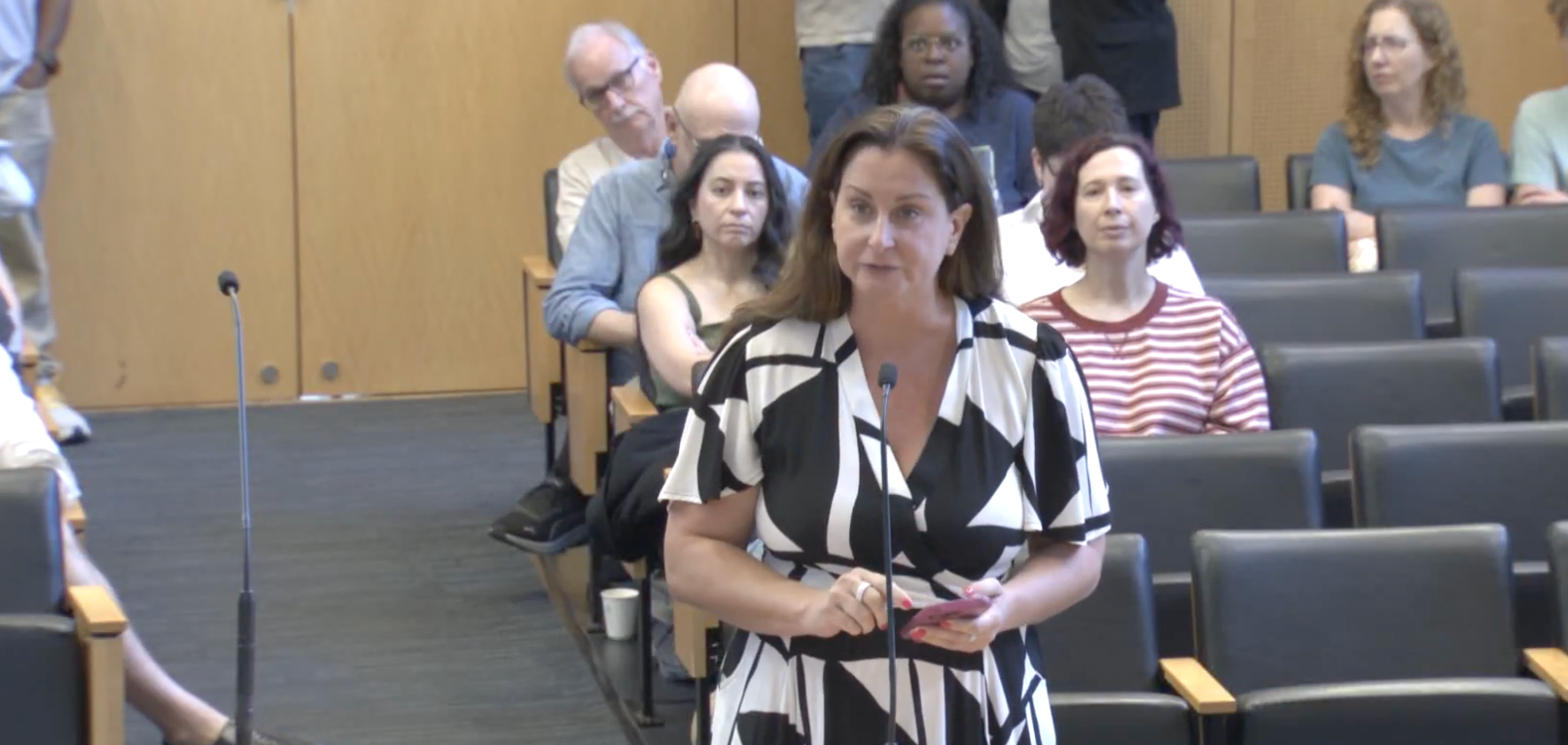
“To be clear, my members support prohibiting the use of personal information to increase prices, but the ordinance should be carefully crafted so it does not unintentionally restrict the discounts and rewards programs that help families, renters, your neighbors, and constituents,” said Amanda Dalton, the president and CEO of the Northwest Grocer Retail Association.
Rinck engaged in a line of questioning with Levitas to confirm that the legislation would not prevent a grocery store from lowering prices or offering discounts to customers, nor would it impact a list of common discounts and coupons. Levitas confirmed the ordinance wouldn’t prevent stores from changing prices due to ordinary business factors, nor would prices be required to be the same from store to store.
Rinck got to the crux of the matter when she asked, “And if a retailer uses information about an individual customer to decide that one person receives a $1 discount while another person receives no discount on the same item, is that functionally a form of individualized pricing, even if the company calls it a discount?”
Levitas answered in the affirmative.
In her conversation with The Urbanist, Rinck underlined that it’s important for loyalty programs, coupons, and discounts to be fair for everyone.
“The only thing we're really prohibiting here is big businesses using your personal information that they bought or scraped off the internet or collected through potentially the loyalty program to set your price differently than anyone else's,” Rinck said. “And so again, we've made it very clear in the legislation that their coupons are fine as long as they're not using your private personal information to decide who gets that coupon.”
Wilson called out the grocery industry’s spending to collect consumers’ personal information as a reason their lobbyists may be opposing the bill.
“Unfortunately, I think that some of our grocery corporations want the freedom to set prices based on personal information. We've seen companies tell their shareholders that this is the direction they're going in, and I think the arguments that they are making now are a little disingenuous,” Wilson said. “These companies are not spending millions of dollars collecting personal information on all of us so that they can make less money, right? And it's really hard to believe that the ultimate intent is not to squeeze everyone for every nickel and dime that they're able to spend.”
Last year, Consumer Reports reported that Kroger grocery stores sell their customer data to other companies for marketing and advertising purposes, with their “alternative profit” business entailing over 35% of their net income.
“Data is clearly a part of the grocery industry right now,” Rinck said. “We're seeing this play out right now in Instacart, but there's some real questions about where is it that we're going from here, and I feel it is important to be proactive and stop this practice before it even starts because it'll only be that much harder down the road if we're trying to claw back and manage something that clearly is in place to try and squeeze money out of our residents.”
Tammie Hetrick, the president and CEO of the Washington Food Industry Association (WFIA) representing. independent groceries, convenience stores, wholesalers, and suppliers gave a cautiously positive testimony. “Over the past two months, WFIA has met regularly with the Mayor's Office and Councilmember Rinck to express our concerns about potential negative consequences on independent grocers,” Hetrick said. “We're very pleased that the ordinance under consideration today does not impact Seattle's independent grocery stores.”
The ordinance’s support of small independent grocers was by design to help them compete in the marketplace.
“We're not trying to get rid of your discounts, your loyalty programs, but also [the ordinance] really is about leveling the playing field for our smaller independent grocers,” Wilson told The Urbanist.
Wilson and Rinck agreed that the ordinance is about affordability and protecting Seattleites from consolidated corporate power.
“We're not trying to stop technology in its tracks,” Wilson said. “We believe in technology and innovation, and we also believe that we need to be using technologies responsibly and really paying attention to the impacts that they have on our communities, on our residents, and designing policy thoughtfully to to mitigate any harms and to make sure that they're having a broad-based benefit and are not just being used to extract profit.”
Proponents also raised the prospect that the rise of AI platforms could supercharge algorithmic pricing, barring intervention.
“When we're really grappling with the reality that we are in the throes of fascism, we know that there are many communities that are under attack by this particular federal government. And as people's feelings of unsafety are rising, I think more of these questions about who can find me and from what dataset are starting to come up,” Rinck said. “With the way we're moving and the speed that innovation is happening on AI, I think [in] local government roles, it really has become a necessity to be able to govern well, we have to understand where our residents' data is going.”
Update: This article has been updated to add Instacart's response to the Consumer Reports study saying they have not used surveillance pricing.
 Doug Trumm