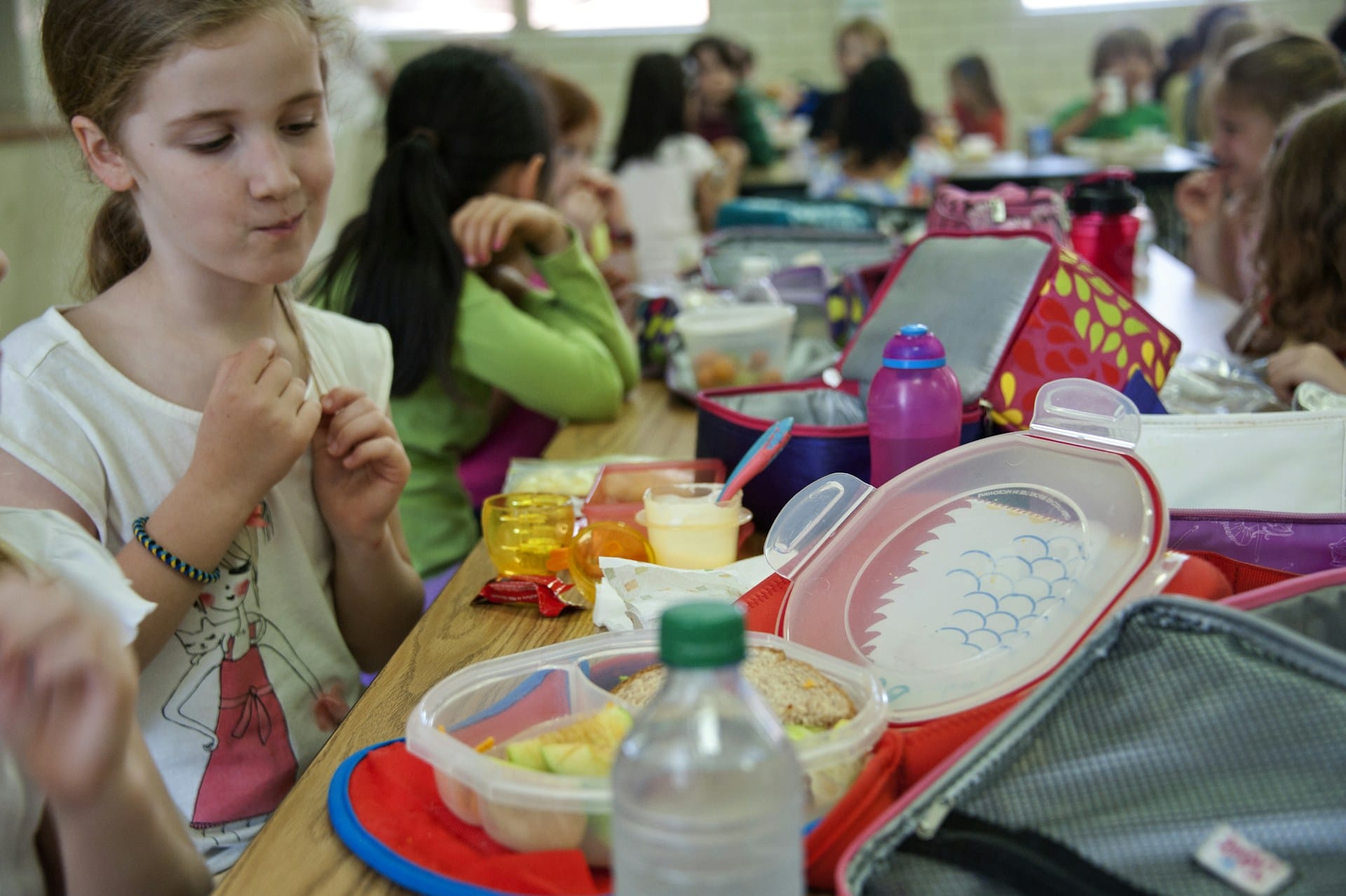
The day after voting to delay the program, the Seattle City Council is moving to ensure students attending K-12 public schools in Seattle will be able to enjoy universal school meals starting this fall.
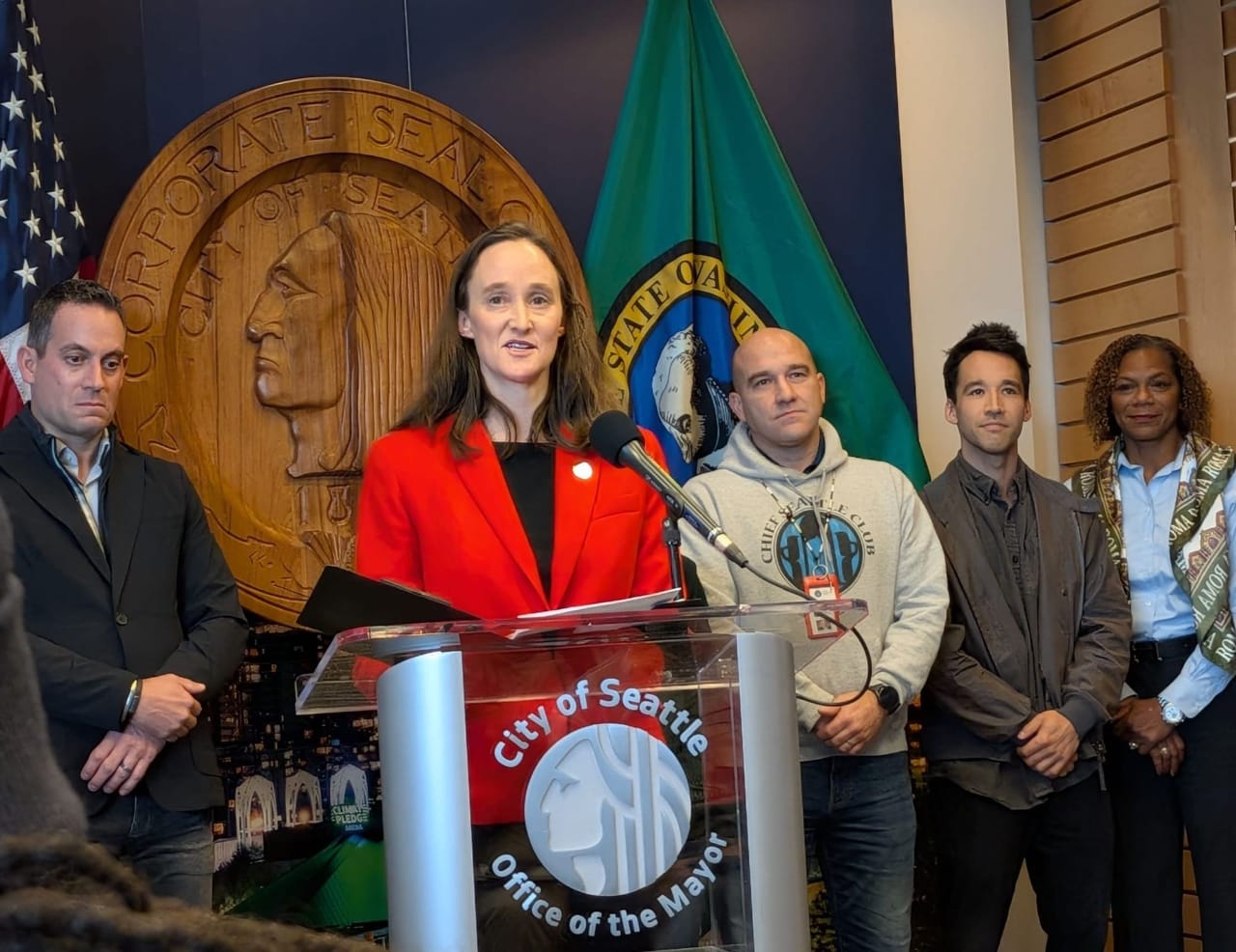
It’s an apparent victory for Seattle Mayor Katie Wilson, who earlier this spring announced her plan to provide universal school meals for Seattle’s children as part of her spending plan for the Families, Education, Preschool, and Promise (FEPP) Levy that passed with 80% of the vote last year.
The Washington State Legislature is planning to use revenue from the newly passed millionaires tax, assuming it survives the legal and electoral challenges against it, to fund universal school meals for all public school students in the state. However, this program is not slated to begin until the 2028-2029 school year. Wilson’s plan bridges this gap at a time when kids are facing increasing food insecurity due to the U.S. Congress slashing food assistance programs last year.
However, Wilson’s plan hit a snag in the form of an amendment on the spending plan co-sponsored by Council President Joy Hollingsworth and Councilmember Dionne Foster. The amendment postponed universal school meals for a year in order to fund a food voucher program providing food on weekends and during school breaks to students who have already qualified for free or reduced school meals.
The new voucher program was also funded by an amendment (with the same co-sponsors) postponing the Seattle Preschool Program’s voucher pilot for a year.
At Wednesday’s FEPP levy meeting, councilmembers passed the amendment postponing universal school meals by a vote of 6-3. Voting in favor of postponing were Hollingsworth and Foster, along with Councilmembers Maritza Rivera, Dan Strauss, Bob Kettle, and Debora Juarez.
Councilmembers Eddie Lin, Alexis Mercedes Rinck, and Rob Saka opposed the amendment.
Wilson expressed disappointment in the decision while affirming her respect for the council’s process.
"When the Trump administration cut SNAP benefits and threatened thousands of families' ability to put food on the table, it made clear how much our neighbors are depending on us to step up,” Wilson said in a statement. “That is what drove me to make universal school meals a priority in the FEPP Levy Implementation and Evaluation Plan. K-12 education is free and universal, and the nutrition a child needs to show up ready to learn should be no different.”
During the lengthy council discussion about the amendment before the vote, Rinck mentioned the possibility of funding both food access programs for kids. Lin also expressed an interest in addressing the food access gap on weekends and school breaks should the amendment fail.
In general, however, the chance to begin the universal school meal program immediately was pitted against funding food vouchers for low-income students. Councilmembers supporting the amendment said this was actually a “Yes, and” proposal because the universal meal program was being postponed instead of outright cut.
“I want to take us back to exactly what we're talking about here,” Juarez said. “We are talking about implementation. We are talking about something being delayed, not denied. We are talking about equity. We are talking about the roots of children being hungry.”
But some councilmembers, at least, had a quick change of heart. In a surprise turnaround about 24 hours after the vote, Hollingsworth, Foster, and Strauss announced a proposal to fund universal school meals starting this fall after all. They will be proposing an amendment to Seattle’s mid-year supplemental budget to provide general fund dollars to pay for the first year of the program. The exact funding source of this investment wasn’t specified in their press release.
Controversial council meeting
At Wednesday’s FEPP levy meeting, councilmembers listened to over an hour of public comment, with Seattleites weighing in on both sides of the debate. Most commenters seemed forced into the either/or dichotomy set up by the introduction of an amendment that took funding from one food program for kids to fund a different one.
Marcia Wright-Soika, the executive director of Family Works, a local nonprofit working to alleviate family food insecurity, rejected that framing in her comment.
“We need to address food insecurity broadly for every child that wants or needs a meal,” Wright-Soika said. “This is a layered issue. We need layered solutions, including public-private partnerships, but they do not have to come at the expense of universal school lunch.”
Particularly noteworthy was the comment given by Elmer Dixon, the co-founder of the Seattle branch of the Black Panthers and original coordinator of their breakfast program, who spoke in favor of the amendment.
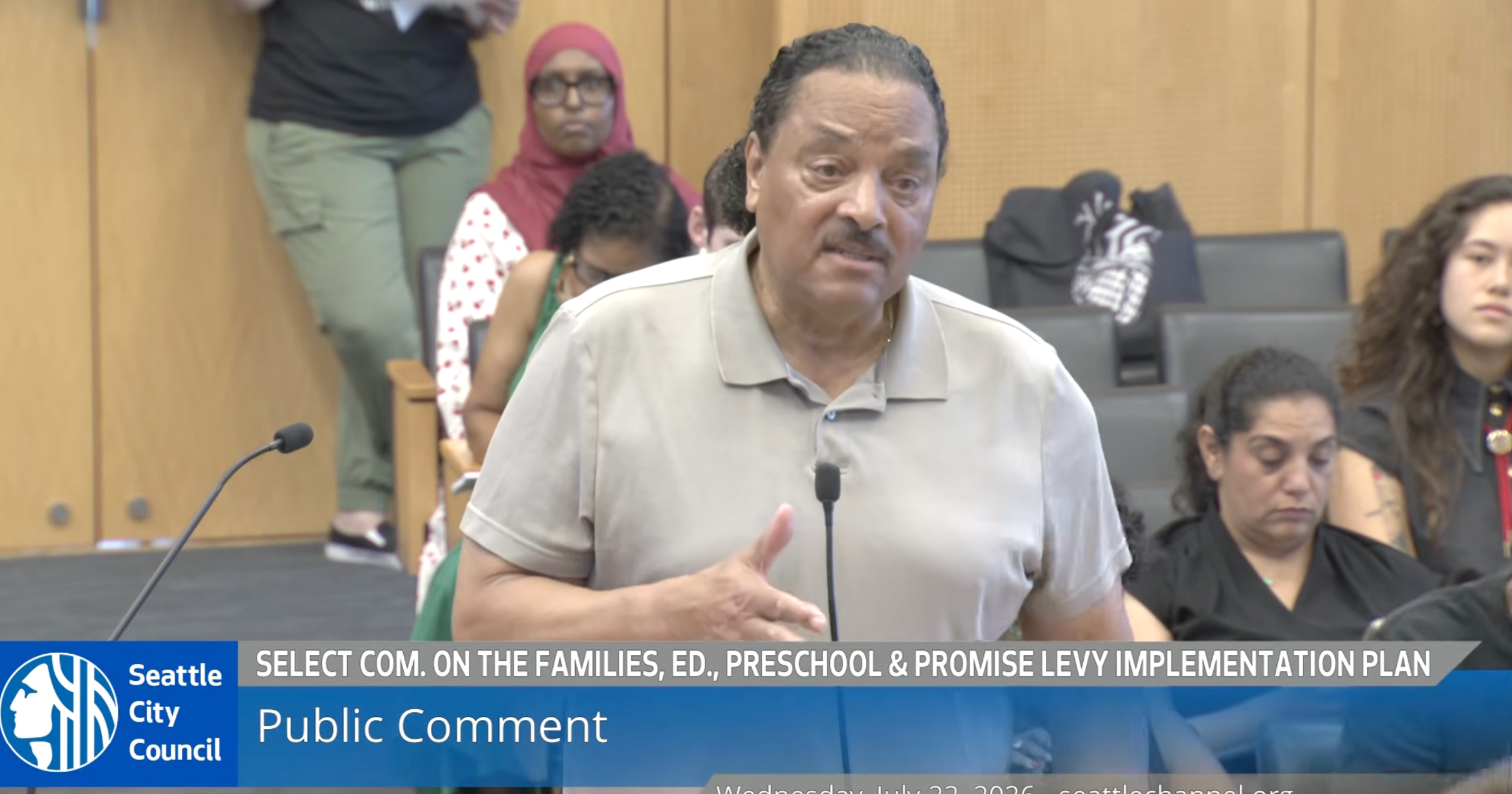
“[The breakfast program] was about feeding the oppressed and the most needy,” Dixon said. "It would have been ludicrous for us to take a breakfast program out to Laurelhurst. And so, that was the intent of that breakfast program. That should be the intent of this feeding program.”
In spite of many commenters talking about the waste of feeding students who might not be hungry, the implementation of the program is not so rigid. The City of Seattle will only be charged for meals served to students, which means that wealthy students can easily opt out of school meals without costing the City a penny.
Foster said the City is currently investing $537,732 annually in programs that provide students with food access on weekends and during school breaks. The new program proposed by her and Hollingsworth will more than double this investment by adding $654,000 annually.
The three “no” votes on the council all appeared visibly upset as they delivered their comments.
Saka spoke about how, when he was a child, he qualified for free or reduced lunch but rarely received any healthcare or dental care. He said his family probably would have qualified for Medicaid but they didn’t participate in the program because of the high administrative burden of applying and staying covered.
“I can only imagine that burden on the families most in need today, especially those from immigrant and refugee backgrounds, because now you're worrying about navigating the system, filling out paperwork, and then worrying about information from that paperwork being sent to the federal authorities,” Saka said. “If you're an immigrant from an immigrant refugee community, you might be targeted for enforcement of immigration. It's more burdensome, it's more onerous now, and it's more risky. So, we know today, colleagues, that there are families that qualify for free and reduced lunch that today are not being served.”
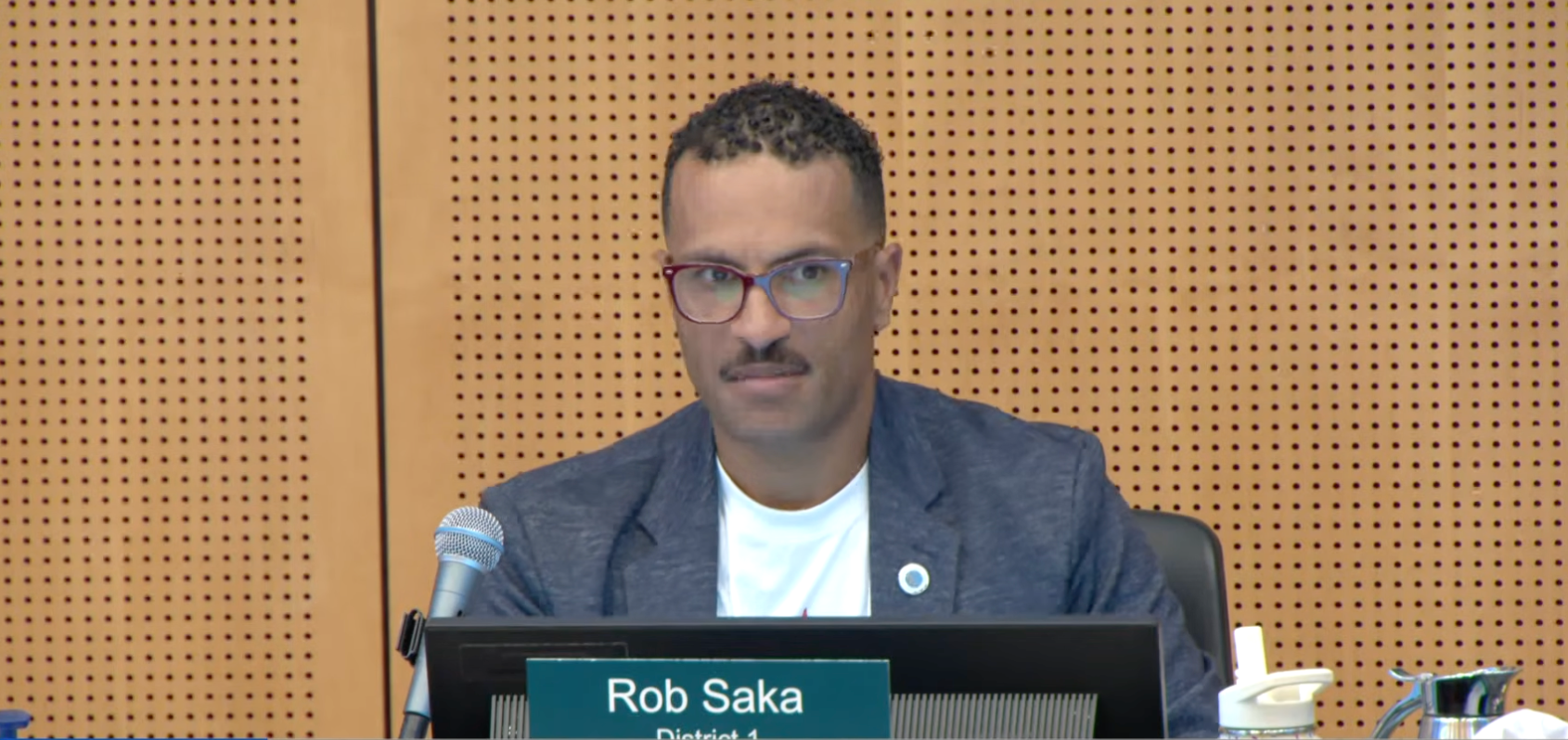
Lin recognized that the amendment would bring more resources to his district – District 2 – specifically, but also said the conversation shouldn’t be a zero sum game.
“I am excited to build the momentum for universal school lunches across both the city and hopefully the state,” Lin said.
Rinck said the debate on universal school meals had been one of the most challenging and emotional policy discussions of her tenure on the council.
“With everything that is happening across our country right now, I do believe it is imperative that we move with urgency to address hunger in our community,” Rinck said. “So on one hand, it has been heartening to see the outpouring of support across our city for feeding our kids, whether it be in schools, on weekends, over school breaks. No child in this community should be going hungry. I know we all agree to that, and that is why it is shocking to my conscience that in a city with the wealth that we know exists, we still have kids going hungry.”
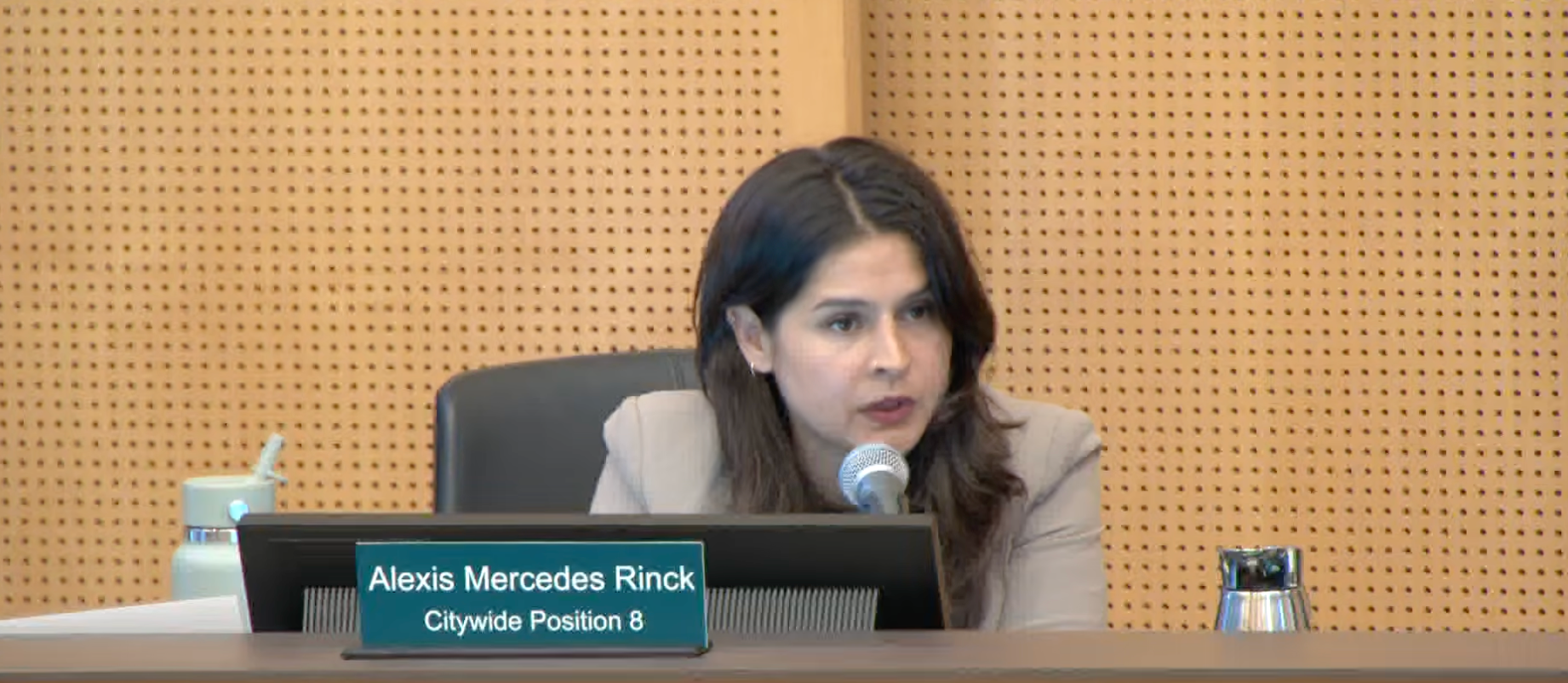
Rinck said if the meal voucher program was being funded by the graffiti abatement fund, money from the Unified Care Team that performs the City’s homeless sweeps, or funds from the Seattle Police Department’s real time crime center, she would support it “in a heartbeat.”
This wasn’t the first time Rinck looked for more funding to feed Seattle’s kids. Last year, Rinck tried to add $2 million annually for food access programs for kids to the FEPP levy before it was put before voters. Her proposal would have added $0.006 per $1000 of assessed value to the levy, with an estimated average tax burden of $6.26 per year to a median-value property.
While the proposal specified supporting Fresh Bucks for families, the additional funds could have been used for any food assistance program, and the amendment specifically called out “afterschool and summer food assistance.”
However, only Rinck, Saka, and Strauss voted in favor of that amendment last year, and it wasn’t included in the final levy proposal that came before voters.
In explaining his support of the amendment this week, Strauss expressed concern about using the levy’s risk and reserves account to pay for two years of universal school meals. However, with his vote in favor of the amendment to delay those meals, he simply reallocated those dollars from the risk and reserves account to pay for the other food program.
In her closing remarks, Hollingsworth didn’t acknowledge the zero sum game she and Foster had set up with their amendment.
“This is obviously a really hard decision, and I believe that this was never about ‘either or’,” Hollingsworth said. “It was always about ‘and’, and implementation, and I just want to highlight that because I know there's been a lot of different perspectives out there, there's been a lot of swirl. Sometimes the lies are more entertaining than the truth, I get that. But I do want to say, and just for the record, that I've always been willing and ready to work with our Mayor's Office on this.”
Political consequences
The sudden change of stance from Hollingsworth, Foster, and Strauss a day after their vote appears to have come about from the large amount of pressure brought to bear by Seattleites who supported Wilson’s universal school meal policy.
All seven district councilmembers are up for election next November, and Robert Cruickshank, the director of digital strategy for California YIMBY and a local organizer, posited that the vote against universal school meals could have a tangible impact on councilmembers’ electoral chances.
“Four of the six Councilmembers who voted yes (Hollingsworth, Rivera, Strauss, and Kettle) are up for reelection next year,” Cruickshank told The Urbanist. “I think this vote will make it much harder for them to win. Universal free school meals have widespread public support, and I expect challengers will make this a major campaign issue in 2027. At least one of those four, maybe more, will likely lose as a result.”
The Urbanist checked back in with Cruickshank after the councilmember proposal to find a new funding source for the first year of universal school meals.
“I think it's a clear recognition that yesterday's vote put them at grave political risk,” Cruickshank said. “It also sets up important questions for the fall budget cycle, when Councilmembers will have to decide whether to cut popular programs. These Councilmembers aren't out of the woods yet.”
Wilson herself told The Urbanist that universal school meals are a policy the vast majority of Seattleites support, and the outcry after the councilmember vote delaying the program gives credence to her read of the situation.
Wilson is not as supportive of the new councilmember proposal, which failed to specify a specific funding source within the general fund.
“Now Council is proposing to pull this funding from our general fund, which is already facing a $175 million deficit,” Wilson said in a statement. “I look forward to seeing which critical services they plan to cut from the general fund to make their numbers work. I ask them to reconsider the fiscally responsible approach my office originally put forward.”
Strauss, who serves as the council’s budget chair, didn’t respond to The Urbanist’s question about what specific money within the general fund he planned to use to fund the school meals. However, he did provide a statement that suggested he might be suggesting an increase in the deficit, which is currently expected to be around $175 million.
"We have a $2 billion general fund and universal free school meals costs around $3.6 million," Strauss said. "Our budget deficit is real and serious. However, this investment in universal free school meals for our students is too important for us not to make."
The new proposal is scheduled for a discussion and vote in the Finance, Native Communities, and Tribal Governments Committee at 9:30am on Tuesday, August 4.
 Amy Sundberg