While busy downtowns have the highest concentration of pedestrian fatalities, the vast majority occur on streets with no sidewalk. According to the Governors Highway Safety Association, 66% of pedestrian fatalities occurred on sidewalk-less streets. But building out full sidewalks on the tens of thousands of miles of suburban and rural roads is prohibitively expensive, costing upwards of $900,000 per mile. There’s a better way: single-side multiuse paths.
Cheaper to build
Single-side multiuse paths are cheaper to build than two-side sidewalks. Construction is cheaper because they only require a construction zone on one side of the street, reducing or eliminating the number of storm drains, light poles and right-of-way acquisitions. Multiuse paths can utilize asphalt, which is significantly cheaper than sidewalk cement.
Seattle’s October 2021 Pedestrian Master Plan Progress Report highlights the cost difference: while standard two-sided sidewalk construction runs between $350,000 and $800,000 for each side of the street, ergo $700,000 and $1.6 million per two-sided block. Meanwhile a single-sided multiuse path costs just $150,000 per block, 4-10 times cheaper than a double-sided sidewalk
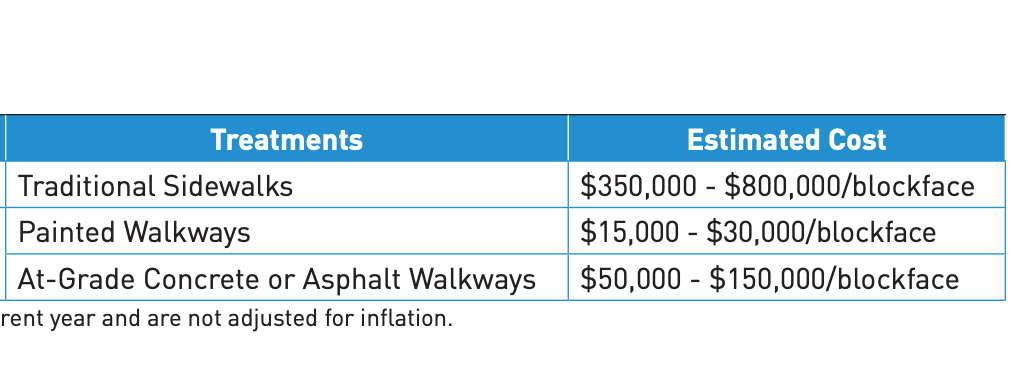
The report also estimates that Seattle has 11,000 blocks that lack sidewalks. Building out sidewalks would cost between $3.9 and $8.8 billion, compared to $1.7 billion for single-sided multiuse paths.
Spokane is building a $1.75 million, two-mile ‘multiuse path’ on Sunset Highway near the Spokane Airport. The winning bid came in $1.5 million less than city planners expected.
Occupies less space
One-sided paths require less space than two-sided multiuse facilities. Regulation sidewalks require five feet of walkway and a 1.5-foot-wide gutter, equaling about 13 feet for two sides. If the sidewalk is accompanied by two 6.5-foot protected bike lanes, it mushrooms to 23 feet of required right-of-way. A multiuse path requires a minimum of 10 feet and a single 1.5 foot gutter, equaling 11.5 feet, less than half the space.
As a result, many more streets are eligible for a multiuse path than sidewalks + bike lanes. Narrower facilities need not eliminate as much on-street parking, street trees or power poles, and single-side multiuse trails interfere with half as many driveways, mailboxes and parking spots.
Often better for users
In many use cases, a 10- or 12-foot multiuse path is probably better fit for most users, compared to a sidewalk + bike lane combination. A group can walk three abreast on a 12-foot multiuse path, while a bike passes in the opposite direction. Bikes and scooters can overtake each other easily. Outside the busiest areas, bike and scooter traffic jams are rare. And wide paths create greater separation from cars for vulnerable people walking, rolling, and biking. Plus, trash cans left out for pickup day are less of an obstacle on a wider facility, as compared to a narrow sidewalk or bike lane.
On busy or high-speed streets, multiuse paths need physical barriers to protect from distracted drivers, but the standard sidewalk-style four-inch vertical curbs work great for that. And enforcement is required to keep delivery trucks and Uber drivers off, no different than bike lanes.
On the down side, people have to cross the road to get to a safe walkway, which is suboptimal. And pedestrians don’t love sharing space with bikes and scooters. Although multiuse paths shouldn’t replace sidewalks in every case, they are a practical solution and a big improvement where there is no sidewalk..
Quantifying Bremerton
Bremerton has well over 100 miles of streets that lack sidewalks. A 2024 report noted that 66% of Bremerton’s 127 miles of arterial and collector streets lack “sidewalks available on both sides… 38% of existing sidewalks are in marginal or worse condition.
A 2026 report provided cost estimates for building new sidewalks in Bremerton. For example, a 0.3-mile single-sided sidewalk costs $136,000. That’s about $450,000 per mile, side of the street, significantly less expensive than Seattle cost. To complete all the missing sidewalks on both sides of Bremerton’s arterial and collector streets would cost about $76 million.
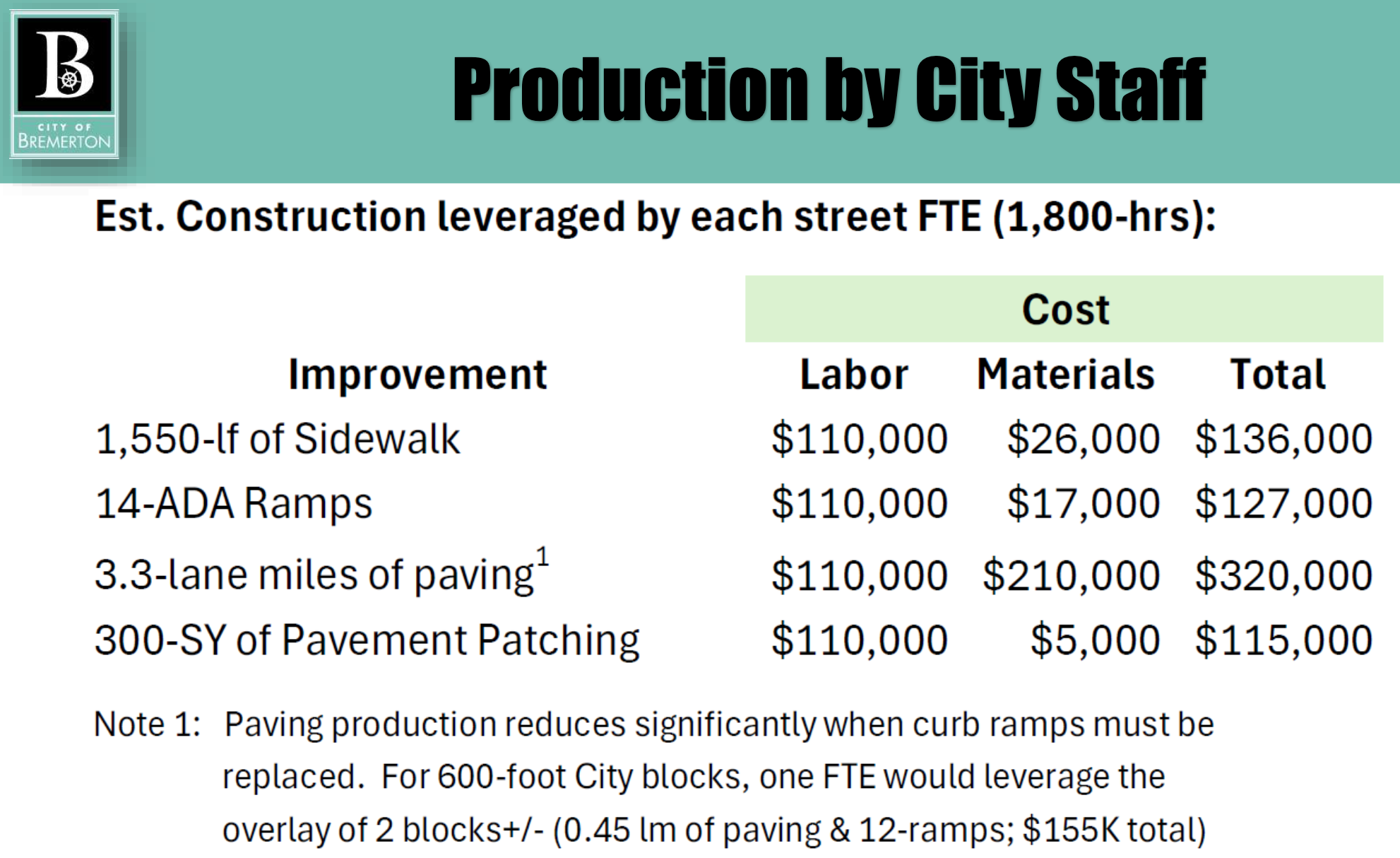
Alternatively, building single-sided, multiuse paths at Seattle’s 2022 estimate of $150,000 per mile would cost just $12.5 million for all arterial and collector streets.
Bremerton has several streets with high pedestrian traffic and no sidewalks, including Pine Road, Snyder Avenue, N Naval Avenue, National Avenue and Werner Road.
Safety deserts
Washington State has thousands of miles of streets and roads without any space for pedestrians. The City of Seattle’s Pedestrian Master Plan counted 11,000 blocks - 26% of all streets - have no or incomplete sidewalks. Suburban and rural roads are infamous for long stretches of high-speed roads with narrow or non-existent shoulders, forcing close car-on-bike passes that are uncomfortable for both driver and cyclist.
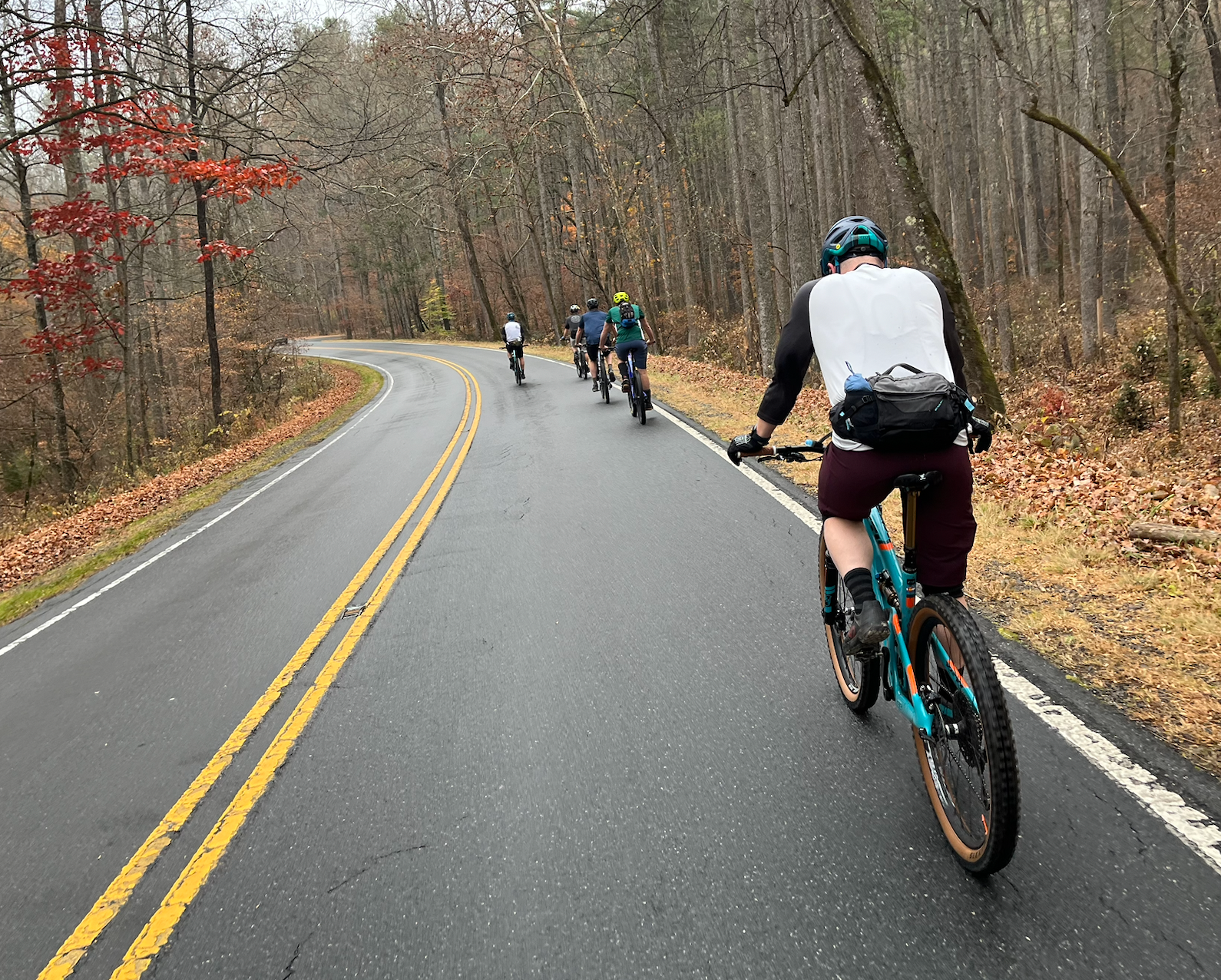
These unsafe streets and roads are the crime scene for two-thirds of pedestrian fatalities, many of which occur on high-speed suburban roads. Addressing these safety deserts should be among our top transportation priorities.
Boise, Idaho is leading the way with an aggressive plan to build 110 miles of multiuse paths in the next decade. Boise includes many sidewalk deserts, but the planned network of multiuse paths will greatly improve mobility for people walking, rolling, and biking.
The path forward
Traditional sidewalks are often too costly and space-intensive to be the sole solution for the thousands of miles of urban, suburban and rural roads that currently leave pedestrians and cyclists exposed. By prioritizing single-side multiuse paths, cities can deliver safe, protected infrastructure for a fraction of the price and footprint of conventional two-sided concrete sidewalks.
This shift is not just about fiscal responsibility; it is about finally closing the gap in our "safety deserts" to build streets that effectively serve every member of our communities.