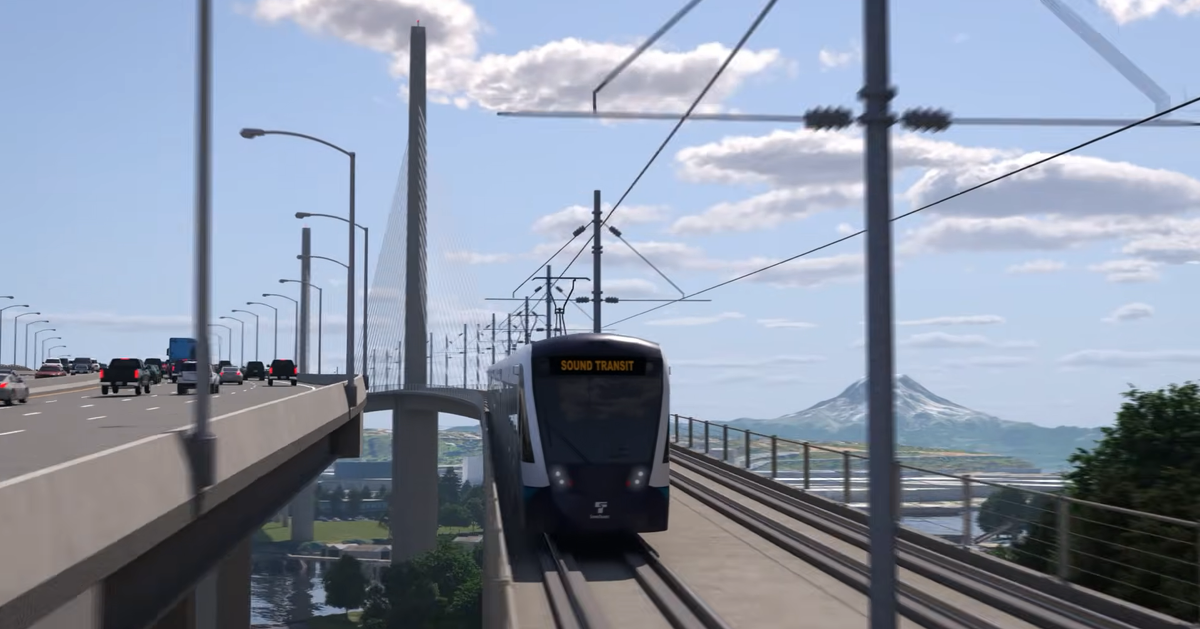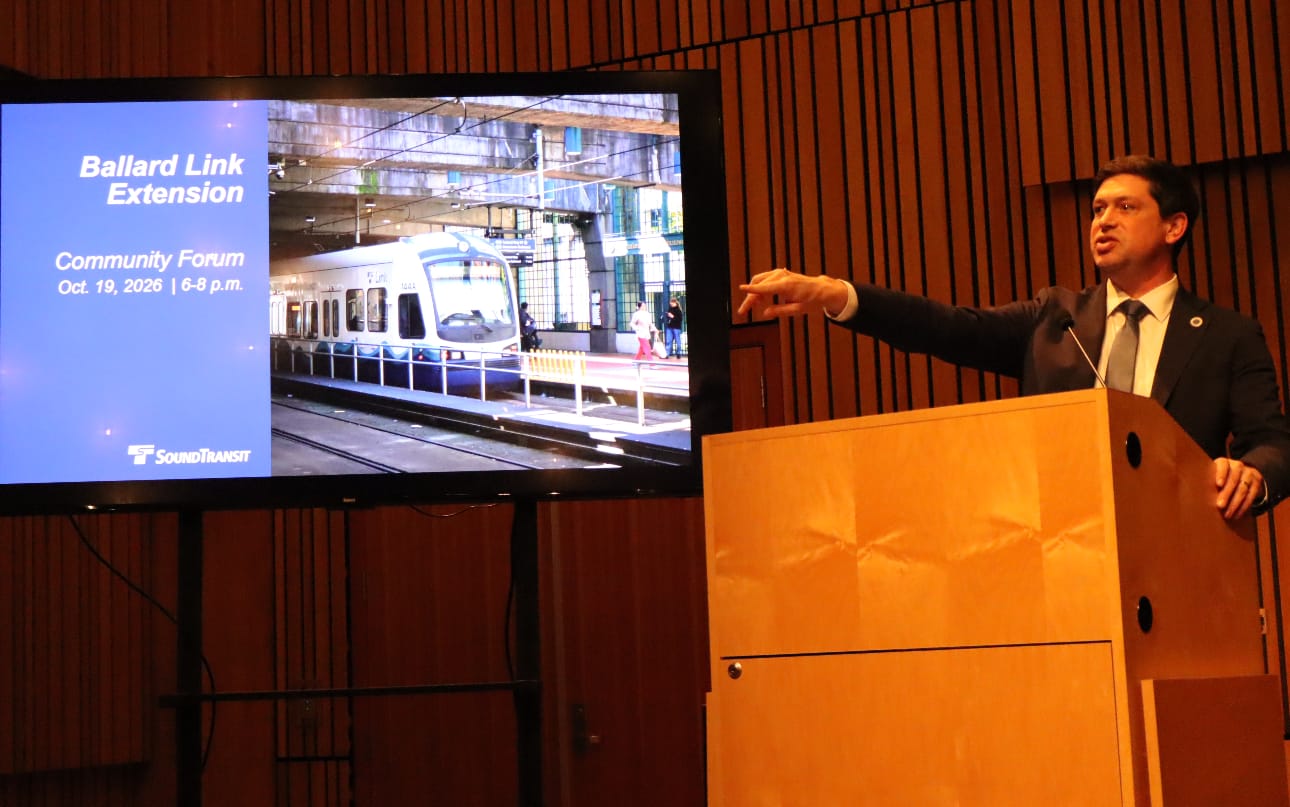
Is the promise of connecting Ballard to the rest of Sound Transit's regional network on the ropes? The answer from Sound Transit planners and board members this week was a clear no, assuring attendees packing into the National Nordic Museum Monday night that the light rail project voters approved in 2016 has a clear path to completion.
It's a hard message to deliver, after a Sound Transit board vote in May separated the long-planned Ballard Link Extension into two phases, with construction funding only identified for stations between Chinatown International District and Seattle Center. That vote demoralized a lot of Northwest Seattle residents, including voters who had helped to get the Sound Transit 3 ballot measure across the finish line a decade ago.
But with $300 million in funding still on hand to design the full line all the way to 15th Avenue NW and Market Street in Ballard, Sound Transit says nothing has materially changed since that vote. The agency still has a significant runway available to find the additional $8 to $10 billion needed to get across the finish line – either through additional revenue, different types of borrowing, or by building things more cheaply.
If that additional funding is found, the entire line could open by 2042 – if not, it may take until 2060 for light rail stations in Smith Cove, Interbay, and Ballard to open.
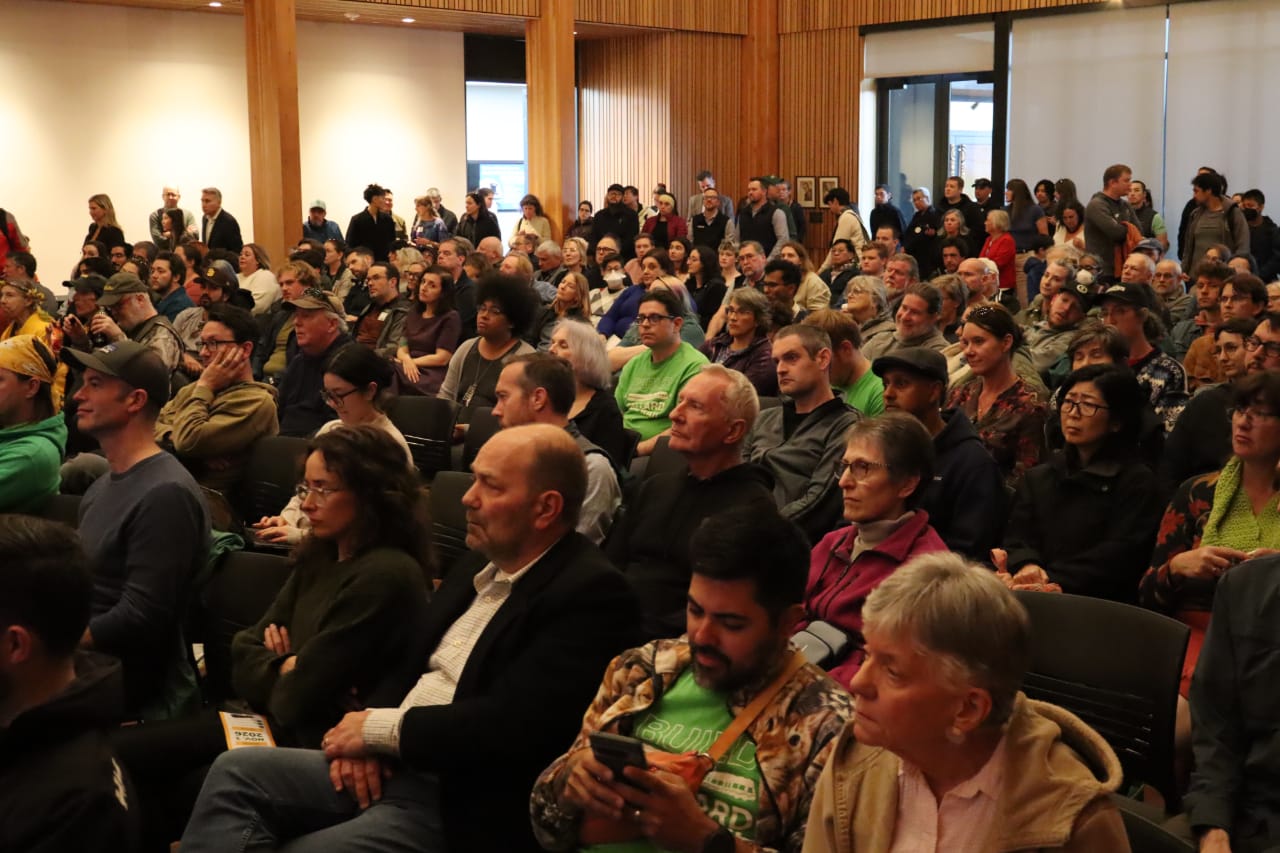
"In my daily life, we're getting to Ballard. We're designing to Ballard," Brad Owen, Sound Transit's Acting Chief Capital Delivery Officer, told the crowd. "We're looking for cost savings in the CID, we're looking for cost savings in Midtown, we're looking for cost savings at Market Street. We're treating the entire project the exact same."
In order to start service by 2042, Sound Transit needs to start construction on the downtown tunnel segment by early 2032, but thanks to the fact that the Ballard and Interbay segments of the project are less complicated to construct, work there won't actually have to start until late 2033 or early 2034. That phasing gives the agency more time to bring Ballard Link into the affordable range.
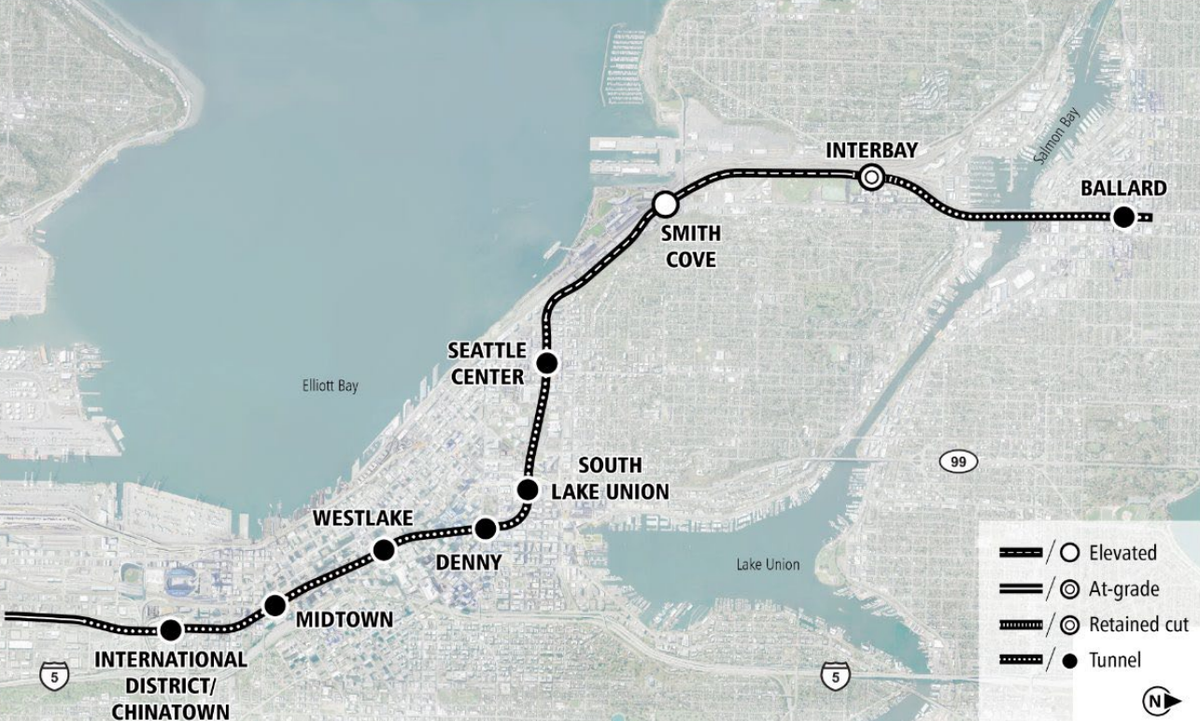
Sound Transit's first major deadline doesn't come until 2030, when an additional $1 billion is needed to start to acquire property north of Seattle Center. By that time, the design team is hopeful about unlocking additional cost savings by refining station and guideway design, the most likely way that Sound Transit is going to be able to get Ballard Link fully funded.
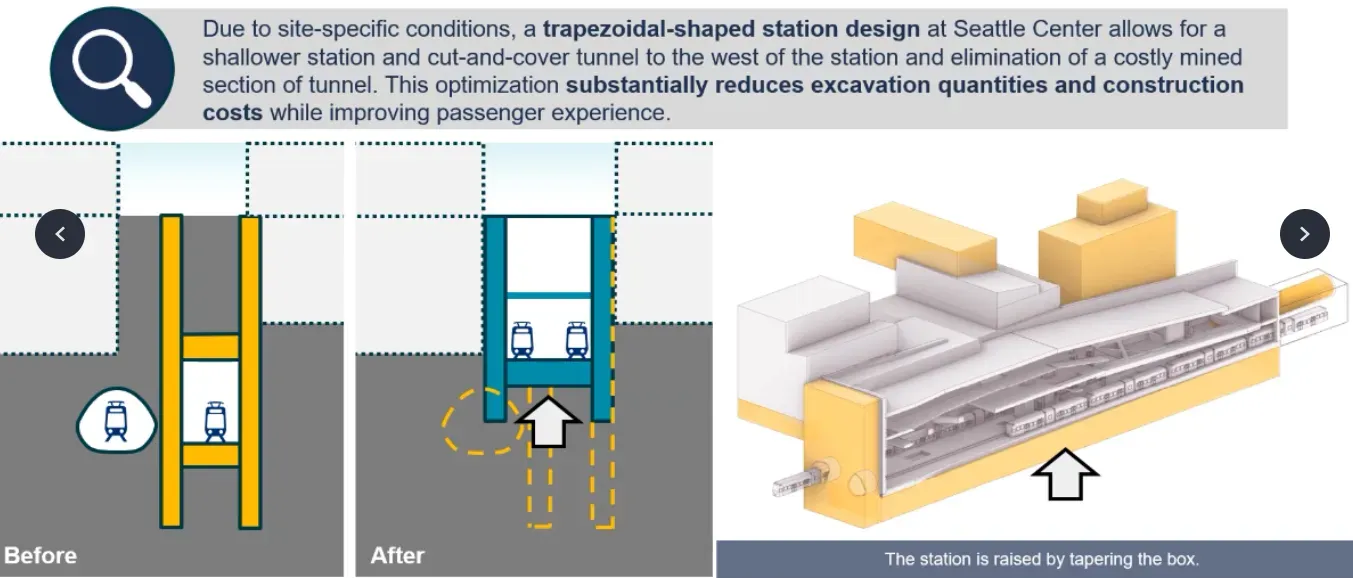
$1.5 billion to $3 billion in cost savings have already been located for Ballard Link, lower hanging fruit that includes the infamous "trapezoidal" Seattle Center station box – a refinement that avoids having to build an expensive mined tunnel rather than simply constructing a cut-and-cover one.
Other refinements have come with impacts for riders, including the consolidation of two stations in South Lake Union into one, taking away a direct transfer near 7th Avenue N and Harrison Street for Route 5 and E Line riders.
Earlier this fall, Sound Transit put out a Request for Information (RFI) seeking outside help in identifying more cost saving ideas, a move that was pushed by transit advocates back in the spring. Owen said that the agency is still reviewing those submittals, but described many of them as validating work that Sound Transit was already doing.
"One of the cool things is we're already doing a lot of the things that they identified in the RFI," Owen said. It's difficult for us to communicate what we do every single day on a daily basis, but, some of the things they talked about, like – getting to talk technical for a moment – 'don't build temporary things, only build permanent things.'"
Monday's town hall also served as an introduction to the Ballard Link Extension's new Executive Project Director, following's Owen's departure from that job to move up ladder following the departure of former Megaproject lead Terri Mestas. Lauren Matthias will now lead the project after being snagged from TransLink in Vancouver, B.C. where she worked on the Broadway Subway project.
"One of the reasons we brought Lauren to town is because she built a lot of the stuff that's in Vancouver right now. And bringing that expertise, not just through the RFI, but through the hiring of Sound Transit staff, the hiring of consultants, we're excited to get through that," Owen said. "We're gonna publish the results of the RFI, we're going to publish our response to it, and I can promise you some of the things that are in that RFI are going to end up on the project."
Ideas that have been set aside
Owen also addressed some of the bolder ideas for saving costs on the project that have been circulating, with help from Ballard Link Project Director Daniel Turner. Many of those ideas have been put forward in op-eds in The Urbanist, including the idea of building light rail to Ballard (and West Seattle) as an automated system with smaller stations where trains come very frequently.
Turner told town hall attendees that the agency did take a look at that proposal and found it ultimately wouldn't save very much money in the broader scheme of things.
"It's an interesting idea. In order to introduce new trains, you have to isolate the line, meaning Ballard to West Seattle, not the line extension, as it's currently planned," Turner said. "If you were to do that, we did a little exercise, how much money could you save? Let's say we cut our stations in half. And that got us to roughly about $2 billion in savings. And what we found was, with additional delay, additional process – we would need new fleet, we would need maintenance upgrades, that we're going to start offsetting pretty quickly, and not likely to actually ultimately reduce cost. And so with some of the trade-offs, including delay including less capacity in the system, we decided not to pursue that idea."
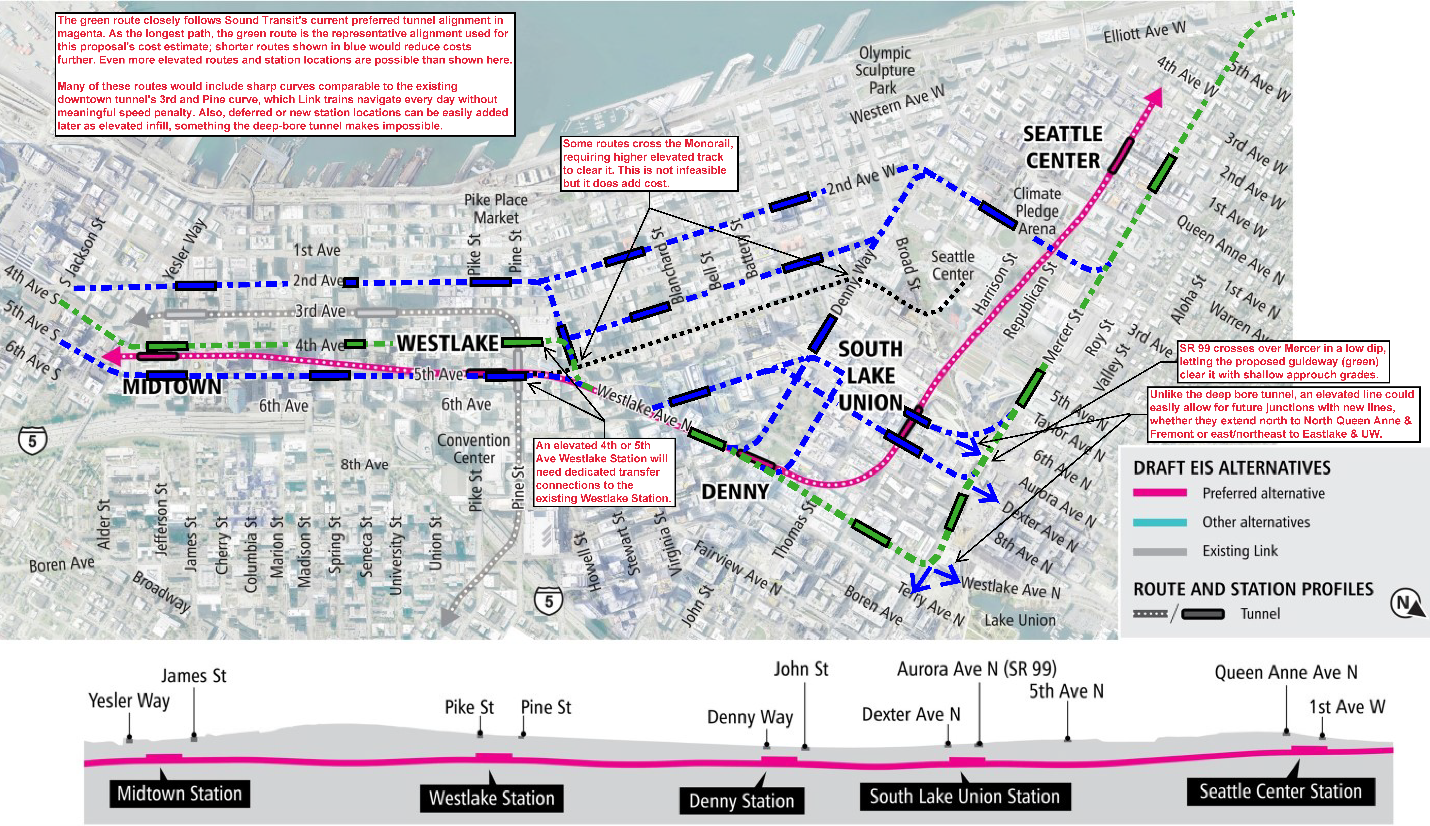
Transit advocates have also pressed Sound Transit to consider what it would look like to avoid a very expensive tunnel under downtown Seattle, and instead build an elevated line through the city's central core.
"Certainly, our project team does think about all options that are available. We don't just discount something. Right off the bat, we do look at it," Turner said. "We look at things like topography, what's the existing infrastructure, what would the impact be on businesses and roads, and when we're thinking about what we call vertical alignment, which is underground versus at grade versus elevated, it really is location-specific, and it's not common in North America, in a downtown core, to have an elevated guideway, particularly with all of those constraints, so that's why we didn't land there."
The billion dollar bill
While the Sound Transit design team is looking high and low for cost savings, others at the agency are looking ahead to next year and the 105-day state legislative session. One big hope is that lawmakers will amend state law to allow Sound Transit to access 75-year bonds that were authorized under the federal Transportation Infrastructure Finance and Innovation Act (TIFIA) program in 2021.
"We have a real credit crunch starting in the mid-2030s because we're building a number of projects at the same time. We have some artificial constraints on our borrowing capacity, constraints that the market would not impose, but that we have imposed on ourselves through state and local law," CEO Dow Constantine said. "In the State of Washington, there's a 40-year limit on borrowing, but if you can borrow money at very low rates. stretch it out over a longer time. That gives us more capacity during those crunch years, and we can come back and pay down the debt, based on what the market is showing us."
By being able to tap into 75 year bonds, Constantine said, the agency could unlock the equivalent of $1 billion in project cost savings.
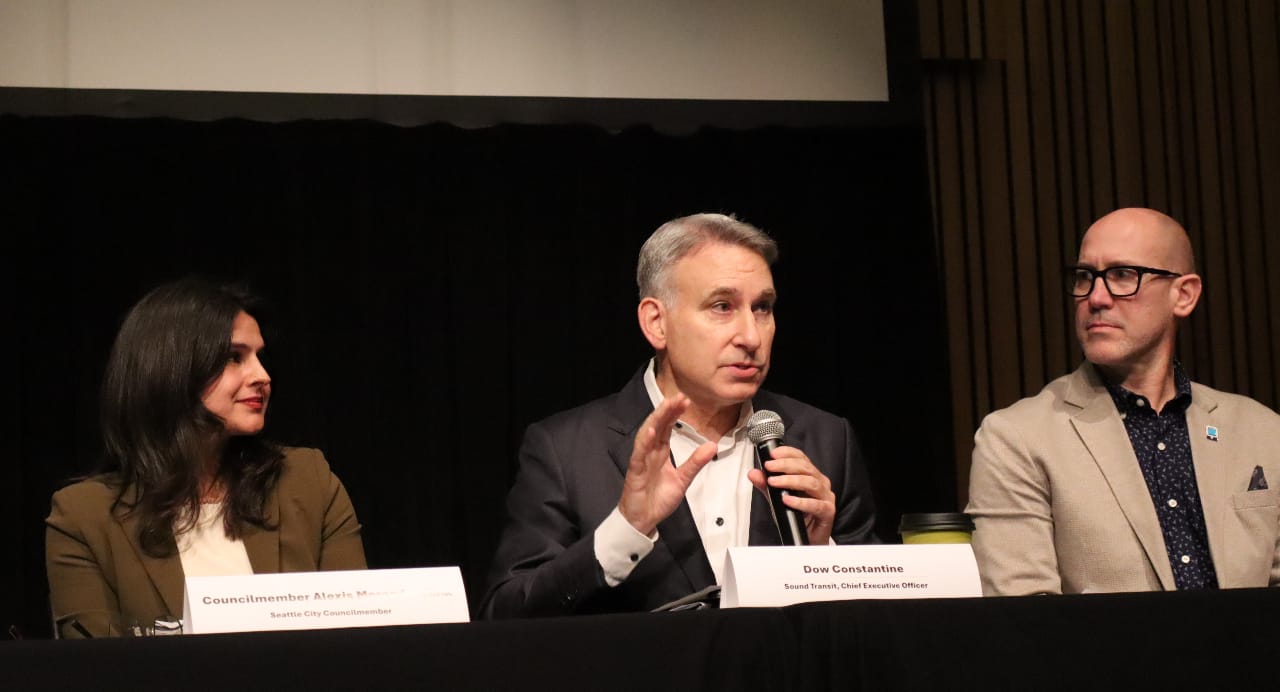
Representative Liz Berry, sharing the stage with fellow legislator from the 36th Legislative District Senator Noel Frame, shared that next year House Transportation committee chair Jake Fey (D-27th LD, Tacoma) would be the prime sponsor for the 75 year bond bill. The 2025 attempt to advance that change passed the Senate but failed in the House, so Fey's sponsorship represents a major step.
Rep. Julia Reed, also a member of the 36th District delegation and a vice chair of the Transportation committee, also reportedly plans to co-sponsor the bill.
But the idea of allowing such long bond terms doesn't have universal approval among Sound Transit's leaders. The day after Monday's forum, King County Councilmember and Sound Transit board member Claudia Balducci took issue with the proposal's potential inclusion on King County's own legislative agenda next year, still being drafted.
"The thought of issuing bonds that will not be paid back until I am dead, my children are dead, and my grandchildren are elderly is concerning to me for an agency that does not seem to have its costs under control," Balducci said.
Though Sound Transit could wait the full 75 years to fully pay down those bonds, it likely wouldn't, with the lower interest rate simply allowing the agency to get through its financial crunch years and then turn around and pay off the principal. But state legislators will likely have a lot of questions about the proposal as it advances through the legislative process again in 2027.
Bringing Ballard better transit now
Another hot topic Monday was Ballard's current level of transit service, and what can be done to help residents of Northwest Seattle get around while they wait on light rail's eventual arrival. Bus service will be how Ballardites are getting around on public transit for the foreseeable future, and there are obvious things that can be done to make those trips better right now – though that work likely doesn't involve Sound Transit directly.
Added trips on King County Metro's D Line are likely if Seattle voters sign onto Mayor Katie Wilson's proposed Seattle Transit Measure renewal, on the November 3 ballot. But the D Line is not exactly lightning quick, and requires riders take a detour through Uptown where they often run into traffic.
District 6 Councilmember Dan Strauss has been pushing for Metro to restore more trips on the Route 17, which takes a direct route to get to Ballard and also directly serves the Sunset Hill neighborhood. Currently it only runs four times during the morning rush hour toward downtown and four times in the evening rush hour to Ballard, with no contraflow trips. There's also the suspended Route 15X, which ran up 15th Avenue NW like the D Line but directly from downtown.
"It's important to me that we bring back the 15X, because it is essentially the D Line Express," Strauss said, as he moderated the town hall. "We don't have to get stuck in Uptown, that has a single lane that does not have bus priority. And it's really critical that we do this now."
Strauss also pressed Wilson on committing to restoring more 17 trips, even before the fate of the Seattle Transit Measure is even known. Wilson shied away from making that commitment, noting that Metro (and the Seattle Department of Transportation) uses a broad range of criteria to decide where to invest service. But she did make another commitment when it comes to helping get existing routes moving faster.
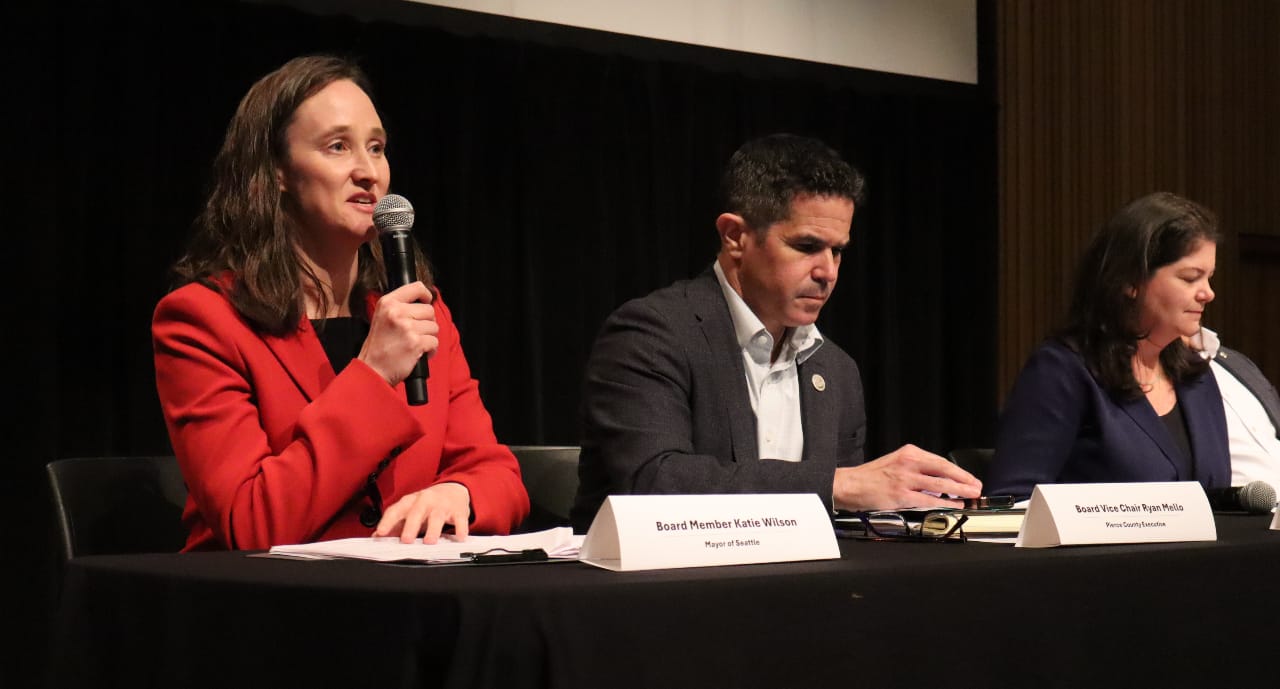
"I'm not gonna comment on all specifics, but I'll say, y'all know I love a good bus lane and some signal priority," Wilson said. "I'm happy to look at opportunities to work with SDOT to speed up transit and improve reliability on Ballard routes, absolutely."
A 2028 milestone
A major make-or-break moment for Sound Transit will be early 2028, after the agency is able to bring on a consultant and work through additional proposals to bring down Ballard Link's costs. By that time, the agency also hopes to have received its federal Record of Decision on the project, the stamp of approval that means environmental review has been fully completed.
"We'll have a good sense of the cost savings that we've been able to bring into the project," Owen said of that early 2028 date. He noted that the design team has already seen success and isn't planning on resting on its laurels any time soon.
"When I joined the project and at the direction of our board, we put together a cost savings work plan and we really took a blue sky approach," Owen said. "How would we approach this project and cut costs on the project? And because of that, we have about $1.5 to $3 billion [savings] in the project," Owen said. "But we're not going to stop. We're going to continue refining the cost savings."
The past few months have been rough for Ballard transit riders just hoping to more easily access the rest of the city within their lifetimes. But Sound Transit definitely tried to convey a sense of optimism this week, despite the gloomy headlines.
"We're playing the long game here," Constantine said. "You gotta put one foot in front of the other, and it's all about the grit and determination to stand in there and make some things happen, locally, statewide, and nationally, and we will get there."
 Doug Trumm
 Ryan Packer