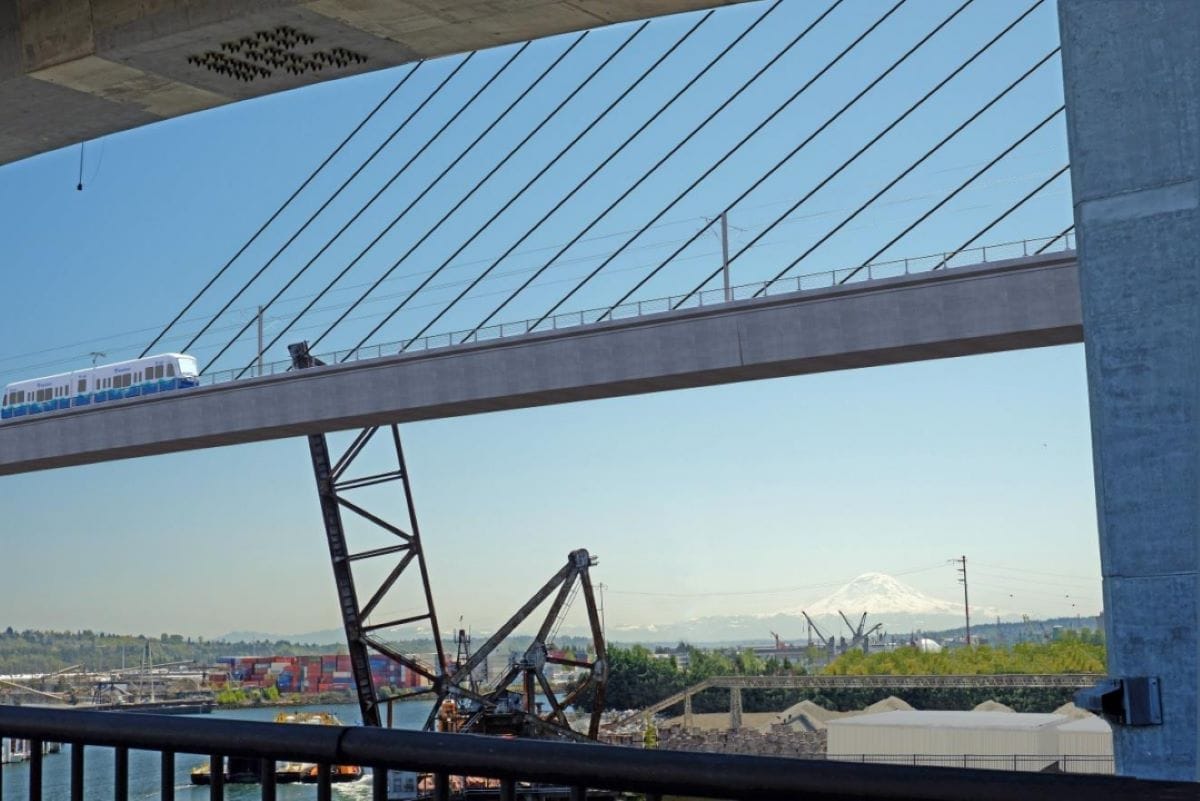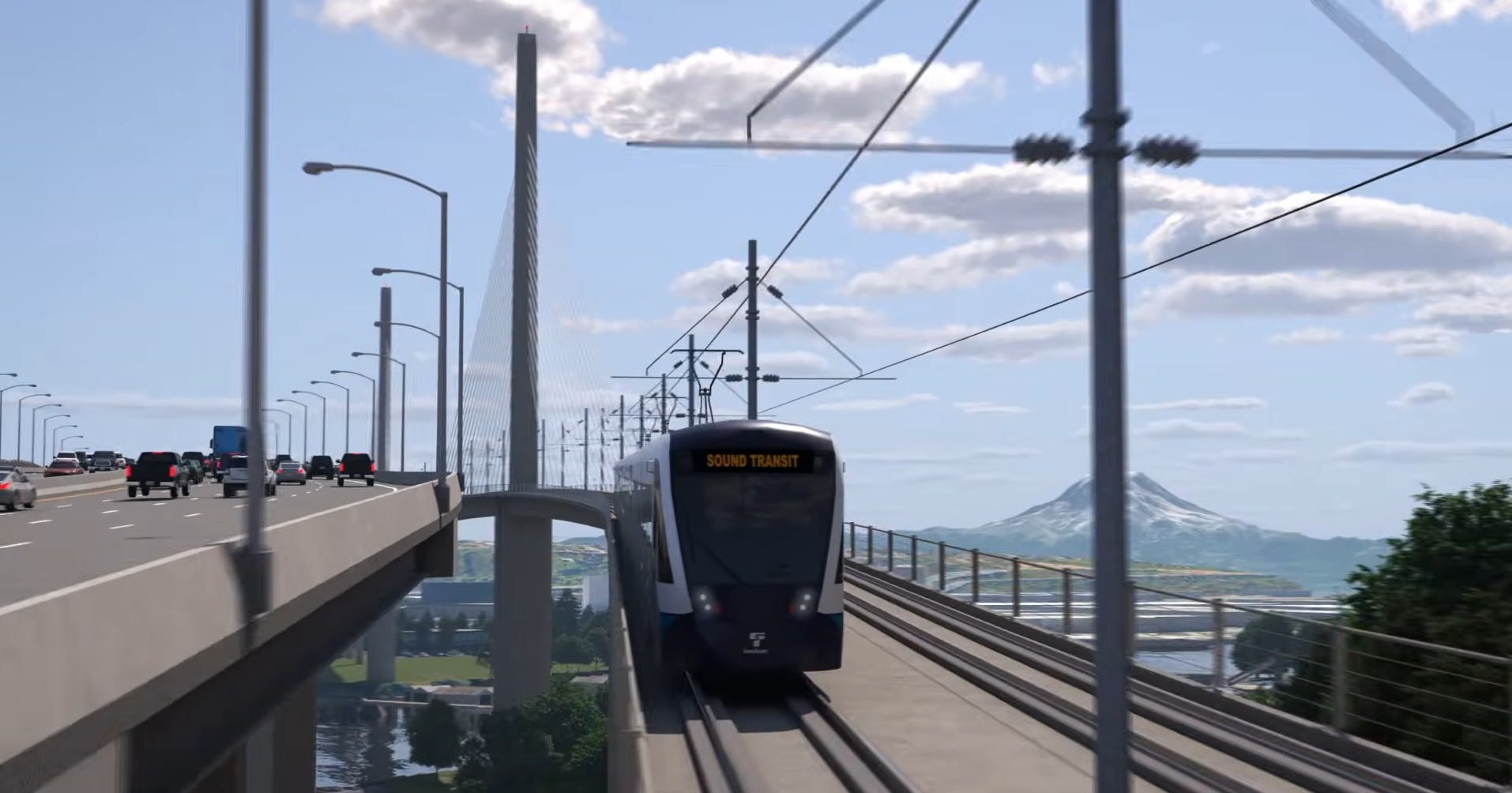
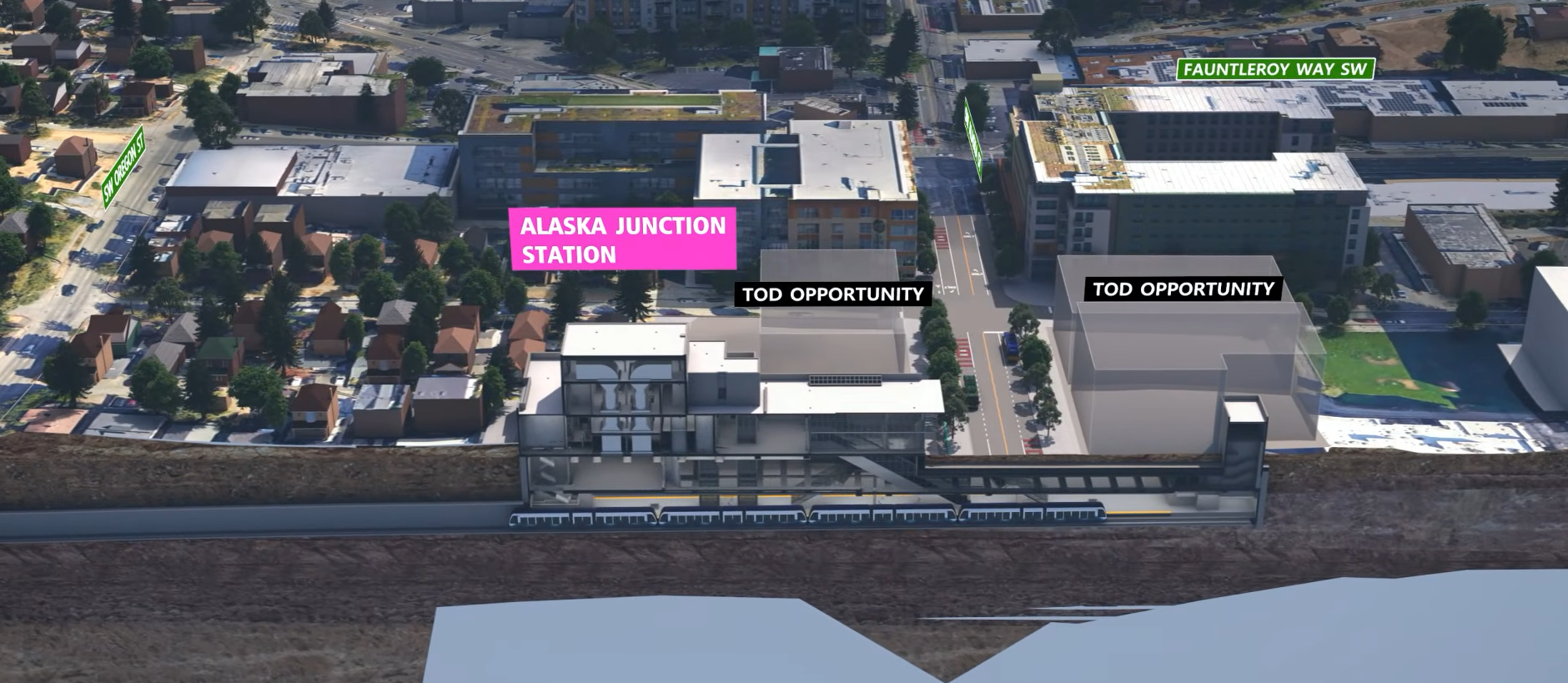
Sound Transit has officially reached the 30% design milestone on the West Seattle Link project, celebrating the occasion by releasing a new flyover video that shows renderings of the entire 3.9 mile planned light rail line between SoDo and Alaska Junction. Set to open by 2035, the 3 Line is the next light rail project planned for construction in the wake of a feverish pace of grand openings over the past two years.
The new images, which reflect the project's design as of this past July, provide an illustration of the significant amount of value engineering that Sound Transit conducted on the line – work that likely saved the project from the chopping block this past spring as the agency grappled with a major budget gap.
From a slimmed-down SoDo station – which will be the northern terminus of the line until the Ballard Link project opens as early as 2042 (or as late as 2060) – to a more compact Alaska Junction, Sound Transit was able to drive down the cost of the line by more than $2 billion between 2024 and 2026.
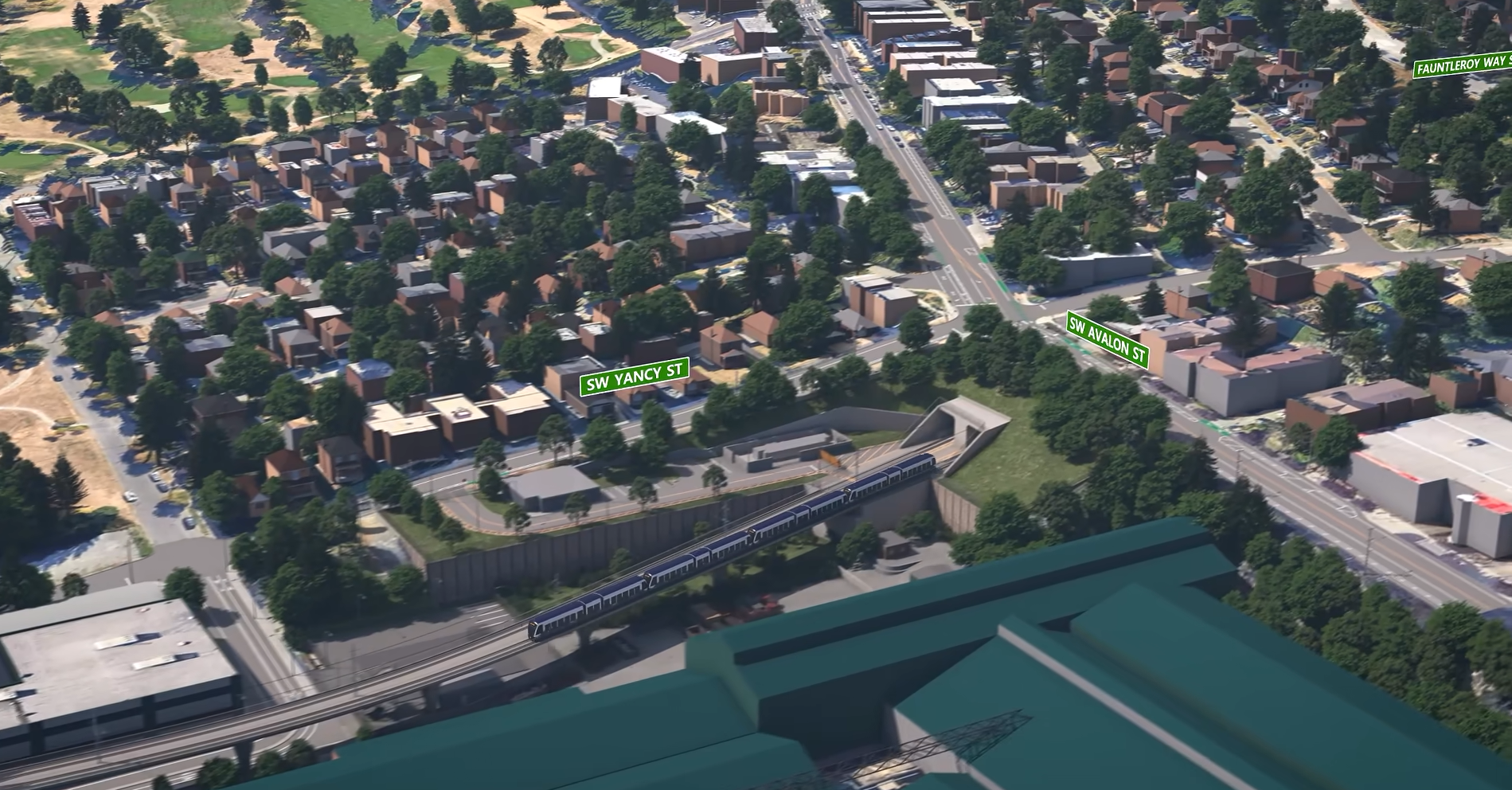
That work to cut costs has come with real trade-offs for riders. The video shows the new plan for the 3 Line to enter a tunnel near Nucor Steel's West Seattle plant at SW Yancy Street, bypassing a planned station under Avalon Way SW that would have served a growing section of the neighborhood. Without that station, Sound Transit was able to redesign the location of the planned guideway and tunnel portal to avoid having to displace several high profile properties, including a portion of the West Seattle Health Club.
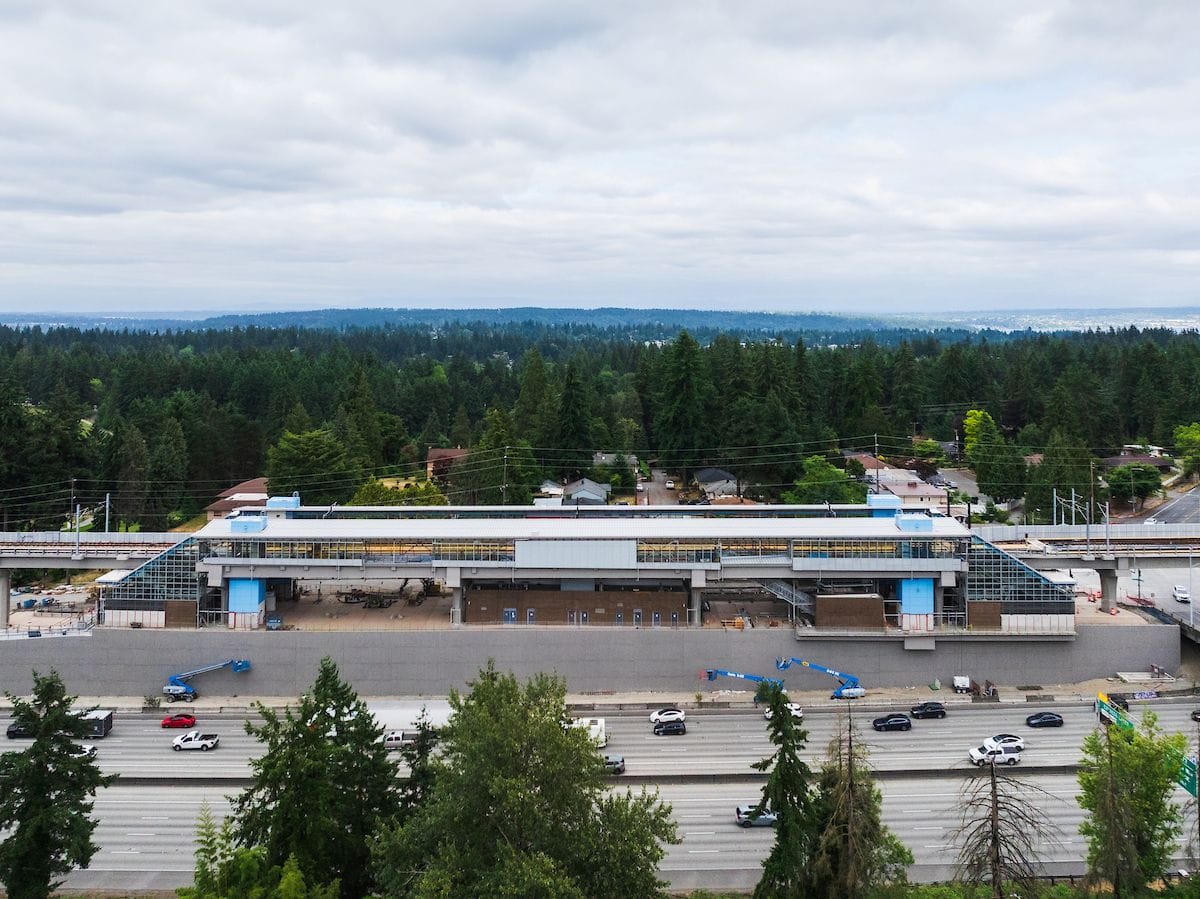
But in contrast with the infill station that opened in North Seattle late last month, it will not be possible to come back later and build Avalon Station down the road if Sound Transit's finances somehow turn around, or voters approve a Sound Transit 4.
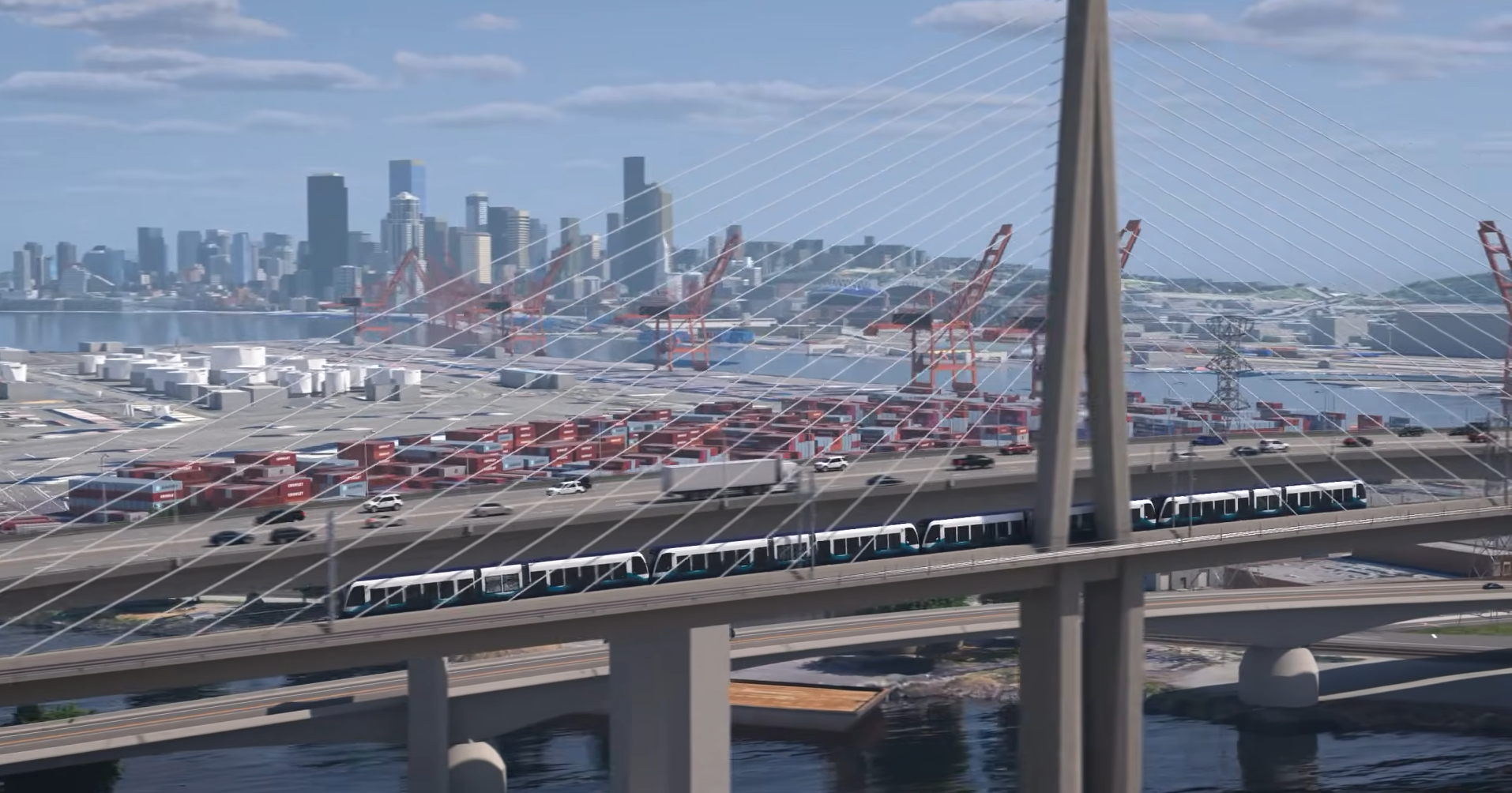
On August 13, Sound Transit and the City of Seattle announced another major design refinement for West Seattle Link, one that would be hard to notice in a flyover rendering. A major transmission line that is currently located next to the dedicated busway through SoDo will be relocated closer to the planned light rail guideway, avoiding major disruptions on a nearby street.
"The new SODO segment design will relocate major City infrastructure, Seattle City Light’s 230 kilovolt and 26 kilovolt transmission poles and lines, entirely within the light rail project footprint in the SODO Busway," a City announcement noted at the time. "This means that Sound Transit will not need to move massive powerlines onto 6th Ave S, which significantly reduces construction and lasting impacts on adjacent properties and businesses. The new design is expected to save the project over $100 million and remove the risk of damage to other critical City transportation and water infrastructure."
Since the May 28 board vote that rebalanced the larger Sound Transit 3 (ST3) plan and kept West Seattle Link on track, Sound Transit officials have been touting how swiftly the agency has been moving and heading toward construction. In August, the board unlocked an additional $765 million in budget authorization, setting up a construction support services contract that includes preparations for the Duwamish River crossing.
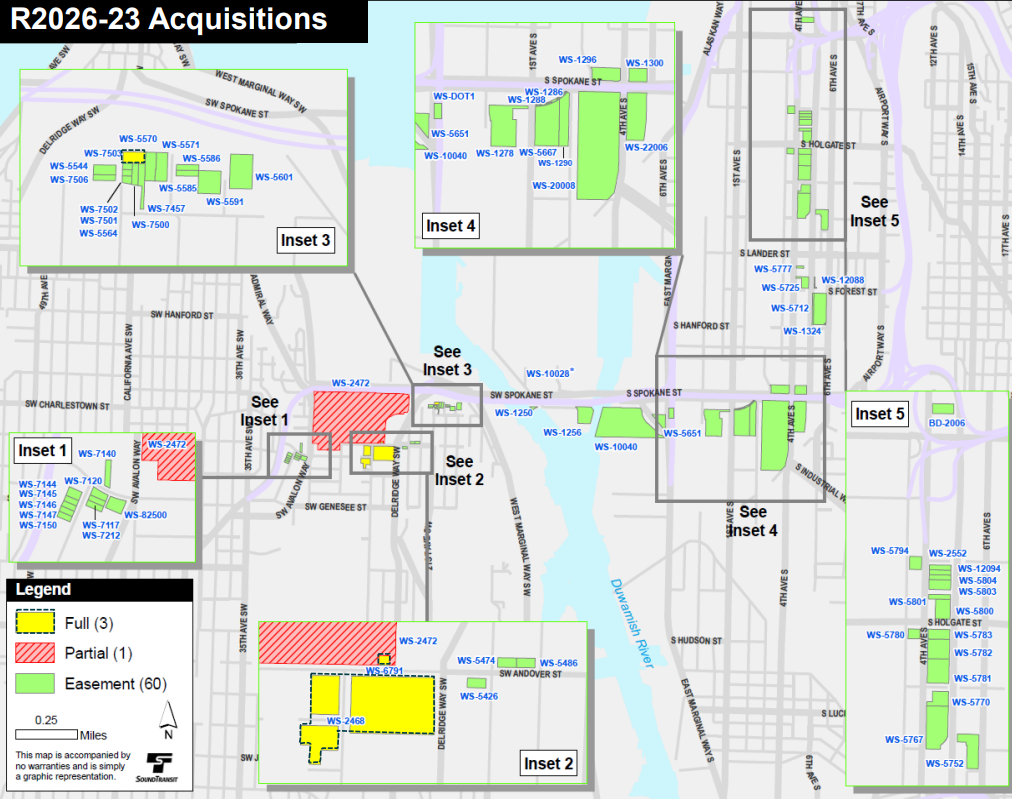
Just last week, the board's system expansion committee approved another set of property acquisitions, including the West Seattle Corporate Center (the former Bartell Drugs corporate headquarters), which will become a major truck staging point for tunneling work to Alaska Junction. If approved by the full board later this month, that will mark the fifth set of property acquisition approvals that the agency has received, getting the agency's real estate team to work.
This week's flyover video makes work that is often happening behind the scenes more tangible for future riders, even if an opening date nine years in the future seems incredibly distant. Once the 3 Line is fully connected with the rest of the light rail network with the opening of Ballard Link, travelers getting from Westlake Station to Alaska Junction will see their travel times cut by 50%, a major upgrade from current C Line service. But there's a lot standing in the way of that benefit becoming reality.
For now, transit fans will have to live vicariously through YouTube.
 Doug Trumm
 Doug Trumm