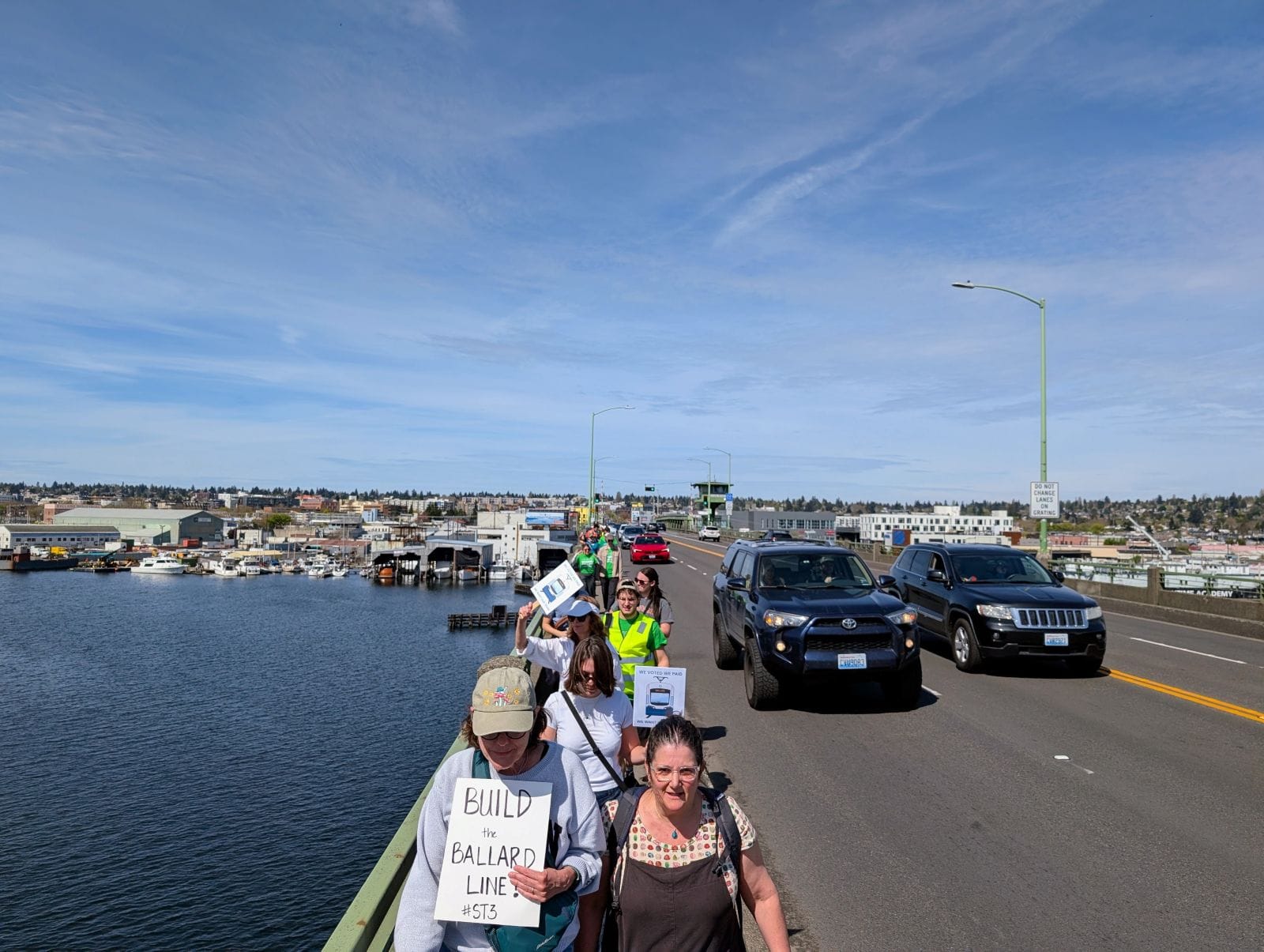
With added funding, light rail could reach Ballard by 2042 in the rosiest scenario.
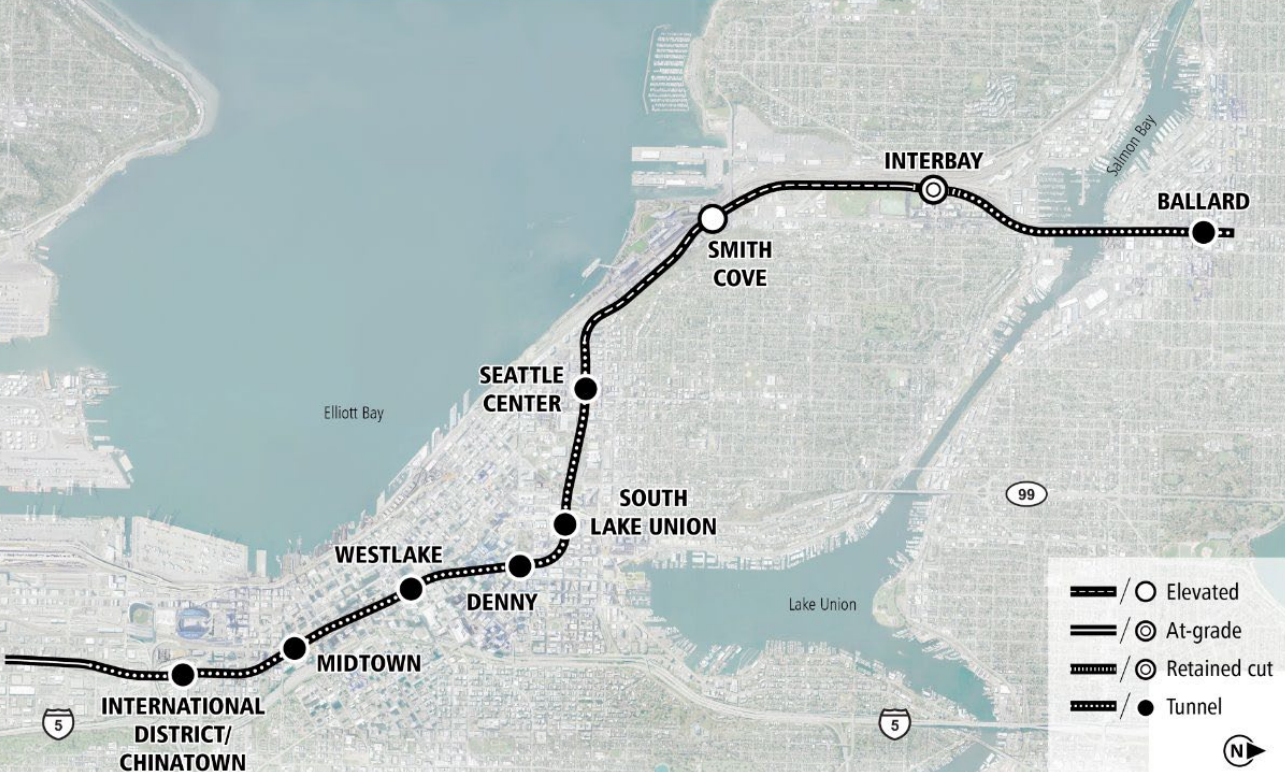
Construction on the full Ballard Link light rail extension including stops in Interbay and at Ballard's Market Street could stretch to 2060, under the worst-case scenario, Sound Transit announced Friday. On the other hand, it could potentially happen as soon as 2042 if additional cost savings are unearthed and new financing tools are able to materialize.
The broad range of opening dates illustrates the considerable degree of uncertainty ahead as the agency grapples with a $7 to $9 billion shortfall on the project. That shortfall pushes the board to vote in May to fully fund the line only between South Downtown and Seattle Center, deferring the remaining three stations.
Friday's announcement came in response to an August 1 deadline to provide a timeline for the full Ballard Link project, a motion made by Seattle Councilmember Dan Strauss at the urging of transit advocates who raised concerns about Sound Transit's lack of transparency. While other Sound Transit 3 (ST3) projects like South Kirkland-Issaquah Link had their timelines explicitly pushed out due to lack of available funding, the future of Ballard Link has remained much more opaque.
The construction timeline for the second light rail tunnel under Downtown Seattle between SoDo and Seattle Center, meanwhile, has also slipped to 2042, Sound Transit also announced Friday.
"The current system plan fully funds light rail to Seattle Center with an anticipated opening date in 2042. The schedule has shifted from 2039 because of changes to station locations, an updated construction timeline, and an extended environmental review process," the agency stated in a blog post. "Over the next several years, we’ll continue to pursue cost savings and additional financial capacity in preparation for right-of-way acquisition on the segment between Seattle Center and Market Street."
If the 2060 date ultimately becomes reality, that will represent a 44-year timeline between the approval of the Sound Transit 3 funding package in 2016 and the start of revenue service to Ballard. But Sound Transit's crystal ball remains cloudy, with additional cost savings on the line likely to materialize in much the same way that they have for West Seattle Link, which is much further advanced in planning. That said, Sound Transit has already baked in cost savings from cutting a South Lake Union station originally planned near Aurora Avenue into its updated Ballard Link plans and budget figures.
In 2024, Sound Transit expected the cost to build a light rail line between SoDo and West Seattle as a $7.1 to $7.9 billion project, but the agency's capital team was able to bring costs down to $4.9 to $5.3 billion by pulling a variety of levers. Several of those levers won't detract from the rider experience, although cutting the planned Avalon station will force longer walks or bus transfers for some riders.
In the wake of May's pivotal board vote that truncated Ballard Link while keeping a number of other projects including West Seattle, Everett, and Tacoma Dome Link on track, Sound Transit officials tried to portray the full Ballard line as still alive, pushing back on what they portrayed as a lack of nuance in news reporting. In June, CEO Dow Constantine called a press conference to spell out a six- to seven-year runway to find the additional dollars to fund the final three stations.
"The current schedule shows the downtown portion of the tunnel to be the critical path, so we need to get moving on that," Constantine told reporters then. "There are several years, potentially up to six or seven years altogether, in which to identify the resources we need to bring the full project in at one time on schedule. We have runway ahead of us, and now we need the time to put our heads down, focus on the task at hand, in collaboration with all of those partners."
Sound Transit fleshed out that timeline a little more this week, with a new 2030 milestone laid out for the agency to find $1 billion to fund property acquisition north of Seattle Center. Finding the rest of the line's funding can wait until 2033, after work to complete final design is completed in 2032.
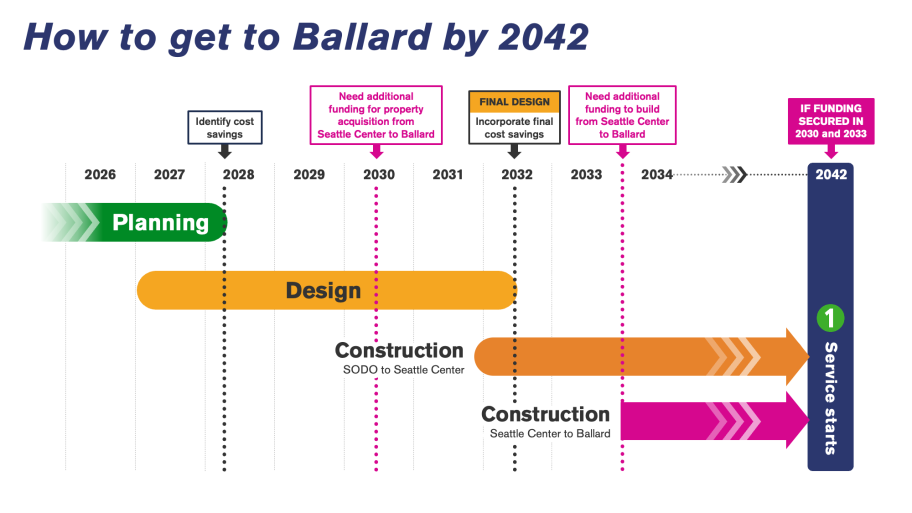
"If the region does not secure additional savings or financial capacity and must wait for existing revenues to accumulate, Link service to Smith Cove, Interbay, and Market Street could be delayed until around 2060," Friday's blog post noted. "We do not want that outcome. That’s why the work must begin now to complete environmental review, advance design, reduce costs, and identify new financial capacity. None of these steps alone will close the gap, and meeting every milestone will be challenging. Together, however, they give us the strongest path to completing the full Ballard extension as soon as possible.
For any progress to be made on Ballard Link, the project will have to advance through the environmental review process. The Sound Transit board had been set to select one preferred alignment to advance into final design by the end of this year, but things are currently much further behind schedule, with the project's Draft Environmental Impact Statement (DEIS) still under review by the Federal Transit Administration (FTA).
"There have been a number of federal regulatory changes over the past two years, including revisions to FTA’s NEPA rules, and recission of the Council of Environmental Quality (CEQ) NEPA implementing regulations," Sound Transit spokesperson Henry Bendon told The Urbanist earlier this month in explaining the delays. "We have also been working with FTA to update the Draft EIS to accurately reflect outcomes from the Sound Transit Board of Directors’ adoption of the revised ST3 System Plan through the Enterprise Initiative, which occurred in May."
Every month that Ballard Link spends in planning limbo is additional costs that Sound Transit will be forced to incur. There have also been concerns that the release of a status-quo scenario date of 2060 could prompt additional readjustments to the DEIS, with the modeling in the current document needing to be updated to reflect a much broader opening date range than previously understood. For now, the DEIS's release remains on the calendar for sometime in the fourth quarter of the year.
"As we’ve shared previously, due to anticipated inflation and projected increases in construction costs, we estimate that each month of delay on any of our projects adds tens of millions of dollars to the overall cost," Bendon said.
While the specter of a 2060 opening is hard to frame as good news, it does provide some clarity for transit riders and advocates who had been pushing for Sound Transit to be open about where things stand with the project. Of course, the wide expanse of potential things that could happen to Sound Transit's finances between now and the 2050s – especially given the number of financial "resets" the agency has faced in the past two decades – mean that even that date is far from guaranteed.
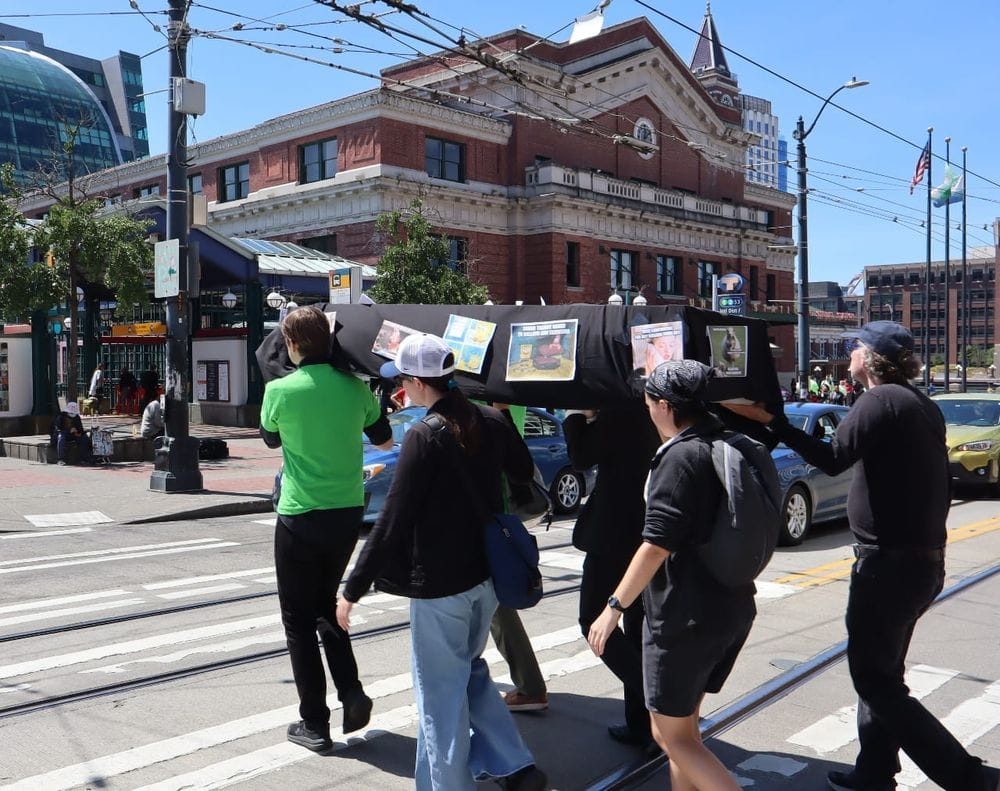
“Light rail to Ballard is not dead,” Seattle City Councilmember Dan Strauss said in a statement Friday. “Today’s announcement shows us the way to get Ballard Link back on track. I asked for Sound Transit to provide this date range to increase transparency for the public and provide us all a clear vision of the work we must do together to deliver light rail to Ballard. We must use these tools and get this project delivered by 2042. We always knew that without additional resources or cost savings the date would be unacceptable. Now, we are unified on the work we must do to move that date sooner.”
In addition to uncovering new cost savings, Sound Transit has work to do at the state legislature, convincing lawmakers to unlock additional financing tools like the option to issue longer-term bonds for its biggest ticket infrastructure projects. Previously, lawmakers had complained around a lack of tangible goals and progress from the agency when it comes to making these big asks.
"I’ve been very clear with Sound Transit – if I don’t see real progress towards Ballard and the rest of ST 3, I have other things to spend my political capital on than their unpopular long term bond proposal. I care about the spine, but we have to do better," Rep. Julia Reed (D-36th LD, Ballard) said on Bluesky in the wake of the May board vote.
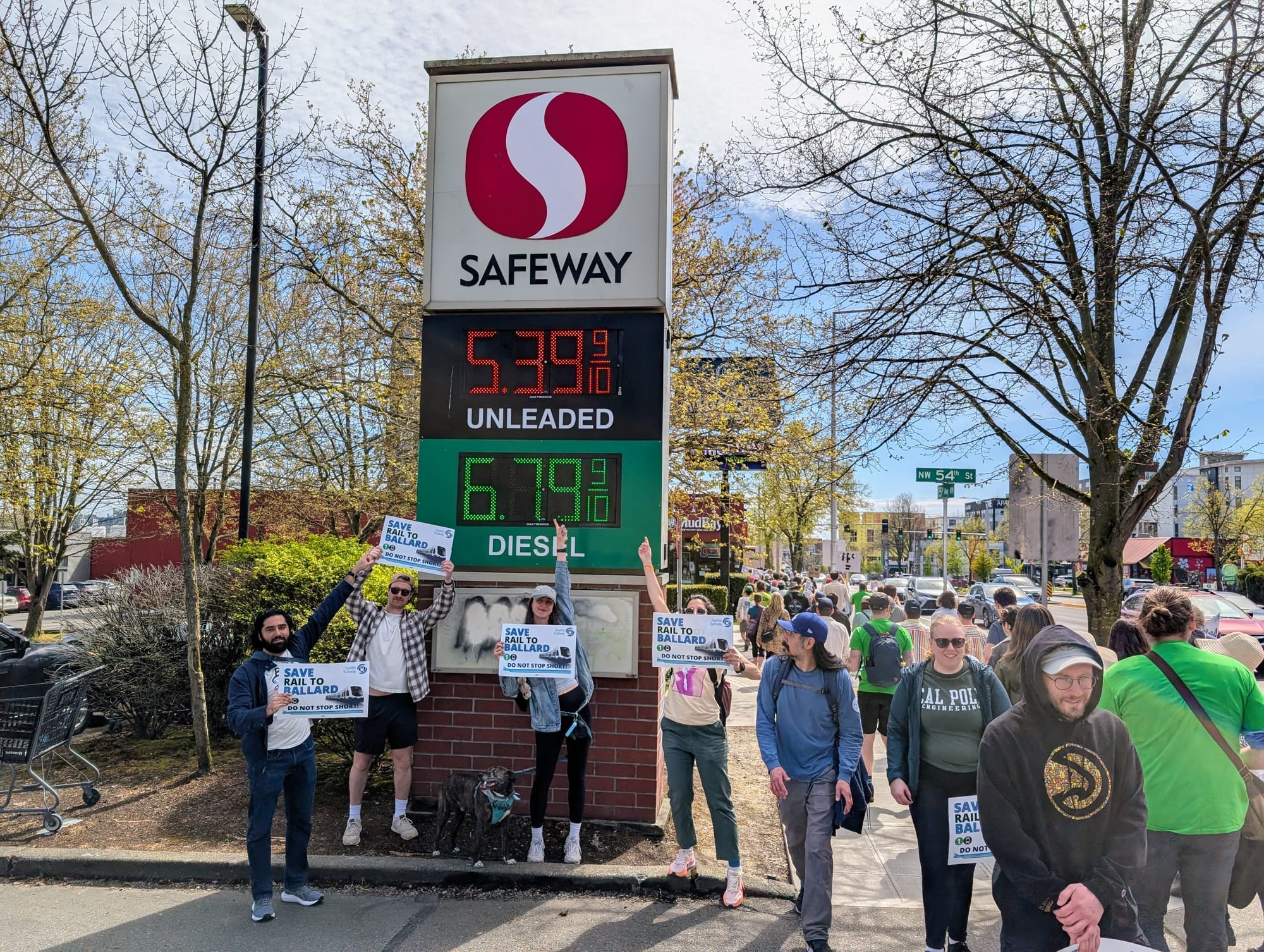
While Friday's announcement didn't reveal a significant amount of new information on any real progress toward reducing costs, it did provide a clearer road map. It also gave Sound Transit board members a chance to reiterate their support for the project as many transit fans continue to lose hope.
“Together with my fellow Board members, Sound Transit staff, and our partners in local government, I’m confident we will find creative ways to lower costs and fund construction of the Ballard Link Extension all the way to Market Street. As we saw this summer, a connected and convenient transit system can elevate a city and region to world-class status, and we are committed to building upon that success," Seattle Mayor Katie Wilson said Friday. "As a lifelong transit rider, I know how important the full build out of ST3 is to people’s lives and to our region’s future. As your Mayor, I’m going to make sure we get it across the finish line."
King County Councilmember Teresa Mosqueda (a West Seattle resident who serves on the Sound Transit board) drew the connection to West Seattle cost savings in her statement Friday.
"The design work done on West Seattle shows what’s possible when we demand creative thinking and aggressively pursue cost-savings options: properties avoided, ridership retained, and billions saved," Mosqueda said. "Now we must apply the same approach to Ballard while rolling up our sleeves with our state legislative partners to secure the needed financial tools. We will get to Ballard, and we will not stop working until we deliver on that commitment.”
 Ryan Packer
 Doug Trumm