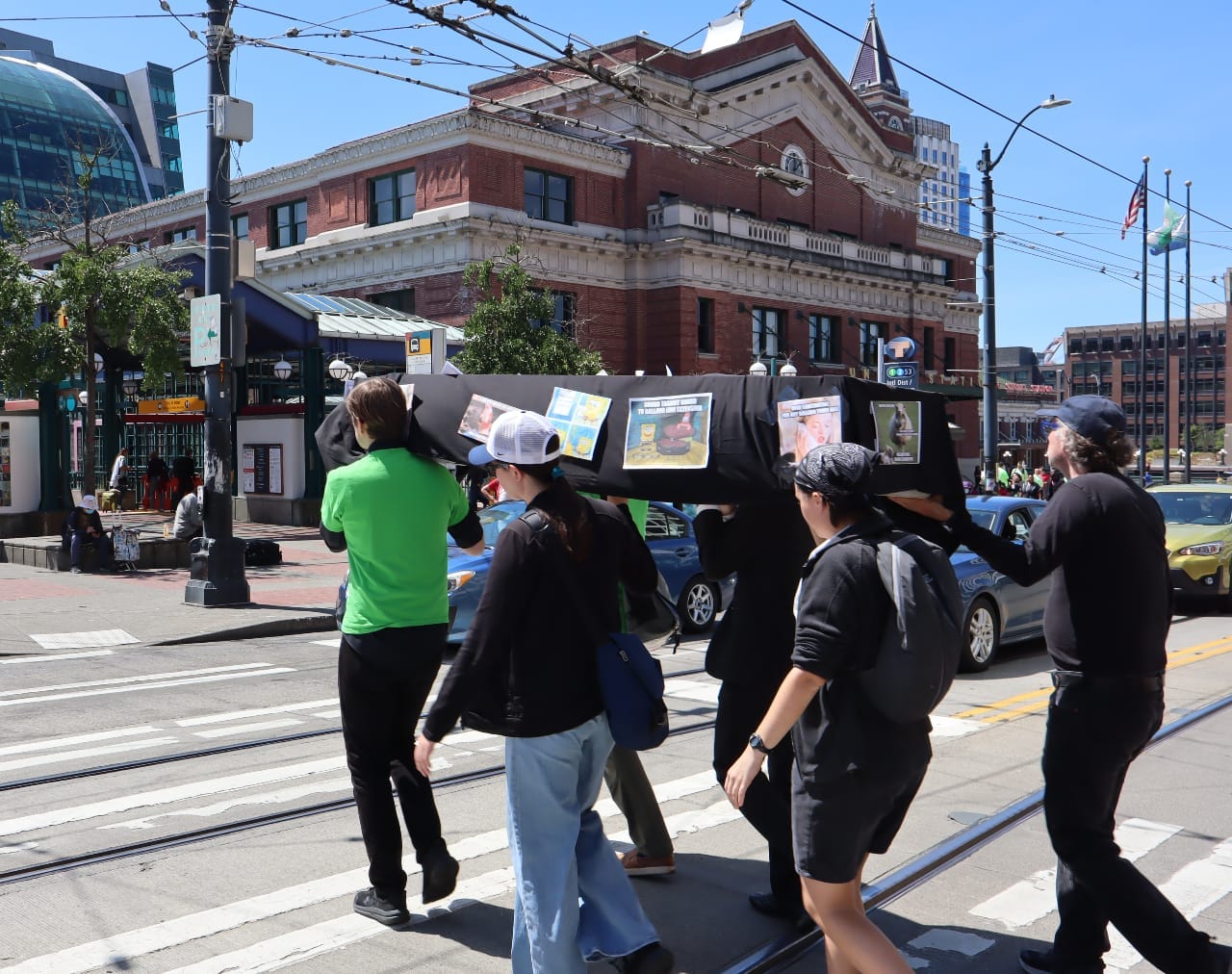
The Sound Transit Board of Directors took a fateful vote last Thursday, preserving some projects, delaying others, and putting some indefinite limbo in order to address a $35 billion long-term budget shortfall. Regional voters approved the Sound Transit 3 (ST3) package in 2016, and the plan's dramatic reshaping has roiled transit advocates, who had been hoping for faster timelines rather than further delays.
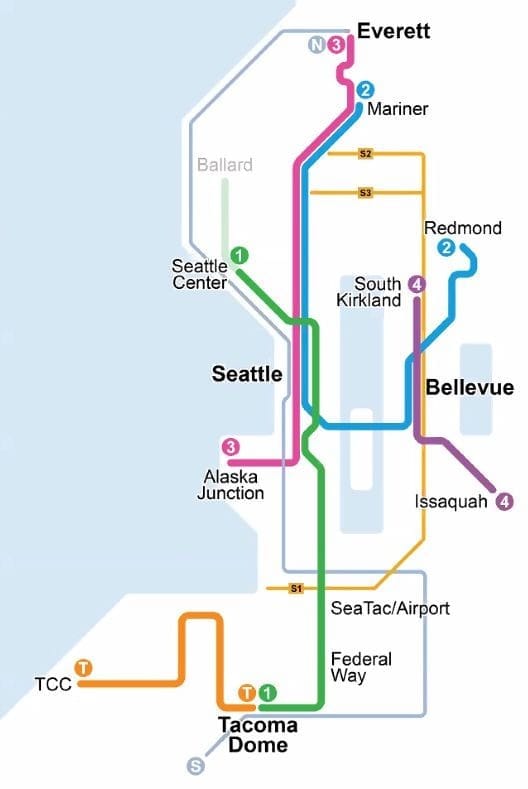
Ballard, Interbay, and Tukwila were the biggest losers on Thursday, with their light rail stations no longer fully funded or provided with estimated opening dates. The agency has pegged the funding gap for Ballard and Interbay light rail at $7 billion to $9 billion.
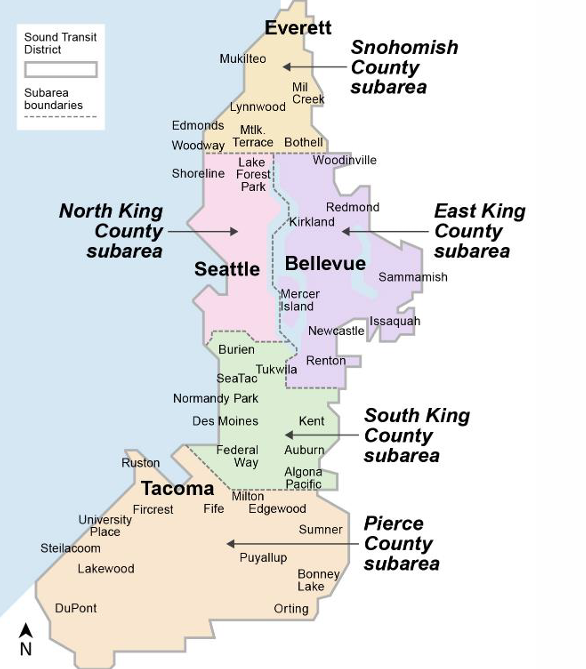
Suburban members of the board have rebuffed calls for additional funding via an ST4 funding measure, saying it's too early to take that step. Moreover, since the "Affordable ST3" plan from Board Chair Dave Somers (who is Snohomish County Executive) prioritized building the light rail spine to Tacoma and Everett, Snohomish and Pierce counties largely avoided the delays that befell other subareas. From such a vantage, additional funding may seem less urgent or even necessary.
The lack of urgency or vision to complete projects as promised has led some transit advocates to float the idea of board reform, effectively putting new decisionmakers into place.
In fact, one board member – King County Councilmember Claudia Balducci – herself was among the reform-curious contingent. Balducci long led the Sound Transit Board's System Expansion Committee before being removed from the committee by Sound Transit Board Chair Dave Somers shortly after she lost the King County Executive election to Girmay Zahilay last fall.
“I really do think it’s time to start talking about governance," Balducci told PubliCola Thursday. "If we’re in this constant cycle of crisis, recovery, crisis, recovery, crisis, recovery, maybe a board full of people who are expert at transit running a transit agency and delivering transit projects would be more attuned.”
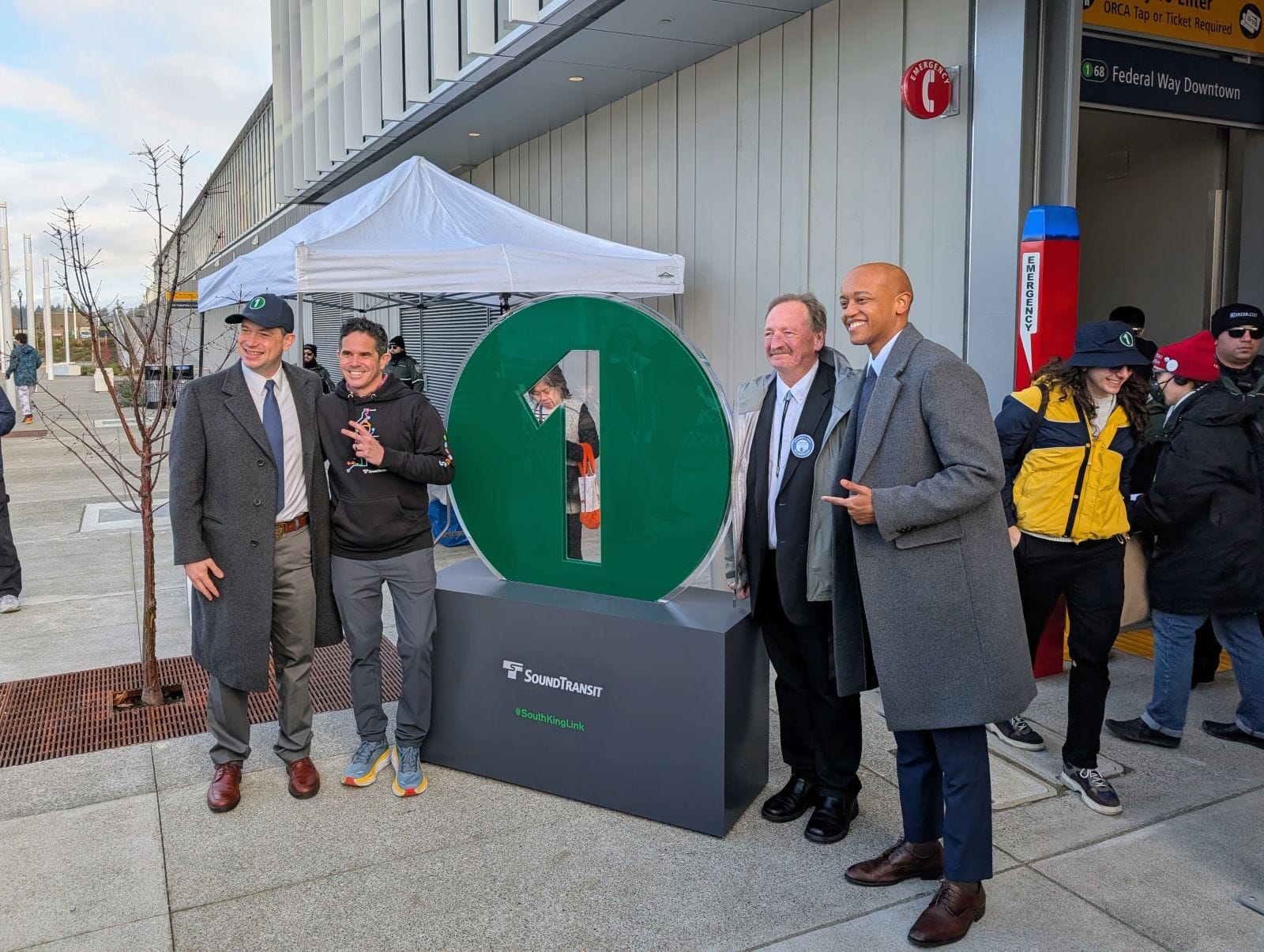
Seattle Mayor Katie Wilson was left trying to balance the victory she engineered to save Graham Street infill station from purgatory, with the huge loss of the Ballard segment being thrown into limbo. Somers' resolution also kept the West Seattle line and a new light rail tunnel between SoDo and Seattle Center moving forward – although the agency's slated 2032 opening for West Seattle Link is likely overly optimistic.
"When I came into office, Sound Transit was eliminating projects, searching for billions of dollars of savings, and there was not a clear pathway to [keep] things moving on key Seattle projects," Wilson said in a statement after the vote. "After six months of public mobilization and hard work by my team and many others, today we finally have a plan to deliver Graham Street, we're moving West Seattle forward, and the development of the regional system once again has continued momentum. This is just a start, but it's meaningful progress."
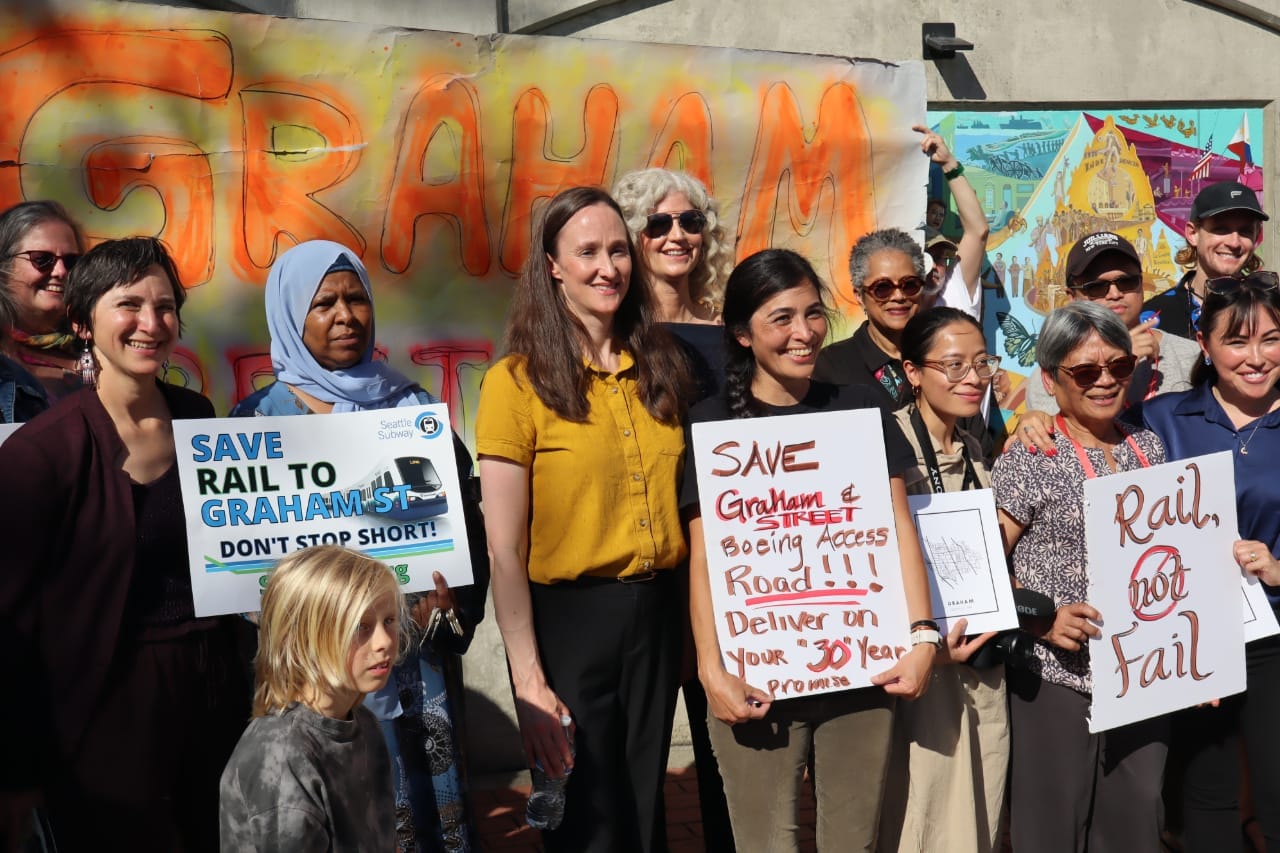
A pledge of $30 million in last-in funding from the City of Seattle was enough to keep Graham in the plan. However, Wilson lamented the chaos facing Interbay and Ballard, and vowed to deliver light rail to Ballard's bustling Market Street. Ballard has seen huge growth in recent decades, with more than 6,000 homes added in the last 20 years.
"I'm frustrated and disappointed that we have not yet been able to find a way to deliver more for people in Ballard who have been paying into the program for years and not seen enough results," Wilson continued. "I'm pleased the Board adopted my amendment requiring us to consider additional options so we can find a better way forward, and I'm committed to keep doing the work to deliver what voters are demanding and build the damn trains all the way to Market Street so we can finish what we are starting here today."
The board did approve an amendment that sets an August deadline for agency staff to provide their estimated delivery date range for light rail to Ballard. Sound Transit staff has insisted that too much uncertainty exists to even estimate opening dates for Ballard and other deferred projects, and suggested a reliable Ballard timeline would not be possible until 2029, when agency plans to have advanced plans and baseline the project. However, that plan did not pass muster with most board members, given the 14-4 vote on the amendment.
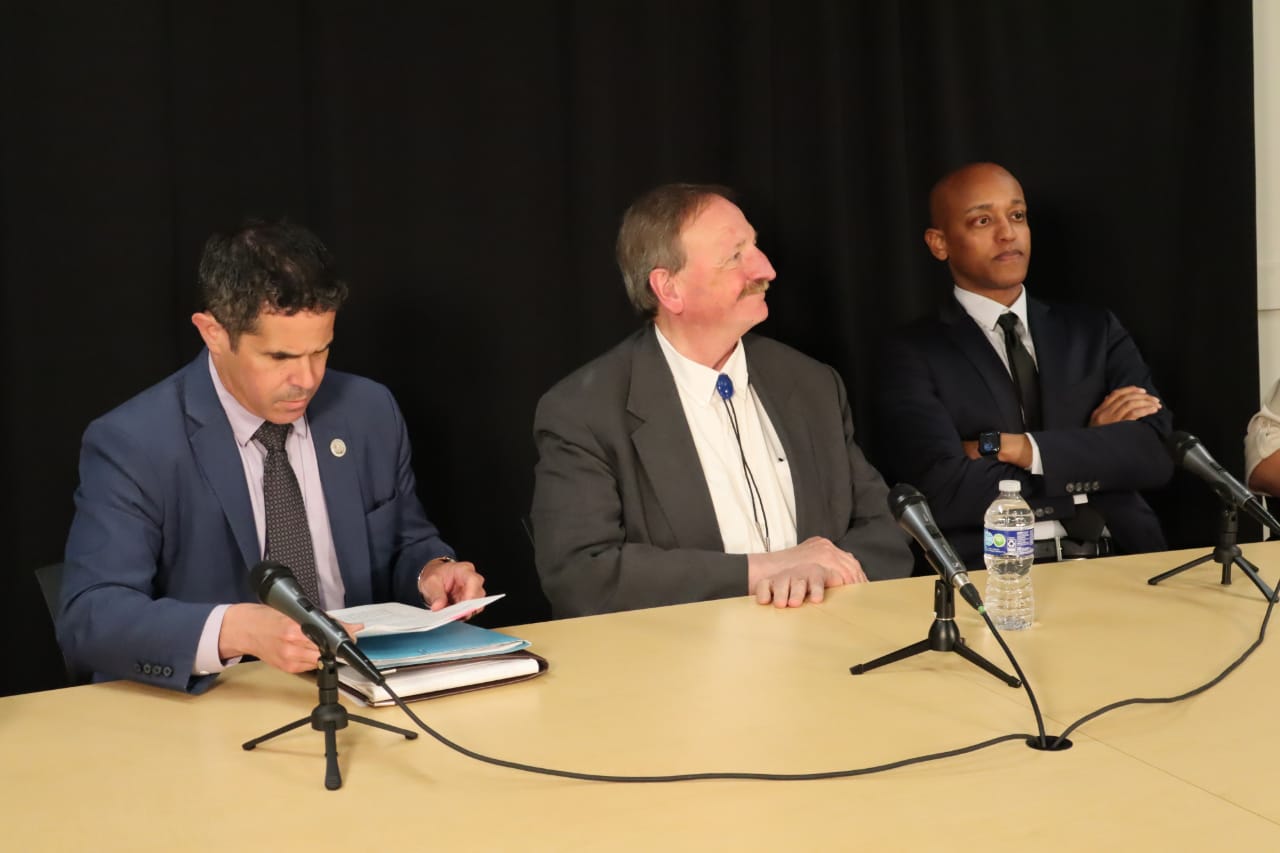
One door was left somewhat open to saving projects within the current framework and board structure. Board members approved an amendment to issue a Request for Information (RFI) for innovative and cost-effective design approaches from outside engineering firms, which could clear a path for an option that delivers major cost savings on the Ballard line, putting it back in the affordable range. That said, nothing is binding about the amendment, and the agency has so far exhibited extreme hesitancy to reopen earlier decisions – at least since a major alignment revision in 2023 that put Ballard Link on its delayed course.
Board member Dan Strauss (whose Seattle Council District 6 includes Ballard) was optimistic that new debt financing tools and cost-cutting moves like reducing how much concrete the agency is pouring could get Ballard back into the affordable range.
"I'll just state real quickly about the seven- to nine-billion-dollar gap [facing Ballard Link]," Strauss said. "If we change our debt limits, we get our 75-year bond, we start pre-casting our concrete rather than casting in place, and we make important revisions to how much concrete we're using, we're going to close that gap."
Frustrations lead to calls for board reform
Assurances to fix Ballard later were not good enough for many advocates. As mentioned, Thursday's vote had some advocates issuing calls to overhaul Sound Transit's board structure, making being a board member a professionalized full-time job instead of a side gig for an elected official.
Transit advocate Day-Z Gould-Wong was among those laying out an ultimatum: "Hypothetically, if we the people found this board to be incompetent, and hypothetically if we the people put out an initiative to reform this board and fire you all hypothetically, what do you think would happen?"
Central Puget Sound Regional Transit Authority (RTA), the official entity imbuing Sound Transit with taxing authority, was authorized by the state legislature, but it could be subject to Washington state's citizen ballot initiative process.
David Scott, a board member with Seattle Subway who submitted public comment on behalf of themself Thursday, also foreshadowed the board reform push.
"ST3 dies today. So, what will happen in the 2029 realignment? Will you finally stop lying to yourselves and to voters? Or will you find new things to lie about? What will you kill next? Everett? Issaquah? Graham Street, again? We won't allow any of this," Scott said. "RTA board reform is on the horizon, and that is the only chance left at restoring trust."
For all the clipboard-rattling rhetoric, the path to passing a statewide initiative is not an easy one. State law requires nearly 400,000 signatures from state voters for a grassroots initiative to make it on the ballot, and successful campaigns typically spend millions on signature-gathering efforts. Levying such a campaign would be a huge undertaking.
Path to ST4 ballot measure is fraught
Another Hail Mary option left to transit advocates trying to save projects from indefinite delays is to pass a new funding measure. But regionwide hopes appear dim after several board members shared their reservations about asking voters for more funding. The Pierce County and Snohomish County delegations – which collectively account for 7 of 18 votes on the board – were especially resistant to ST4 talks prompted by Wilson's Amendment 10.
"From my perspective, again, from my corner of the map, trains really need to be running to Tacoma and to Everett before we start talking about the next measure, and I mean, even just talking about it," Fircrest Councilmember Hunter George said. "It is not harmless just to talk about it, which is something I fear people may think, and if at least trains aren't running, at least the pillars are in the ground, and that people can see it's coming, because they don't believe it's coming, and I think this will cause some harm."
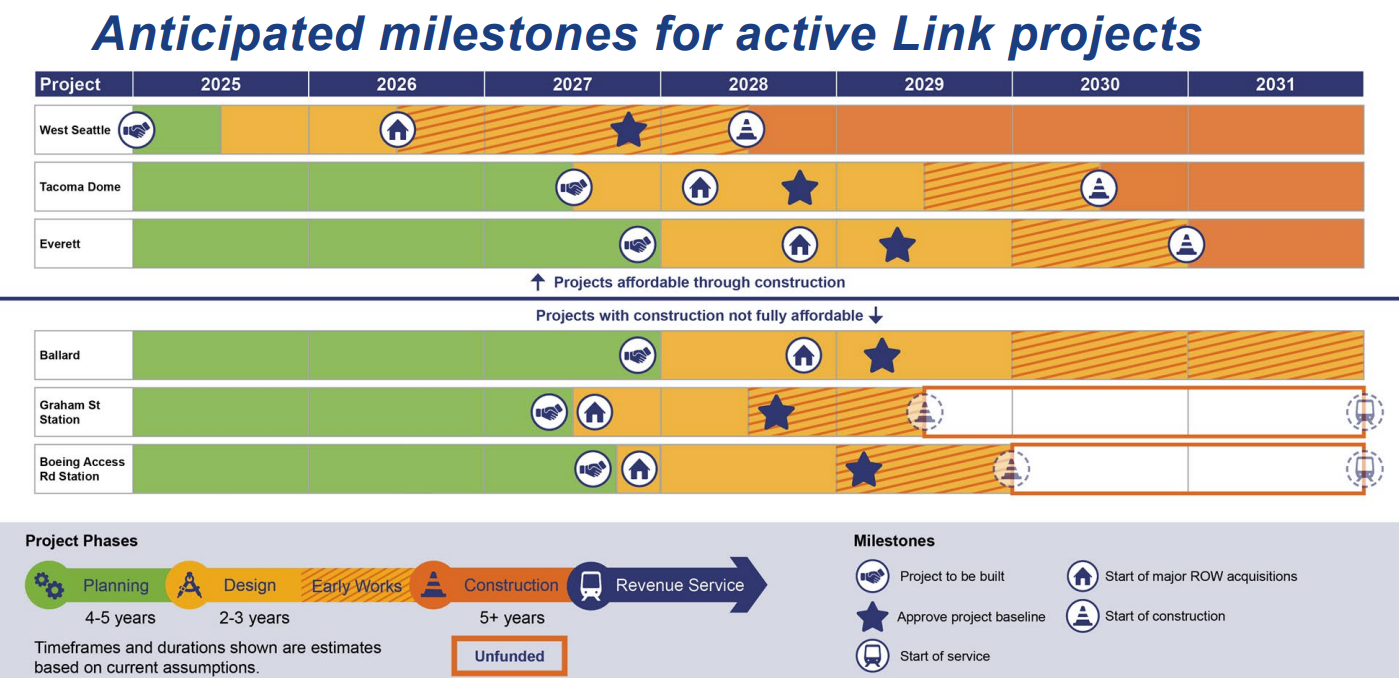
A timeline graphic shared by Sound Transit’s Deputy Executive Director for Enterprise Planning Alex Krieg suggests the agency does not anticipate breaking ground on Tacoma Dome Link until 2030, with "pillars" not likely to be in the ground until a couple years after that, since grading and foundation work would come first.
Pierce County Executive Ryan Mello, who is next in line to chair the board, echoed George's sentiment (Mello also appointed George as a Pierce County member on the board). Mello hasn't been shy about talking about the need for future transit expansion, but also is clearly hesitant to ask his constituents for more money just yet – especially with a Pierce Transit bus funding measure likely going to voters soon.
"I think planning for the future is the smart and responsible thing to do, and that is part of the proposal, is to think about the future," Mello said. "I want to make really clear: I'm all for subareas thinking about raising more revenue in subareas, if that's what some areas want to do. In Pierce County, I can't get behind a funding package until there is pillars in the ground and folks really see that we're delivering light rail to Tacoma. So, in the spirit of no surprises and this regional board being able to trust each other and work together collaboratively, I just need to say early I'm going to support the amendment, because I think it's the responsible thing to do, to be planning for the future, encouraging subareas to do what's best for them. But for a regional ballot measure, not until there is substantial, real concrete progress of delivering light rail to all corners of the region, including Pierce County."
Everett Mayor Cassie Franklin appeared to set an even higher bar than Mello or George, saying she wanted light rail trains running to Everett before her city would be ready to levy more funds. Sound Transit anticipates a 2041 completion for Everett Link.
"If Seattle wants to vote for additional revenue, go for it," Franklin said. "Everett is certainly not ready for that, and won't be ready until we have trains in our community."
Balducci pointed out ST4 needs to have a strong value proposition for voters, not just cleaning up the mess of ST3.
"If we do end up going back to the voters, I think it's really important that we do so in the context of asking for and being in a position to be credible in asking for expansions, increases in things that we can't do today, not just the things we talked about, which, of course, would be on the list first, the Boeing Access Road, things that are not on the affordable list, et cetera," Balducci said. "But also like where we're going next? Going out to ask people to pay more for what they already paid for is a losing proposition. We've been there, we've done that. It doesn't work, and for really understandable reasons, if we go out again, we should be asking for the next expansion and the update. That's why ST2 paid for part of Sound Move, and ST3 paid for part of ST2, but mostly it did a new program."
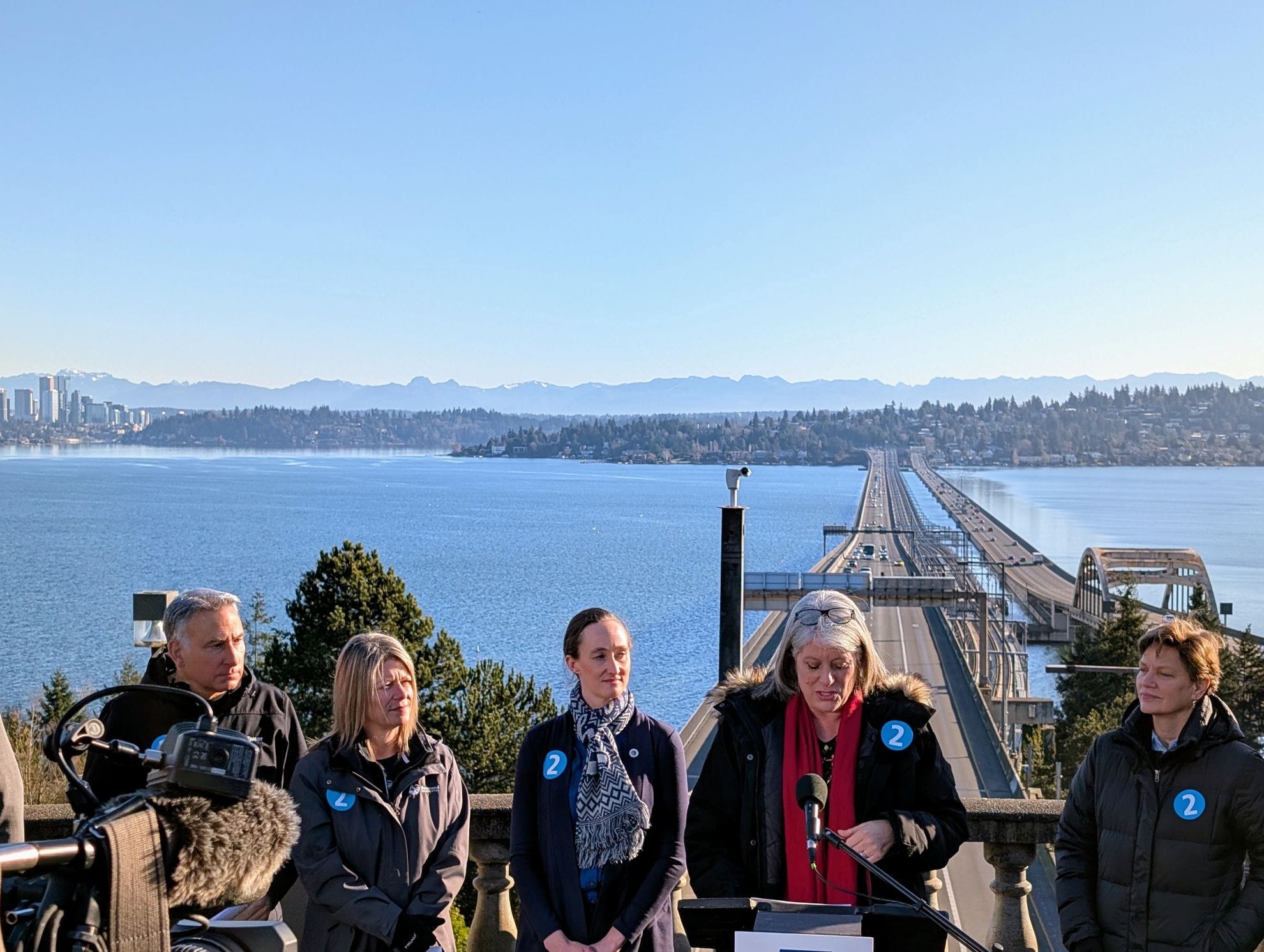
Krieg said enhanced service zones recently authorized by the state legislature could provide a path for a portion of King County to advance an ST4 package that Pierce and Snohomish counties would sit out.
"I believe this amendment identifies enhanced service zones, which I understand to be a tool authorized by the state legislature in a recent legislative session, which does enable jurisdiction or group of jurisdictions to bring something to the voters," Krieg said.
Wilson's amendment to advance some future measure planning work did pass, but without the will to put funding on the ballot those future plans will likely gather dust on a shelf. Seattle members seemed more bullish about putting the question to voters.
"There are numerous places in the resolution and attachments that discuss how we will move projects from unfunded to funded, but nowhere does this resolution explicitly call on the board to consider sending a future revenue package to voters in the event that all other efforts fail to provide the needed capacity to deliver on our promise to voters," Wilson said, introducing her amendment. "Just as ST2 helped to finish Sound Move and ST3 helped to finish ST2, we may need to adopt a new revenue package to complete what ST3 promised to voters, too."
Wilson already appeared to factor in the likelihood that Pierce and Snohomish Counties may not be interested in being a part of the next measure, since ST3 is set to deliver their core aim of completing the regional rail spine.
"My amendment calls on Sound Transit staff to develop options for a future revenue package if there are still gaps in delivering ST3 following the next update to the long-range financial plan and following the next state legislative session," Wilson added. "Those options could include funding packages at the regional level or at the subarea level. This amendment is about responsible governance. We need to deliver on the promise to voters, and this amendment helps to give us the options to do so."
Door slightly ajar to automated light rail cost-cutting solution
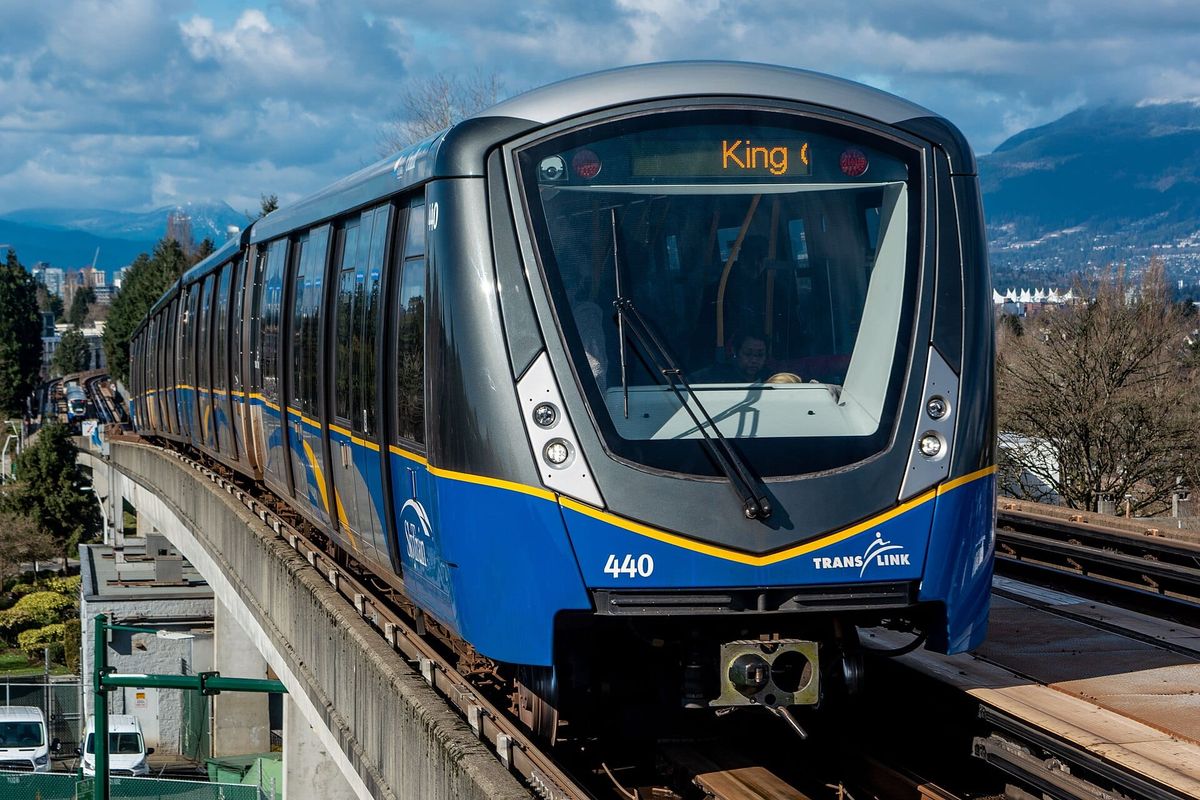
Beyond new funding or deferring the Downtown Seattle tunnel instead of the Ballard segment, the other big idea in discussion to get light rail to Ballard within the ST3's 20-year planning window is overhauling the train technology used.
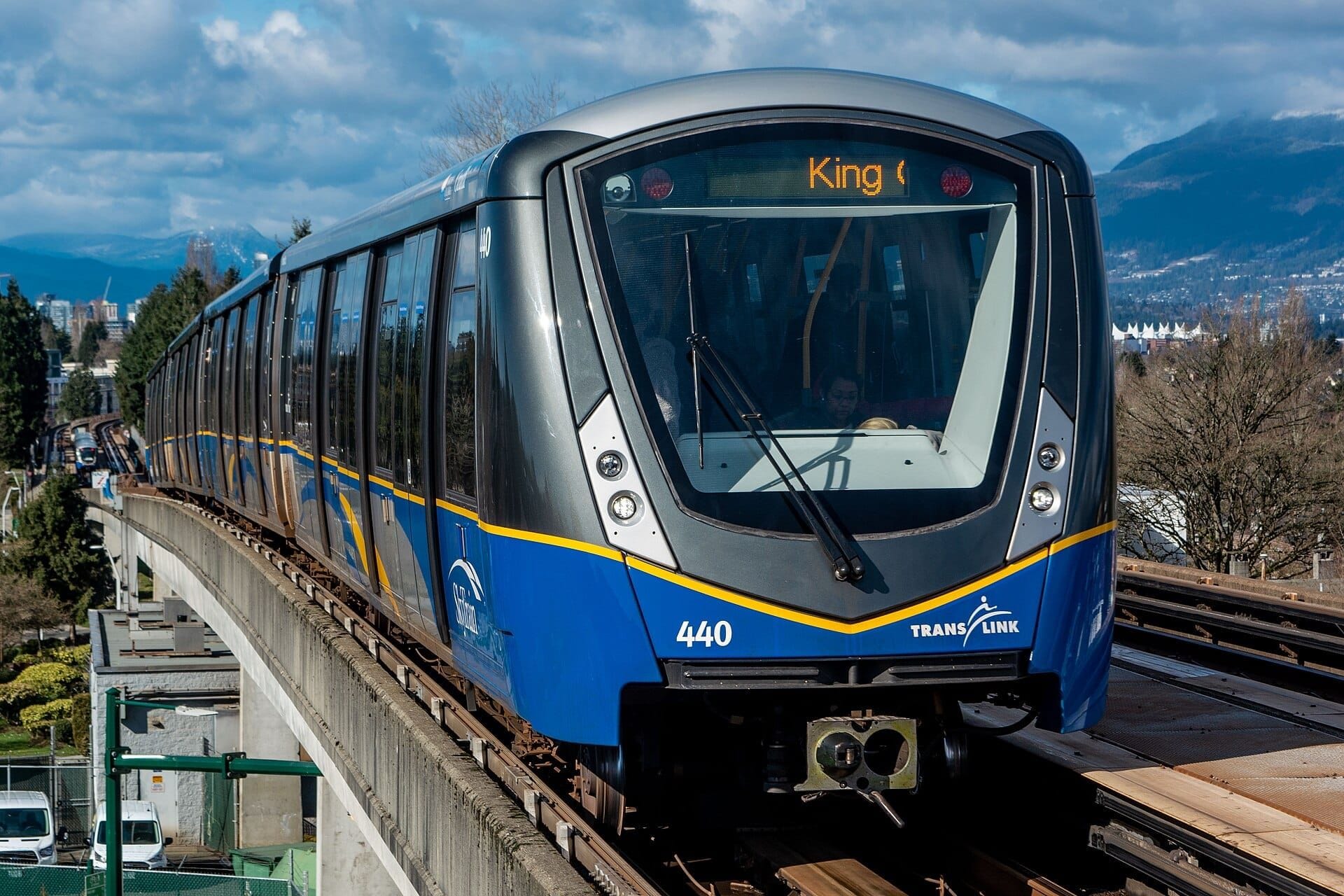
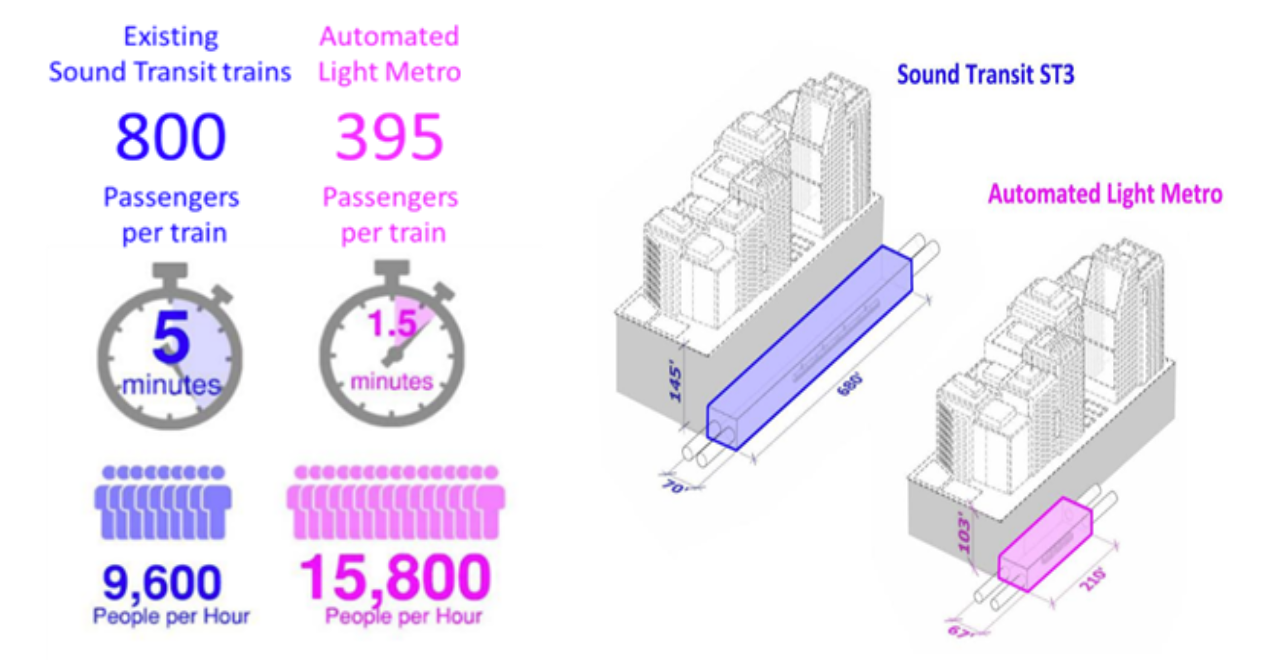
Former Seattle Department of Transportation director Scott Kubly and transit planner Trevor Reed put out a white paper and op-ed in The Urbanist laying out a path to get to Ballard on time. Their "automated light rail" plan would redesign the line to connect to West Seattle and use shorter automated trains, allowing much smaller (and thus cheaper) stations.
After the board votes leaving Ballard unfunded but passing an amendment to initiate a Request of Information (RFI) process soliciting new ideas from outside engineering firms, the pair of transit industry veterans shared this statement with The Urbanist.
"We were excited to see the amendments pass. But passing amendments is not the same as implementing them," Kubly and Reed wrote. "The realignment plan's adoption risks removing the energy to implement these amendments. We've been here before where grand statements are made during realignment about how this time being different, only to end up back in realignment a few years later."
They argued that ST4 talks have underlined that studying a more cost-effective automated line is the prudent course. Plus, if elevated ST3 project costs remain the baseline for future extensions, those ST4 expansions will be "prohibitively expensive" in their estimation.
"The board's ST4 discussion pulled back the veil on the realities of getting more funding," Kubly and Reed wrote. "Seattle will need to go it alone to backfill Ballard. The board hasn’t shared what the tax burden per person would be to complete the Ballard line, let alone build more. Based on our conversations, no one has polled an ST4, at least recently... Banking on the continued generosity of Seattle voters to bail out Sound Transit with no polling, no plan, and out of control costs seems naive at best, particularly with the ill will and distrust Sound Transit created by this most recent realignment. We believe that future funding should go to expansion, not backfilling to cover for poor execution."
At a recent appearance on the Seattle Nice podcast, Kubly posited that part of the challenge to overcome is internal board dynamics and the difficulty in getting the whole King County delegation acting in unison. He noted agency CEO Dow Constantine is on an expiring contract and needs to curry favor with Somers and Mello, who would oversee his contract extension.
"The CEO's contract is up in December," Kubly said. "Outgoing chair is going to be Dave Somers, and incoming chair is going to be Ryan Mello. Two ends of the spine. Then you have two chief executives in Seattle and King County that are new: one is Katie Wilson, new mayor, the other is King County Exec Girmay Zahilay. So, what I see there is Girmay controls 10 of the 18 votes, or will control 10 of the 18 votes, right? And so he should have the power, and Katie is going to have the biggest megaphone of any elected in the region, because she is the mayor. So why aren't they fighting harder?"
The pair is optimistic that the RFI could lead to a viable automated light metro proposal that is much cheaper than existing plans, so long as agency staff and board are properly engaged with the process.
"The RFI amendment and its language are strong and close to what we hoped for," they wrote. "We want to see a serious RFI process with the Board's enthusiastic public support and engagement. Without that commitment, industry will not respond, and we will be no better off. The board needs to actively manage the RFI process and engage an outside technical advisory group with international transit project delivery experience to ensure the RFI is executed as well as possible."
Ultimately, much rides on the board, whatever its composition and structure.
"The door has opened on an opportunity to do better; whether Sound Transit walks through it is another question," Kubly and Reed concluded. "We will keep close tabs and continue pushing for change so this moment is not wasted."
 Ryan Packer
 Scott Kubly