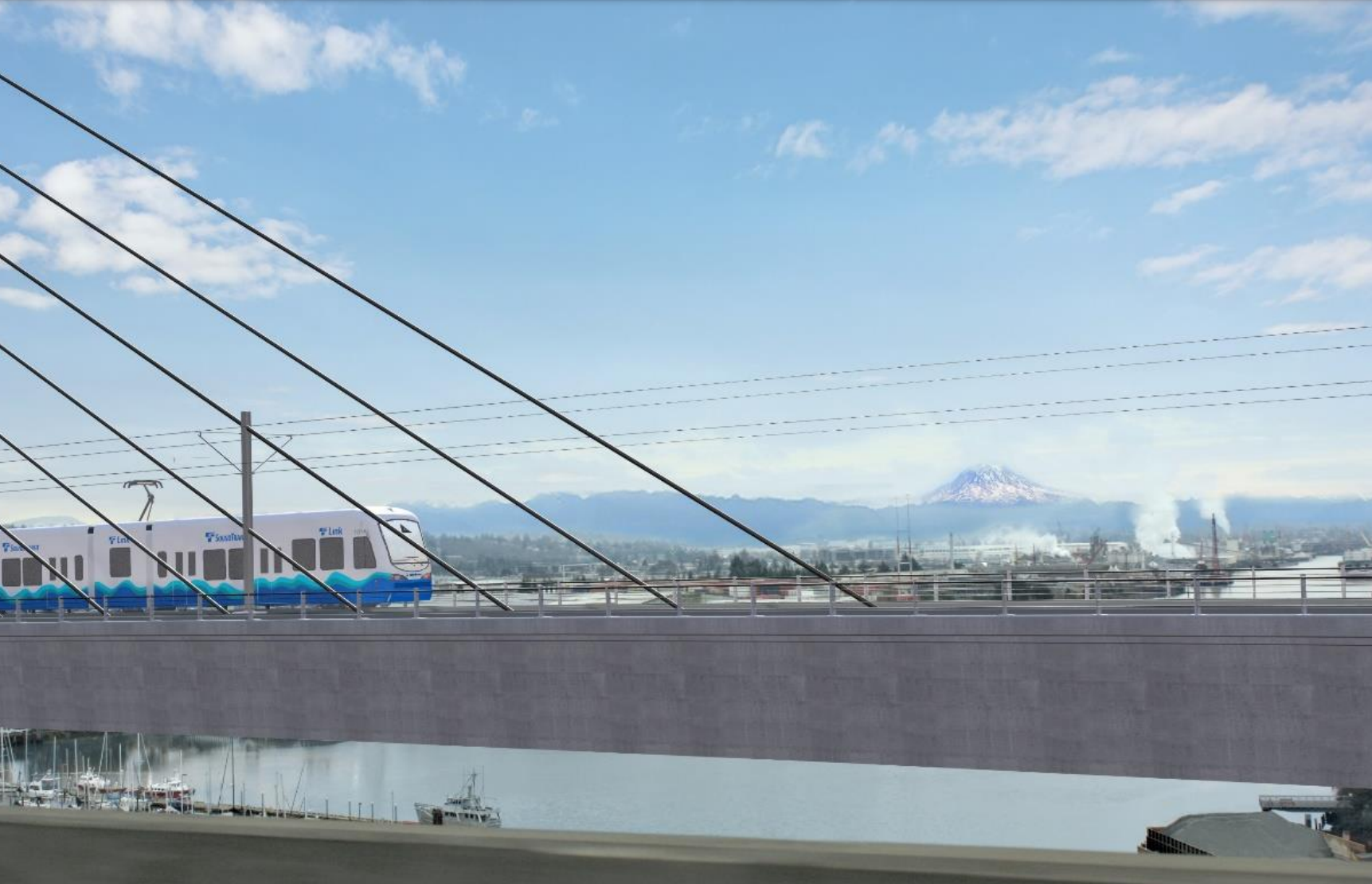
Alas, West Seattle Link is not shovel ready.
This week the Sound Transit Board will approve a plan based on a 2032 “opening date” for the West Seattle Link Extension and treat the project as "shovel ready," and ready to break ground in 90 days. Neither claim survives basic scrutiny.
Before any vote, the board owes the region revised, evidence-based dates for every Sound Transit 3 (ST3) project, and the CEO, board, and staff should be willing to bet their jobs on hitting them.
The current situation presented by the agency is dire. The reality is worse.
What’s past is prologue, we hope
Sound Transit has secured four federal New Starts grants, one each for: Central Link, University Link, Lynnwood Link, and Federal Way Link. The story of these projects is remarkably consistent, averaging 2.6 years from a Record of Decision (ROD) to a Full Funding Grant Agreement (FFGA), when excluding outliers time from ROD to opening takes 9.2 years.
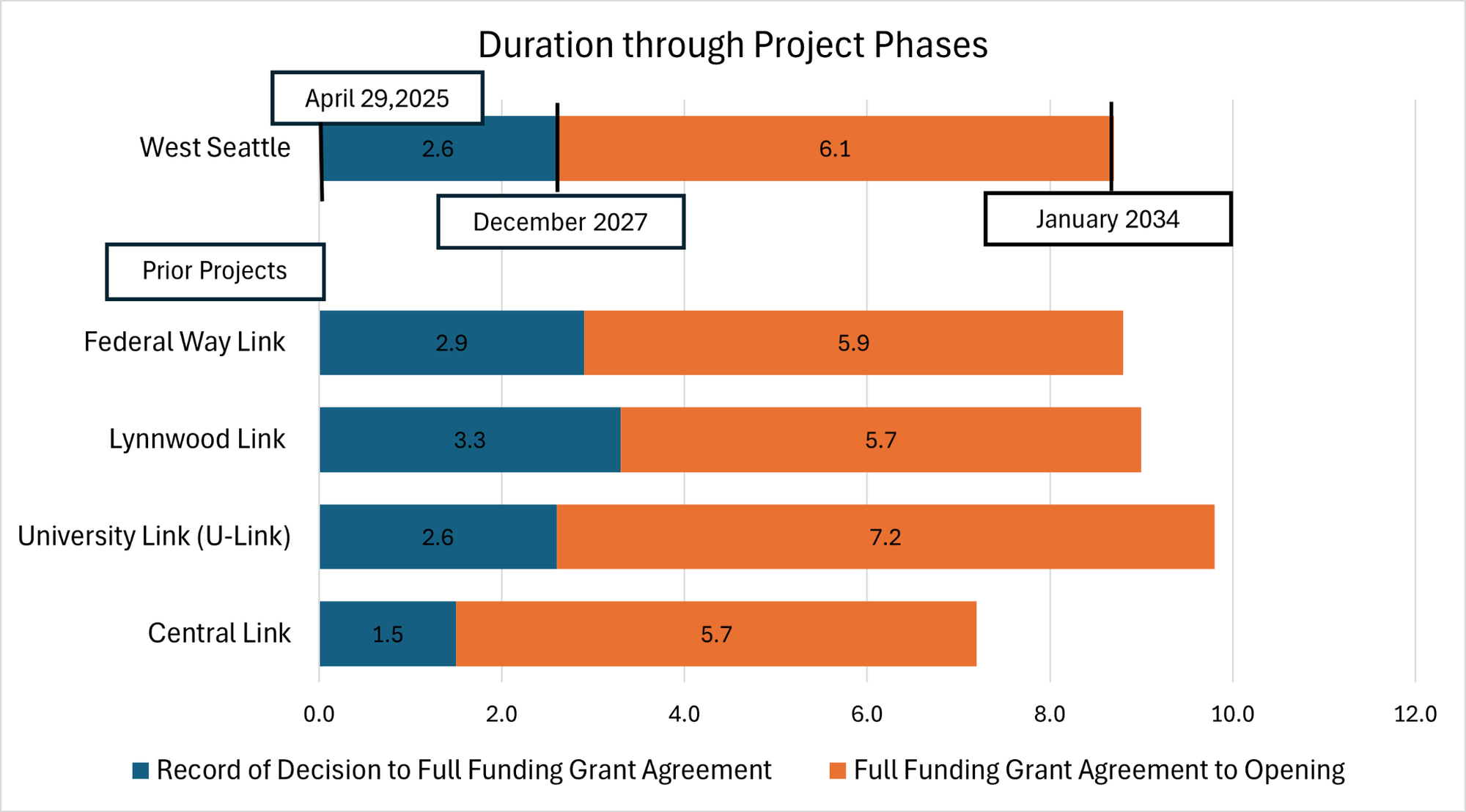
Assuming an average timeline based on prior FFGA projects, West Seattle Link’s April 29, 2025 ROD would result in an early 2034 opening. This is a very optimistic scenario due to the simplicity of delivering highway alignments like Lynnwood and Federal Way and faster review processes than today for Central and University Link. However, even this optimistic scenario is a major departure from the current date.
When average is optimistic: West Seattle will not advance faster than usual
Three things make the average optimistic: one outside of Sound Transit’s control, and two entirely within Sound Transit’s control.
West Seattle Link received its ROD last spring after significant delay from the Federal Transit Administration (FTA). The delay was only a preview of the hostility that has come to define the Trump administration. Since taking office more than 14 months ago, the FTA has entered into no FFGA agreements.
Under normal conditions, on a project advancing at normal pace through review, achieving a FFGA could easily stretch into 2028. The idea that Sound Transit will win a multi-billion dollar grant faster than usual against a federal government that is currently approving no agreements is fantasy.
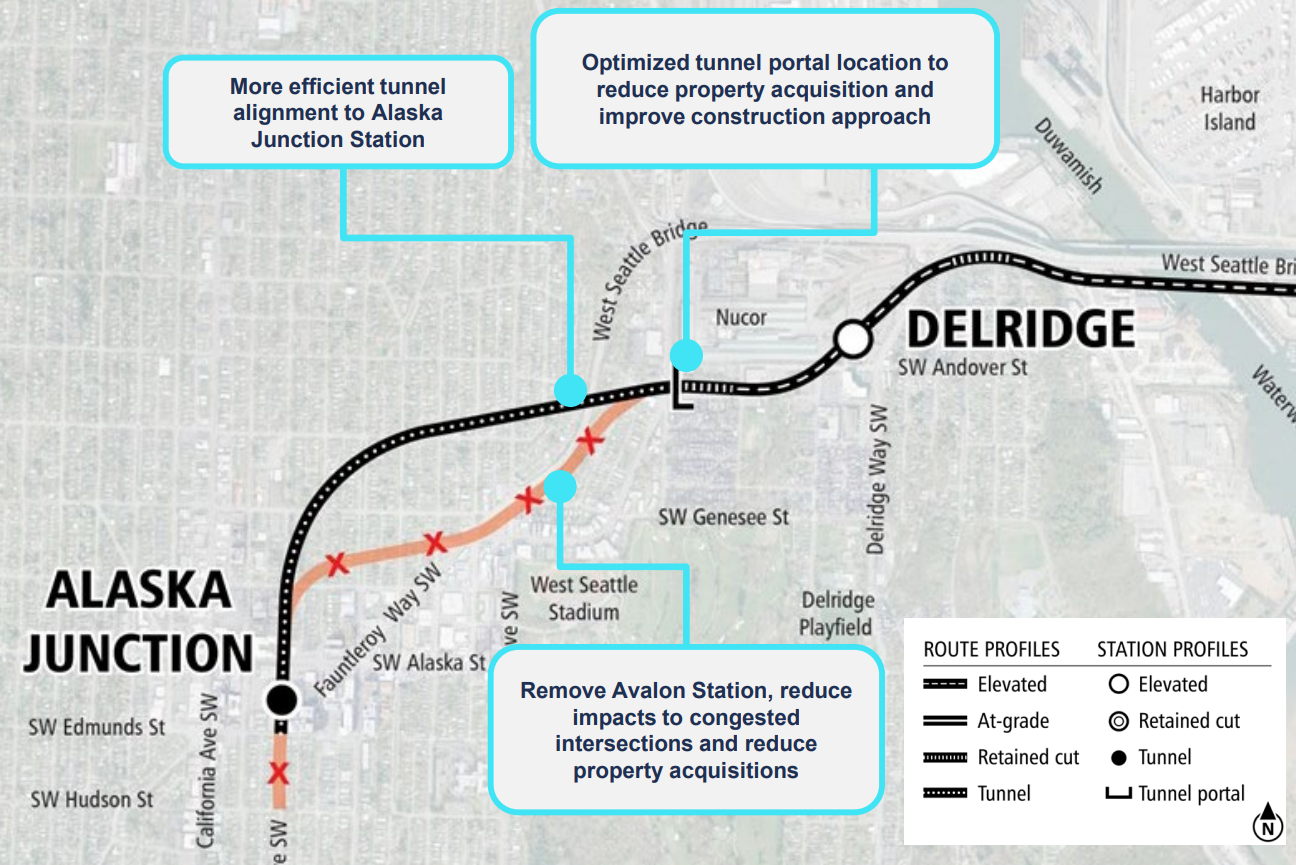
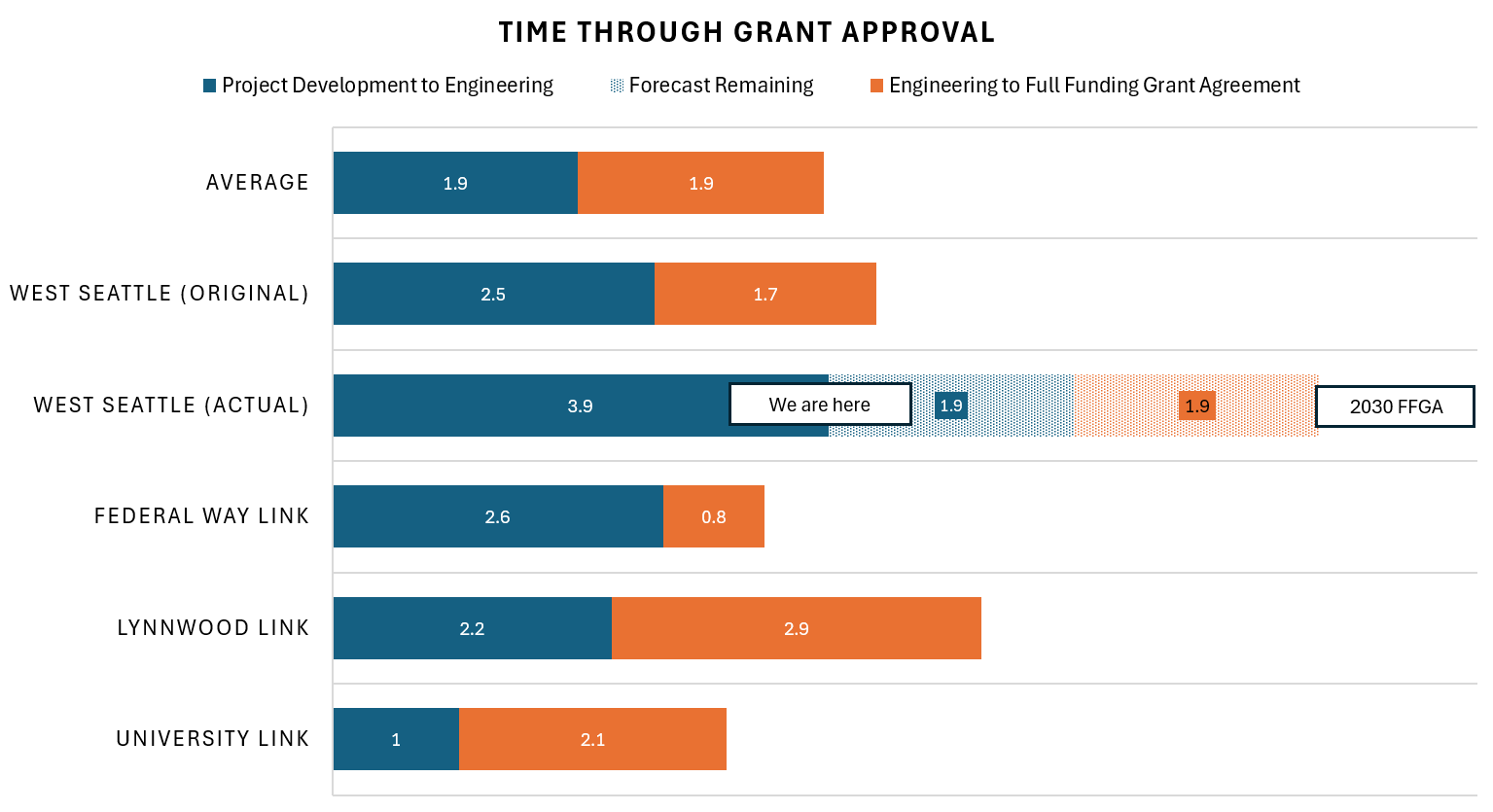
The explosion in costs and efforts to contain them via the Enterprise Initiative has resulted in West Seattle Link sitting in the Project Development phase of New Starts for nearly four years versus an average of 2.2 years. The impact of removing Avalon Station and a new alignment, revealed only in March, means the project is likely earlier in Project Development than typical for this duration. Assuming ‘normal’ performance from Project Development to FFGA based on current 30% design, groundbreaking would occur in 2030 -- likely in the second half of the year.
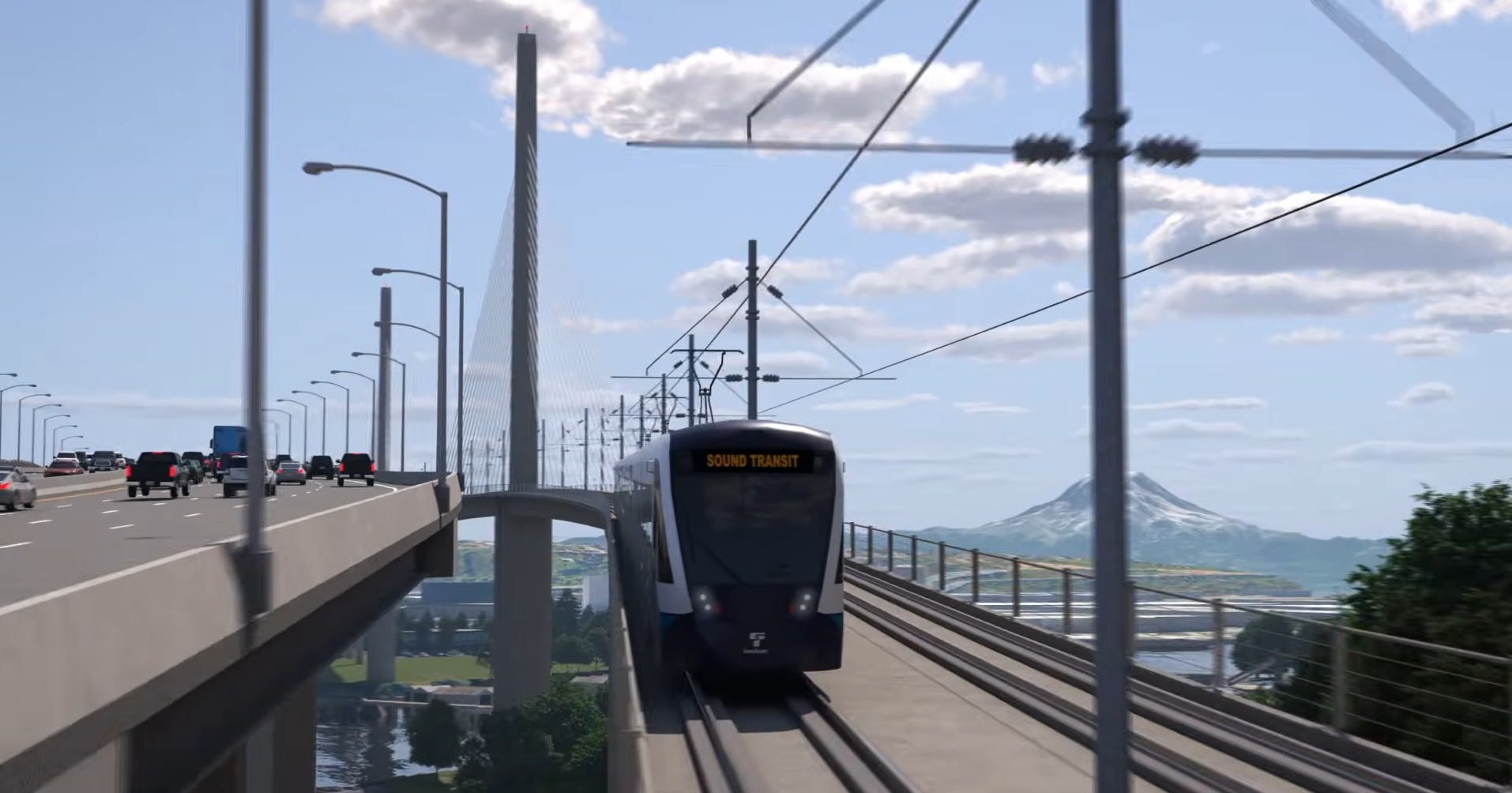
Sound Transit has averaged 7.0 years for construction across recent deliveries and proposes less than 6 years for West Seattle Link. West Seattle is not a freeway alignment like Federal Way or Lynnwood. It includes tunnelling and a cable stay bridge with 374-foot towers.
The closest analog is University Link, which took seven years from groundbreaking to revenue service. Even assuming U-Link’s impressive fast timeline while delivering a tunnel would add another year to the current delivery date.
Under optimistic assumptions based on prior Sound Transit projects and FFGA agreements, a realistic groundbreaking for West Seattle Link is 2029 or 2030 with service beginning in 2036 or 2037.
Ballard, Tacoma, and Everett are worse
This analysis of West Seattle Link was only possible because it has completed its environmental review, a ROD, and is in the New Starts pipeline. The delivery dates for Ballard Link to Smith Cove and Tacoma Dome Link Extension are likely further delayed since they have yet to hit the same benchmarks and are tracking worse. Everett Link’s status is unclear due to it only starting environmental review last year.
After a huge alignment overhaul in 2023 that added previously unstudied options, Ballard Link is still stuck in the environmental review phase, with the agency needing to finalize its Environmental Impact Statement (EIS) before applying for a ROD.
Tacoma Dome Link needed a major revision after the agency belatedly realized its formerly preferred I-5 alignment was unworkable due to needing to demolish a former Indian boarding school in South Federal Way, which the Puyallup Tribe had not signed off on.
It’s extremely unlikely any of these projects will hit the FFGA milestone over the next three years, especially given the headwinds from the Trump administration. Even achieving a ROD may take some luck, given how hostile to transit this administration has been.
The public and board need transparency
The rush to vote this week to prevent delay of “funded” projects is not supported by Sound Transit’s own historical data. These projects are far away from breaking ground and few at Sound Transit are saying so. Sound Transit should take their cue from Chair Somers’ own calls for transparency:
“I just wanted to make the point that using the term shovel ready -- I like honesty, too. I think we need to be really clear with the public, if you look at West Seattle, [...] There's significant work that has to happen before we get to that point. I think terminology and being clear is really important to build trust (emphasis added).”
Chair Somers is right. Providing clarity, transparency, and honesty to both the public and the Board is critical to delivering ST3. Before voting on delaying, deferring, or deleting projects the board should direct Sound Transit to:
- Revise opening dates for every ST3 project based on the evidence, aspirational timelines serve only to disappoint.
- Publish critical path milestones: ROD, Project Development, Project Engineering, FFGA, construction groundbreaking, and opening for each project with actual versus forecasted timelines.
The Board is sailing towards an iceberg with no knowledge as to what lies beneath the surface. They owe themselves and the public looking to see the scale of the crisis facing Sound Transit.
 Doug Trumm
 Scott Kubly