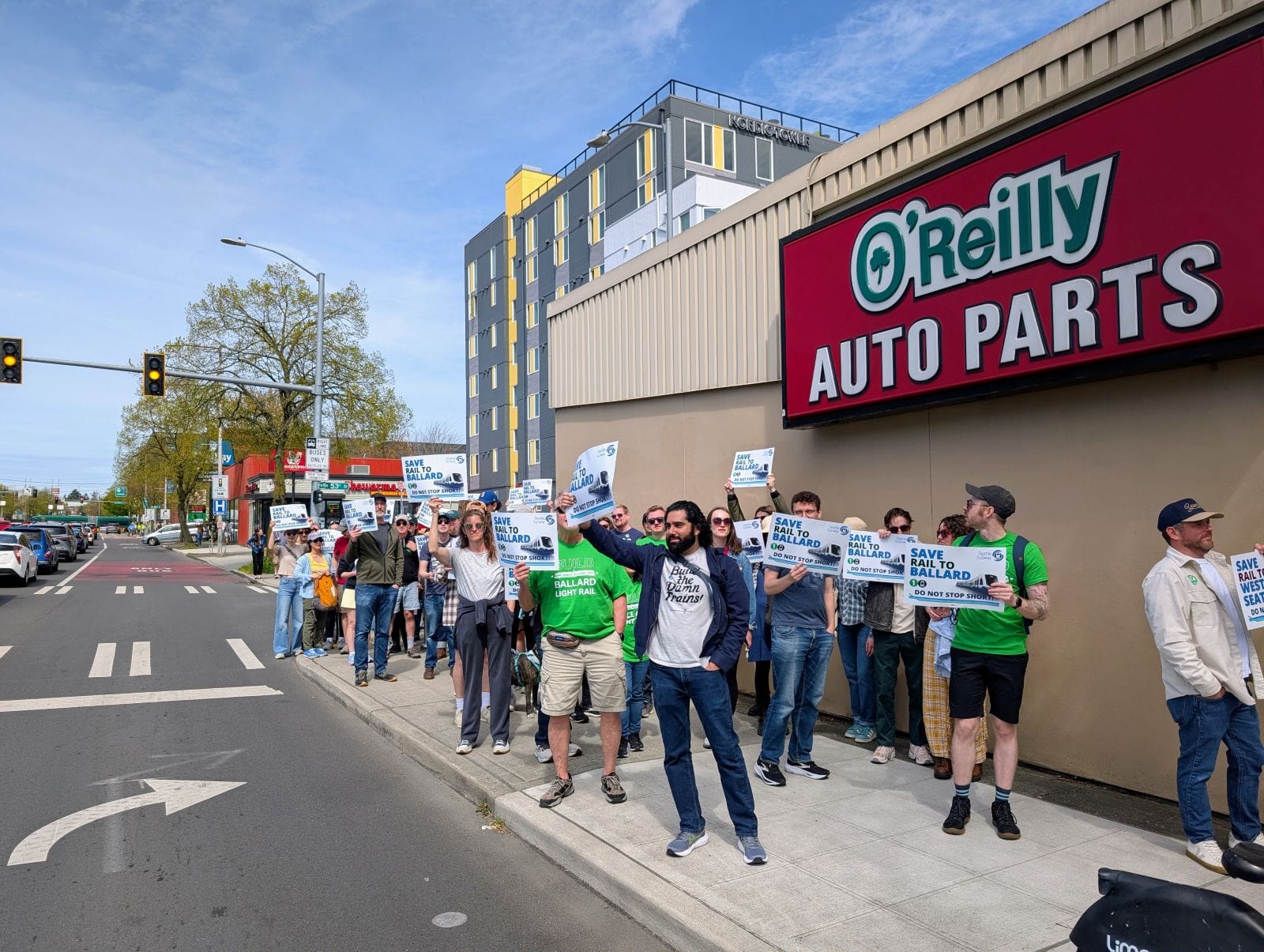
Just weeks before a vote to overhaul the voter-approved Sound Transit 3 (ST3) expansion plan, agency leaders are insisting that estimating opening dates for deferred stations like those in Seattle's Ballard, Interbay, Hillman City neighborhoods is impossible. Nonetheless, estimates for opening dates remain a core request from the Seattle delegation on Sound Transit's 18-member board.
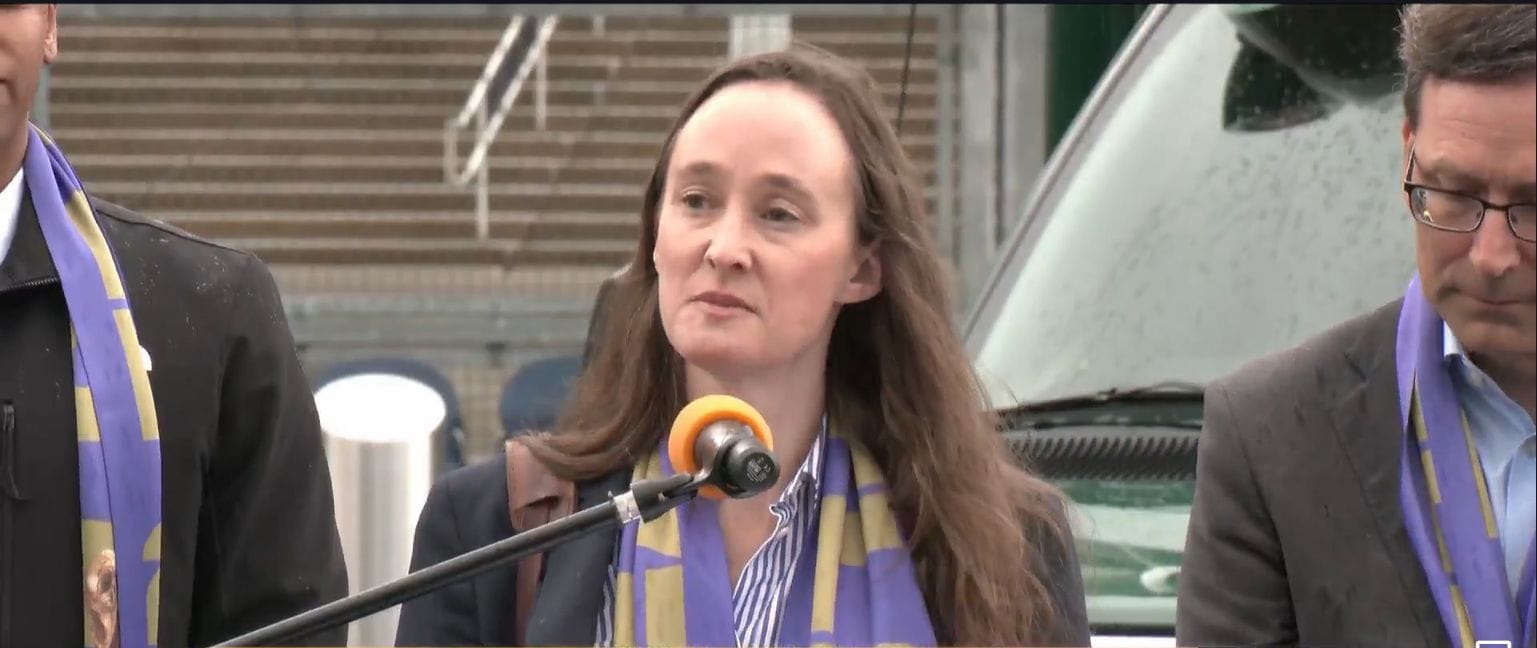
Seattle Councilmember Alexis Mercedes Rinck (who doesn't serve on the board) showed up at Sound Transit's Union Station boardroom to deliver that request during a special meeting of the Executive Committee on Thursday afternoon.
"We are here today because close enough is not good enough, not for Ballard, West Seattle, or South Seattle, where people have been waiting," Rinck said. "We need a date for all of these projects, not indefinite deferral. Seattle voters said yes. They said yes to light rail. They said yes to a fully integrated system."
'Give us a date' has also been a core ask of advocates, including the Save Ballard Rail coalition, which led a well-attended rally and march in April. Business groups like the Ballard Alliance and the North Seattle Industrial Association have echoed similar points about pointing more information out there.
Those two business groups recently sent a letter urging Sound Transit to do more to expedite the project and find funding solutions. They also urged Sound Transit to extend its truncated line to Smith Cove to improve bus connections and reduce construction impacts, which could be acute in the busy Seattle Center area.
"At present, the process feels largely opaque, with insufficient public information available regarding the long-term impacts of near-term decisions," the business groups wrote. "These are consequential choices that will shape the region for generations, and they must be grounded in transparent, data-driven analysis."
The Urbanist reached out to Sound Transit requesting the agency's best estimate of a Ballard opening date under a deferral scenario or offering information about when the agency would zero in on one following the realignment vote. However, our efforts were similarly rebuffed, with agency spokesperson Rachelle Cunningham saying there were too many unknowns to provide such an estimate. This is the same tack that Sound Transit's Deputy Executive Director for Enterprise Planning Alex Krieg has taken during public events.
"The construction timeline for a deferred segment would depend on the circumstances at the time funding becomes available, which we can’t predict at this point," Cunningham said.
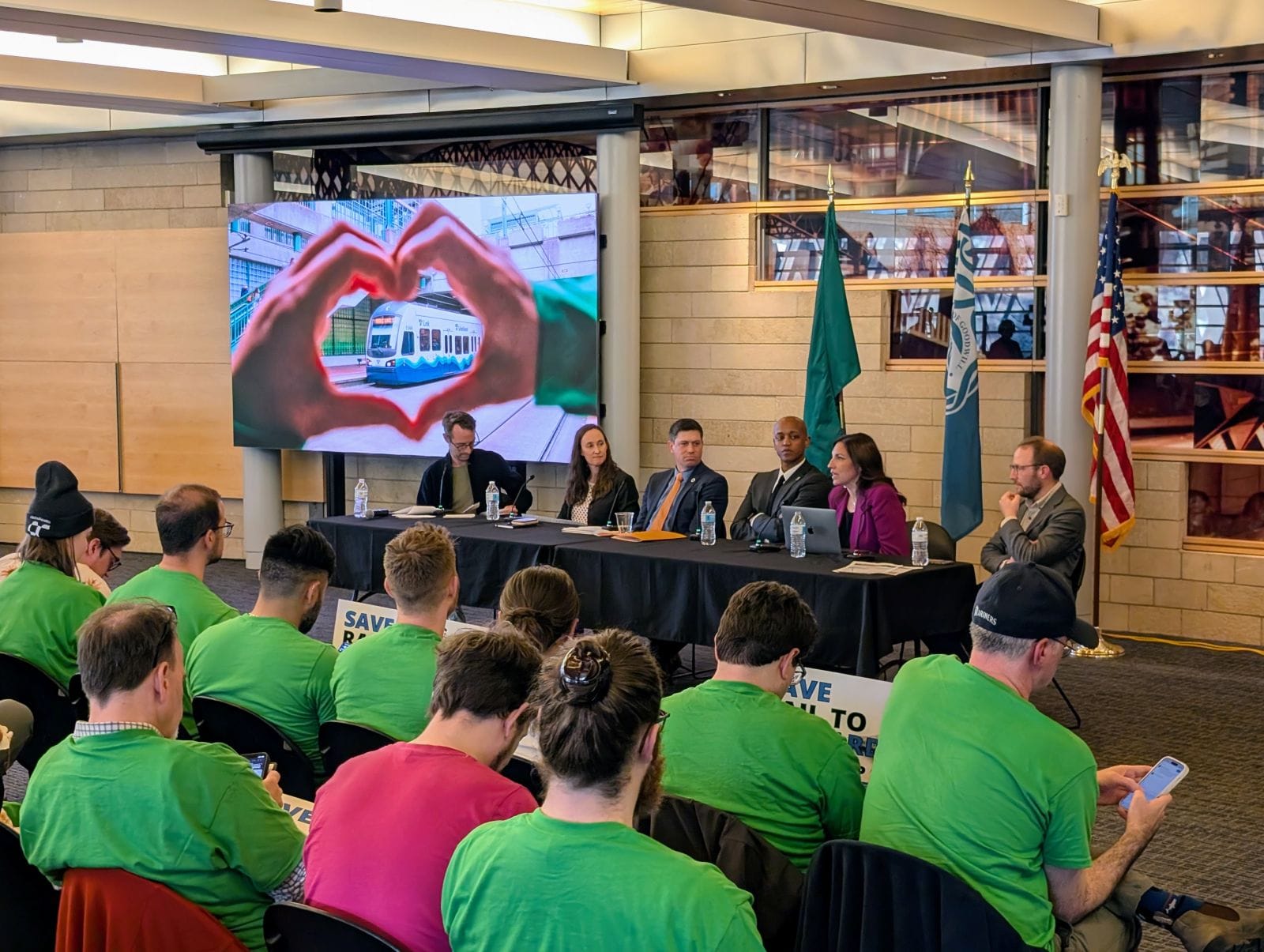
Seattle Councilmember Dan Strauss (who is a Sound Transit board member) echoed the demand for an opening date, and also pushed for riders and ridership figures to be more central in their discussions: "One of the questions that was asked of Alex [Krieg] at the town hall that I took for him, and it's a question I've actually asked as well, but I also haven't received an answer is: why did we not have an approach that prioritized ridership?"
Strauss highlighted a chart of ridership projections that shows the ridership hit that not reaching Ballard would cause. Truncating the SoDo-to-Ballard line at Seattle Center would cost 34,000 daily boardings according to agency modeling.
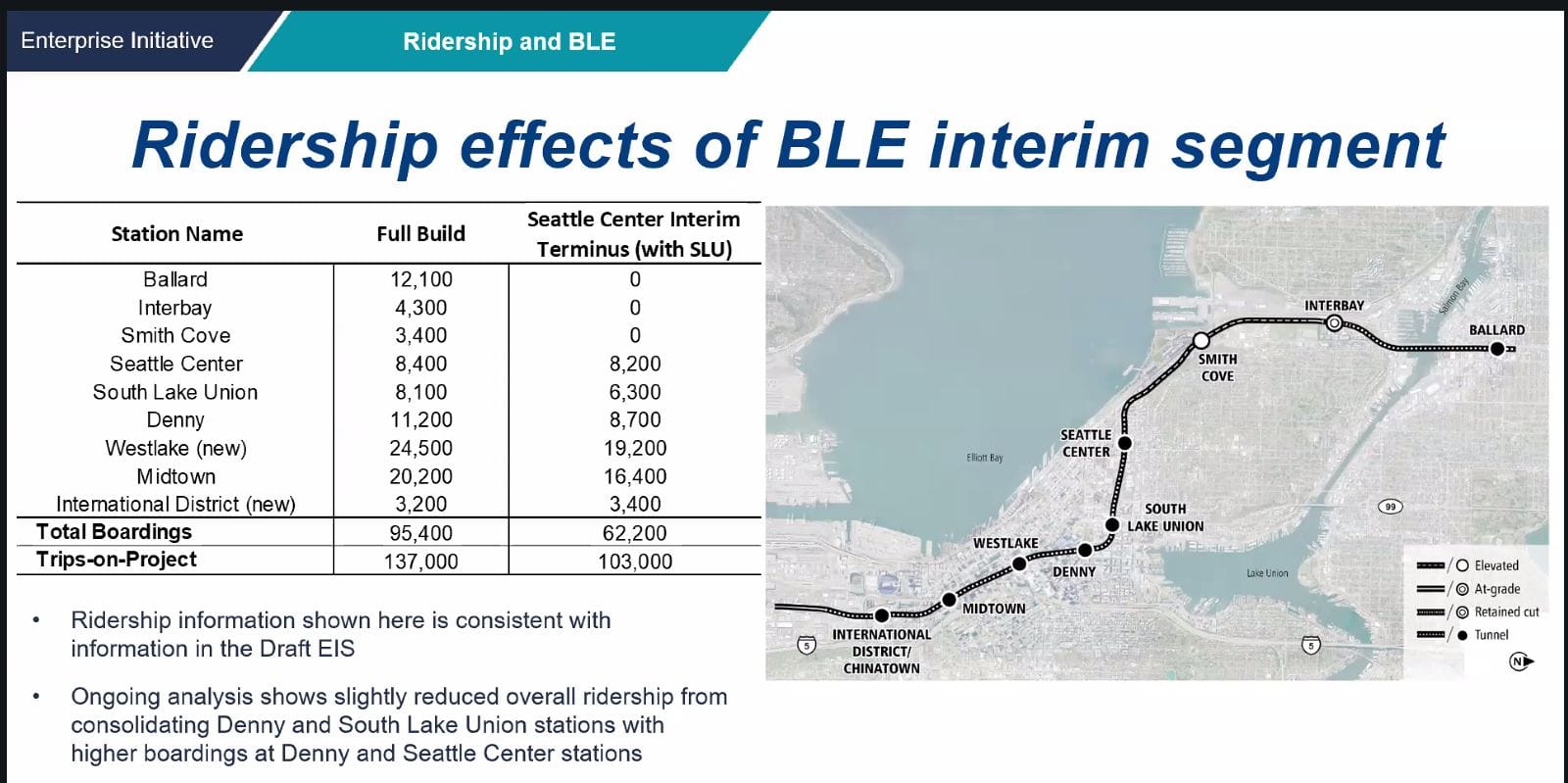
Sound Transit Board Chair Dave Somers, who proposed the deferrals in his rebalancing plan, and agency staff sought to put a glass-half-full spin on this data point, noting that an abridged Ballard Link is expected to attract 75% of ridership – 103,000 daily trips – as compared to a full build out, thanks to huge demand in Seattle's downtown core. As Snohomish County Executive, Somers has framed the regional light rail "spine" from Everett to Tacoma as the agency's highest priority.
The 34,000 daily boardings lost by truncating Ballard Link is more than some entire extensions are expected to garner, including the Everett Link Extension (27,100 daily riders), the 4 Line from South Kirkland to Issaquah (~13,500 daily riders), and West Seattle Link's 27,600 daily riders.
On the other hand, West Seattle Link already having federal approval via a "Record of Decision" has put it on a faster track than other King County projects.
The entire Everett Link extension project is projected to attract 27,100 daily riders, by way of comparison. Issaquah Link: 12,000 to 15,000. www.theurbanist.org/snohomish-co...
— The Urbanist (@theurbanist.org) May 14, 2026 at 3:26 PM
[image or embed]
Ballard Alliance executive director Mike Stewart noted that the uncertainty around the timeline is hard on the Ballard business community, which his organization represents.
"[Businesses] don't really have a clear understanding of when we can expect light rail to Ballard, and they can't make decisions based on something that is promised for a date in the future," Stewart told The Urbanist. "And that's really what is presented right now is just sometime in the future. I think what we appreciate, certainly, is that this resolution will take the Ballard Link extension to 100% design, all the way to NW Market Street. I think that is a step forward from where we were a week or two weeks ago."
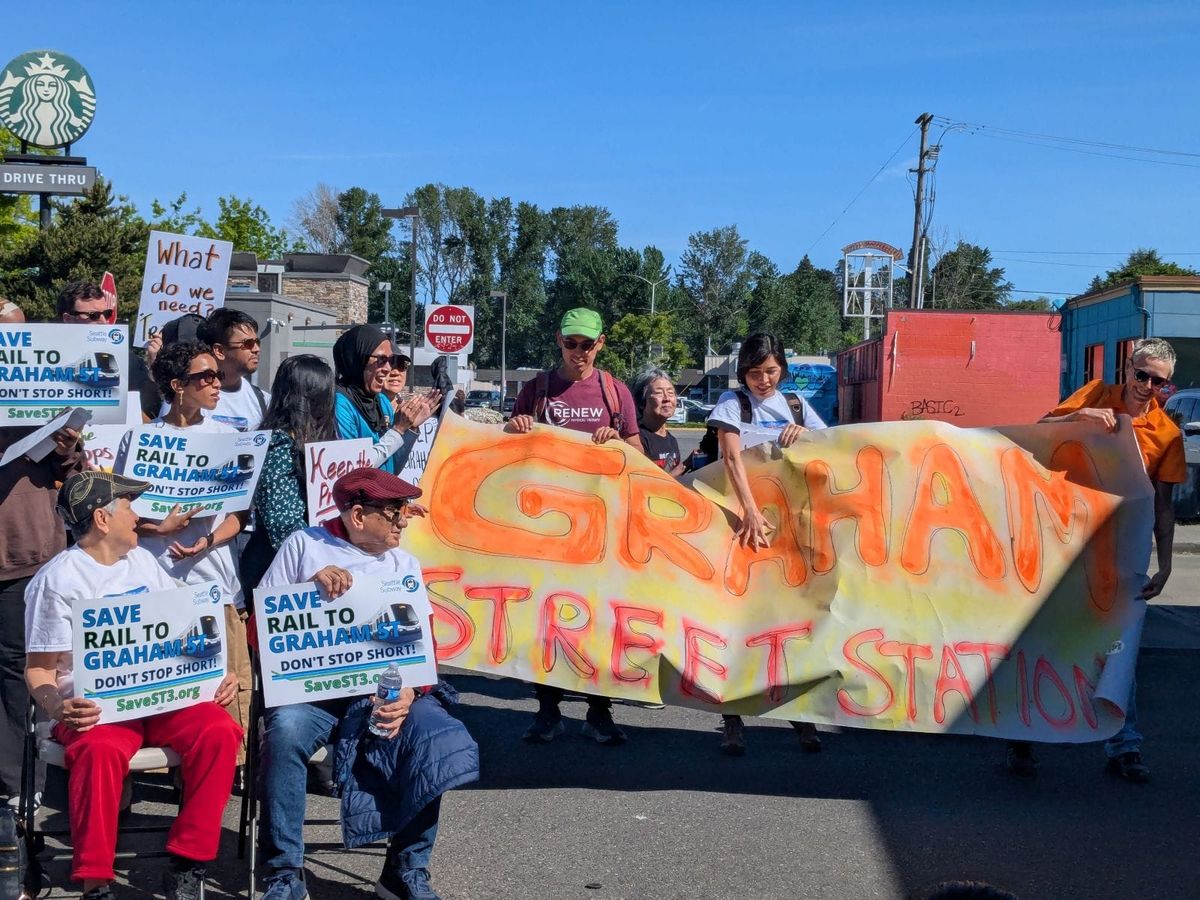
Likewise, Rainier Valley residents, businesses, and nonprofits long expecting 1 Line infill stations at Graham Street in Seattle's Hillman City neighborhood and Boeing Access Road in Tukwila have protested being sent to deferral limbo.
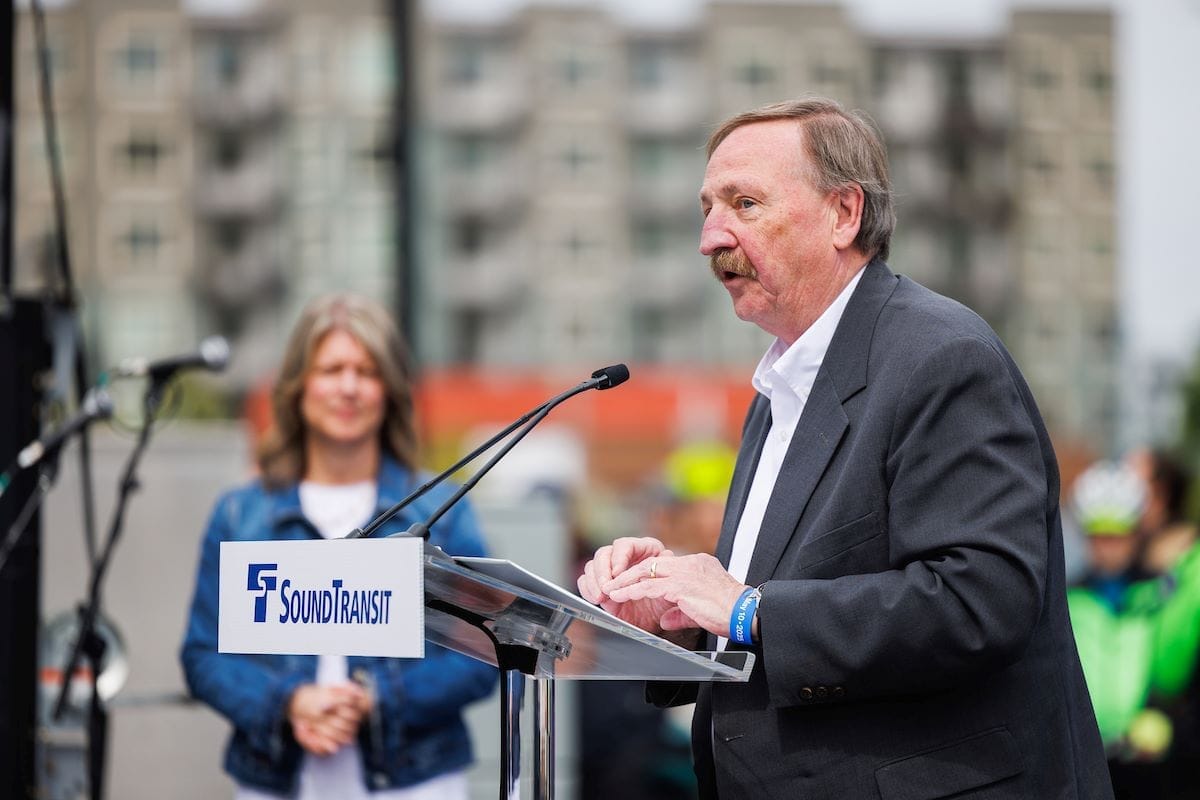
While Somers had initially hoped the Executive Committee would recommend his proposal to the full board Thursday, he delayed that move to allow more time for amendments. This calls in doubt his hope to take final action at the May 28 board meeting. Somers could theoretically call a special meeting of the Executive Committee to get it done. For now, Sound Transit is listing the May 22 committee meeting as canceled, leaving June as the likely time realignment votes are settled.
"I think terminology and being clear is really important to build trust," Somers said Thursday. "The other thing I'll say about the desire for dates, I totally understand that. I also think it's extremely difficult to date when we don't know how we're going to fund the project. That's obviously a key factor in what the date will be. And I also don't personally like giving a date and having to change it and say, 'oh, you know, it wasn't real.'"
Agency needs timeline for grant purposes
While Sound Transit officials claim they cannot produce an estimated opening date for Ballard Link, some industry experts have argued that one must surely exist internally. Among them is Scott Kubly, the former director of the Seattle Department of Transportation, who also worked for the Chicago DOT and Washington Metropolitan Area Transit Authority (WMATA), which serves the DC region.
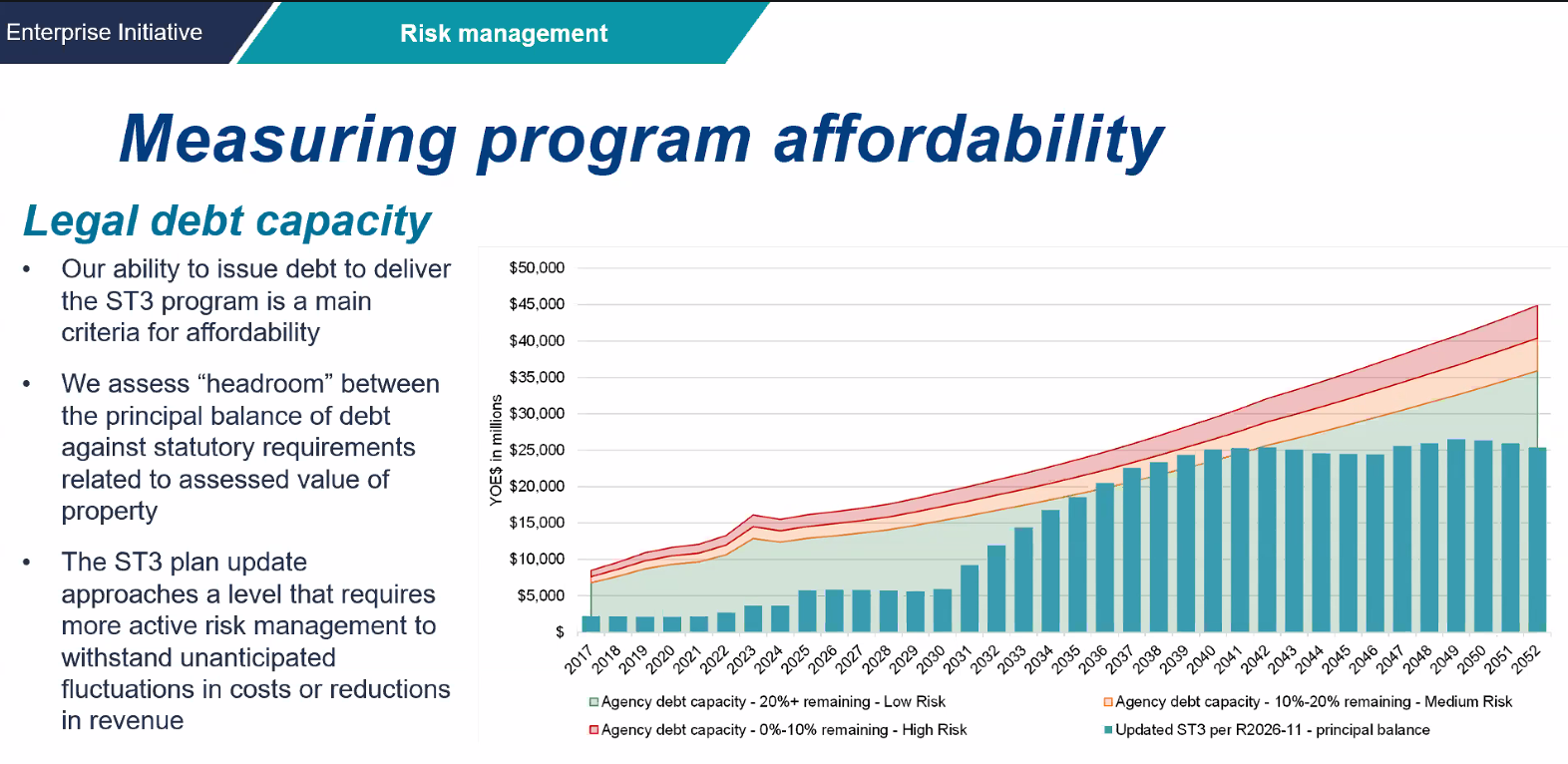
In order to secure key federal loans through the Transportation Infrastructure Finance and Innovation Act (TIFIA), whether for Ballard Link or other future expansion projects, Sound Transit will be expected to provide a spending plan with dates for planned projects systemwide, he said.
"Early in my career I led capital financial strategy for WMATA. Sound Transit should absolutely be able to produce a financial plan that shows their current estimate for when they can start the Ballard extension given current resources and an anticipated spend plan," Kubly said in an email. "For context, they proposed 75-year debt. In order to secure a TIFIA loan the agency needs to produce a financial plan for the rating agencies (Fitch, Moody's and S&P Global) to provide a bond rating. That is a TIFIA requirement."
Agency skeptical of automated light rail proposal
Along with transportation planner Trevor Reed, Kubly published an op-ed in The Urbanist proposing an alternative Ballard-to-West Seattle light rail plan that relies on shorter automated trains at higher frequencies to drive down station costs and future operating expenses, similar to the Copenhagen Metro model. Agency staff have greeted the idea with skepticism, but Kubly and Reed argue it could deliver Seattle expansion projects much sooner without sacrificing capacity or ride quality.
"Sound Transit is always evaluating new ideas and potential improvements to process and design," Cunningham said. "Substituting automated light rail technology with smaller stations and higher frequencies may cause limitations if transit demand grows beyond initial projections."
In contrast, Kubly argued an automated light rail (ALR) would have higher capacity than the agency's existing plans – at least without massive investments to provide grade separation for the 1 Line through the Rainier Valley and SoDo and to improve train control and signaling systems to tighten headways. These projects would add billions in cost and are not currently accounted for in agency plans.
"The capacity objection is specious," Kubly said. "Their current train design and operating plan covers a 20-year planning horizon. The current train design can carry 800 people per four-car train and they plan 5-minute headways - 9,600 passengers per hour through the max load point. Compared to the ALR proposal (using the ST loading / crowding standard) is 15,800 per hour."
Sound Transit's Krieg also brought up the prospect of process delays and potentially being required to re-do Environmental Impact Statement (EIS) work, which Kubly also disputes, as covered in a previous article. Moreover, Kubly argued that designs and plans created in the 2020s for a project not set to open for two decades or more may not be very useful or usable, as conditions on the ground change and residents turn over, with new generations born into a dream deferred.
"My takeaway: Sound Transit has not read our report and/or thoroughly analyzed their arguments," Kubly concluded. "They are raising plausible-sounding rebuttals that do not stand up to scrutiny."
Kubly has done his own rough estimate of when light rail could arrive in Ballard under Sound Transit's current deferral trajectory, and he puts the opening date in the late 2050s. That is based on starting construction in 2047 – at the end of the 20-year planning window during which the agency said the project is not affordable – and needing about a decade to finish construction, similar to the agency's current estimate that building the full SoDo-to-Ballard line would take 11 years.
Sound Transit's spokesperson declined to comment on Kubly's math, other than to point to uncertainty.
For many riders anxious to see light rail arrive in Ballard, worrying about shaving a year off the EIS process in the 2020s for a project that appears to have slipped to the 2050s under the agency's plans may seem a silly exercise. Out of the box thinking might not be the craziest thing at this juncture.
 Doug Trumm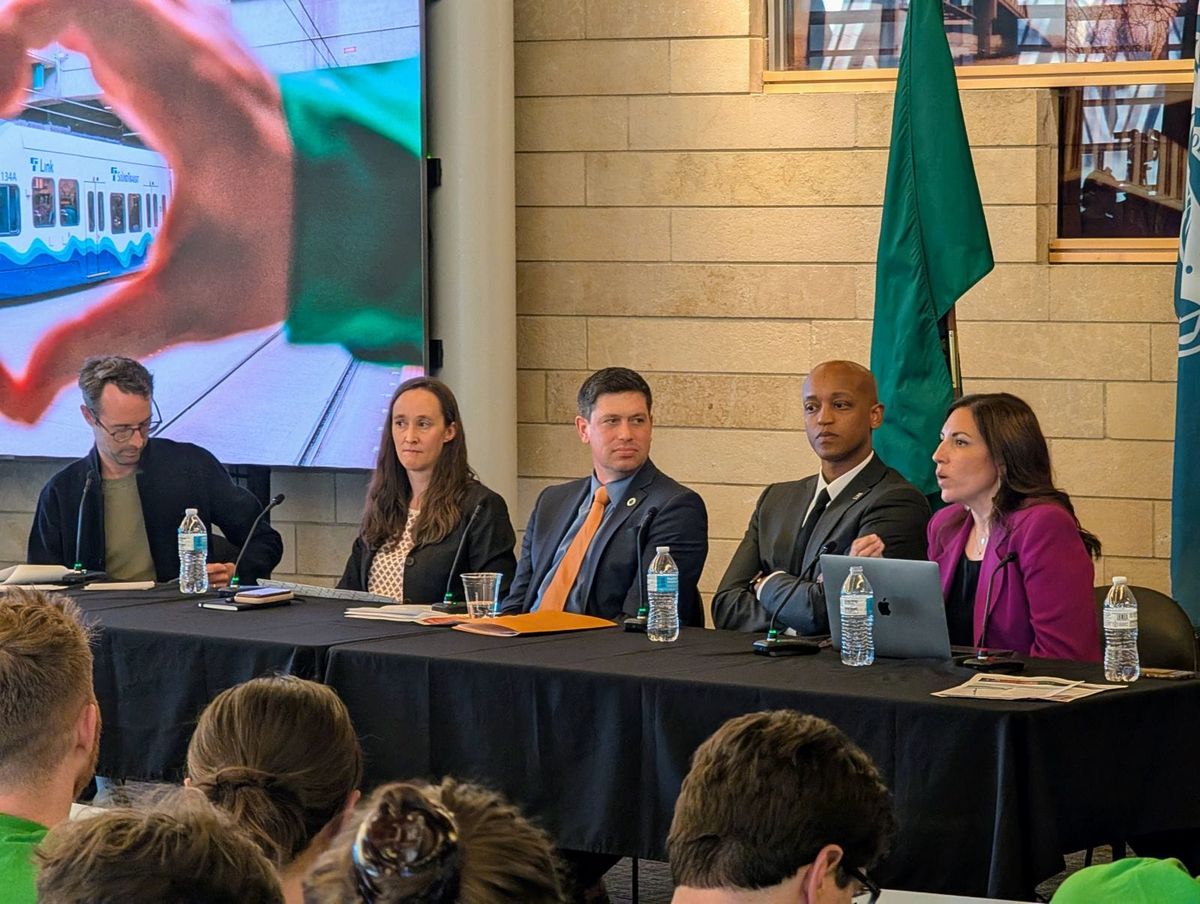
 Amy Sundberg