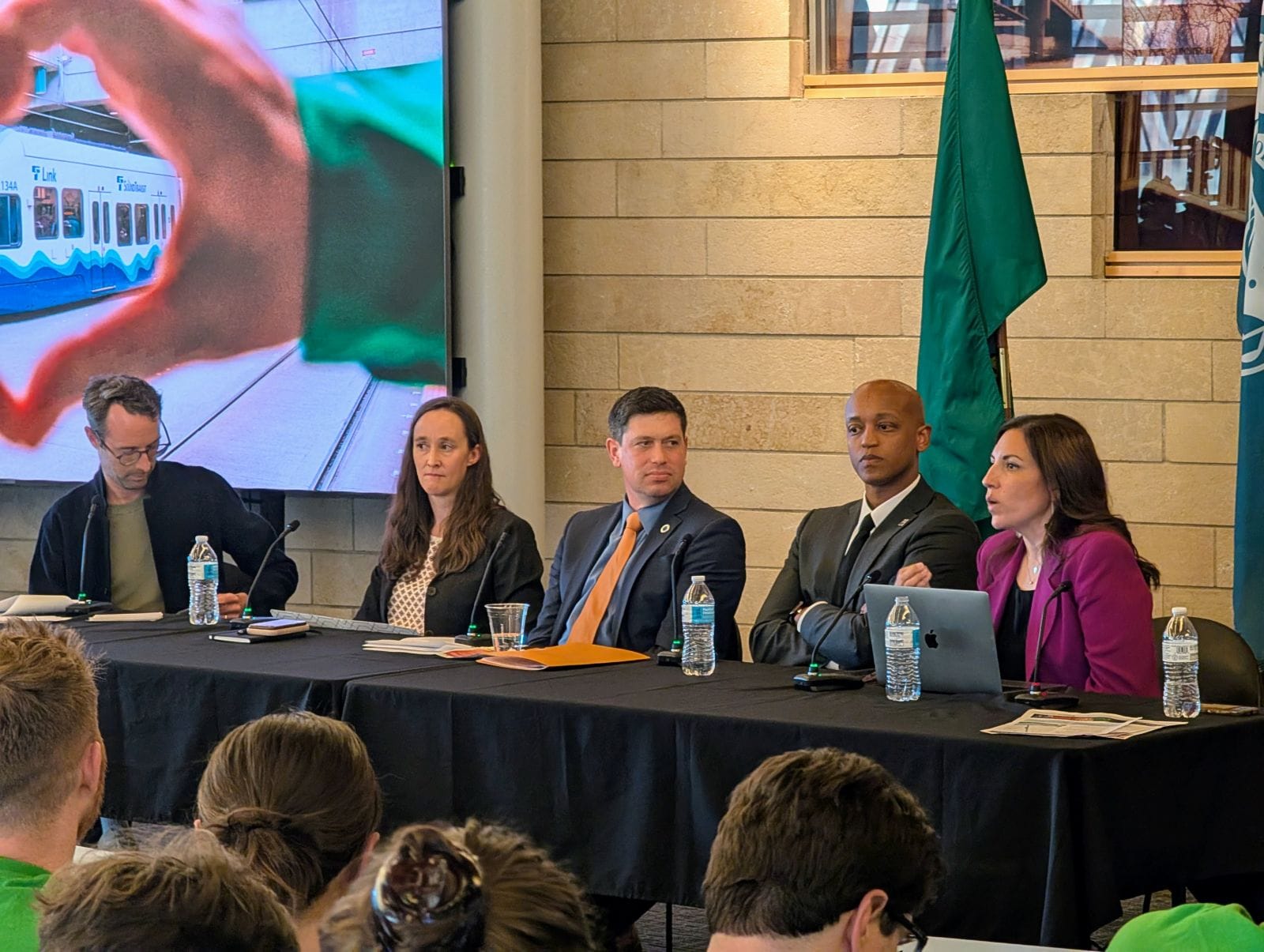
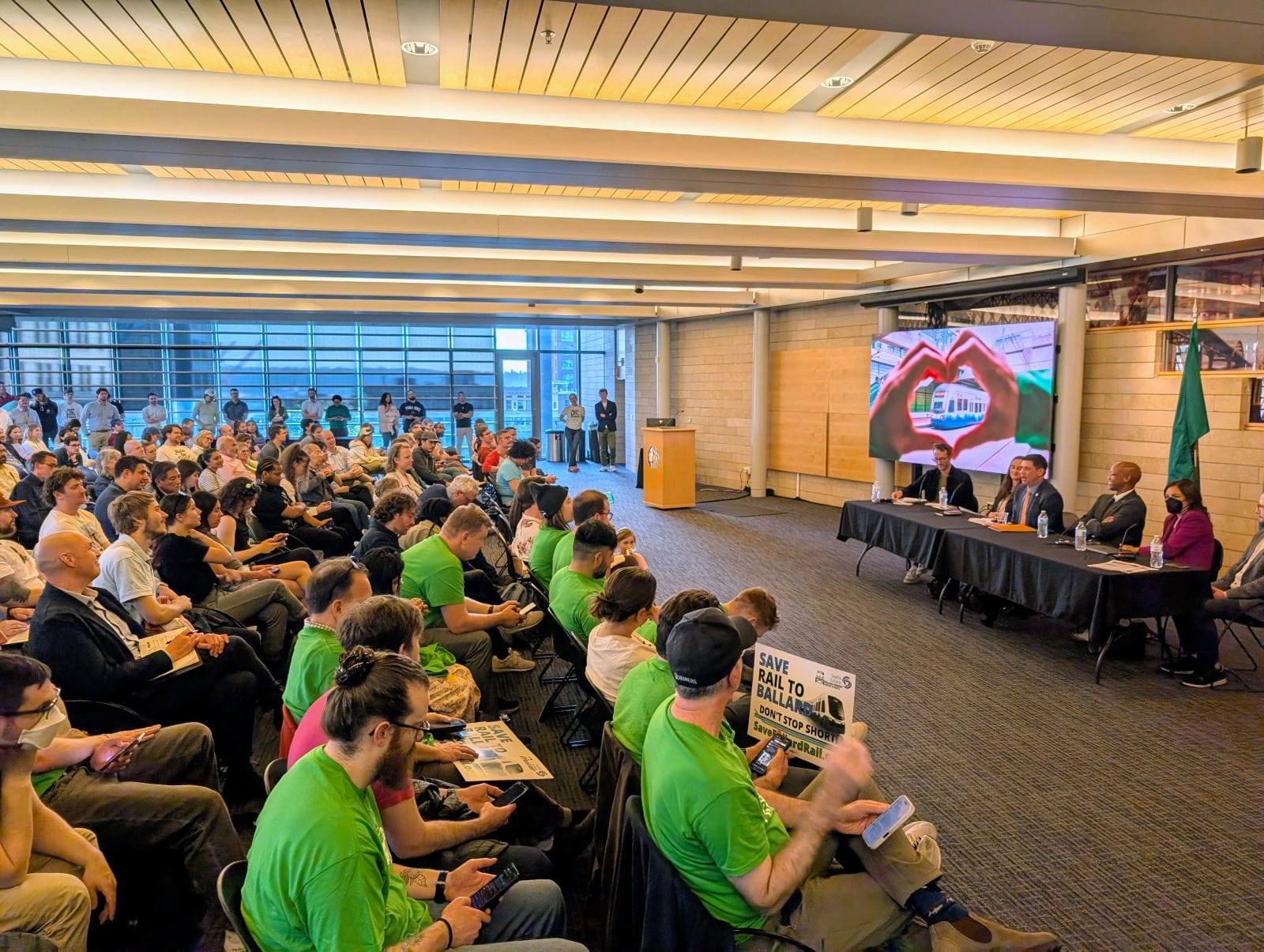
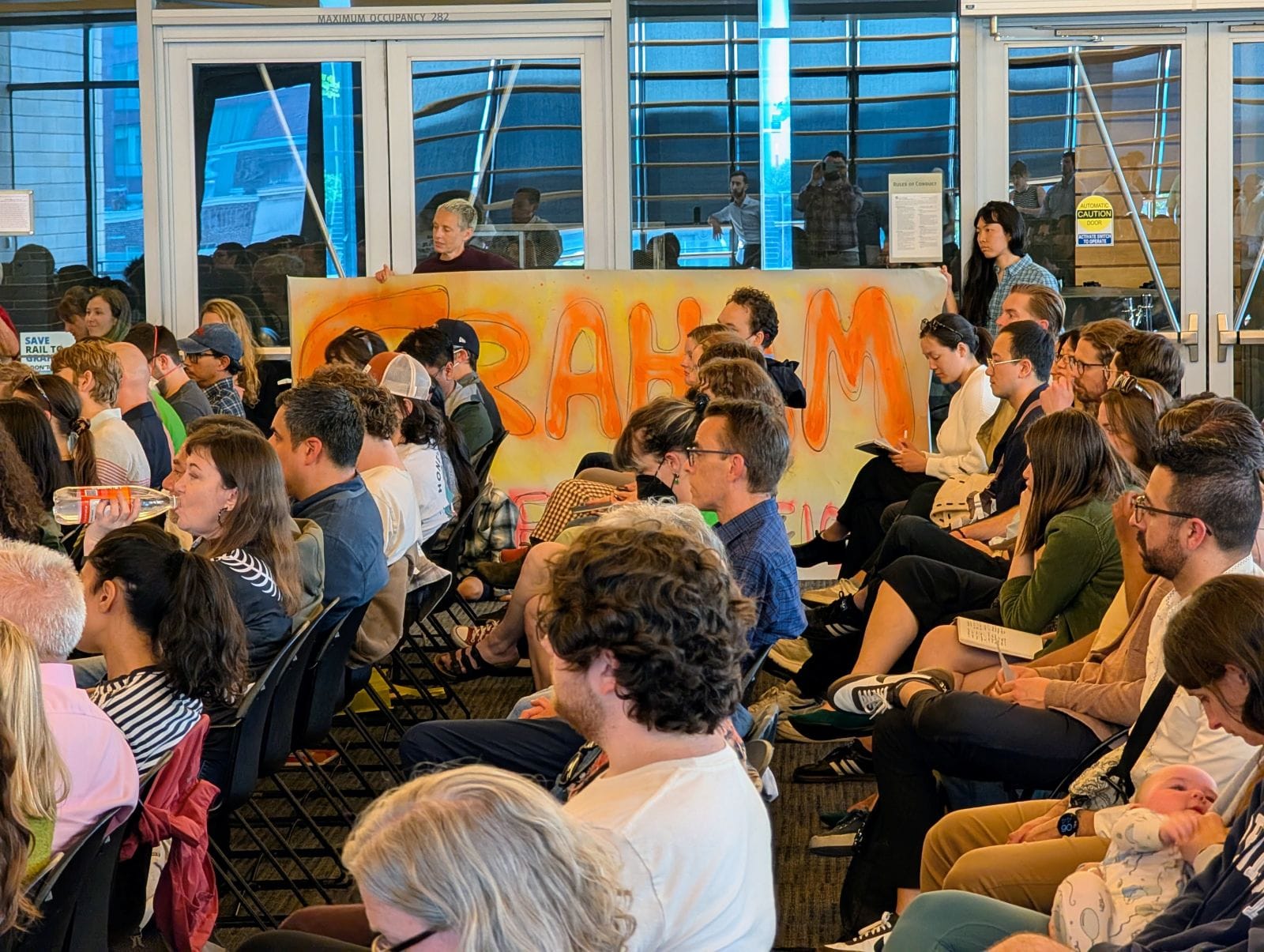
On Tuesday, more than 200 transit advocates turned out at Seattle City Hall to hear Seattle's delegation on the Sound Transit Board of Directors pitch ideas to avert delays to local light rail projects. The board members from Seattle pushed back against the idea of deferring some stations indefinitely, arguing for keeping the projects moving and looking for additional revenue.
Seattle leaders made an overture to regionalism, as some board members like Everett Mayor Cassie Franklin have emphasized deferring Seattle projects to ensure the regional light rail "spine" is prioritized. That's exactly the approach that Snohomish County Executive Dave Somers (who chairs the board) took when he released his budget-balancing proposal on Wednesday.
Like Franklin, Somers has emphasized that the 62-mile spine is his top priority among Sound Transit 3 (ST3) projects approved by voters in 2016, while framing light rail to Ballard and a Hillman City infill station at Graham Street as simply unaffordable and in need of being shelved indefinitely. That approach has not gone over well in Seattle.
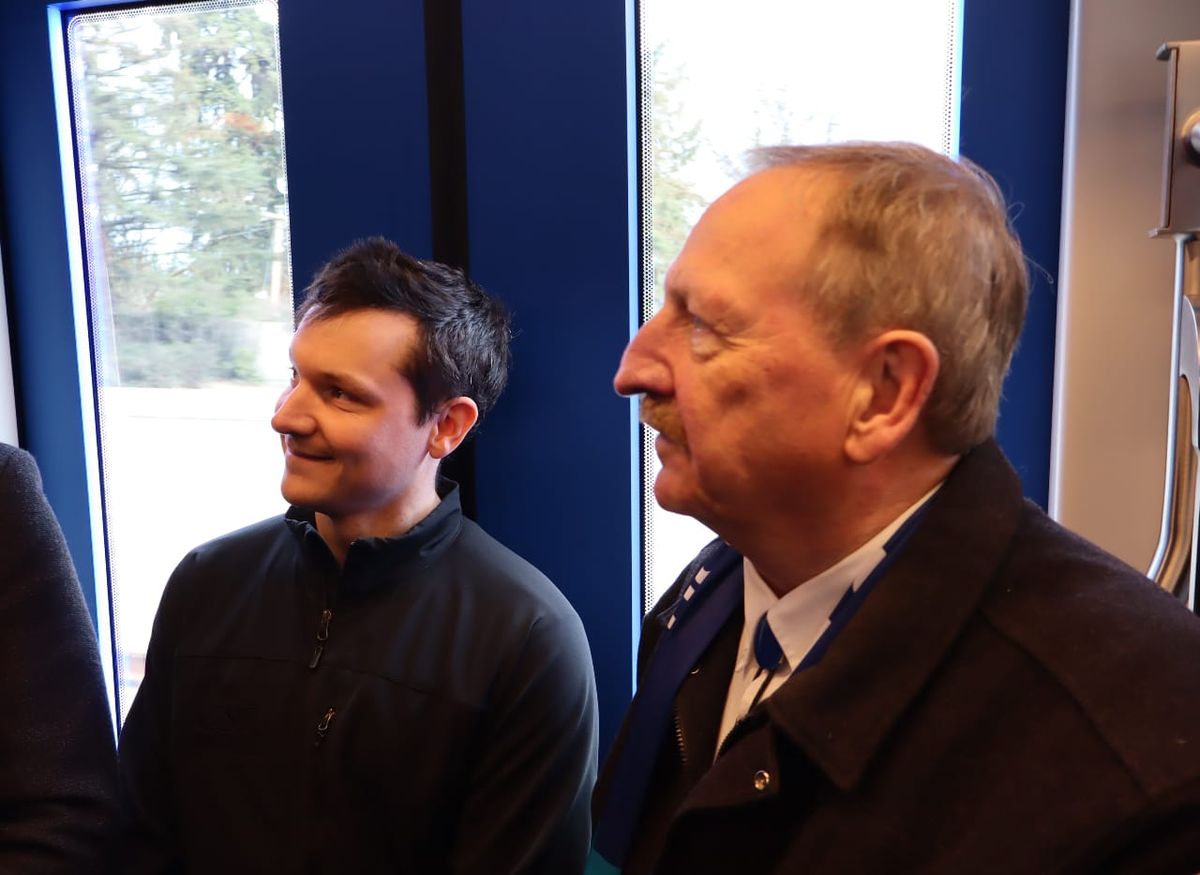
Tuesday's forum featured King County Executive Girmay Zahilay, King County Councilmember Teresa Mosqueda, Seattle Mayor Katie Wilson, and Seattle Councilmember Dan Strauss – comprising four of the 18 members of the Sound Transit board. All agreed that indefinitely deferring light rail lines or stations was the wrong approach and argued that Sound Transit owed it to voters to provide estimated dates to deliver promised stations.
Strauss reiterated his argument that it was unacceptable to leave Ballard unconnected, since it's a regional urban growth center that has added several thousand residents. But he did grant that getting to Smith Cove or Dravus Street in Interbay, rather than stopping well short at Seattle Center, like Somers has proposed, would be a win.
"So this is bad," Strauss said. "What I'm looking for this week is 100% design and a date for construction to Ballard. And anything less than a date certain and 100% design is a loss. If we were able to go further to Smith Cove [or] to Dravus, that's when we're getting into counts of wins in this situation. Because we have to look at this as a total region. We have to get to Snohomish. We have to get to Everett. We have to get to Tacoma, and we can't leave the only urban regional center unconnected by Sound Transit."
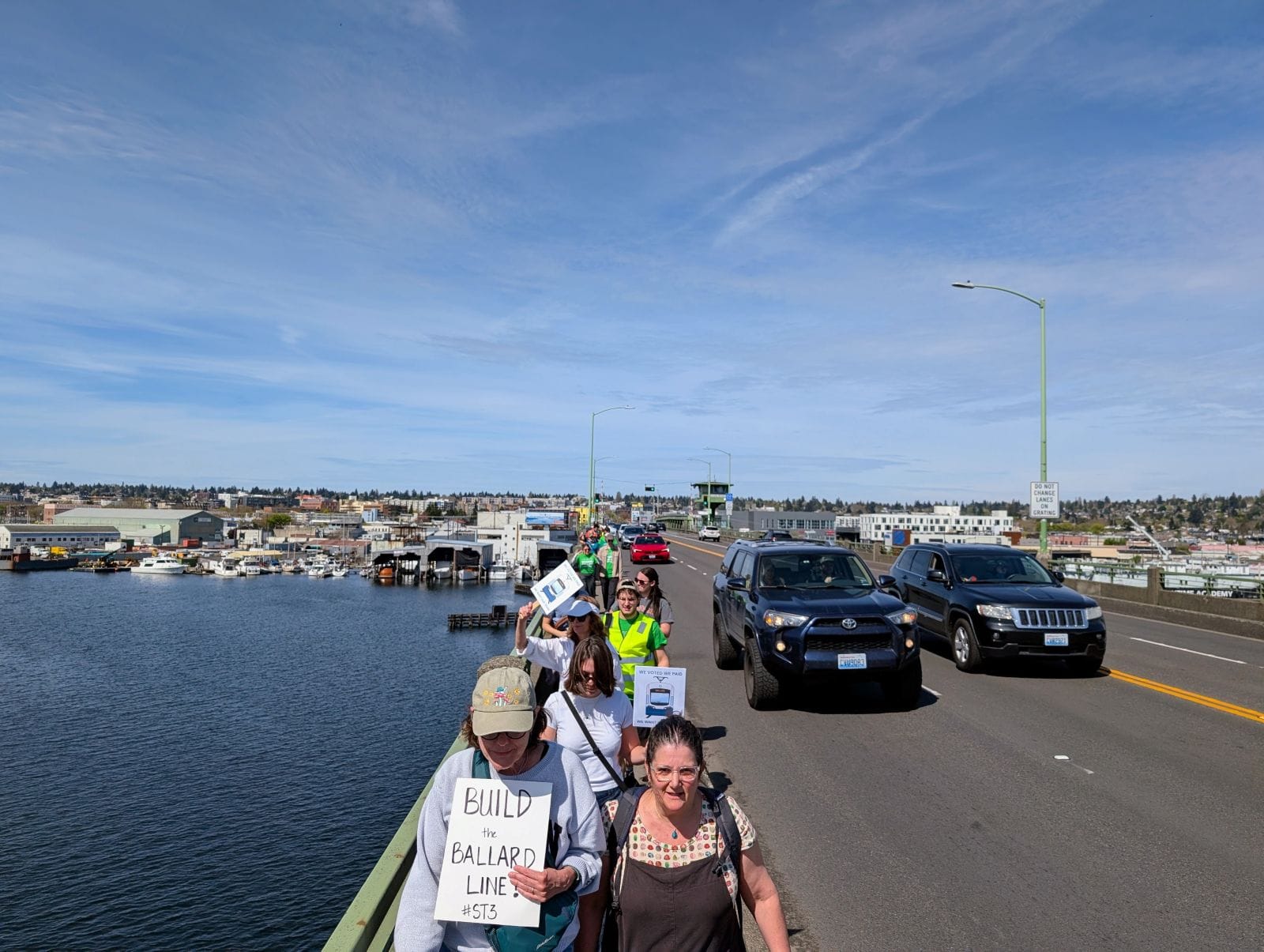
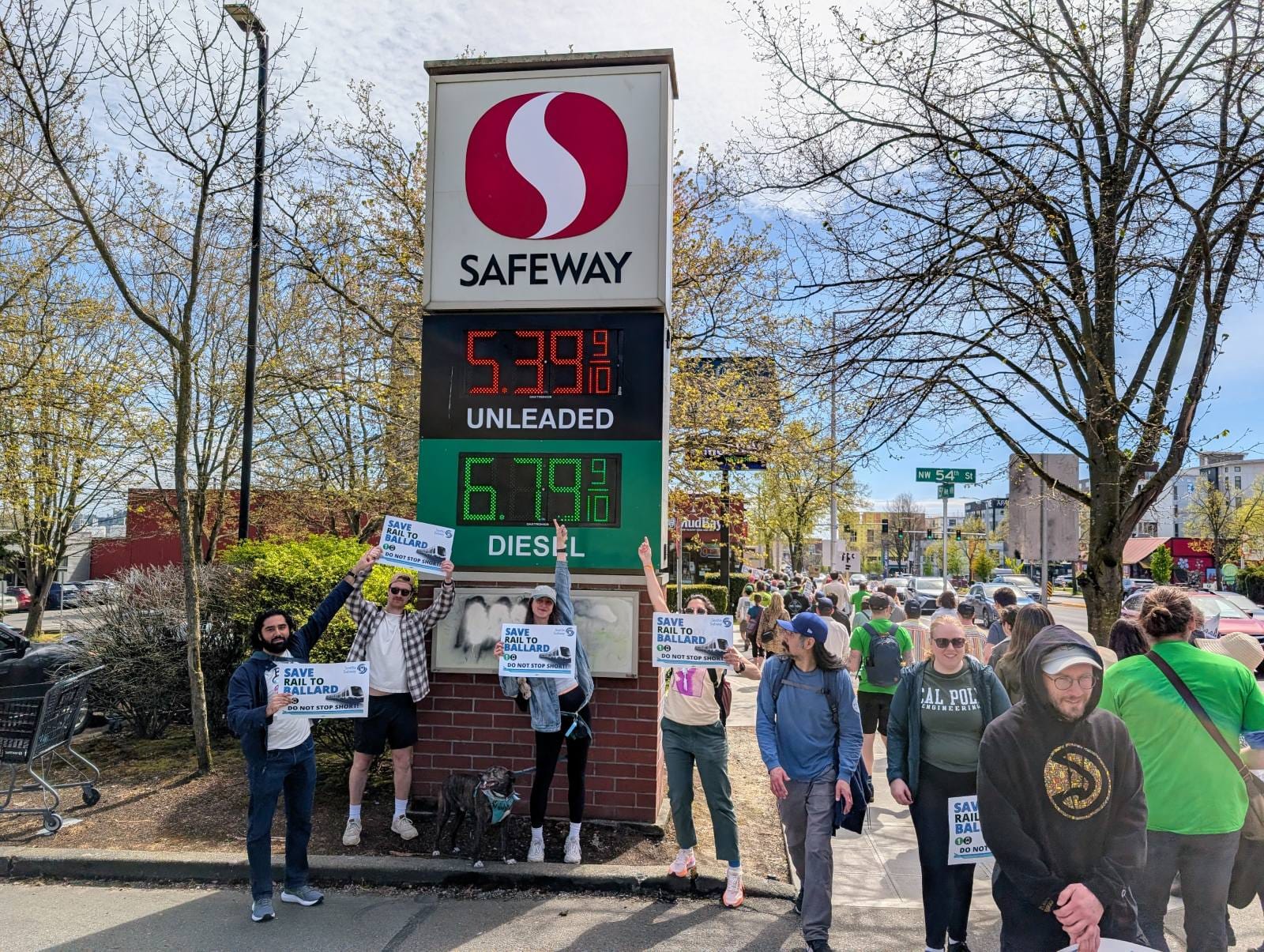
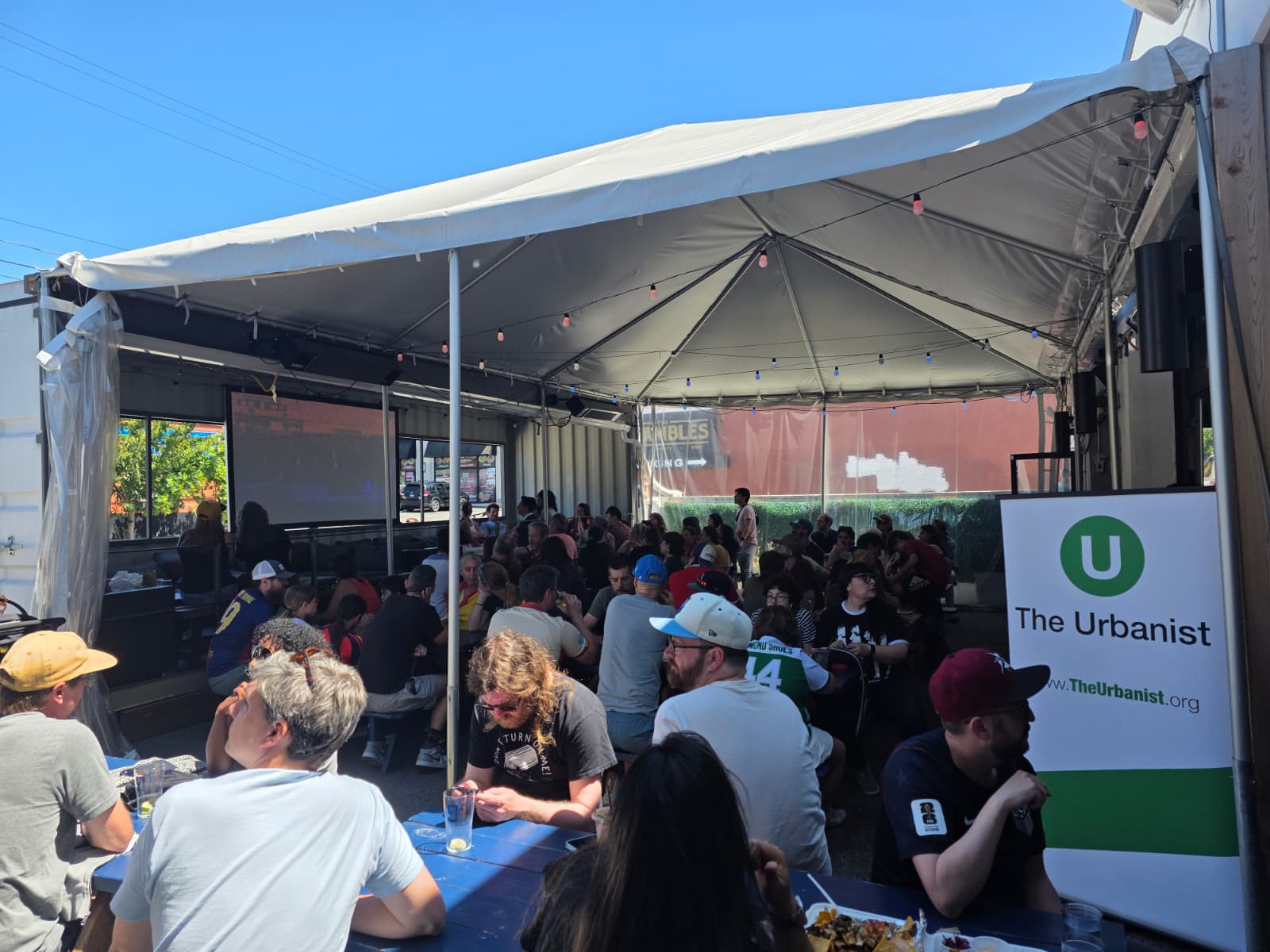
Transportation Choices Coalition hosted the forum, along with similar talks across the region – in Tacoma, Everett, and Bellevue – featuring local Sound Transit board leaders. Each focused on expansion projects in the respective subareas of Sound Transit's coverage area. An event at Highline College in Des Moines focused on the South King County subarea is slated for May 13. TCC is leading a "Build The Damn Trains" coalition featuring a number of advocacy groups, such as Seattle Subway, Transit Riders Union, Seattle Streets Alliance, and Sierra Club Seattle.
In addition, Councilmember Strauss is hosting a "Community Meeting on the Future of Ballard Light Rail" on Monday, May 11 at 6pm at the National Nordic Museum.
Mosqueda, who secured a coveted Sound Transit board appointment in late 2025, argued the best approach was keeping all projects moving forward and hoping for more favorable financial conditions in the future.
"There's no turf; there is no stealing. We're all in this together," Mosqueda said. "And I think that's the point of these forums, to show people that we want the connection across our three counties, and we want to continue to deliver lines. That we don't want things to be in a category of unaffordable or defer. We want them to be on the list, and we're committed to doing so. So I think how we talk about it, and recognizing that there is work to do on the financing tool, absolutely, but the commitment, the vision, the values, making sure that we carry through, that needs to be the takeaway at the end of the month."
One of those revenue options is stretching out bonding to longer terms, as the federal government approved as part of its last infrastructure bill under President Biden. Sound Transit has lobbied the Washington State Legislature to approve 75-year bonding, but the bill died in the state House. However, Zahilay was bullish about its prospects in the next session.
"I had multiple state legislators call me after this session saying don't read the death of the 75-year bond bill as a lack of an appetite from the state Legislature," Zahilay said. "That bill passed out of the Senate. It didn't make it out of the House, but people are hungry to pass it next year, is what I'm hearing."
To alleviate its financial woes, Sound Transit has also sought higher debt limits and is hoping for more state and federal grants to close gaps. The agency has also floated a rental car tax. That revenue would largely go toward the South King County subarea, where the presence of the airport leads to the highest share of car rentals within Sound Transit’s operating area. That could be a life preserver to the Boeing Access Road station, which Somers proposed deferring, but it may not offer much help beyond that, given its scale.
The other big lever to solve the financial crisis is to trim costs on the expansion projects, and Sound Transit has made some progress on that front, with smarter designs and cost-cutting moves like dropping Avalon Station in West Seattle.
Another way to cut costs is to outrace inflation by getting projects done as soon as possible, which Wilson argued was also necessary to maintain public trust in the broader enterprise.
"I want to get started on building West Seattle this year," Wilson said. "This is a shovel-ready project. We cannot risk losing momentum. It is important that we get those shovels in the ground, that we begin to deliver on that project, on the station, so that people can really see that we are moving forward. Because that is what is going to just increase the faith of the public in this agency's ability to deliver, and it's going to build on momentum for us to get whatever other tools we need in order to complete the whole thing."
Agency pours cold water on automated light rail idea
Alex Krieg, Sound Transit's Deputy Executive Director for Enterprise Planning, was present Tuesday to provide the obligatory opening PowerPoint presentation and field technical questions during the panel. Krieg pointed to some big opportunities to shave costs with smarter design choices, like slimmer stations, as outside experts have urged.
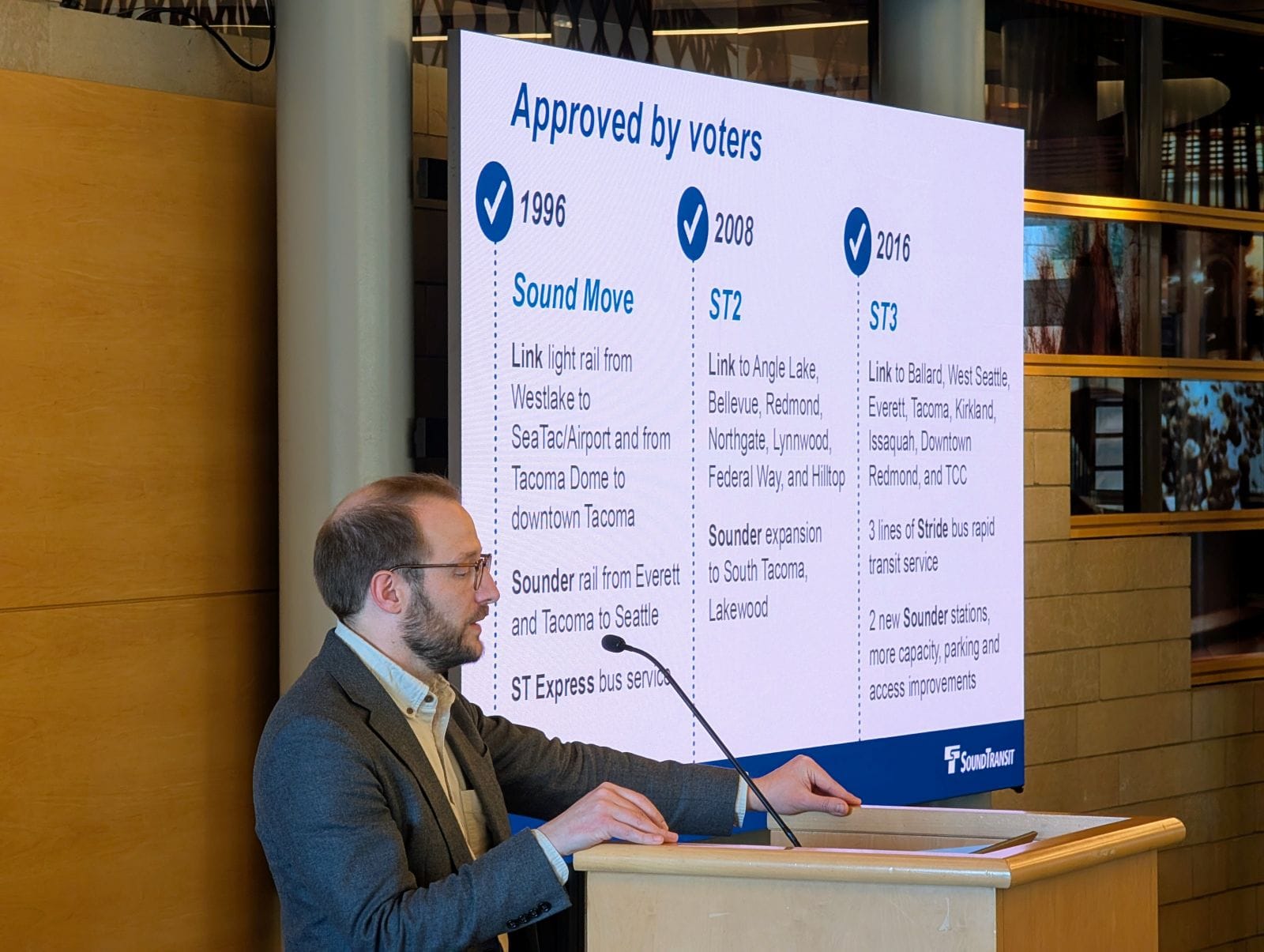
"We've certainly heard and are incorporating the feedback around station size," Krieg said. "Some people in this room know the reference to the word trapezoidal station, where the Seattle Center Station has found real significant cost savings. I would also say, I think, with respect to the proposal, which does assert significant cost savings and schedule savings."
Sound Transit saved nearly half a billion dollars over earlier estimates with a nimbler, trapezoidal station design at Seattle Center. This hints at big opportunities for savings as the agency advances designs beyond the conceptual phase across the Ballard to SoDo line. Without those cost-saving measures, Ballard Link saw its cost estimate balloon past $20 billion in year-of-expenditure dollars.
However, Krieg tempered expectations and pushed back on a Hail Mary idea to connect West Seattle to Ballard rail and convert it to an automated light rail line with much shorter stations and more frequent, shorter trains. Former Seattle transportation director Scott Kubly and transportation planning consultant Trevor Reed issued a white paper and op-ed in The Urbanist pushing the idea.
"There's real risk with process delay," Krieg said. "We do need approval from the Federal Transit Administration to get that draft environmental impact statement published. Changing that in such a way just carries risk. There's also, I think, real considerations around smaller stations and more frequency, around the ability to expand in the future."
Krieg pointed to Vancouver's TransLink Canada Line as an automated line that outgrew its small stations.
"We know from a region up in Vancouver, the Canada Line has been identified as an example of this. They're bursting at the seams, and it's not easy to grow capacity once you set a station size," Krieg said. "So, there are very real tradeoffs. We love the idea that we want people to be engaged in this work, and also just want to be really clear: there are no easy answers here. I wish there were..."
Kubly and Reed would see the tradeoffs differently, especially with Sound Transit prepared to spend the better part of $20 billion and not get light rail to Ballard anytime in the next 20 years – if current plans hold.
In fact, when reached for comment, Kubly told The Urbanist it appeared Krieg had not read their paper, which he said addressed the concerns he raised.
"His capacity objection is that the hypothetical capacity of a rail line they can't afford is more important than the actual capacity of one they can afford to build," Kubly said in an email. "The proposed Automated Light Rail (ALR) capacity exceeds Sound Transit’s planned capacity by 60%. Sound Transit’s current planned capacity for Tacoma to Ballard is based on five-minute headways, which exceeds the six-minute headway that SDOT asserts is the maximum possible through the Rainier Valley."
Kubly also pushed back vigorously on Krieg's Canada Line narrative, arguing the automated alternative could exceed the capacity of Sound Transit's proposal by a wide margin for much less cost. He noted that the Canada Line currently uses 131-foot-long trains, but the Seattle automated proposal would use 166-foot trains that could be expanded to 200-foot sets in the future, meaning significantly higher carrying capacity.
"He cites SkyTrain. So, let’s look at how they are increasing capacity (innovative train design)," Kubly added. "Furthermore, we cited 90-second frequencies. The most recent ALR from Hitachi (Copenhagen and Milan) can reach 75-second frequencies, 18,960 passengers per hour (2x more than ST’s planned capacity). Building big stations serving infrequent trains to address peak-of-the-peak capacity is the most expensive way to provide capacity. Something the rest of the world has learned and implemented."
Looking at the same Canada Line case study, Kubly saw support for automated shorter trains, rather than a cautionary tale.
"Why is Sound Transit discrediting a proposal that they clearly have not investigated beyond anecdotal information and a cursory google search?" Kubly said. "The Canada Line isn’t a cautionary tale. It affirms the need for a new approach by Sound Transit. The Canada Line was delivered on time and to budget. That budget and timeline? $6.7 billion (converted to 2025 US dollars), less than six years, for almost 12 miles of transit."
CID hub station could be revived at 5th Avenue
Ballard Link's planning delays have meant additional costs, but it also means a glimmer of hope for advocates hoping to revise the alignment.
One audience question for Wilson: "Is the Chinatown International District station location and configuration set?"
"No," Wilson answered. "I know we're waiting for some information back and discussion yet to be had, right?"
It's been a saga for the Chinatown-International District (CID) station, which was originally envisioned as the premier transfer hub of the entire system at Fifth Avenue and Jackson Street. However, community activists rallied against the Fifth Avenue location, arguing impacts on the historical district and long-marginalized community that lived within it would be too great.
This pushback led then King County Executive Dow Constantine (who is now Sound Transit CEO) and Mayor Bruce Harrell to propose overhauling the plan in 2023, dropping the CID hub station and a Midtown station near the Seattle Central Library. Instead, the agency plans to put stations next door to Pioneer Square Station and near Uwajimaya grocery store in what was dubbed the "North and South of CID" alignment. However, since that option hadn't yet been studied in 2023, the agency also had to start from scratch on station plans and re-do its Environmental Impact Statement (EIS) for this segment, delaying planning. The agency's Draft EIS still has not been approved by the feds, let alone the Final EIS necessary to set a Preferred Alternative and advance to construction.
Advocates for a CID hub poured their efforts into Fourth Avenue, but the agency sought to put that location to bed in 2024. An outside consultant deemed Fourth Avenue "not reasonably constructible" due to proximity to freight rail and complex sequencing needed to tear down the Fourth Avenue viaduct and rebuild it after building the underground station.
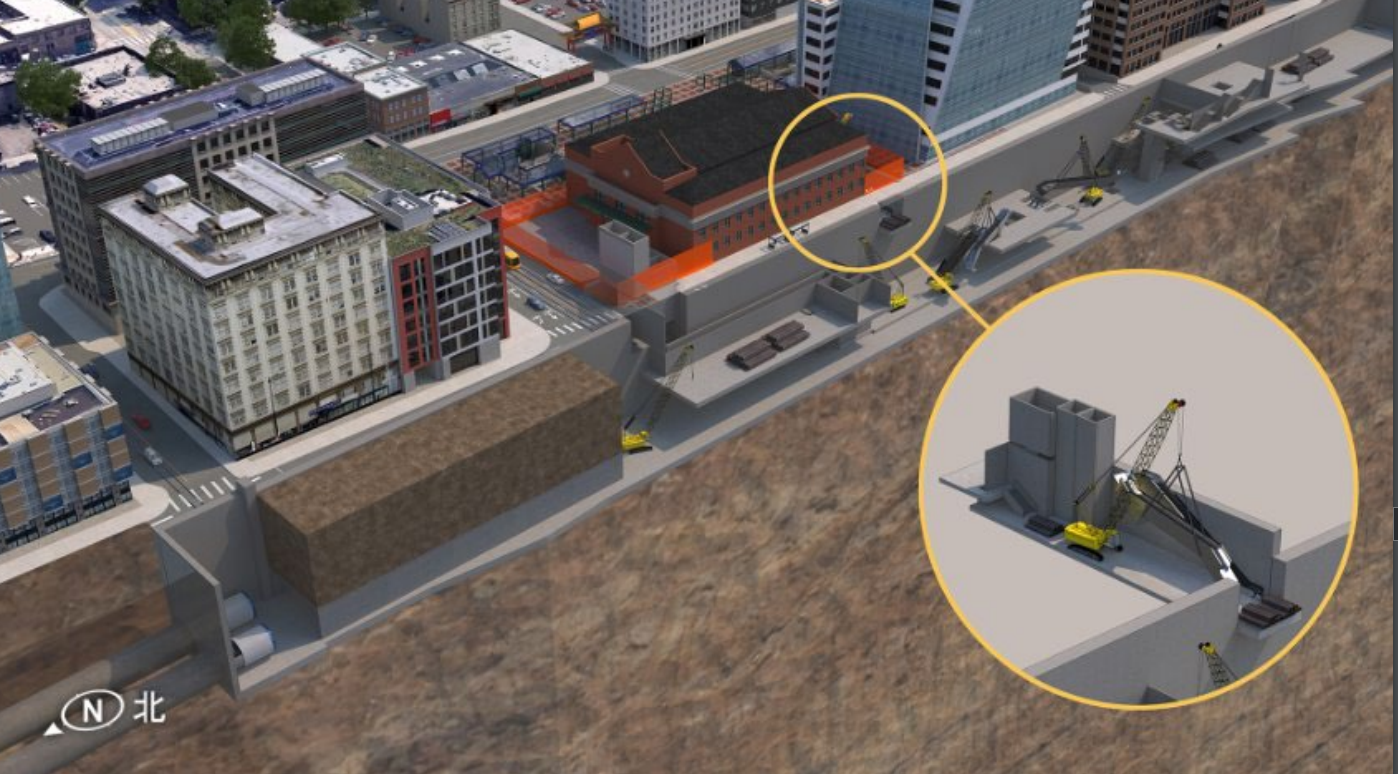
Some advocates for a CID hub station have shifted their focus to a refined 5th Avenue diagonal station that would reduce construction impacts over earlier options. Wilson's comments Tuesday suggest she is keeping an open mind on that front.
That decision will not come in the next few months, but the Sound Transit board is expected to vote this month to revise its long-term financial plan, likely leaving some neighborhoods in the deferral void. Seattle leaders vowed not to give up, though, and keep fighting to deliver promised rapid transit.
"I think we need to build these damn trains," Zahilay said. "I think we need to truly show that we can accomplish really hard things. And I think that these last couple of years show what our values are, and our values are a region that's committed to the environment, to mobility, to economic opportunity and to showing up for each other. When I look around this room, I just see all kinds of people from every single corner of our three-county megaregion showing up for each other, showing up for the type of society that we want to leave behind for our children and their children's children."
Author's note: The Scott Kubly quotes were added at 1:30pm, shortly after the article first went to post.
 Ryan Packer