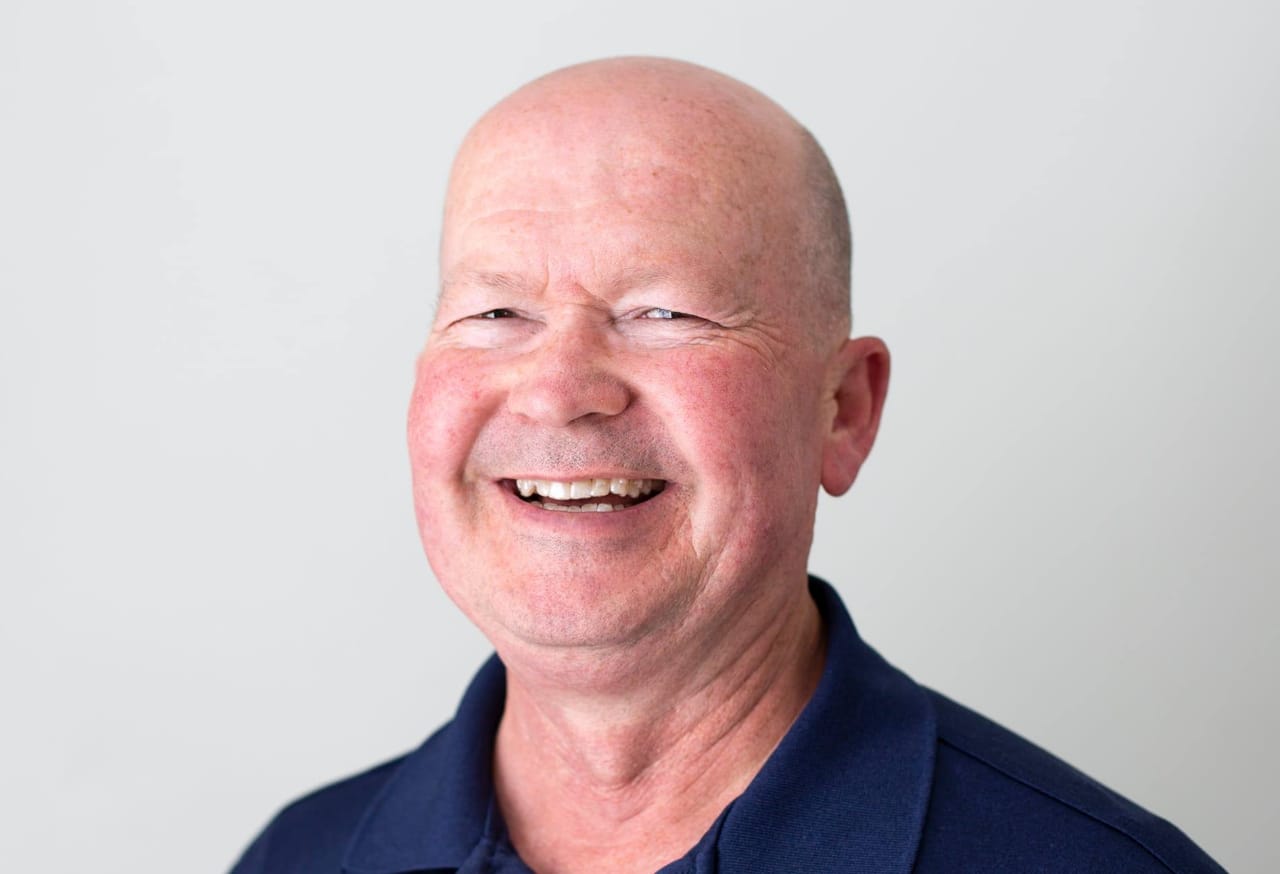
Federal Way Councilmember Jack Walsh is drawing the ire of traffic safety advocates from across Puget Sound, in the wake of comments about pedestrian safety he made Monday night at a council committee meeting. Even as local governments continue to tout a move toward a "safe systems" approach that takes into account the fact that road users of all kinds frequently make mistakes, Walsh's comments illustrated how deeply embedded the idea that pedestrians are to blame for being injured or killed is in today's deeply car-oriented society.
The context was a discussion about a potential federal grant that the City of Federal Way is going after, under the USDOT's Safe Streets for All (SS4A) program. Walsh jumped in on a discussion started by Federal Way Council President Susan Honda, providing a tangent about the behavior of pedestrians in Federal Way, a city dominated by multi-lane arterial roads with long stretches between marked crosswalks.
In 2024, Federal Way added rectangular rapid flashing beacons (RRFBs) to eight locations with the goal of improving safety, though nothing requires that drivers actually yield to people trying to cross at these locations.
"We have the new crosswalks, the ones with the flashing lights – the ones that are working – and you have people running across the street five, ten feet... they can't take the time to walk [to the marked crosswalk]. How are we going to convince people to use the safety things we've created for them so that they don't get hit by a car," Honda asked Federal Way Senior Traffic Engineer Jason Kennedy.
After Kennedy told Honda that he shared her frustration, suggesting that education may be a potential avenue to increase the use of marked crosswalks in Federal Way, Walsh jumped in.
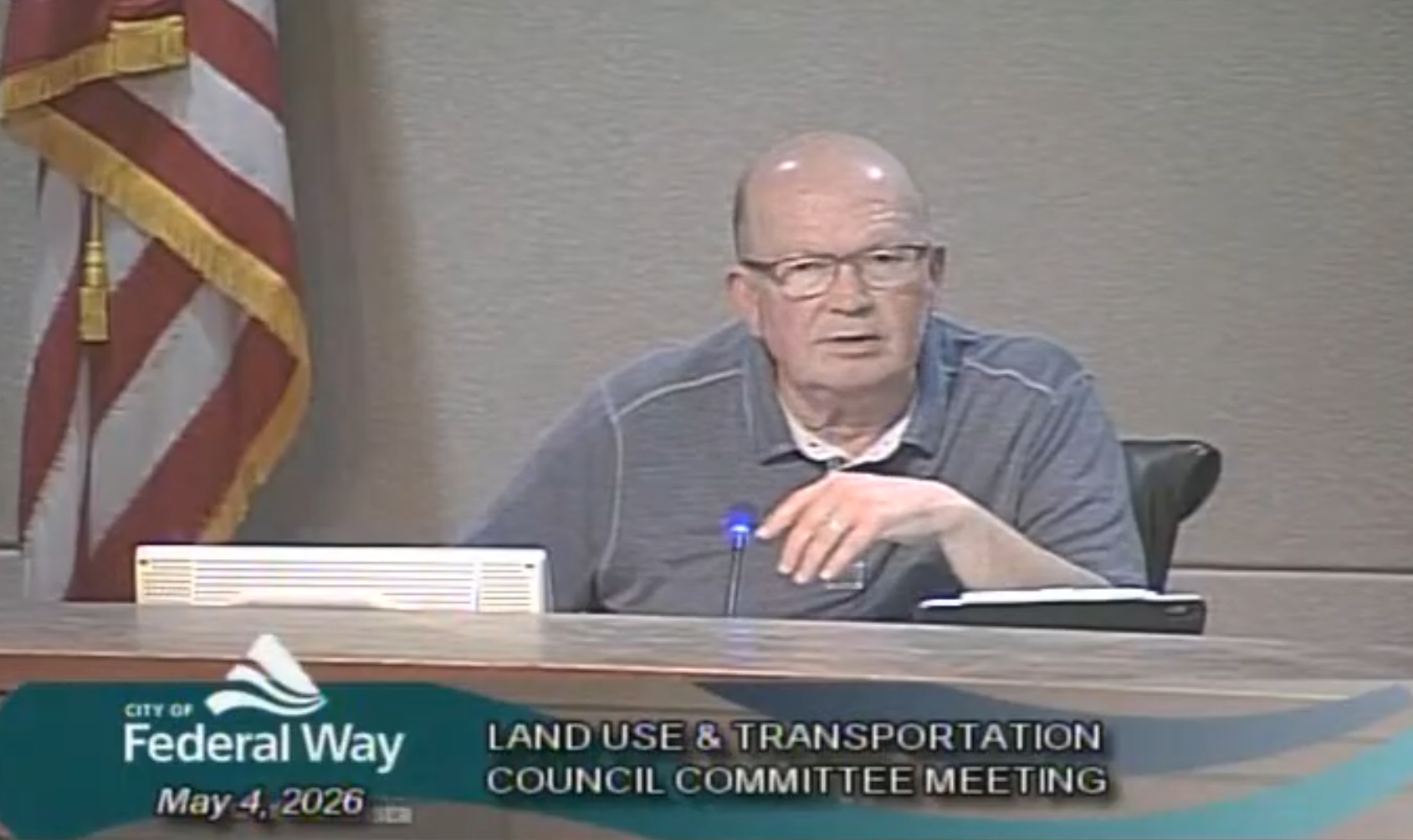
"It's frustrating. If you follow Darwinian theory, it may take a few generations to solve the problem, I don't know," Walsh said. "But it's beyond me how that is."
Walsh's comment, clearly meant as a dark joke, seemed to cast blame on pedestrians who get hit by drivers, even though oftentimes it's a lack of infrastructure – or being in an area designed to maximize vehicle speeds and not pedestrian safety – that puts them in that position in the first place.
It's not easy being a pedestrian in Federal Way.
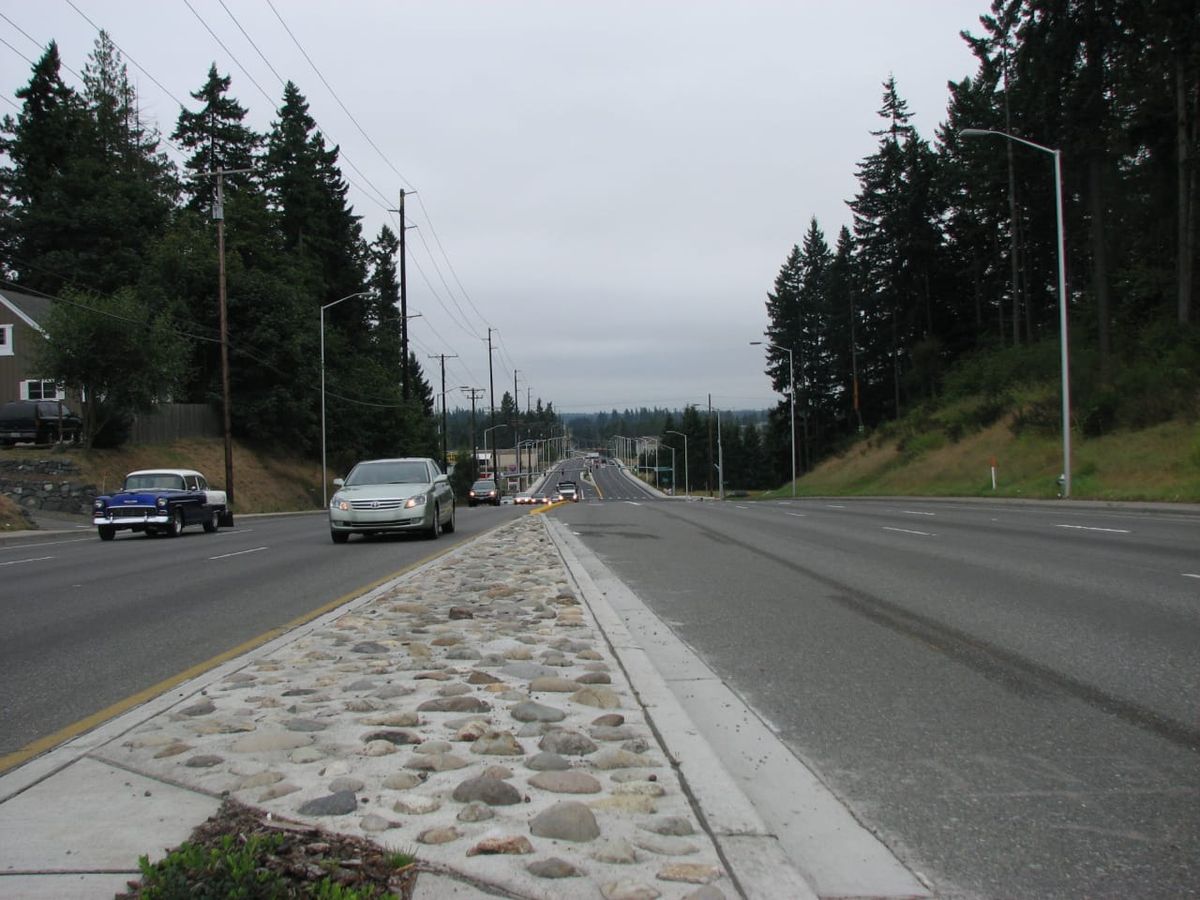
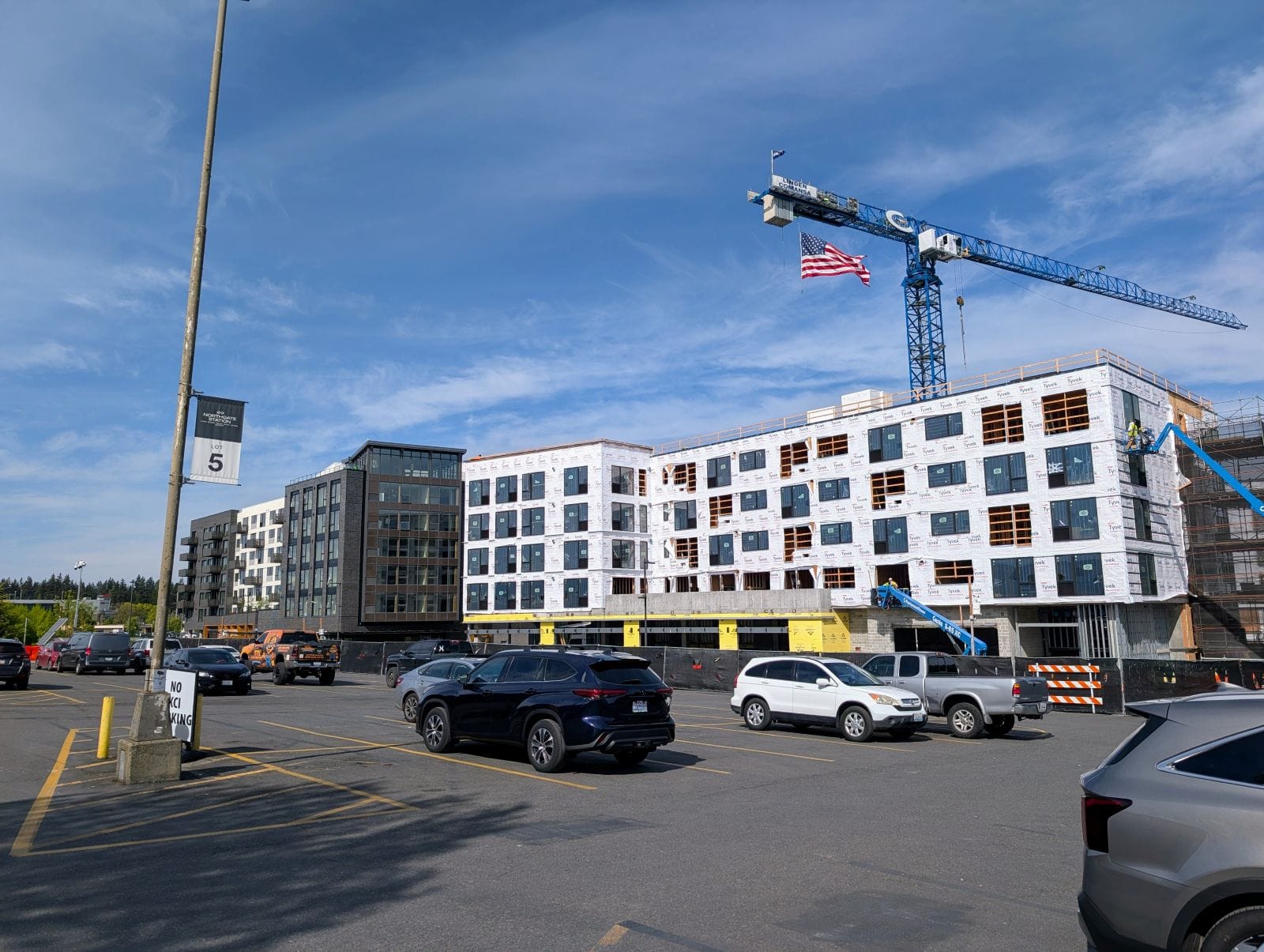
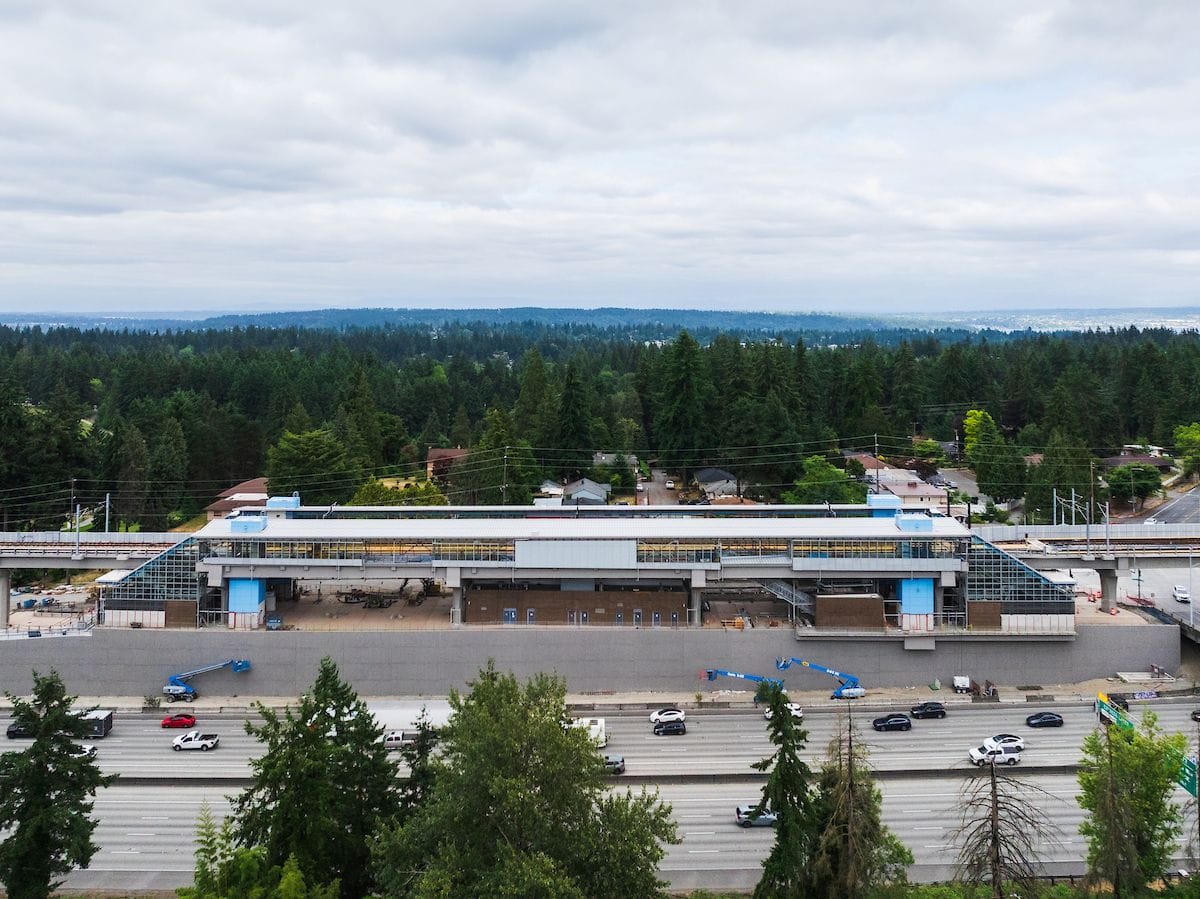
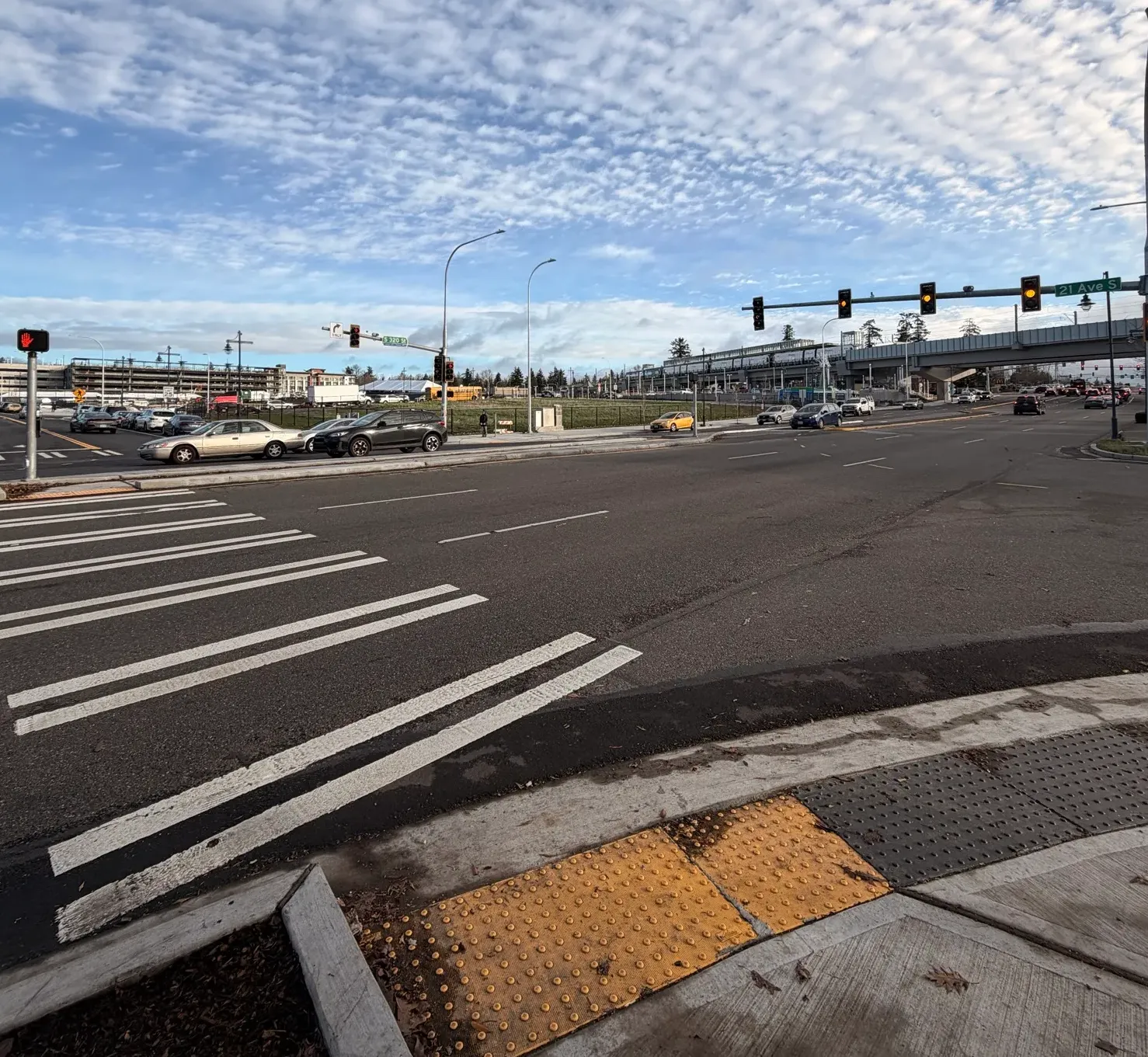
Anyone jumping off the 1 Line's current southern terminus at Federal Way "Downtown" is greeted by a sea of parking lots, with eight-lane S 320th Street serving as a vast "welcome" mat. Last year, days before the light rail station opened, the City of Federal Way opened a new pedestrian signal across 320th, the first new signal built in the city in nearly a decade. But rather than providing a straight shot across the street, anyone trying to get over to the Commons mall has to zig-zag about 20 feet, and then wait in the middle of the street for a separate signal to complete the crossing.
That crossing is ultimately illustrative of the City of Federal Way's attitude toward pedestrians more broadly, with many other multi-lane roads like 320th found all over town.
Washington's pedestrian safety crisis isn't confined to any one city. According to preliminary data from the Washington State Department of Transportation (WSDOT), 149 people walking were killed in traffic in 2025, and another 433 were left with life-altering injuries as the result of a traffic crash. That's a slight decline compared to 2024, but remains much higher than the levels seen before the Covid-19 pandemic.
Since 2020, motorists have killed 21 people walking in Federal Way, with at least 73 seriously injured over the same period of time.
Yanxia Zhang was one of them.
On April 4, Zhang was crossing 320th Street, near the light rail station, but outside the confusing and cumbersome crossing. A driver of a Subaru Outback heading eastbound struck her before she reached the other side of the street. She was transported to Harborview, succumbing to her injuries the next day. The driver did not face any charges. Zhang was 59 years old, and left behind a daughter and a disabled husband.
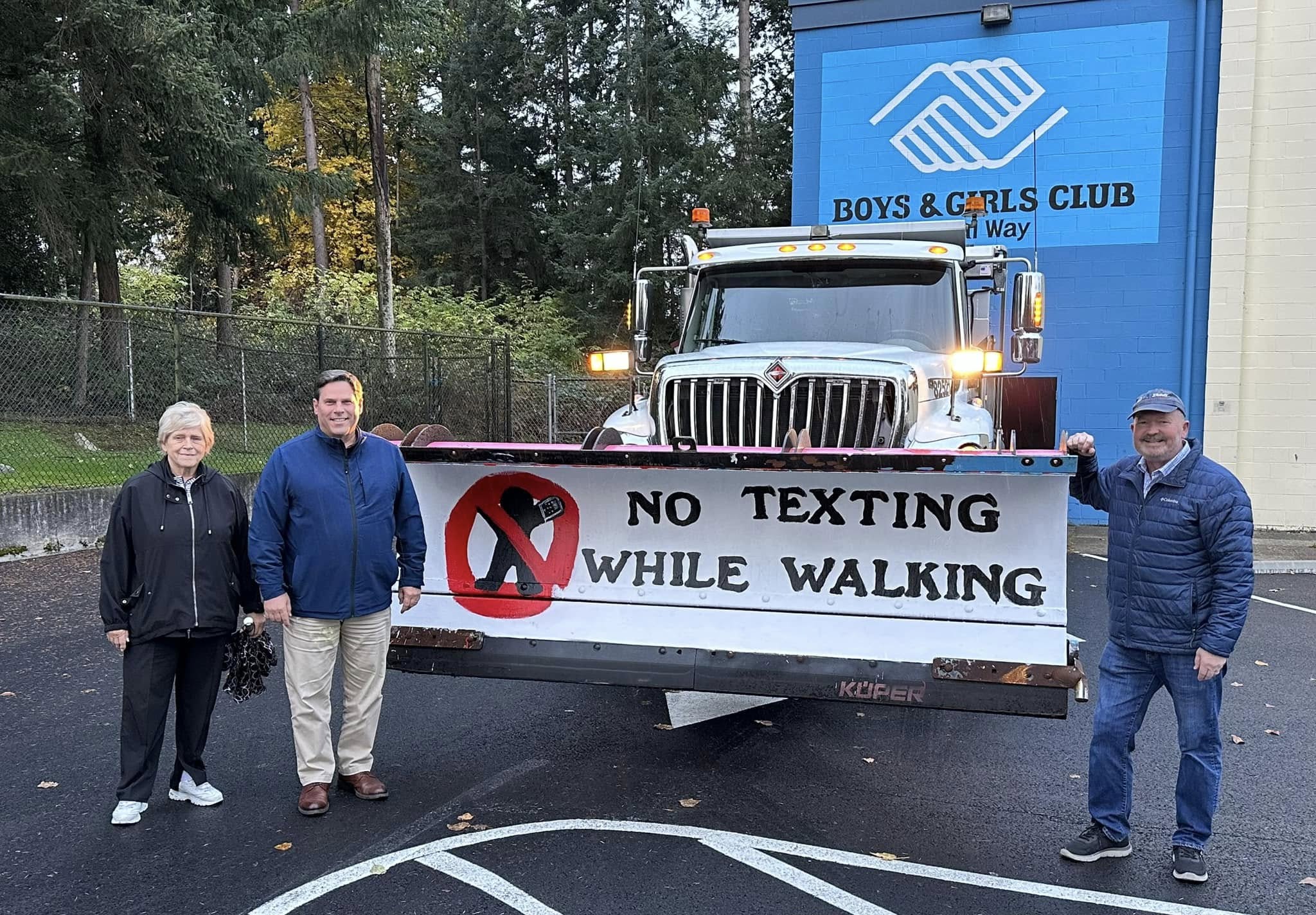
The idea that pedestrians should take responsibility for their own safety, even in a place dominated by car-oriented infrastructure like Federal Way, is very pervasive. In 2023, Federal Way officials touted messages directed toward pedestrians painted on the city's snowplows, including one that read "no texting while walking." Among those who posed with the painted plow was Jack Walsh.
(For the record: texting while driving is illegal in Washington. Texting while walking is not.)
Reached via email, Walsh provided The Urbanist with a statement seeking to clarify his remarks.
"I apologize for my choice of words during the traffic safety discussion. My comment about Darwinian theory was intended as a lighthearted remark on human behavior, but in retrospect I recognize now that it was inappropriate and hurtful," Walsh wrote. "I have a friend whose wife died in a pedestrian accident outside of a crosswalk. I cannot even imagine how he would feel if he heard my remark. Public safety is a serious matter, and I regret that my comment distracted from the importance of keeping our pedestrians safe."
Some Federal Way residents have already called on Walsh to resign as chair of the Land Use and Transportation Committee, which oversees traffic safety issues.
A clear precedent exists for that in the removal of Councilmember Martin Moore as Council President earlier this year. Moore's post as the head of the council – approved only a few weeks earlier – was stripped in February by a 4-3 vote following comments Moore made on Facebook, in support of students walking out of class in protest of federal Immigration and Customs Enforcement (ICE) activity taking place across the country.
But the issue of trying to find a reason to blame a user of the transportation system for an incident rather than looking holistically, taking steps toward a system where a mistake doesn't cost someone their life, is clearly broader than Councilmember Walsh. His comments, along with Council President Honda's, do remind safety advocates of how much work remains.
 Ryan Packer
 Ryan Packer