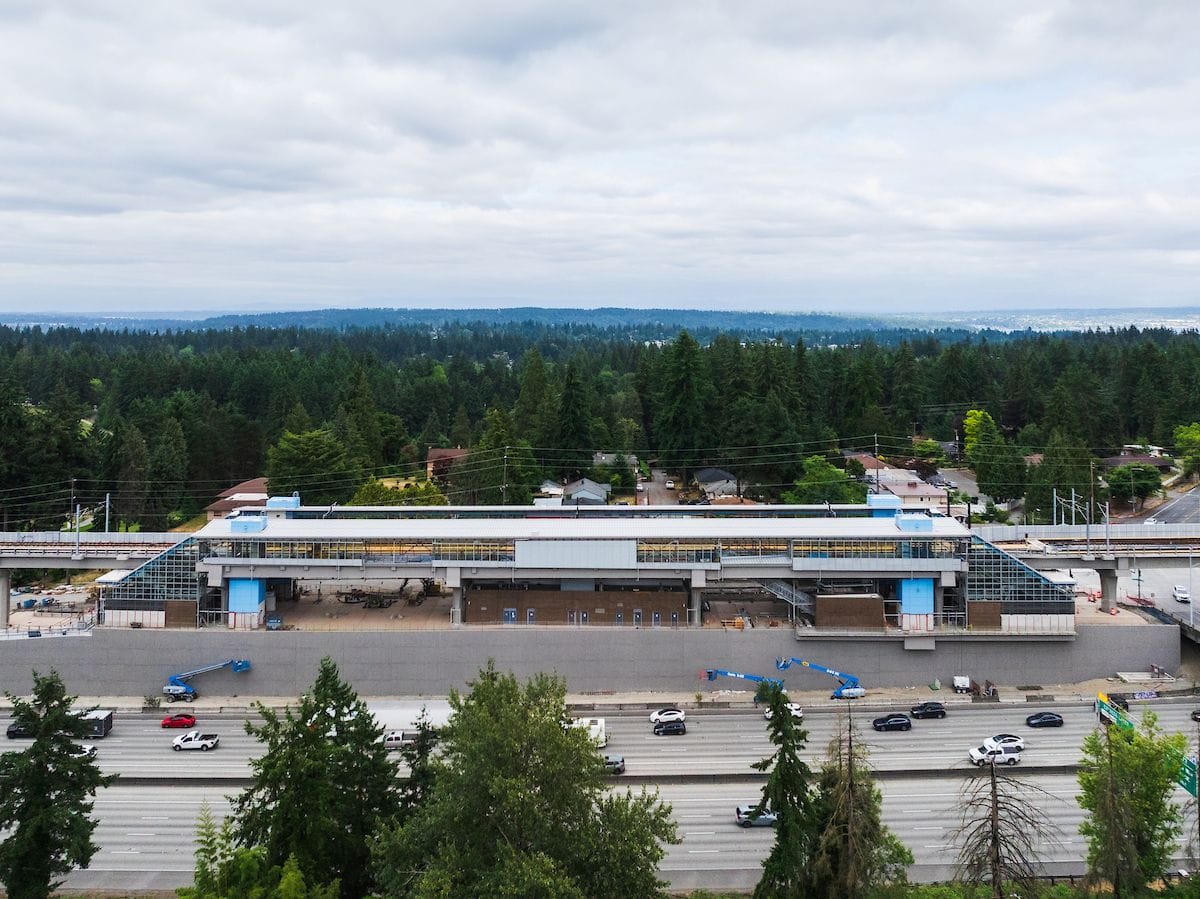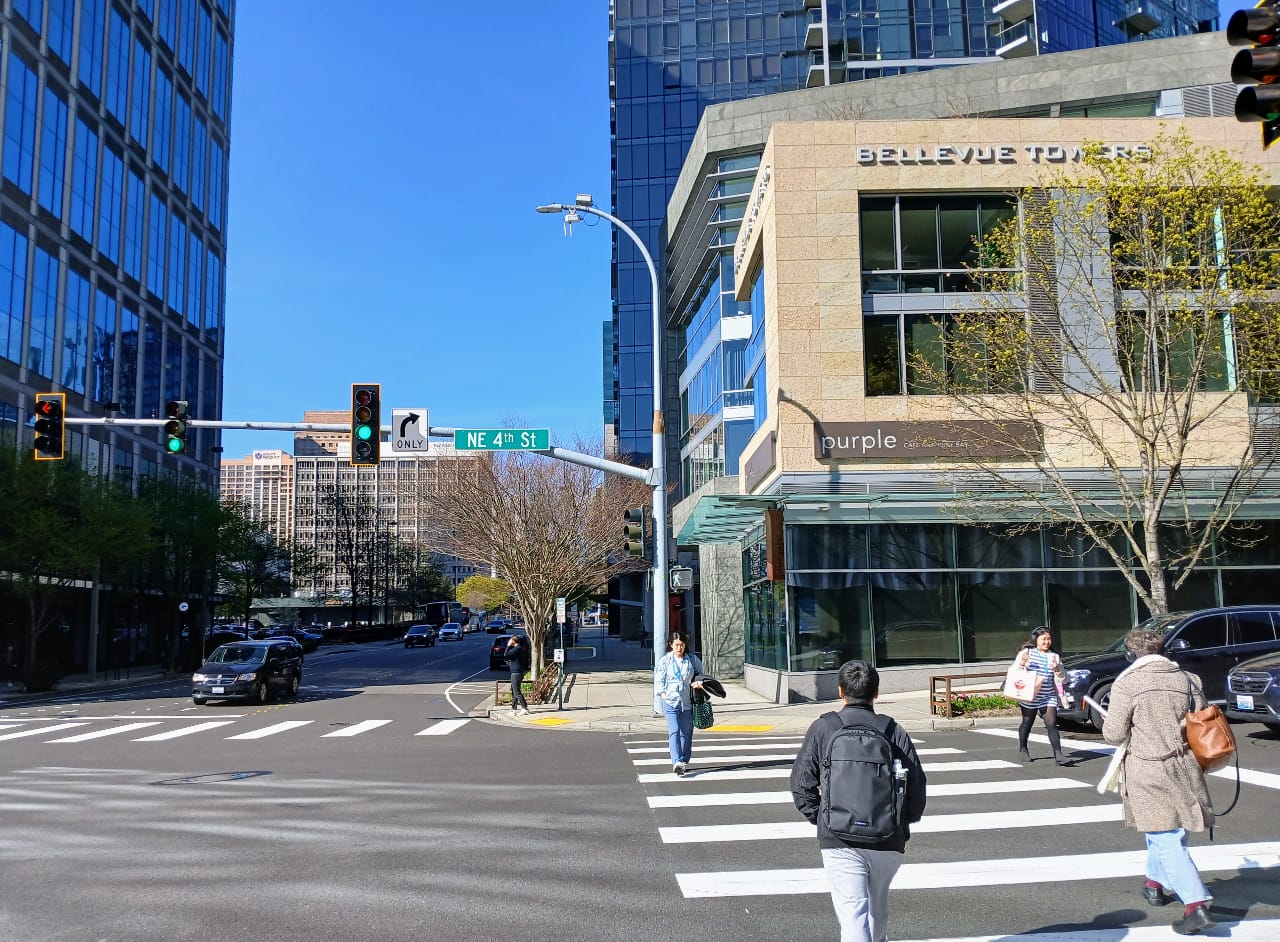
The City of Bellevue is kicking off budget season, and the head of the city's transportation department wants to ramp up spending on car infrastructure, even in the wake of Bellevue's brand new light rail connection to Seattle and the broader region.
At an April 21 city council meeting, Bellevue Transportation Director Andrew Singelakis delivered comments about initial spending priorities developed within the department, which seem at odds with multiple Bellevue councilmembers, who have voiced a desire to see Bellevue shift in a more multimodal, safety-focused direction.
Currently, Bellevue is set to spend around 30% of its transportation budget through 2030 on pedestrian and bike infrastructure, with another 20% set to go to "neighborhood mobility" projects throughout the city including traffic calming measures. The City intends to set aside 30% for "major projects," including the full construction of new roadways through the city's burgeoning growth areas like Spring District and Bel-Red, and 10% for basic road preservation and reconstruction, leaving the remaining 10% for upgrades intended to improve traffic flow and benefit drivers.
"We've been talking internally more along the lines of 25% for vehicle mobility, 25% for bike/ped, 25% for major projects, 15% for neighborhood and 10% for reconstruction," Singelakis told the Council, responding to a question from Councilmember Naren Briar about whether the allocation to neighborhood mobility was actually too low.
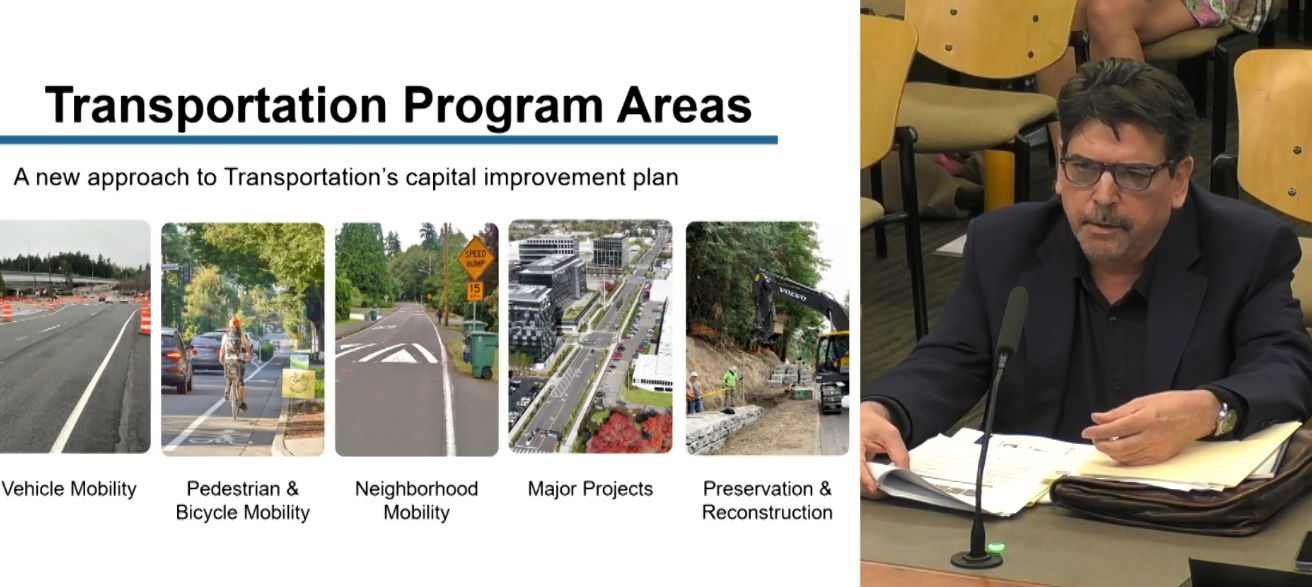
"That makes me really nervous," Briar responded, getting that information for the first time. "I would personally prioritize neighborhood mobility, [and] bike and ped."
These early budget conversations are occurring ahead of the council's consideration of a new source of transportation revenue, either a $20 vehicle license fee, a 0.1% sales tax increase, or both. Advocacy groups of varying stripes are all eyeing that new revenue, including the newly created Streets Are For Everyone (SAFE) Bellevue coalition pushing for a ramp up in Vision Zero spending. That push to increase safety investments seems to have been taken up by multiple councilmembers.
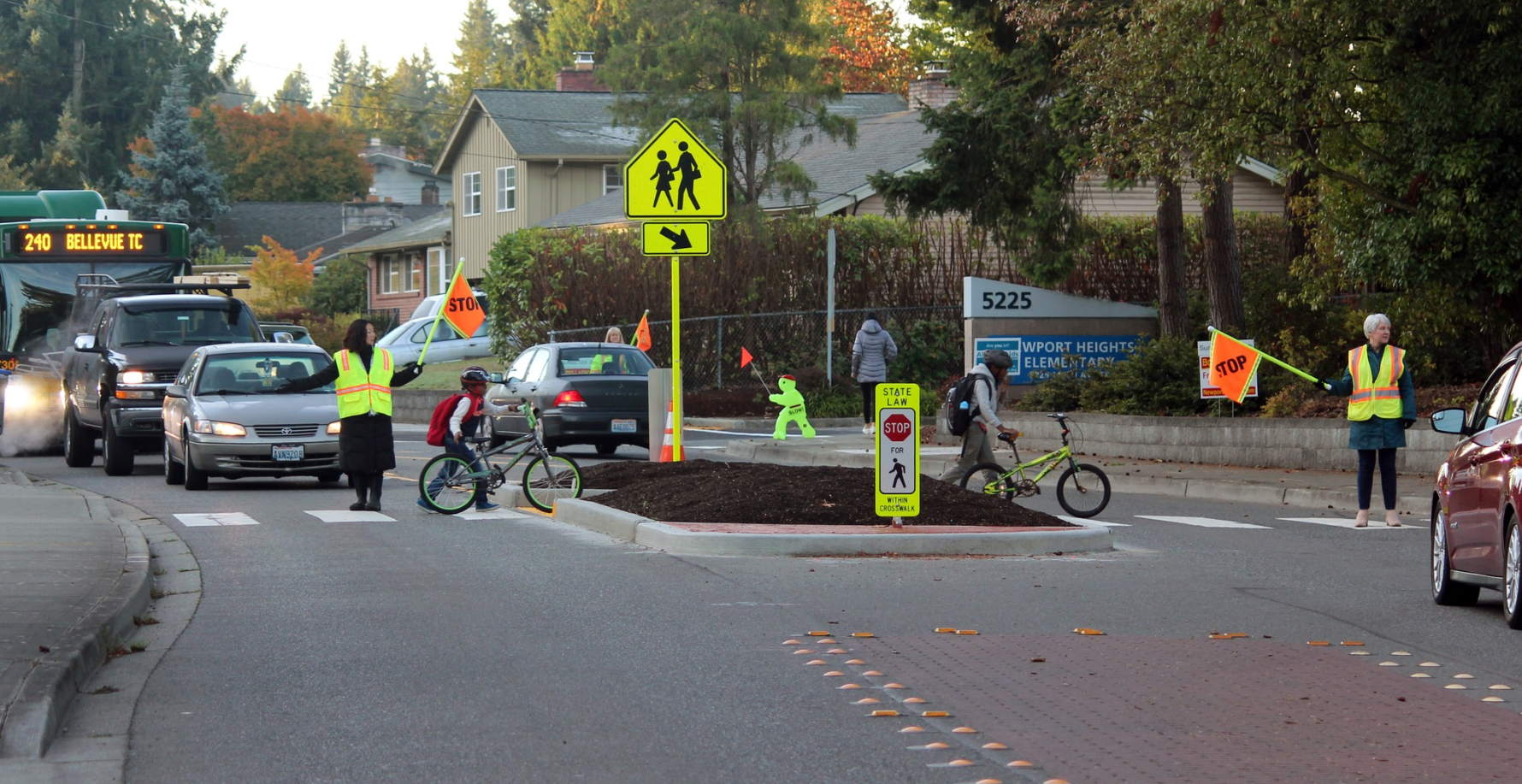
"These categories don't mean much to me. I think there are wants and there are needs. And I think safety is a real necessity," Councilmember Lynne Robinson said at the budget workshop, later in the meeting referencing a lack of pedestrian infrastructure on Bellevue's roads. "We're asking children to walk to the school bus without a sidewalk, and having cars going 35 miles per hour next to them, it's just not acceptable to me."
After laying out his proposed spending split, Singelakis pivoted to touting the entire spend plan as being focused on safety.
"That's why we're calling the entire portfolio 'safety'," Singelakis told Robinson. "We tried before, saying, OK [these are the] safety projects, but they all should be safety projects. They all should end up advancing safety. The whole thing of what we're doing is safety."
That framing brought pushback from Robinson.
"I know, but to different degrees," Robinson said. "I mean, seriously."
Singelakis has been helming Bellevue's transportation department since 2019, and oversaw the slow dismantling of the ambitious Bike Bellevue plan to add quick build bike infrastructure around some of the city's fastest growing neighborhoods. After a project opponent filed an ethics complaint against Franz Loewenherz, the lauded planner who had been stewarding the project forward, Singelakis removed him from that post in consultation with City Manager Diane Carlson.
That ethics complaint was later dismissed and Loewenherz fully cleared, but Singelakis never restored him to his post, as the department slowly turned Bike Bellevue into a minimalist endeavor to add some space for bike lanes without impacting space for drivers.
A City of Bellevue spokesperson confirmed that the initial spending allocations Singelakis listed are just a starting point.
"The preliminary allocations referenced at the meeting are the department’s internal starting point and reflect an effort to balance investments across modes, consistent with our Comprehensive Plan direction to manage a system that improves the quality of the travel experience for all users. This approach ensures we can serve citywide travel demand generated by increased density in the land use plan as well as regional travel demand," Chief Communications Officer Michelle DeGrand told The Urbanist.
DeGrand's statement also justified the increase in vehicle spending by noting that car mobility projects are simply more expensive than other types of transportation investments.
"The initial allocation recommendation also reflects the relative difference in the costs of projects across program areas," DeGrand said. "For example, last year’s intersection improvements at 156th Avenue NE and Lake Hills Boulevard cost approximately $2.5 million to add a traffic signal, improve traffic flow, reduce neighborhood congestion, and provide multimodal benefits such as enhanced bike lane infrastructure and shorter pedestrian crossing distances. In comparison, constructing three phases of speed bumps along 119th Avenue SE is about $250,000."
Safe streets advocates weren't having it.
"We share Councilmember Briar's concern with the Director's proposed 150% increase in funds for vehicle mobility projects. This would take resources away from the key pedestrian, cycling, and neighborhood mobility projects that would improve safety for all who travel through Bellevue," Christopher Randels, founder and director of Complete Streets Bellevue told The Urbanist. (Randels is a former Urbanist contributor.)
"In 2025, 41 people were seriously injured or killed on Bellevue streets - a record high," Randels continued. "On Tuesday, we heard unanimous Council support for a transportation budget that prioritizes safety and turns the tide. This will require a data-informed workplan that advances the projects that will have the biggest impact on preventing serious injuries and deaths. We look forward to seeing how the department reflects Council's direction in its upcoming preliminary budget."
Meanwhile, the Bellevue Chamber of Commerce-backed Bellevue Mobility Coalition is pushing the Council to prioritize the city's growth centers (including Downtown, Wilburton, Factoria and Eastgate) when it comes time to allocate any new transportation revenue. They've developed a project list that includes some bike and pedestrian projects – mostly shared use paths that don't take space from travel lanes – but also car capacity improvements at several major intersections and some pricey highway upgrades, including a new southbound off-ramp from I-405.
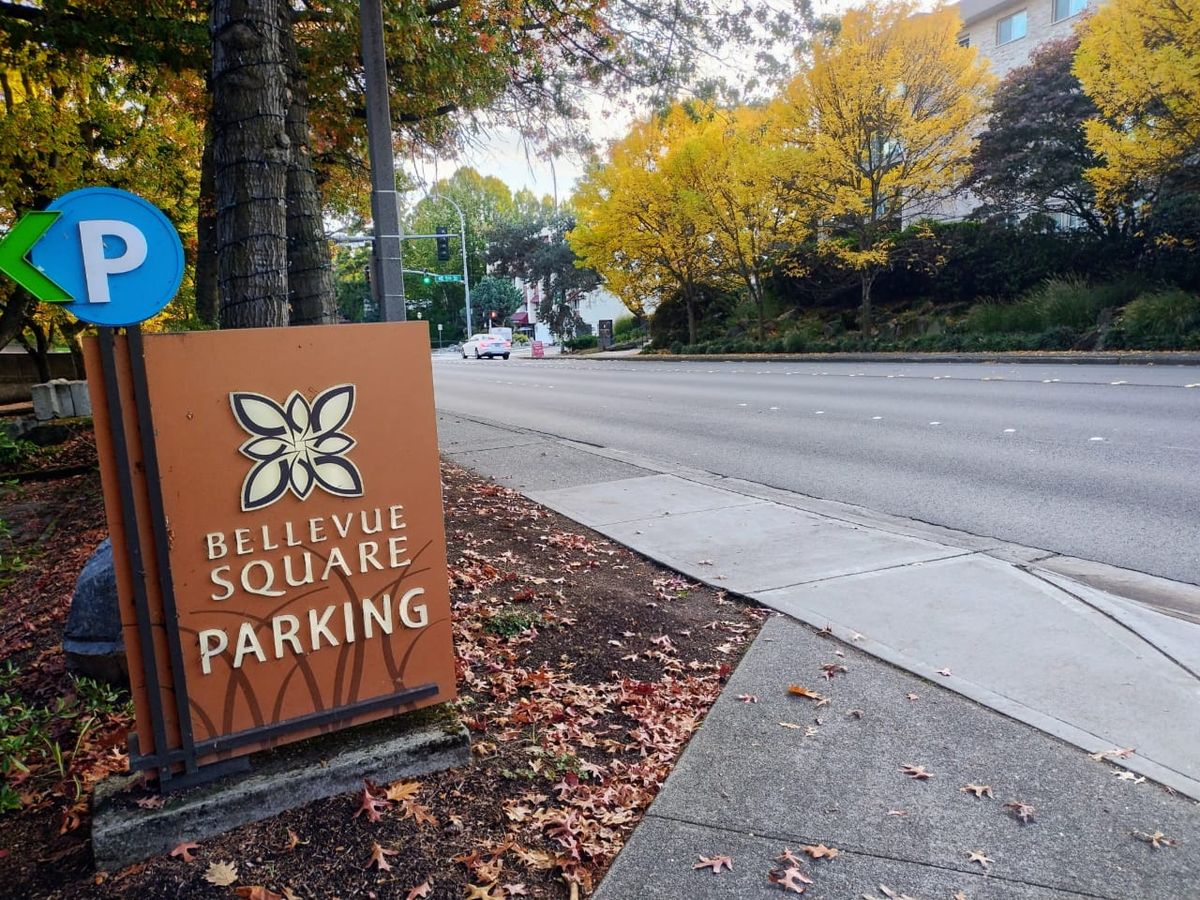
That coalition's membership is dominated by Bellevue's biggest power players including executives at Amazon, Wallace Properties, Vulcan, and Kemper Development, which owns the Bellevue Square Mall.
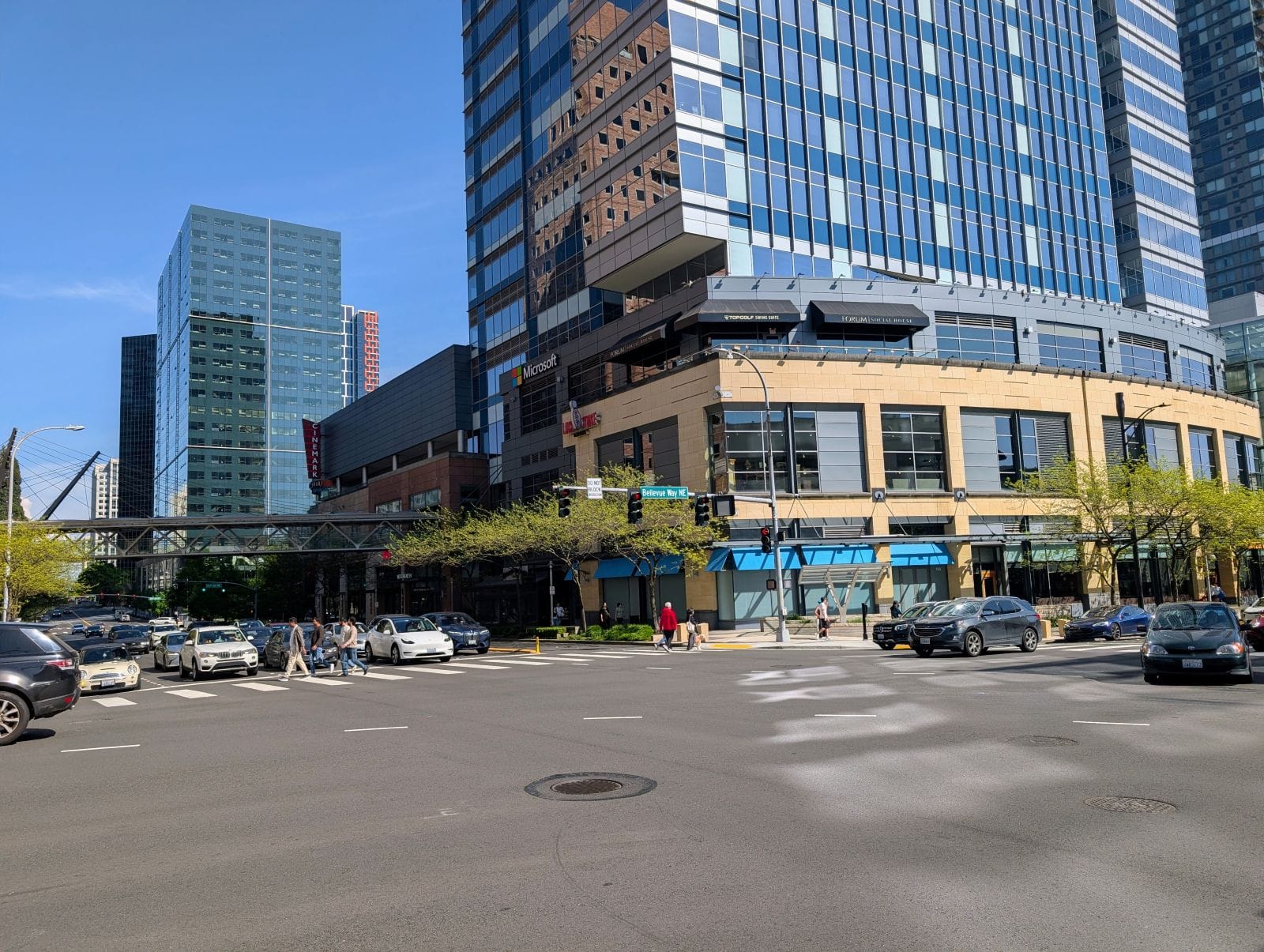
"The vast majority of sales tax revenue is generated in the growth centers, so it is appropriate for a sales tax [transportation benefit district] to primarily fund projects that benefit these areas and enable more growth, and more sales tax revenue, to occur," a letter dated April 21 from the coalition read. The group pushed for the city to maintain "vehicular level of service (LOS)" standards, a measure that progressive transportation advocates have long set aside as antiquated.
Though they seem to have officials like Singelakis in their corner when it comes to ramping up spending on car capacity, winning over a city council that has shifted significantly more progressive in recent years may prove trickier. That debate is set to play out over the coming months, with an initial public hearing on the budget scheduled for June.
Correction: Singelakis was misspelled in the original version of this article. We regret the error.
 Ryan Packer
 Ryan Packer