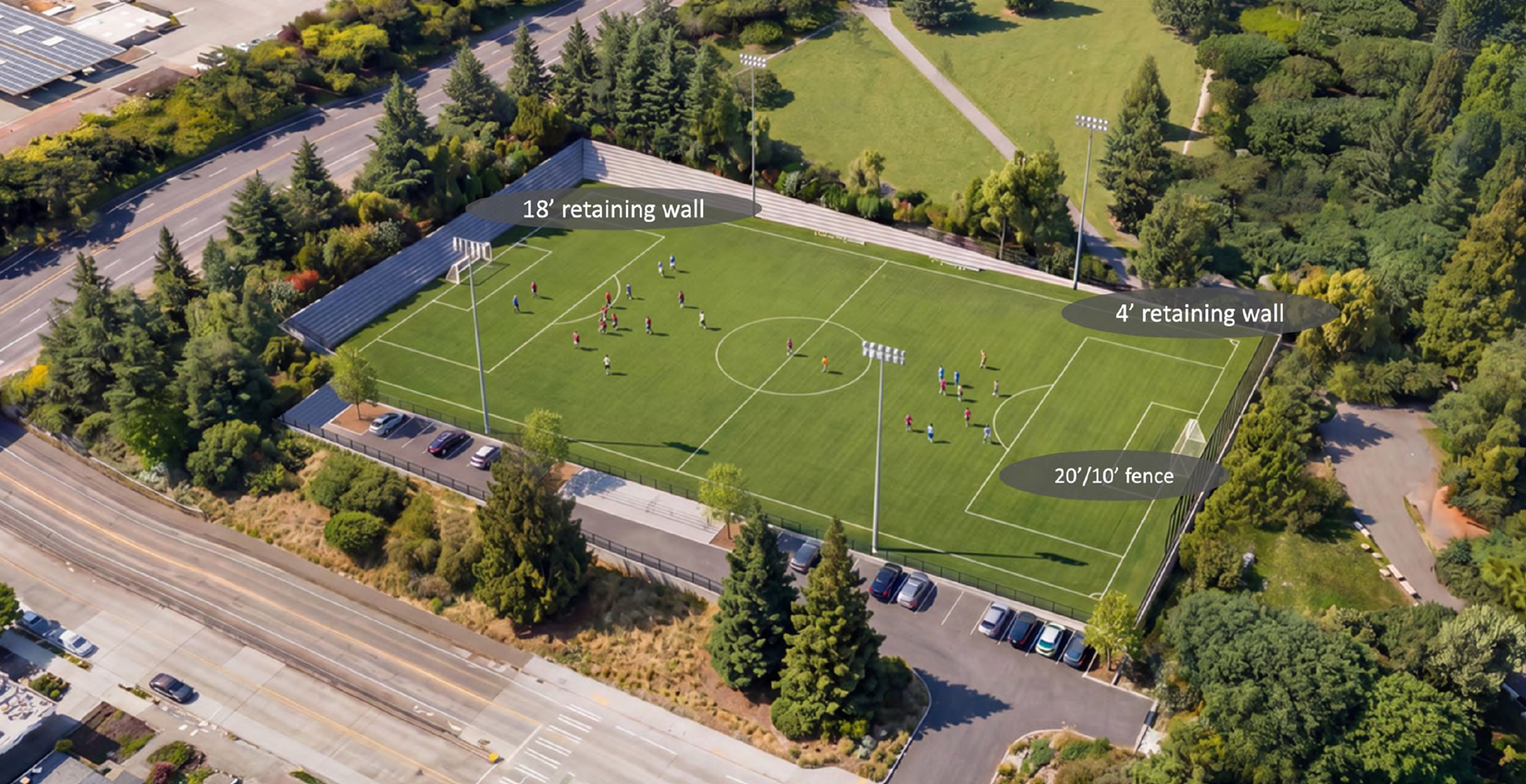
Seattle Public Schools (SPS) is moving through the public review phase of its planning process for a new hybrid Lincoln High School athletic field that can accommodate football and soccer at Lower Woodland Park. The district has presented three primary alternatives as part of its April 25th briefing and outreach process: Option A, Option B, and Option C.
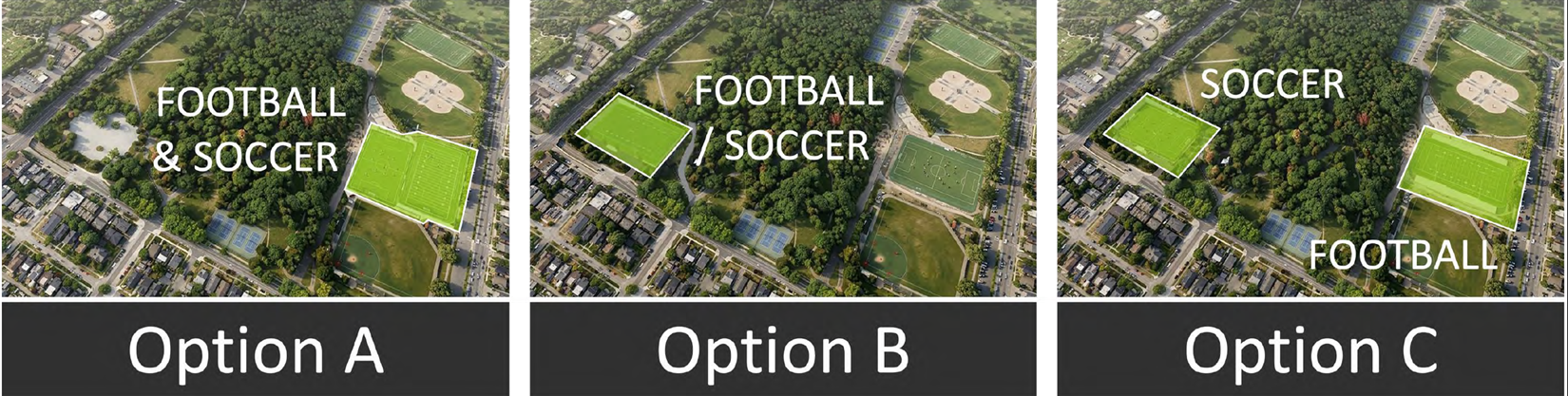
SPS is pursuing the project in order to address the shortage of athletic fields that is negatively affecting student athletes at Lincoln. The key differentiator between options is where the athletic fields would be developed.
In February, I analyzed the two options SPS had on the table at the time, finding both severely lacking, and outlining a Community Alternative backed by the community group Friends of Lower Woodland Park. SPS’s new options come with some improvements, but still fall well short, which is why our group continues to push our “Community Option” (details below) and encourage community members to weigh in via SPS’s public survey by May 9.
SPS Option A: Squeezing the Field Into the Eastern Athletic Core
SPS Option A involves the total demolition of the 2021 $1.7 million rebuild of Soccer Field #2, demolition of concrete platforms and electronic baseball scoreboard, and shrinking the north end of the baseball diamond by 20 feet – meaning that it can no longer be used for regulation baseball games. Estimated at $8.6 million, the plan requires 18 months of construction downtime with no field access. The end result is two narrow fields that are fenced off on all sides.
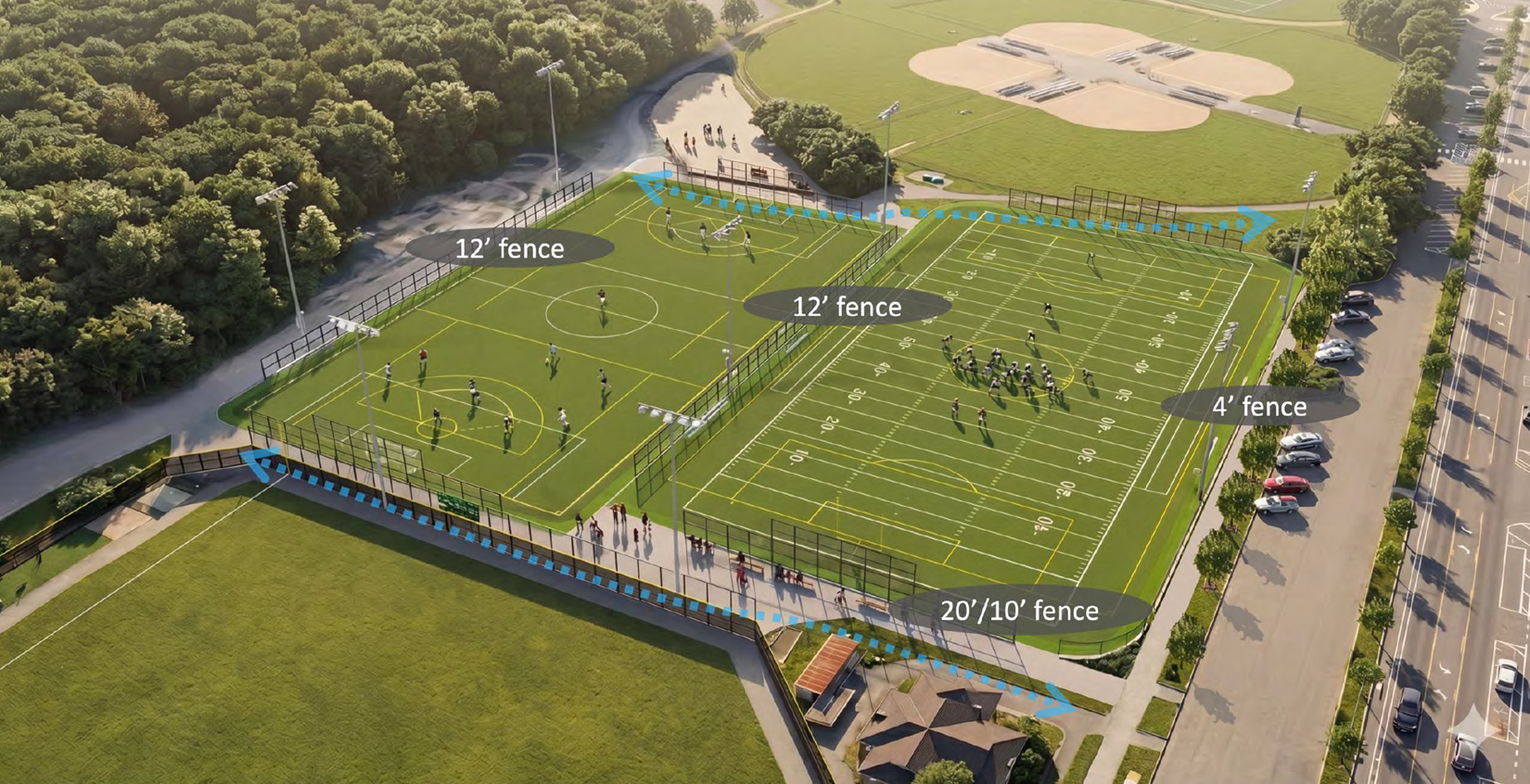
Beyond the physical footprint, the proposal significantly degrades the surrounding park experience with overcrowding. There will be conflicts with the BMX jumps, the skate park, and events at Green Lake. The design also eliminates the existing 45-foot sidelines of Soccer Field #2 that are used for flexible configuration of the fields for ultimate frisbee and youth leagues. Open sidelines and paths allowing for spectators will be gone, and eight Olmsted-specified Linden trees along Green Lake Way will be replaced with a retaining wall, fencing, and field lights.
SPS Option B: New Athletic Field at 50th and Aurora
SPS Option B focuses construction at N 50th Street and Aurora Avenue, leaving the main athletic complex untouched. The size of a hybrid field for football and soccer plus parking has major impacts on trees and requires rerouting a section of the paved picnic driving loop. The project carries an estimated cost of $9.4 million.
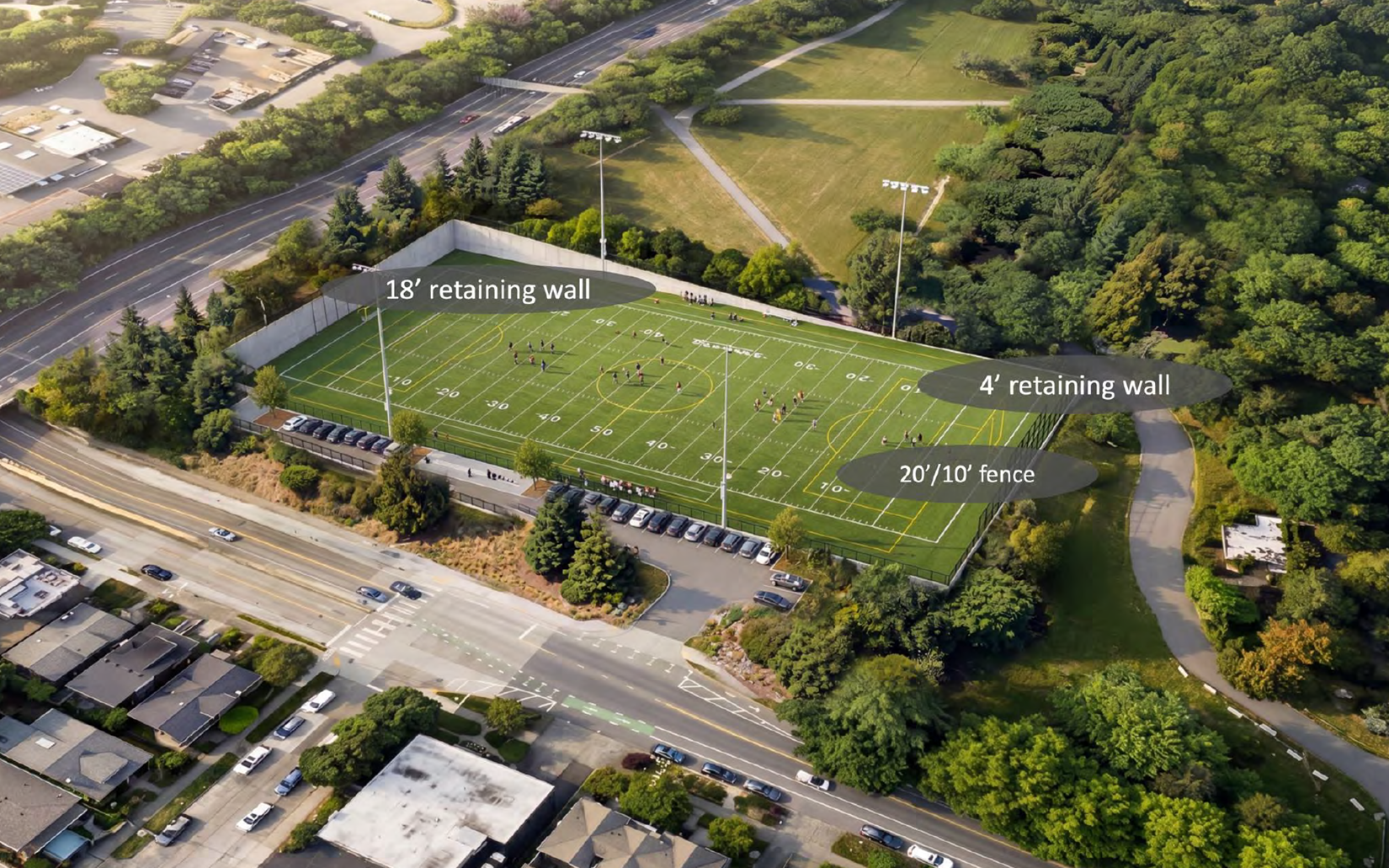
The plan necessitates the removal of 40 trees, including exceptionally large Western Red Cedars that may be more than 100 years old. During construction, the picnic loop would be shut down, displacing cars to overflow parking and creating a negative impact on the cross country and cyclocross communities and the residential neighborhood to the south.
SPS Option C: Upgrading Athletic Complex + New Field
SPS Option C involves the demolition of Soccer Field #2 at the main athletic complex to make way for a new hybrid field designed to host larger games and events. The cost of this reconfiguration is $4.8 million, compared to $1.7 million spent in 2021 to build the existing Soccer Field #2. It is unclear why such a great expense is needed to reconfigure the field.
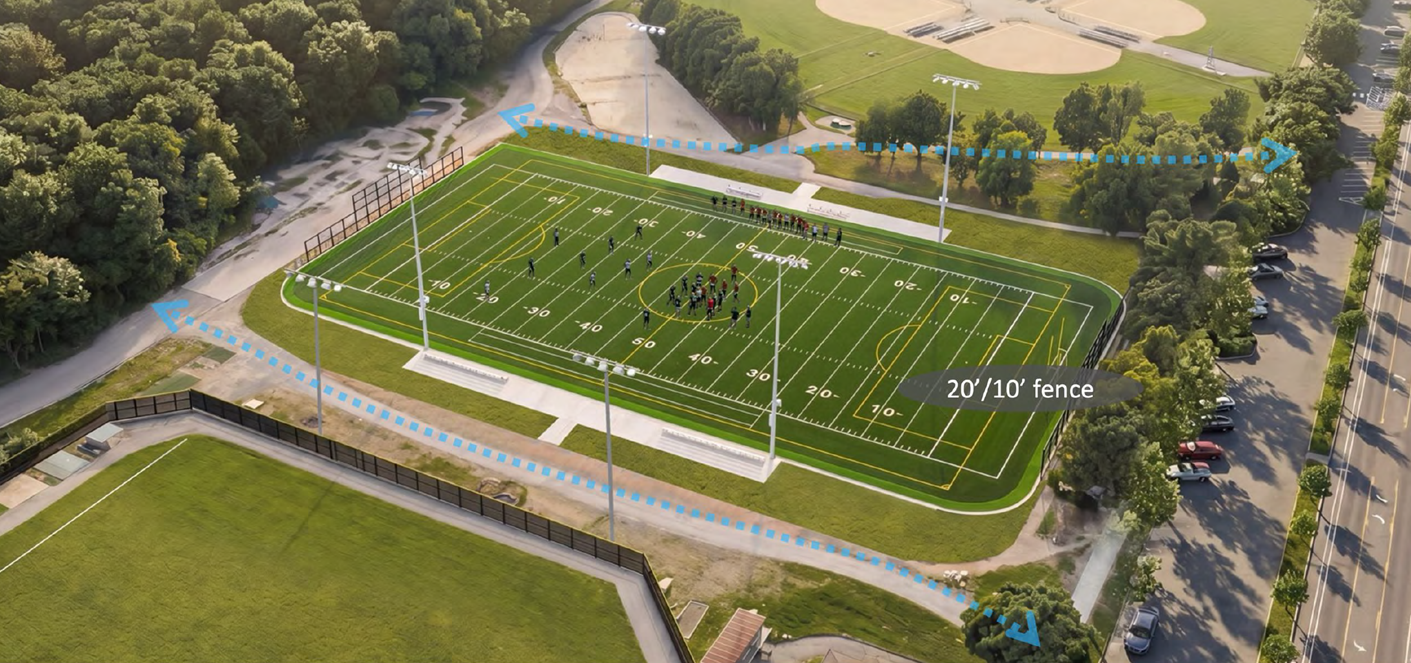
Option C would add a soccer pitch at the southwest gravel parking lot but it is reduced to 300 feet in length, a compromise that is acceptable for recreational leagues but renders the site unsuitable for competitive play. This installation is expected to cost $6.7 million in addition to the $4.8 million athletic complex overhaul, so that the total project cost is higher than Option A or Option B.
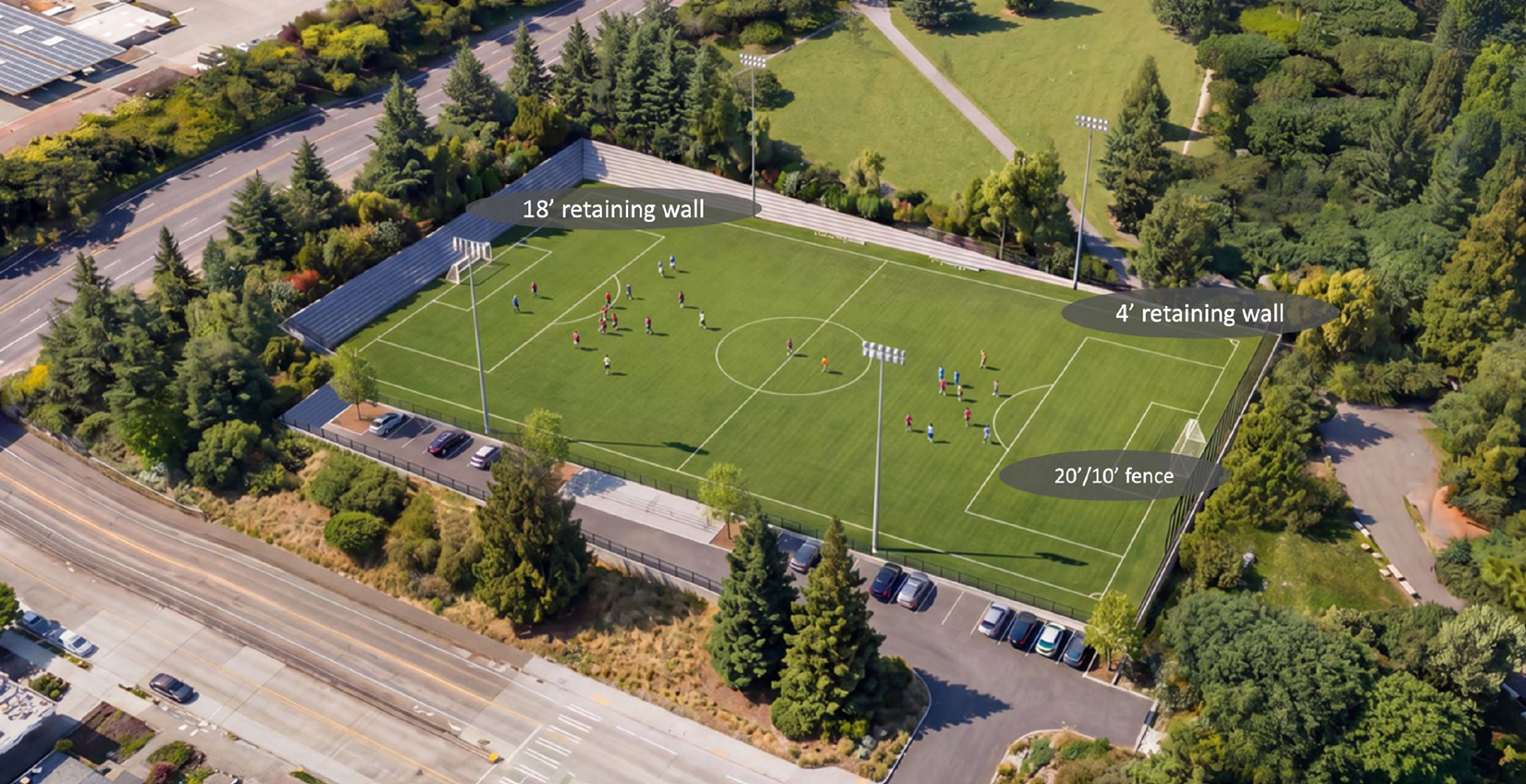
The pitch’s length being 60 feet shorter than Option B significantly cuts down the negative impacts. The number of trees removed is cut by half, to 20 trees, although it appears to still impact exceptional Western Red Cedars. Similarly, the picnic loop is untouched so cross country and cyclocross can continue to function during construction, although event organizers would need to their setup to stop using the gravel lot.
The Community Option: An Affordable, Low Impact Approach
Friends of Lower Woodland Park proposed an “Option C” last December that has major differences with what SPS first brought forward as Option C on April 25th. It has also evolved since December in response to new inputs. For clarity, we’ll call it the Community Option.
The Community Option extends recently built Soccer Field #2 by 30 to 40 feet to the west to reach the required football field dimension, adds end zone fencing, adds goalposts, and restripes. No regrading, no lights moved, no concrete changes, no seating changes. We estimate this could cost less than $1 million, compared to the $4.8 million that SPS Option C is estimated to cost. Additionally, construction should not require loss of the field for a season:
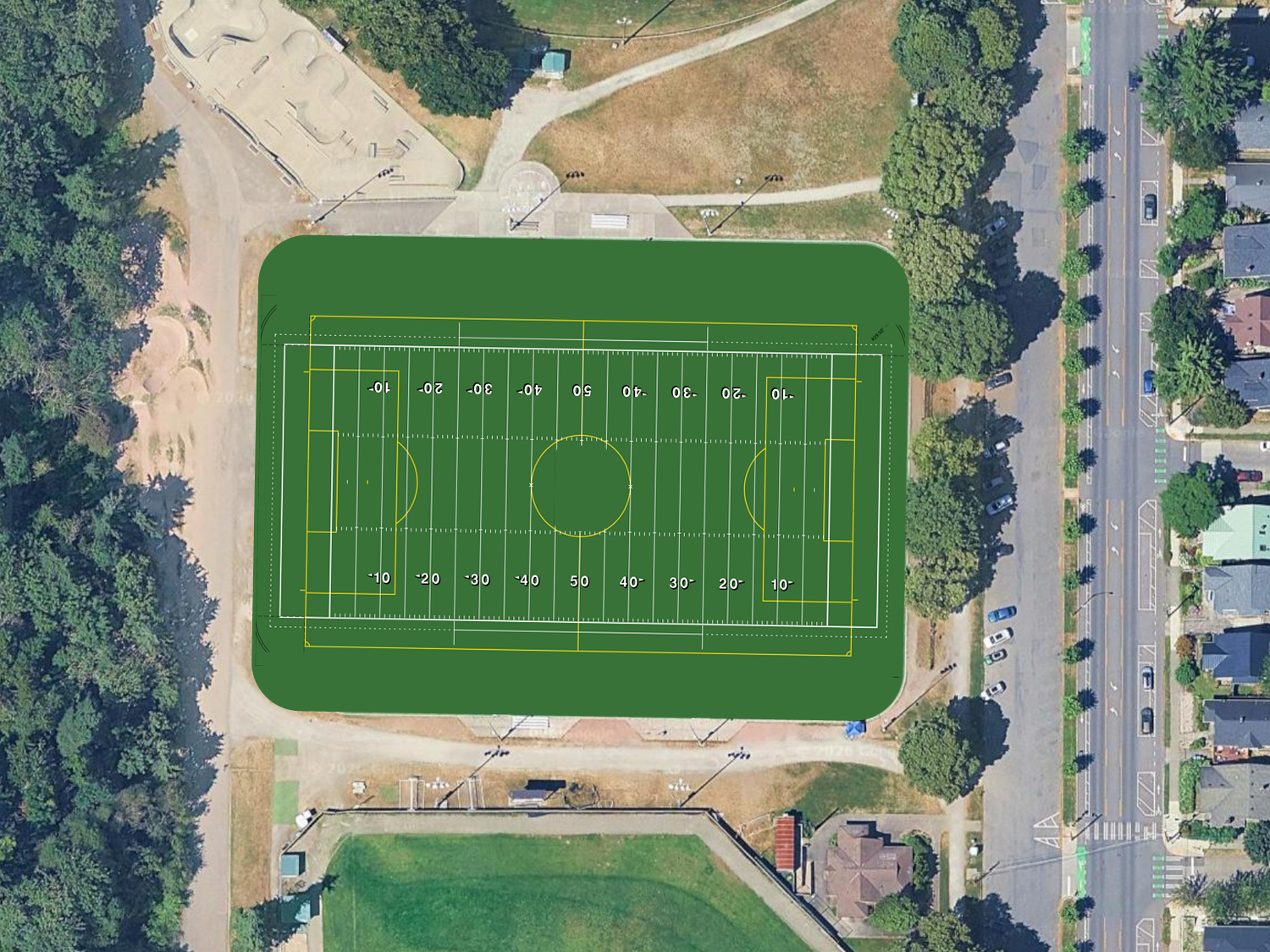
At the gravel lot location, the Community Option avoids a new parking lot and orients the soccer pitch into the hillside, with the field taking advantage of the 170 parking spots in the picnic loop. Cut and fill grading reduces costs for hauling dirt and cuts retaining wall heights by up to half. The northeast and southwest corners are at grade and ADA accessible to crosswalks and the parking loop. The field can be full size (330 feet by 185 feet) and will be surrounded by mature trees without impacting existing infrastructure:
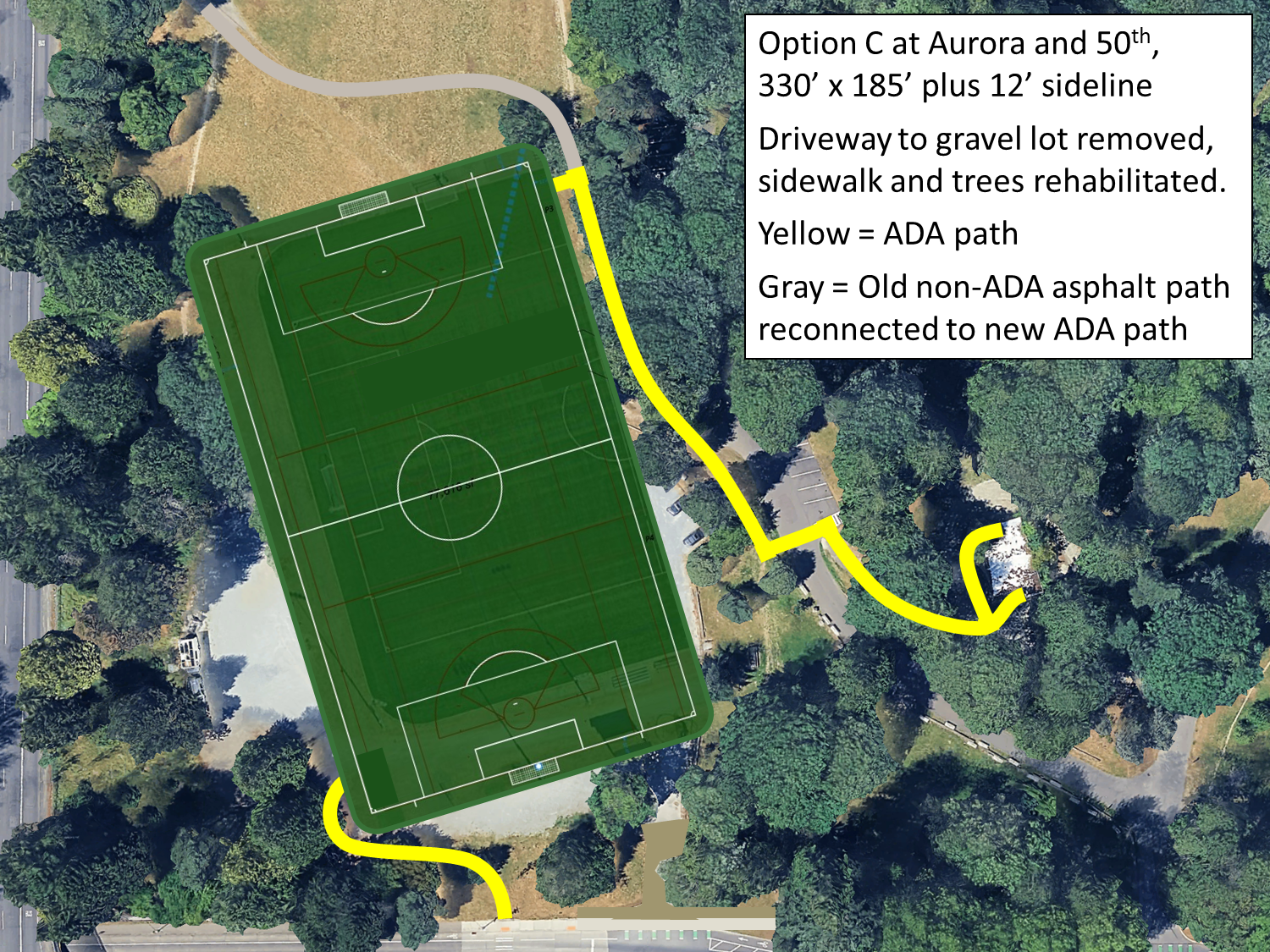
This plan removes about 10 large trees and requires smaller hillside trees (< 8 feet tall) to be transplanted to the reclaimed gravel lot area. It displaces the gravel lot used for cross-country and cyclocross races, but likely would not impact the picnic loop during construction. The field is well spaced from 50th, with sidelines areas and high-intensity lighting at least 200 feet away from neighbors.
As the field is oriented into the hillside, regrading will be necessary, although if cut and fill is feasible it will reduce retaining wall heights and slash dirt haul-out costs, which can run into the millions for a project like this. With a 0.5% field slope the northwest corner of the field is dug into the hillside with a retaining wall of up to 13 feet high, and at the southeast corner the field is raised up by as much as 12 feet. This rotating graphic shows the general appearance, although it is based on a 300 foot by 185 foot field, meaning the retaining walls are a couple feet shorter and the field length is 30 feet shorter.
What About Parking?
SPS has persistently stuck with adding a new parking lot when redeveloping the gravel parking lot. There are 170 underused parking spots in the picnic loop adjacent to the gravel lot and 120 spots at the horseshoe pitches up north. Simply removing gravel lot parking offers major benefits, starting with reclaiming park space for pedestrians and nature. It also enables a flexible configuration of the field in the gravel lot area, as in the Community Option. To calm traffic and help with wayfinding, a new four-way stop at the picnic loop intersection with N 50th can be added.
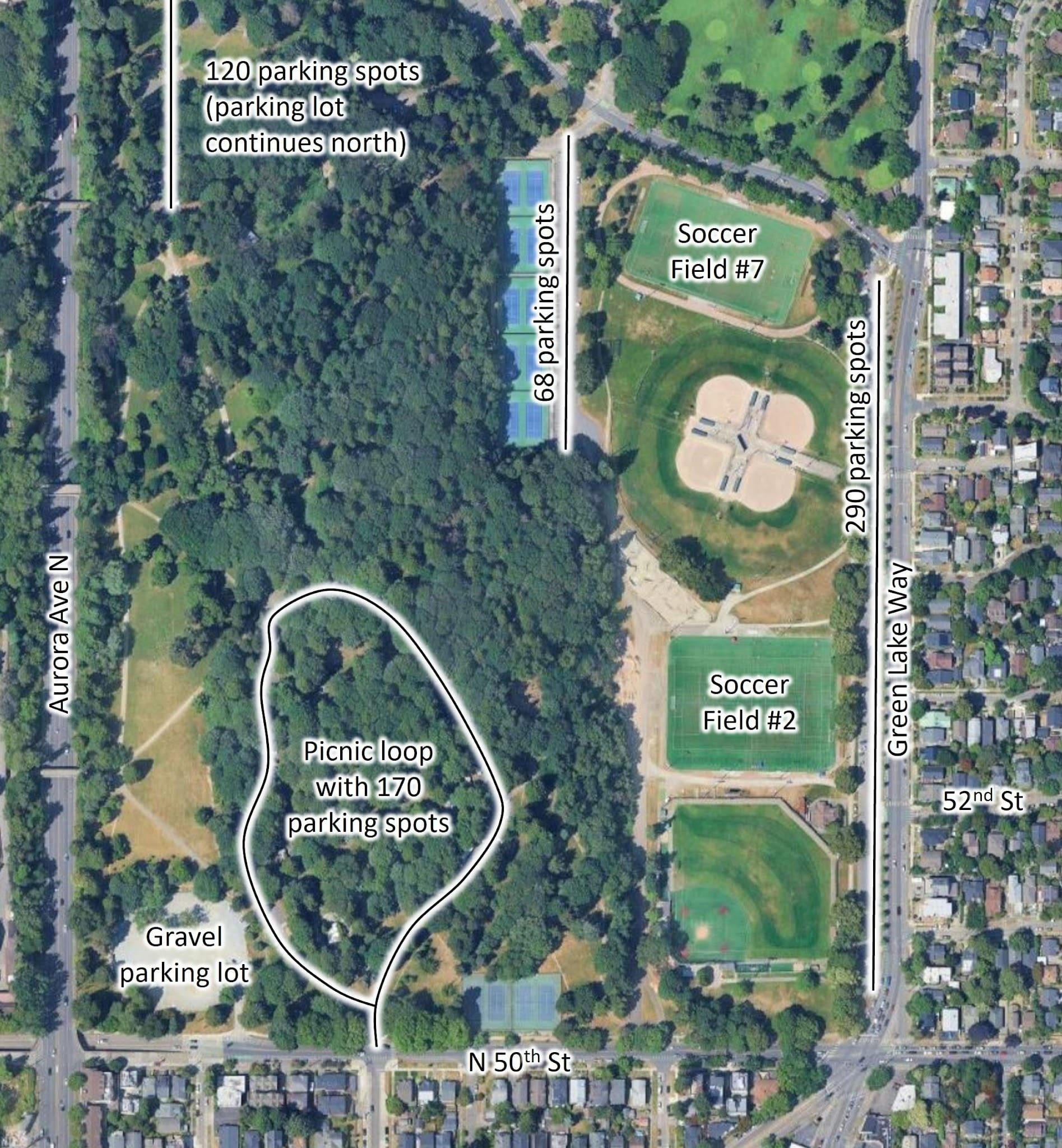
The zoo has been mentioned by SPS as needing the gravel lot, but the primary zoo entrance (which serves Zoo Tunes concerts and other large after-hours events) is at N 59th Street and Phinney Avenue, nearly a mile away from the gravel lot. The path to the zoo’s south entrance from the gravel lot is a one-third mile uphill climb that is not lighted or graded to ADA access standards. For the rare occasion when the gravel lot may be a convenience, the zoo can shift that parking overflow to the picnic loop.
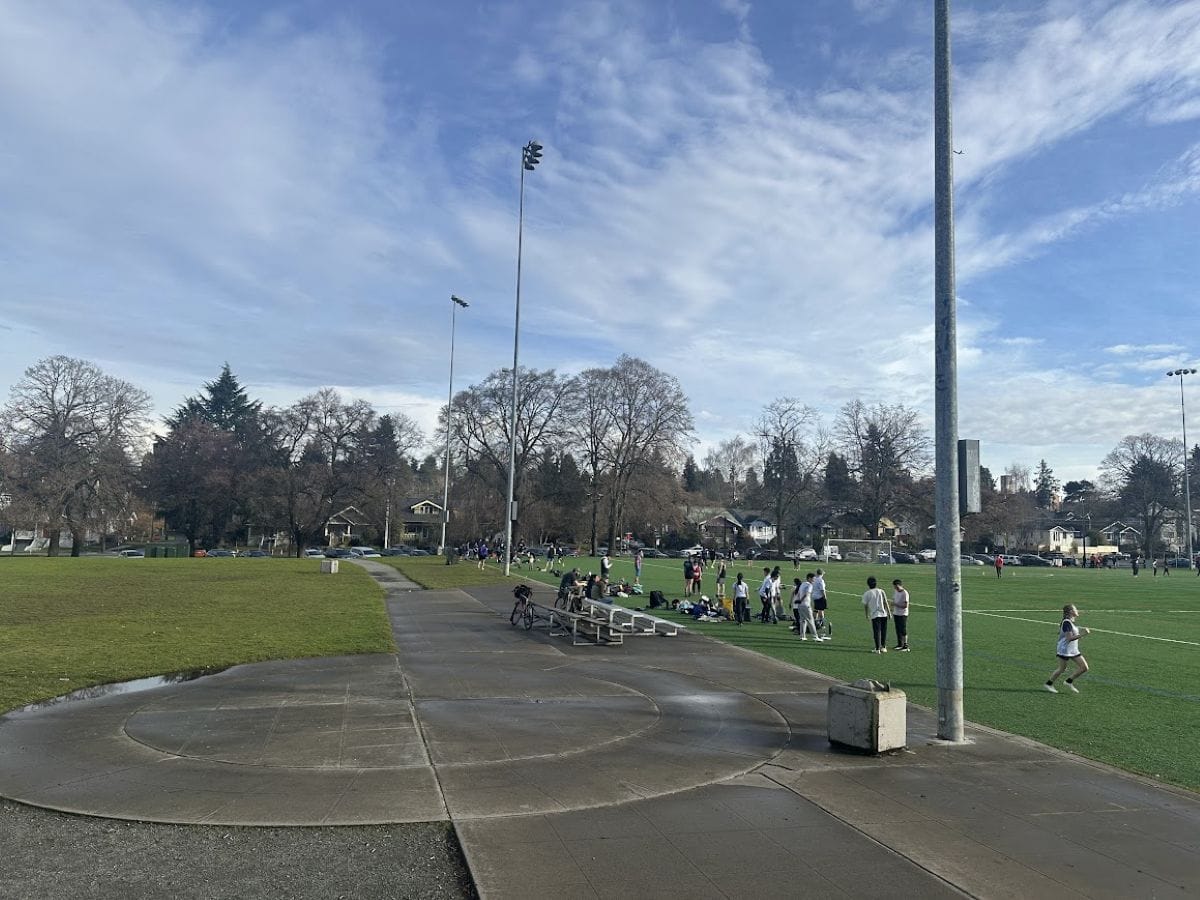
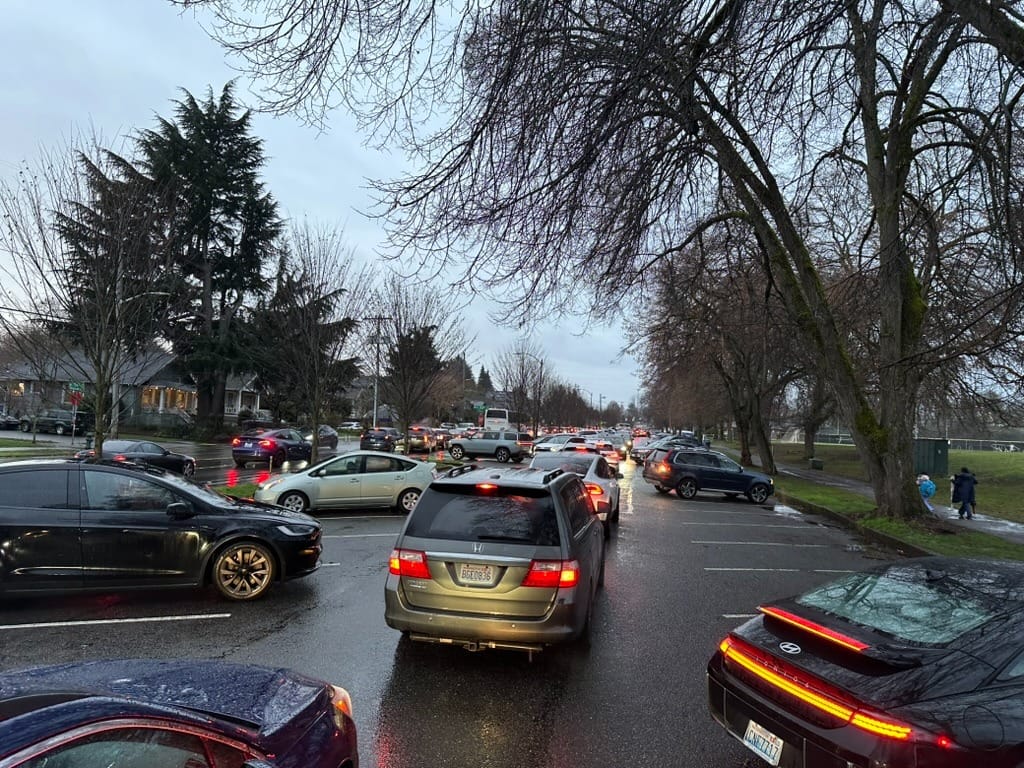
If parking is an actual concern, then Option A is the problem. In a stroke of remarkable symmetry, there are 290 paved parking spots along Green Lake Way and also 290 paved parking spots on the west side of the park. The spots along Green Lake Way support four softball fields, one regional baseball diamond, two soccer fields, a track loop, BMX bike jumps, and a skate park. Here is a typical Friday afternoon when sports are in full swing:
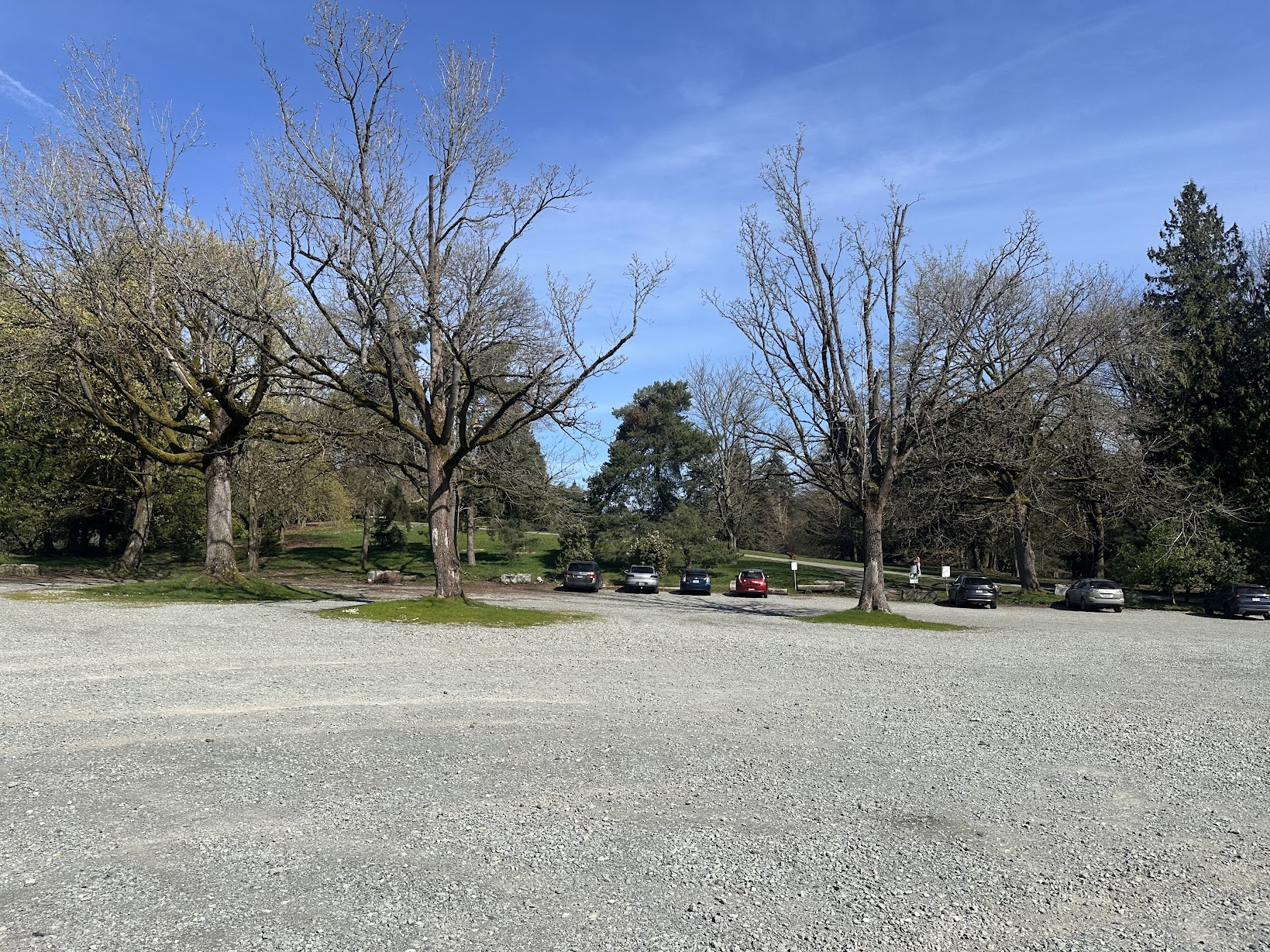
Meanwhile, the spots on the west side of the park support lawn bowling, horseshoe pitches, picnickers, and the occasional cross country or cyclocross event. SPS does not appear familiar with the area, leading to bizarre decisions. At the gravel lot, adjacent to the 170 spot picnic loop parking area, here is a typical Friday afternoon:
Public comment open until May 9
SPS is accepting feedback until May 9th at their website.
I encourage everyone who uses Woodland Park to comment. Friends of Lower Woodland Park has created a handy comparison chart:
Is the above chart too charitable to the Community Option? Perhaps, but until SPS conducts a feasibility study of the community proposal, these figures are our best attempt to capture cost and impacts. We believe better outcomes are possible than anything SPS has put on the table.
 Eric Fisk