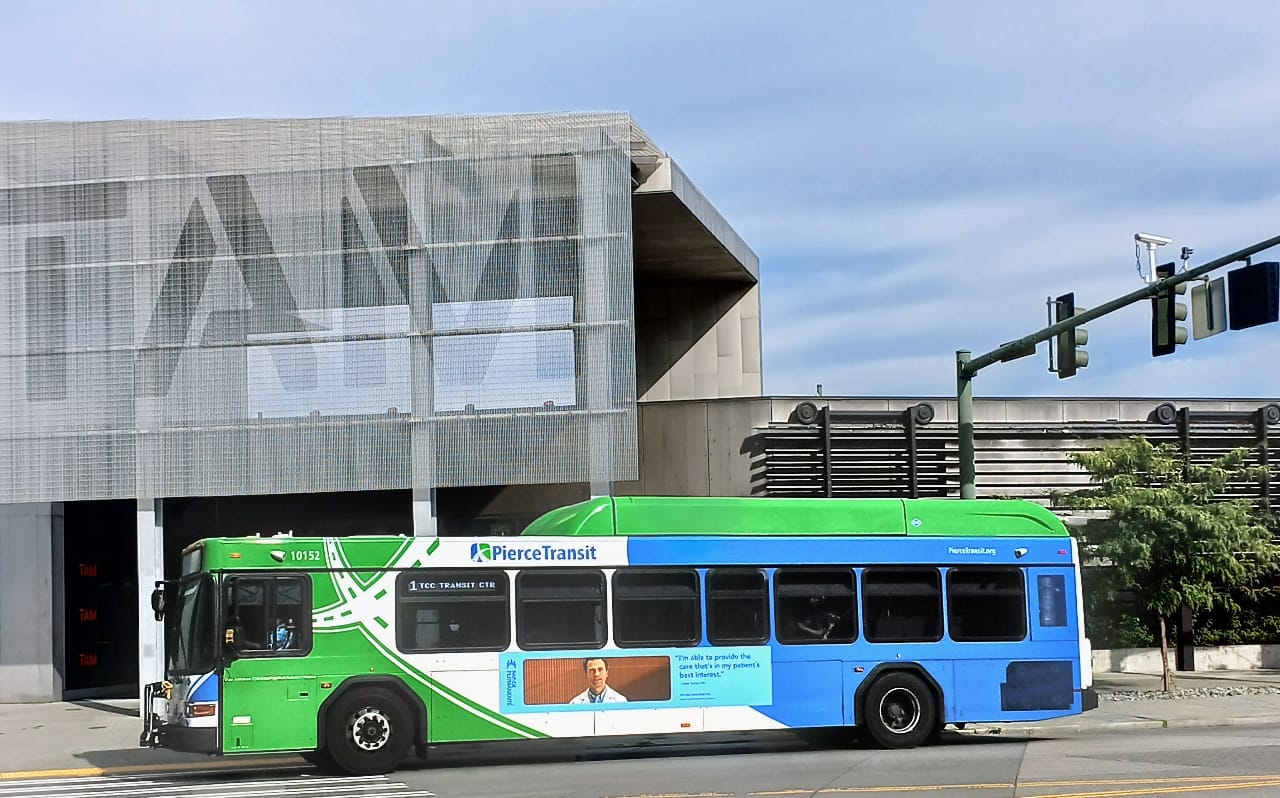
Agency leaders at Pierce Transit this week presented a potential system expansion plan that lays out a road map for a 40% jump in transit service, thanks to a new funding source that voters could be asked to approve this November. The plan includes four new bus routes in different corners of Pierce County, increases in frequency levels across dozens of existing bus routes, and two route overhauls as part of the agency's Stream bus rapid transit system.
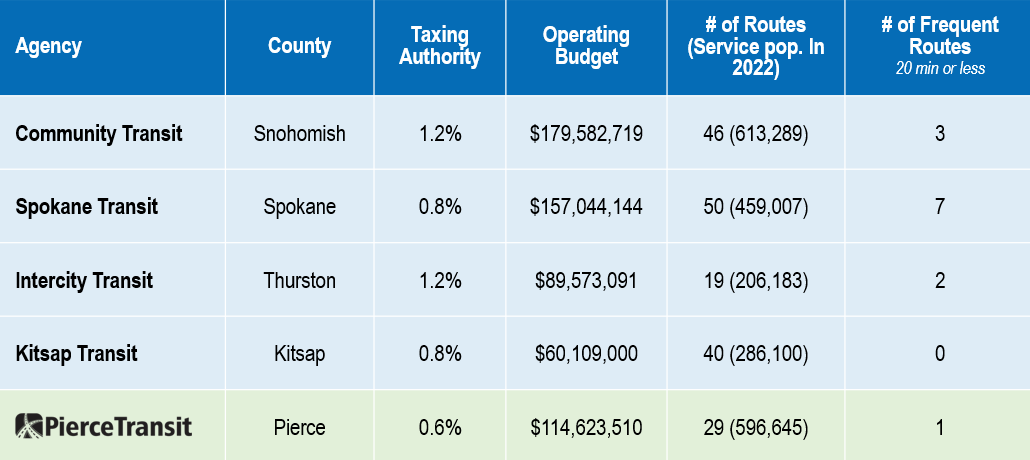
If given the greenlight, the 0.3% sales tax increase that this plan is built around would be the biggest infusion of resources into one of Washington's most under-resourced transit agencies in decades. Pierce Transit's funding rate has been stagnant since 2002, with its 0.6% sales tax rate well below peer agencies across the state.
By comparison, Spokane Transit is funded by a 0.8% sales tax allocation, King County Metro has a 0.9% rate, and Community Transit in Snohomish County and Intercity Transit in Thurston County are both at 1.2%.
Without new funding, service cuts could be on the horizon in Pierce County, as cost pressures cause the agency to eat into its financial reserves – a dilemma that is not unique to Pierce Transit. King County Metro faces similar financial issues, which has led advocates to push for a new countywide transit funding measure in Pierce County's neighbor to the north. Such a measure looks unlikely this year.
Pierce Transit CEO Mike Griffus referenced those obstacles as he presented the proposal to the agency's board and community advisory group Monday.
"Today, we're sharing a package designed to address those challenges, built from data, long-range planning and extensive community input. It is designed to help us reach more people, more places, more often," Griffus said. "This package is about putting service where it matters most, and the impact on our community. By focusing on high-need areas, we can better connect people who rely on transit every day. This includes workers with non-traditional schedules who need earlier morning and later evening options. It means greater independence for seniors and expanded paratransit for those that cannot drive or who can't use the bus due to a disability."
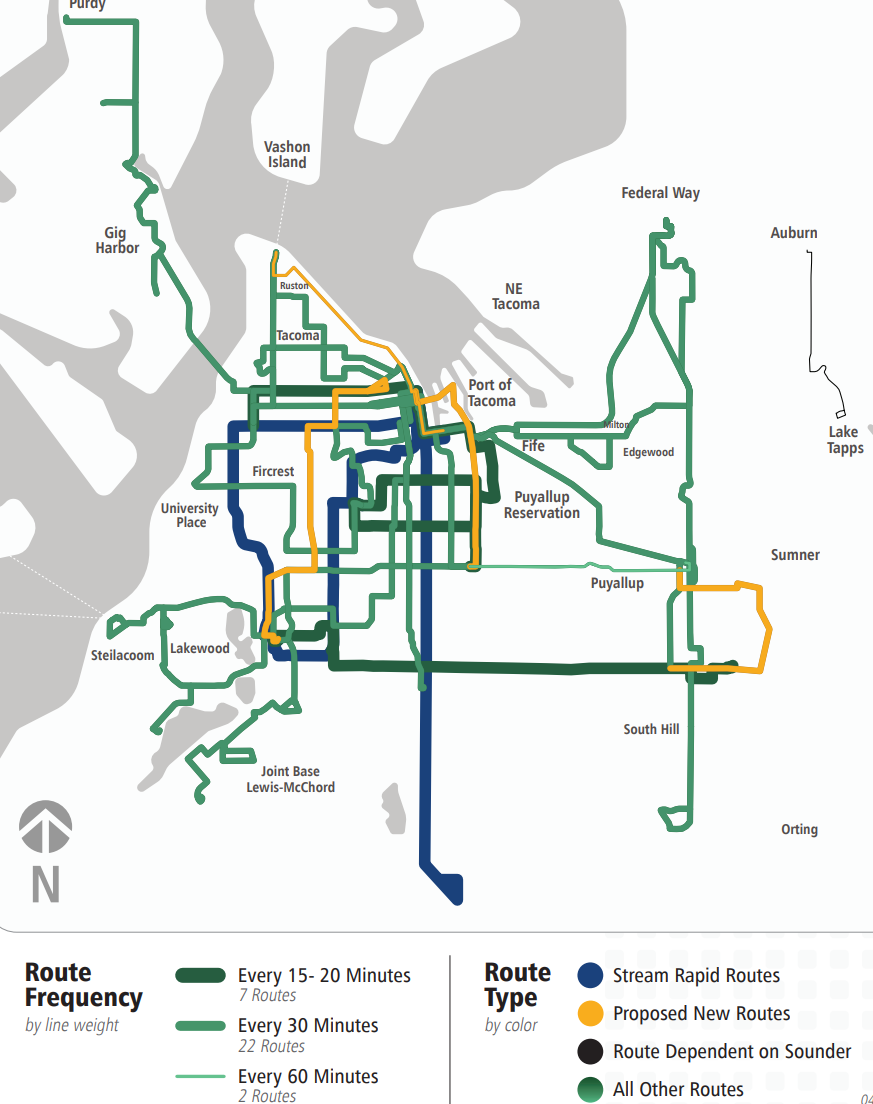
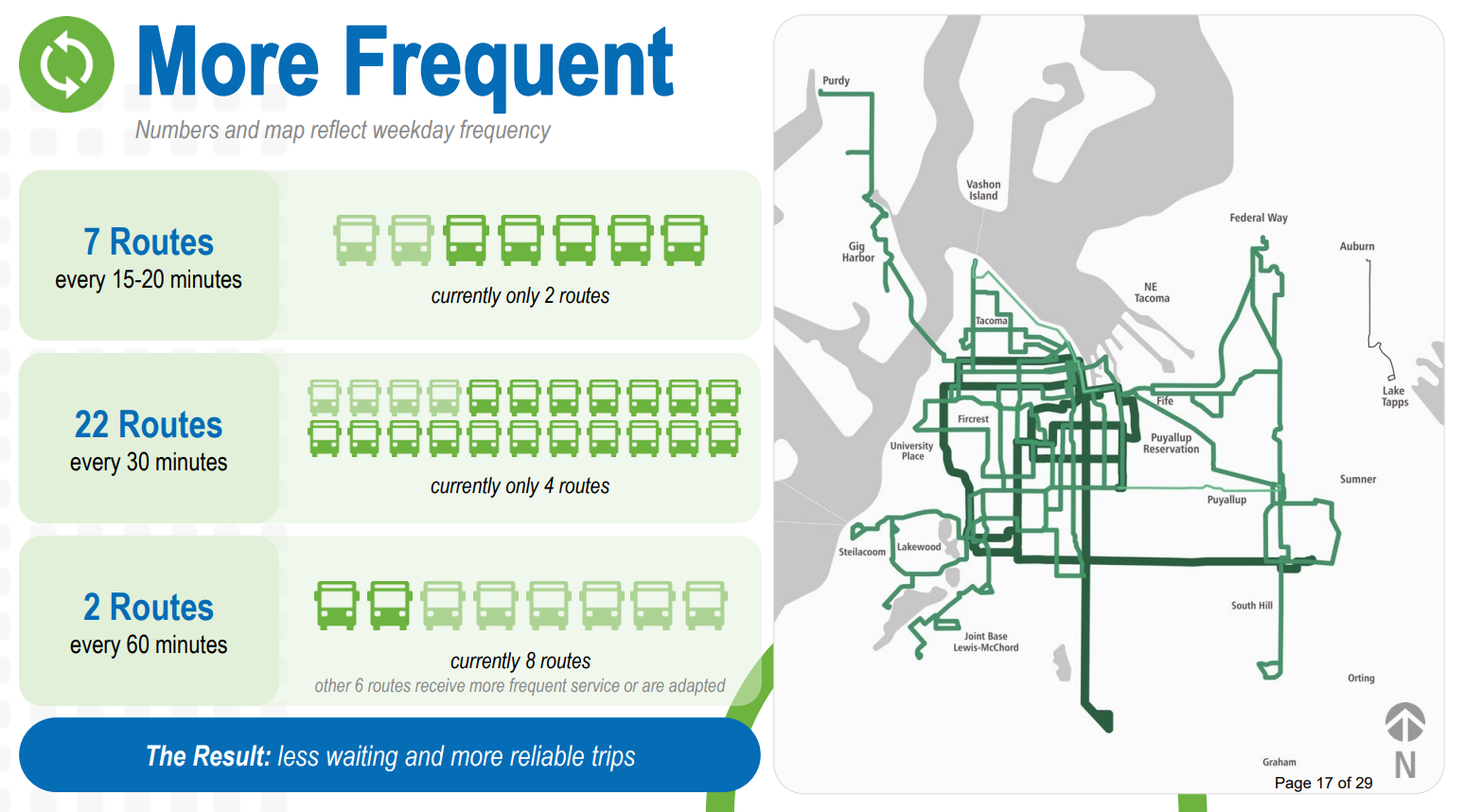
Under the plan, the number of Pierce Transit routes with service every 15-20 minutes would jump from two to seven, with a 450% increase in the number of routes seeing 30-minute service – from four to 22. Only two routes in the system would be left with hourly bus service.
Among the brand new bus routes that could be on deck: a weekday-only route in East Puyallup, connections between the Port of Tacoma and East Tacoma, Tacoma's North End and Lakewood, and Tacoma and Ruston, an area primed for significant development that still lacks fixed-route bus service.
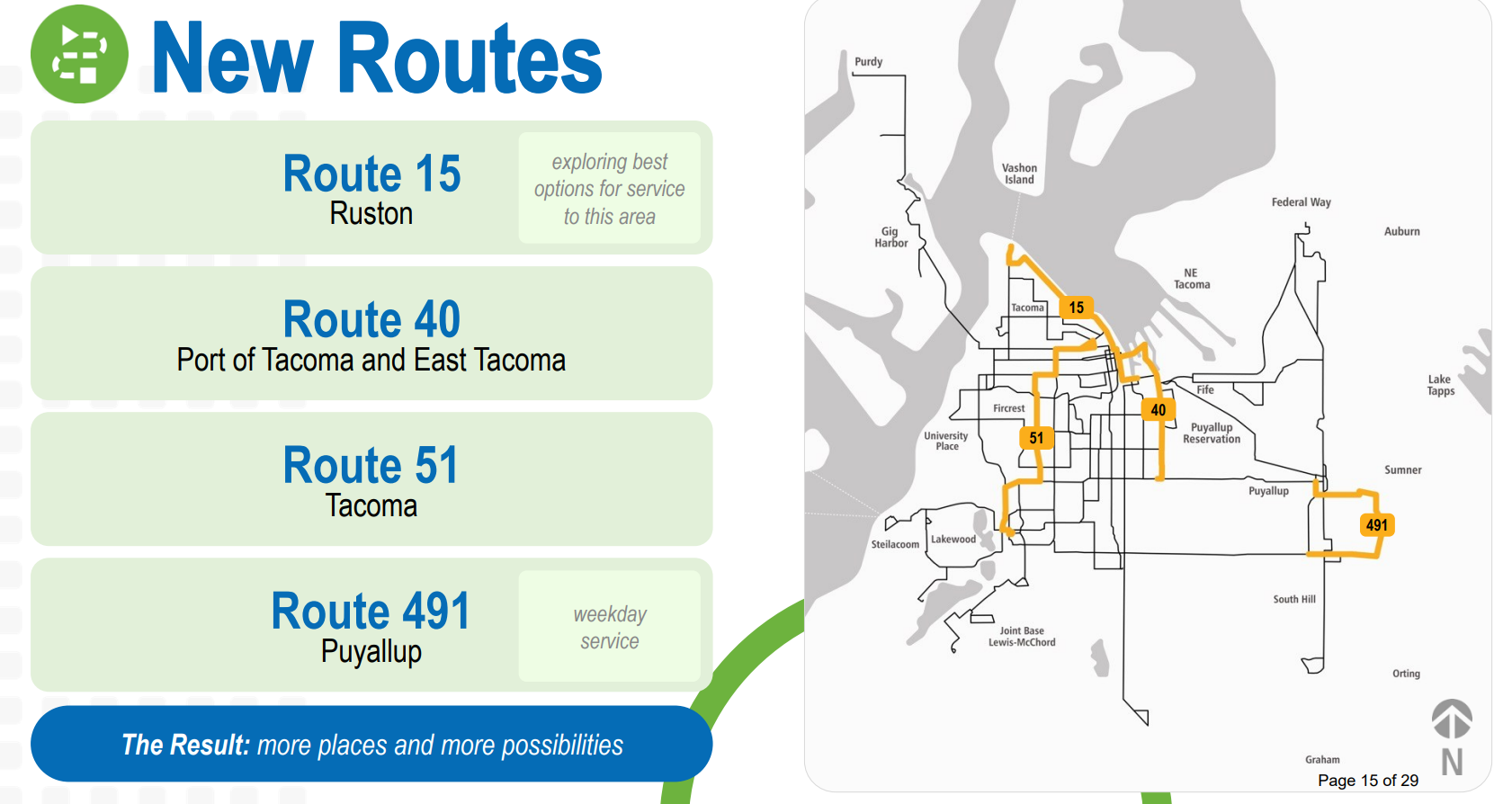
The service expansion plan would also be a game changer for evening service in Pierce County. Under the proposal, 23 routes would see later span-of-service, with the last trip around 10pm on weekdays and 8pm on Sundays. Those hours would be much longer than many routes operate today, a fact that makes taking transit untenable for many Pierce County residents.
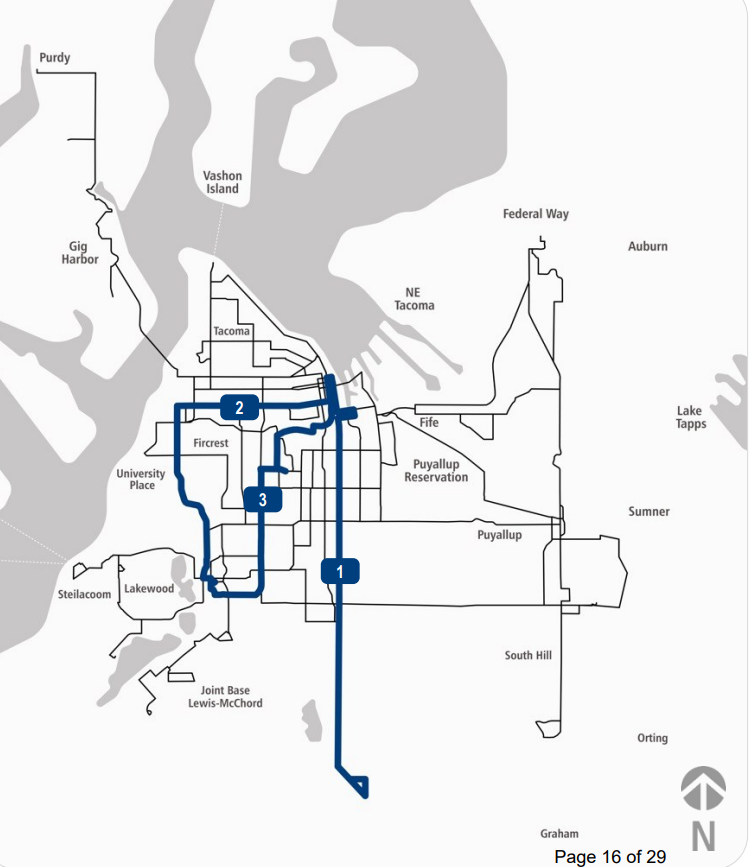
And then there's Stream. After scaling back an ambitious bus rapid transit plan for the Route 1 between Tacoma and Spanaway in 2023, Pierce Transit launched the Community Line instead the following year. Operating as a shadow route, the Community Line provides express service at peak times on weekdays, providing a faster route by stopping less frequently.
Under this plan, the Community Line would be expanded to seven days per week, bringing that 15-20 minute service to more types of trips apart from just peak commutes. The Route 2 and 3 would also see upgrades to Stream service.
The long overdue funding measure would put Pierce Transit on a more sustainable financial path, averting the fiscal cliff that the agency is currently heading toward.
"In the last 24 years, while our funding rate has stayed the same, the cost to deliver and the demand for transit has outpaced funding," Pierce Transit CFO Christopher Schuler said. "Due largely to inflation, expenses are expected to exceed revenues as early as 2027 – next year. We have a healthy reserve balance, however, our reserves are largely committed to capital projects and the reserves will be used to cover the operating shortfall after 2027 and so by 2032 reserves are projected to fall below our minimum requirements."
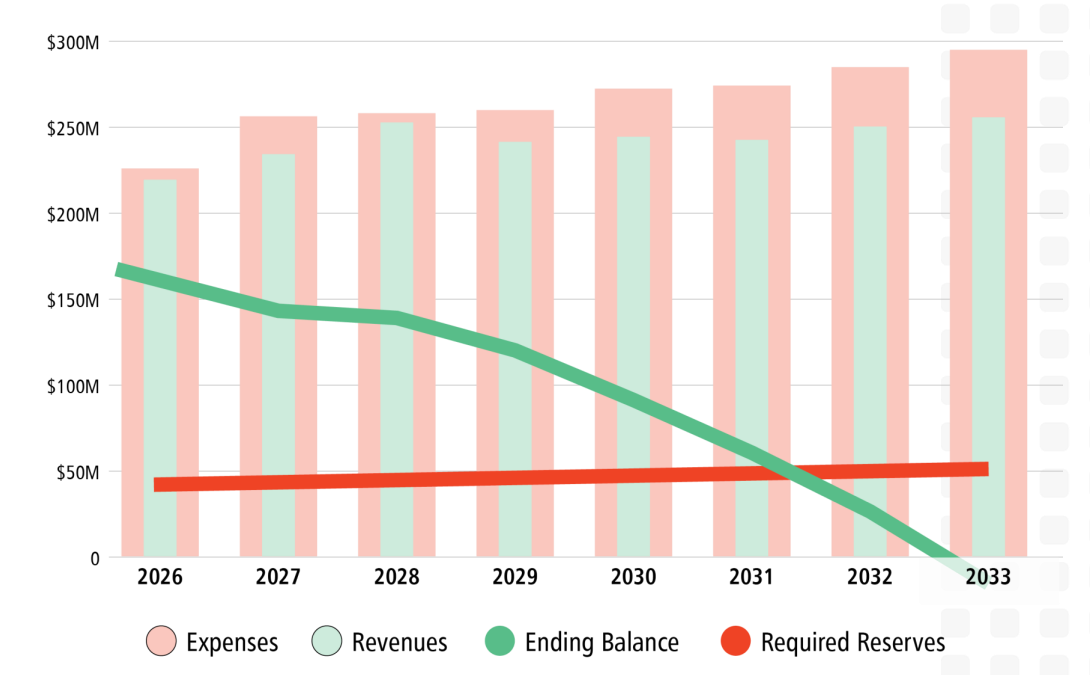
If voters don't sign on, repeating the failed 2011 and 2012 Pierce Transit ballot measures, consequences could be dire.
"Pierce Transit will continue running the current service levels for as long as possible, but rising costs will eventually need to be covered by cutting back that same service," Schuler said. "So, starting in 2027, Pierce Transit would begin planning for cost-cutting measures that would prioritize maintaining service and service reductions could begin as early as 2031."
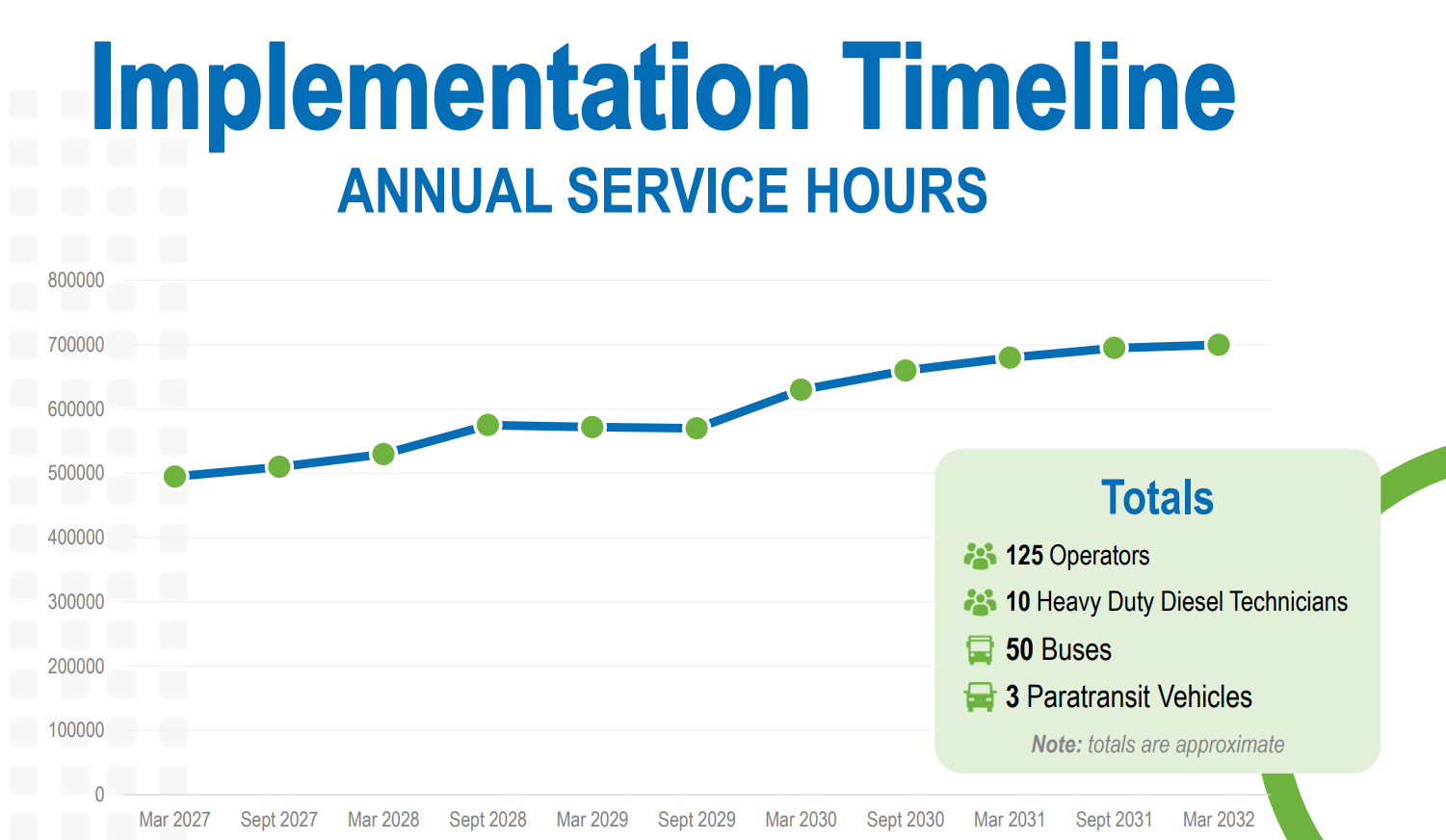
If successful this November, Pierce Transit would be able to add service on nights and weekends most easily, with service increases at other times (including the new routes) set to come when the agency is able to acquire more buses. In addition to 50 new buses and 3 new paratransit vehicles, the agency would plan to hire 125 new operators, gradually increasing annual service hours over a five-year period between 2027 and 2032.
With a beefed up network, the South Sound would be well positioned to take advantage of the arrival of regional light rail at Tacoma Dome, set to happen by 2035 – "come hell or high water," according to Pierce County Executive Ryan Mello.
But first, the Pierce Transit board will have to sign off on the package, expected to happen by July, following a round of community engagement that could result in tweaks. An in-person engagement session is planned for June 3 at the Tacoma Public Library, followed by online sessions on June 5 and 11.
 Ryan Packer
 Carolyn Bick