The “Connect Tacoma” levy scales back the public ask, but still aims to fulfill goals of safer, more pedestrian-friendly streets.
The Tacoma City Council wants to take another crack at convincing voters to make Tacoma’s notoriously dangerous streets safer. The council unanimously voted at its April 14 meeting to put a levy measure on the August ballot that, if passed, will raise $200 million and leverage another $120 million in grants and partner support to improve the city’s most dangerous streets and make pedestrian infrastructure safer and more connected over a period of 10 years.
Called Connect Tacoma: Safe Streets and Sidewalks Resolution — “Connect Tacoma,” for short — the levy would replace the Tacoma Streets Initiative, a different levy that brought in more than $400 million for improved street and pedestrian safety over a period of 10 years, and made up about 20% of the city’s transportation budget. That levy, funded by a combination of property and utility taxes, expired this past December.
To keep moving forward on its street safety and Vision Zero goals, the City brought Tacoma Streets Initiative II to ballot boxes in a special election last April, aiming to replace the first levy, but voters ultimately rejected it in a close vote.
If voters greenlight it, the Connect Tacoma measure will fund improvements through a combination of taxes, grant funding, and partnership funding for another decade, starting next year and sunsetting in 2037. The levy would support the city’s Vision Zero goals, aimed at eliminating traffic fatalities and collisions, as well as support its Climate Action Plan and housing density targets. The City would also intentionally incorporate trees into levy-funded projects.
A new proposal on the table
The city’s Public Works interim director, Kurtis Kingsolver, shared the breakdown of this funding in a presentation to council at the council’s study session on April 14.
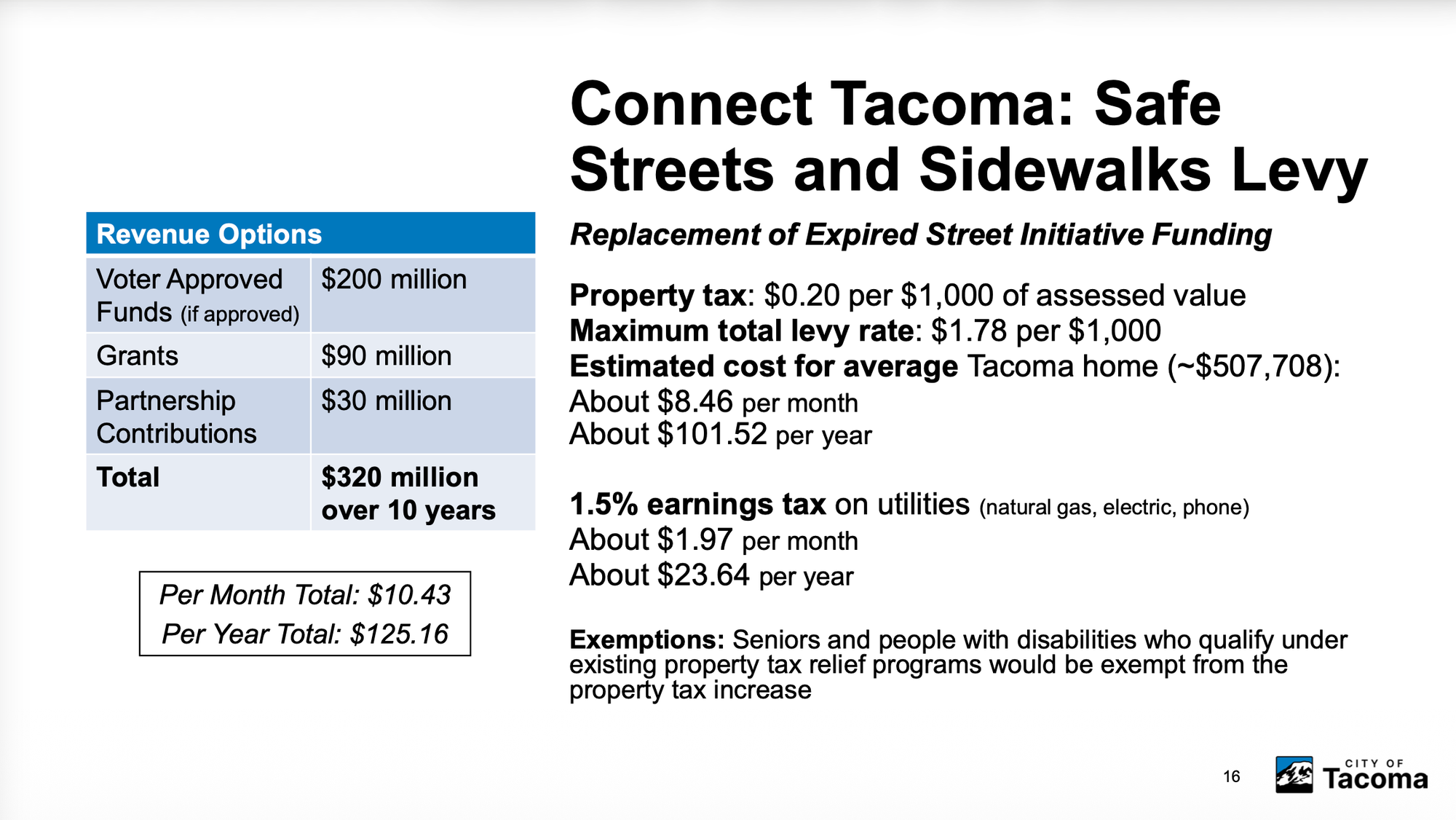
Most of the Connect Tacoma levy funding would come from property taxes of $0.20 per $1,000 of assessed property value, and a 1.5% tax on utilities. The failed Tacoma Streets Initiative II had asked voters to permanently approve property taxes of $0.25 per $1,000 of assessed property, and a 2% tax on utilities.
The cost associated with property taxes works out to a touch more than $100 per year on the median-value home, which sits at nearly $508,000, Kingsolver said. The average cost of a tax on utilities is a little less than $24 per year. Elders and people with disabilities who qualify for property tax relief programs would be exempt from the property tax increase portion, but not the utility tax.
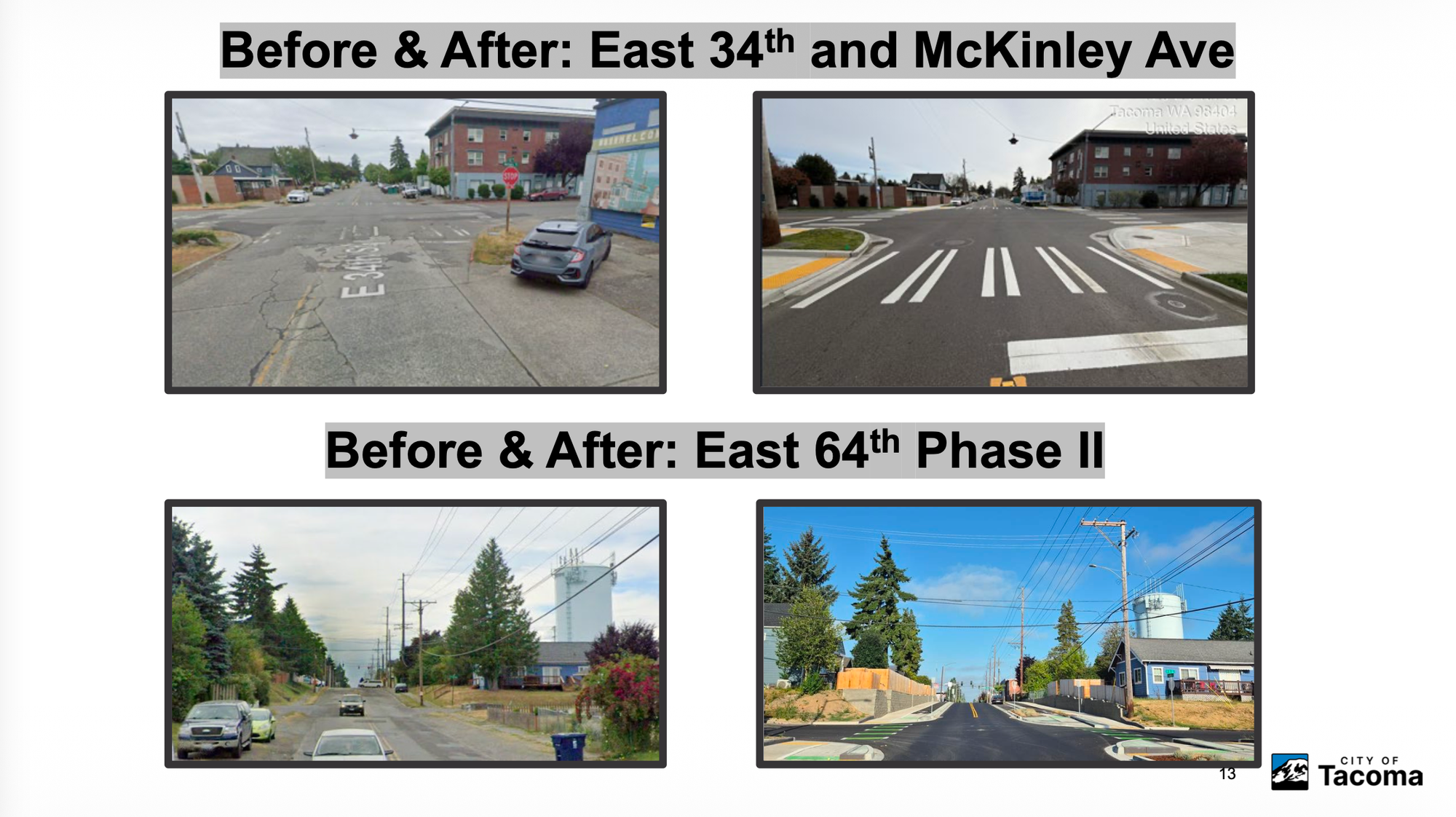
Kingsolver also shared the infrastructure improvements the previous levy brought, highlighting a few examples with side-by-side pictures. For instance, he said, the levy made it possible for the City to make 13 blocks along East 34th Street safer, and improve pedestrian infrastructure at the intersection of East 34th and McKinley. The City completed this project last year.
In expressing his support for the measure at the council’s evening meeting, Deputy Mayor Chanjolee “Joe” Bushnell underscored that Tacoma used to be a place to pass through, rather than to recreate or stay, but he highlighted that the Tacoma Streets Initiative was making a big impact and changing that.
“Our roads have not been designed in a way that thought about pedestrian safety or the safety of the community. It really was about how fast can you get your car through a certain area,” Bushnell said. “For every dollar [we spent], we got $3 in return [in total project value]. That to me is not a waste, that's a maximizing of our voter and tax-dollar impact.”
Mayor Anders Ibsen noted in his evening meeting comments that the passage of the levy would mean more jobs in the community, and that safer, more pleasant streets and pedestrian infrastructure would mean more money both staying in and coming to the city.
“It means more money directly in the pockets of our small businesses, more opportunities, more access to the skilled trades for kids here in Tacoma. Imagine what we could do more with more of that when the Jobs 253 Center opens up, for example, and we can see even greater identification of a talent pool for our local contractor community,” Ibsen said, referring to a new center for the collaborative initiative that allows high school students to get paid, hands-on work experience. “It means more opportunities for our downtown to actually feel more like a downtown, for our neighborhoods to be more connected, as well as more opportunities for public transit and for greater transit connectedness.”
A more transparent approach
While officials hope to convince Tacoma voters that street investments are bearing fruit, economic anxieties and tight household budgets could create powerful headwinds for the ballot measure. Tacomans are still grappling with a period of high inflation, now exacerbated by a legally dubious and economically ill-advised war in Iran that has risked an oil crisis and sent gas prices skyrocketing.
In response, councilmembers and City staff discussed the decision to revamp the overall approach with voters, focusing on crafting a comprehensive, community-driven vision and a transparent plan.
The Urbanist is a nonprofit newsroom powered by reader support. Become a member, get perks, and support local journalism.
Joe Franco, who serves as special assistant to Kingsolver, highlighted key takeaways from last April’s failed initiative. He said that voters largely rejected the proposal, due to a combination of the levy’s price tag and its lack of an end date.
“Given a lack of defined duration[, it] did not align with our community's expectations, particularly given broader economic pressures across households,” Franco said, noting that the public was largely unaware of the first levy’s successes, which told the City that “we need to do a better job clearly communicating outcomes and demonstrating value.”
Franco stressed the need for greater community buy-in, feedback, and project direction.
Franco said that the City compiled feedback from the Community Levy Committee, a 23-member group composed of people from labor organizations, real estate, business, and the construction industry, as well as community organizations like the Asian Pacific Cultural Center and Tacoma On the Go. The committee also consisted of public agencies, including the Port of Tacoma, Tacoma Public Schools, Parks Tacoma, and Pierce Transit. The City has also sought input from several other organizations and groups, including the Safe Streets Campaign, community partners like Reach Tacoma, and different City commissioners. The City hosted a listening session in early April for Connect Tacoma.
“Across our engagement, we heard consistent themes: the need for safer streets, better maintenance, improved pavement conditions, and a system that works for everyone, whether people are driving, walking, biking, or taking transit,” Franco said, referring to a presentation slide. “That's reflected in the core investment areas shown here, which are safety improvements, maintenance and pavement preservation, multimodal access, and addressing our critical infrastructure gaps.”
Real-world impacts
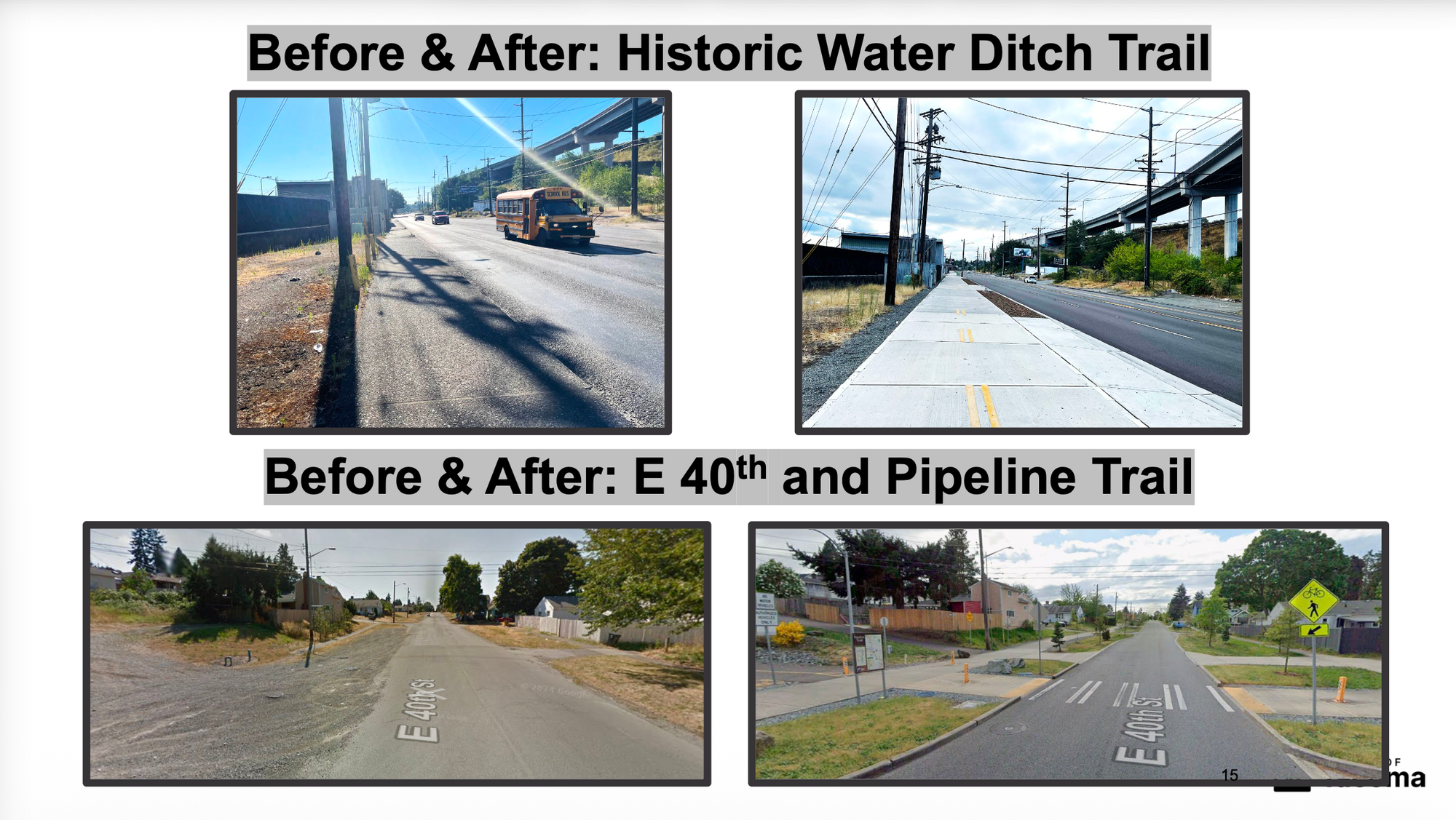
The core investment areas aren’t abstractions, either, Franco added. They reflect everything from crumbling arterials to missing linkages in sidewalks to dangerous pedestrian crossings.
In public testimony on Tuesday evening, Laura Svancarek, executive director of Tacoma On the Go, emphasized that while driving through Tacoma’s major arterials can be “an unpleasant experience and doesn’t feel particularly safe,” people walking, rolling, biking, and using public transit face feel the lack of safety and comfort more viscerally.
“[They] are incredibly aware of what it feels like to try to cross these roads, what it feels like to sit at an unshaded bus stop on the side of a high-traffic, high-speed roadway with no trees and broken sidewalks. It's not a fun experience. It does not bring respect to all members of our community, and it's not accessible mobility for all,”
If the City wants to encourage more people to use transit, bike, or walk, particularly in the interest of both reaching the City’s Vision Zero and Climate Action Plan goals, and density targets she continued, “it becomes more and more important that we invest in safe infrastructure that helps everybody to get around our city. And I firmly believe that this levy package will tangibly move us towards those goals.”
Connect Tacoma’s three focus areas
The Connect Tacoma levy would divvy up the $320 million among three focus areas:
- Better Neighborhood Streets - Maintaining and improving residential streets to make them safer, calmer, and more accessible;
- Safe Streets for Everyone - Improving the safety of the City’s busiest streets and crucial arterials; and
- Improve Connections - Better connections along pedestrian and bike routes that people rely on to do things like catch buses or get to school or work.
The first area, Kingsolver said, is similar to what the City did with the first Street Initiative levy dollars in 2015—maintain 70% of Tacoma’s residential streets—but would allow the City to do more than just maintain these streets.
“We didn't fill in missing-link sidewalk, we didn't add traffic calming, or any other safety measures,” Kingsolver said. “This levy will be different. However, our first goal will remain the same, and it's maintaining residential streets. … It would be irresponsible to let that investment deteriorate over the next 10 years.”
He said that, after crunching the numbers, they believe that the work under the first focus area umbrella would cost $85 million, with $75 million coming from levy dollars and $10 million coming from partnerships.
The team also estimated that it would take about $159 million to address the city’s busiest streets and key arterials. The city plans to “leverage” the $85 million the levy raises to raise the remaining $74 million from grants and partnerships, Kingsolver said. Creating connections in pedestrian and bike infrastructure would make up the final $76 million.
Let’s talk trees
In his public comment at the evening meeting, civil engineer Tyler Daniels expressed neither support nor opposition to the Connect Tacoma measure. Instead, he emphasized that, whatever the City chose to do, they should do it with a specific focus on incorporating trees, rather than treating them as an afterthought. He briefly discussed how the lack of trees in a city environment has severe detrimental effects on environmental and human health, and noted that the City has a lot of ground to (literally) cover.
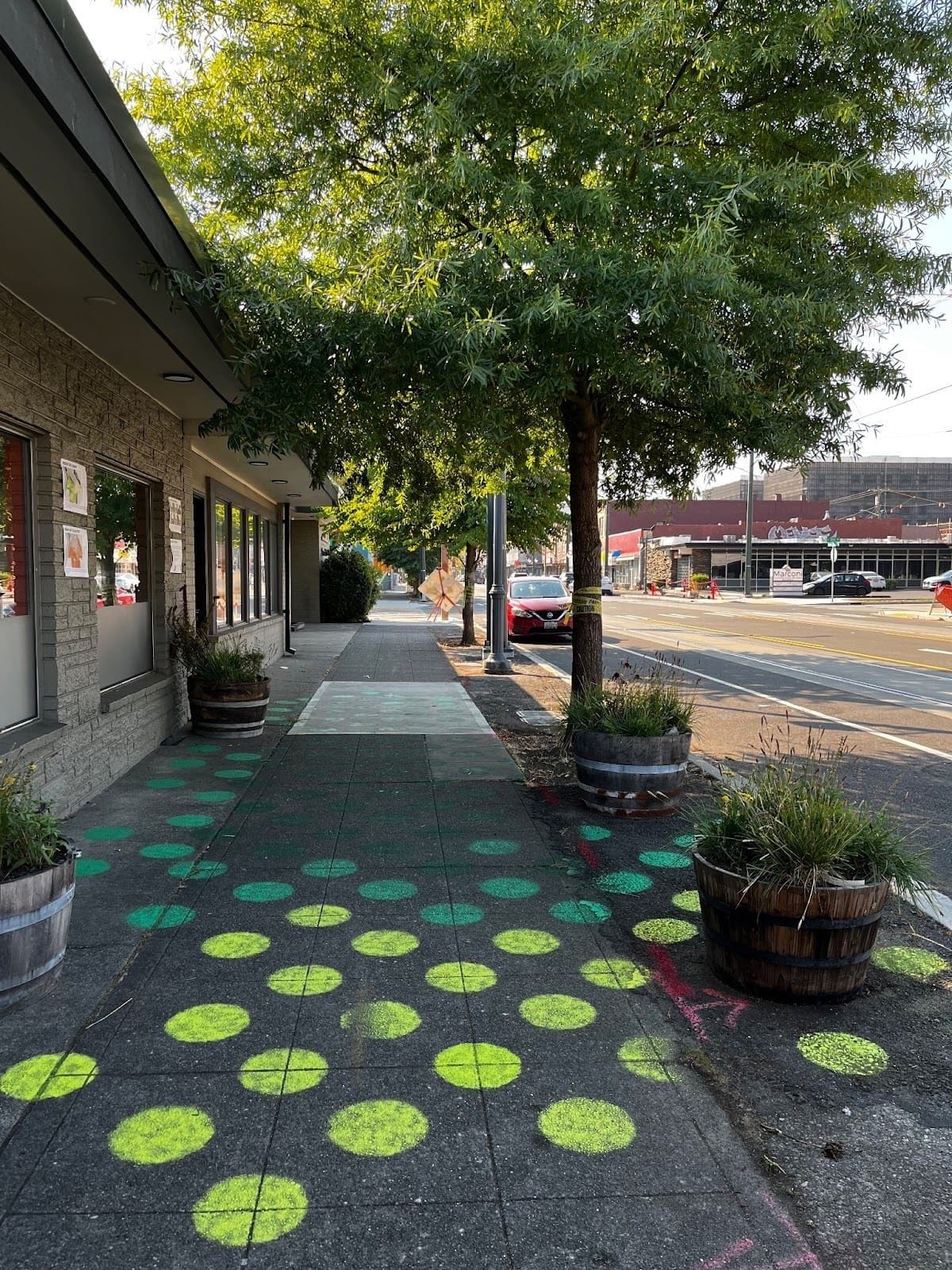
“The past actions that Public Works has done has fallen short of installing any sort of vegetation or street trees along residential blocks, creating significant increases in heat islands and impacting those who are in the minority groups who are suffering from health conditions — not from genetic inheritance. They're from toxic environments that we as a community suffer from,” Daniels said. “The Public Works design standards are outdated and they are toxifying our community. The asphalt concrete installation is toxic to those who implement it without face coverings. Those exhaust fumes go through the community and the oil that's used in the chip ceiling is toxifying our groundwater and the stormwater system. So, I hope that you are able to implement that as you review their proposal moving forward.”
Tacoma ranks low in tree canopy compared to other Puget Sound cities, with just 20% of the city covered by trees. Bellevue’s tree coverage rate is nearly double that.
At the council’s study session earlier that day, Councilmember Olgy Diaz noted that she has heard Tacoma residents wondering how the City can incorporate more trees into its everyday infrastructure, particularly because the City has partnered with the Tacoma Tree Foundation to pilot a new SafeTREE Routes to School program meant to support greener, safer routes to school. The Tacoma Tree Foundation also operates Green Blocks, a program focused on planting street trees in areas most lacking canopy.
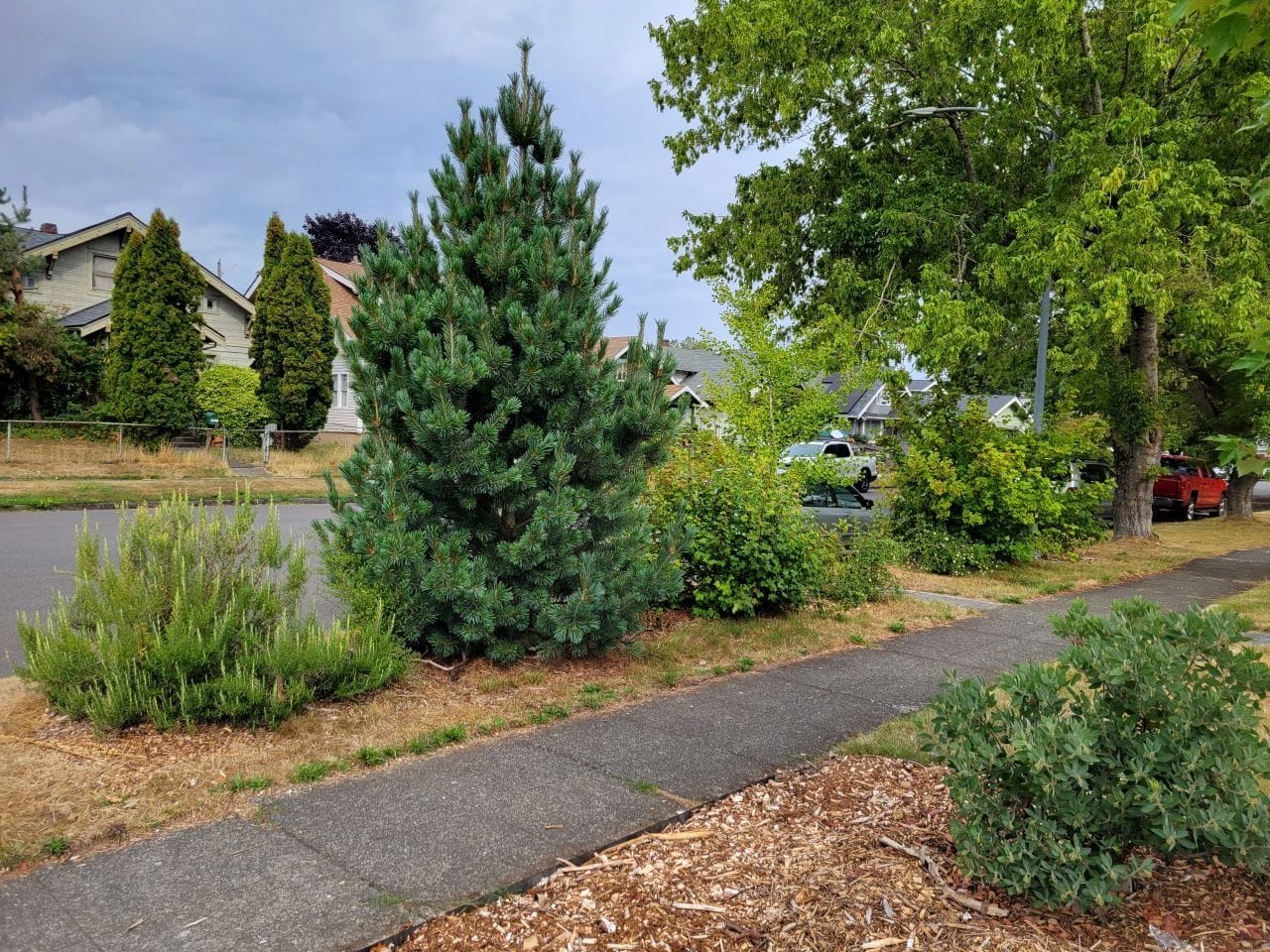
Kingsolver said that the council plans to budget for including trees in its second category of the levy’s focus, which targets the city’s busiest streets and important arterials.
“On the residential streets,” Kingsolver continued, “it's a little different. It'll be a little more case-by-case. It depends on how much room we have, but we want to further our tree canopy, and so as part of our projects, that's what we plan to do.”
He said that the money may come from “other resources to support this,” and suggested that, along with a successful levy passage, the city may become eligible for urban canopy grants in the course of its work, especially since the City has a specific goal to increase Tacoma’s tree canopy cover by 30% by 2030.
Pierce County Elections will mail out August ballots on July 17, with the Connect Tacoma levy on the ballot. Check your voter information or register to vote here.
 Ryan Packer
 Doug Trumm