Seattle's housing solution can't come at the expense of the people who need it most.
Seattle has a housing crisis. That's not a controversial statement. It's the one thing developers, affordable housing advocates, and city leaders all agree on. Where the agreement ends is what to do about it.
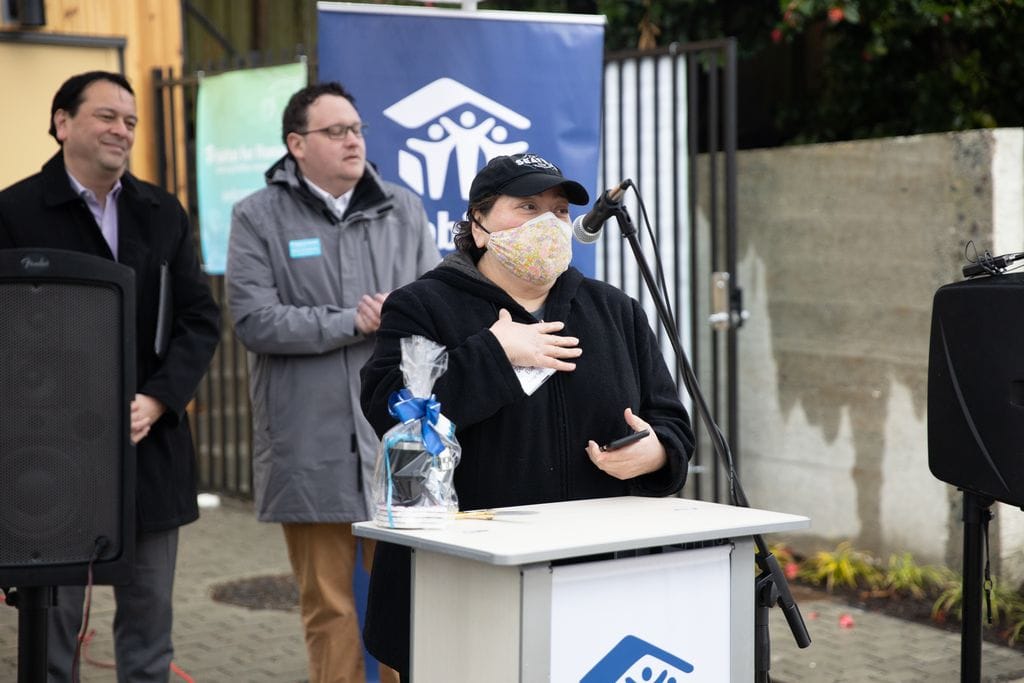
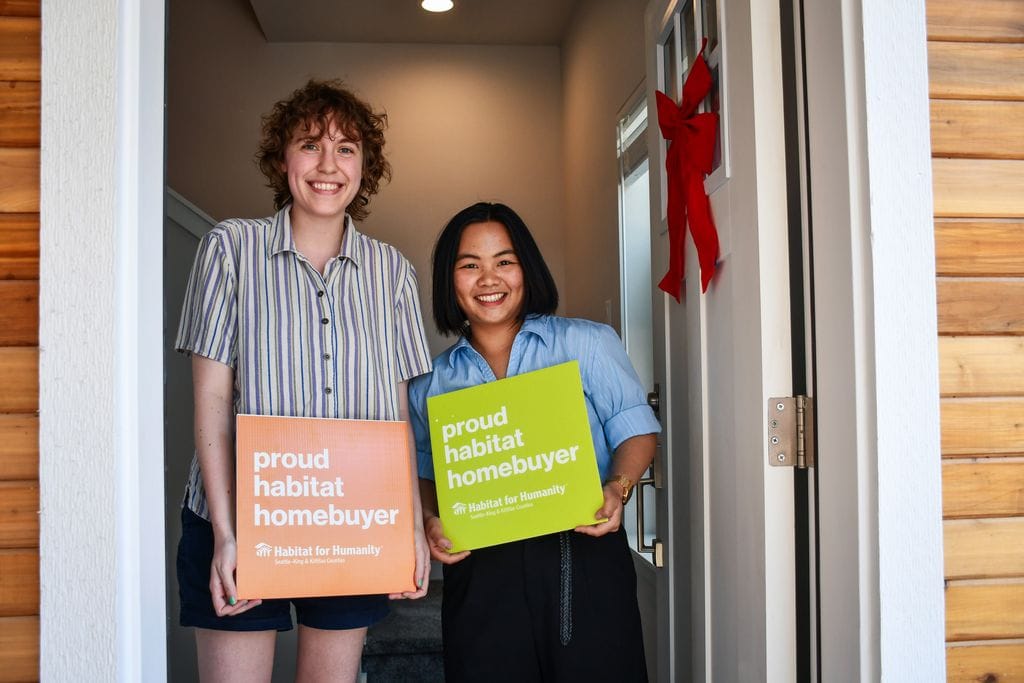
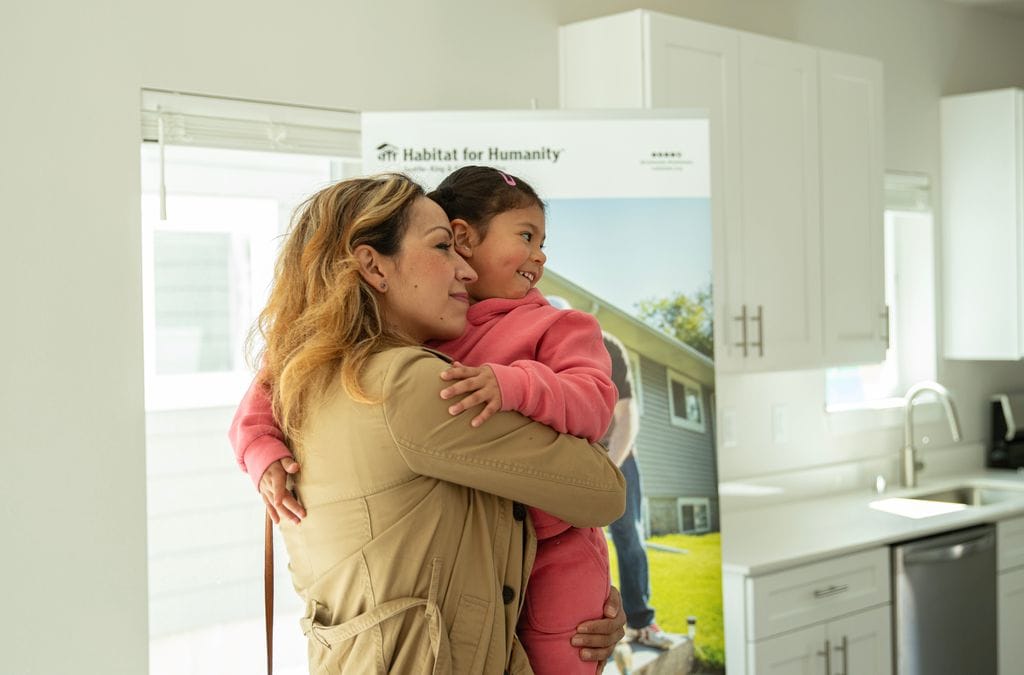
Becaley came to Seattle with a theater group, fell in love with the city, and decided to stay — even after her original opportunity fell through and she found herself living in a homeless shelter. She became a commercial bus driver. She put in her sweat equity hours. And she moved into a home on Capitol Hill, breaking what she calls a generational cycle of never owning a home.
Becaley's home, and thousands more like it, exist because Seattle's Mandatory Housing Affordability (MHA) program exists.
That matters, because MHA is now in the crosshairs. A coalition of nearly 30 developers calling itself the Seattle Housing Roundtable is asking the city to reduce MHA fees by 90% this year, tapering to a reduction of 75% over three years, with the goal of permanent reform. Their argument initially appears straightforward: fees are making projects financially unviable in an already brutal market, and without relief, Seattle's permitting collapse will continue.
The slowdown is real. Permit applications last year were down nearly 90% from the 2020 peak. That should alarm everyone who cares about housing in this city.
But the argument doesn't hold up under scrutiny. A comprehensive analysis completed in March 2025 by BERK Consulting found that cities without MHA-style programs saw similar production declines during the same period. Interest rates, construction costs, labor shortages, and tariffs are regional and national forces that Seattle cannot control. MHA fees are one line item in a complex financial equation. And there are likely some within the development community who would question whether even the proposed reductions would be enough to move stalled projects forward.
Worth noting, too: the market is already adapting. More developers are choosing MHA's on-site performance option, building affordable units directly within their projects, rather than paying into the fund because it is more financially feasible in a tough market. In 2024, developers committed to 101 affordable homes through the performance option alone, the second highest total since Seattle’s MHA launched. The program isn't freezing development; parts of the market are finding ways to successfully work within it.
What a 75-90% fee reduction would do is cut the funding stream that built 4,595 affordable homes in Seattle from 2017 through 2024. Not projections. Not promises. Houses that exist today because the MHA exists, houses like the one Becaley calls home.
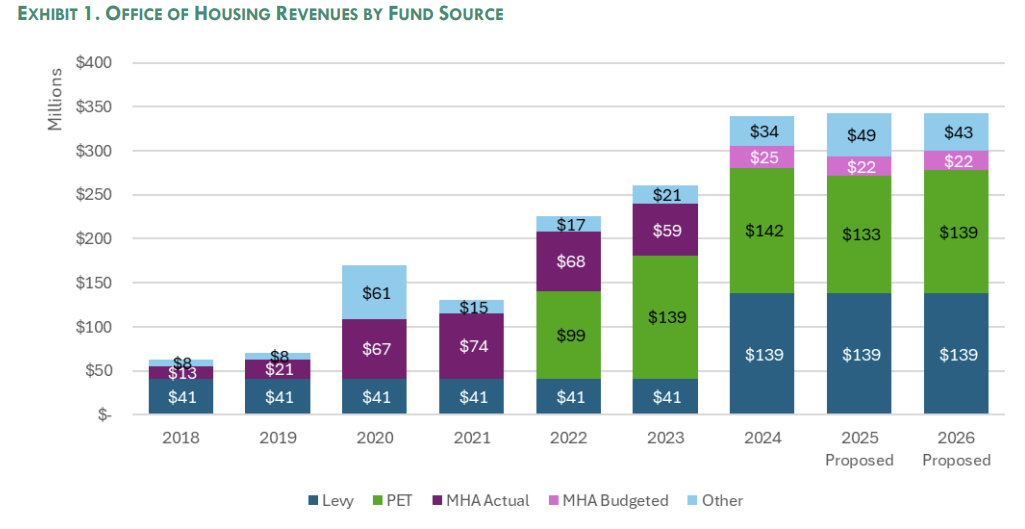
According to the Seattle Office of Housing's 2025 annual report, MHA contributes roughly $60,000 per unit toward affordable housing production. At current collections of $22 million annually, that funds approximately 365 new affordable homes each year. A 90% reduction would bring that down to roughly $2.2 million, only enough to fund about 36 homes. That is not a recalibration, it’s a collapse.
The roundtable argues that without relief, development will stall entirely — making the current $22 million baseline irrelevant, and those 365 homes a year out of reach regardless. It's a fair point to raise. But a 90% fee reduction is a speculative bet that reduced fees will unlock enough volume to offset what's lost — and that assumption is far from settled, including among some in the development community itself.
MHA is also 85% of the way to its original 10-year goal of 6,000 affordable homes, a promise Seattle made to its residents when it struck the grand bargain with developers in 2017. This proposal doesn't just slow that pipeline. It stops the clock on a commitment the city made and halts progress on a tangible solution to our housing affordability crisis.
At Habitat for Humanity Seattle-King & Kittitas Counties, we built 86 of the 105 MHA-funded homeownership units in this city: Olympic Ridge, Yarrow Townhomes, Yarrow Cottages, and Capitol View. These are not abstractions. They are communities where people like Becaley put down roots.
The developers asking for relief are not bad actors. They are facing a genuine problem and reaching for the closest lever. We understand that impulse, and we are not reflexively opposed to reform. If there are targeted adjustments that can help unlock production without gutting affordable housing funding, we want to be part of that conversation. There are good ideas about how fees are structured and when they are collected that deserve serious examination by the city and the development community together.
We are encouraged that those conversations are already underway, and we are hopeful they will produce a path forward that unlocks increased private development activity while honoring the commitment to affordable housing that MHA represents. That is a balance worth finding, and we hope to be at the table as the city, and the development community, both for profit and nonprofit, works toward longer-term reforms that serve everyone.
But the financial relief that a 90% fee reduction provides to market-rate development comes directly at the cost of the affordable housing pipeline and the people depending on it. That is not a tradeoff the city should make on behalf of the people the housing system has already failed.
Mayor Katie Wilson's "taller, denser, faster" vision is the right instinct. Seattle needs more housing at every income level, and we share that perspective and sense of urgency. But density without affordability doesn't solve the housing crisis. It just reshapes who gets to live here.
The goal was never just more units. It was a city where everyone, from the bus driver to, the nurse to, the warehouse worker, has a safe, decent, and affordable place to call home.
That's the city Becaley chose to stay in, even when it was hard. It should stay worthy of that choice.
Ryan Donohue is the chief advocacy officer at Habitat for Humanity Seattle-King & Kittitas Counties.
Publisher's note: The Seattle Housing Roundtable has been invited to present their own op-ed in favor of their "Housing Accelerator" proposal temporarily reducing MHA fees. Watch for that in coming days.
 Doug Trumm
 Seattle YIMBY (Guest Contributor)