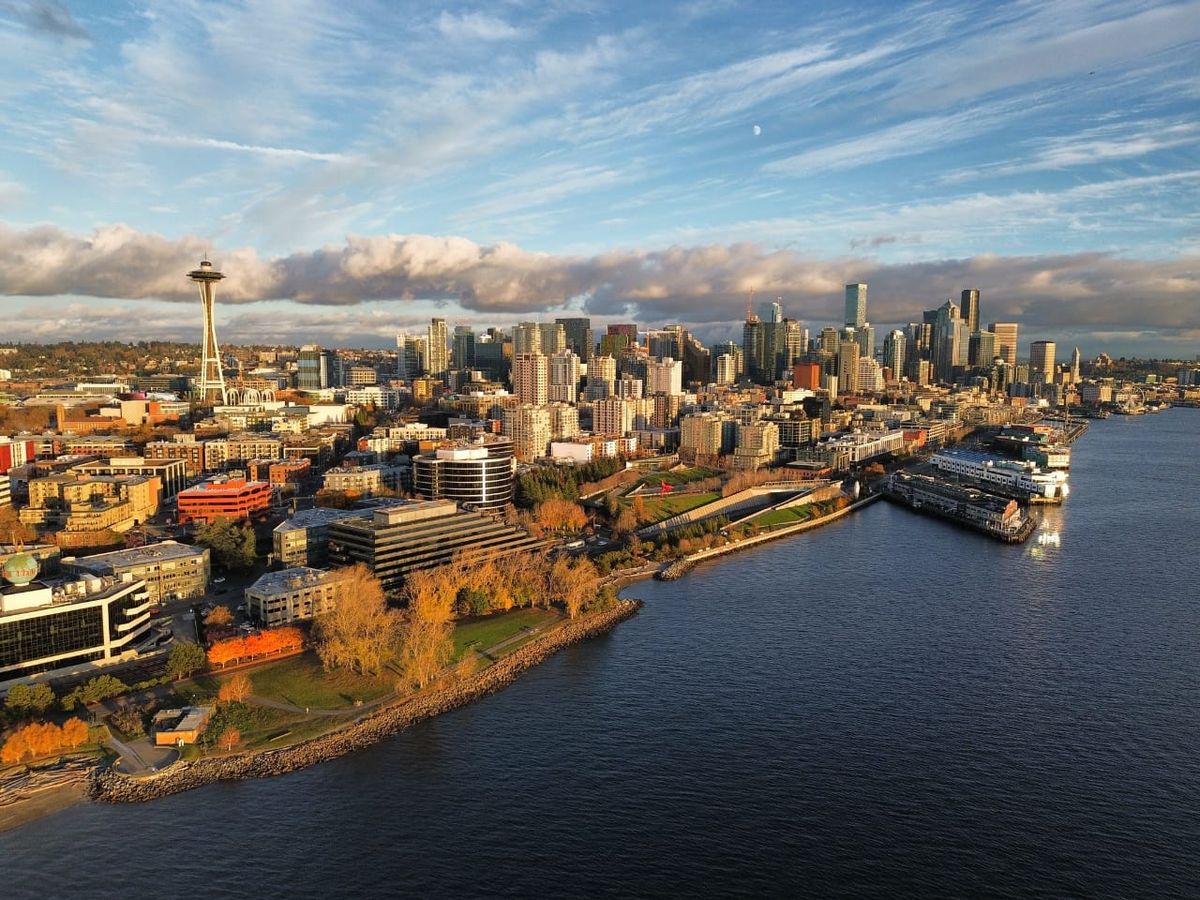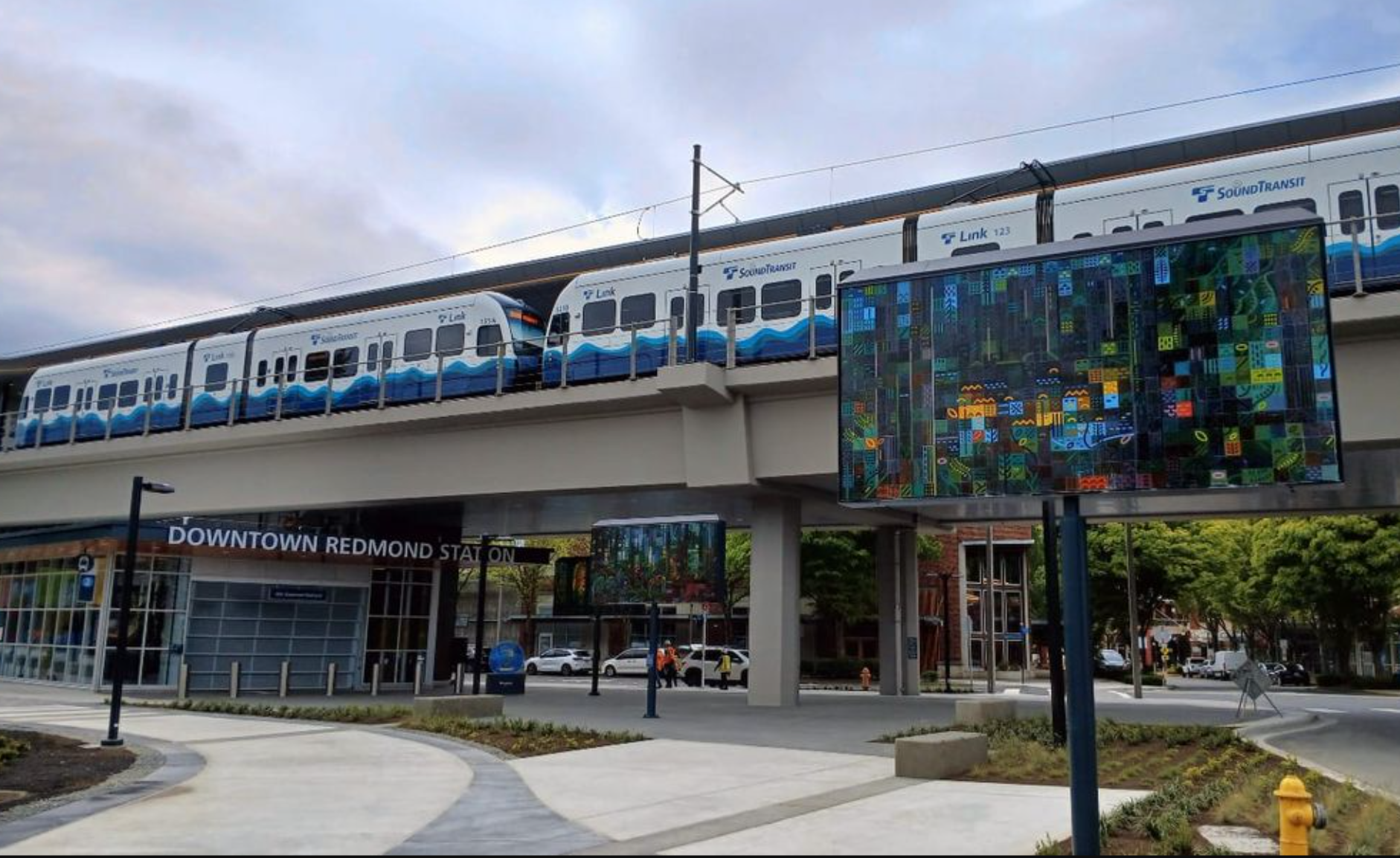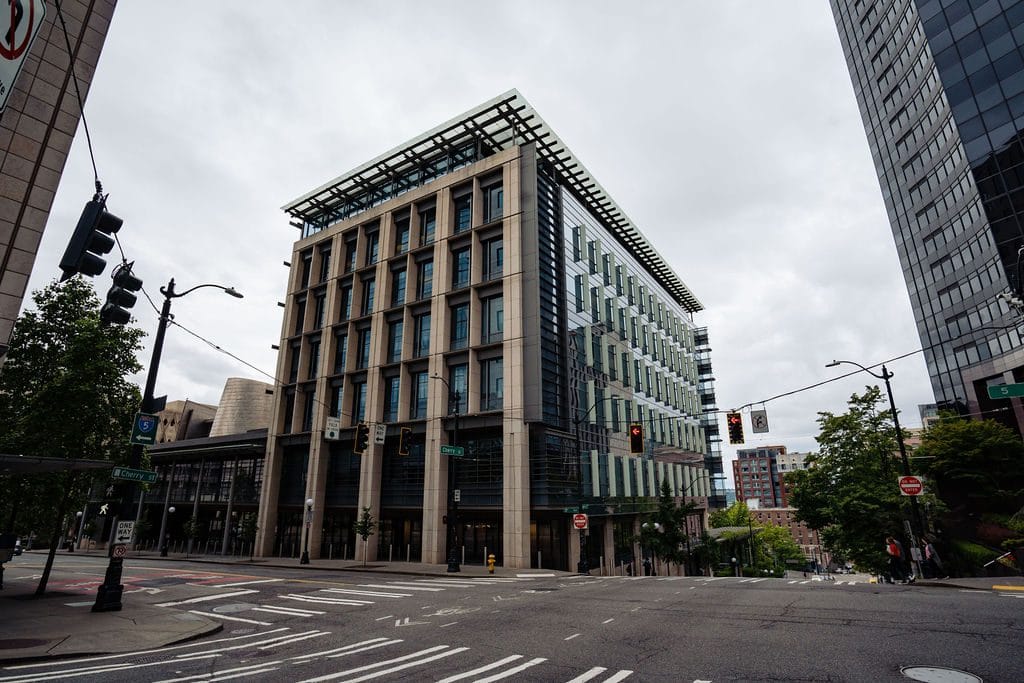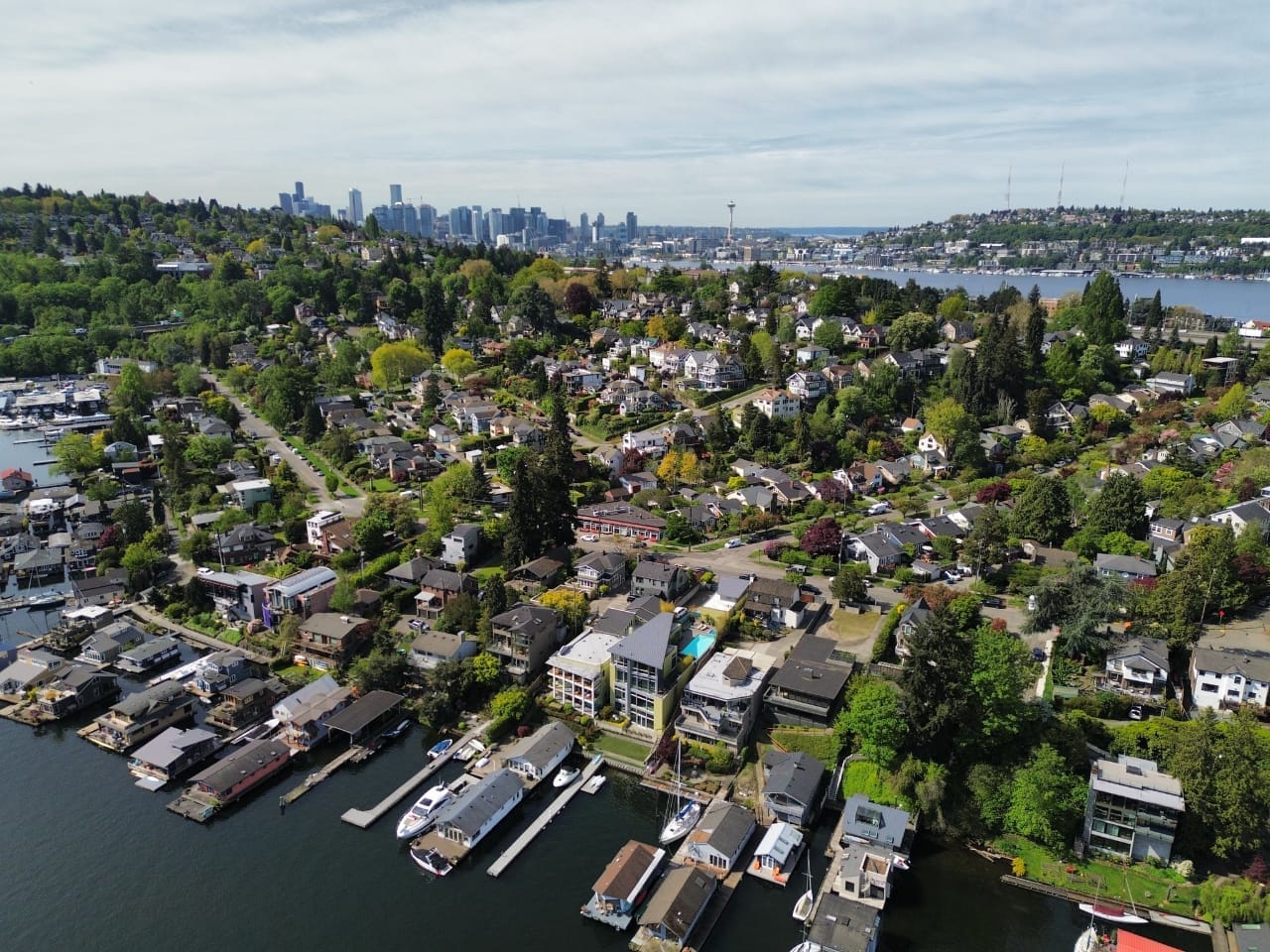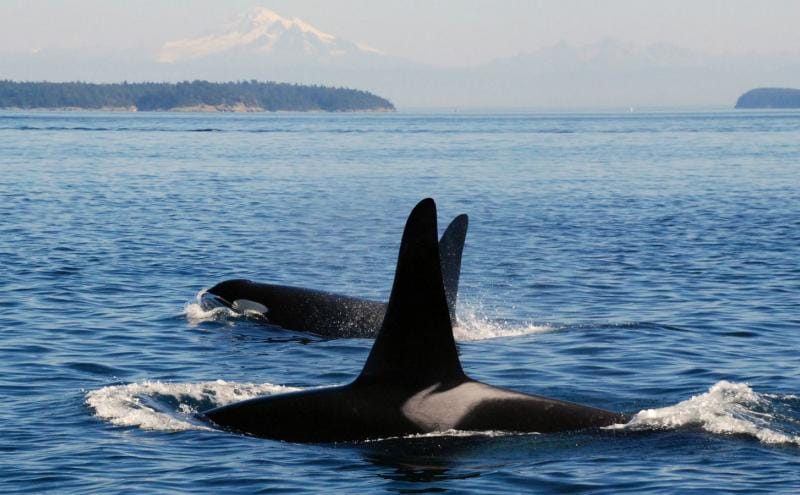
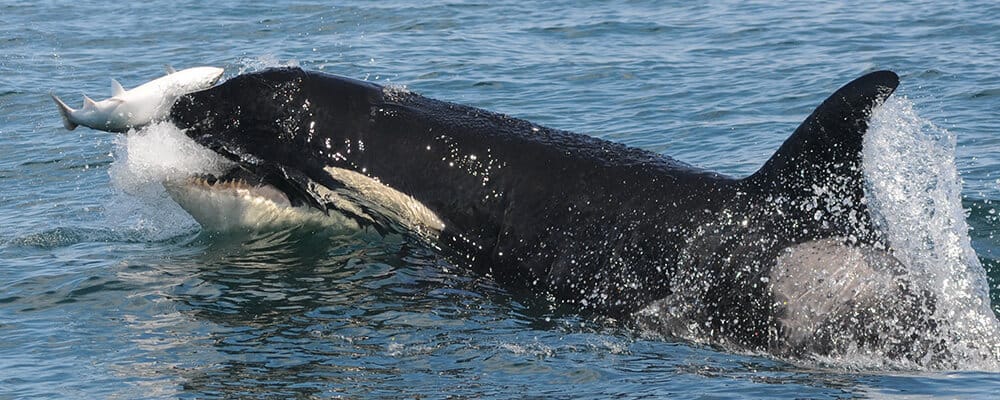
The biggest threat to whales is cars and the sea of pavement carrying them.
“This plan will literally pave over orca recovery efforts.”
So said Jennifer Godfrey, Seattle Symphony bassist and founder of Orca Nexus, in a January press release opposing the Seattle Comprehensive Plan — the city’s 20-year housing growth framework, now fully adopted and in effect. Godfrey has spent the better part of a year in court trying to force the City back to the drawing board on its environmental review, arguing that new housing will remove trees, increase impervious surface, generate stormwater runoff, and ultimately harm the 74 remaining Southern Resident killer whales.
She is not wrong that impervious surfaces are killing salmon and threatening orcas. She is wrong about which ones.
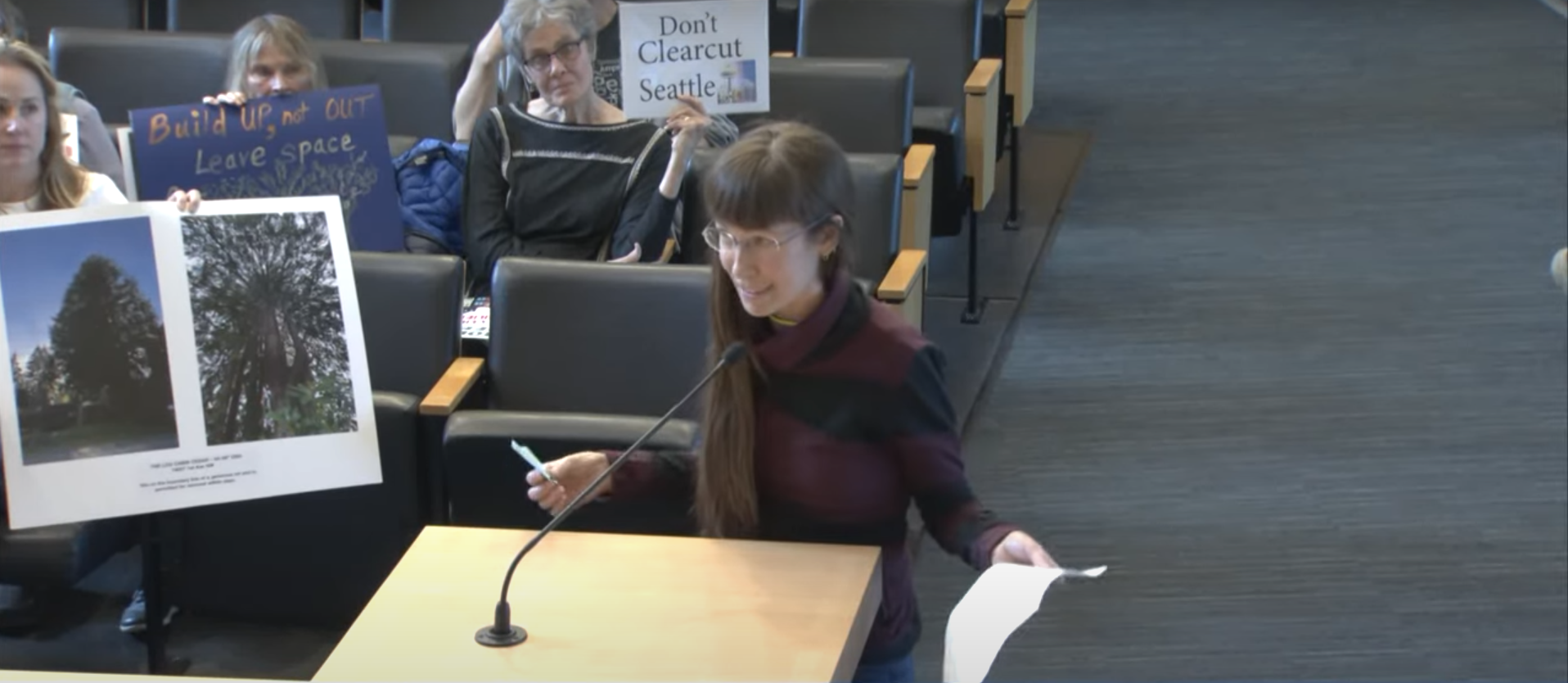
If Godfrey and her coalition are genuinely concerned about runoff entering Seattle’s watersheds, there is a policy agenda available to them that does not require blocking 112,000 housing units. It would mandate permeable pavement for any surface parking lot undergoing resurfacing, require retrofit on lots above a certain acreage, and phase in replacement across the city’s hundreds of identified surface parking parcels — the ones generating tire and brake particulate runoff into the drainage system with every rain event, right now, today, before any new apartments can be built. Unlike existing roads and parking lots, new apartment buildings are required to provide stormwater retention on site.
A permeable pavement ordinance would measurably reduce the load of the toxic 6PPD-quinone compound entering Thornton Creek and Pipers Creek. Godfrey has not proposed it. The question worth asking, as the evidence accumulates, is why not.
In 2021, researchers at the University of Washington and Washington State University published a study in Science that appeared to solve a 25-year mystery. Adult coho salmon had been dying in Seattle-area urban creeks every fall during their spawning runs — healthy fish, arriving at the stream mouth and dying before they could reproduce. The cause was stormwater. But which compound, exactly?
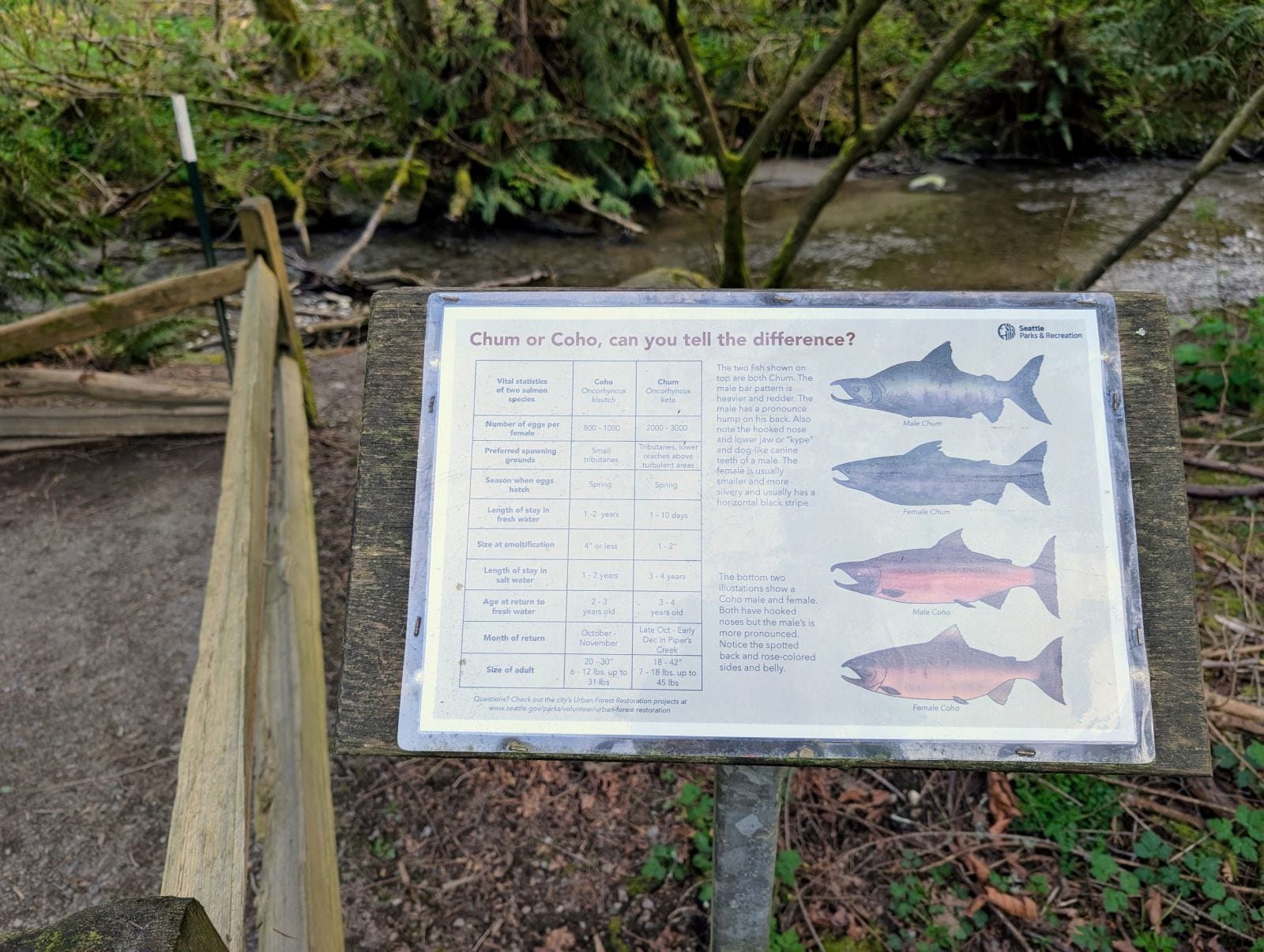
The answer was 6PPD-quinone, a transformation product of a chemical added to every car tire manufactured on Earth to prevent ozone damage. As tires wear against road surfaces, they shed particles continuously. Those particles — and the toxic compounds they carry — wash off roads and parking lots with every rainfall, enter the drainage system, and flow into urban streams. The median lethal concentration for coho is 0.8 micrograms per liter. Researchers measured concentrations of up to 19 micrograms per liter in Seattle-area urban runoff. This is not a marginal exceedance.
This is in every creek in the Puget Sound region right now. Today. Every time it rains.
Pipers Creek, which flows entirely within Carkeek Park before emptying directly into Puget Sound — no estuary buffer, no treatment lag — still hosts a salmon run. It is not merely geographically convenient to this argument. Federal scientists conducting daily surveys at Pipers Creek in 2008 documented an unusual fall overlap of returning coho and chum: every coho died before spawning, while nearly all the chum survived. That observation became one of the key lines of evidence that eventually led, 12 years later, to the identification of 6PPD-quinone as the cause.
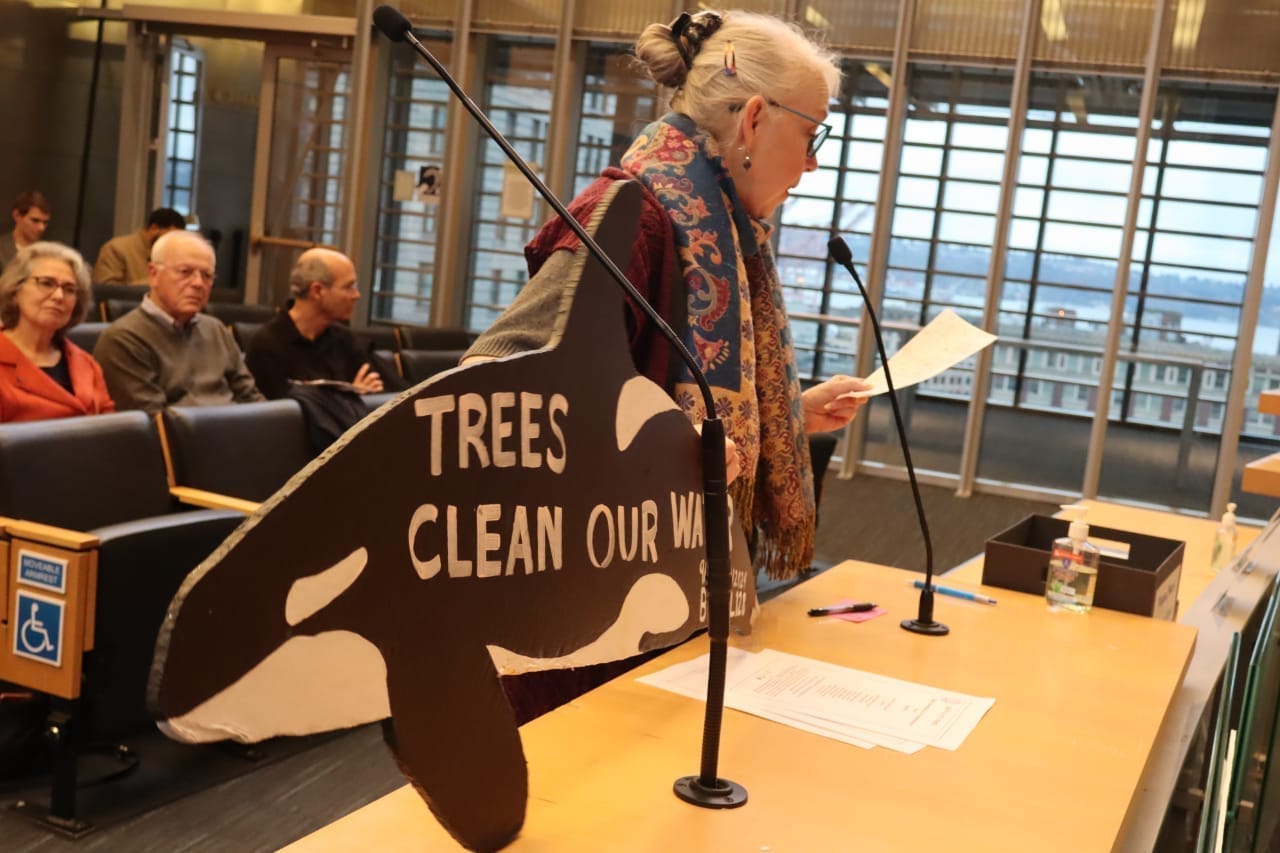
The creek that Godfrey claims to be protecting from hypothetical future apartments was already an outdoor laboratory for the damage that existing roads and parking lots were doing — years before anyone knew the compound’s name.
The One Seattle Plan did not put it there. Decades of car-centric land use did.
Seattle’s street network comprises nearly 4,000 lane-miles of paved surface — roughly 5,750 acres of asphalt and concrete, by the Seattle Department of Transportation’s own inventory, not counting alleys or parking lots. The Mortgage Bankers Association, in its inventory of Seattle parking, counted 1.6 million individual spaces. At a standard planning estimate of 300 square feet per stall including access lanes, that is approximately 11,000 acres of impermeable parking surface alone — about one-fifth of Seattle’s total land area, devoted entirely to storing cars.
Weaponizing environmental concerns to prevent people from living in our urban environments isn’t new. It’s deployed by people with resources to restrict access to high opportunity areas. It’s nimbyism. In order to reach our housing goals, our land use processes must stop enabling this behavior.
— Jess Bateman (@jessdbateman.bsky.social) May 28, 2026 at 7:08 AM
[image or embed]
Together, roads and parking represent approximately 17,000 acres of impervious car infrastructure already in place, already shedding tire particles, brake dust, oil, and heavy metals into the drainage system with every rainfall.
Globally, tires generate approximately 6 million metric tons of microplastic particles annually. American drivers, owing to higher vehicle miles traveled, generate 4.7 kilograms of tire wear per capita per year — roughly 20 times the rate in lower-car dependency countries. The Bay Area, comparable in scale to greater Seattle, generates an estimated 15,000 to 18,000 metric tons of tire wear particles annually from its road network alone.
Owners of electric vehicles should note: tire emissions from EVs run approximately 20% higher than from internal combustion vehicles, because they are heavier and generate more torque. The Prius in the driveway is not a get-out-of-jail free card.
Against this existing, operating, continuously generating pollution load, the appellants have placed a speculative projection of future tree canopy loss from future housing construction. The city’s own environmental review found that only 14% of Seattle’s recent canopy loss occurred on parcels that underwent development — the rest is attributable to climate stress, aging trees, and the general effects of a city that has not met its own canopy targets for decades. Godfrey disputes the methodology. Whatever numbers she claims to be concerned about are a tiny fraction of the existing impermeable surface.
Seattle looks clean. It largely is clean — as long as you are standing on a sidewalk. The prevailing westerlies push combustion byproducts east over the Cascades, and what stays behind washes into Puget Sound. Seattle’s performative environmentalist mindset takes credit for the clear skies, while the salmon and orcas get the runoff.
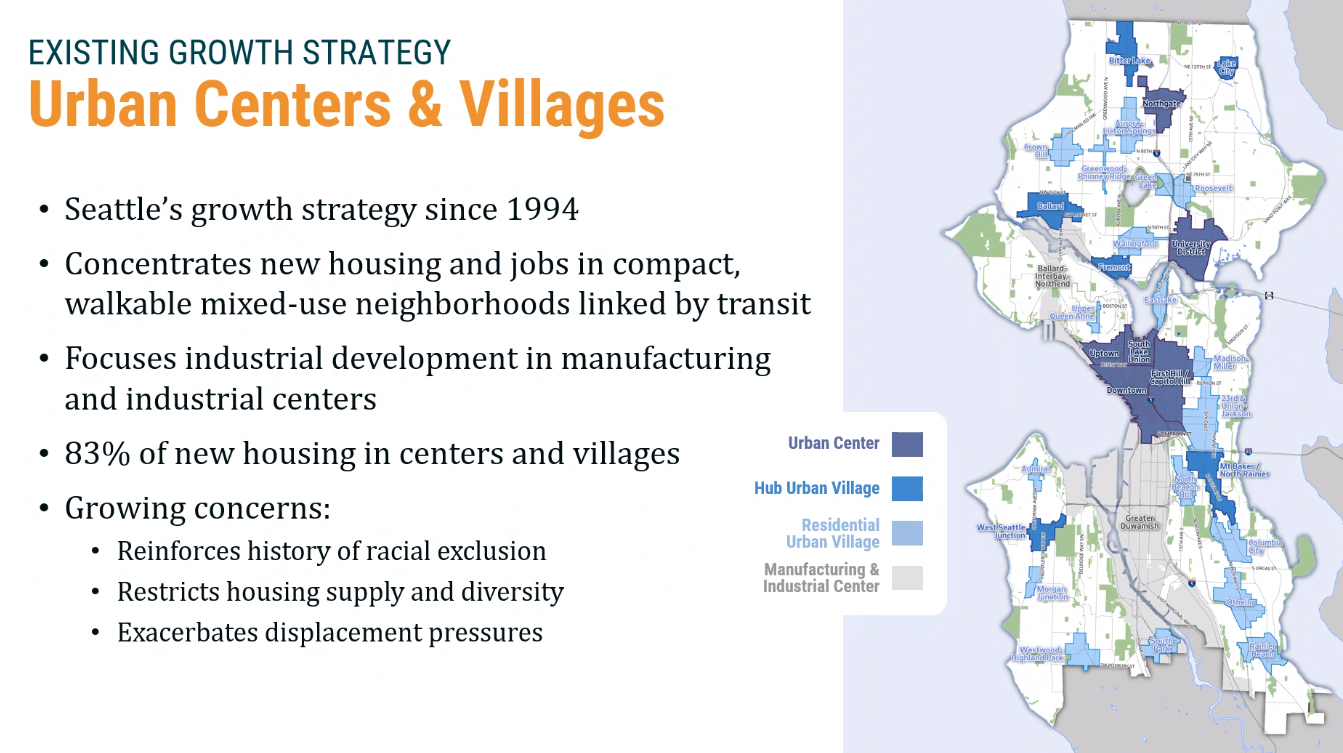
The carbon load the westerlies are moving along is not trivial. According to the city’s own 2022 greenhouse gas emissions inventory, road transportation is Seattle’s single largest source of climate pollution, accounting for 58% of core citywide emissions — roughly 1.7 million metric tons of carbon dioxide equivalent per year. That number goes down as the city densifies: Seattle’s per-capita emissions are already approximately half the national average, a direct consequence of transit access and walkable land use.
Every apartment building that replaces a surface parking lot reduces vehicle miles traveled, shortens the distance between residents and the conveniences they would otherwise drive to, and with it decreases the tire wear load, the brake dust, and the carbon inventory the westerlies are so efficiently redistributing on our behalf. Every year the appellants succeed in delaying that outcome, the existing pollution continues unchanged. Science advances one funeral at a time, as Max Planck observed; one hopes the orcas can wait.
This is not an accident of geography that thoughtful policy might address. It is the operating condition that the appeal seeks to preserve — single-family land use patterns, high car dependency, and a parking-lot-to-apartment ratio that generates maximum road surface per resident and minimum transit use per capita.
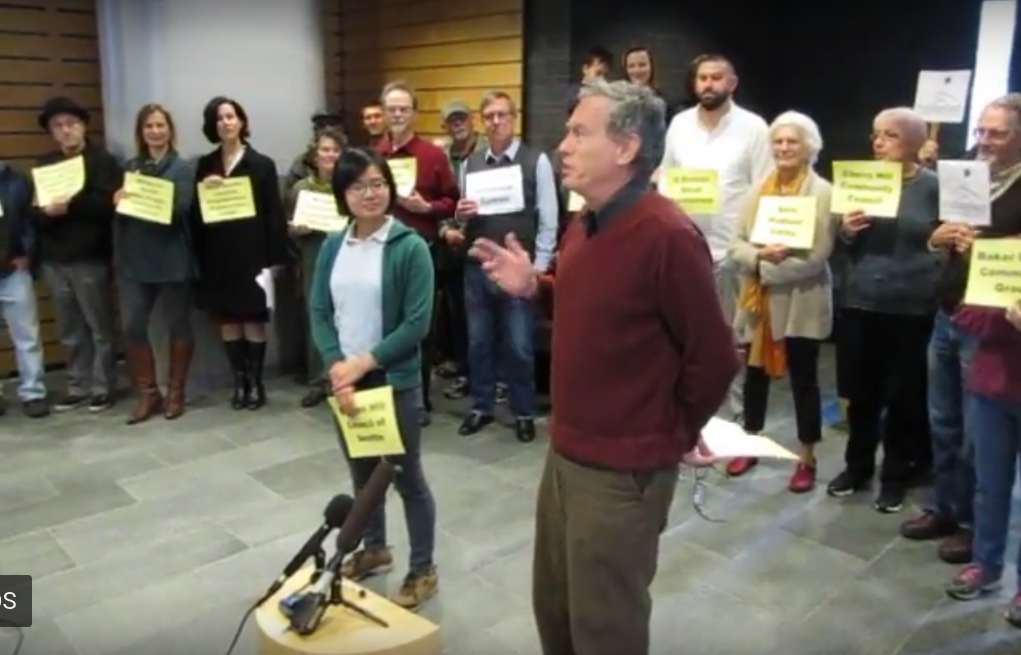
Godfrey is represented by Toby Thaler, a familiar figure in these types of obstructionist legal appeals. In 2017, Thaler organized the Seattle Coalition for Affordability, Livability and Equity or SCALE — a group of 24 neighborhood associations — to appeal the Mandatory Housing Affordability rezones. The appeal failed at every level, costing the city an estimated $87 million in affordable housing contributions during the year it was pending.
One of SCALE’s stated grounds for appeal was tree canopy. When Alex Pedersen won his District 4 Seattle City Council seat in 2019, running on homeowner backlash, he hired Thaler as his aide. Within weeks, Pedersen convened a special hearing on protecting Seattle’s trees.
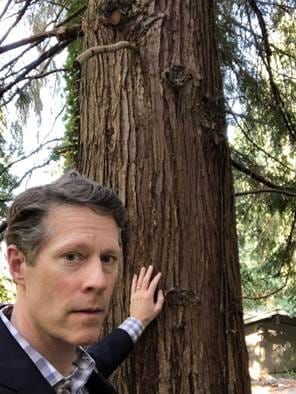
Pedersen left his seat after one term, though his successor Maritza Rivera has largely taken up the mantle for him. The trees argument has found new sponsorship. The orcas are new. The attorney is not.
This is the operational definition of performative environmentalism: the deployment of ecological language, legitimate scientific concern, and charismatic species as legal instruments in service of an outcome — blocking density — that has nothing to do with watershed health and everything to do with preservation of human habitat in a way certain homeowners see fit.
The words are correct. The citations are real. The Southern Resident orca whales are genuinely endangered. None of that changes the fact that the remedy sought is a new environmental impact statement, not a permeable pavement ordinance, nor a parking retrofit mandate, nor a petition against the 1.6 million impermeable stalls already draining into Seattle’s creeks every time it rains. The performance is convincing precisely because the threat is real and the science it borrows is sound. What it borrows the science for is something else entirely.
The organizations that signed Godfrey’s amicus brief — Birds Connect Seattle, the Thornton Creek Alliance, the Orca Conservancy, the Puget Sound Chapter of the American Cetacean Society, and the Oceanic Preservation Society — are welcome to demonstrate that this reading is uncharitable. The permeable pavement ordinance is available. So is a petition to reduce parking minimums, a filing against any of the 1.6 million impermeable stalls currently draining into Seattle’s watersheds, or a public comment in support of the transit infrastructure that would reduce vehicle miles traveled and the tire particulate load that comes with them.
The 6PPD-quinone literature is not obscure. It was produced at Washington state universities, published in Science, and has generated more than 400 follow-on studies worldwide. It names the compound. It names the source. It names the creek.
Godfrey is welcome to co-sponsor that pavement ordinance. Her response will be informative.
Paul Beard is the author of Why the Rent Is Too Damn High, published by Otherwise Book in 2026.
 Ryan Packer