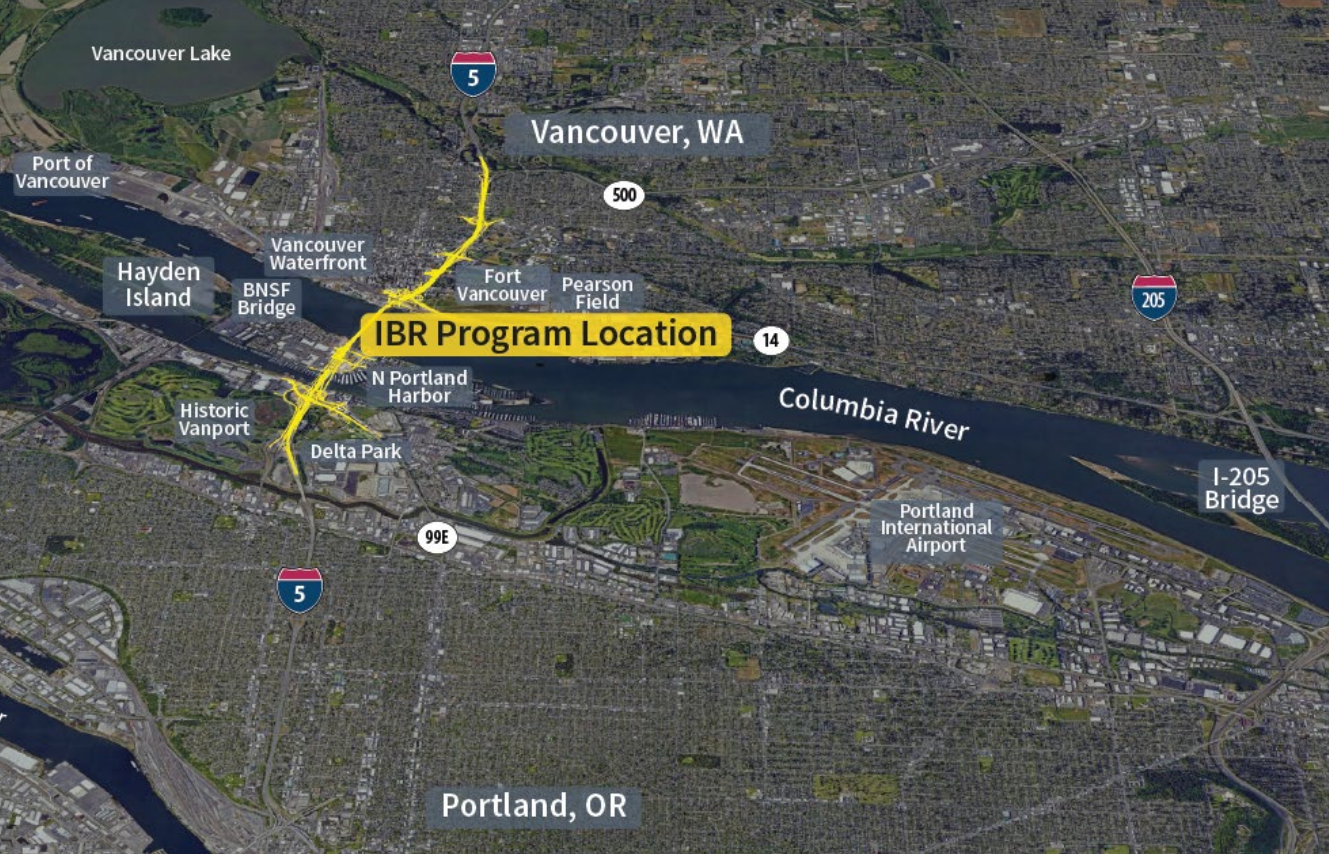
As Sound Transit was dominating headlines this spring due to a budget-shortfall-triggered realignment of transit expansion plans across Puget Sound, another Pacific Northwest transportation megaproject was quietly marching forward. The bi-state Interstate Bridge Replacement (IBR), which will replace and widen I-5 for a five-mile stretch between North Portland and Vancouver while upgrading the aging set of bridges that span the Columbia River, continues to rack up approval milestones.
On July 1, the Federal Highway Administration and the Federal Transit Administration (FTA) jointly issued an amended Record of Decision on the IBR, officially putting a cap on the project's federal environmental review requirements. A milestone that was quickly lauded by elected officials in both states, the announcement came after several votes across various layers of local government gave the IBR the go-ahead to proceed into its first funded phase.
That said, lawmakers remain well short of the full $13.5 to $15.2 billion needed to finish the entire corridor overhaul.
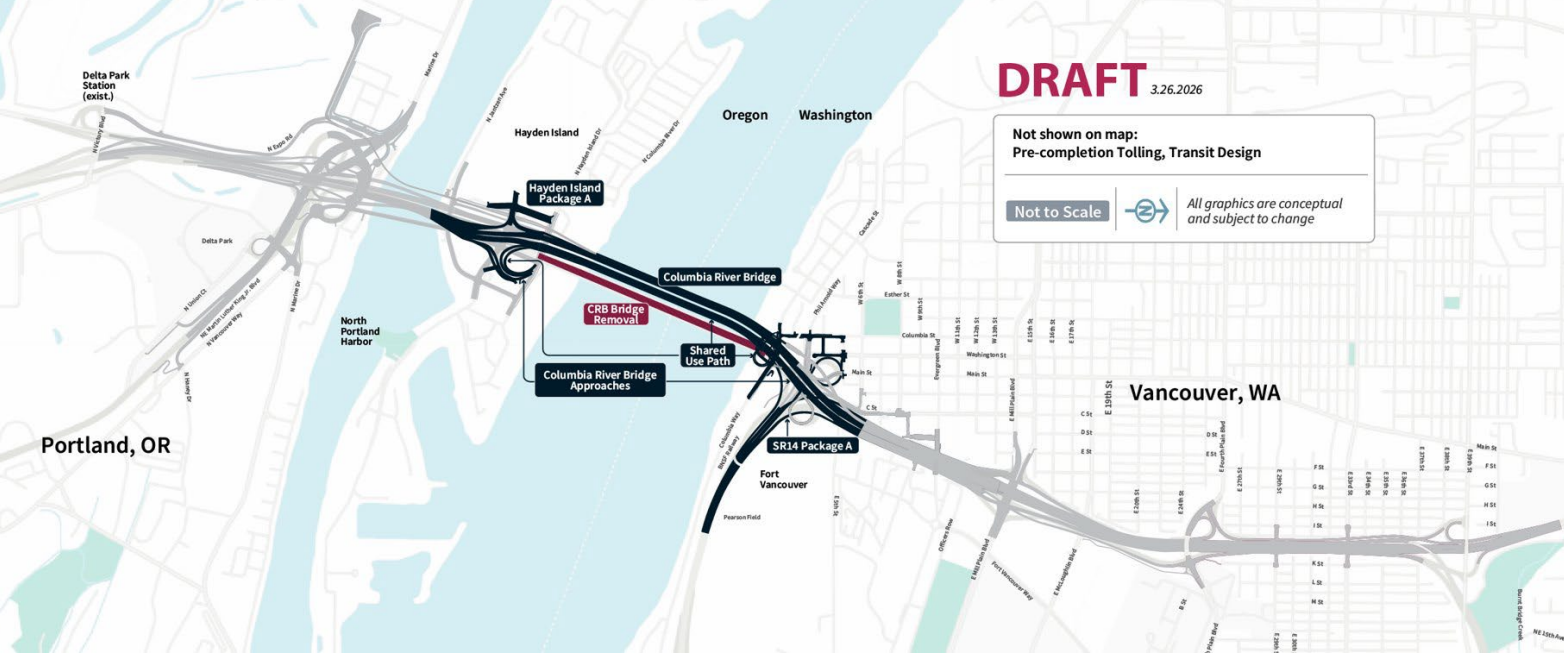
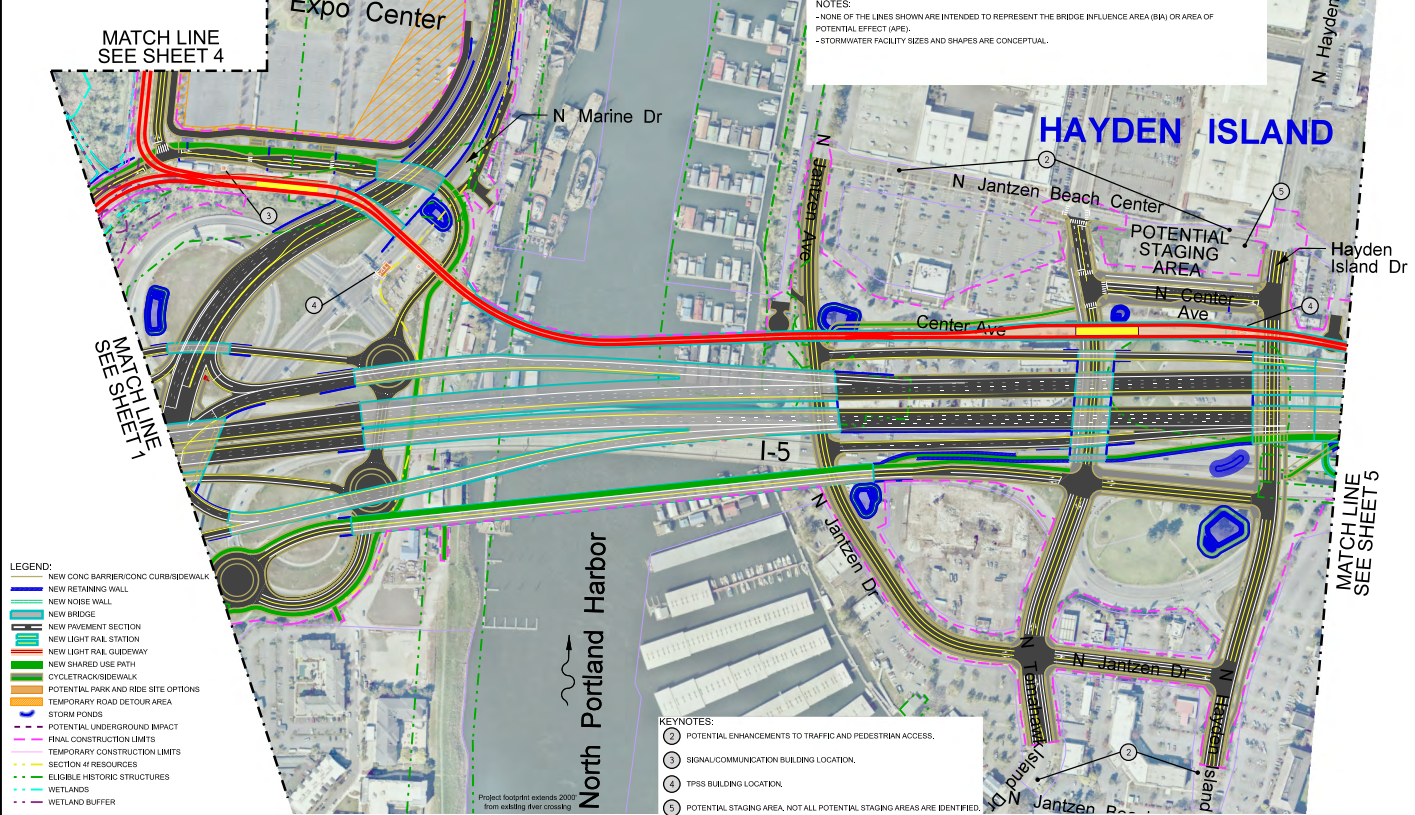
That first phase is set to include a new stretch of I-5 between Vancouver and Portland's Hayden Island, tolling infrastructure, eventual demolition of the existing bridges, and design work on an extension of TriMet's MAX Yellow light rail line into Washington State.
Phase 1 won't include any I-5 widening beyond that footprint, nor most of the interchange work that is set to come along with the IBR. It also doesn't include construction of light rail, which is dependent on the project receiving a $1 billion FTA grant that likely won't be awarded before 2030. Instead the bridge will be built as "light rail ready," with train service not set to begin until 2036 or later.
With $5.6 billion on hand now (including future toll revenue), the funding for the first phase looks to be secure, though additional cost increases could ultimately send Washington and Oregon back to the drawing board.
But even as the IBR races toward awarding its first construction contract – likely sometime in 2027 – the coalition standing behind the IBR is far from unified, with a number of major issues around the project coming to the fore in recent months. The question of whether finding full IBR funding will take precedence over other major transportation priorities in either state looms large.
That tension was most clearly articulated by Senator Khanh Pham, who has been one of the primary negotiators tasked with trying to get a transportation package across the finish line in Oregon, with the most recent proposal to shore up transportation revenue statewide recently repealed by Oregon voters.
"Having been in the trenches of the transportation package struggle in Salem last year, I am here this morning to say that it will be challenging to pass a package that meets our state's basic needs if I am also expected to raise additional billions of dollars for current and future cost overruns of an oversized highway bridge project," Senator Khanh Pham told the Oregon Transportation Commission in May. "Every additional billion committed to this project is funding unavailable for preservation, maintenance, safety, and transit needs across Oregon."
Light rail, heavy frustration in Vancouver
When local governments across the Portland metro area endorsed an updated "locally preferred alternative" for the IBR in 2022, it included a light rail line with three stations: one on Portland's Hayden Island and two on the Washington side of the river in Vancouver. But now the current plans for a light rail-ready IBR only include one of those Vancouver stations, with officials committing to funding the second station at some future date. (Sound familiar, Ballardites?)
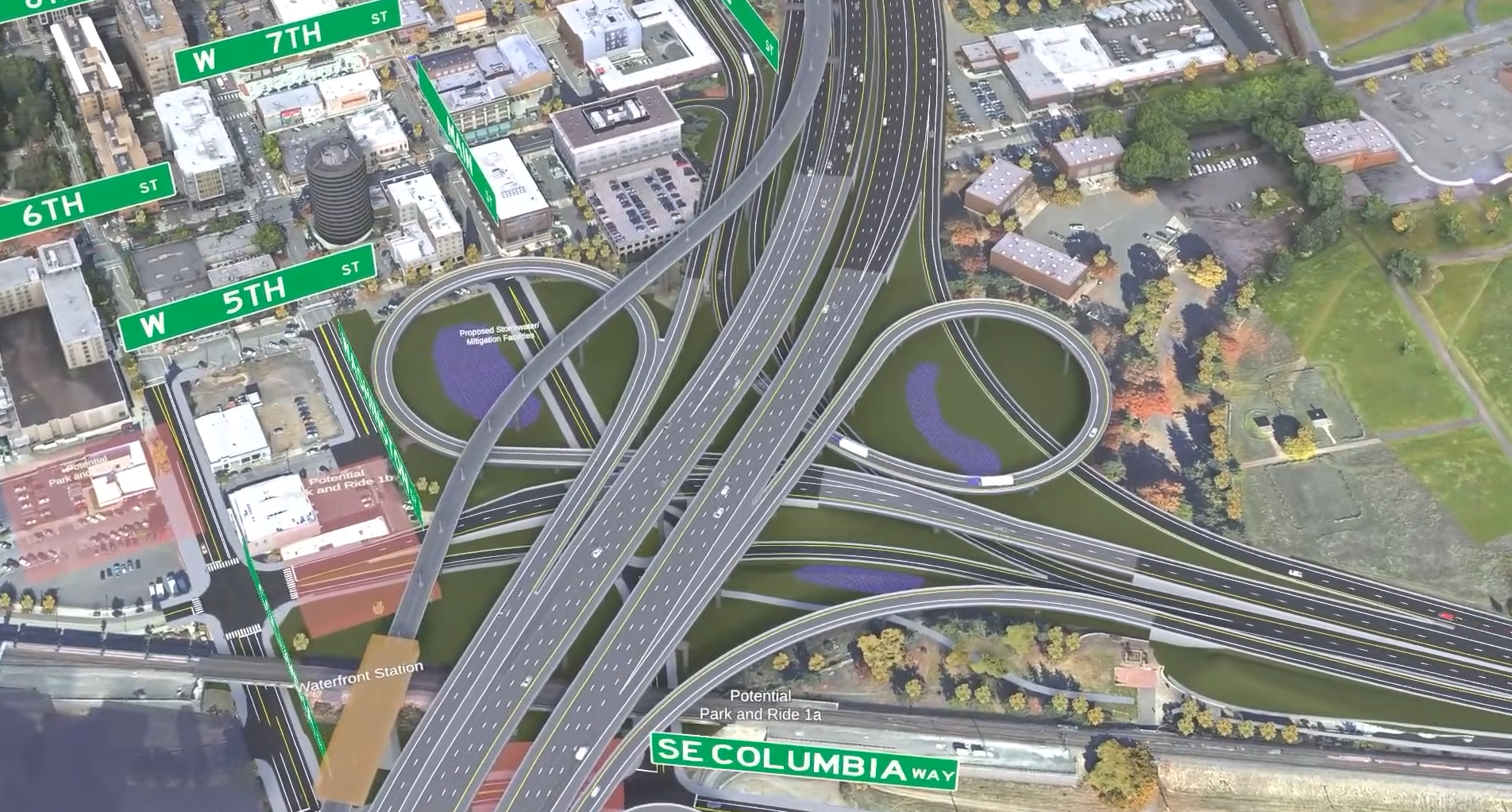
The iced station at Evergreen Boulevard is much more important to Vancouver's broader city planning efforts than the station at the waterfront, which would be located 90 feet above ground due to the height of the I-5 bridges as they cross the river. A station at Evergreen, located right next to the Vancouver public library with an adjacent site primed for redevelopment, would be able to serve as a hub for C-TRAN's Vine bus rapid transit network in a way that the waterfront station simply could not.
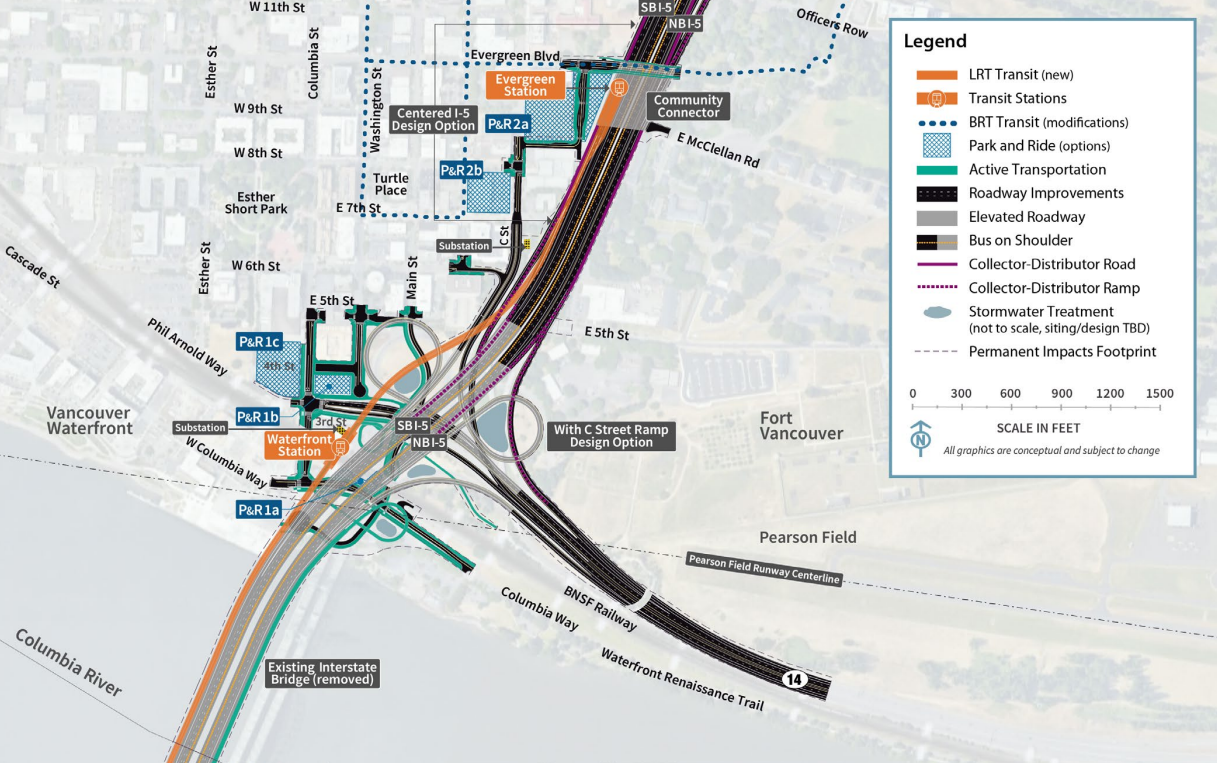
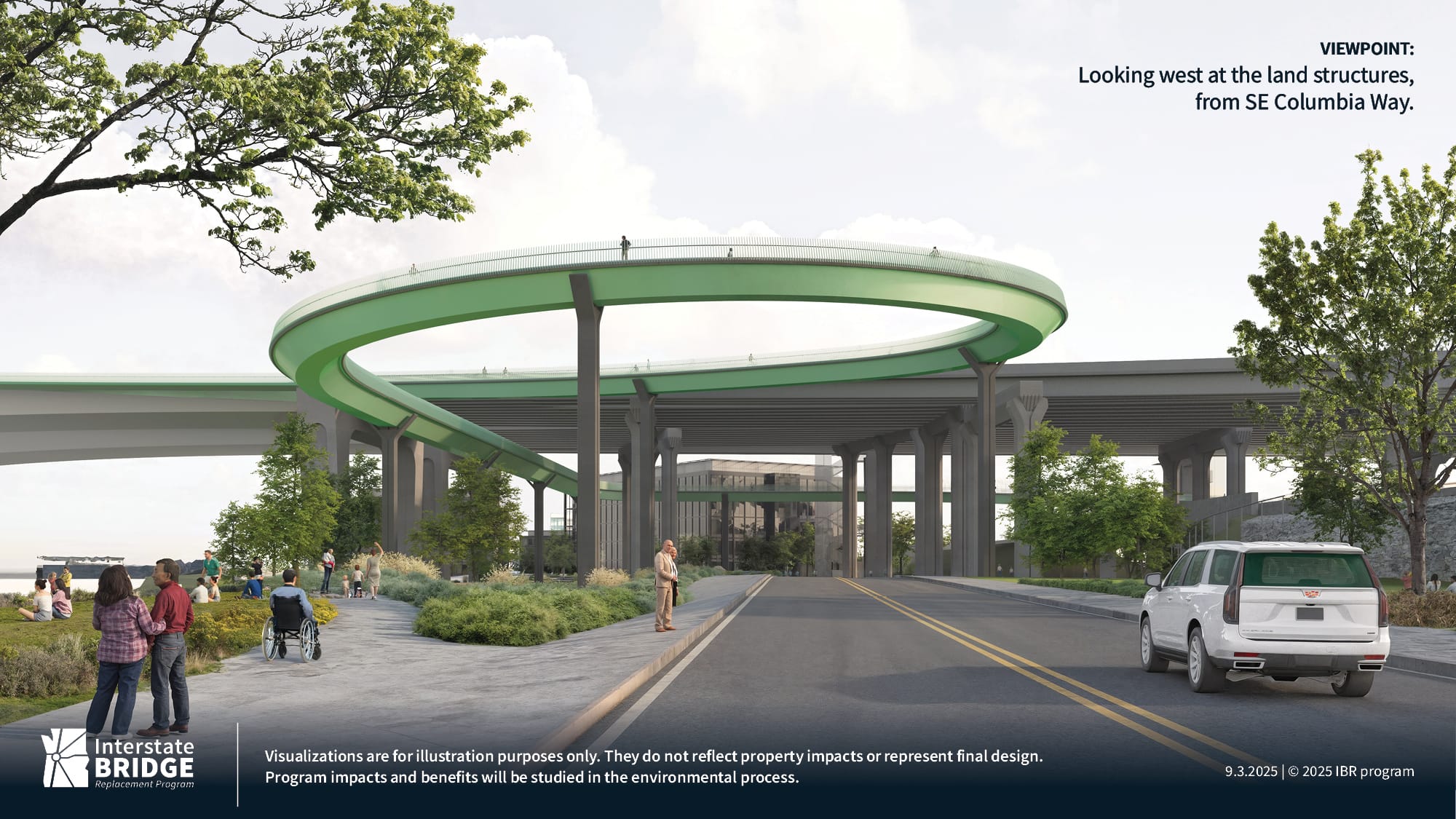
Vancouver Mayor Anne McEnerny-Ogle has been one of the biggest champions of the IBR – despite the clear negative impacts that it will have on the city's burgeoning waterfront district – but she described being blindsided by the decision to cut the light rail line short. City officials say that decision was communicated to them just a day before Governor Bob Ferguson's March announcement that the IBR would be moving forward in phases.
"We thought we were in a partnership on how this could look in Vancouver. We’ve had pretty good communication. Then boom, things stopped,” McEnerny-Ogle told the Washington State Standard. “That’s when they made a decision.”
Light rail has been one of the most contentious components of this project, dating back to its inclusion in the failed Columbia River Crossing (CRC) project a decade ago. The CRC would have seen light rail serve Downtown Vancouver at-grade, somewhat matching MAX's alignment through Downtown Portland, which would have been good for bus connections if not for safety and reliability.
On the other hand, adding just one station far away from transit connections won't really please anyone. In April, the Vancouver City Council approved a resolution officially opposing stopping light rail at the waterfront, a move that was followed by a similar vote at the C-TRAN board in May.
"The Vancouver City Council strongly recommends that LRT extend beyond the planned Waterfront Station and connect with C-TRAN's existing and planned bus system at a multimodal hub by Evergreen Boulevard near Library Square to achieve the stated purpose and needs of the IBR Program," the council resolution stated.
Even after looking at the significant success of Sound Transit's light rail network in Puget Sound, light rail is clearly not the top priority for the IBR program, even if federal funds do ultimately come through to get some portion of the line advanced through to construction.
Downplaying the diversion math
With $1.5 billion of the IBR's first phase set to be funded by tolling, the calibration of the toll program – the first pricing program to be implemented on any segment of I-5 in the Pacific Northwest – will be crucial to getting the project across the finish line. But with tolls acting as a funding mechanism rather than a tool for congestion management, questions are emerging around their impact on overall traffic rates on both I-5 and I-205, the only parallel route between Portland and Vancouver.
A traffic study, released via a public records request before it could be rolled out by the IBR team, shows a significant impact on traffic volumes from the tolling program.
"The study’s calculations show that crossings over a tolled bridge could plunge by 50,000 vehicles—more than one-third of the 134,000 cars that officials say cross the I-5 bridge today," the Oregon Journalism Project reported in May, detailing the "investment grade analysis" released to economist and advocate Joe Cortright. "The estimated traffic will initially be far below the planned capacity of the new bridge, which is being designed to carry 180,000 vehicles per day."
"Fewer vehicles will use the I-5 bridges and the I-5 between Portland and Vancouver once we implement tolls. The traffic will go from about 127,000 vehicles a day to 77,000 vehicles per day, and will basically never recover between now and 2050," Cortright told the Oregon Transportation Commission in May. "So essentially, you will be building capacity that will be going unused at a time when we're facing real shortages, you will have squandered billions of dollars on capacity that we won't use, and at the same time, that will divert traffic to I-205 and gridlock, or greatly reduce the capacity, of I-205. This is a transportation own goal of epic proportions to put that much money into a project that actually makes our transportation system worse."
Concerns around traffic diversion were referenced by Portland Mayor Keith Wilson at a meeting last month of Oregon Metro's Joint Policy Advisory Committee on Transportation (JPACT).
"My colleague from Vancouver and I are walking very closely down this path. We're concerned about the bridge. We appreciate all the work that you've done, no doubt, and the hard efforts and important efforts we put forward. But without the thought and talk of a multimodal transportation corridor and a travel shed, we have all these unintended consequences," Wilson said. "We're missing the opportunity to focus on a 21st century transportation system that focuses on walking and biking and rolling and riding, but we're focusing once again on last century's transportation mode, which is driving, and so we're just going to diffuse and disburse all these individuals."
Other leaders have been even more pointed.
“Lawmakers are being asked to advance the largest infrastructure project in state history without a defensible plan to pay for it or a clear understanding of the full long-term costs,” Rep. Thuy Tran (D-45th LD, Portland) told Willamette Week. “As a member of the committee charged with oversight, I have growing doubts that this project can be delivered without putting the rest of Oregon’s transportation system at risk.”
Legislators not ready to let go of the question of more lanes
Even as the traffic analysis raises major questions around the design of the bridge, state legislators from both sides of the Columbia continue to lament not going even bigger. At a June 12 legislative update, the topic of how many "auxiliary" lanes I-5 will have through this stretch was put front and center, with the IBR team reiterating that they're advancing a plan that includes one in each direction, bringing the total number of I-5 lanes to eight not including shoulders.
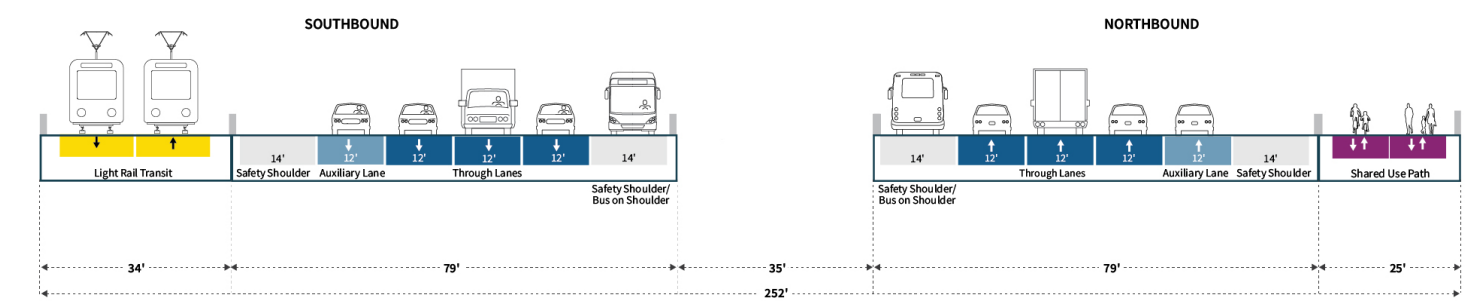
Oregon Representative Shelly Boshart Davis (R-15th LD, Albany) was the most forceful in lamenting the decision to not include two auxiliary lanes, which would bring the total project's costs up even more and increase the footprint of the bridge, requiring additional property acquisition.
"As soon as you decide to build a bridge with eight feet or 10 feet less, then that is a decision that will last for perhaps the next 100 years, and so I am extremely disappointed and frustrated that that decision was made," Boshart Davis said.
"I do think the consideration of the additional lane is important. My attitude is I would rather over build rather than regret a few years from now not having built enough when there's such a great cost involved," Representative Kevin Mannix (R-21st LD, North Salem) said, while at the same time suggesting that light rail might be given a second look and potentially dropped from the project.
Representative Jake Fey (D-27th LD, Tacoma), overseeing the project from his post as Chair of the Washington House's transportation committee, joined the chorus as well.
"Like some other members of this group, I have disappointment on not having two auxiliary lanes," Fey said. "We don't have $500 million to a billion dollars to put the lanes in and still build the bridge."
Even as these internal debates still dominate the process surrounding the IBR, the one thing most elected officials across all levels of government seem to agree on is that now is the time to move forward. With the project now on the cusp of awarding its first construction contracts, the months ahead will make it clear whether Washington and Oregon have truly passed the point of no return on the IBR.
 Ryan Packer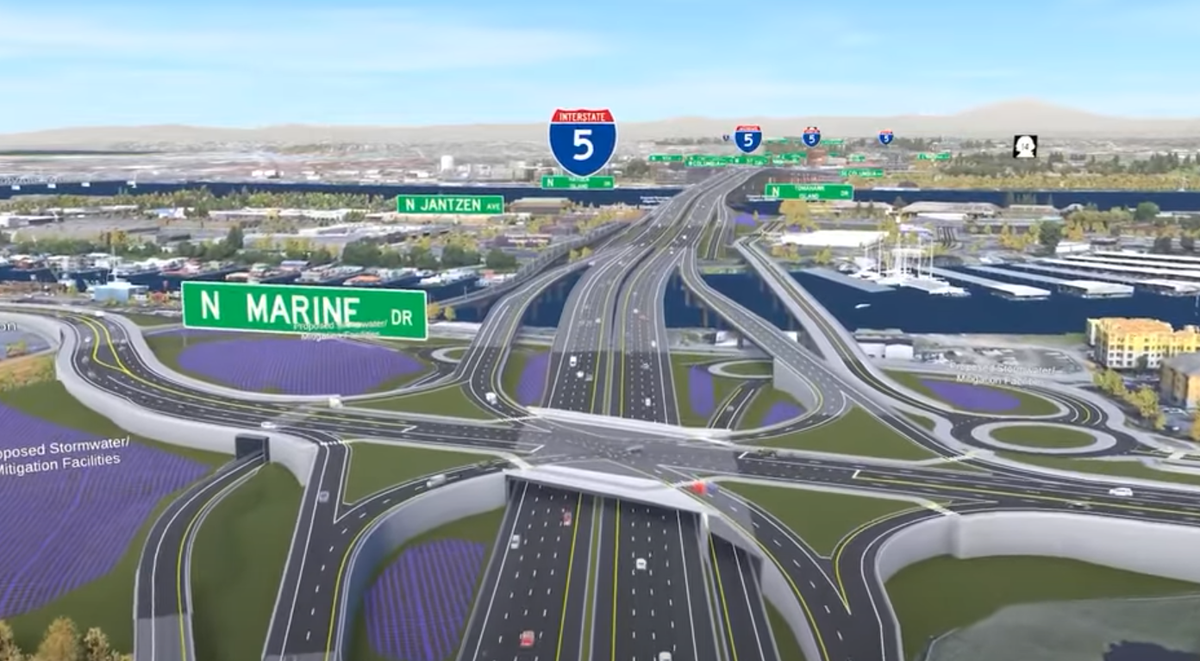
 Ryan Packer