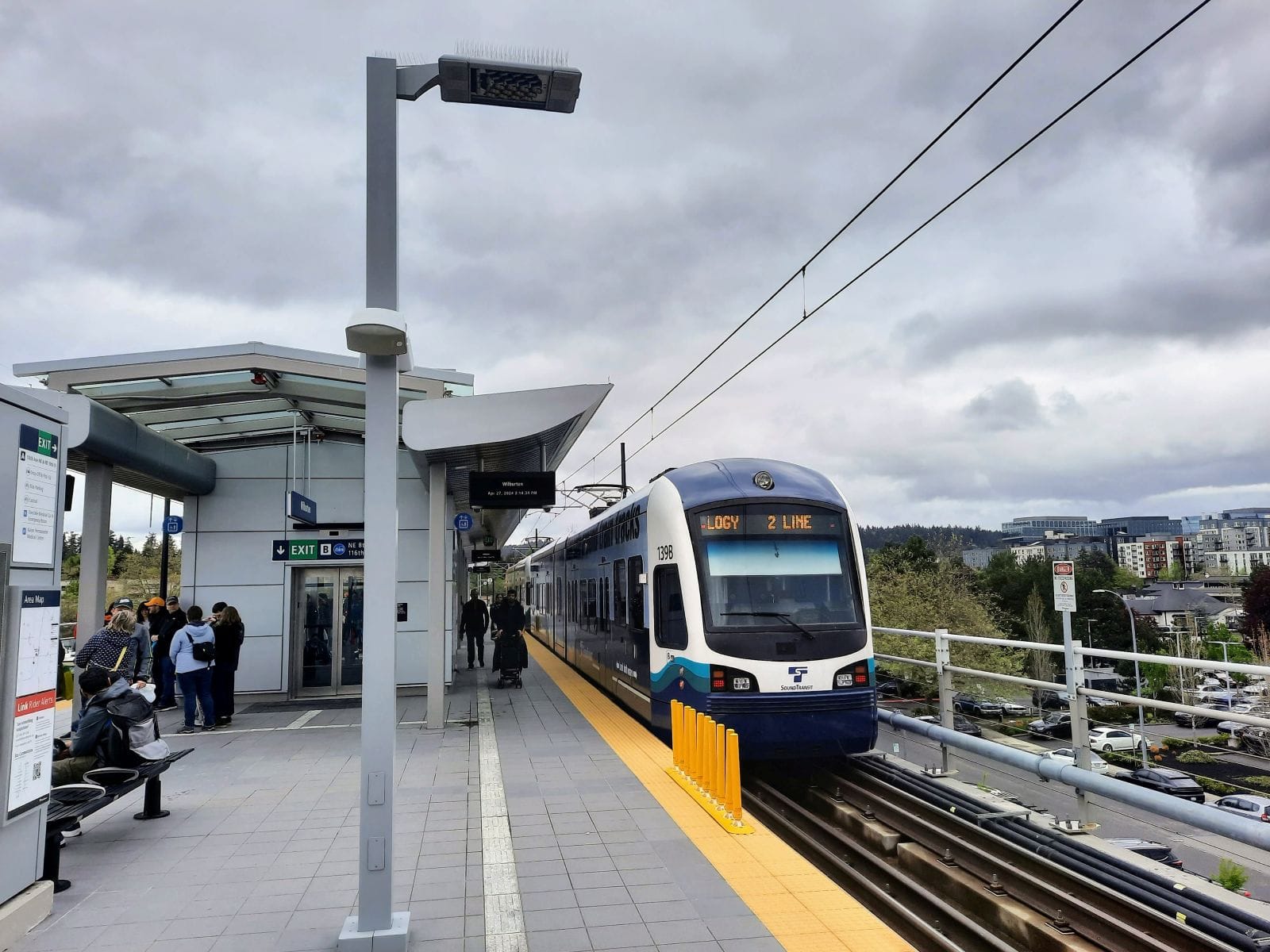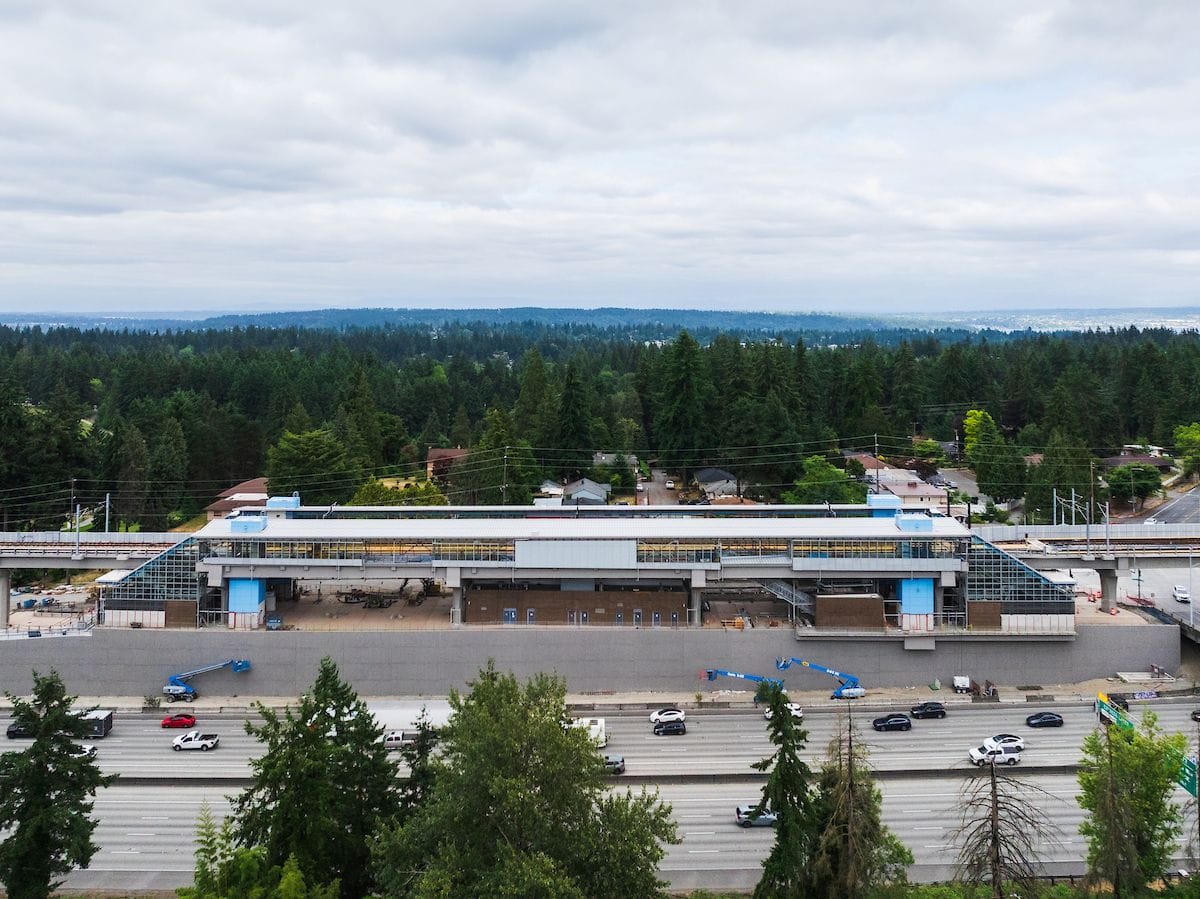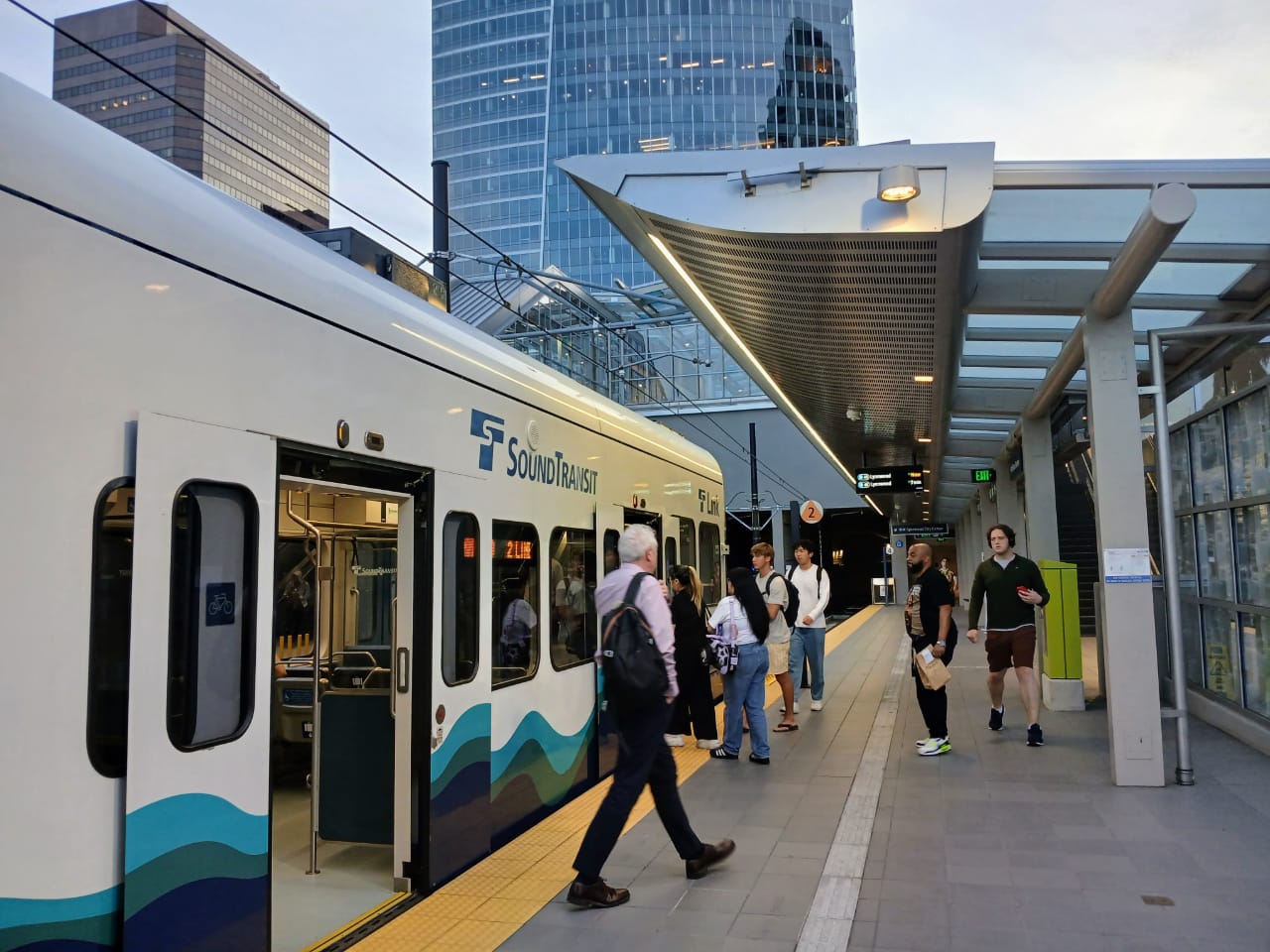
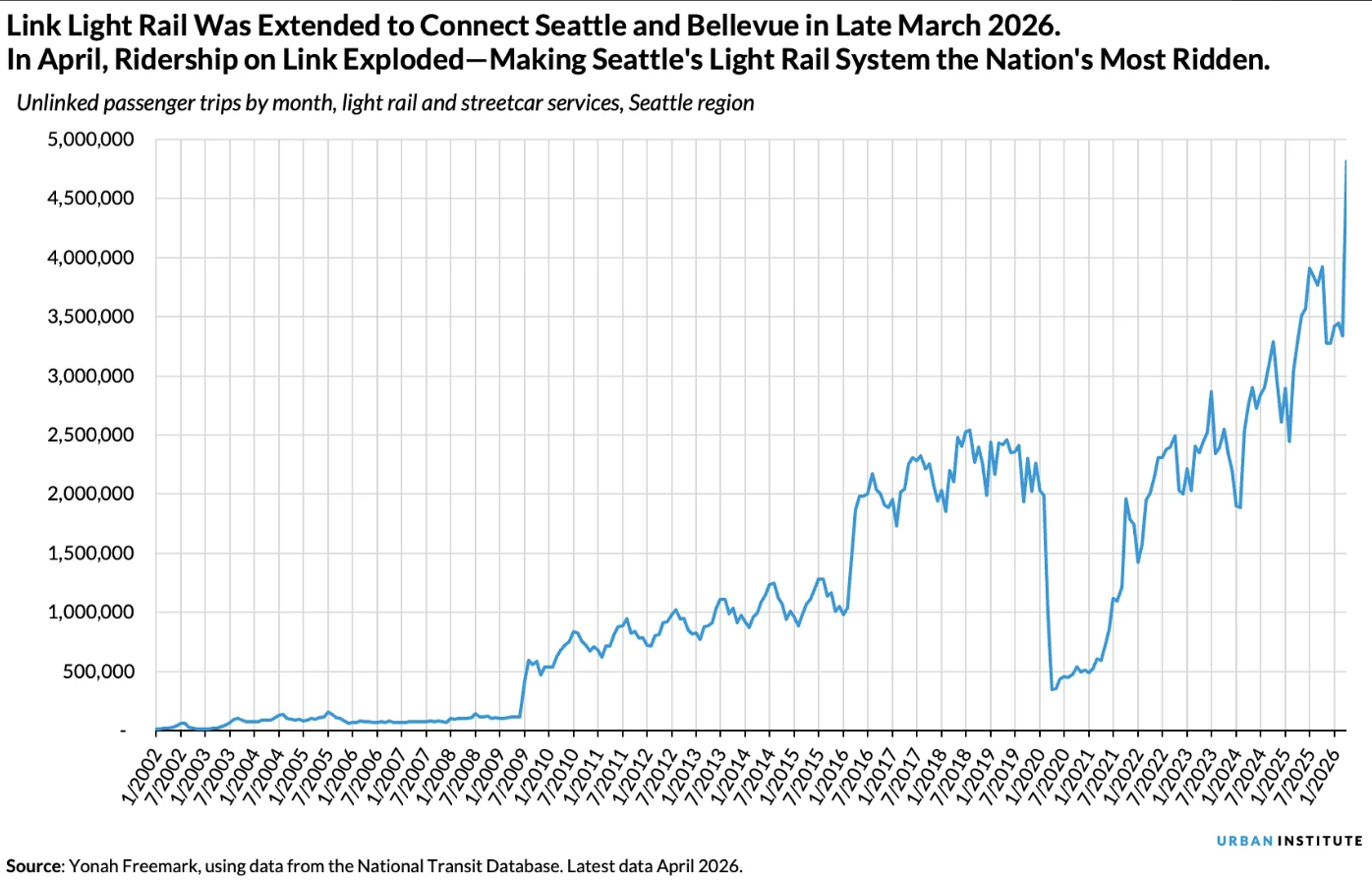
Light rail ridership in the Seattle region has exploded following expansion of the 2 Line across Lake Washington, which connected Bellevue and Seattle for the first time on March 28. In fact, the ridership boost was so pronounced that Sound Transit leapfrogged its peers to become the most ridden light rail system in the United States.
"Seattle's light rail & streetcar lines carried 4.8 million riders in April—a 44% increase above March, after Link Line 2 was extended to connect Seattle & Bellevue across Lake Washington," Urban Institute researcher Yonah Freemark said in a social media post. "Seattle's light rail & streetcar lines are now the most-ridden in the nation, above LA, Boston, or San Diego."
Link approaching 5 million unlinked trips per month works out to roughly 160,000 daily trips. That was enough to surpass Los Angeles for the busiest light rail system in the country. Those numbers include the 1 and 2 Lines but also the T Line streetcar Sound Transit operates in Tacoma.
Of course, several heavy rail systems in the U.S. have higher ridership, with the New York City lapping the field. Still, Link's big ridership boom has pushed it to the eighth busiest rail system (whether heavy or light) in the nation.
The only U.S. cities with higher rail ridership than Seattle: New York City, Washington D.C., Chicago, Boston, Philadelphia, San Francisco, and Los Angeles, which does surpass Seattle when adding in heavy rail service, LA Metro's B Line and D Line.
Being eighth in the nation is particularly impressive when considering that Seattle has the 15th largest metropolitan population, according to the U.S. Census Bureau. Seattle is punching well above its American weight, though it's still relatively middling compared to leading Canadian cities or in an Eurasian context. The ignoble list of American metros with larger populations than Seattle but less rail ridership include Dallas, Houston, Atlanta, Miami, Phoenix, Inland Empire, and Detroit.
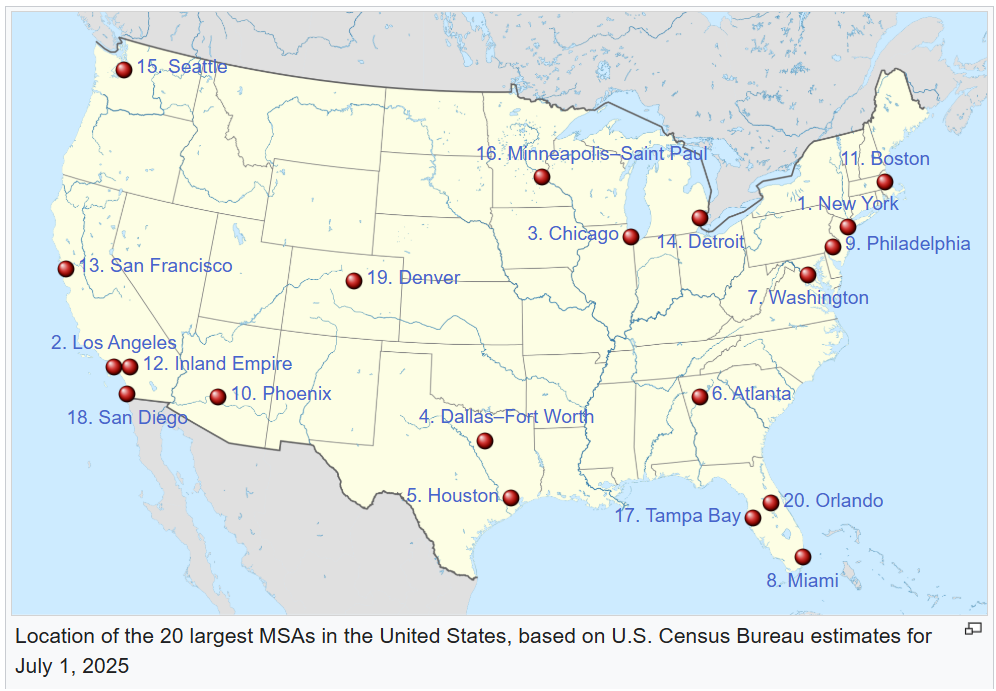
In fact, Dallas has twice the population of Seattle, but a fraction of the transit ridership, which is a major factor in Big D's enormously big climate footprint.
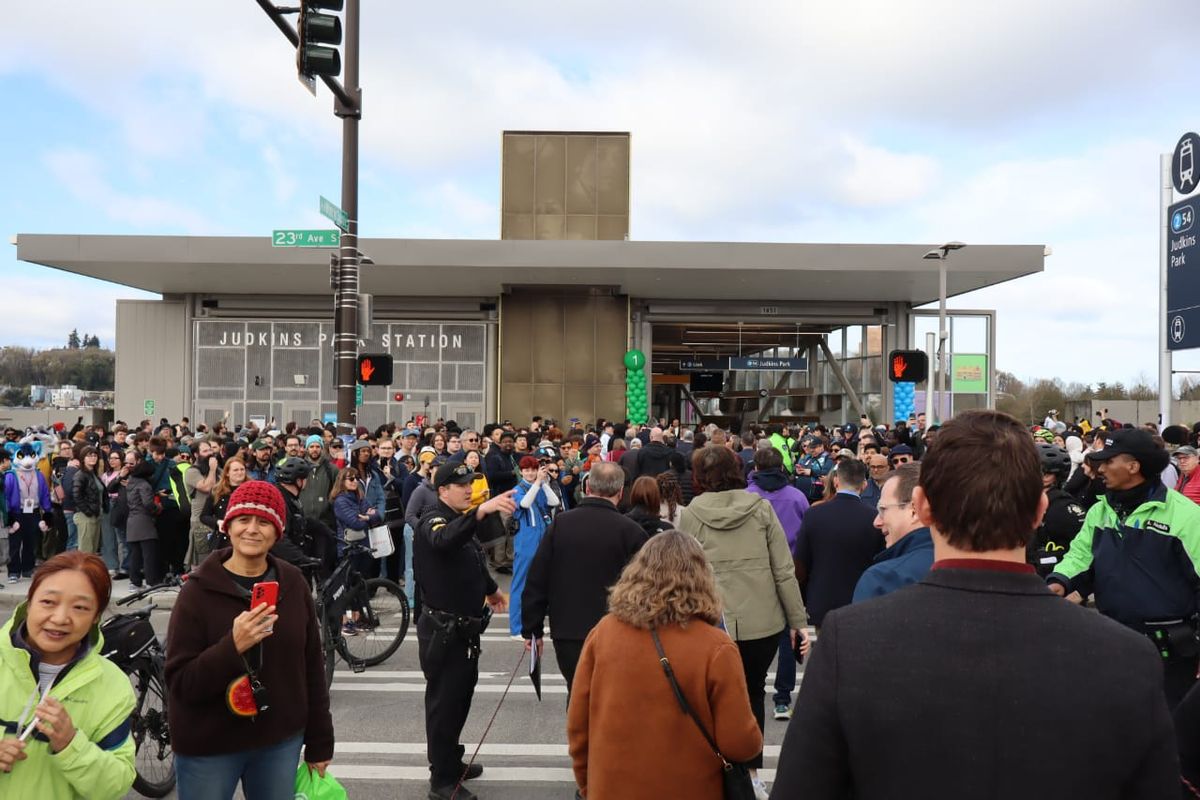
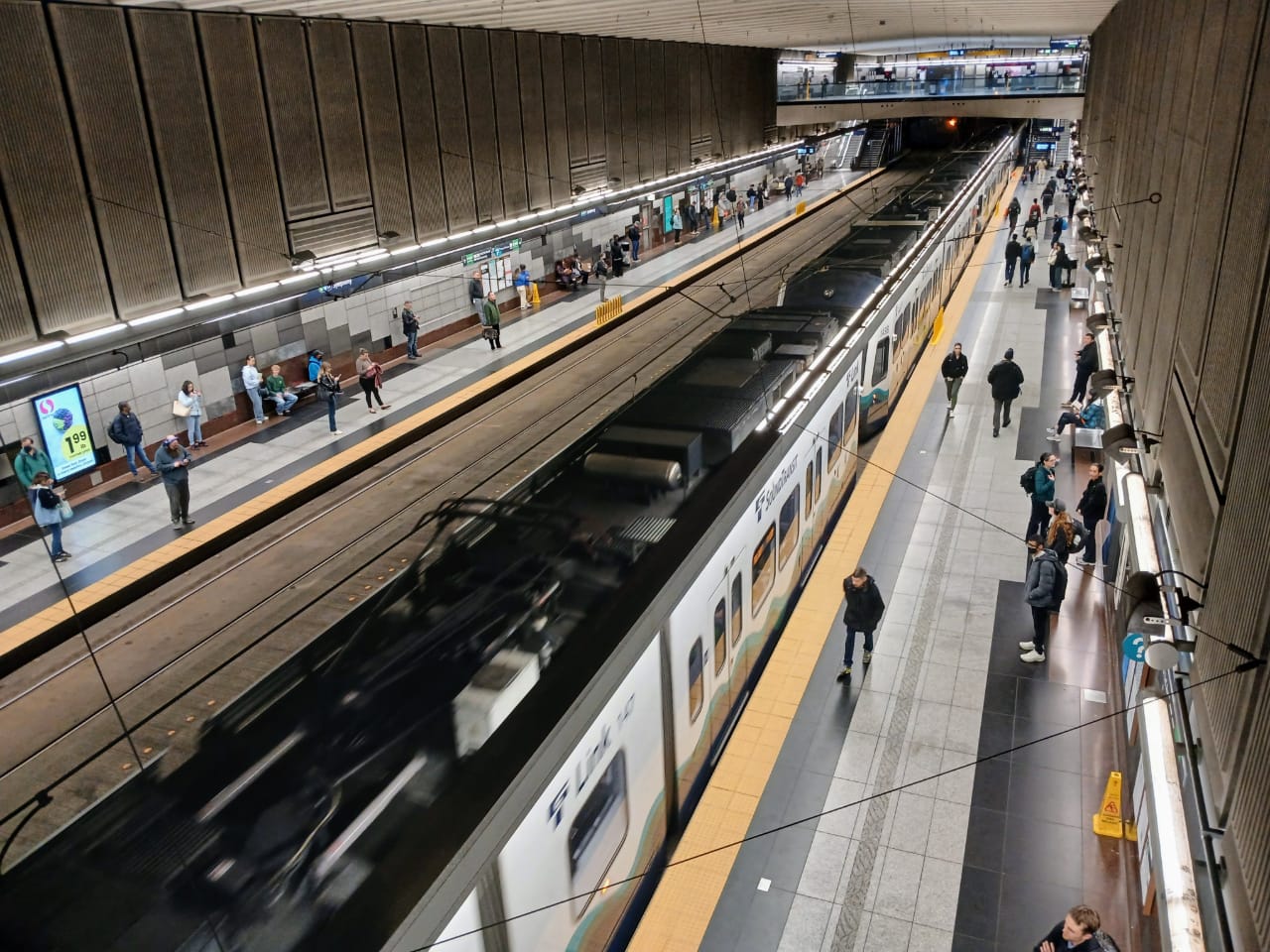
Sound Transit celebrated a huge ridership day on the grand opening of the 2 Line's crosslake connection, with more than 205,000 boardings tallied. At the time, it was unclear if that mark was a momentary blip or a portent of things to come. The recent figures from the National Transit Database say it was no blip.
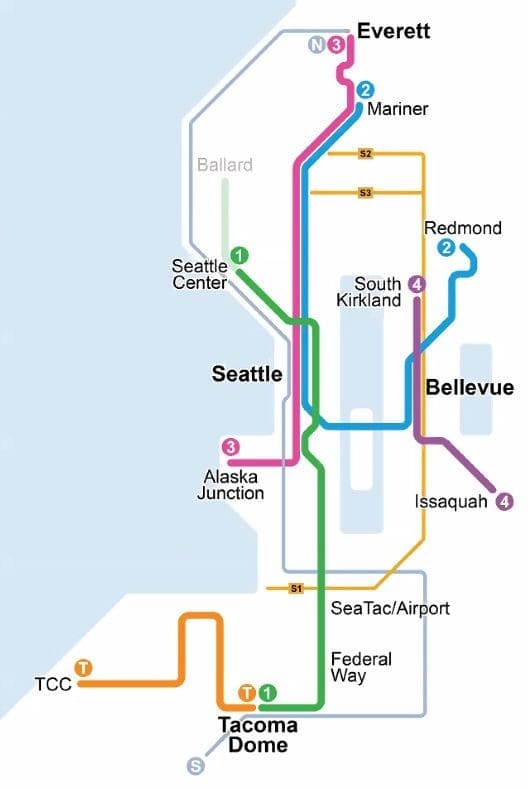
Link ridership is only expected to swell as the system expands, although the next major rail expansions are not slated until the 2030s. The Sound Transit 3 (ST3) measure has pledged to expand the agency's system to serve 650,000 daily riders by the 2040s. Regional voters who approved ST3 in 2016 were promised a grand total of 116 miles of light rail and 46 miles of bus rapid transit.

In a recent vote, the Sound Transit Board of Directors voted to scale back plans, delaying some projects, while putting other on indefinite hold due to a budgetary crisis. Even with one popular four-mile segment from Seattle Center to Ballard now in the limbo category, the agency projects the revised plan will still attract 92% of the ridership promised – just shy of 600,000 daily riders.
At least in 2026 terms, reaching 600,000 daily rail boardings would be enough to catapult Seattle to second in the nation behind the Big Apple. However, the DC Metro could likely see rail ridership growth of its own to keep ahead of Seattle, with Chicago and Boston also having a nice head start to work with.
The only other U.S. transit system embarked on rail expansions as ambitious as Seattle's ST3 build out is Los Angeles with its Measure M, which could get a famously car-oriented city on the path of transit embrace. So far, though, Seattle is adding riders much faster than LA. The D Line extension, with one segment open and two more on the way, is Sound Transit's biggest threat in the ridership game.
The next city Seattle could conceivably surpass in rail ridership is San Francisco. Bay Area Rapid Transit (BART) latest reports have daily ridership hovering around 200,000. LA Metro Rail is a tick higher at just over 211,000. Link could be breathing down their necks soon.
Even though West Seattle and Tacoma Dome light rail extensions are not expected to open until the mid 2030s, Link light rail is still likely to continue to see ridership growth in the interim period from network effects, population growth, greater public awareness, and shifting travel habits. Later this fall, Metro will adjust bus routes across South King County and the Eastside to better serve light rail stations, a move that is certain to have an impact on ridership.
A pair of infill stations should help too, with Seattle's 130th Street Station next to open in late 2026. In South Seattle, the 1 Line's future Graham Street stop is still on course to open in 2031 or thereabouts after Seattle Mayor Katie Wilson stepped in with a plan to save the station from the chopping block.
On the network effects front, Sound Transit will also be rolling out 46 miles of Stride bus rapid transit from 2028 to 2029, in the I-405 and SR-522 corridors. Several Stride stops will serve Link stations, pumping riders into the light rail network.
King County Metro, Pierce Transit, and Snohomish County's Community Transit are also pursuing plans to expand local bus service, each to varying degrees of ambition and success. All have prioritized boosting bus service to Link stations, as funding allows.
Will Link light rail reach the prophesied heights of 600,000 daily riders? Time will tell, but it's certainly a fun ride to be on.
 Ryan Packer