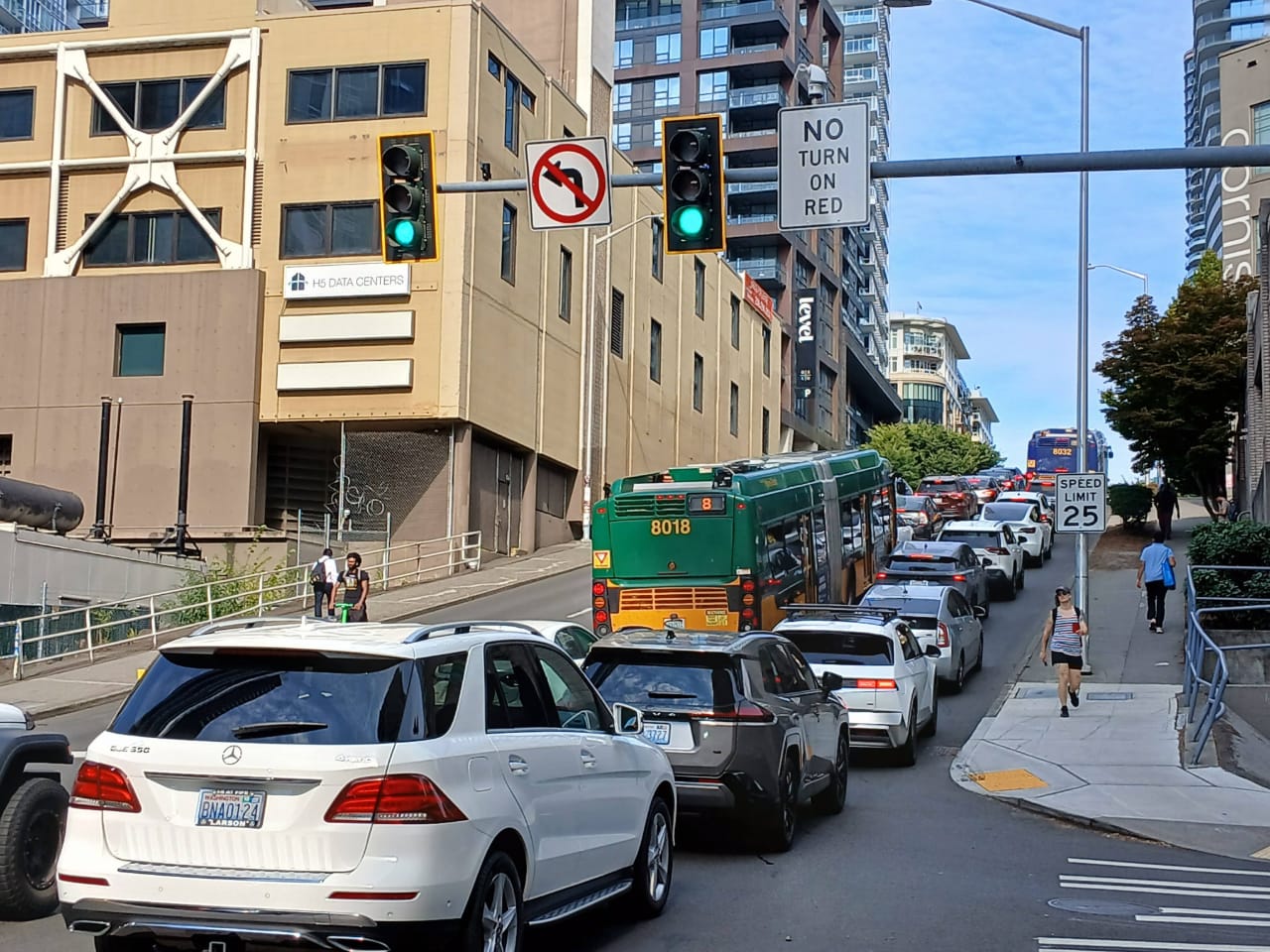
The Bellevue City Council is beginning its biennial task of creating a City budget. Historically, the City's transportation budget has focused on expanding its roads to move cars around faster, a pattern that has left highway-esque city streets cutting through downtown, most notably the eight-lane NE 8th Street. Predictably, this development pattern has also left Bellevue with an increasing number of deaths and serious injuries on its streets (41 in 2025).
As early as 1972, Bellevue's chief city planner, Fred Herman, lamented that the pedestrian was merely a "pipsqueak" in the city's auto-oriented urban core. His vision of a safer, pedestrian-oriented city was never realized in his time.
But today, a new group called the SAFE (Streets Are For Everyone) Bellevue coalition is picking up the baton to steer the City's budget more towards pedestrian and bicycle safety projects, compensating for decades of myopic focus on vehicle throughput.
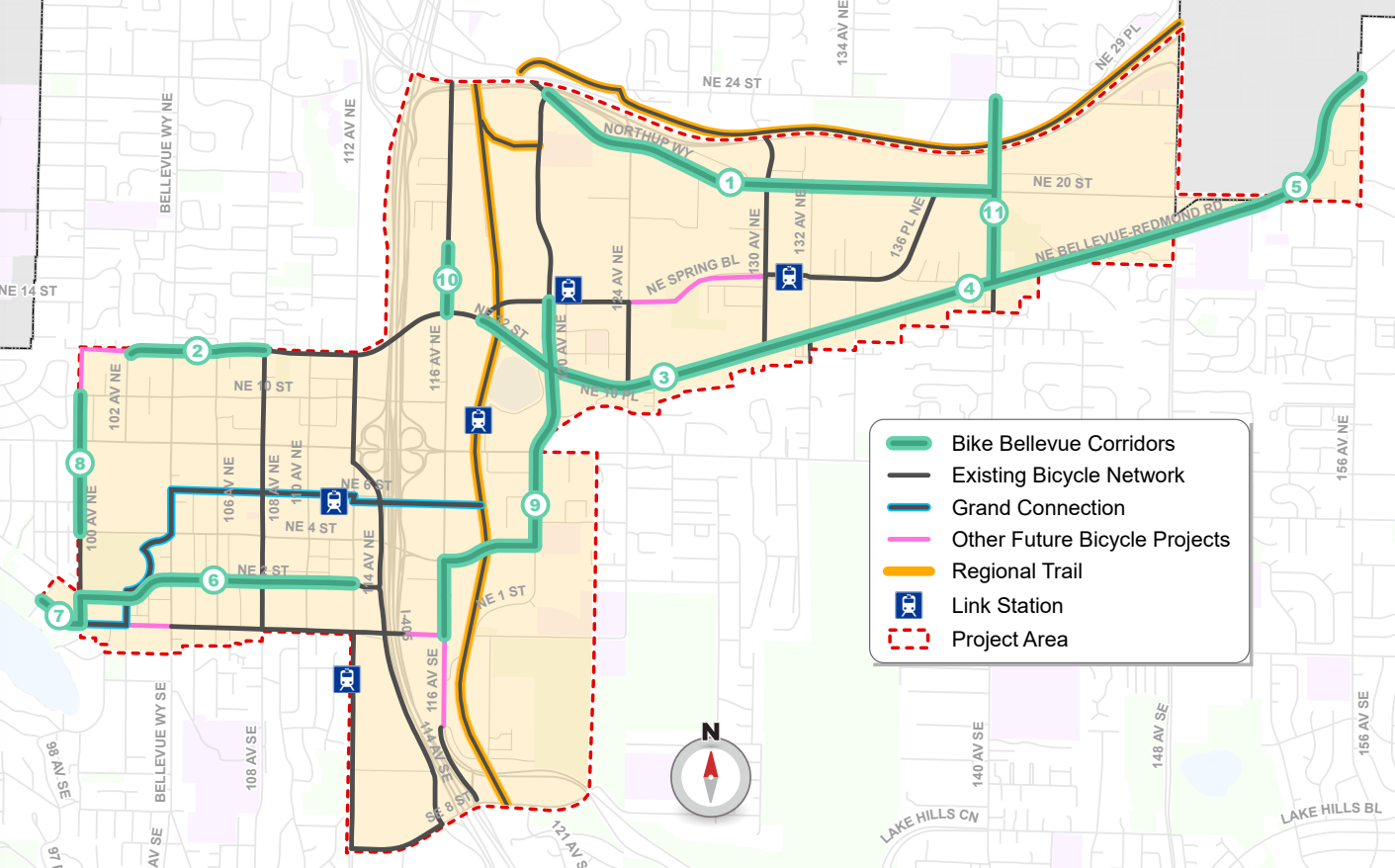
The SAFE Bellevue coalition encourages city leaders to prioritize infrastructure that will make it easier and safer to access light rail stations. One of the most notable gaps in station accessibility is the lack of a safe bike route between the densely-populated Crossroads area and Overlake Village station. The City could address this gap by putting protected bike lanes on 156th Avenue, which would also connect to the existing bike lanes by the Microsoft campus, simultaneously creating a bikeable route for Microsoft employees.
This stretch of 156th Avenue has had nine serious injuries in the past 10 years, and studies show that protected bike lanes reduce collisions for all road users.
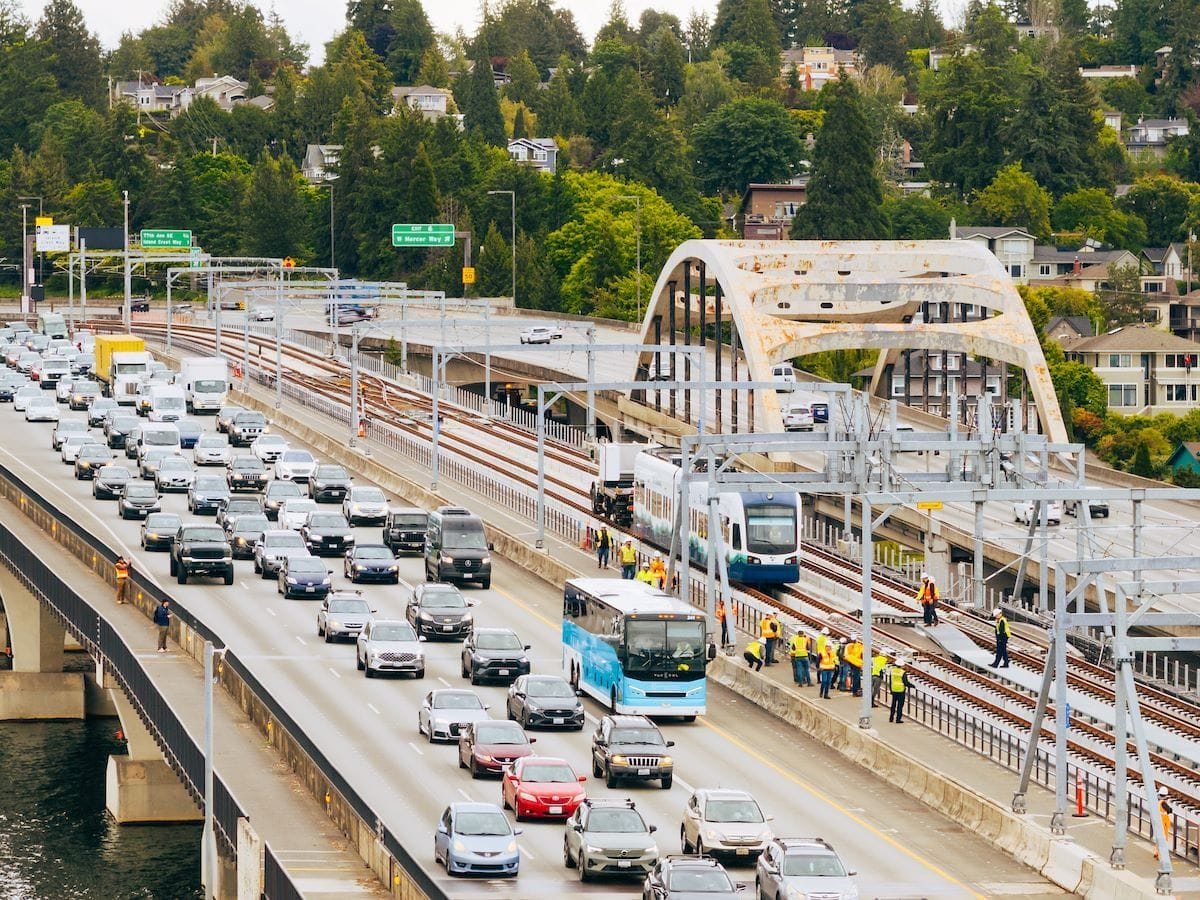
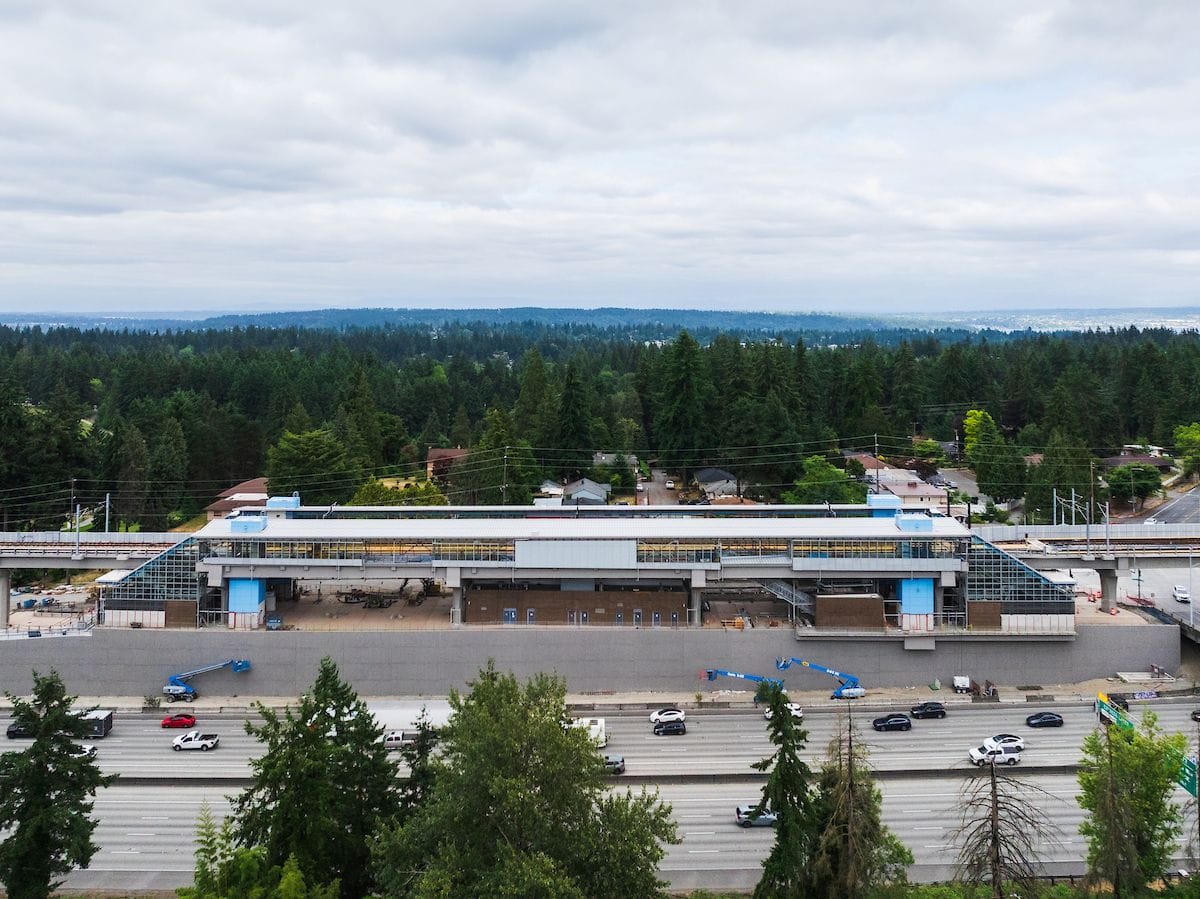
Just as the light rail is the foundation of Bellevue's economic future, it is also the foundation of SAFE Bellevue's budget proposal. Bellevue's transportation landscape isn't what it was in the 1970s. Sound Transit’s 2 Line Crosslake Connection opened in the spring and is officially a big hit with residents and workers! During a typical evening commute, it is difficult to find a seat on crowded trains. Imagine how popular light rail will be once the city's major transit-oriented rezones take off in Wilburton, with BelRed and East Main not far behind.
At a budget meeting last month, City finance staff cited anticipated development in Wilburton as the city's best hope for economic growth in the next few years. Looking ahead to the predominantly high-rise rezone of the BelRed station area, it is clear that the light rail will be the foundation of Bellevue's economic growth for the next several decades.
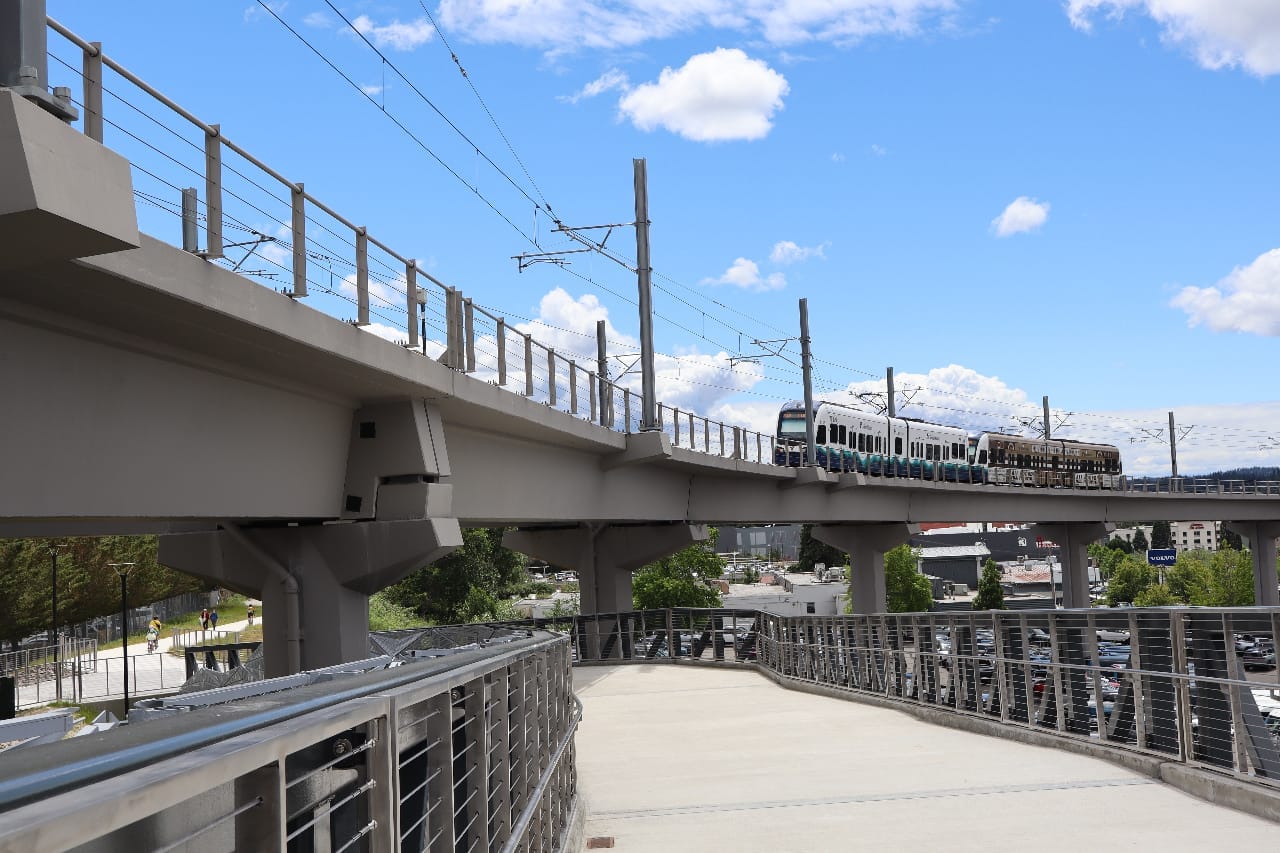
The full opening of the 2 Line marks the beginning of a new era for Bellevue. Now the challenge shifts from floating train tracks and concrete plinths to creating safe ways for Bellevue residents and workers to access the new stations without a car. As former Governor Jay Inslee said on the day of the 2 Line opening, the train is the main artery, but now we need new sidewalks and bike lanes to serve as the veins and capillaries.
As long as we're putting a bike route along 156th Avenue, it would also be imperative to connect it to an east-west route across the city. The City of Bellevue has somewhat firm plans to complete the notorious missing link of Spring Boulevard, but this still leaves a gap in bike infrastructure along BelRed Road between 140th Avenue and 156th Avenue. The SAFE Bellevue proposal encourages city leaders to fund the study to close that gap. Doing so would unlock critical network benefits of having disparate major bike routes (Eastrail, Spring Boulevard, 156th Avenue) connect together into a single system.
Even as we look to the future, it is also important that we don't leave behind the areas with unacceptably poor infrastructure. The most glaring example of such infrastructure is SE 34th Street, running through the Vasa Park neighborhood. Among Bellevue's many arterials, it stands out for being one of the few that lacks any sidewalk or shoulder, a condition that is particularly dangerous for children walking to school bus stops. The City has a project to dramatically improve it for pedestrians, which the SAFE Bellevue coalition recommends for full funding.
To see the whole SAFE Bellevue proposal, visit the website and send a letter to city leaders to show your support for a future-focused Bellevue budget that is committed to reducing the high rate of serious injuries on our streets.
 Ryan Packer