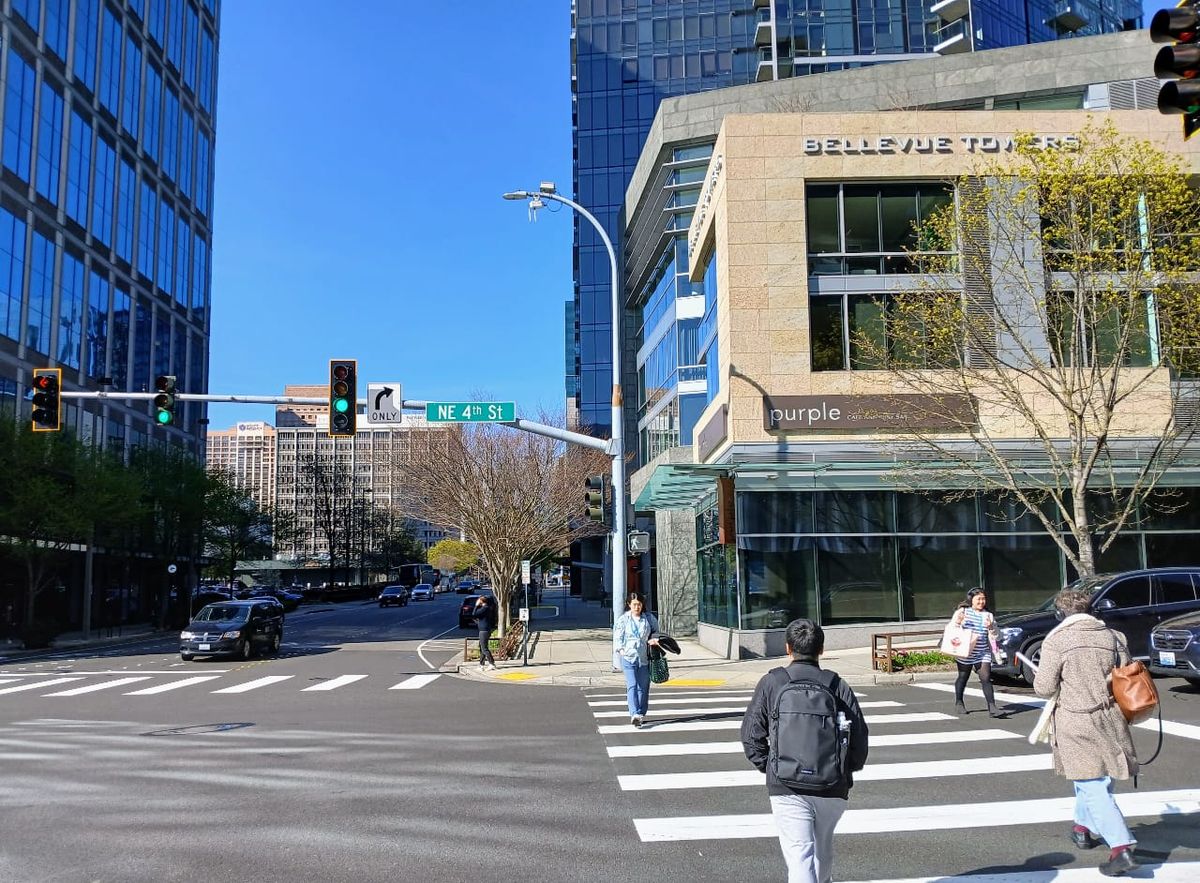
The Bellevue City Council gave the green light Tuesday to enact speed limit reductions across a wide swath of the city's arterial road network. The "Safe Speeds Bellevue" program comes in the wake of an uptick in fatal and serious injury crashes on Bellevue's streets, with lower posted limits just one tool being deployed in an attempt to stem the tide.
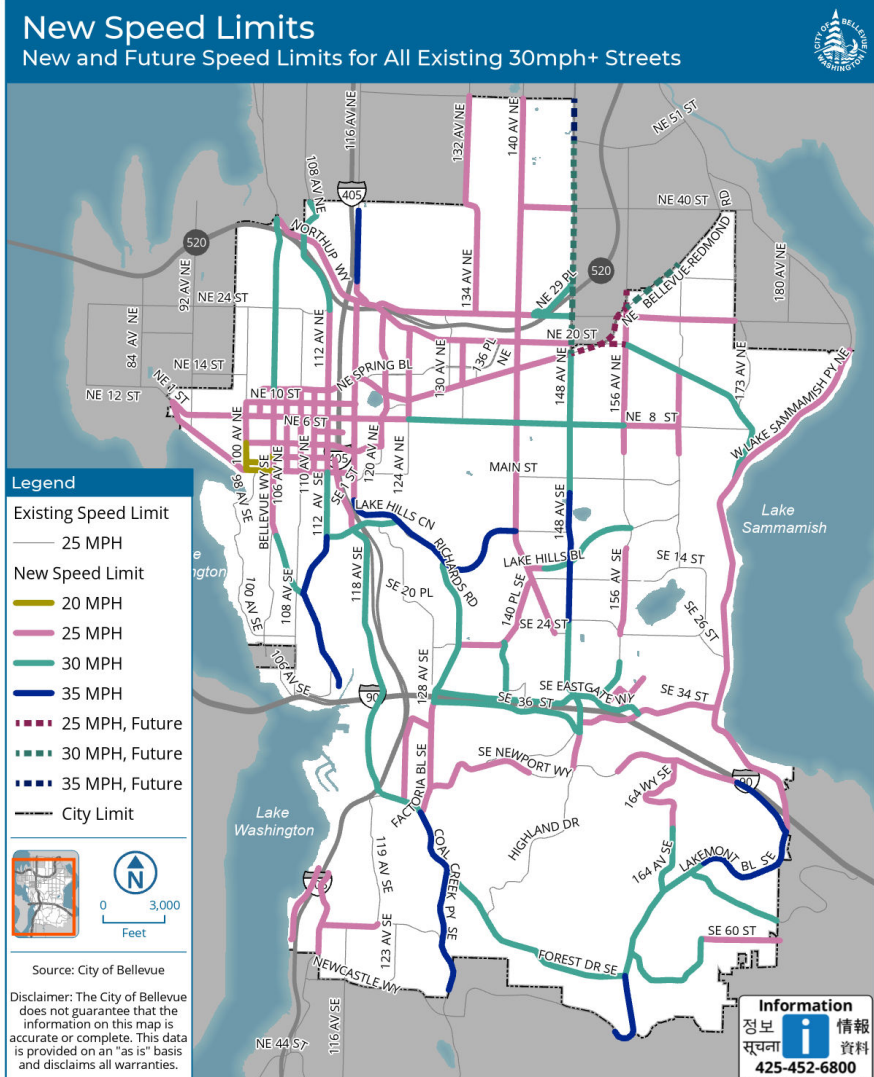
Out of all of the streets in Bellevue with posted speed limits of 30 mph or higher, 84% will see those limits reduced under this proposal, with the vast majority going from from 30 to 25 mph.
Several corridors on Bellevue's "high-injury network" – like Bel-Red Road and NE 20th Street – will drop from 35 to 25 mph. A number of streets around Downtown Bellevue Park are going all the way down to 20 mph.
Several major corridors in Bellevue including Coal Creek Parkway, Lakemont Boulevard, and the Lake Hills Connector – all streets with few legal pedestrian crossings – will remain high-speed with 35 mph limits.
Bellevue is just the latest city to take steps to systematically reduce speed limits over recent years, with many jurisdictions seeing measurable improvements after doing so. Seattle led the pack with a reduction of default arterial speed limits to 25 mph in 2019. Minneapolis followed suit in 2020, and then Washington D.C. in 2022.
Though the gains from Seattle's speed limit drop were quickly overshadowed by an uptick in traffic fatalities during the Covid-19 pandemic, the data proved convincing to traffic safety experts. A 2024 study published in the Journal of Safety Research found the new 25 mph limits led to a 17.2% reduction in odds of a crash involving a death or serious injury and a 19.9% reduction in overall traffic crashes on arterials in downtown Seattle.
Bellevue targeted streets for speed limit reductions using analysis of three different factors: "potential points of conflict between people walking, biking and driving," quality of existing walking and biking facilities, and nearby "activity generators," such as housing, transit stops, or parks.
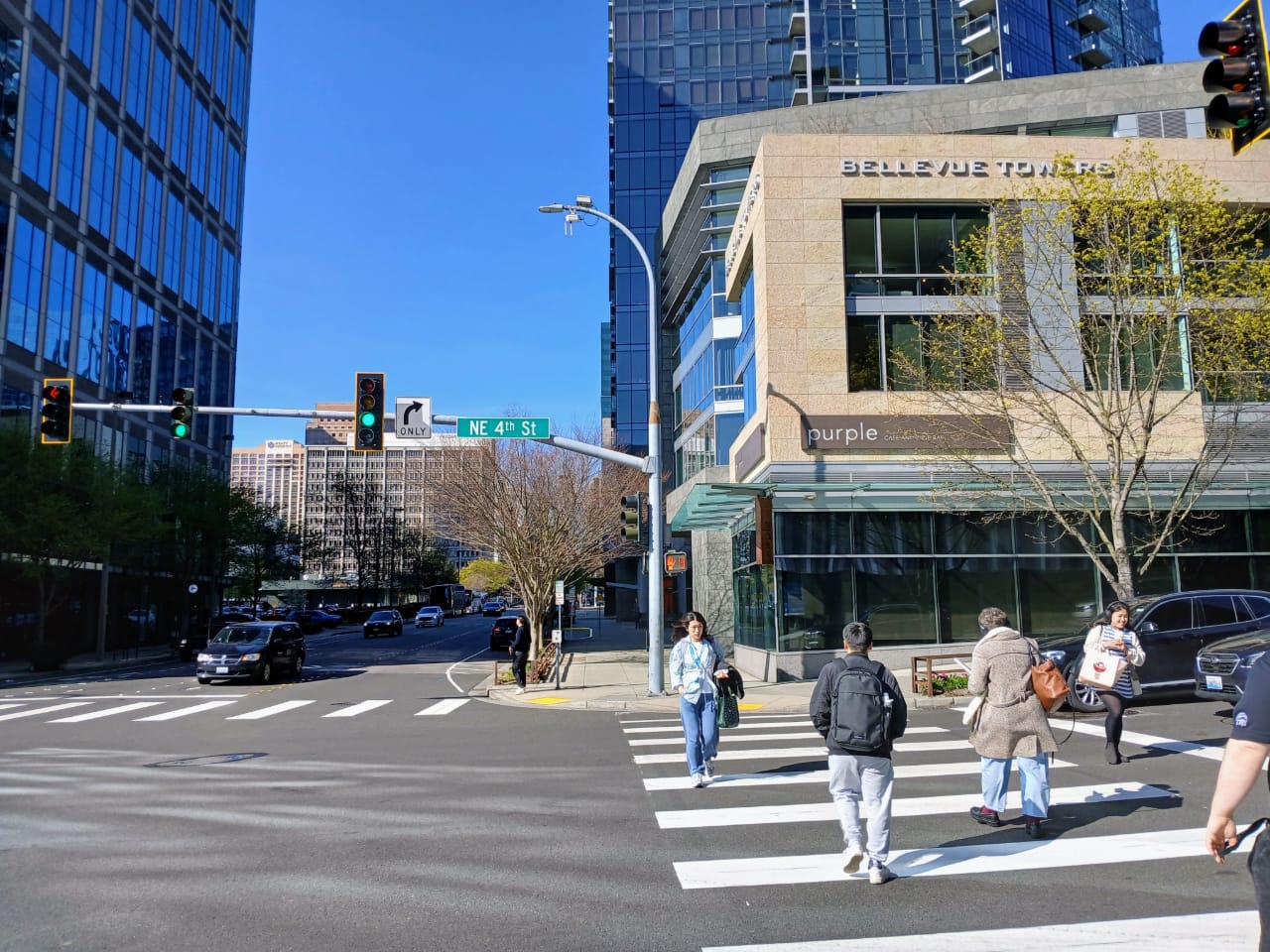
"Speed is a contributing factor to a lot of our serious injury and fatal crashes in Bellevue, and as such, safe speed strategies really are a cornerstone of the Safe System approach with within the Vision Zero lens, and we know when speeds go down, the frequency and the severity of crashes also go down," John Murphy, Bellevue's Neighborhood Traffic Safety Services Manager, told councilmembers earlier this month.
In 2025, 41 people were killed or seriously injured on Bellevue's streets, the highest number in at least a decade and 61% higher than the city's 10-year average. Three of those crashes resulted in deaths.
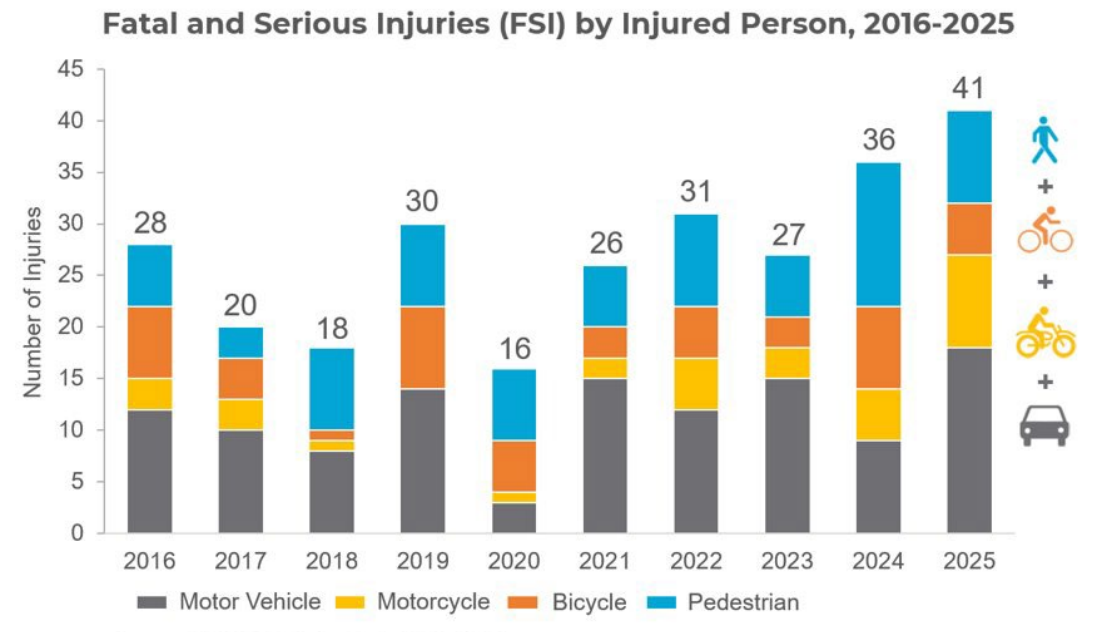
On top of promising data from elsewhere, Bellevue has already seen results when deploying reduced speed limits.
"This isn't [just] found in other cities, this is found in our community. When we tested for lower speed limits last year on four corridors posted at 35 miles per hour, we measured speeds and found reductions of upwards of 42% reduction in high-end speeding, which is the most dangerous type of speeding, and has that direct relationship to serious injuries and fatalities," Murphy said.
Installation of new speed limit signs will take place in two to three phases starting early next year, with the downtown core first on the list of places where adjustments will get made.
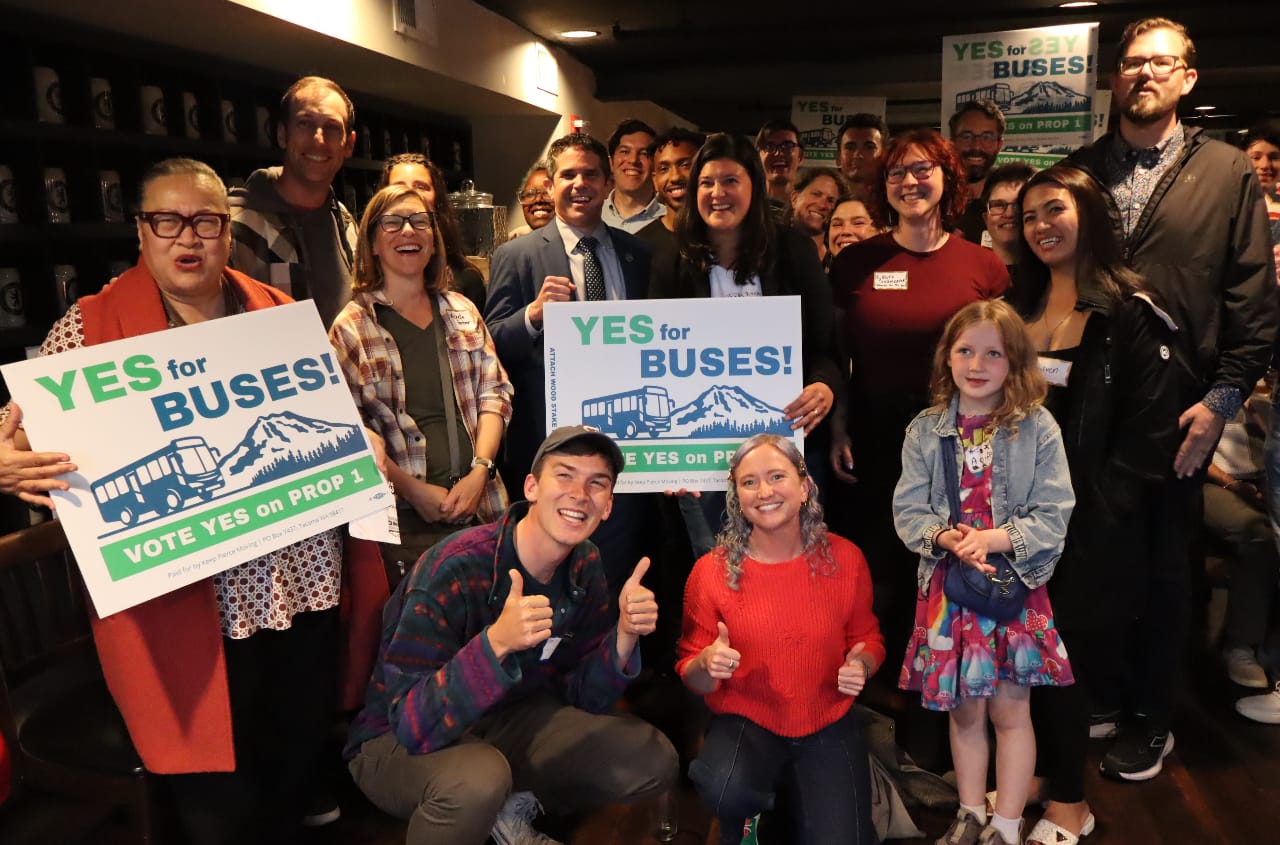
The council motion to advance these speed limit changes, on June 2, was a unanimous one. But what's poised to be more contentious is a debate currently teed up for this fall's budget discussions, around how much funding Bellevue should devote to physical roadway upgrades intended to improve safety. The Urbanist reported earlier this spring on an initial proposal from transportation director Andrew Singelakis to shift city spending toward vehicle mobility projects, an idea that brought push back from several councilmembers who were more in favor of prioritizing safety projects.
Roadway upgrades intended to make these speed limit adjustments are planned in Bellevue. But the question is how much funding the city will have available for those projects, with new dollars potentially on deck from the city's as-yet-untapped transportation benefit district.
"There's a strong desire to pair speed limit changes with design changes, add physical measures, add speed safety cameras, and some of those efforts are in the pipeline for this year," Murphy said. "We realize that setting speed limits is not a panacea. This is not a set speed limits and walk away."
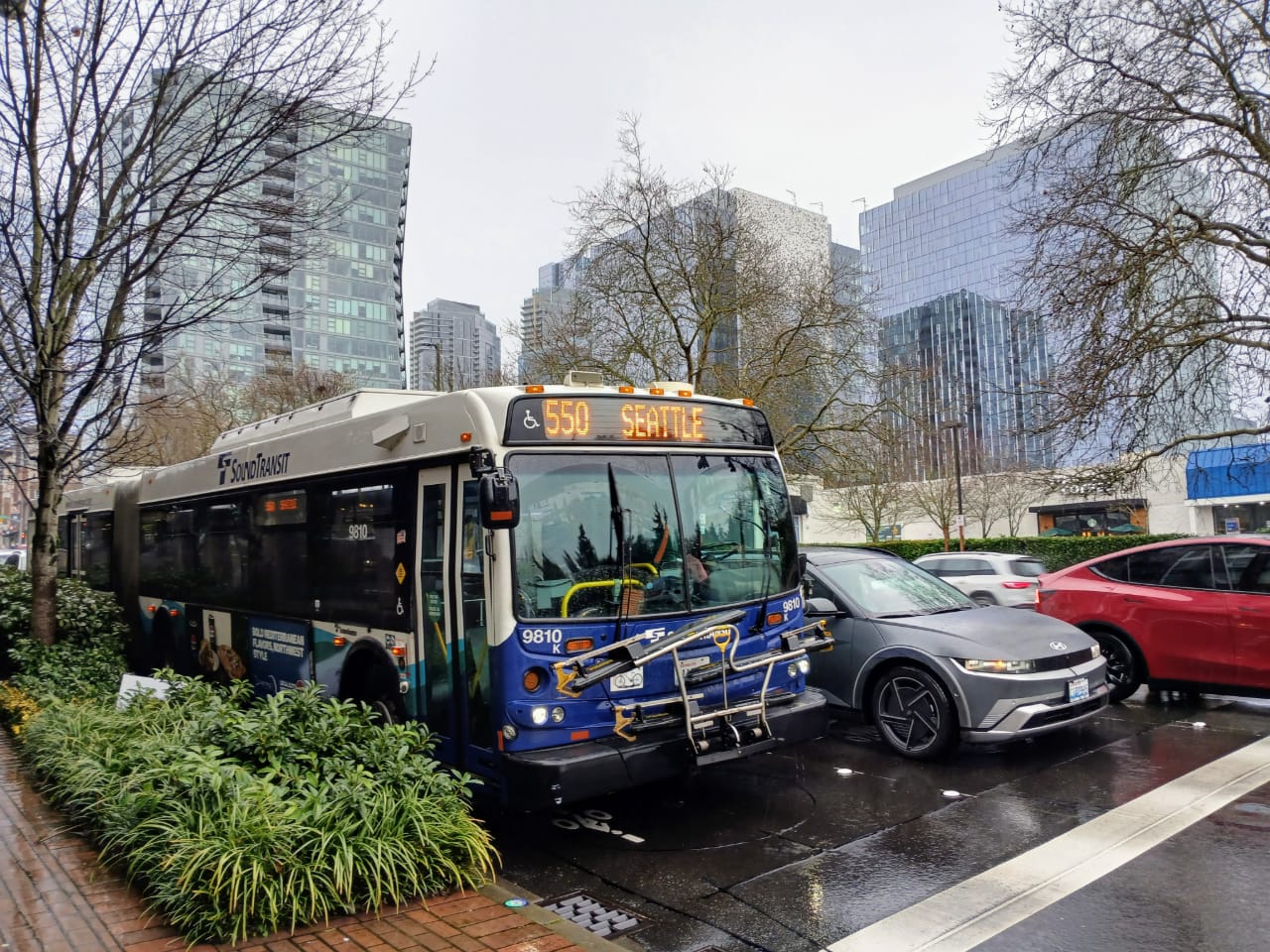
At a public hearing on the same day as Tuesday's vote, Bellevue residents and transportation advocates weighed in on how the city should prioritize transportation funding as the budget is debated over the coming months.
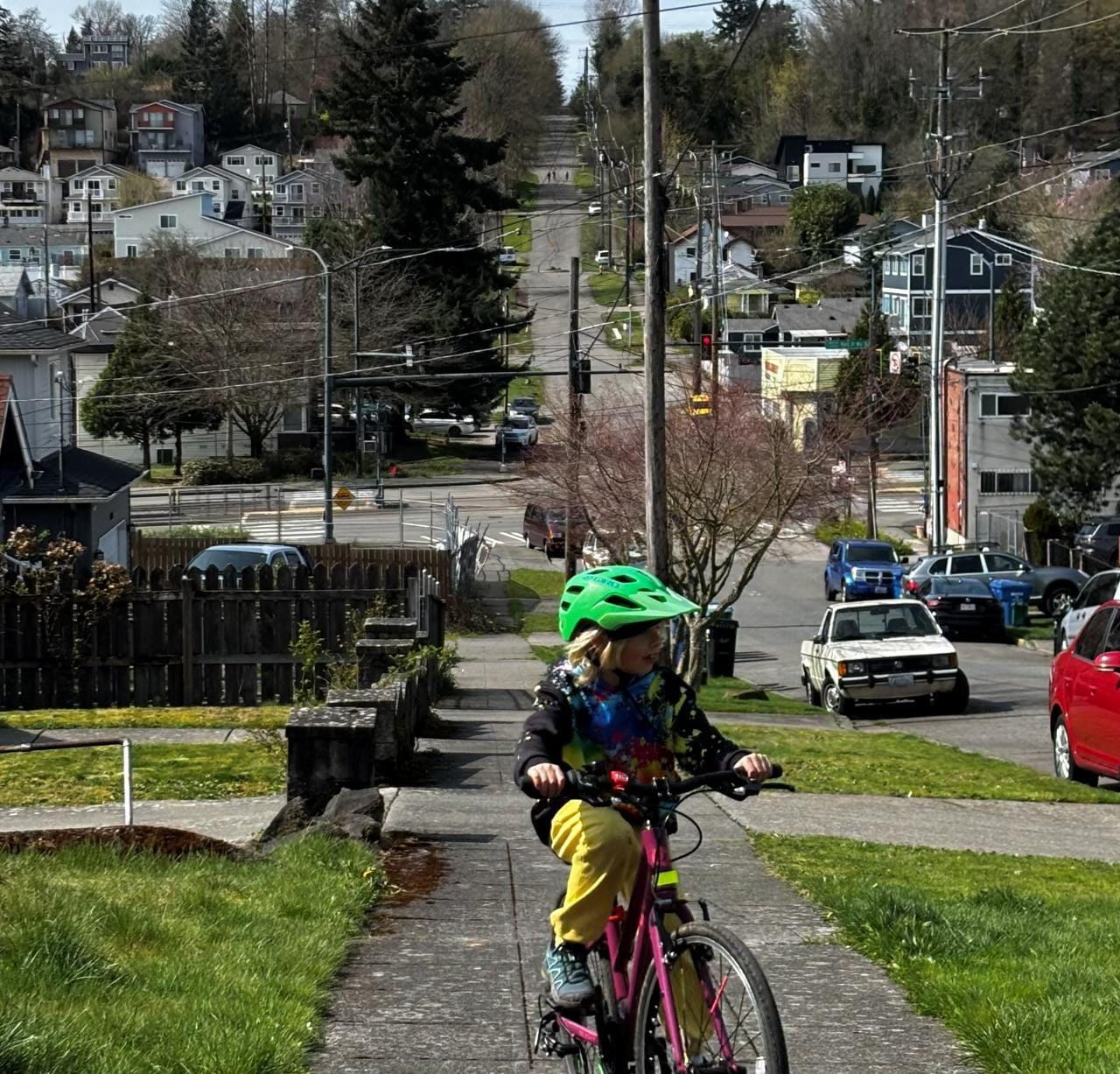
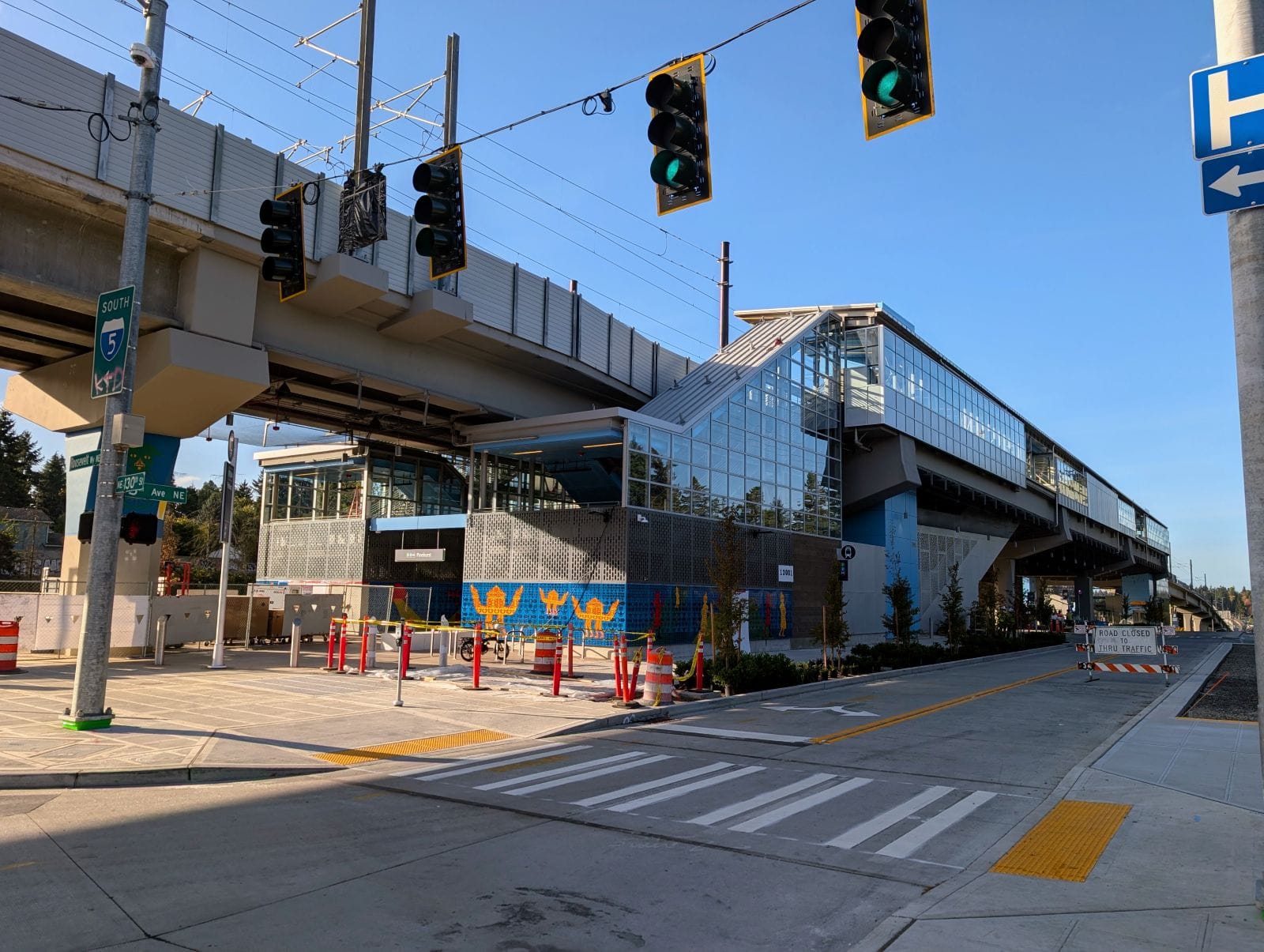
"Every afternoon when I see kids dropped off by their school or city bus walk along the side of the road with no sidewalk and little space between them and the cars driving by, I'm reminded of how little protection the existing car-centric infrastructure provides and is afforded to those who are biking, walking, rolling, and taking transit on my street, in my community, and in my city," Lake Heights resident Cathy Lieu told the council. "I dream of a future where my family and I can bike to and from the new light rail transit line without putting my kids' safety at risk."
But even as residents of the Eastside's largest city clamor for more safe, multimodal options, many of the city's powerbrokers are certain to be pushing to maintain capacity for vehicles.
"Safety investments should be data driven and targeted," Mariya Frost, VP of Government Relations for Kemper Development, told the council. "As a mom and as a downtown employee, I share your goal of eliminating fatalities and serious injuries on our roads, most of which are caused by failure to yield and distraction. Addressing these behaviors requires a thoughtful scalpel approach, engineering targeted exactly where the data shows risk, rather than the blunt instrument of ideological urban street design. Implementing road diets or rechannelization, which should remain a last resort, penalizes the vast majority of our traveling public and pushes congestion to other parts of the city, which can create new hazards."
With reduced speed limits an encouraging step toward making Bellevue a safer place, it will be what comes afterward that will likely determine whether the city is truly able to make inroads in reducing fatalities and serious injuries on its roads.
 Ryan Packer
 Ryan Packer