“That’s Mr. S. He substituted for our class a bunch this year,” my nine-year-old tugged at my arm and whispered loudly.
My heart dropped. We were listening to Mayor Katie Wilson address the crowd at the Seattle Streets Alliance Block party. I wasn’t sure my kid was even really listening. It was raining and he was whining that he wanted to go home. I’d bribed him to stay with the promise of an extra cookie.
Towards the end of her remarks, Wilson spoke about how Christian Salyer (Mr. S.) had been killed that week biking home from his teaching job at Thurgood Marshall. Parents at the school had received an email earlier in the week, but I’d be reluctant to have a conversation with my kid about it.
When I saw there would be a gathering and ghost bike installation, I wrestled with whether to bring him to the event. I wanted to show up and I know it would be meaningful for people who knew Mr. S. to have kids from Thurgood present, but I also really dreaded having a conversation with my kid about how dangerous biking can be. Because as a parent who can’t drive, biking is often our best option for getting around Seattle.
On the bus on the way home, I asked my kid if he knew Mr. S. had been killed. Yes, he said. His teacher had told them. He didn’t ask anything else and I decided to leave it at that. But as we bumped along on the 48, I kept wondering if I was making the right choice.
I have a really hard time containing my sadness in the aftermath of pedestrian or bicyclist deaths. Being in spaces where these deaths are being processed sends me into an emotional tailspin that sinks into depression that can last for weeks. Given my advocacy work, I’ve been in a lot of these spaces.
In 2012, I started volunteering with what became Families for Safe Streets in NYC, documenting vigils. When we moved to Arizona in 2017, I continued that volunteer work with the advocacy group there. On my birthday in 2017, I was filming a vigil for a mom and two children killed crossing a street that I travelled along frequently. That was my breaking point.
I know this work is so important, and I deeply respect the advocates like Families for Safe Streets that work in this space, but I also know that I can’t be part of these spaces without breaking down in a way that debilitates me for days.
I didn’t want my kid to see me like that because I knew if he did it would force him to reckon with the danger people traveling on our streets outside of vehicles are exposed to. Of course he understands some basics around road safety, but the risk that we can’t control, no matter how many times we look both ways and check behind us for vehicles that might want to turn, that risk I don’t think he comprehends yet. And I wish he didn’t have to.
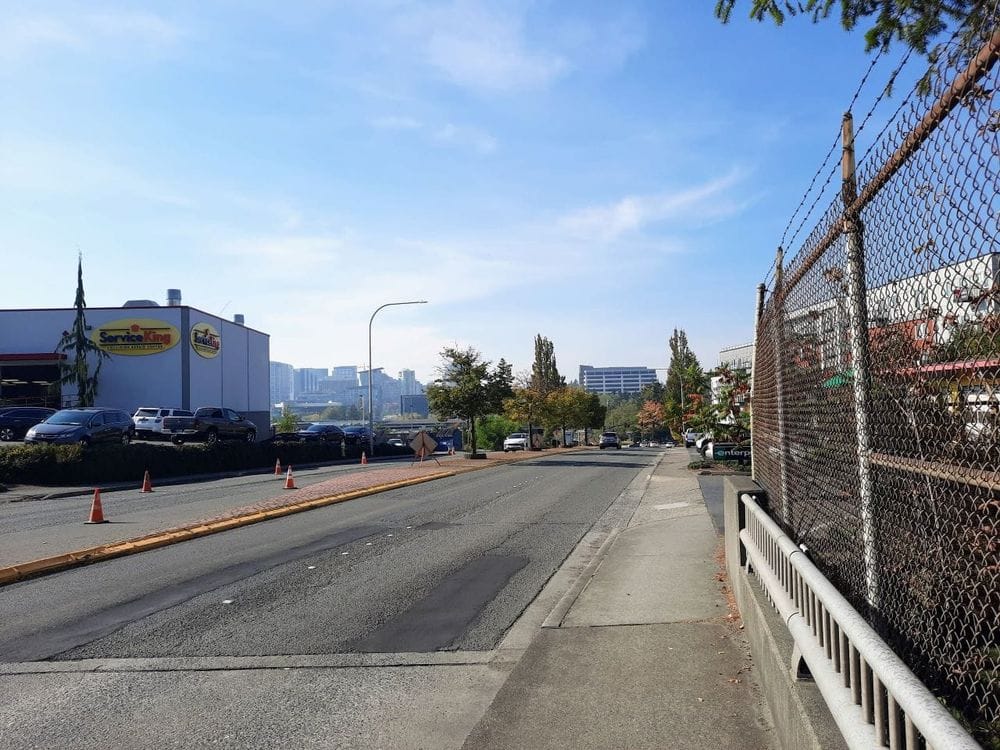
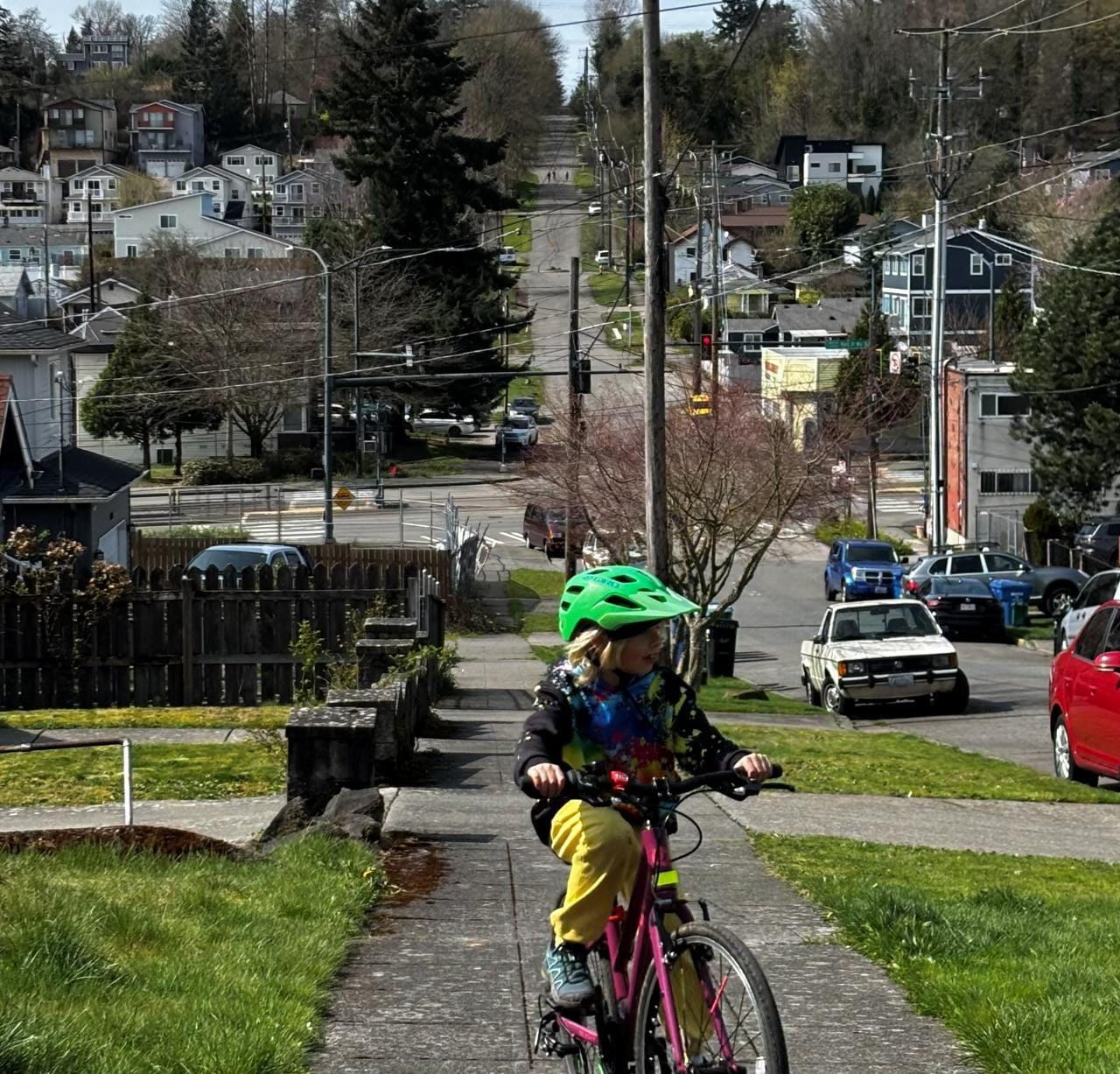
Because we live in Rainier Valley, he rarely gets to bike on his own bike anywhere with me. All the low-stress “greenway” routes are super hilly, and there’s no way I’d let him bike Rainier Avenue or MLK Way before the bike lanes start. Sometimes we get as far as Columbia City, but that means we’re riding the sidewalks.
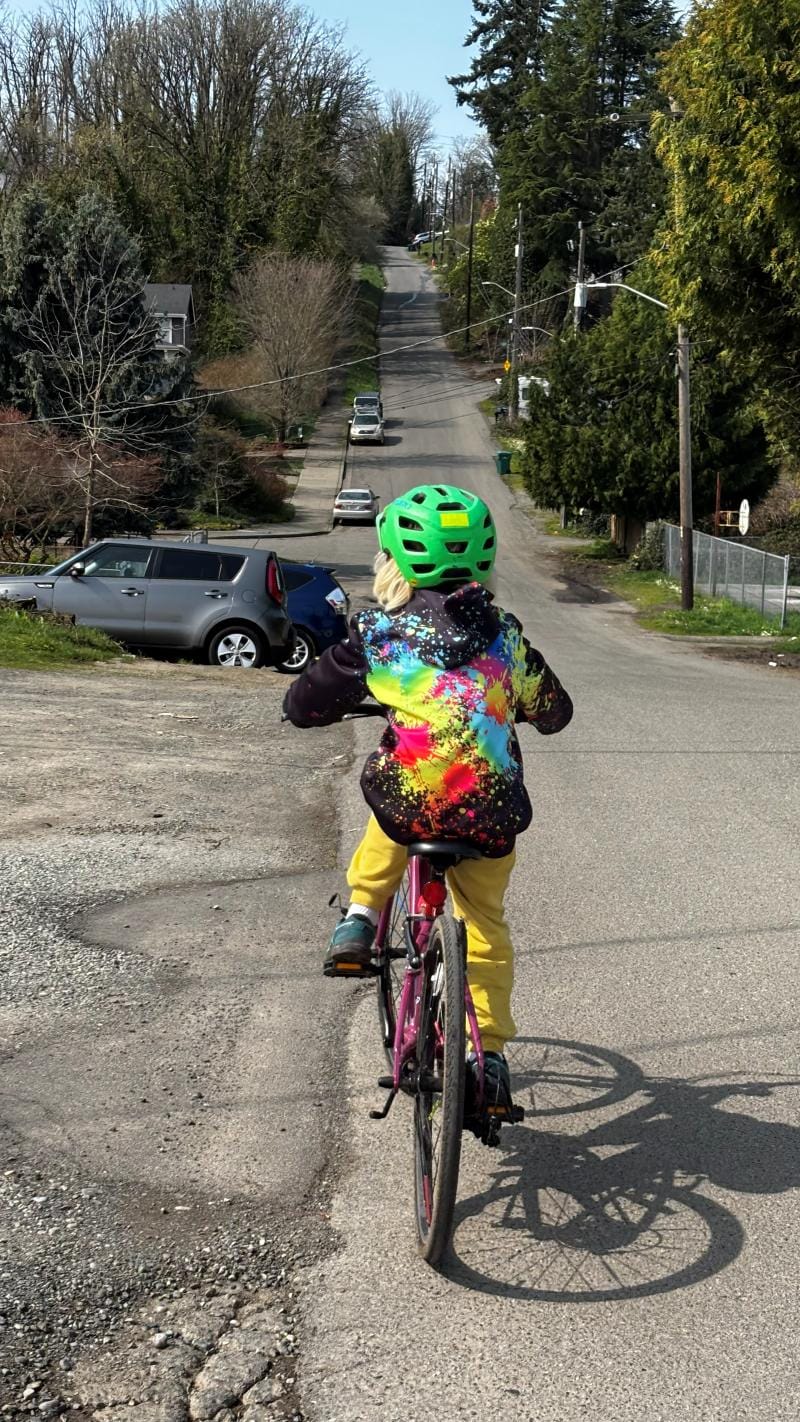
I’m not sure I’ve ever seen another parent biking with their kid on our neighborhood streets, though the paved loop in the park nearby is packed with kids on all sorts of scooters and bikes, rollerskates and skateboards, going around and around in little quarter-mile loops.
I keep turning over and over in my head, at what age will I let my kid bike in Rainier Valley on his own? When he’s in sixth grade? Eighth grade? Knowing that all the safest routes are far less direct and have far more steep hills, is there any age at which he’ll choose to take the harder route?
Over the last few years, I’ve watched with excitement as more and more residents of Rainier Valley started using Lime bikes and scooters. In the summer evenings, groups of young people on scooters zoom past the park. The joy and freedom of their movement makes me hopeful. But then I think about what happens when they turn off the neighborhood street. What streets are they using to get where they need to go? By a long shot, the most direct routes in Rainier Valley involve riding along MLK or Rainier.
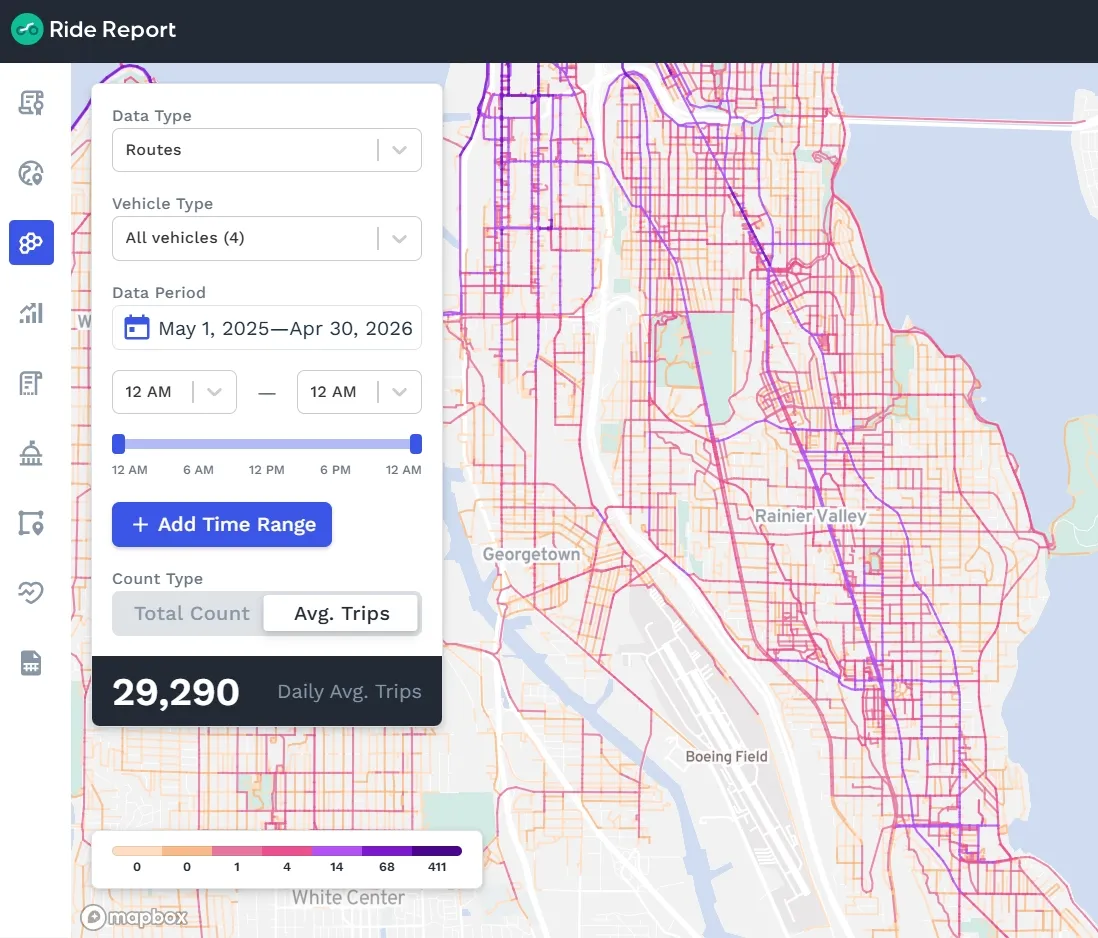
I asked the City of Seattle if they could share a heatmap of shared mobility ridership for SE Seattle. From the graphic it’s clear, most users are using MLK and Rainier Avenue to get through Rainier Valley, despite the lack of protected infrastructure. (The data can’t distinguish between sidewalk or street – from what I’ve seen, most riders on MLK are using the sidewalks. With the new segments of bus lanes on Rainier Avenue, more riders are willing to risk the street).
Knowing that, compared to other parts of Seattle, many residents of Rainier Valley are low-income, I was especially interested in understanding what percentage of riders using shared mobility were accessing the program through a subsidized program. So I asked my friends at Lime if they could share ridership data for their low-income fare program Lime Access, where riders pay $0.75 to unlock plus $0.01 per minute compared to $1.00 to unlock and then $0.47/minute.
The data I received shocked me. And it should shock you.
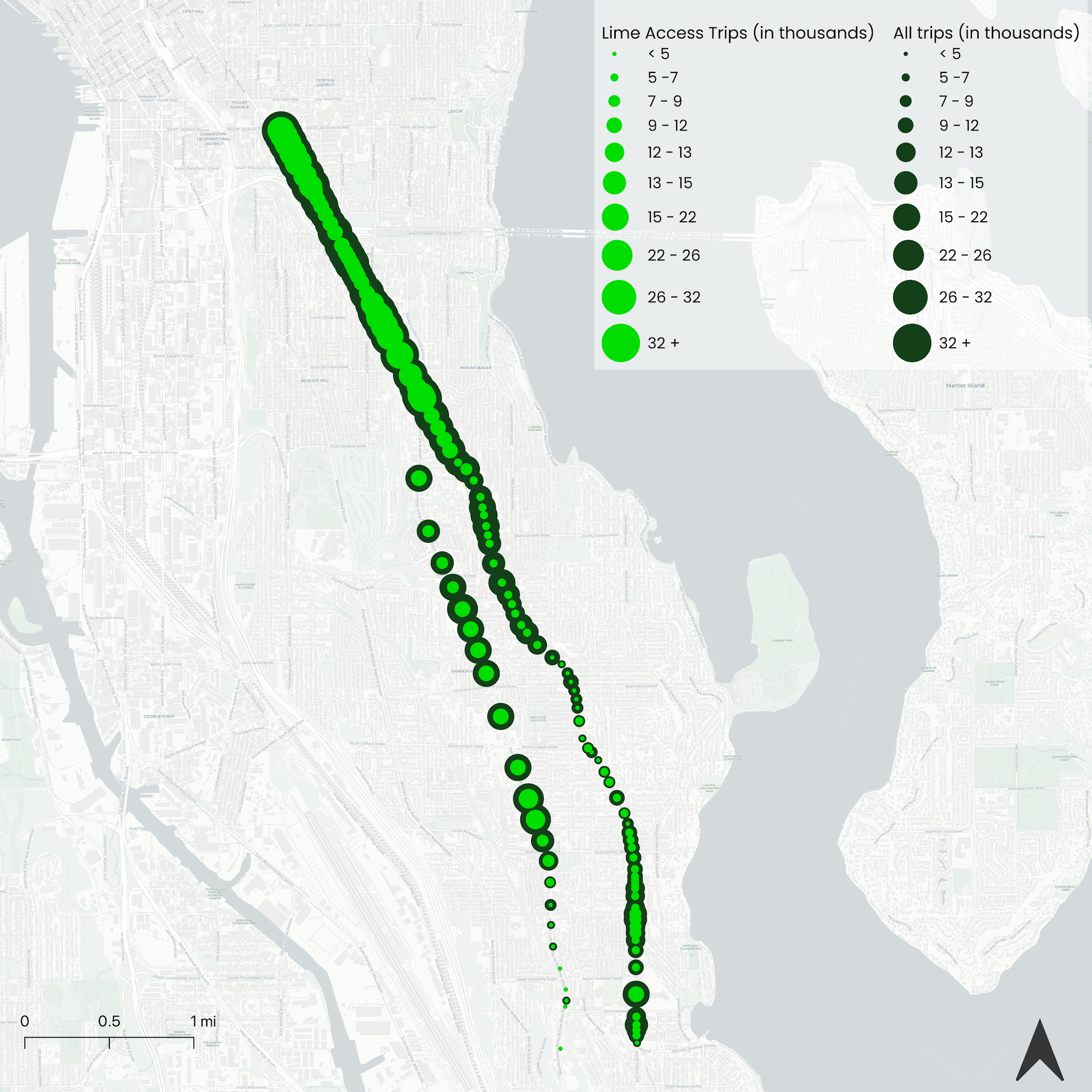
Around half of the average trip volume on Rainier Avenue and MLK south of Mount Baker are Lime Access trips. That’s compared to 11% of trips citywide.
While this only captures one piece of how people are moving through Rainier Valley, since plenty of people are using their own bikes, scooters, e-bikes and other devices, it does tell us something important about who is relying on these streets. On Rainier and MLK, a huge share of Lime trips are being taken by people using the Access program.
This reality begs the question, why are there no plans to build protected bike and scooter infrastructure on these critical corridors?
The narrative that Rainier Valley doesn’t want or need scooter and bike infrastructure is so clearly outdated. The status quo is not safe and it’s not meeting the needs of people using micromobility or anyone else who wants to or needs to be able to get places safely outside of a vehicle.
Of course Rainier Valley isn’t the only place in Seattle that needs safer infrastructure. There are far too many arterials and freight routes that are missing safe and protected spaces for people walking, scooting, biking and rolling. But the gaps in Rainier Valley are huge. When my neighbors tell me they’d like to try biking, I struggle to suggest a single route from Hillman City to downtown that doesn’t involve 15-degree slopes and two or three extra miles to avoid the flat and direct routes on MLK or Rainier.
And still, as I think about the Lime Access riders, the neighborhood cyclists, and others already navigating these streets, and all the people getting around on their own bikes, scooters and other devices, I keep coming back to my kid. Best case scenario, failing to create a city where biking and scooting are safe and comfortable means less freedom for him, and for every kid growing up in neighborhoods where the safest routes are also the steepest, least direct, and least useful. But in reality, failing to act also means a future of more vigils and more ghost bikes. I don’t want that future. It’s time to insist on something different.
Memorial ride: Tonight (June 26), Critical Mass Seattle is hosting a group bike ride in honor or Christian Salyer and Maridee BonaDea, another cyclist who was killed by a motorist this month. The ride starts from Westlake Park around 7pm and will visit the ghost bike sites for vigils.
Critical Mass Seattle will ride tomorrow to the ghost bikes of Cristian Salyer and Maridee Bonadea, both killed on Seattle streets this month. Westlake (4th and Pine) ~6:30pm, ride ~7:00pm, WSB ~7:30pm, Maridee ghost bike ~8:30pm, Cristian ghost bike ~10:00pm. Get loud. Get angry. Force change. 💔
— Jeremy Cole (@jeremycole.bsky.social) June 25, 2026 at 9:24 PM
[image or embed]