The Sound Transit Board of Directors voted Thursday to authorize a pair of contracts targeting the West Seattle Link Extension, fulfilling a promise to get that project moving quickly after a major update to the Sound Transit 3 (ST3) system plan last month. A mammoth $341 million contract with Jacobs Engineering is expected to be enough to get West Seattle Link into final design, and comes as Sound Transit has received its first permit approvals from the City of Seattle on the project.
A smaller, $48.7 million joint contract with Mott MacDonald and WSP (doing business as Connect Seattle Partners) will provide funding for continued project management on the West Seattle and Ballard Link projects. All told, West Seattle's approved budget increased by $406.8 million, with Ballard Link's budget jumping by $16.3 million.
"These are among the first steps we're taking following the adoption of our updated plan. They demonstrate our commitment to maintaining momentum, delivering on our original ST3 vision. We're moving forward with urgency," Sound Transit Board Chair Dave Somers said ahead of Thursday's vote.
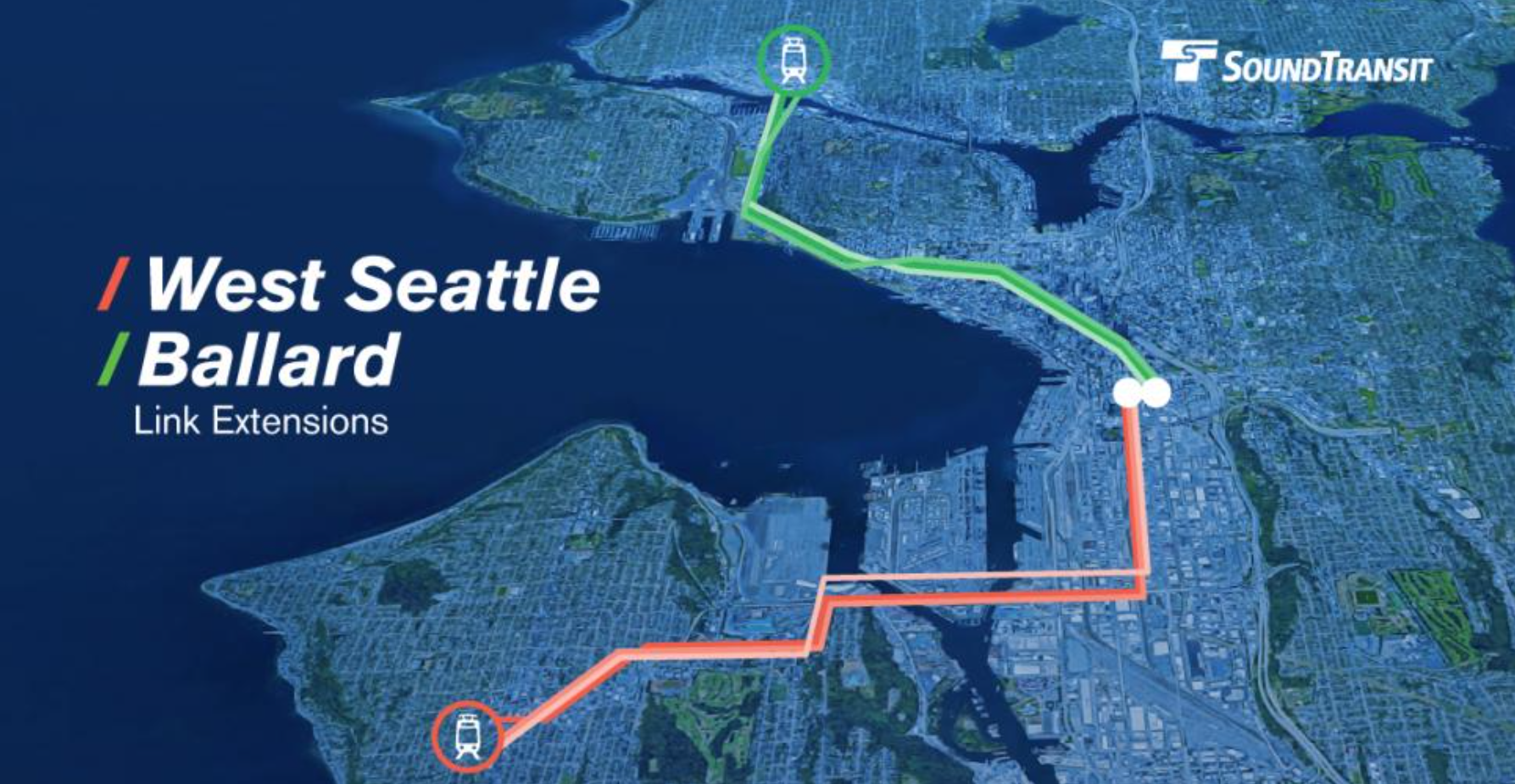
As Sound Transit's next light rail project in the queue, West Seattle Link's status was at the heart of the May 28 board vote that pushed construction timelines on other key projects into the future and left others in limbo. Somers, in keeping the board on an abbreviated timeline take a vote in the face of a $34.5 billion shortfall through the mid-2040s, repeatedly pointed to a need to keep West Seattle Link moving or risk impacts to the only Sound Transit project that currently has federal approval.
Despite the fact that the agency currently lacks construction funding for Ballard Link's three northernmost stations in Interbay and Ballard, Sound Transit officials insist that things are moving full speed ahead on that project as well. They say have an additional six or seven years to find the $7-$9 billion needed to get all the way to 15th Avenue NW and NW Market Street, where the Ballard station is planned.
While West Seattle Link is currently at 30% design, Ballard Link remains further behind in planning, with an estimated 15% of design work complete.
Much still remains outside of Sound Transit's control, like how quickly West Seattle Link can secure federal funding, or how easily other lines will be able to advance through the federal environmental approval process. Earlier this month, Sound Transit leadership confirmed that West Seattle Link is unlikely to break ground without a full funding grant agreement, something that the agency may be waiting on until there's turnover at the White House, which has yet to approve a new transit grant during Trump's second term.
Still, getting the line to full design ultimately means things will be able to fall into place quickly if that agreement is secured.
With an opening date of 2032 still on the calendar, West Seattle Link is moving forward with a major change compared to a few months ago – one fewer station. The Avalon Way station voters signed off on in 2016 will no longer be part of plans, a major source of cost savings that allowed Sound Transit to redesign other major elements of the project including the tunnel portal near Nucor Steel.
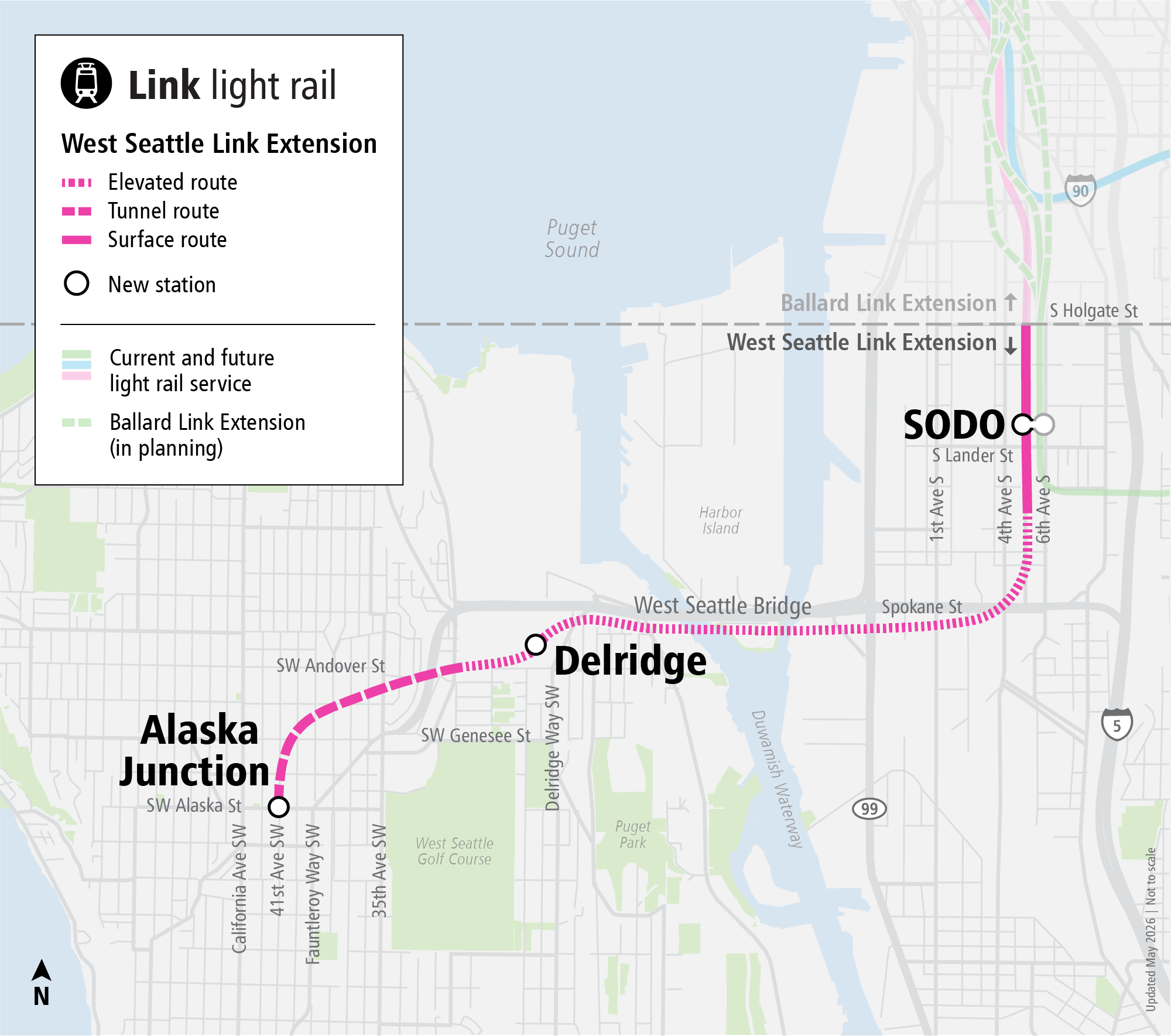
Other design refinements are coming into view as well, and earlier this month, Sound Transit showed members of the Seattle Design Commission updated designs for West Seattle Link's stations.
In SoDo, which will be the transfer point for all 3 Line riders until additional stations open to the north as part of Ballard Link, the station footprint has been significantly scaled back from previous iterations of its design. Multiple escalators and elevators have been dropped from the plans and instead a smaller concourse and canopy are moving forward.
"[Jacobs Engineering] looked at a solution where they concentrated the access and the connections between the platforms at the center, so bringing people kind of naturally where they want to travel, having sufficient number of escalators and elevators and stairs to get people up and over," Jason Hampton, West Seattle Link's project director, told the commission of the cost savings work.
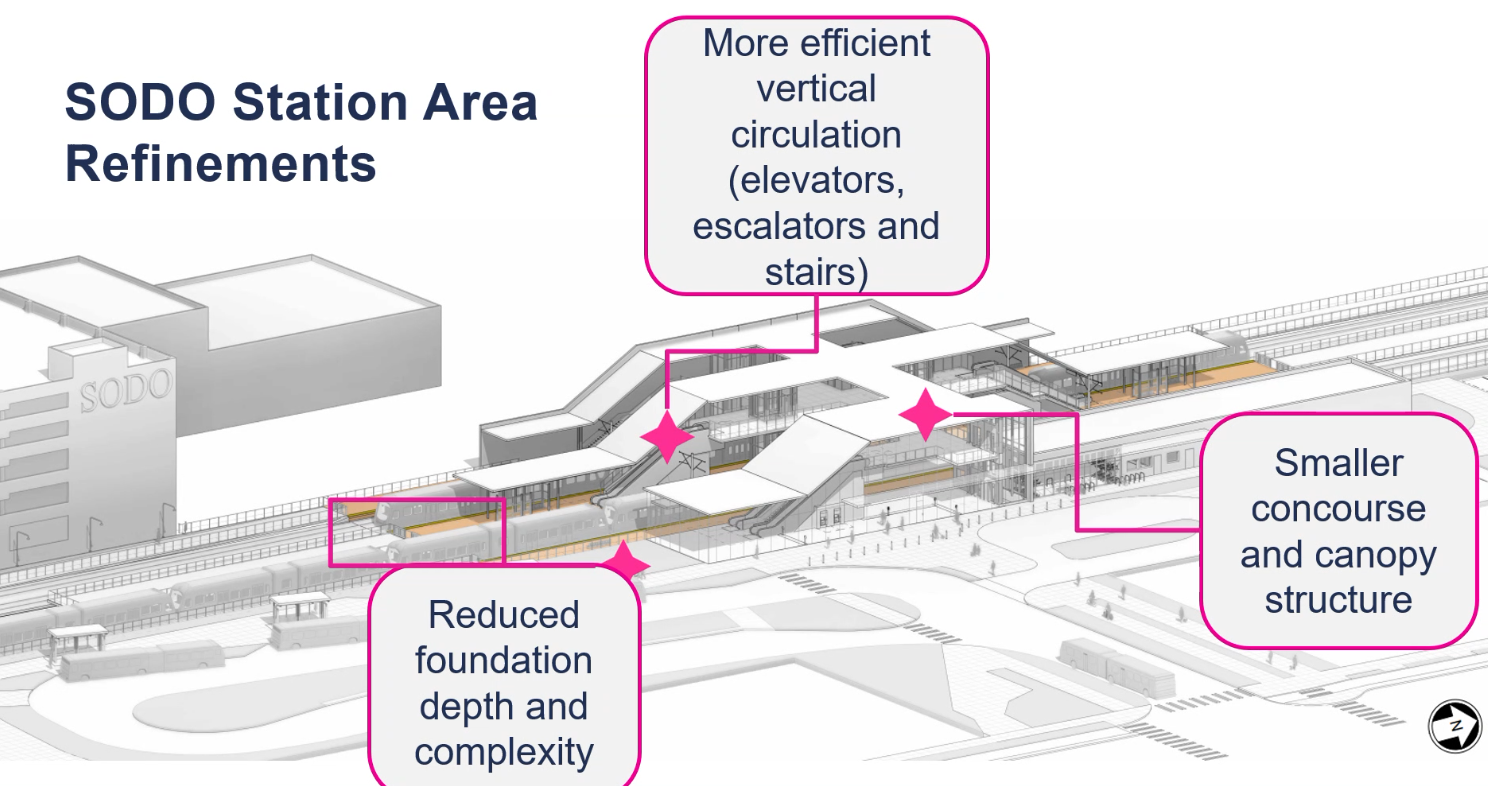
"There's a lot less elevated structure. There's a lot less need for elevators and escalators, because they're more consolidated, and not only does that save you money above ground, but those soils in this area [...] they're really bad," Hampton said, noting that any reduction in the amount of above ground structures in SoDo means less expensive foundation work.
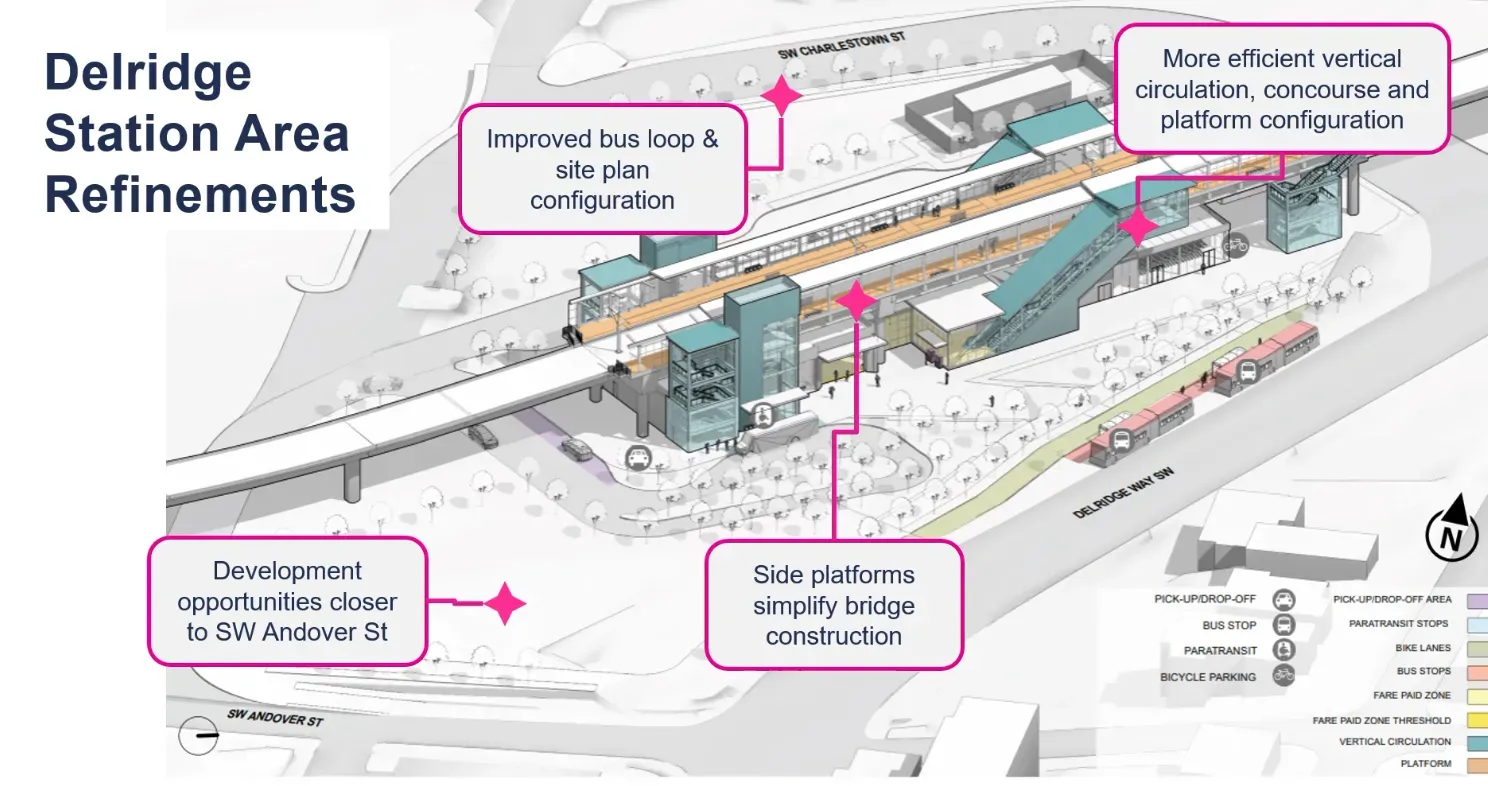
Delridge Station is now planned as a side-loading station, similar the 1 Line station in Mount Baker, a fact that better aligns with plans to use precast segmental construction for West Seattle Link's rail guideway. Planned station elevations have been adjusted to reduce a height differential between one end of the platform and the other, a move that means less will be spent on escalators. And the station has been shifted slightly north, opening up an opportunity for redevelopment of a construction staging area at SW Andover Street.
"You remember we had that plaza at the corner of Andover and Delridge," Hampton said. "There was a lot of discussion about what that would look like as a gateway to the neighborhood. We've opened up that space for a better development site that's more adjacent to the rest of the neighborhood."
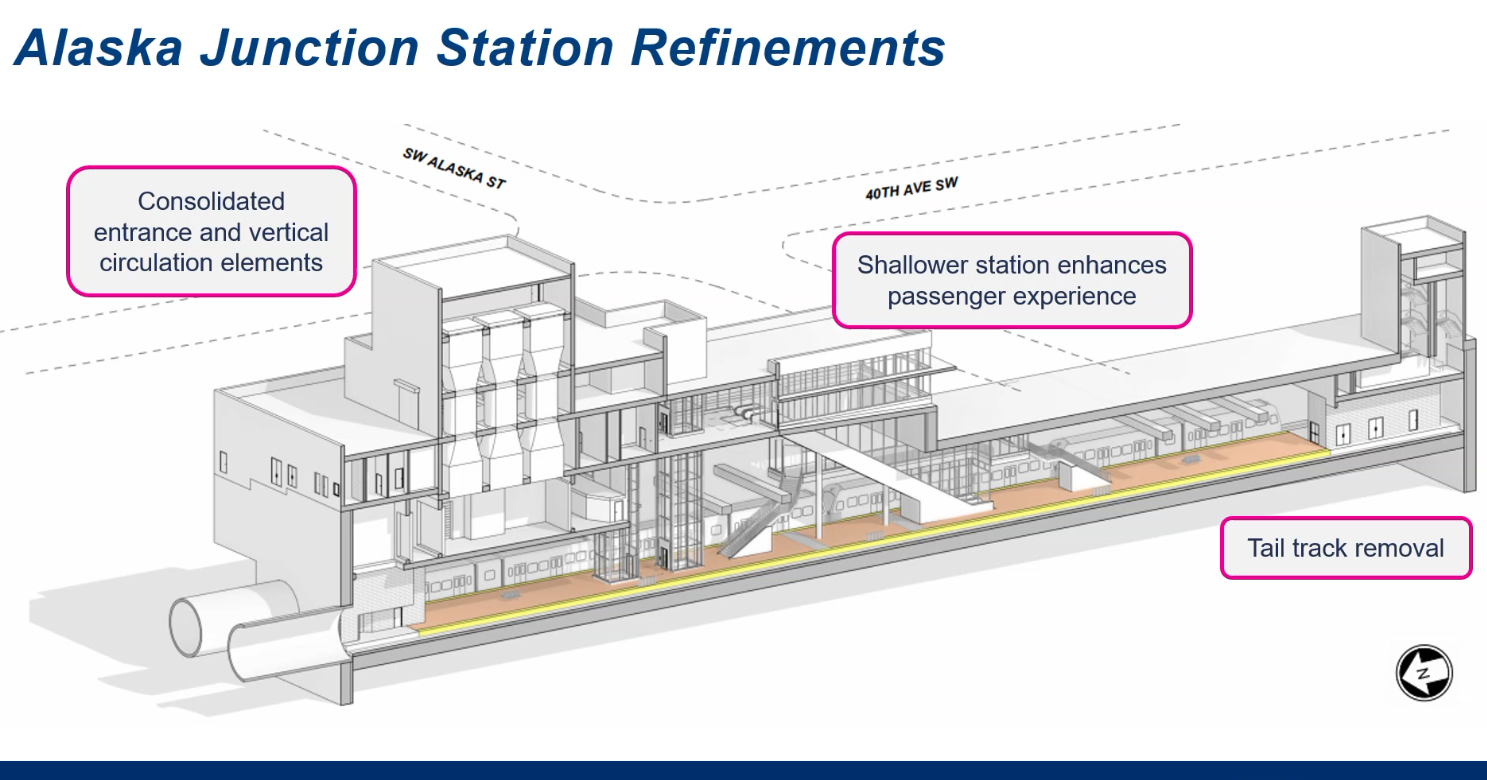
At Alaska Junction, the station has been slimmed down considerably and is now planned to be at a much shallower depth than in previous design iterations. With two headhouses consolidated into one, Sound Transit no longer needs to consider acquiring the business-heavy Jefferson Square property south of SW Alaska Street.
"One of the key tradeoffs here is we only have one station entrance here, so we're showing a station entrance on the north side of Alaska," Hampton said, noting that the shallower station means less time for riders to reach the platform even if coming from the other side, though it does mean crossing a busy street.
While many of these design changes will benefit riders, the biggest benefit is combined together they likely served to get West Seattle Link into the "affordable" column on May 28. Brad Owen, the head of the capital team overseeing Ballard and West Seattle Link, told board members this week that the Mott MacDonald and WSP contract renewal is intended to do exactly the same for Ballard.
"It's the same group of consultants who provided such good cost savings on West Seattle, we are focusing that on Ballard. That focus is along the entire alignment, so that we can reduce costs, reduce schedule impacts from Market Street all the way down to the Chinatown International District," Owen said.
Owen is about to step into a new role, overseeing capital delivery for the entire agency after Deputy CEO Terri Mestas departs her post. "We continue to environmentally clear the entire alignment, and we continue to look for those cost savings and schedule savings along the entire line," Owen said.
While West Seattle Link is far from the finish line, the next time the project comes back before the board it will likely be a vote to put shovels in the ground.
 Ryan Packer
 Doug Trumm