Advocates threw a funeral procession for Ballard light rail ahead of the move.
At a marathon five-hour board meeting Thursday, the Sound Transit board approved a sweeping update to its rail expansion plans, choosing which transit projects to prioritize and which to delay or defer indefinitely. The big shakeup is in response to a precipitous $34 billion budget shortfall over the next two decades. The final vote to recalibrate the plan was approved 16-2, with Seattle Councilmember Dan Strauss and King County Councilmember Claudia Balducci voting no.
The adjustments approved Thursday now leave agency leaders with a need to find $9.3 billion to $11.3 billion in cost savings (or new dollars) to complete the major projects included in the 2016 ST3 package approved by voters, with another $2.5 billion in projects fully deferred and unlikely to be built.
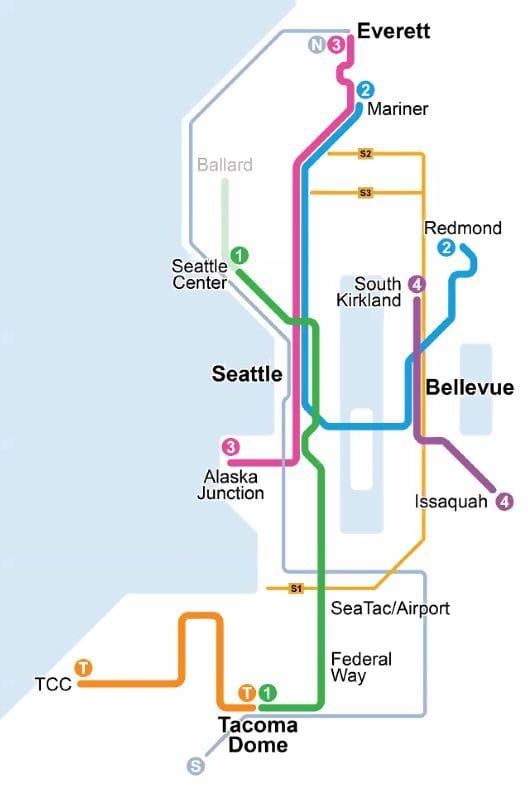
Among the projects that now have unclear futures: a commuter rail extension of the Sounder S Line to DuPont, additional off-peak trips on the broader S Line between Seattle and Pierce County, a 1 Line infill station at Boeing Access Road in North Tukwila, and the northernmost three stations of Ballard Link.
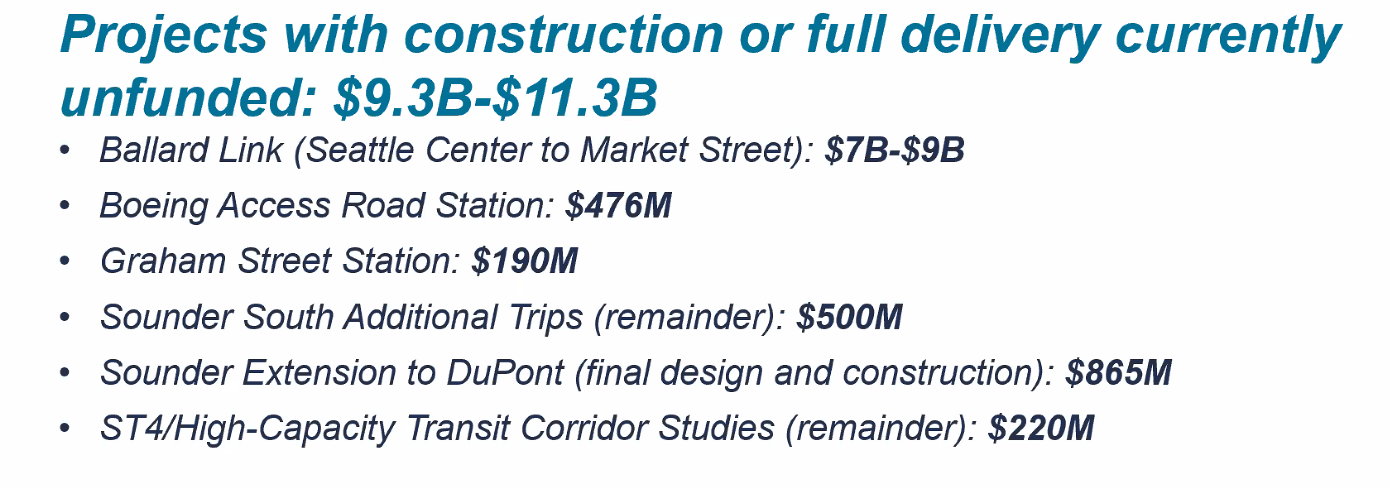
A number of board members portrayed deferral as a temporary setback, pledging all lines would be built eventually. The biggest task left for the board to tackle is how to complete Seattle’s next light rail line between SoDo and Ballard, with everything north of Seattle Center – including stations at Smith Cove, Interbay, and 15th and Market Street in Ballard – now unfunded and with a question mark for an opening date.
The lack of a timeline or a clear path to fund the deferred segment of Ballard Link didn’t sit well with Seattle’s board delegation, including Councilmember Dan Strauss and Mayor Katie Wilson.
“Ballard Link Extension is expected to be the highest ridership project in this program's history, some Ballard precincts passed ST3 with nearly 90% of the vote,” Wilson said “So, the fact that Ballard link extension is the only major project that is not receiving that stamp of full funding today is extremely, extremely upsetting.”
As the culmination of a process led by Sound Transit board chair and Snohomish County Executive Dave Somers, Somers’ own subarea came out of the rebalancing relatively unscathed. While the lightly-used Sounder N Line would be mothballed in 2033, the $9.5 billion Everett Link Extension would stay on track to reach Everett Station by 2041. The only ST3 projects in Snohomish County now on the deferred list are parking garages, part of a systemwide delay building parking garages in favor of transit projects themselves.
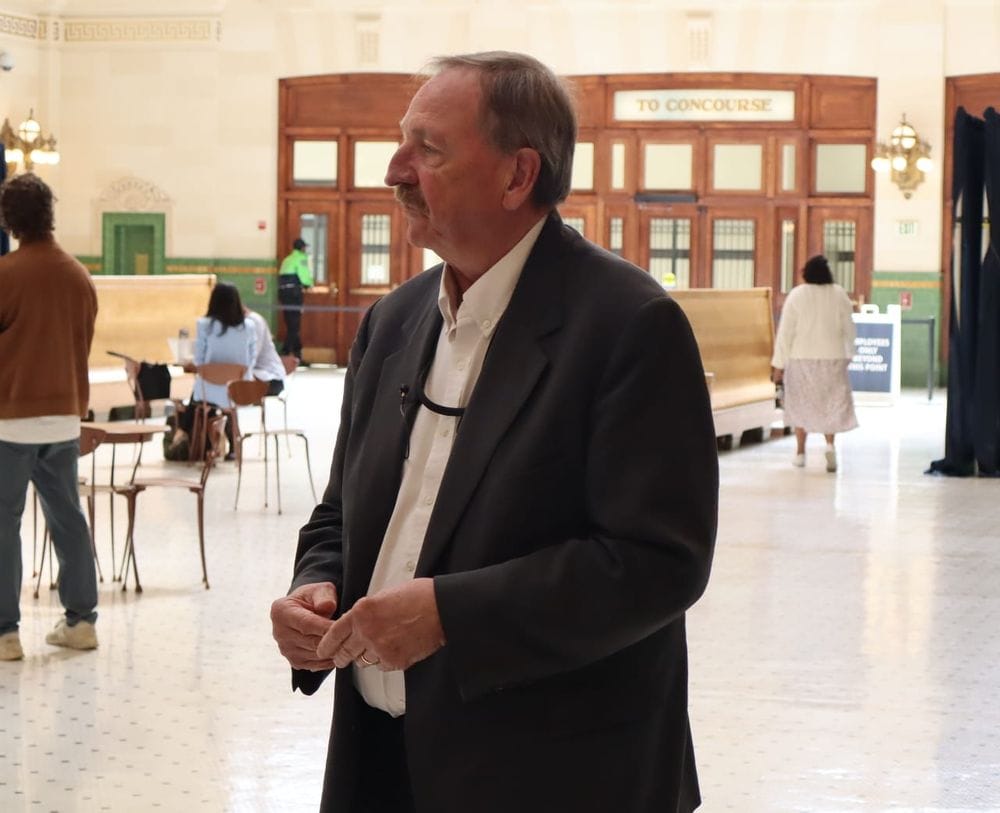
“Nothing in this proposal represents a decision to permanently eliminate the voter-approved vision. Nothing,” Somers said in kicking off Thursday’s meeting. “The proposal does not cancel ST3. It preserves it. It prioritizes continued progress on major light rail extensions, keeps critical projects moving forward, and creates a framework that allows us to continue advancing projects as financial conditions improve, and new opportunities emerge.”
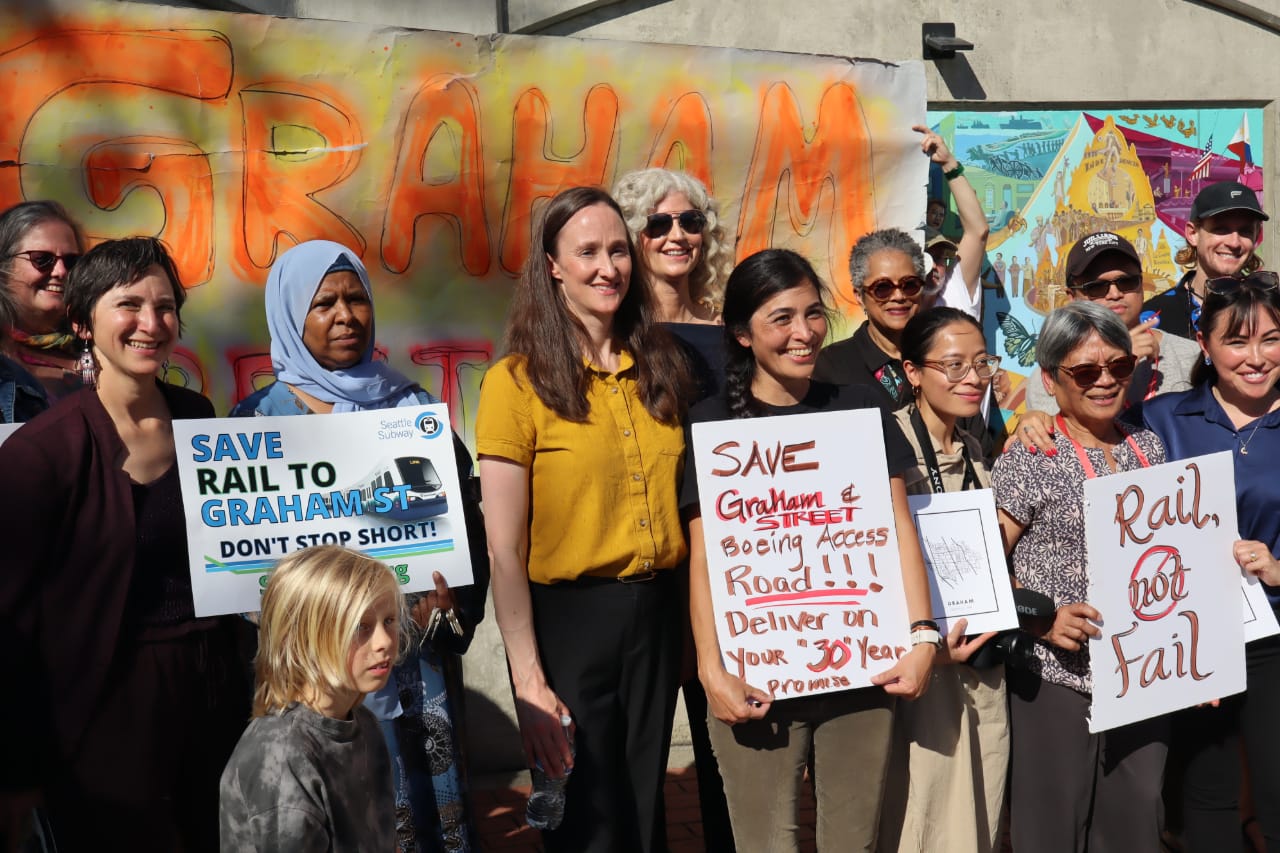
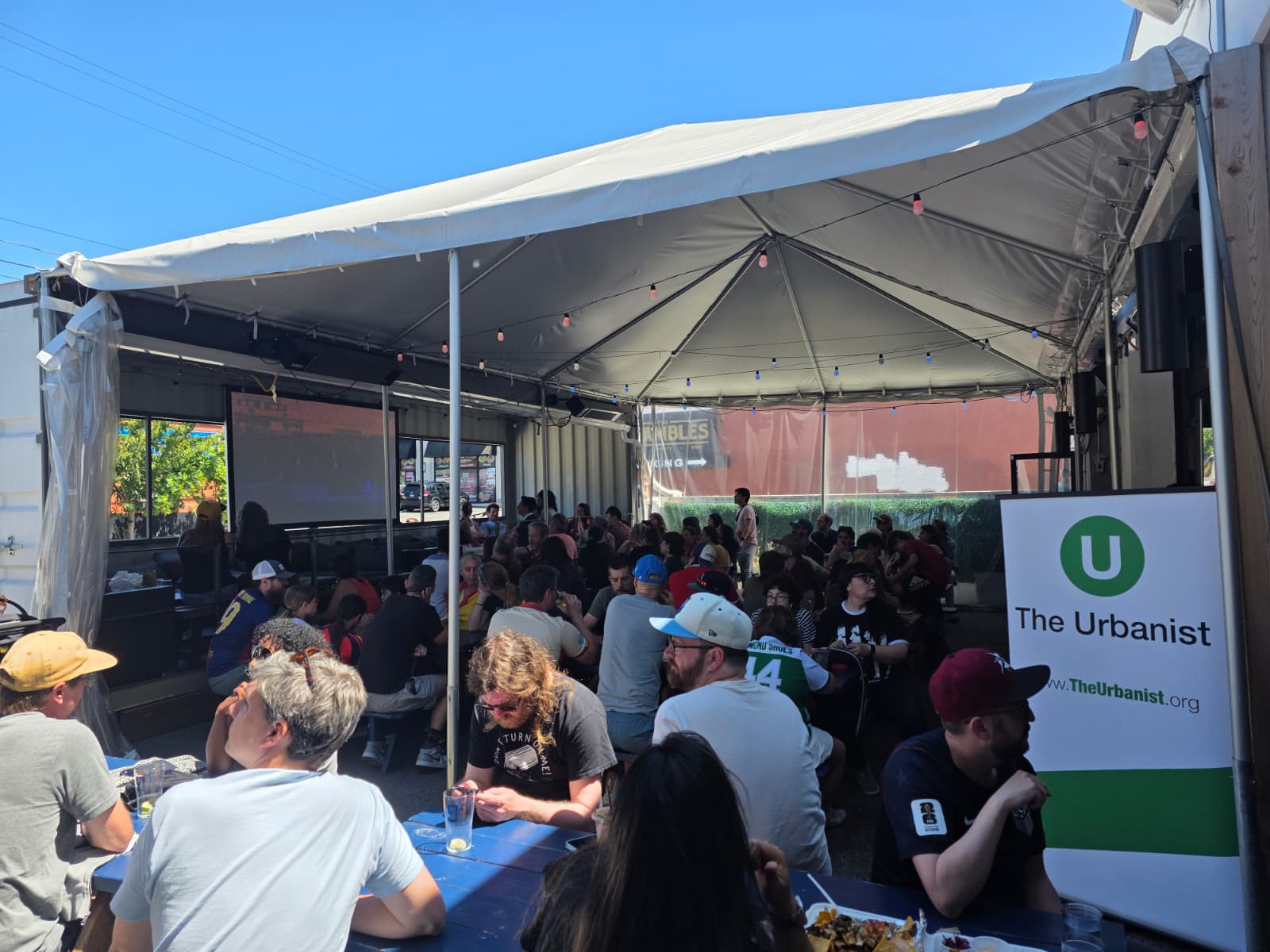
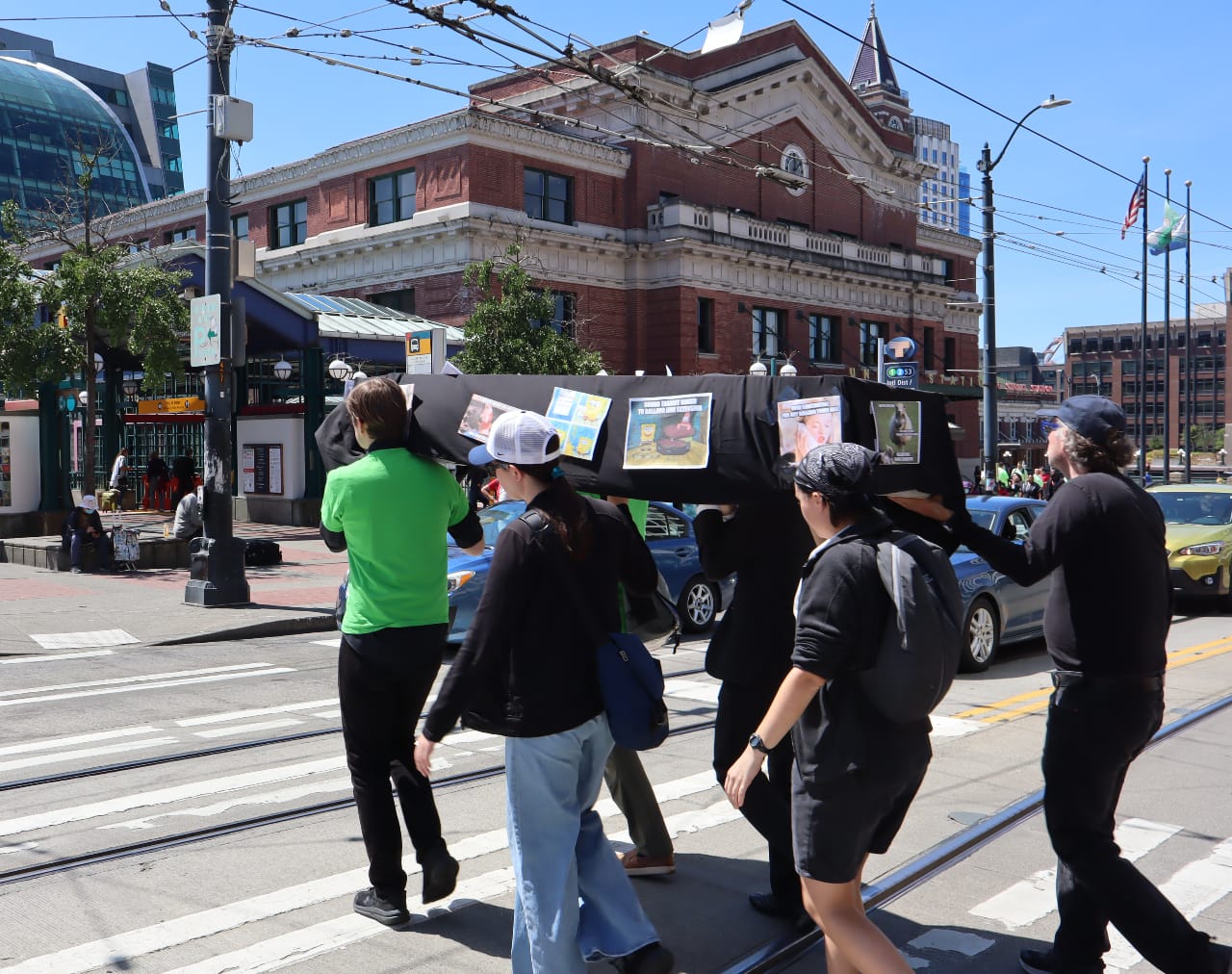
Assurances aside, many transit advocates are skeptical that Sound Transit board members will be able to deliver on their promises to follow through on the full ST3 plan. Ahead of the board meeting, the group Seattle Subway organized a “funeral” for the full Ballard Link project, carrying a cardboard coffin – festooned with memes – through the streets of Downtown Seattle to Union Station.
“We've stood by this agency in its darkest moments. Now we're watching you make the worst decision since voters twice rejected Forward Thrust,” Robert Cruickshank, an advocate with Save Ballard Rail, told the board. “This resolution is terrible policy. The Enterprise Initiative should have been a method to find the financing tools and construction reforms to affordably build all of ST3 by 2040. Now, many of the amendments proposed today do go in that direction, but they come within an overall framework of unacceptable cuts and delays that break the promises made to voters.”
Graham Street Station fully funded, Boeing Access still in limbo
Seattle’s biggest win Thursday came with a successful amendment by Mayor Katie Wilson, King County Executive Girmay Zahilay, and King County Councilmember Teresa Mosqueda to move the long-promised Graham Street infill station into the funded column. That change was partially enabled by explicitly identifying dollars from a federal grant and savings on the forthcoming Pinehurst Station in North Seattle. But the thing that really got it across the finish line was a commitment of “last-in” dollars from the City of Seattle (and potentially King County) if cost savings on the project don’t materialize.
Boeing Access Road station, filling another gap between Rainier Beach and Tukwila International Boulevard Station, wasn’t as lucky as Graham Street. As an elevated station, the price tag for Boeing Access Road is more than twice as high as Graham Street. Even with a board vote to raise Sound Transit’s rental car tax rate, a revenue source that disproportionately benefits the South King County subarea thanks to SeaTac airport, Boeing Access Road remains on the unaffordable list at a whopping $476 million.
Instead, thanks to an amendment from Zahilay, Mosqueda, Tukwila Mayor Thomas McLeod and King County Councilmember Steffanie Fain, Sound Transit will earmark $10 million for transit service in North Tukwila, dollars coming from the “Innovation and Technology Fund” tucked into the ST3 program.
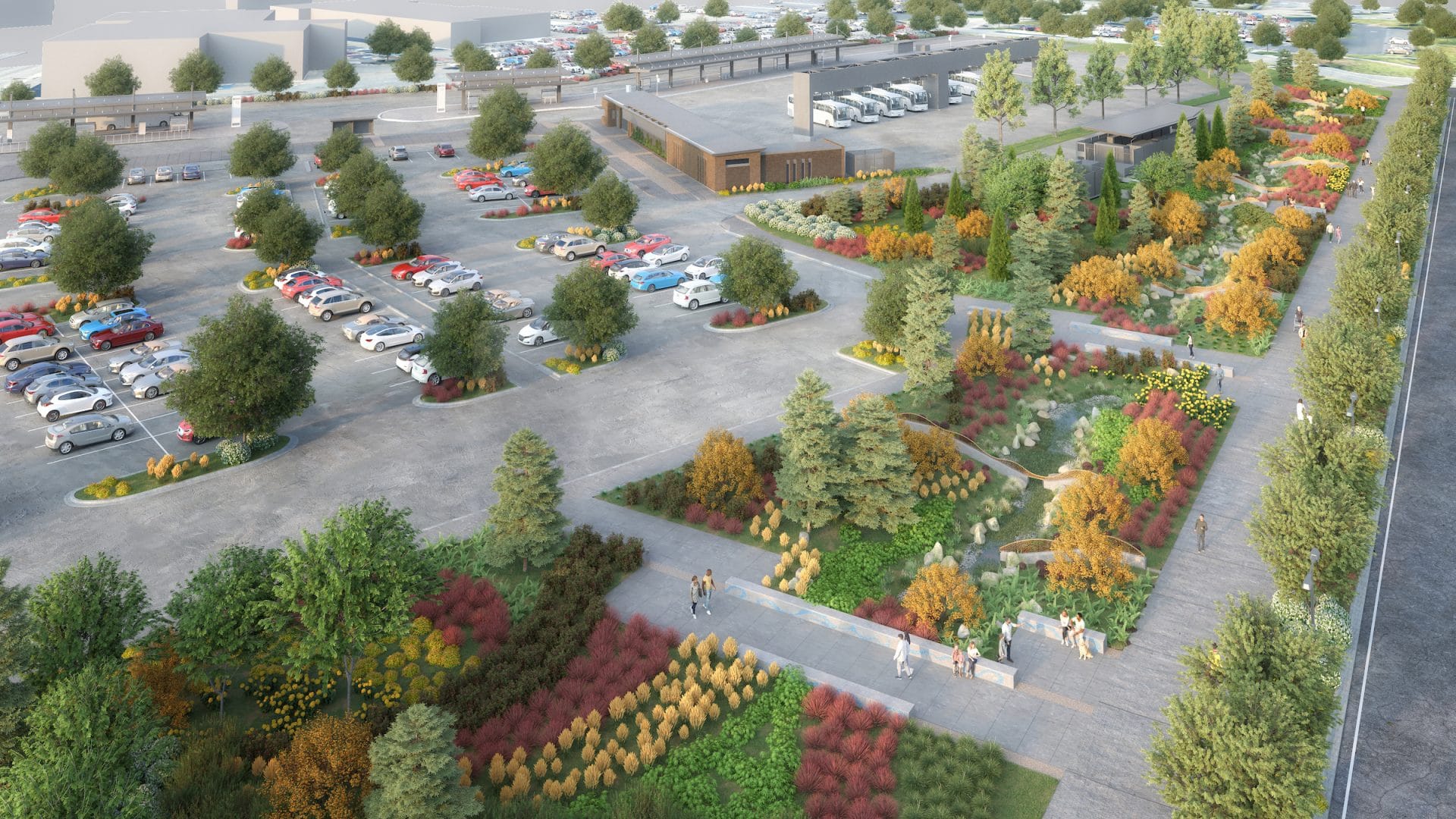
South Renton parking garage restored with $100 million transfer
The City of Renton won its top priority: getting its 700-stall parking garage adjacent to its transit center out of the deferral zone. In a 15-3 vote, boardmembers transferred $100 million to the Renton parking garage from the 4 Line project, which is set to connect Issaquah and South Kirkland to the light rail network in 2050 in the revised plan.
Balducci led the opposition to the amendment, arguing it would deplete transit funding.
"We are a transit agency, not a parking agency," Balducci said. "We should not take money out of our primary mission to do an important, necessary, but ancillary service, and I think we can do that. We do both, but I can't support this funding source, no matter how popular it is."
Balducci offered an alternative amendment that used a different funding source, namely bonding. Zahilay, who co-sponsored the amendment using the 4 Line transfer, objected to this approach.
"The alternative proposal would find $100 million through bonding, a.k.a. borrowing money to invest in parking garages,” Zahilay said. “And when you eat up Sound Transit's debt capacity, that is money that could have otherwise gone to transit that is going to parking."
Wilson and Tacoma Councilmember Kristina Walker joined Balducci in opposing the amendment.
Renton is set to get Stride “S1” bus rapid transit service in 2028, and the agency broke ground on the Renton transit center (sans parking garage) in February. Renton lobbied Sound Transit to move the center closer to I-405 late in the process, raising project costs.
Board keeps second downtown tunnel on track
One of the most significant amendments to bite the dust was a proposal from Strauss, shifting funds from the downtown end of the Ballard Link Extension to the portion of the project between Westlake and Ballard.
Somers and Sound Transit staff leaned heavily on the risk to federal environmental review timelines, with the project’s Environmental Impact Statement (EIS) needing approval.
“In my personal opinion, voting yes on this is the worst thing you could do for Ballard,” Somers said. “It would stop the EIS process dead in its tracks. We would be making no progress until we figured this out, and the responsible thing to do, in my view, for Ballard to keep it moving is to keep the environmental process going. The project we've got on the books in that process moving, and continue to explore options as we go forward. And so I mean that with all sincerity.”
An amendment setting an August deadline for Sound Transit to provide a specific estimated delivery date for the stations in Interbay and Ballard by August did pass in a 13-5 vote. Sound Transit staff made the case that too much uncertainty exists to provide an accurate estimate – at least until 2029 or thereabouts.
“Because the full project is unaffordable within the current finance plan horizon, any date will be unreliable, at least until we reach baselining in early 2029,” Alex Krieg, Sound Transit’s Deputy Executive Director for Enterprise Planning, told board members. “In addition, defining a specific date introduces risks related to the environmental process, given implications for ridership projections and the current horizon year for land use planning and population and employment growth, and the potential rework and costs associated with environmental documentation.”
What’s the rush?
Though the board has been working toward a system update since last year, the process this month has been fairly abbreviated, with only a two-week window for board members to propose amendments to the update, and just 24 hours for members of the public to review them. The sense of urgency is being framed around the need to get the next light rail line in the pipeline, West Seattle Link, back on track as part of an updated financial plan.
The agency has described West Seattle as “shovel ready” – a term of art that refers to the fact that it’s been given federal approval and could theoretically start some “early works” construction activities within a short timeframe. That said, major work isn’t likely to start until 2028.
“When we face affordability challenges at the scale of those we're dealing with now, there are legal limits to how the agency can spend money, especially for higher cost phases like final design and right of way, as in the West Seattle project. Getting back to a balanced and affordable plan is the method by which those legal limits are resolved and enable the agency to confidently move forward with project delivery,” Alex Krieg, Sound Transit’s Deputy Executive Director for Enterprise Planning, told board members. “Should the board act on this resolution, there will be a flurry of activities on the West Seattle project to move it fully into final design and the right of way phase, which will support better schedule certainty.”
So where does ST3 go from here?
The best-case scenario after this week is a transit agency that digs in, with Sound Transit’s capital delivery team uncovering additional cost savings across the ST3 portfolio at the same time other agency officials are able to tap into new financial tools.
The resolution approved Thursday includes a commitment to an Independent Oversight Program, set to be stood up by the end of this year, to “strengthen oversight of project development and construction, provide expert perspective on ST3 program delivery, and identify opportunities to improve cost, schedule, and financial outcomes.” On top of that, the board added in direction to put forward a Request for Information (RFI) to “identify strategies that reduce cost or speed delivery through innovative technologies.”
“This work is not finished until every project is on the map, and every light rail line is built,” Kirk Hovenkotter, Executive Director of Transportation Choices Coalition, said at a rally held before the board meeting. “The work turns to city halls across our region, and it turns to the legislature. The board must direct the cities it leads to do everything they can to build light rail quickly and affordably, and the governor and the legislature need to step up. This winter, we will be in the halls of Olympia. We’re going to channel the energy you see today, and we’re going to finish what we started at the ballot in 2016 and together we're going to build the damn trains.”
This spring, Sound Transit had lobbied for state authorization to issue longer term bonds up to 75 years in length, in order to expand its financing capacity, but was rebuffed in the state House. Agency officials vowed to try again next session, but without the state go-ahead, longer term bonds couldn’t be factored into the rebalancing plan approved Thursday.
The federal government is positioned to be a hindrance to Sound Transit’s project timelines, at least for the remaining 2.5 years in Trump’s term. During this Trump term, the Federal Transit Administration (FTA) has approved no new grant agreements for transit projects nationwide. With the agency hoping for a New Starts grant for West Seattle Link (not to mention other projects further back in the queue), this could make it a challenge to break ground in that timeframe.
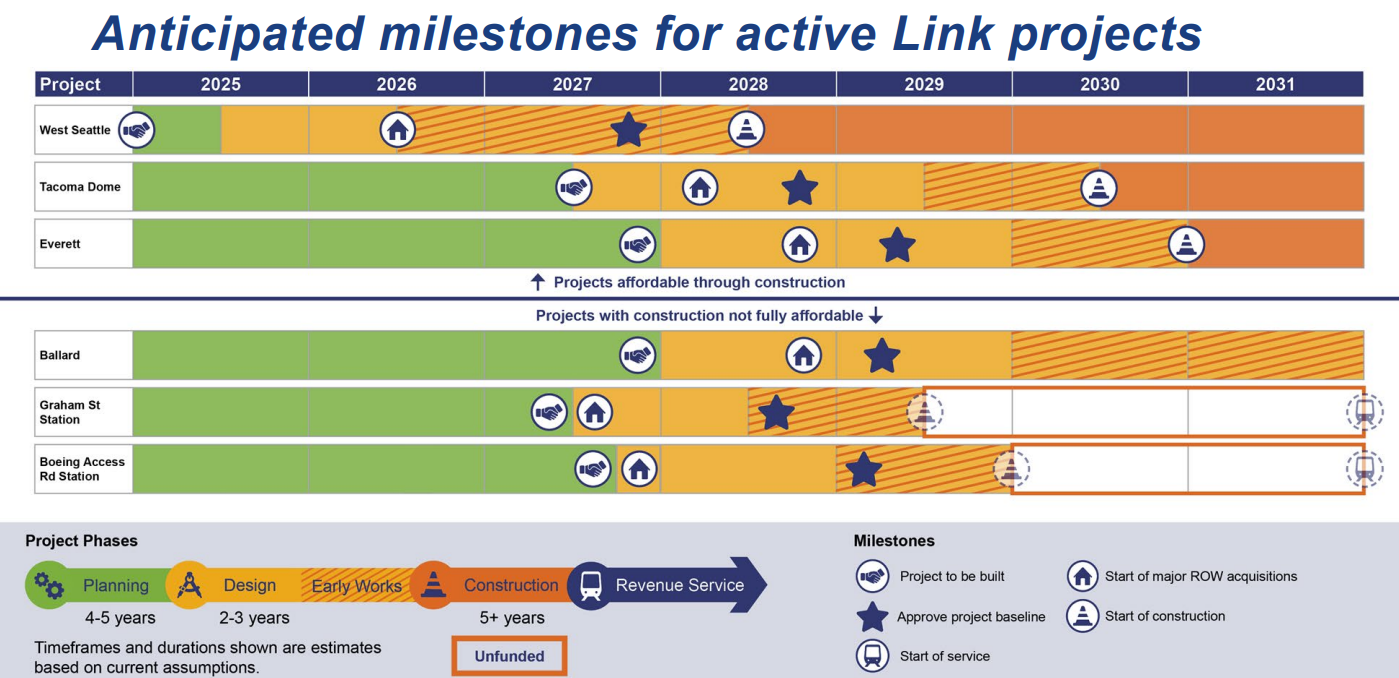
Ballard Link, Tacoma Dome Link, and Everett Link are still in the environmental review phase and hoping for a Record of Decision with the FTA in order to advance to full design and engineering work. While West Seattle Link was able to secure a federal Record of Decision in 2025 after a few hurdles, Ballard Link has run into major snags to advance toward its own decision, potentially signaling more serious obstacles ahead for other lines.
Balducci pressed the staff and board to follow up with next steps to advance the deferred Ballard stations. While Krieg seemed to envision more details about delivering Ballard arriving in 2029, that is not likely to be good enough for a number of board members.
“We have so much to be proud of with respect to moving forward with West Seattle and Graham Street station, and getting to 100% design on Ballard, and completing the spine, and advancing the the 4 Line in South Kirkland and Issaquah, and we also recognize that there is a lot of understandable disappointment and frustration from communities like Ballard,” Zahilay told reporters following Thursday’s meeting. "And what I would say to them is the work is not done. The work is nowhere near done. The work won't be done until every single station in ST3 has been completed.”
 Doug Trumm
 Scott Kubly