With the Sound Transit board days away from voting on a update to the Sound Transit 3 plan, a move that is poised to take completion dates for numerous major transit projects off the calendar, Seattle Councilmember Dan Strauss has reignited a conversation about whether funding to build a second light rail tunnel in Downtown Seattle could be shifted elsewhere.
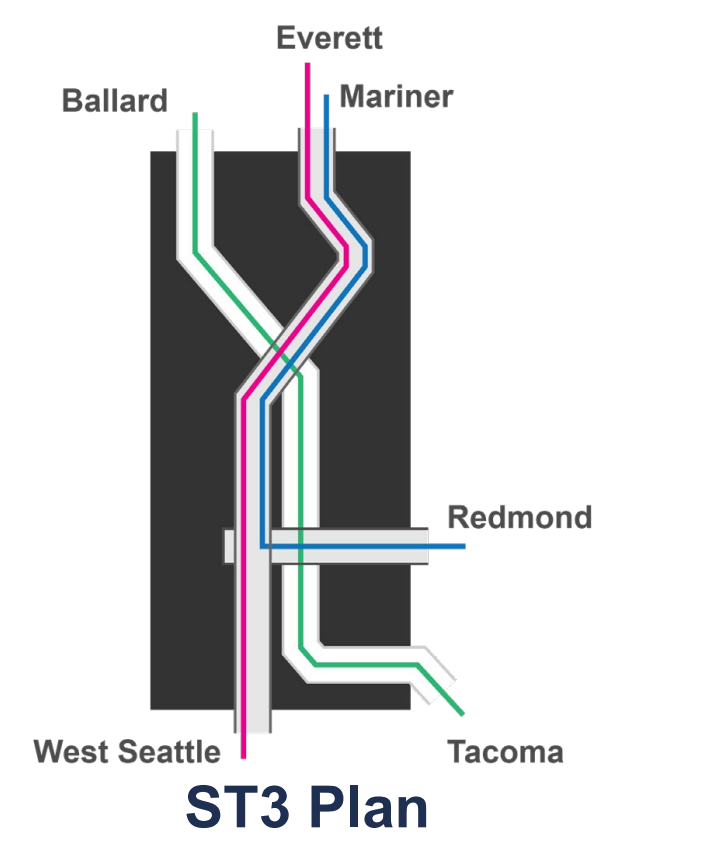
The second downtown tunnel is a central part of the ST3 plan, planned to carry riders heading from Tacoma and the Rainier Valley through South Lake Union and onto Ballard. Unlike other transit projects that voters approved in 2016, it's being funded jointly by taxpayers regionwide from Everett to Lakewood and Sammamish – an exception to the longstanding policy tying investments to dollars raised locally in that "subarea" of the region.
The exception had been carved out under the reasoning that the gains in passenger capacity and system redundancy from the second tunnel will improve service for the entire region. Keeping trains on the Ballard-to-Tacoma line out of the strained 1980s transit tunnel used by Sound Transit today will benefit the two other lines. Following expansion projects, the lines slated to operate in the older tunnel will be the Redmond to Mariner line and West Seattle to Everett Station line. Those lines are expected to push the older tunnel near capacity limits.
Sound Transit Board Chair Dave Somers' "Affordable ST3" plan intends to keep the second tunnel on track, while throwing the rest of the Ballard Link Extension into limbo. The entire project would be advanced to full design, but from today's vantage point, Sound Transit says it doesn't have enough funding to extend the line any further north than Seattle Center.
Furthermore, the agency claims it cannot provide a projected date when the line would reach Interbay or its planned Ballard terminus at 15th Avenue NW and NW Market Street. "Ballard 2066" has quickly turned into an online meme, as transit advocates speculate in lieu of information from the agency.
Set to be released Tuesday, Strauss's amendment would shift the dollars Seattle and Shoreline are contributing to the second tunnel further north, essentially flipping the script on Ballard Link. The tunnel would be left with some funding, but not enough to cover the entire estimated cost. Without Sound Transit uncovering additional cost savings (or receiving additional dollars), it couldn't be built as envisioned today.
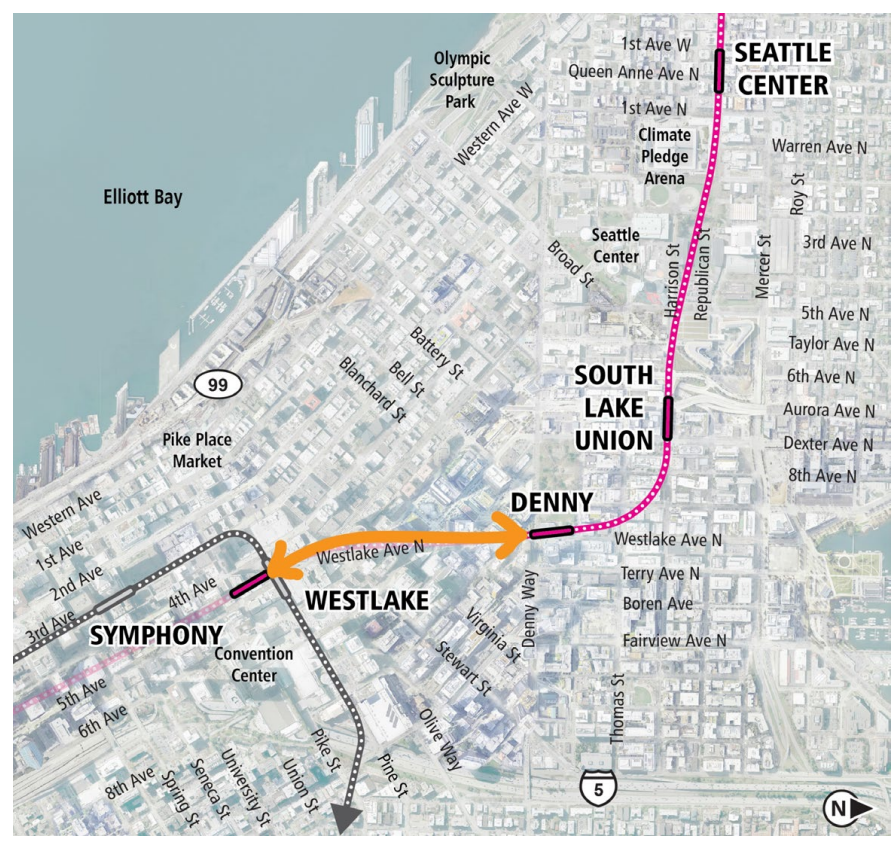
"This amendment is functionally shifting the North King County dollars that are allocated to the Ballard Link extension from where they are today, which is SoDo to Seattle Center, and reallocating them to Westlake to Ballard," Strauss told The Urbanist late last week. "The remaining of the $7 billion of regional funds would be held constant, status quo, no change there. They would still be allocated to the downtown tunnel."
With a Ballard "starter line" – as Strauss is calling it – Sound Transit would either need to build an independent operations and maintenance facility somewhere between Westlake and Ballard, or find a way to connect to its SoDo maintenance base. That could take the form of interlining with the existing downtown tunnel, or building a new tunnel that isn't built to carry passengers and could be upgraded with full stations later.
Delaying the second downtown tunnel would entail West Seattle Link operating as a stub line terminating in SoDO for a longer duration, extending the period with a forced transfer and slower trip for those riders.
Sound Transit looked at building a Ballard "stub line" late last year, but set the idea aside, with numerous board members contending that it would be too risky to change course. But Strauss, who has been one of the most bombastic among Sound Transit board members in his support for getting all the way to Downtown Ballard, wants to give it another look.
Finding a way to build Ballard Link without the downtown tunnel, Sound Transit's initial analysis found, could save more than $4 billion in 2025 dollars – a number that grows even larger when factoring in inflation. That sum dwarfs other ideas for potential cost savings that have been put on the table so far.
"We want the second tunnel, but there are other ways to connect the metropolitan regional center that is Ballard to the spine of light rail, and that's the goal here, connect Ballard to the spine," Strauss said. "The best-case scenario is we work hard this next year and identify the savings and funding opportunities that allow us to just fully fund the tunnel and just keep going."
Since announcing a $34.5 billion funding gap through 2046 last year, Sound Transit has been working to bring that number down, with the plan Somers released earlier this month narrowing the gap to $11 to $13 billion, in part by extending the range of the agency's financial plan to 2052. But that shortfall still leaves much of Ballard Link unfunded, along with the Graham Street and Boeing Access Road infill stations along the existing 1 Line, and a Sounder S Line extension to DuPont. The 4 Line between South Kirkland and Issaquah would be pushed to 2050, 34 years after voters gave the green light.
As an area of the region where voters turned out in high numbers to support ST3, Ballard residents have been loudly crying foul on any recalibration of the plan that leaves out the neighborhood, pointing to the highest ridership projections out of any ST3 project. The agency expects the full SoDo to Ballard line to generate 90,000 to 137,000 daily riders, either boarding or disembarking somewhere between Chinatown International District and Ballard every single day.
That said, Sound Transit expects only 25% of those riders to be using stations north of Seattle Center. The bulk of those other riders would use stations somewhere downtown, where they could potentially use the existing tunnel.
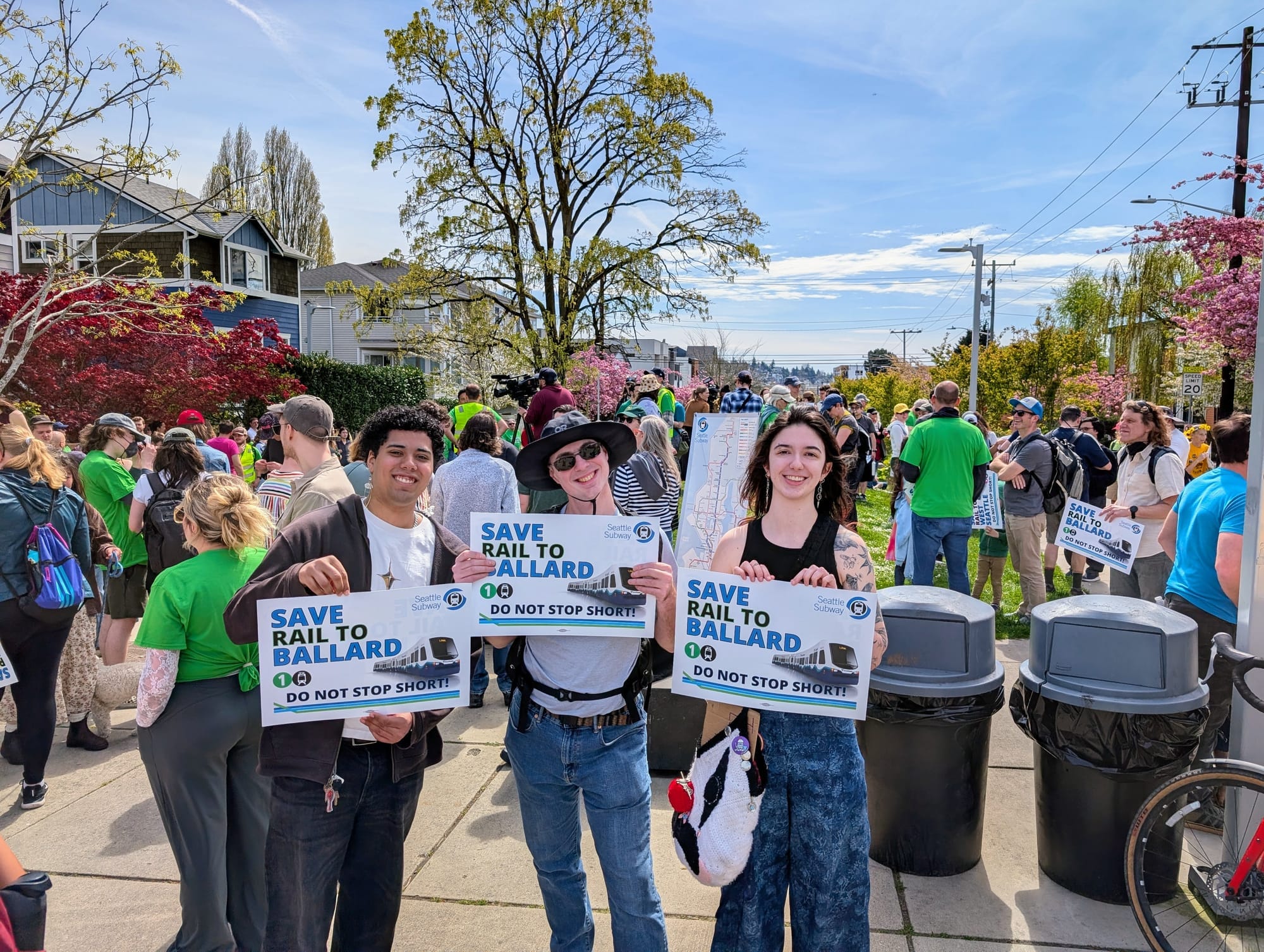
"Sound Transit has done a good job of building out a regional network. The fact that you can get from Northgate to Redmond without transferring is a really big deal," Strauss said. "And right now, the only metropolitan regional centers that are not connected to the spine, in this plan – because we're connecting to Everett, and Tacoma – are South Lake Union and Ballard, and this amendment would ensure that every metropolitan regional center will be connected to our spine, so that no matter what city you live in, in this region, no matter what suburb you live in, you have the ability to access this regional transit system."
The timeline for considering this major update ahead of Thursday's final vote has been very condensed, with only a few weeks for Sound Transit board members to provide potential amendments. Somers has pointed to the fact that the agency needs to get West Seattle Link – its only current light rail project with federal approval – advanced toward construction or risk seeing that approval pulled back. Meanwhile, the environmental review on Ballard Link is months overdue, likely stemming from delays at the Trump-run Federal Transit Administration, which has slowed transit approvals and grants nationwide.
Strauss told The Urbanist that the short timeline has made it harder to marshal support behind his proposal, though convincing suburban board members to support a proposal that primarily benefits Seattle riders would have always been an uphill battle. And he suggested that it might be better for the board to postpone its vote, spending more time on the potential impact on riders in places like Ballard.
"I think that these are generational decisions," Strauss said. "I don't think we should rush to make generational decisions without more information."
 Doug Trumm
 Ryan Packer