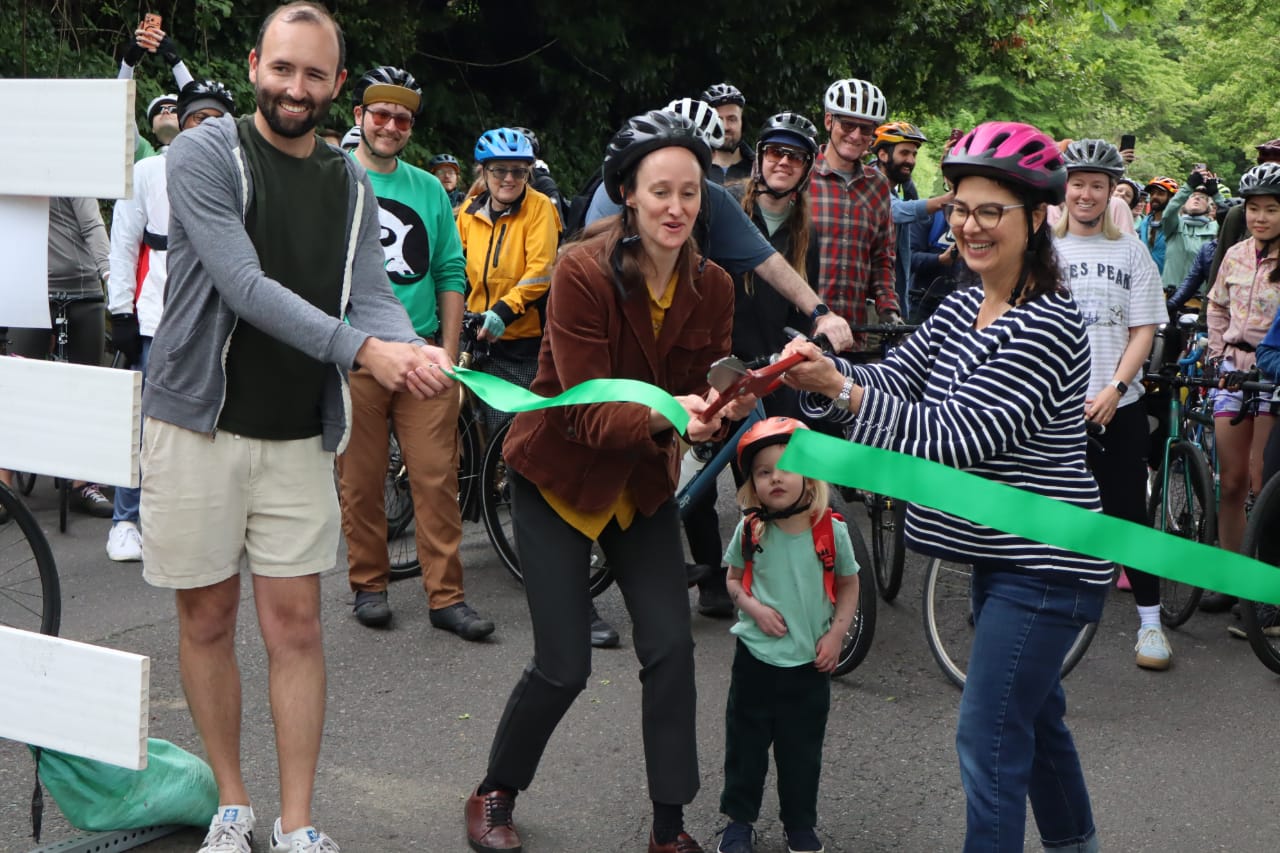
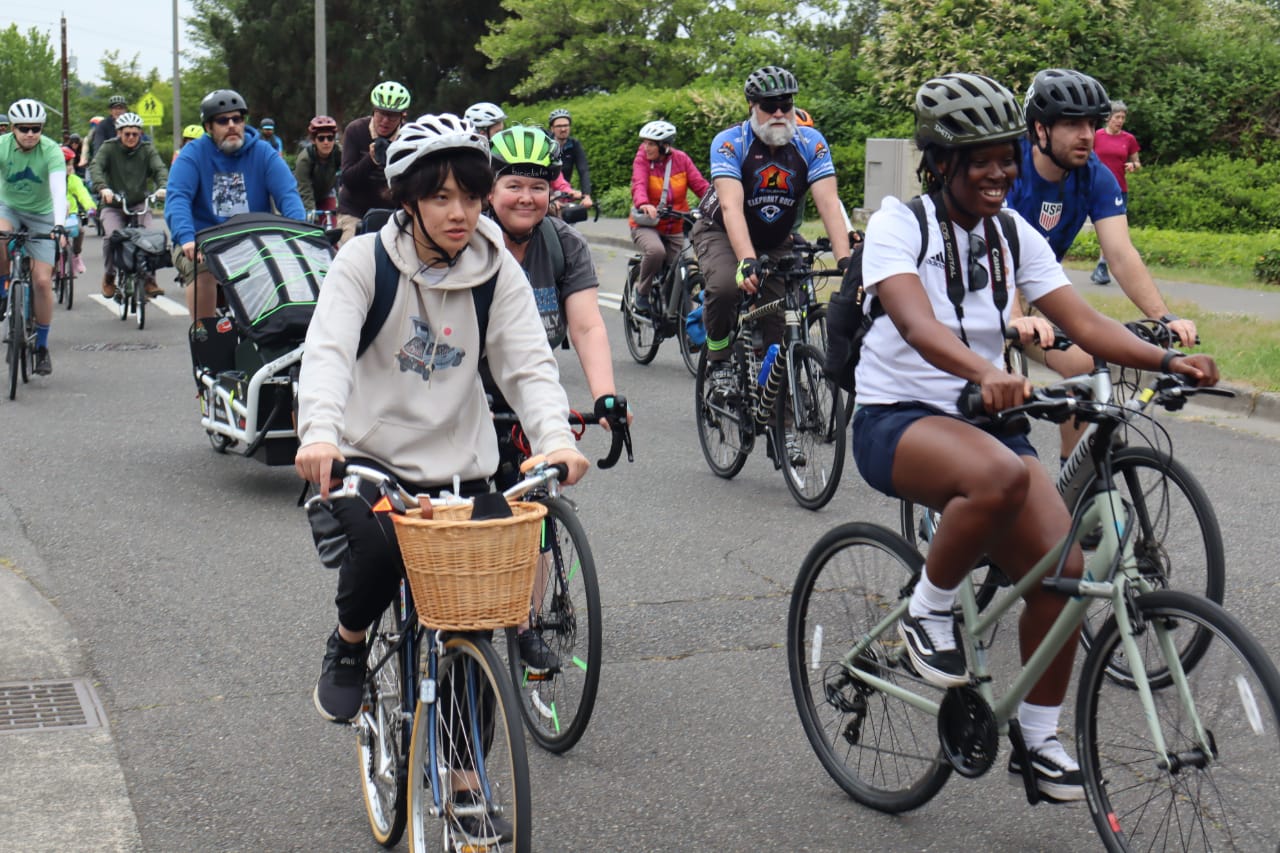
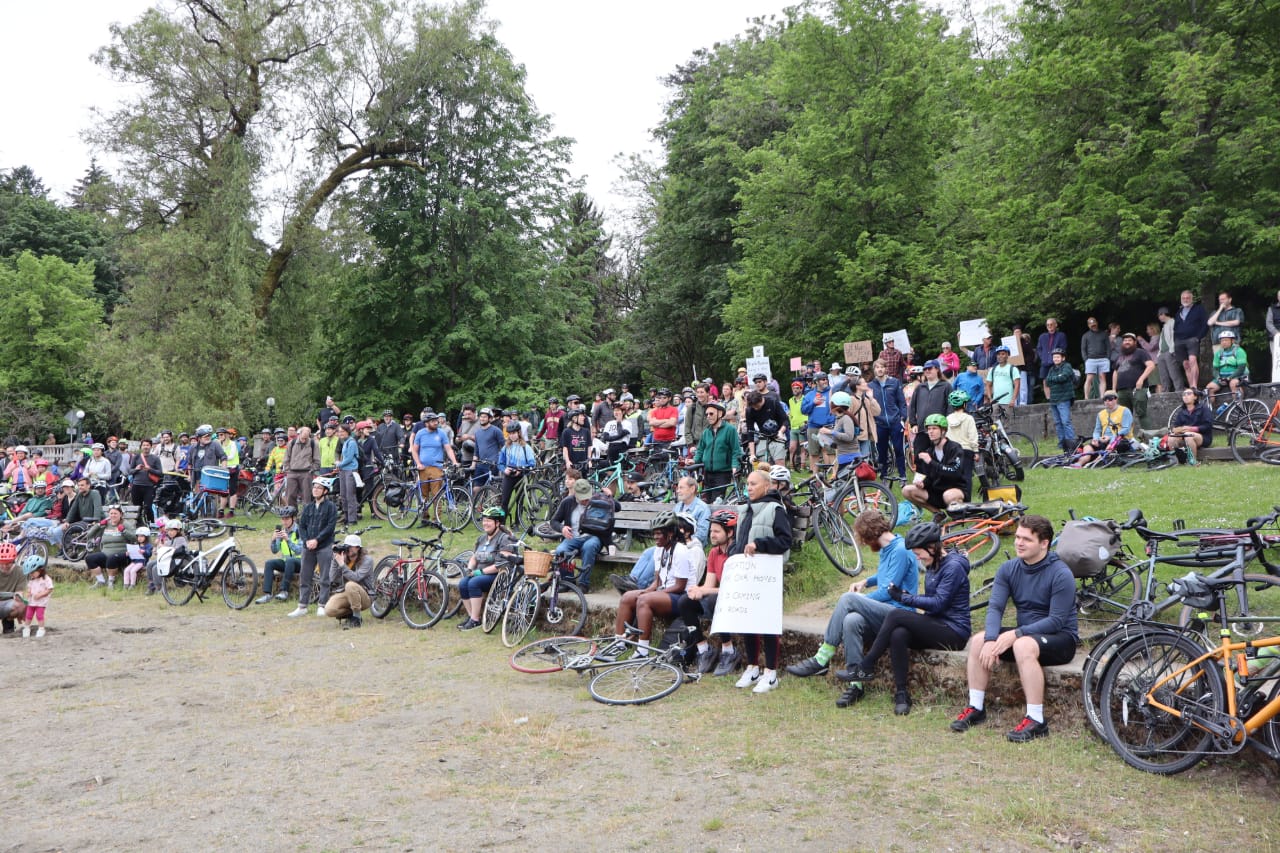
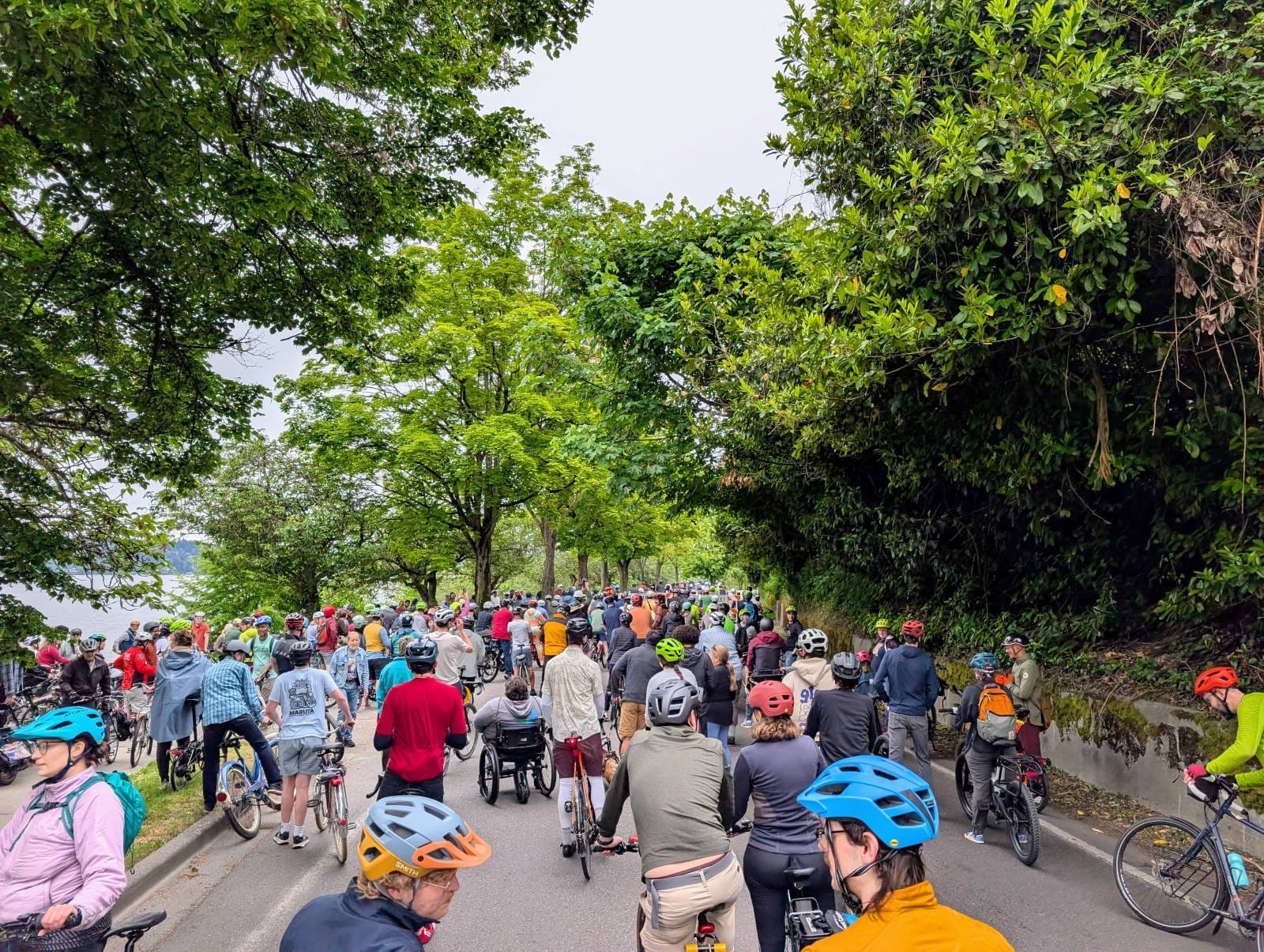
Seattle Mayor Katie Wilson kicked off the long Memorial Day weekend with a bike ride on Saturday – with around 300 of her fellow Seattleites. The launch for the 2026 Bicycle Weekend season on Lake Washington Boulevard drew safe streets advocates from all over the city celebrating an expanded schedule this year.
Rainier Valley Safe Streets, which organized Saturday's event, pulled out all the stops to start the season with a bang for Seattle's only annual open streets event, which stretches along a three-mile segment of Lake Washington Boulevard from Mount Baker to Seward Park.
Opening up the park boulevard for walking, biking, and rolling on summer weekends is a tradition that dates back to 1968, making it even older than other storied local institutions like the Seattle International Film Festival and Bumbershoot. But in recent years, the program has been thrown into political turmoil, with former Mayor Bruce Harrell significantly scaling back the Bicycle Weekend schedule after it was expanded under his predecessor, Jenny Durkan.
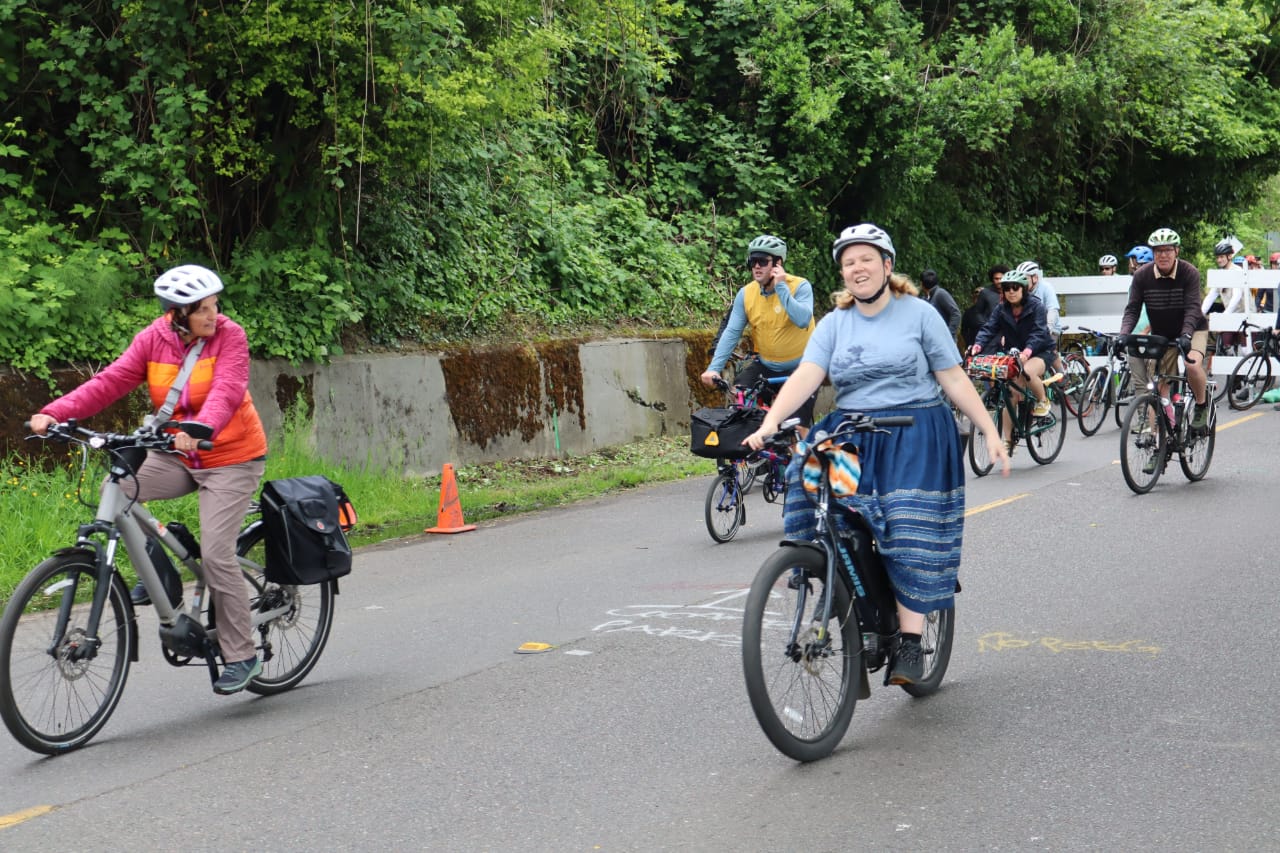
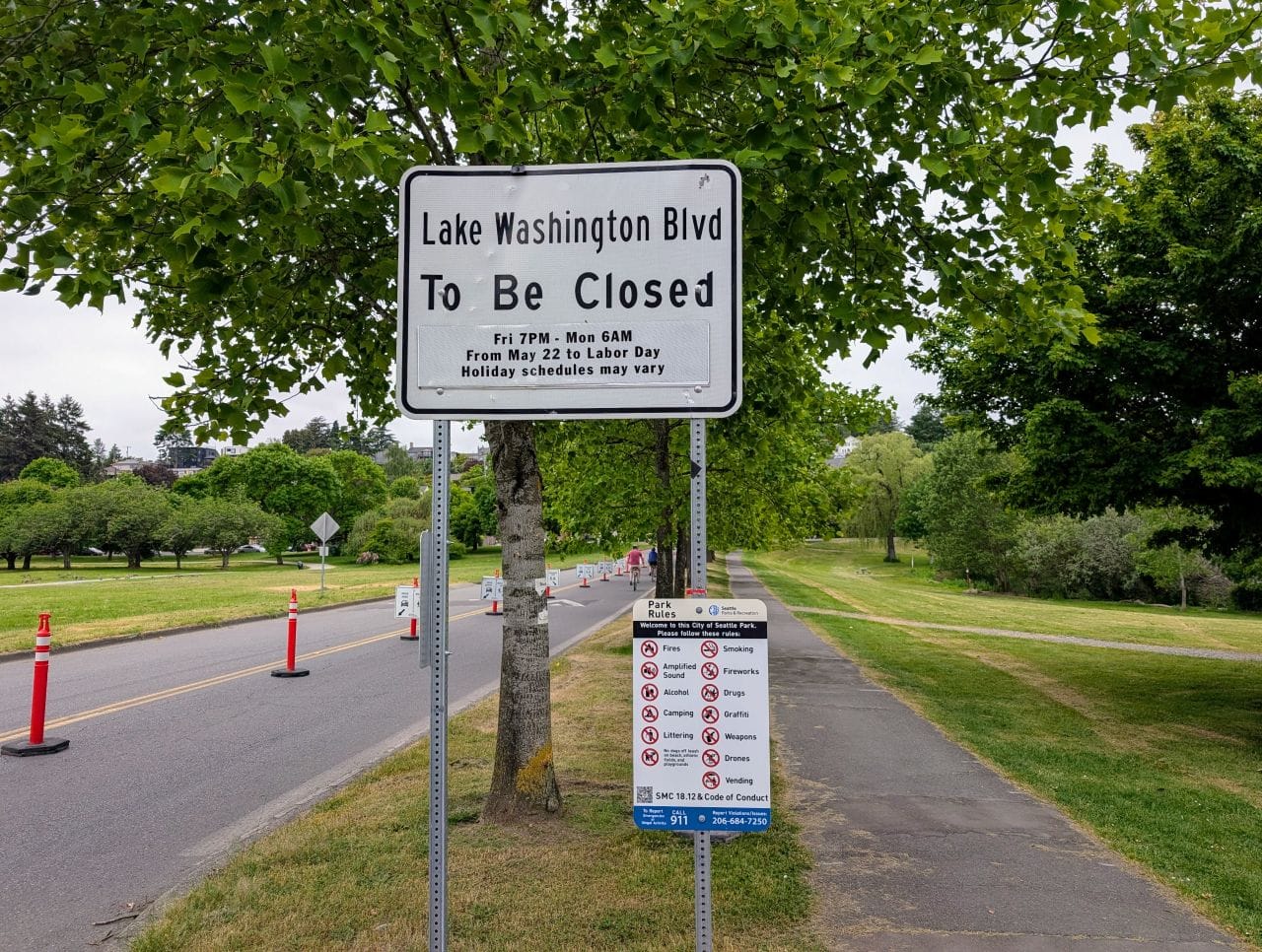
Wilson's reversal of that decision strongly aligned with the result of a 2022 public survey showing that 62% of Seattle residents wanted to see Bicycle Weekends expanded across more days. This year, every single weekend between Memorial Day and Labor Day – apart from Seafair weekend July 31 to August 2 – will be Bicycle Weekends, with the hours of operation expanded to include Friday and Sunday night.
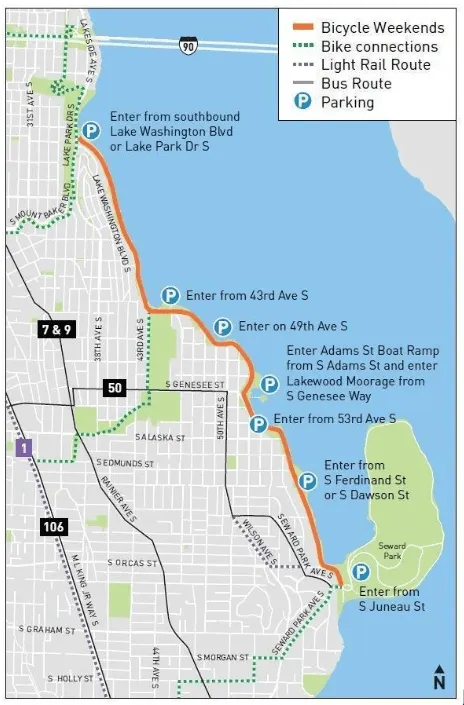
All parking lots along Lake Washington Boulevard remain open on Bicycle Weekends. Property owners with driveways along the street have exemptions to maintain access, though long stretches of the boulevard do not contain any driveways or houses at all.
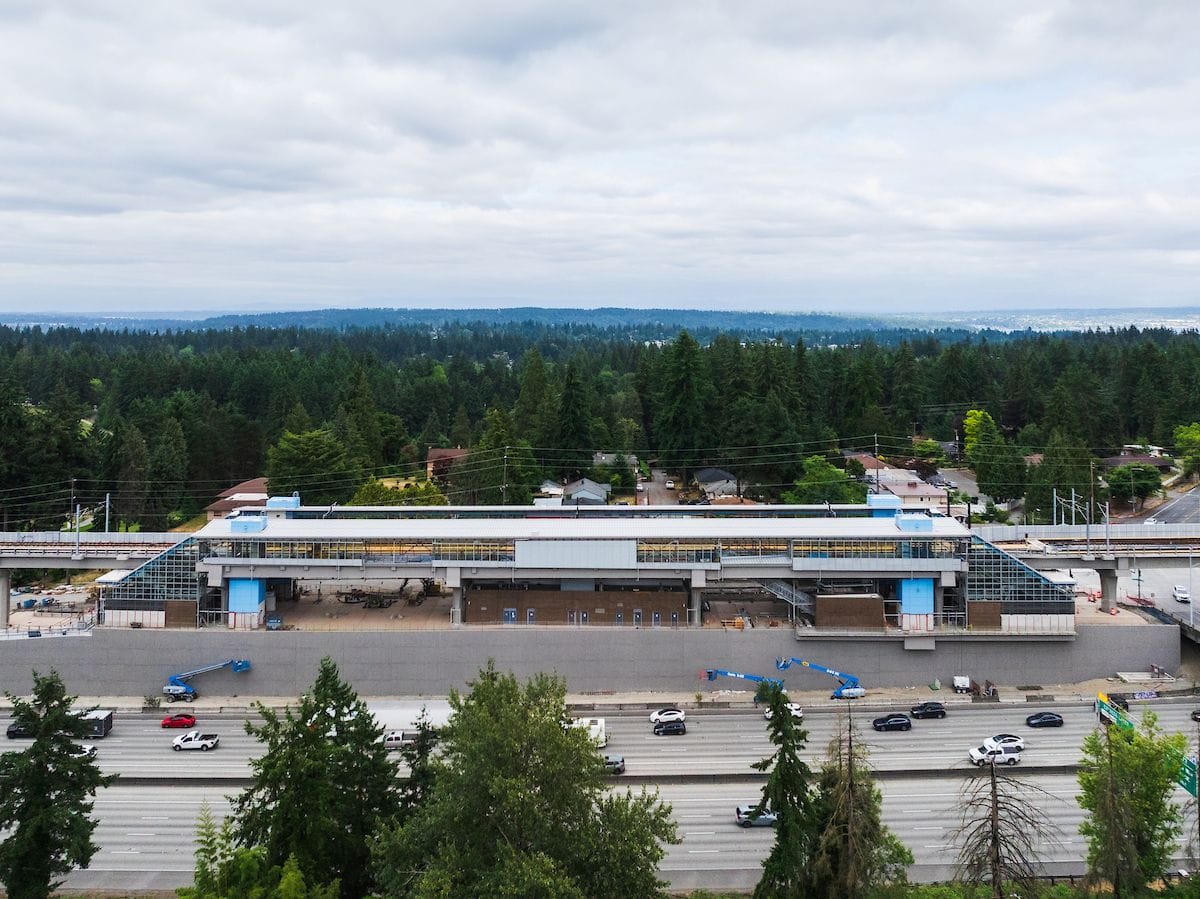
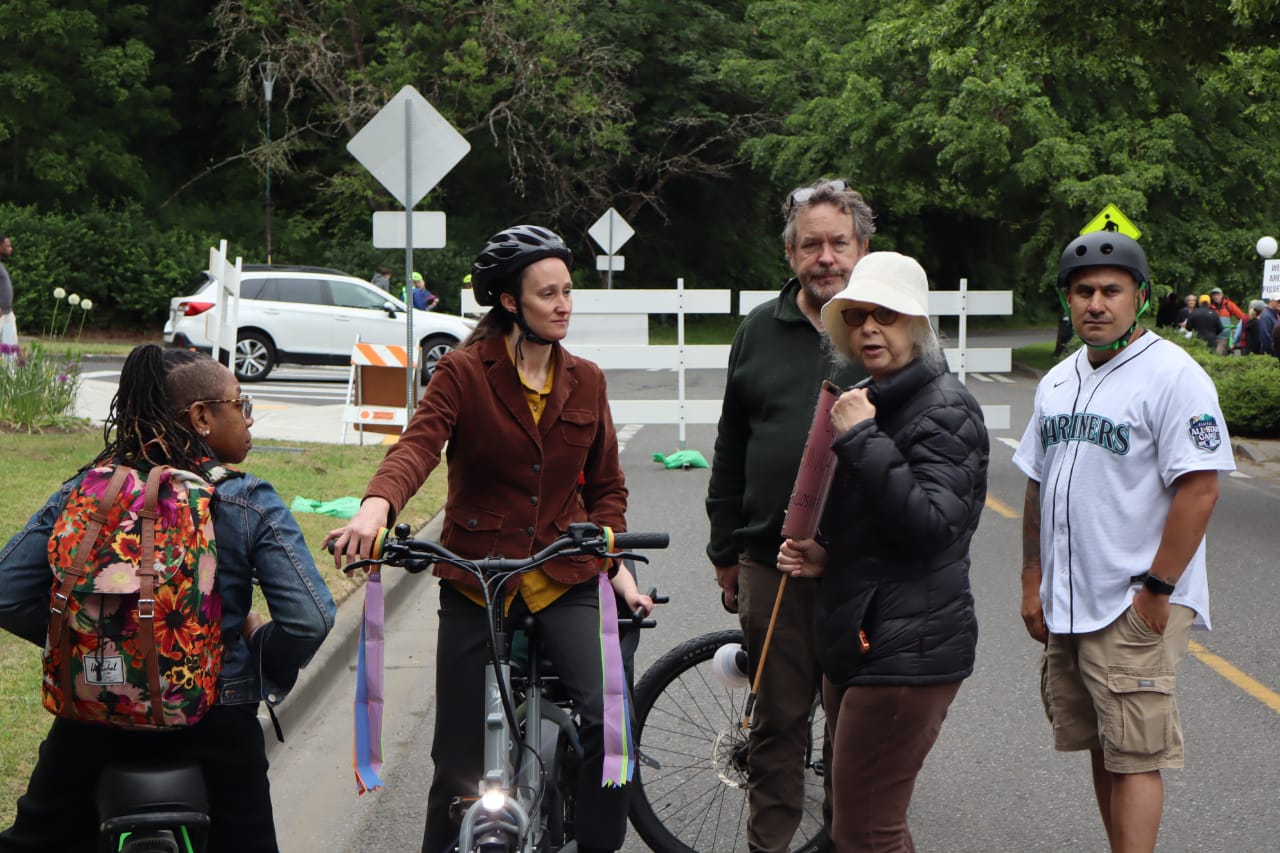
Saturday's event officially started in Sam Smith Park, with group rides from different corners of the city all converging near the new Judkins Park light rail station. Wilson's arrival, with daughter Josie and the rest of the mayor's entourage also on two wheels, was greeted with cheers from the crowd. A longtime cyclist herself, Wilson now rides around in the beefy SUV due to the realities of ensuring that a big city mayor has security protection, and this ride was her first chance to get back in the saddle for a public event.
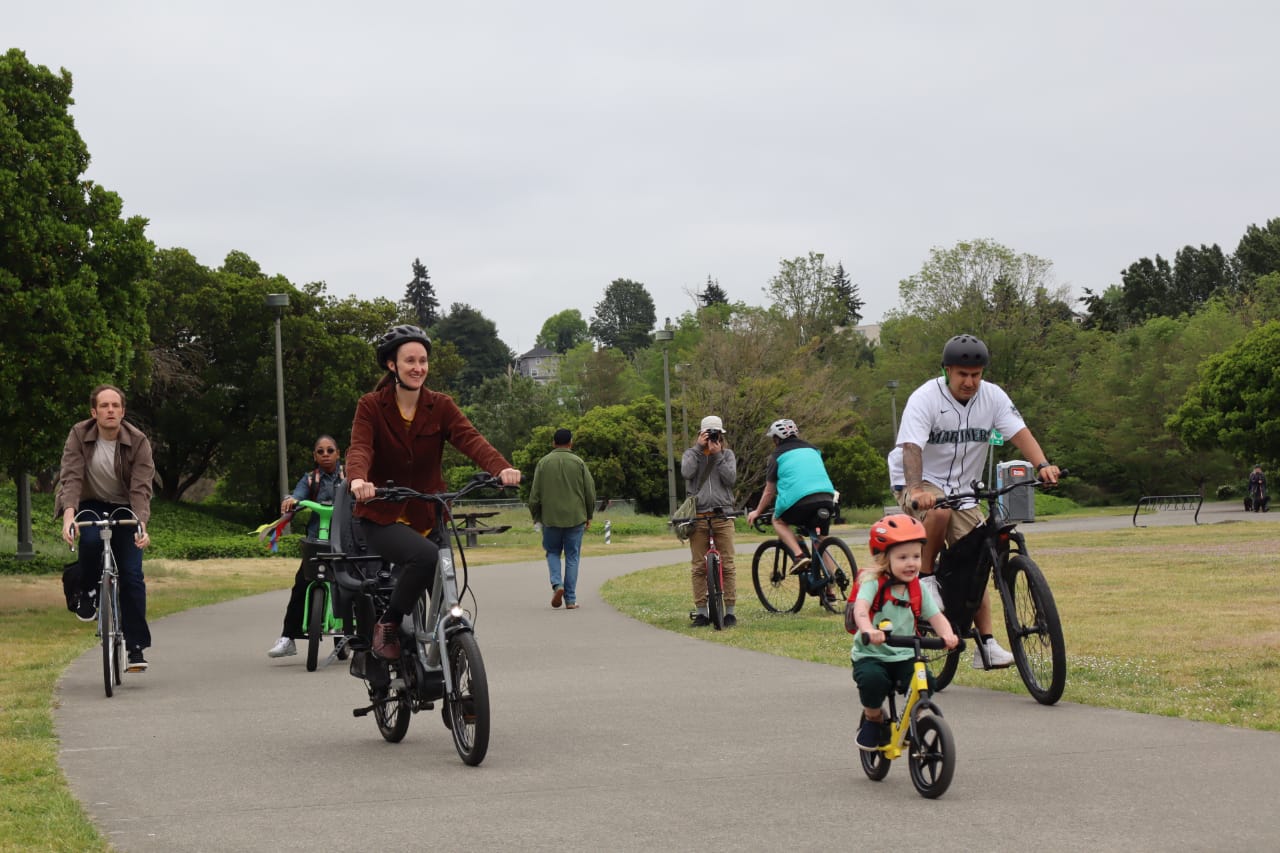
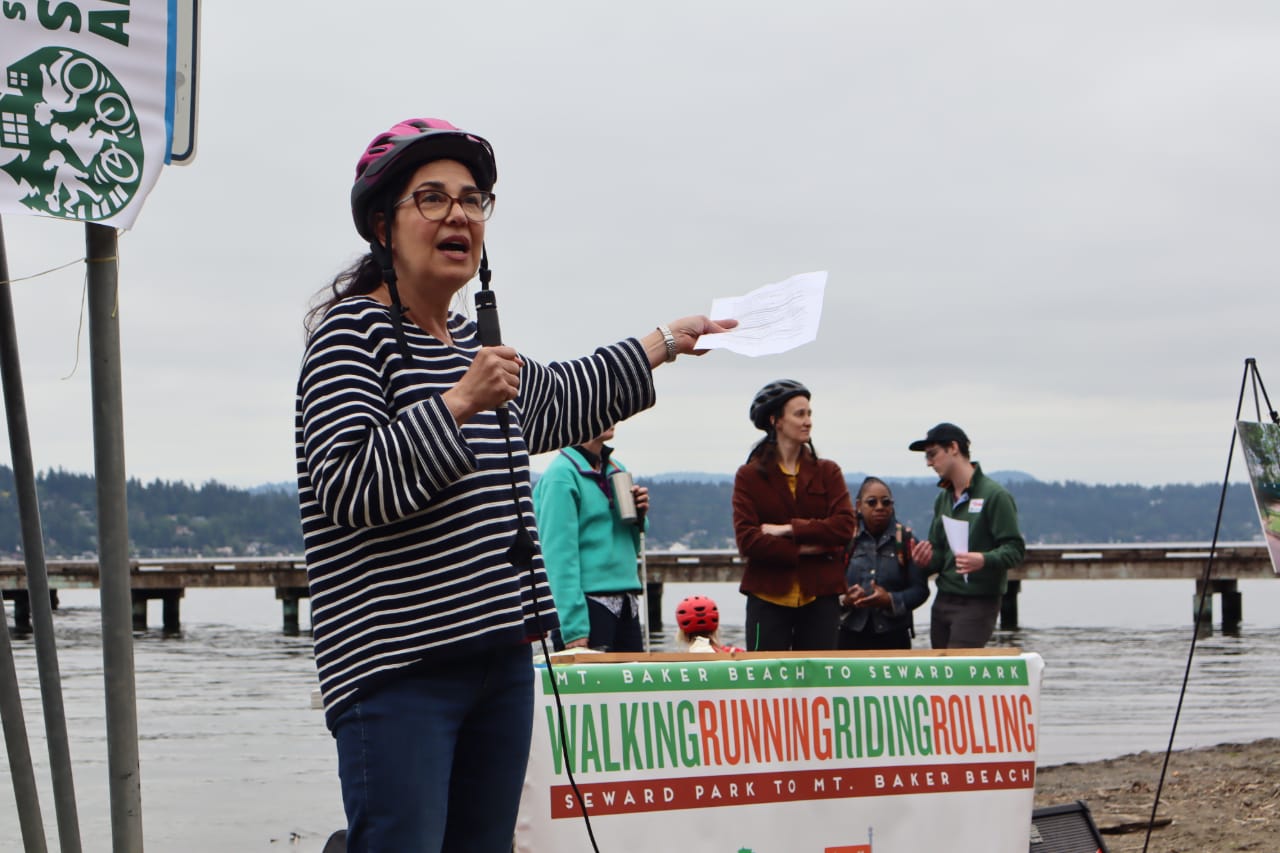
"Coming into office, we heard from so many people that this event could be more consistent and reliable, so expanding to every weekend this summer means that more people can enjoy greater access to this beautiful park," Wilson said in a speech at Mount Baker Beach. "People from all over Seattle can come here all summer long, with all ages, to walk, bike, stroll, push strollers, and let their kids run freely around without the fear of getting hit by a car."
Homeowners heckle mayor, protesting expanded schedule
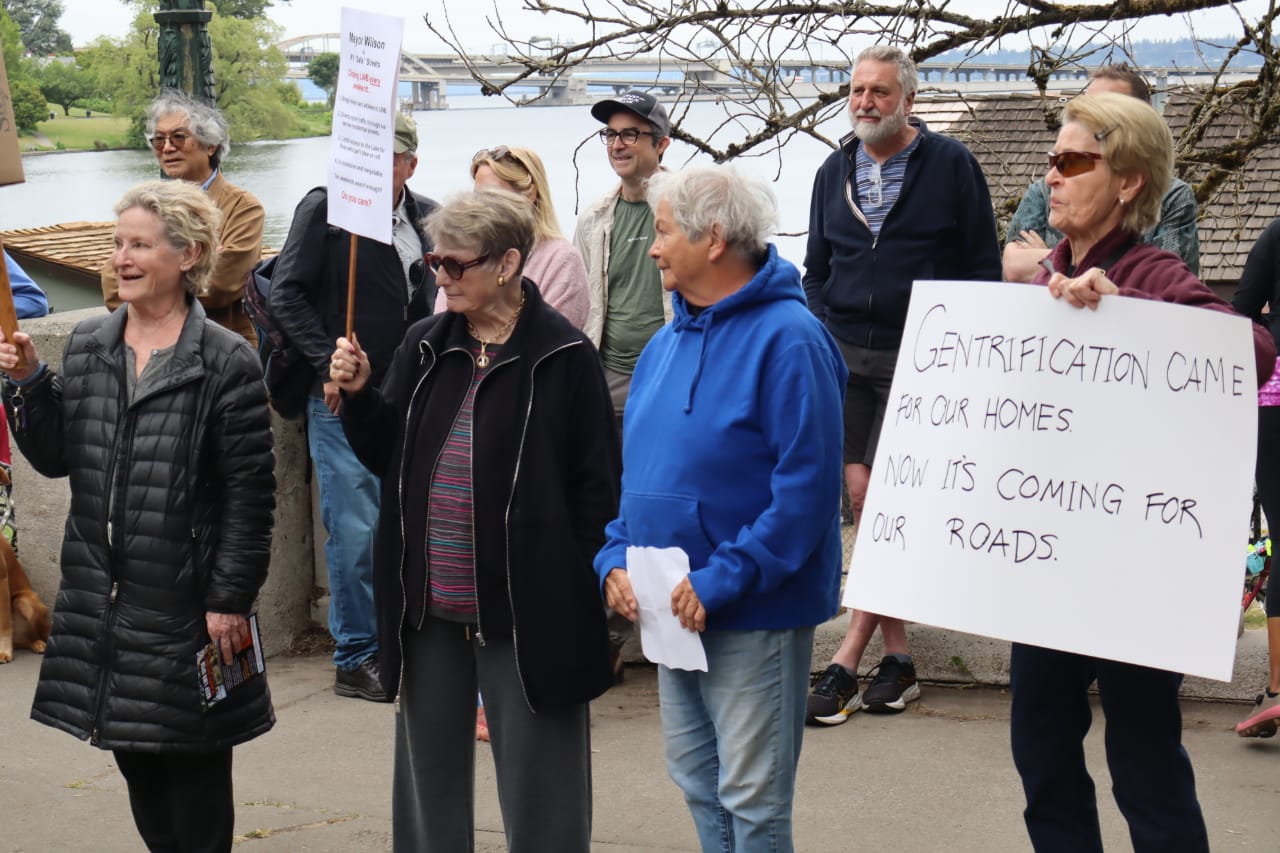
Joining the crowd at the beach were a group of few dozen protestors, holding signs in opposition to the idea of an expanded Bicycle Weekend schedule – and any potential changes that could be made to Lake Washington Boulevard down the road. The crowd was organized by mailings from the pro-driving group Coexist Lake Washington.
Coexist members pushed a 2022 city taskforce created to study the future of the street back toward the status quo, with the group taking a victory lap in 2023 when the Harrell administration scaled back the Bicycle Weekend schedule.
Reporting by The Urbanist last year confirmed that meetings with Coexist Lake Washington preceded decisions by Bruce Harrell's office to put planned traffic calming elements along Lake Washington Boulevard on hold, including approximately half of the speed cushions designed to slow cars and a revamp of a complicated intersection near Seward Park.
Despite taking advantage of those closed-door meetings under a previous administration, members of Coexist are now complaining about the process used by Katie Wilson to expand the schedule, which involved meetings with stakeholders across the first few months of 2026.
The signs hoisted up by irate protesters Saturday ran the gamut from "we are pissed" to "bikes will not replace us," a message that many immediately tied to an infamous antisemitic slogan brandished in the 2017 white supremacist rally in Charlottesville.
"Ten weekends wasn't enough?" read another sign, which went on to complain of increased traffic on side-streets blamed on a closed Lake Washington Boulevard, a claim that really isn't borne out by the data that has been collected by the Seattle Department of Transportation.
Likewise, a protester's sign claiming that expanding Bicycle Weekends on a park boulevard neighboring some of the city's priciest mansions would amount to "gentrification" are hard to support or parse.
In her speech, Wilson didn't shy away from addressing the opposition, even after meeting one-on-one with at least one opponent of Bicycle Weekends.
"I'm someone who has very often been on the protesting side of things, so I just want to say to you, your experiences matter, your voices matter," Wilson told the sign-wavers, a number of whom consistently interrupted each of the scheduled speakers. "I will continue to hear from you. And I just want to acknowledge that when we make decisions like this, about how we're using our right of way and our public space, these are hard decisions, right, because we can't use our space for everything all the time, and so I just want to acknowledge that, and we're going to be monitoring how this works over the course of this year, and we will continue to talk to you, talk with you in the months ahead."
Also on hand Saturday was former District 2 City Councilmember Tammy Morales, who advanced safe bike routes throughout Southeast Seattle during her time on the council, including a budget amendment that would have looked at creating a dedicated bike path along Lake Washington Boulevard. Those funds were diverted by the Harrell administration and ultimately ended up paying for the traffic calming improvements that are being completed this year.
"The reality is that this road was designed in 1903, when the top speed for an automobile was 28 miles an hour," Morales said. "So the safety improvements that SDOT is working on are crucial for everybody here, and that's what this is really about. It's about making this safe for everyone, and making sure that people can use this without the stress of worrying about getting taken out by a car that's going too fast around the curbs, and preserving summer weekends for bicycles, but not just for bicycles."
Despite the sour notes that were added by the disruptive sign wavers, the mood was not dampened for the hundreds of folks who turned out to celebrate the start of a beloved Seattle tradition, ramped up under a mayor who hasn't been shy about promoting a safe streets agenda.
"Bicycle weekends are such an important part of our larger goal of creating a city with safe, joyful, people-centered public spaces," Wilson said. "I want to encourage everyone to come out to as many weekends as you can. Let's make sure that everyone around the city knows that this opportunity exists this year."
 Doug Trumm
 Ryan Packer