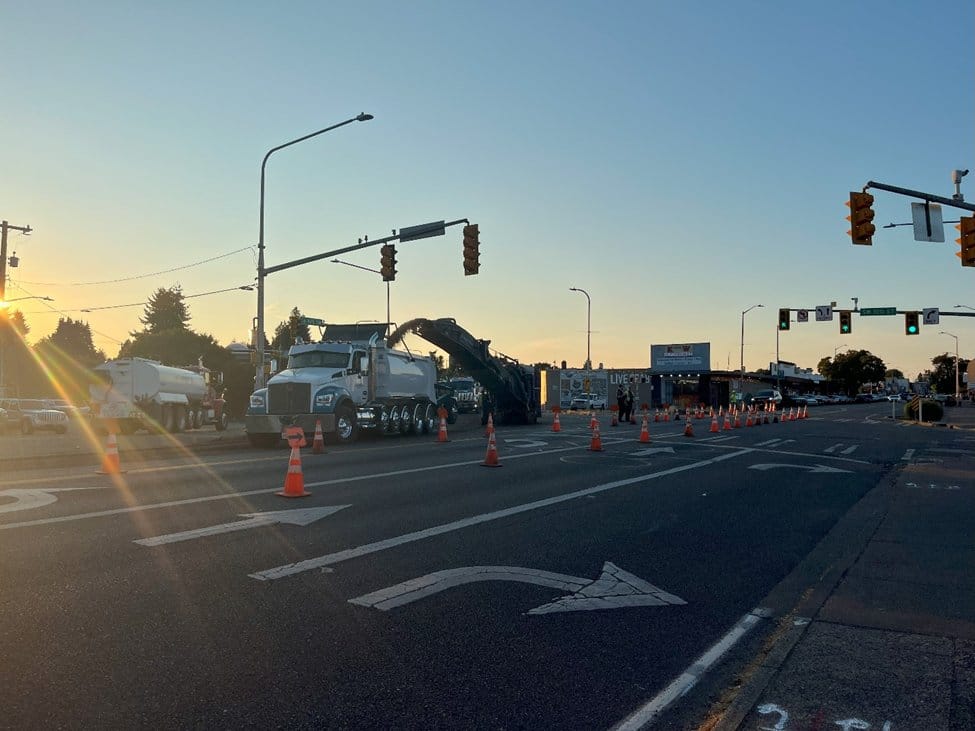
The King County Council is on the verge of tapping into a long-dormant funding source with the goal of aiding the county's beleaguered Road Services Division. But an amendment on deck doling out a portion of those new dollars to King County cities could end up significantly shortchanging Seattle, the county's largest city.
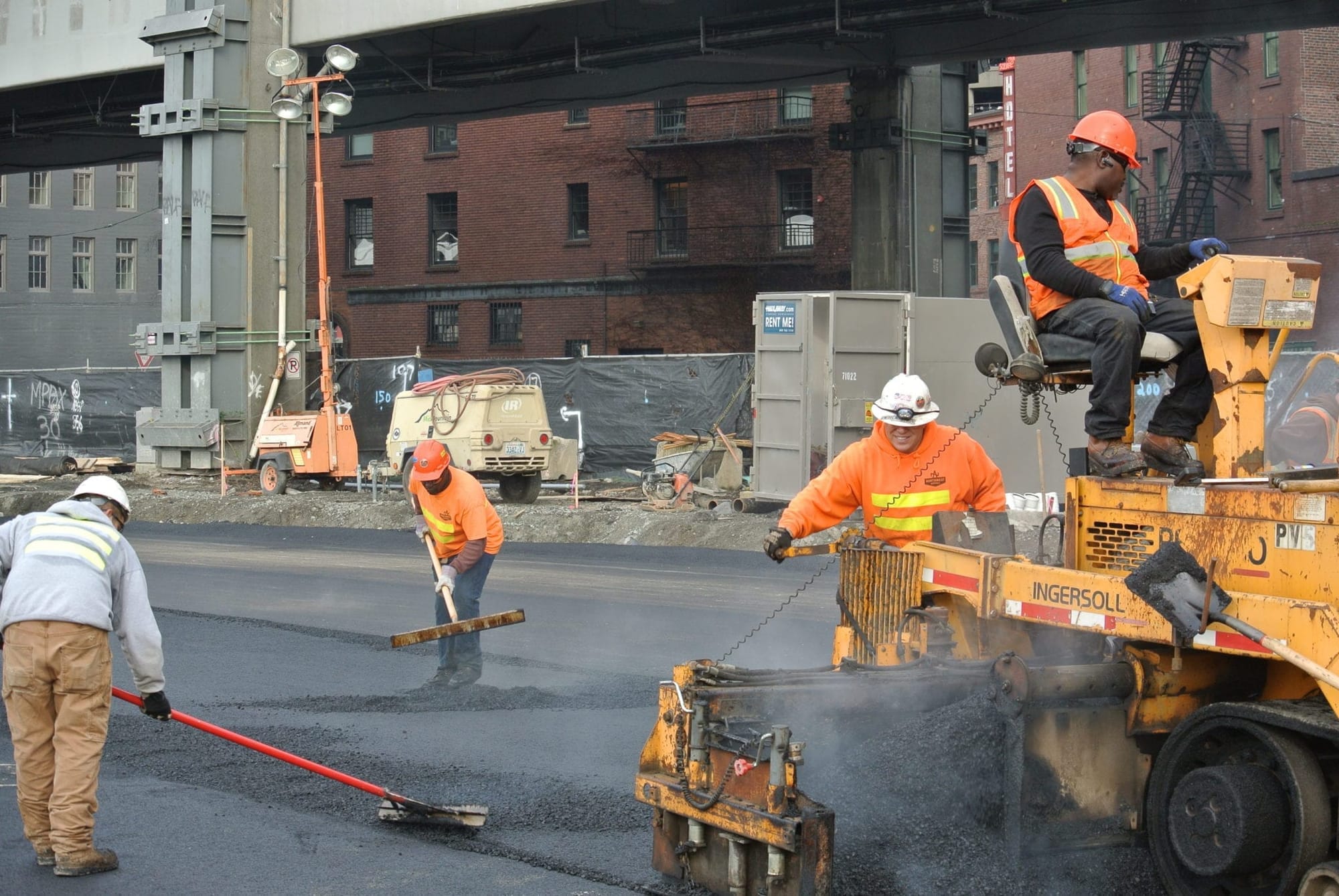
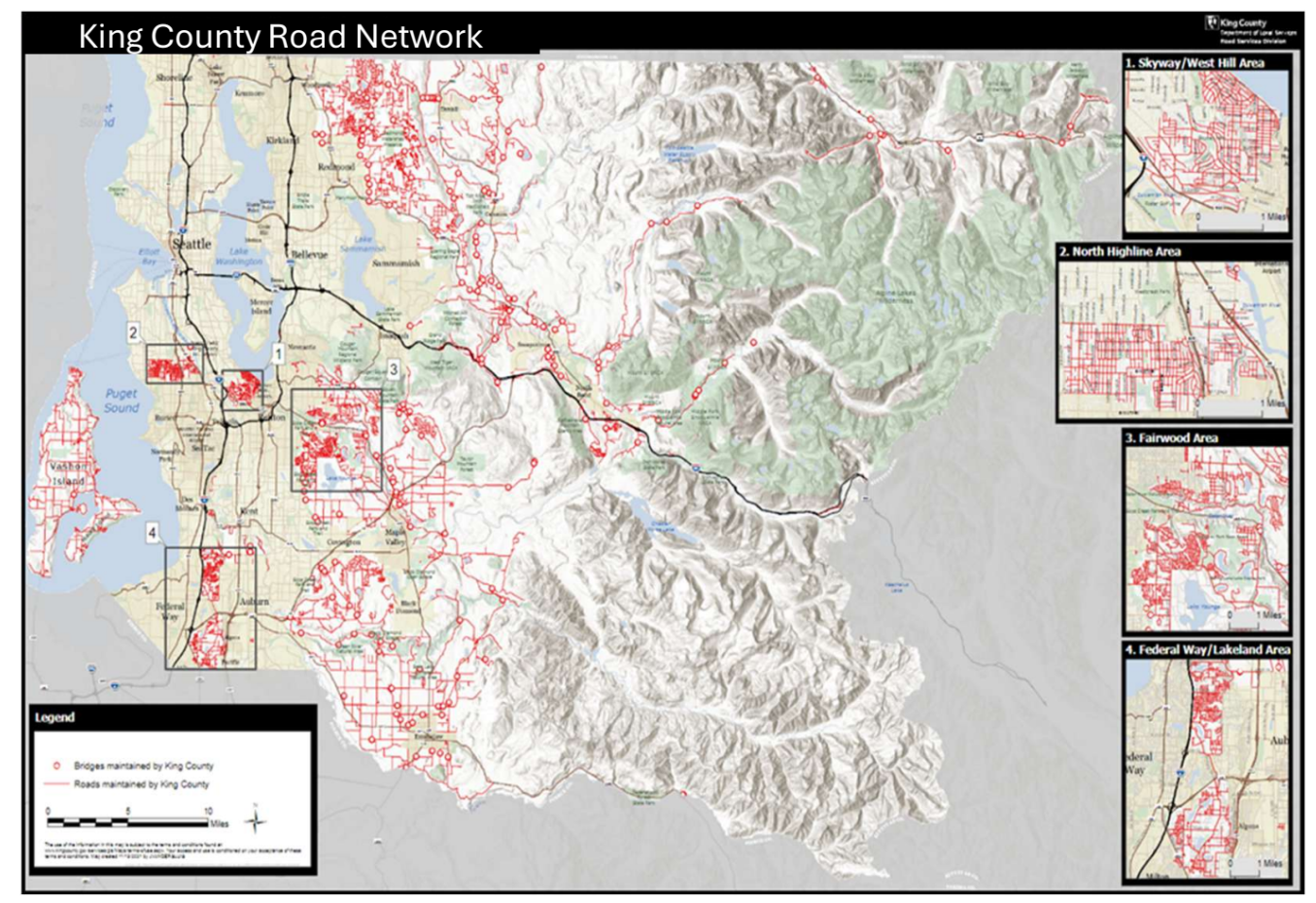
The new 0.1% sales tax, administered through a King County Transportation District that was established in 2014, is expected to generate around $100 million per year, the bulk of which will go toward maintenance and preservation work on the county's approximately 1,500 miles of roads through unincorporated areas. But after local elected officials pushed for a cut of the funding, pointing out that the vast majority of sales tax revenue gets generated within cities, the measure is poised to include a pass-through handing over a slice of that revenue to King County's 39 cities.
After a wild April meeting where different pass-through amounts from 12.5% to 25% were thrown about but no proposal garnered enough votes to pass, the Council seems to have settled on the 12.5% amount. Two competing amendments discussed on Thursday put forward by Steffanie Fain and Claudia Balducci both included that amount, but from there the proposals differed sharply.
Fain's amendment included a minimum allocation to every city of $10,000, ensuring that even towns like Beaux Arts Village (pop. 310) and Skykomish (pop. 165) receive a slice of the pie that is meaningful. But it also included a cap that prevents any one city from getting more than 15% of the total amount – a cap that only impacts Seattle. By population, Seattle is approximately 38% of the county's incorporated area, with the second largest city in King County (Bellevue) at around 7%.
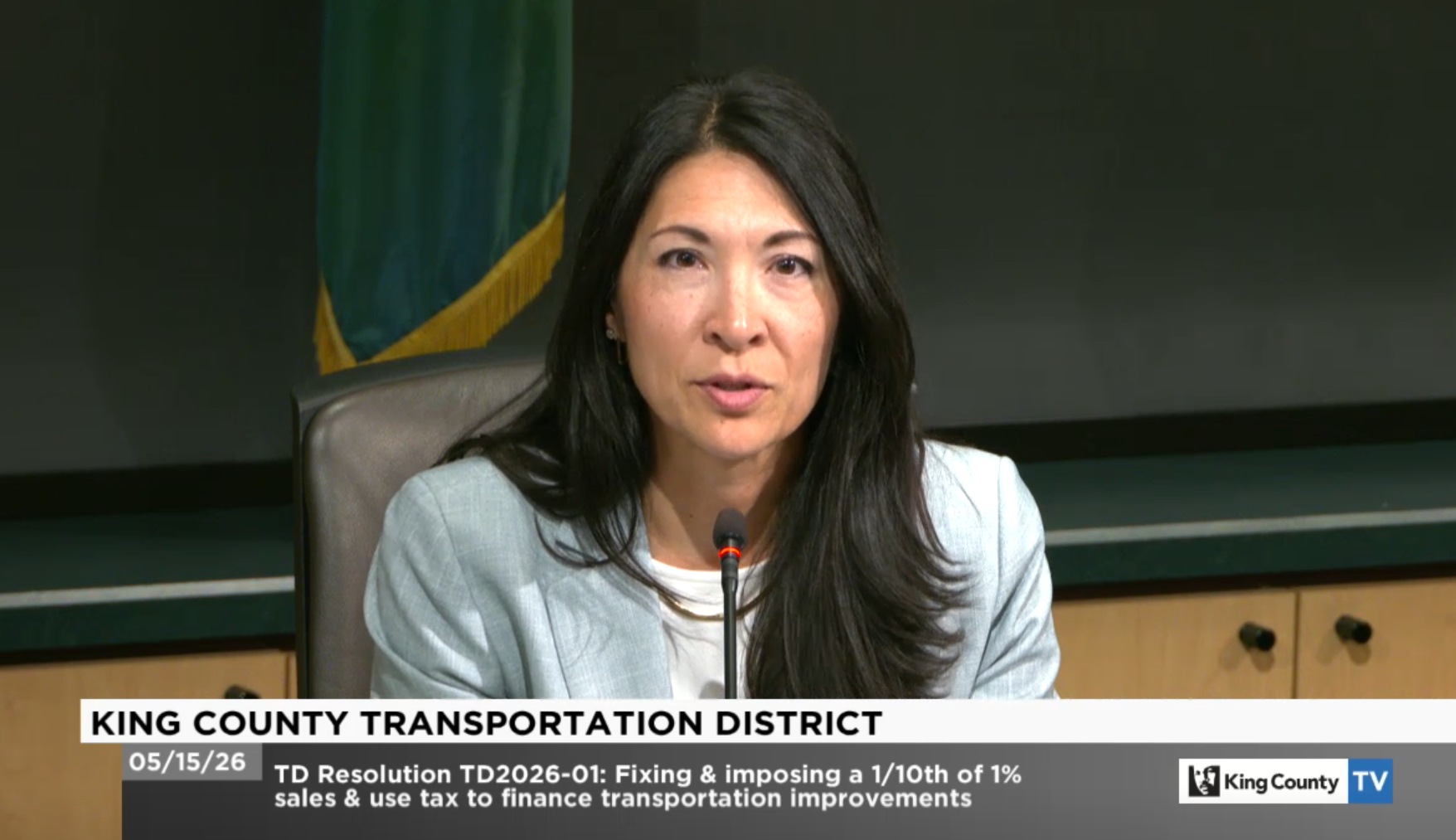
Shortchanging Seattle and only Seattle with a cap on pass-through funding would come after the very idea of the pass-through came about through advocacy from suburban cities. The Sound Cities Association – a group formed in the 1970s as the Suburban Cities Association specifically to lobby for local governments that aren't Seattle – has been one of the pass-through's biggest boosters, and Thursday the group expressed support for the Fain amendment.
Though an exact estimate of the difference in the amount of funding Seattle would receive under either amendment isn't yet available, that difference is likely to amount to several million dollars per year.
Councilmember Jorge Barón, the only councilmember who district only includes areas within the City of Seattle, has put forward an amendment that would remove the 15% cap, but it's not clear that he'll have enough support for that move among his colleagues.
"I find that problematic," Barón said of the cap Friday. "I think it sets a concerning precedent for the future, if we're going to start restricting that distribution based on population, and placing caps that only affect our largest city. I think a number of folks have mentioned that people in Seattle come out to unincorporated and use those roads. I totally appreciate that, and that's again why I recognize that the bulk of the money should go to unincorporated areas, but residents of unincorporated areas also come to Seattle, and also benefit, whether they're coming for a Seahawks game, or or they benefit from transportation that goes through Seattle streets."
Responding to Barón, Fain defended her amendment as not singling any one city out, and framed the ability of other King County cities to access county dollars as more equitable.
"I haven't looked at the math, but certainly there is a potential that another city might hit the 15% – potentially Bellevue as being the next largest city – so it certainly was meant to ensure that there were a more equitable distribution of resources throughout the county, and I didn't just, from drafting this, want to cut any one city out, but to rather spread the resources throughout the county," Fain said.
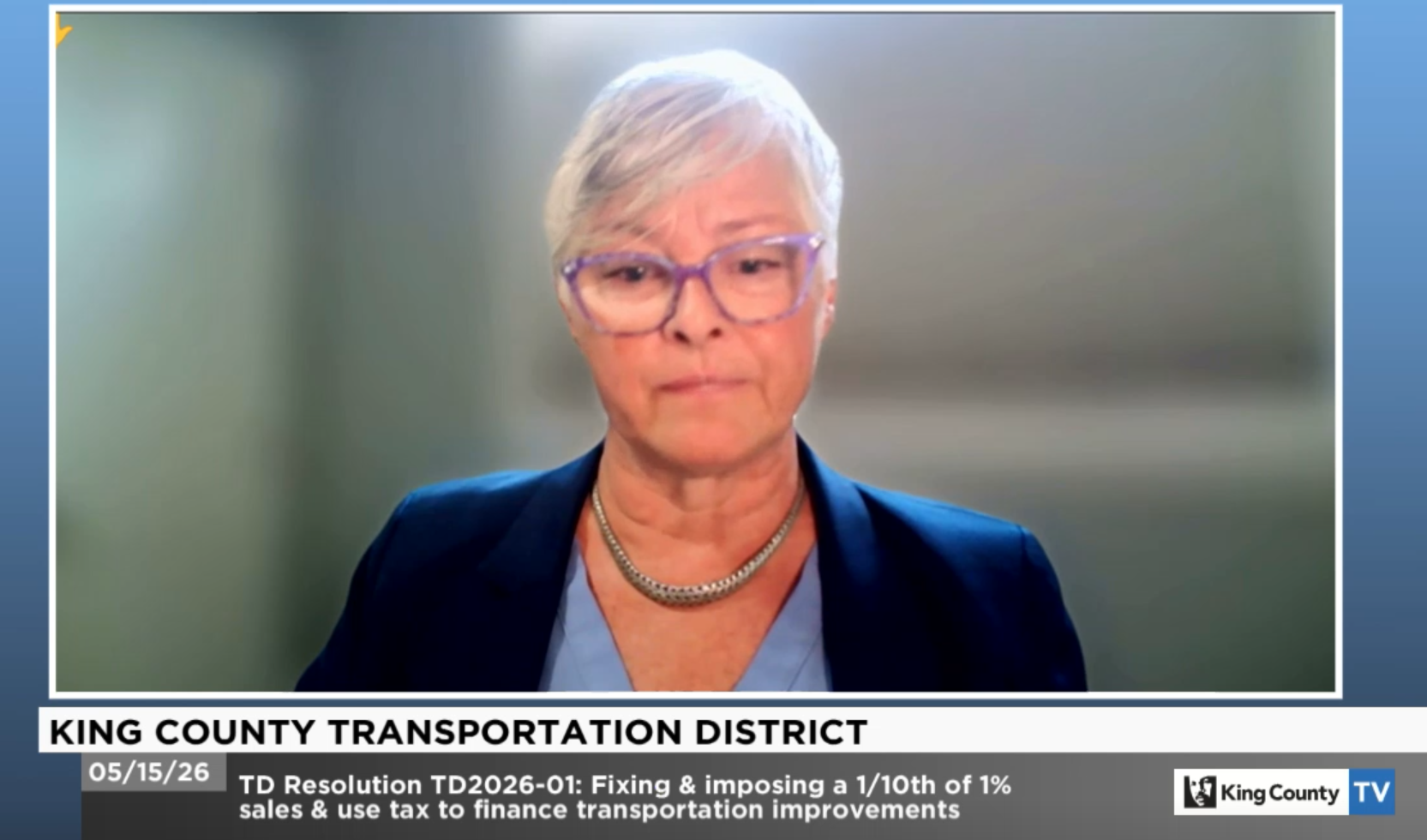
It was ultimately Sarah Perry, who represents a wide swath of unincorporated East King County but also cities like Carnation, Duvall, and North Bend, who articulated the most cogent justification for a cap. Perry pointed to the pending renewal of the Seattle Transit Measure, which uses the same authority that the County is considering tapping into with this move, as evidence that Seattle is able to raise transportation revenues that other cities simply cannot match.
"The other jurisdictions simply do not have the ability to carry that," Perry said. "When we are talking about the population of Seattle, and the ability to bring forward that funding from that population. We just simply do not have it, and those cities that are around the unincorporated areas are relatively, compared to Seattle, much smaller, and not able to maintain that."
At a transportation district committee meeting last month, Perry had explicitly referenced the idea of not including Seattle in the pass-through at all. At that time, the 25% pass-through that had initially been proposed had been based on the amount of sales taxes generated in each jurisdiction rather than population, a method that would have boosted the amounts headed to the county's largest cities even more. Perry even brought up the idea of only providing pass-through funding for cities with 150,000 residents or fewer – cutting out Seattle and Bellevue entirely.
"Sound Cities [Association] came in and said, you know, we'd like to support this, and we'd like to make sure the cities are receiving some portion of this as well, and when they put it forward, I thought it was just going to be the cities, the Sound Cities outside of Seattle, and that made sense to me, because that's the Sound Cities mission," Perry said. "But then Seattle and Bellevue came in, which are both very well-funded cities, and it turned out that the 25% that was being asked from Sound Cities ended up giving well over 50% to Seattle and Bellevue. Now Seattle's going for a .3% [renewal] coming up. Bellevue is well funded. It doesn't make sense to me that that meets what our intention is with this, to give yet more funding to already well funded spaces."
Councilmember Rhonda Lewis, who was appointed to fill the seat vacated by County Executive Girmay Zahilay late last year following his election and represents a major segment of Seattle from Rainier Beach to Ravenna, seemed to put her support behind a cap on Seattle's contribution.
"I do think we should be looking at what's equitable, and what assets, what tools all of the cities have available to them and use that to inform our decision. I don't believe all cities are created equal when it comes to this legislation," Lewis said.
Fain's amendment would also require cities to spend their pass-through funding on roads, rather than allowing it to be spent on transit service, an allowed use under state law. Balducci's amendment included no such restriction, and while Councilmember Rod Dembowski expressed support for the idea of letting cities spend on transit, no policy rationale for keeping that restriction in place was put forward.
It's not clear exactly how much would ultimately filter down to local cities, in part because the cost to administer a brand new pass-through program isn't yet known. Under Fain's amendment, cities would have to apply for funding through a brand new City Transportation Improvement Program (CTIP), with unused funds either allocated to other jurisdictions or back to King County. The cost to the county to administer such a program is also unclear.
The entire proposal has been coming together in what has appeared to be a haphazard fashion. At least one councilmember noted Friday that they hadn't been involved in conversations around how the pass-through program should be constructed, and had only seen the proposed amendments just one day before the meeting. While County policy staff had been working to produce scenarios illustrating the differences between the Fain and Balducci amendments, that analysis was not yet complete, even as Councilmember Teresa Mosqueda lamented the fact that the board wouldn't be voting that day.
A final vote is expected at a May 27 meeting. Because this tax is set to be administered through the special-purpose transportation district, Executive Zahilay wouldn't be afforded the opportunity to either sign or veto the measure.
 Ryan Packer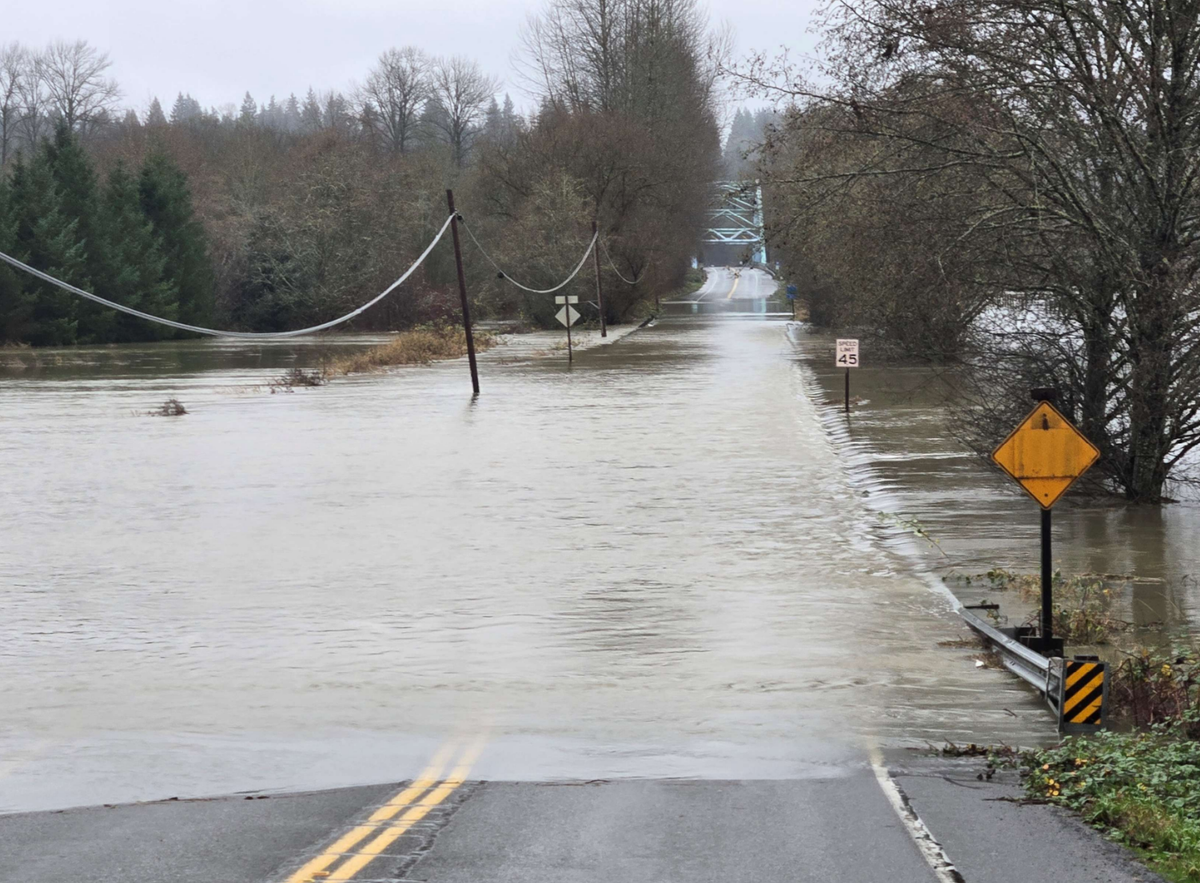
 Ryan Packer