If you're one of Trailhead Direct's thousands of riders, you may have found yourself on a standing-room-only bus on the Mount Si route. It's common to see this on the first several morning runs. It’s no surprise — the service was an immediate success when King County’s trailhead transit shuttle service launched as a pilot program almost a decade ago in 2017.
Trailhead Direct is now entering its 10th season, with the 2026 season launching May 23 and running through August 30.
Across its initial offering of three routes in 2018, Trailhead Direct's first full season, round-trip boardings hit 10,000. After a fourth route was added in 2019, boardings increased 75%. Even after the Covid pandemic knocked the program back on its heels, cancelling service for 2020 and 2021, ridership rebounded when service returned in 2022.
When a service is this successful, investments to expand and enhance it are bound to be welcomed. In fact, expanding this wildly popular service is required to meet demand. Several enhancements and expansions are obvious and relatively easy to implement, with only modest funding required. Some bigger changes will require more funding, which behooves King County to unlock more transit funding.
Use larger vehicles to increase trip capacity
Redeploy larger vehicles from King County Metro’s fleet to accommodate more riders and address crowding for the earliest runs and allow more passengers to have a seated ride. This would not require additional drivers, so is unlikely to increase labor costs.
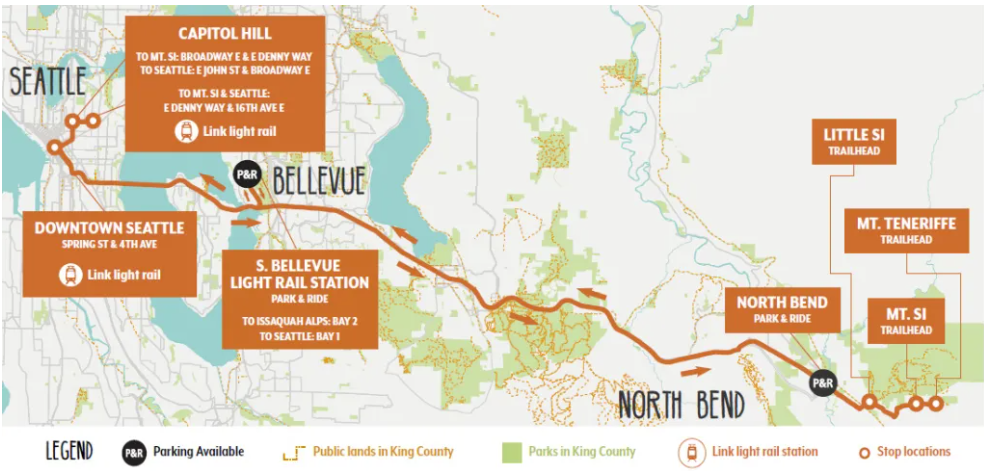
The trip from the Mount Si route's first stop on Capitol Hill to its first trailhead stop at the Mount Teneriffe Trailhead is a little over an hour. That's a long time to stand on a bus running at freeway speeds, and many of the current vehicles do not have straps and poles that let riders easily stabilize themselves. It's a much less comfortable ride than a seated ride (and probably not as safe as most transit trips, even those that require standing).
The more comfortable we can make trips, the more likely riders will return and the more likely some folks who currently drive to trailheads will be likely to give Trailhead Direct a try.
Make room for cycling
It's not just crowded inside the Mount Si route. Bike racks, whether with two- or three-bike capacity, are packed, and you will often see multiple riders left behind at the first Capitol Hill stop. Forget about trying to put a bike on one of those early runs if you live downtown.
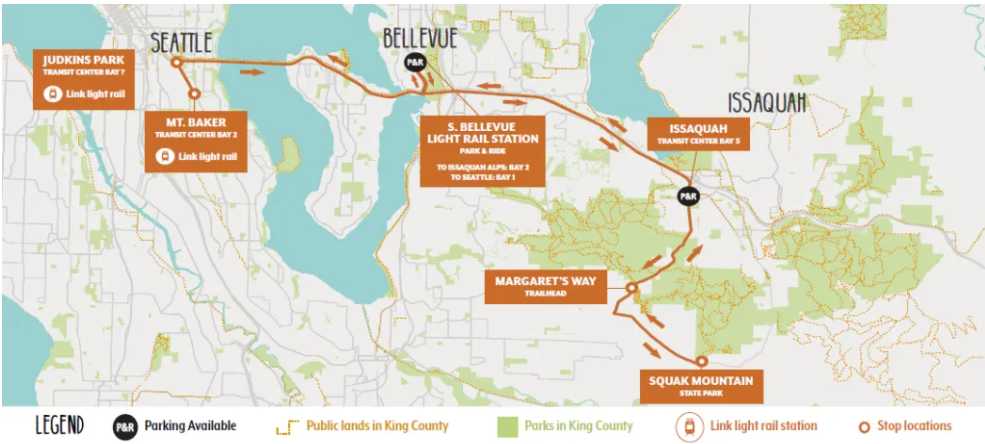
The Mount Si route bike racks fill up in large part because the stop at North Bend Park and Ride is a very short ride to the Snoqualmie Valley Trail. A gem all on its own, the trail also connects to mountain biking destinations like the East Tokul trails and those in the highlands of Tolt-MacDonald Park, and to the Palouse to Cascades Trail, opening up the possibility of epic backpacking. The Issaquah Alps route stops a short ride from the Grand Ridge system, and many trails in the Tiger Mountain system allow bikes. The Mailbox Peak route, when it operated, stopped along Lake Dorothy Road, a fantastic road for cycling that connects to gravel options in the Middle Fork Snoqualmie region.
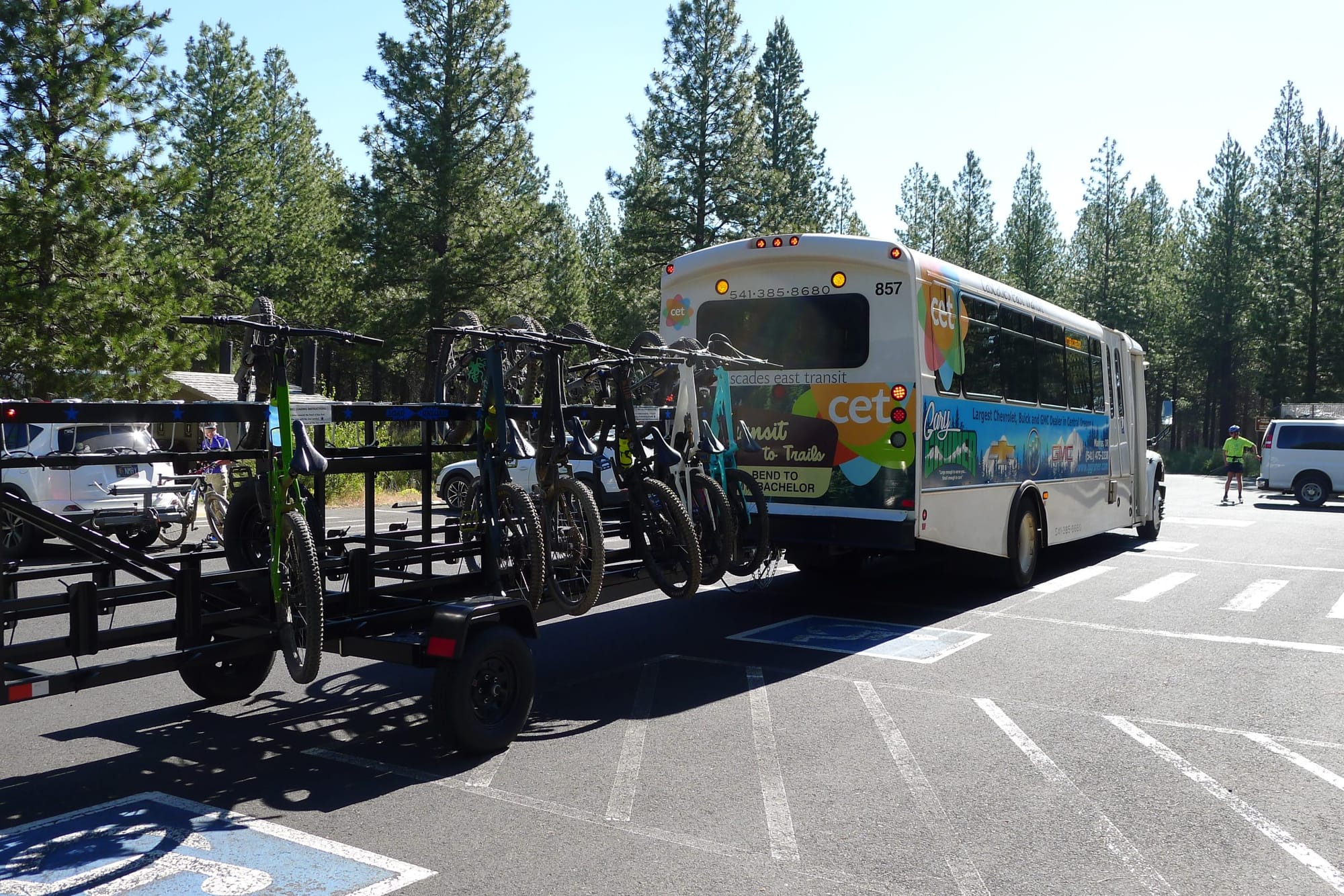
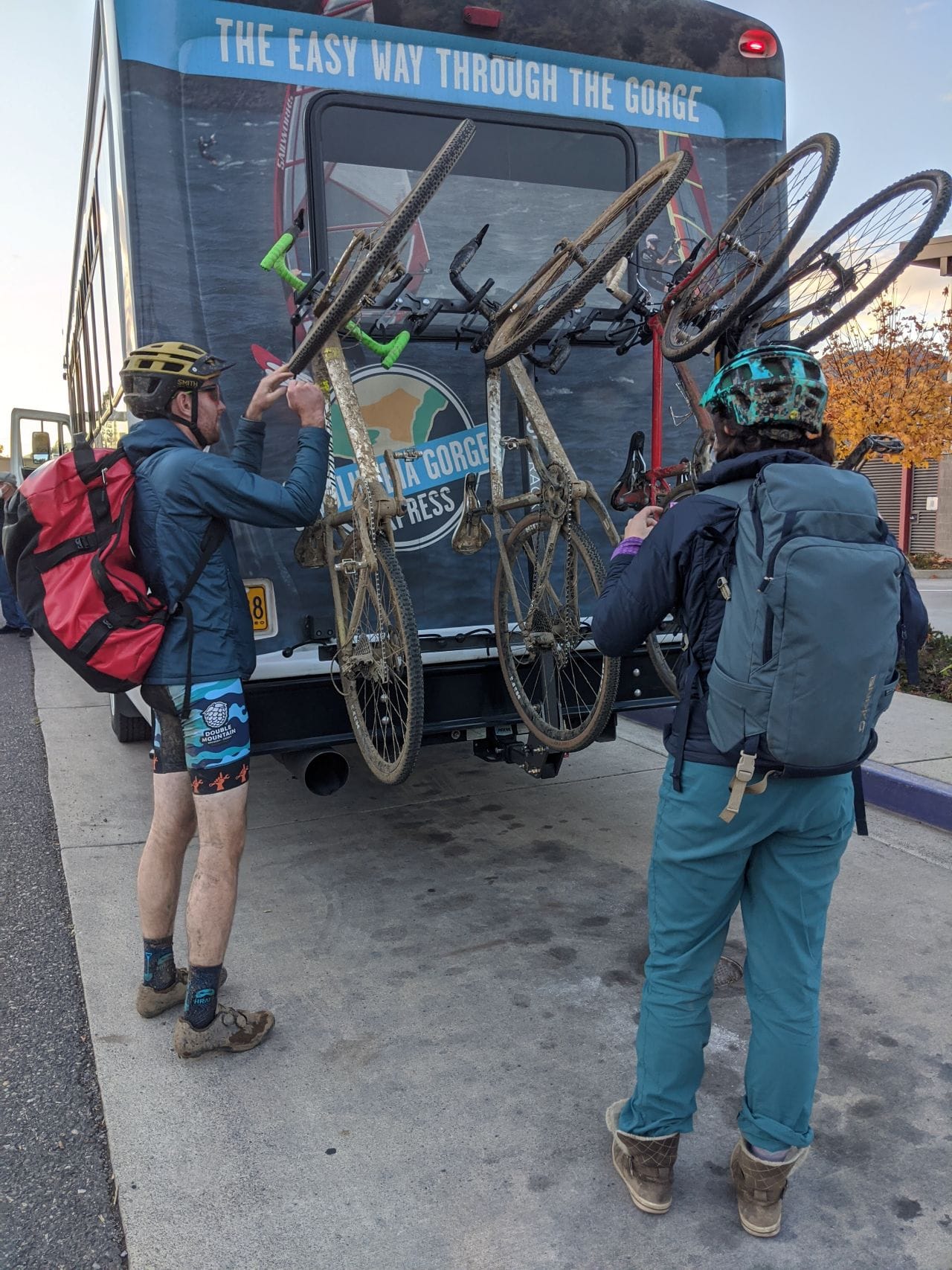
There's an easy and inexpensive way to increase bike capacity, and other transit agencies are already doing it not that far from us. Cascades East Transit in Bend, Oregon offers seasonal trailhead service that includes 20-bike capacity trailers to facilitate mountain biking. Columbia Area Transit’s Gorge Express vehicles have bike hooks on their backs that makes access to the Gorge region’s Historic Columbia River Highway trail system easy, as well as miles of its rural pavement. Increasing bike capacity not only makes it easier for nondriving and car-free cyclists to enjoy more of our regional trails, but could also entice some mountain bikers to opt for the bus instead of packing the bike on their car’s rack.
Share the wealth
Last summer while walking in my Capitol Hill neighborhood on a Sunday afternoon I wandered by the Trailhead Direct stop on 16th Avenue E. An older Black woman with a walker was in a clearly frustrated exchange with the Trailhead Direct driver. She had taken Trailhead Direct from her home in North Bend earlier in the day but when she went to return she found herself barred by the driver, who insisted he was not supposed to pick up passengers on his eastbound run. He ultimately relented.
Knowing that efficiency is a watchword of transit planners everywhere, I asked the head of a local transportation provider about this, who confirmed her understanding: Metro’s official policy is to not permit people to board afternoon eastbound trips.
The buses are already going in that direction. Why turn riders away? Particularly when those return trips are to regions currently underserved by transit — there is no Sunday service of the Metro’s Route 208, which serves North Bend. When the 208 does run, reaching Seattle requires a transfer to Sound Transit Route 554. If Sound Transit’s fall restructure goes ahead as planned with a truncated 554, that North Bend to Seattle trip will take another transfer, to light rail. Let’s not squander valuable transit seats by denying their use by underserved communities.
Bring back all four routes – and then add more
In its second year, Trailhead Direct served nine trailheads with four routes. There’s no need to re-conceive these routes from the ground up, but the launch of 2 Line light rail is good reason to look at how to reconfigure some of these routes with light rail to ensure eastsiders are better served. In 2025, the Mount Si route was wisely adjusted to stop at South Bellevue Station.
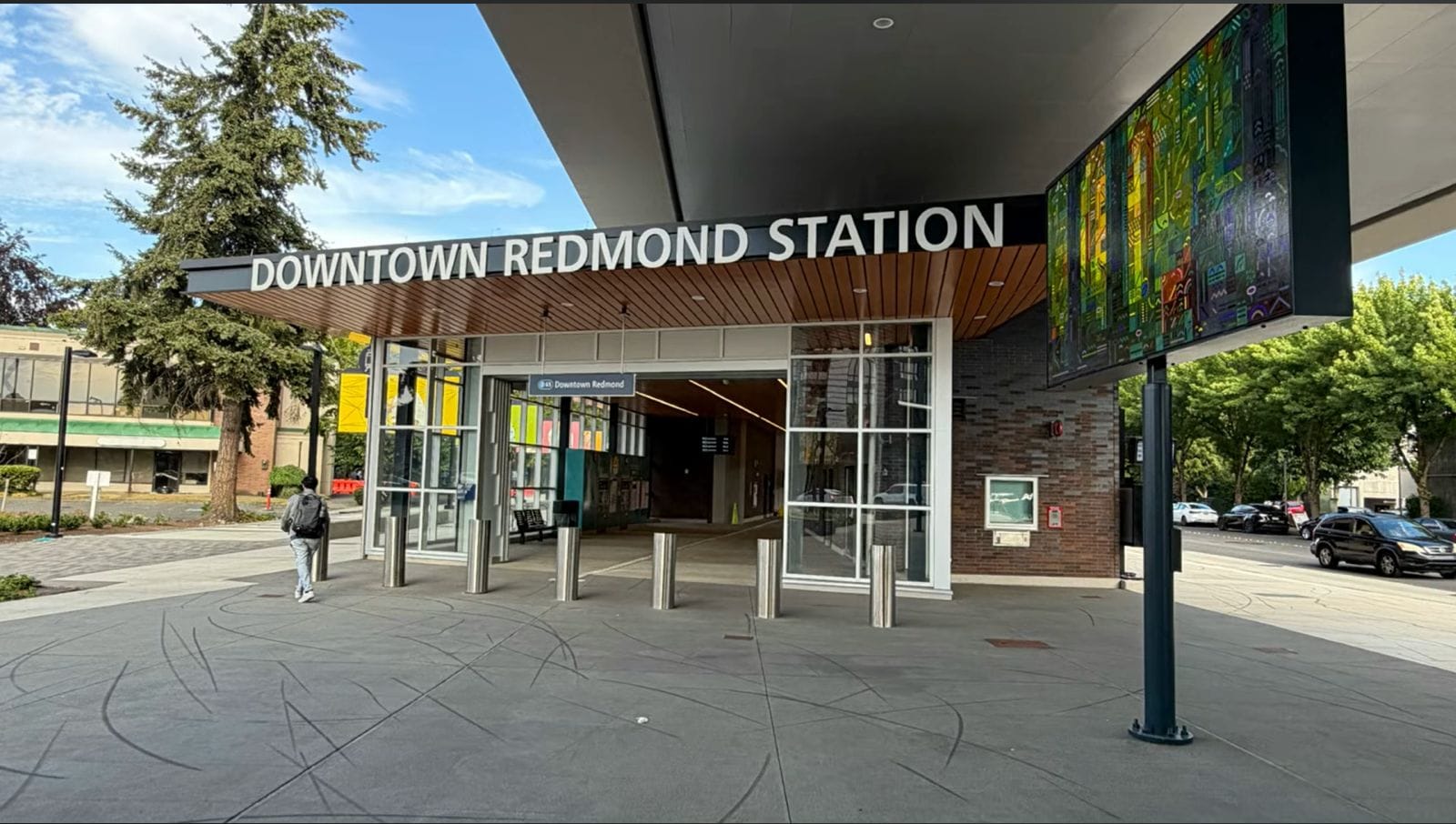
Early trips were often standing-room only, on the verge of crush loads, relegating many Eastside passengers to a long uncomfortable standing-room-only ride, providing another rationale for larger vehicles. A Trailhead Direct stop at Downtown Redmond Station seems the most obvious immediate candidate.
Add stops and adjust routes to increase recreation access
The trip out to Mailbox Peak was already one of the Trailhead Direct’s longer routes. Extending that route to add a couple of key stops along the Middle Fork Snoqualmie would significantly increase car-free access to the area, while putting not just hiking but some backpacking and starter-level bikepacking outings in to reach. Metro should consider doing this in conjunction with offering the kind of flag stop options as Vashon Island’s Metro Routes 118 and 119 offer.
This could help relieve trailhead congestion and entice overnight backpackers to leave the car at home (along with anxiety about trailhead parking lot break-ins). Similar opportunities likely exist on the other routes. Of note: the Mount Si and Issaquah Alps routes, which each stop at several trailheads in comparison to the Mailbox Peak and Cougar Mountain routes’ single stop each, had the highest ridership among the four routes in 2019, suggesting, unsurprisingly, that offering more trailheads on a route increases ridership.
Serve riders seven days a week
Demand from summer visitors and those chasing ideal weather conditions mean that peak hiking season is seven days a week. I can't drive, but one upside to the vagaries of freelancing is a flexible schedule. And, my hiking buddy is a retiree who can drive and prefers less crowded midweek day hikes, including on trails served or previously served by Trailhead Direct. The lots may be less crowded on weekdays, but are often full or near-full on weekdays in the summer months.
Seven day a week service in peak hiking season just makes sense to ensure access to the most congested trailheads. When Clallam Transit launched its seasonal Hurricane Ridge service, it did so as a daily service, subsequently adding additional trips. That could be one approach for piloting Trailhead Direct weekday service.
Recognize recreation is year-round
Summer is peak season, but King County is a four-season outdoor recreation region. Just as the most popular trailheads are often crowded on weekdays, they are, barring extreme weather, often well-used for almost the entire year, even if not at peak summer levels. A year-round Trailhead Direct could serve year-round activity, with frequency scaled back in line with lower — but still ample — demand.
We already live in a region that perpetually supports additional funding for transit service, but we shouldn’t get complacent. With Sound Transit 3 expansion plans mired in cost overruns and delays, it’s important to offer transit riders some nearer term wins. Expanding Trailhead Direct service over the next few years could offer a high-profile opportunity to maintain and feed enthusiasm for transit service and build public trust and support.
Some of these suggestions cost little to no money. Service expansions, obviously, cost more. Admittedly, I find the details of transit funding befuddling, and given all the revenue streams and funding mechanisms in play, who can blame me? But one thing is clear: we need more of it.
Any conversation about funding transit should be rooted in the fact of the tremendous value public transit investments provide. Public transit can return every dollar we put into it five times over. Likewise, transit to trails service should be seen as the excellent investment it is.
Seattle must increase transit funding, and it would be wise to direct some of that money to Trailhead Direct. Perhaps, the upcoming Seattle Transit Measure renewal can be structured to support additional Trailhead Direct service in recognition that not only is the service broadly popular but Seattle residents are probably its heaviest users?
King County is also mulling a countywide ballot measure to augment bus funding. Another potential source is the lodging tax. Or could a future King County Parks Levy include some funding for Trailhead Direct?
These aren't the only ways that Trailhead Direct service could be enhanced. But these are some of the most obvious and ripe avenues for the Metro and its partners to pursue and for all of us to invest in. We owe it to Puget Sound residents, both current and future. We may never be able to provide transit service to every trailhead in our region, but we should aspire to serve as many as possible by starting to enhance and grow Trailhead Direct.
Kimberly Huntress Inskeep is a Seattle-based transportation advocate, nondriver, and founder of Transit Trekker.
 Kimberly Huntress-Inskeep