What’s Nashville have that Seattle doesn't? New Jim Crow, abortion ban, low wages, unchecked poverty, and copious gun deaths.
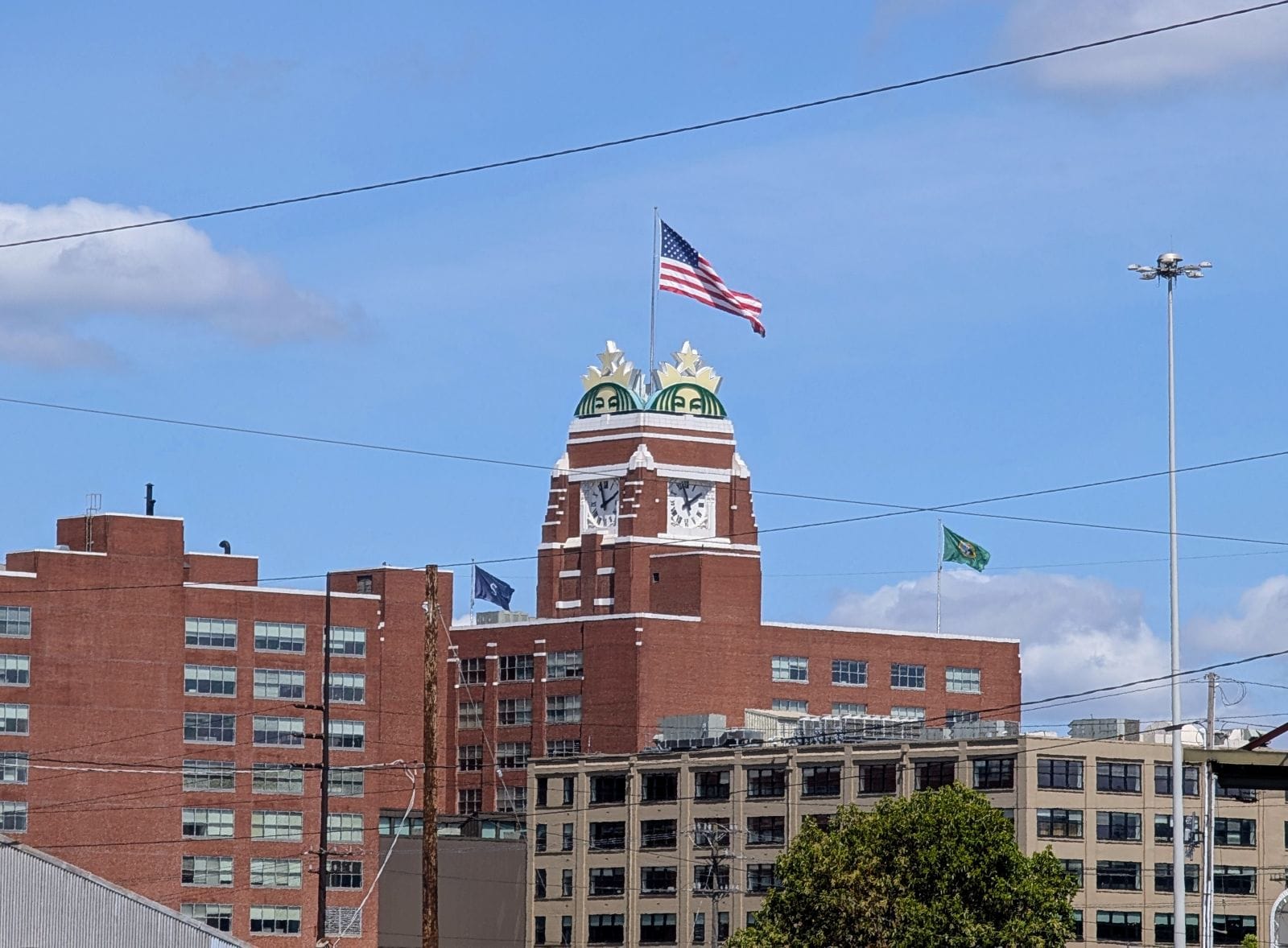
Much hay has been made of Nashville’s “friendly business climate” after Starbucks planted a corporate office set to have room for 2,000 workers in the Tennessee capitol, while shortly thereafter laying off 252 workers in Seattle. But the flowers being given to Nashville overlook some serious thorns, and they betray a concerning disappearance of any semblance of corporate social responsibility, which major companies used to at least make attempts to display.
In 2015 Indiana passed legislation to allow private businesses to discriminate against gay people. That action ignited a corporate campaign with threats by major corporations to withhold investments, events, and job creation in Indiana. The Indiana Legislature quickly reversed itself. Those corporate statements sounded good. In retrospect they were purely transactional, fed by corporate consideration of the impact of consumer boycotts on profit-taking.
Now the era of hate has overtaken any apparent corporate goodwill. So while the Seattle Times lauds the “business climate” of Tennessee, they omit the reality of the southern political economy on the health and wellbeing of workers, women, African Americans, democracy, and economic security. Here are some answers to the Seattle Times question, “What’s Nashville have that we ain’t got in Seattle?”
A lack of reproductive rights
Tennessee bans abortion outright at any stage of pregnancy, including both surgical and medication-induced procedures. The law does not allow exceptions for cases of rape or incest. Even in situations where a pregnancy results from sexual assault, termination remains illegal.

Tennessee rolling out new Jim Crow
Confederate monuments are another thing Nashville has, unlike Seattle, which tore them down. Nashville’s Centennial Park proudly displays a monument to Confederate soldiers who fought for slavery, as does the Tennessee State Capitol in Nashville. This isn’t just an appeal to history. Today, Tennessee is returning to a truly Jim Crow state.
The Tennessee State Legislature just passed an immediate redistricting plan that eliminates the state’s only Black majority congressional district. This act ensures that the 20% of Tennesseans who are black or mixed race will have no representation in Congress and the Tennessean delegation will be 100% Republican, with all nine Congresspeople doing everything that Trump commands.
Earlier this month, Republican Tennessee House Speaker Cameron Sexton doubled down on racism, kicking all African American state representatives out of legislative committees in retaliation for Democrats' attempts to impede that regressive redistricting plan.
Tennessee has more gun deaths, minimal gun control
After the Covenant school shootings in Nashville, three legislators were condemned for insisting that the Tennessee legislature address gun control in a special session that the Governor had called to do just that. The Republican majority refused to budge and instead expelled two African American legislators.
In 2024, Tennessee had the ninth highest gun death rate among the states. In an average year, 1,511 Tennesseans die from gun violence. So now, with no universal background checks, no assault weapons restrictions, no waiting periods, and no gun owner licensing, if you want your children to be safe in school, it is best just to keep them at home.
Tennessee denies basic worker rights
Workers, especially low wage workers, are given short shrift in Tennessee. The minimum wage is $7.25. That low bar hasn’t been increased since 2008 – 16 years ago. Seattle’s minimum wage is $21.30 – almost three times that of Tennessee.
Tennessee is a “right-to-work-for less” state, meaning that while workers can join unions to bargain for better wages, they cannot be required to pay union dues. To reinforce this free-rider system, which weakens workers’ bargaining power, Tennessee voters passed the Tennessee Right-to-Work Amendment, enshrining the prohibition of mandated union membership. It is no wonder that the average wage in the Seattle metropolitan area is $43.16, compared to $30.92 in Nashville – 40% higher.
Workers in Seattle are entitled to a minimum of 12 weeks of paid family and medical leave. Workers in Nashville are entitled to none. Seattle workers get paid sick days – that is state law. In Tennessee, no such law exists.
Nashville: more poverty, fewer programs to address it
Over 12% of Nashville residents live in poverty. For a three person family, that means making ends meet on less than $27,320 a year. Almost 7% of Nashville residents live below half the federal poverty level – $14,000 a year. Meanwhile, 9% of Seattle residents live in poverty – not good, but a lot better than Nashville.
In Seattle, residents with incomes below 138% of the poverty level – $22,025 for a single person or $37,702 for a three person family – are entitled to Apple Health. Statewide, 1.9 million Washingtonians are covered by Apple Health. Not in Tennessee, which is one of only 10 states that refused to expand Medicaid. Less than 8% of Washington state residents lack health insurance. In Tennessee, 12% have no health insurance.
All graduates of Seattle’s public high schools are entitled to two years of free tuition at Seattle’s public colleges, along with a living stipend. In Washington state, all public school kids are entitled to free breakfasts and lunches. In Tennessee, that is only for poor kids.
Seattle pays for all day and year-round pre-kindergarten for 3- and 4-year-old kids. The City provides child care subsidies for families with incomes up 110% of the state median income – $128,724 for a family of three. Tennessee throws up barriers to accessing child care, rather than expediting it. Relatedly, Tennessee's child poverty rate is a staggering 20%.
Tennessee coddles corporate elite
Tennessee is rolling out the red carpet for Starbucks corporate executives, both rhetorically (at a fawning press event in Nashville) and financially with a whopping $30 million incentive package financed by state taxpayers to benefit the 119-billion-dollar company.

For women, workers, children, parents, families, Seattle looks like a much better deal. But for the corporate executives intent on moving out of Seattle, they seek workers without bargaining power, low wages, on the edge of poverty and no unions. Nashville is a good bet for them.
Corporate executives rake in so much money they don’t blink an eye at the cost of child care – not their problem. Access to abortion means nothing to these corporate oligarchs, unless of course their daughters become pregnant and have to fly to Seattle for an abortion. For safe schools, they can send their children to boarding schools in states which have gun control laws. And they understand that modern day Jim Crow and 21st century racism are very effective in dividing workers from each other and undermining class solidarity… increasing their profits and their own uber-compensation.
In 2001, Boeing moved its corporate headquarters from Seattle to Chicago. In 2003 Boeing persuaded (blackmailed) the Washington state legislature to get a $3 billion tax incentive to keep manufacturing in Washington state. What did they do with that tax incentive? They built a new production facility in South Carolina, a state storied in racism, slavery, and union-busting. In 2013 Boeing received $8 billion in Washington state tax incentives and promptly laid off thousands of employees in our state.
How’s it going for Boeing? They went from being the world’s best aerospace manufacturer to a company making headlines for upending pilot controls and crashing 787s into the earth and for inserting an airplane window that blew off in mid-air.
Starbucks CEOs always had a foot out the door
It should be no surprise that Starbucks is leaving our city for Tennessee. Starbucks' CEO, Brian Niccol, has never lived in Seattle. He resides in Newport Beach, California and commutes three days a week to Seattle using a company-owned jet. Starbucks has set up a remote office for Niccol in California to enable his hybrid work arrangement. He made 6,666 times more than his workers in 2024. He received more than $97.8 million in total compensation that year.
Niccol is only following the footsteps left by Howard Schultz. Schultz sold the Supersonics for $350 million in 2006, netting a cool $150 million over Schultz’ purchase price. The Sonics changed their name and moved to Oklahoma City, leaving a broken lease with the city. Schultz said that the sale “was a mistake, I apologize for it, and I’m sorry.”

Now he has moved to Miami and complains about Seattle politics. Schultz is doing only what's best for himself. Selling the Sonics created a two-decades-long drain on professional sports in Seattle, with lost revenue of over $300 million annually.
Nashville is unlikely to fix bad business strategy and executive incompetence. Moving to a 'right to work for less' state won’t fix disastrous labor relations for a national company. Starbucks, it’s not us, it’s you. Skipping town won’t fix your bad company culture and strategy. There’s a reason most Seattleites have been getting their coffee elsewhere.
Seattle is ready for business, not profiteering
What do we want from corporations in our city? Let’s start with decent compensation – for both workers and executives (that is, not indecent compensation for executives). We want companies that don’t undermine public funding for education by getting tax loopholes for themselves that no one else gets.
Amazon and Microsoft structured a loophole only for themselves (that is, corporations with more than $25 billion in global sales) that shorts the college grant and other higher education funding by $1 billion a year. We want companies that don’t poison the elections and politics with their money and don’t finance Trump’s ballroom, as Amazon, Microsoft, and T-Mobile did.
There are many socially responsible companies in Seattle – Molly Moon’s Ice Cream and Dick’s Burgers, to name a couple. But these are not Fortune 500 corporations. The Fortune 500 corporations are always trying to emulate others in corporate culture, compensation, and citizenry. That means that for workers and taxpayers, it is a race to the bottom – in job security, in wages, in retirement savings, in health benefits, while it is a race to the top in shareholder value, stock buybacks, and executive compensation.
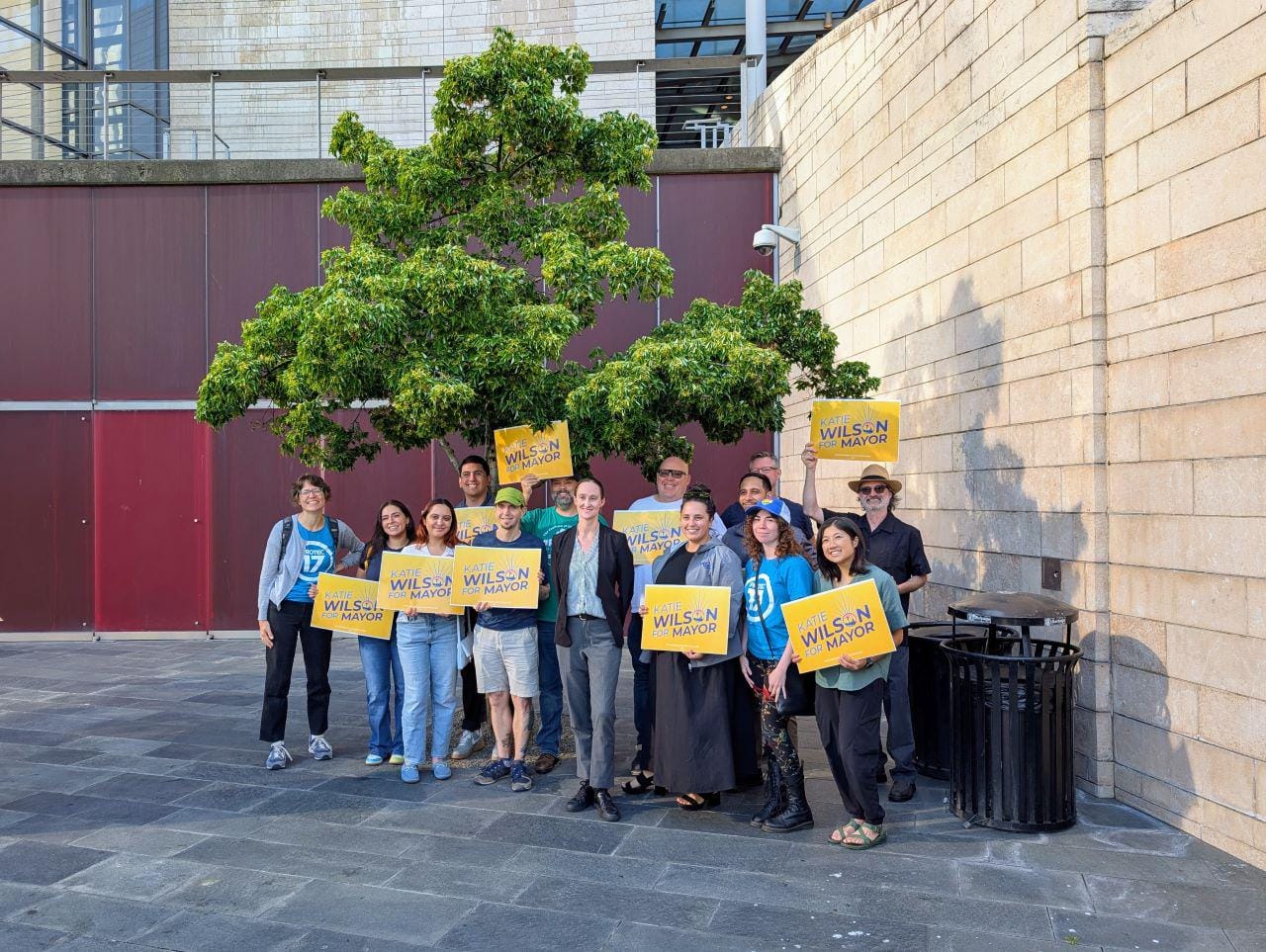
Corporate executives can orchestrate moves to the South. They don’t pay the price. We do. Katie Wilson was correct when she just said “bye-bye” to those corporate oligarchs who choose to leave Seattle. We want corporate partners, and we have them in Seattle, who invest in our city and our economy.
We need entrepreneurs partnering with the University of Washington, the city’s largest employer, to create advances in technology that benefit all of us. We need investment in research and development. We need collaboration across the public and private sectors. We must reinforce and grow secure, productive, and good-paying jobs. We do have in Seattle socially responsible corporations. With these corporations, we can construct a commonwealth in which all of us thrive.
 John Burbank (Guest Contributor)