King County's homeless population grew to 18,365 in a 2026 count, up 9% from 2024.
Last week, Seattle and King County announced that they are re-absorbing their contracts for homelessness services from the King County Regional Homelessness Authority (KCRHA). The KCRHA has been administering over 400 city and county contracts worth around $160 million, but these contracts will be returned to Seattle’s Human Services Department (HSD) and King County’s Department of Community and Human Services (DCHS) by the beginning of next year.
County Executive Girmay Zahilay and Seattle Mayor Katie Wilson both insisted the troubled regional homelessness agency wasn’t being fully dissolved but wouldn’t discuss its future beyond asserting the continued importance of a regional approach to homelessness and their intention to engage in “broad stakeholdering.”
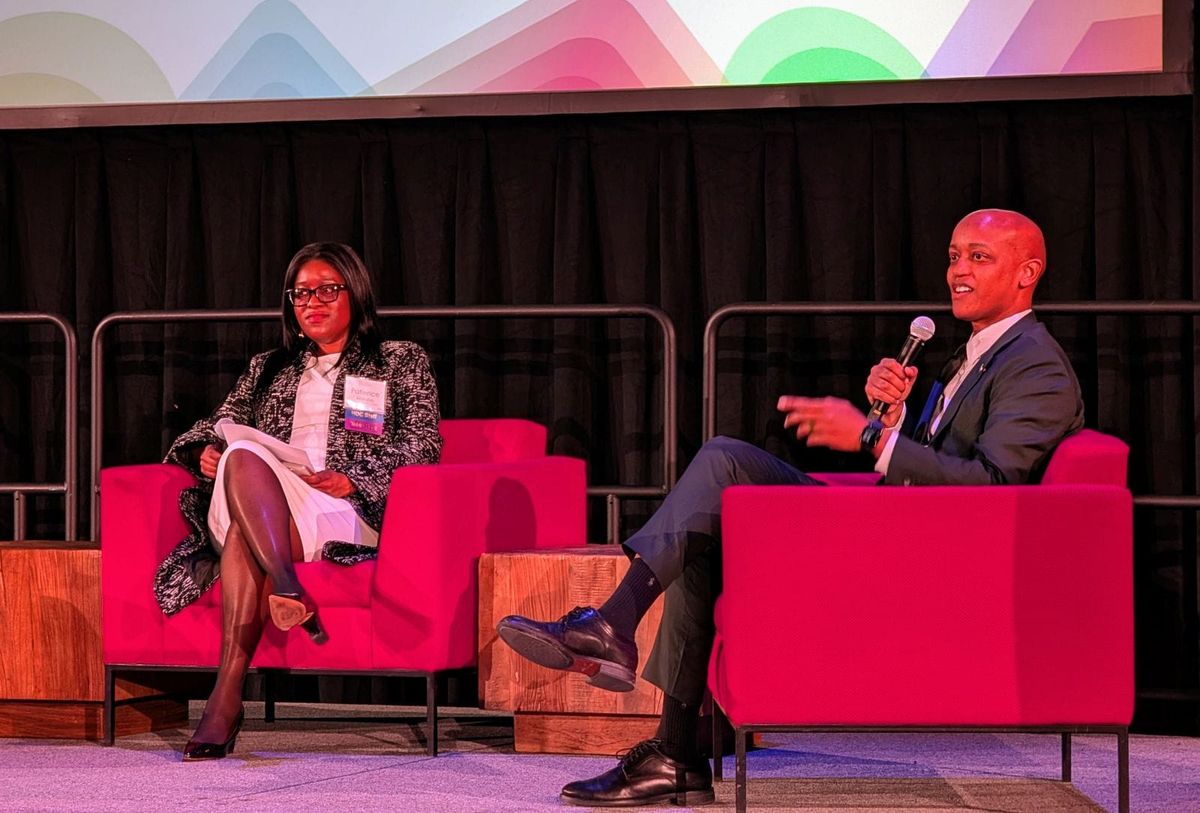
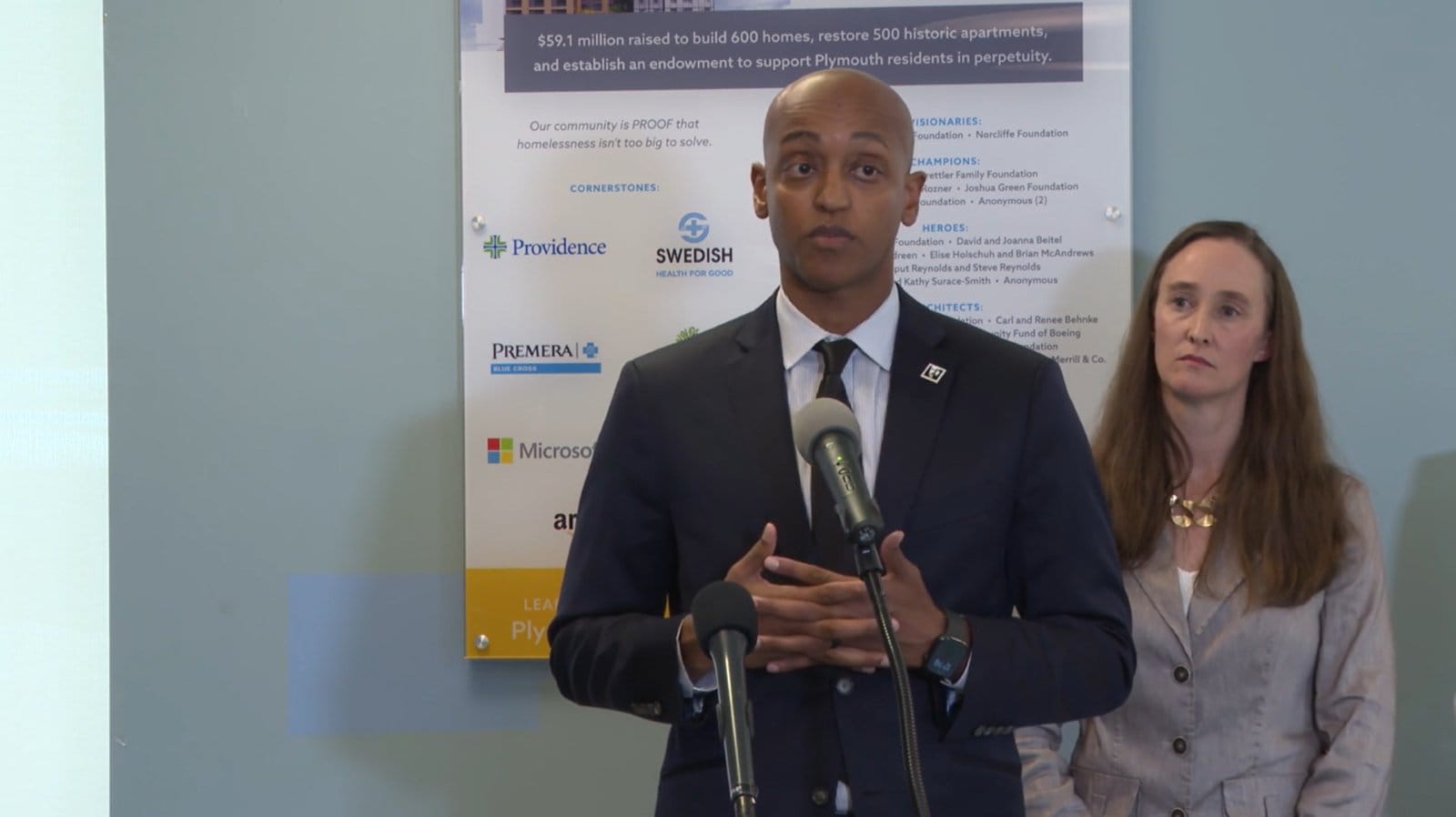
“Mayor Wilson and I have inherited a lot of issues, but we will not maintain the status quo just because change is hard,” Zahilay said in a press conference announcing the new direction of the agency. “So today we are taking further action to stabilize, right-size, and reset KCRHA. Our aim is to strengthen this organization's foundation, improve accountability, and put the agency in the strongest possible position to fulfill the responsibilities that are entrusted to it.”
The City of Seattle declared homelessness a civil emergency and public health crisis in 2015, under Mayor Ed Murray. Envisioned as a way to take a regional approach to homelessness, KCRHA was formed in late 2019 and began operations in 2021. However, the new regional agency had trouble getting buy-in from the majority of the region’s cities, wasn’t given its own taxing authority, and struggled to act independently from its two primary funders: the City of Seattle and King County.
The agency’s first CEO, Mark Dones, exited in mid-2023 amidst reports that service providers were losing faith in KCRHA due to delayed payments and tension with some elected leaders as Dones vocally advocated for permanent housing rather than tiny house units. Dones' successor as CEO, Kelly Kinnison, has run into troubles of her own, including clashing with employees, who alleged she retaliated against them.
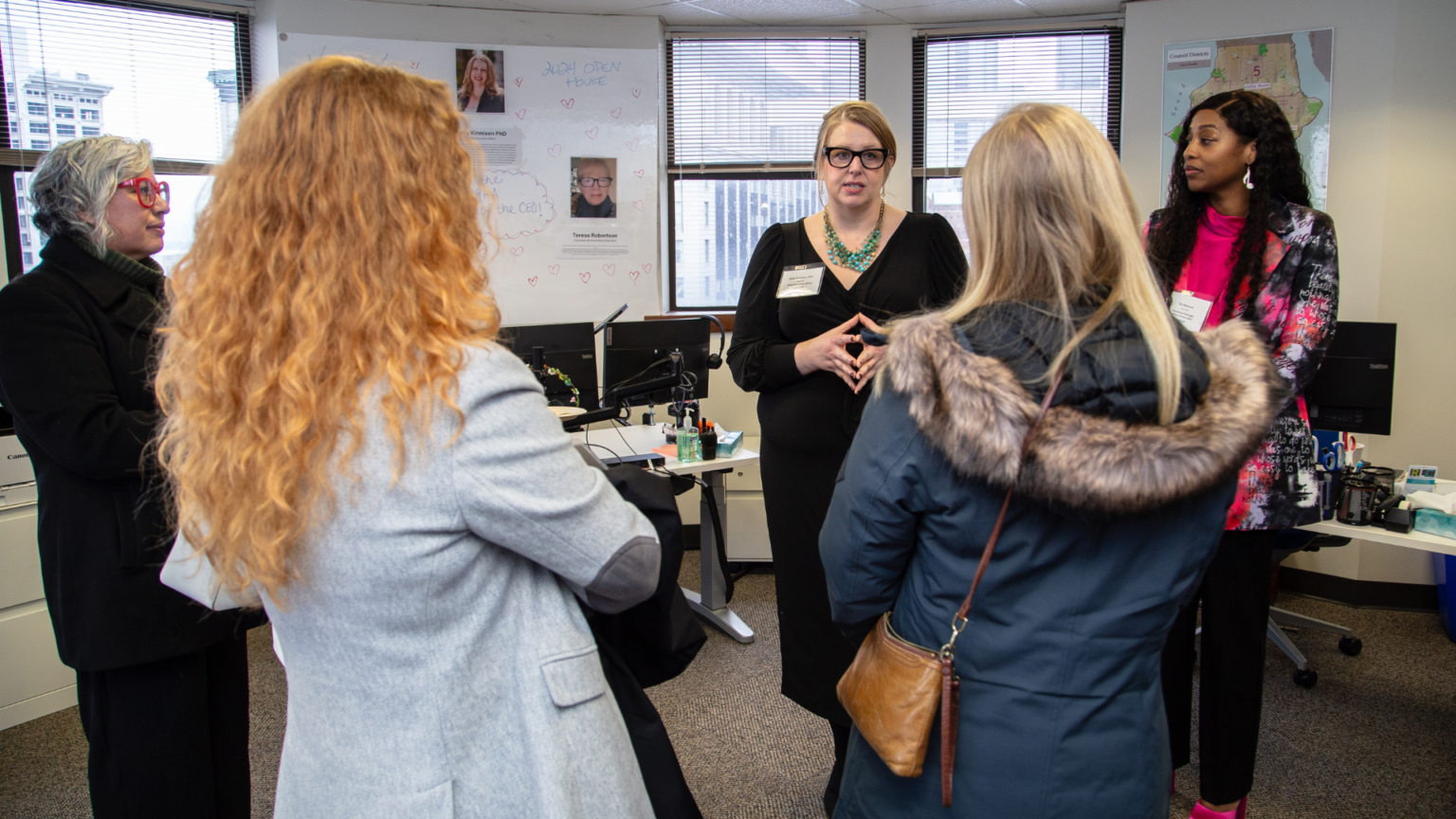
Recently, a forensic audit performed of KCRHA’s finances uncovered serious concerns with the agency’s accounting processes. KCRHA had a $44.7 million negative cash balance as of July 2025, and the audit unearthed $13 million of expenses they couldn’t account for, including $8 million that couldn’t be reconciled and more than $4 million of administrative overspend. KCRHA leadership later said this $8 million represented expenses for which the agency had not properly billed the City and County.
“When I reflect on the reasons for those challenges [of the KCRHA], one that sticks out to me is that this agency was given incredible responsibility without sufficient capacity or authority to really effectively create and drive an overall strategy for addressing the homelessness crisis in our region, and I think that the audit really reflects this reality, and also, of course, brings to light specific problems that have to be urgently addressed,” Wilson said.
King County and the City of Seattle will continue with their earlier announced plan to embed an independent financial compliance team within KCRHA to strengthen its financial oversight, improve internal controls, and support timely payments to providers.
The large-scale downsizing of the KCRHA will almost certainly result in significant layoffs at the agency.
For now, KCRHA will remain the region’s applicant for federal Continuum of Care funds, which currently constitute around $67 million per year – although the Trump administration has cut funding. KCRHA will continue to oversee the region’s homelessness data management system, conduct the biannual Point-in-Time Count to determine the current homeless population, and operate severe weather shelters.
“The most recent Point-in-Time Count reminds us that homelessness remains one of the most urgent challenges facing our region,” Wilson said. “That reality demands both accountability and partnership. It requires us to learn from what has worked, improve what has not, and bring together governments, providers, workers, businesses, philanthropy, and community members around a shared commitment to swift and sustainable progress.”
2026 Point-in-Time Count
KCRHA released the biannual 2026 Point-in-Time Count report a week before local leaders announced their downsizing intentions.
The new count showed that homelessness, and particularly unsheltered homelessness, continues to be a growing problem in King County. 18,365 people are estimated to be experiencing homelessness in the county on any given day or night, which represents a 9% increase from 2024 numbers.
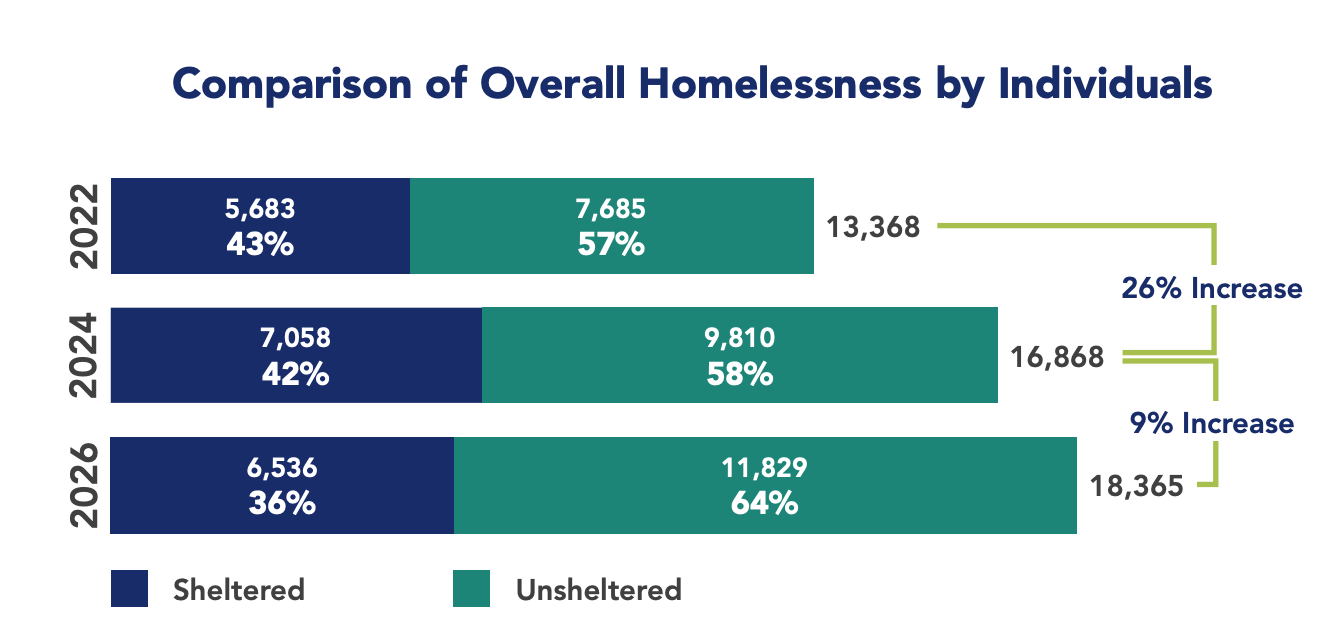
While the 2026 numbers show that the rate of homelessness growth is slowing when compared to the 2024 count’s 24% growth rate, more people experiencing homelessness now are doing so while unsheltered. There has been a 21% increase in unsheltered homelessness in the last two years. This increase is partly due to a loss of 689 shelter beds between 2025 and 2026, driven by less family shelter capacity.
“Because we lost shelter capacity in our network overall since 2024, almost twice as many people (64% of the total) are living outside or in places no person was meant to inhabit while local shelters and transitional housing programs are full,” read an informational email from The Coalition on Homelessness.
The Point-in-Time Count report showed that homelessness continues to disproportionately impact communities of color in King County. An estimated 24% of the homeless population is Black, with another 24% Hispanic.
Individuals in 2026 self-reported on vulnerabilities that sometimes co-exist with homelessness. 15% reported being survivors of domestic violence, 27% reported having a serious mental health condition, and 33% reported having a substance use disorder. These numbers go up for those who are experiencing homelessness while unsheltered.
“Homelessness is not growing because proven solutions aren't working. It's growing because the flow of people becoming homeless continues to exceed the number of people we can help exit homelessness,” Downtown Emergency Service Center (DESC) executive director Daniel Malone wrote. “Research consistently shows that housing affordability is the strongest driver of homelessness, and without addressing that root cause, our community will continue to struggle to keep pace.”
Trying to compete for federal dollars
As people continue to fall into homelessness more quickly than people can exit, the Trump administration has continued to be an opponent to the “Housing First” strategy in which the King County region is heavily invested. As a result, millions of dollars of federal funding that flow into city and county services is at risk.
Both Wilson and Zahilay spoke of the importance of being able to submit a strong application to the U.S. Department of Housing and Urban Development (HUD) for Continuum of Care dollars.
“I think it's no secret that Seattle, King County, we have a target on our backs because of our values,” Wilson said. “So we are obviously also preparing for a situation where we lose some or all of that funding, and I think we are jointly very committed to making sure that the people who are currently served by Continuum of Care funds, through permanent supportive housing, through rapid rehousing, through other kinds of shelter, that they do not become homeless.”
Zahilay referenced HUD’s recent decision to freeze funding to Los Angeles’s biggest homelessness agency due to alleged fraud and mismanagement.
“We are taking all of the actions that we believe put us in the strongest position,” Zahilay said. “When we look at what happened in Los Angeles, the way the Mayor and I interpret that is that inaction by local authorities and perceptions of mismanagement and fraud were the driving reasons why that agency was defunded by the federal government, and we want to make sure that those perceptions are minimized here.”
In addition to the KCRHA forensic audit, DCHS underwent an audit on a narrow range of its youth program contracts last year. While the audit found potential issues and oversight failures, the King County Auditor’s Office’s follow-up in April found that the department “made significant progress on audit recommendations, improving training and awareness.”
As a result of this audit, the King County Council passed legislation this week that established a new Inspector General division to increase oversight of county funds and contracts, which will include a new King County Fraud Hotline.
“This step will provide significant new resources and authority for responding to complaints of fraudulent use of county funds and abuse of authority in contracting,” King County Councilmember Claudia Balducci said in a statement.
DCHS will be receiving oversight of the county-funded KCRHA contracts, and Zahilay said they will be hiring 10 to 12 new staff members to achieve this new work.
At the end of May, The Urbanist asked DCHS director Susan McLaughlin about the possibility of the department taking over some of KCRHA’s contracts.
“If something happens that requires DCHS to pick up some of the books of business that KCRHA is doing, I have strong confidence that our department can pick up that body of work and move it forward,” McLaughlin said at that time.
Wilson was pleased by last week’s federal ruling in favor of Washington State in regards to last year’s HUD Continuum of Care changes. However, the judge in the case declined to issue a permanent injunction on federal conditions limiting access to duly awarded HUD funds.
“This week's federal court ruling in favor of Attorney General Nick Brown's lawsuit against HUD was an important victory for communities in Washington and across the country,” Wilson said. “It affirmed that HUD must follow the law when administering these programs, and it protects our ability to continue delivering services to people who need them.”
Efforts to address homelessness continue
Wilson and Zahilay both said they remain dedicated to a regional approach to solve homelessness. And both of them have made addressing homelessness a key issue for their first terms in office.
Wilson campaigned on the commitment to open 4,000 new shelter beds by the end of her first term, and she told The Urbanist at the beginning of her term that homelessness was her top priority. Further broken down, Wilson wanted to open 500 new beds before the World Cup this summer – a goal she missed by more than 300 – and 1,000 new beds by the end of her first year.
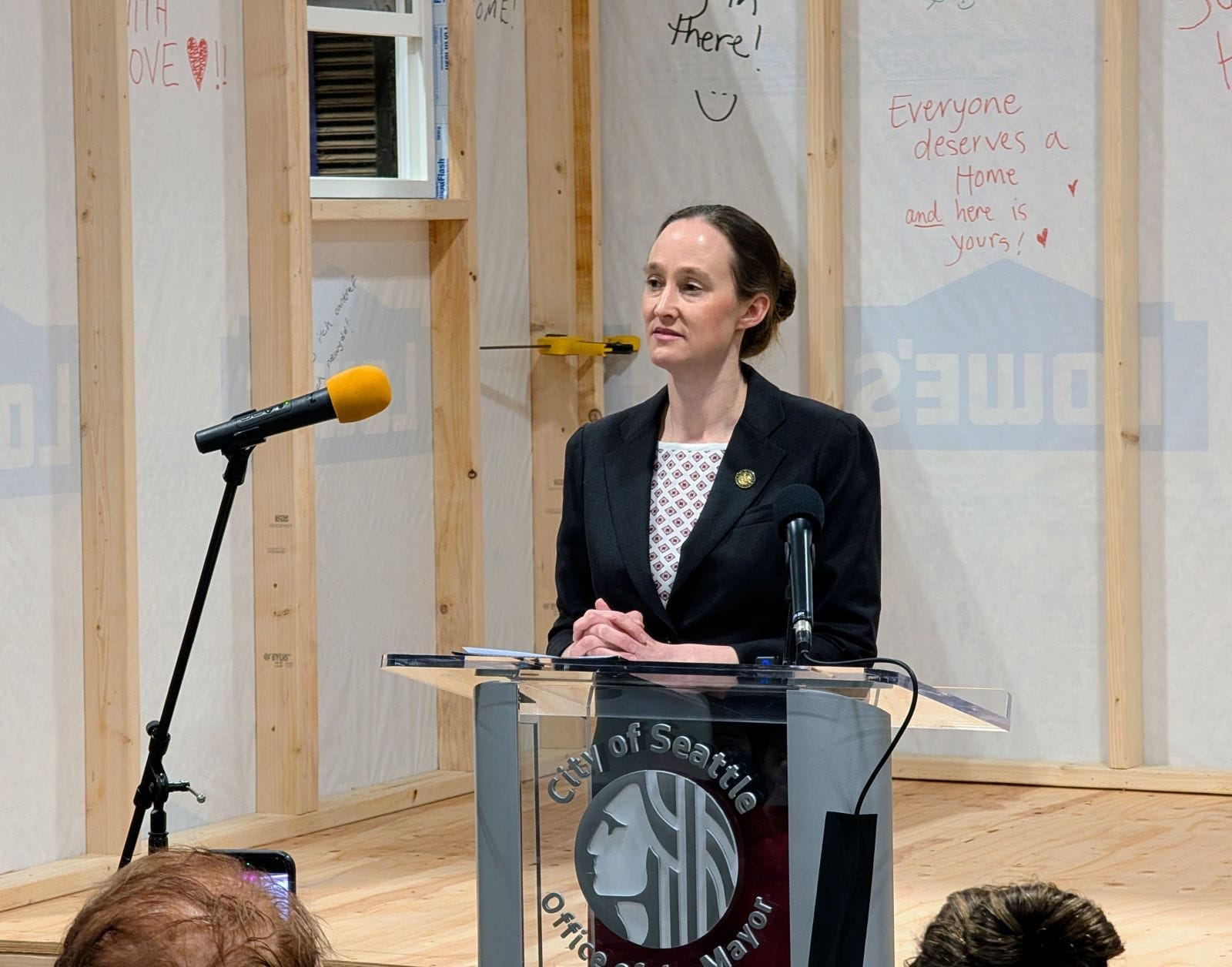
Meanwhile, Zahilay announced his Breaking the Cycle initiative in March, in which he pledged to open 500 units of supportive housing in 500 days, which could include both emergency units and permanent supportive housing. The first 80 units towards this goal will be a tiny home village in Seattle’s Central District, and the initiative’s workgroup has officially launched, with a goal of delivering a report in November to improve cross-system coordination.
So far this year, the County has opened the Booker House, providing 80 units of permanent supportive housing, and Copperleaf, providing 235 units of affordable housing next to Northgate Station. Just this week, DSHS’s Health Through Housing is opening 101 units of permanent supportive housing at Sheila Stanton Place in Kirkland.
“Given that these are not “net new” units since they were previously funded, we are not counting them towards the 500 goal,” spokesperson Callie Craighead told The Urbanist. “But they are still noteworthy to show the momentum that is building.”
The steering committee for the housing revenue workgroup, looking into the idea of a countywide housing levy, met for the first time in June
“We are in this challenging moment, and at the same time, I want to say that I am filled with a lot of hope,” Wilson said. “We are in a moment again where we have new leadership that is really committed to tackling this crisis with the urgency that it deserves, and I think there is a huge amount of alignment in terms of the values and the vision between the Executive’s Breaking the Cycle initiative and the shelter acceleration work that we have embarked on at the City of Seattle.”
 Doug Trumm