King County’s Department of Community and Human Services (DCHS) recently released data showing the success of their Health Through Housing’s permanent supportive housing (PSH) program in keeping people housed and stable. DCHS also analyzed the overall impact of the region’s permanent supportive housing interventions on incarceration rates, finding that jail bookings of participants in these programs dropped almost 27% in their first year and more than 37% by their third year.
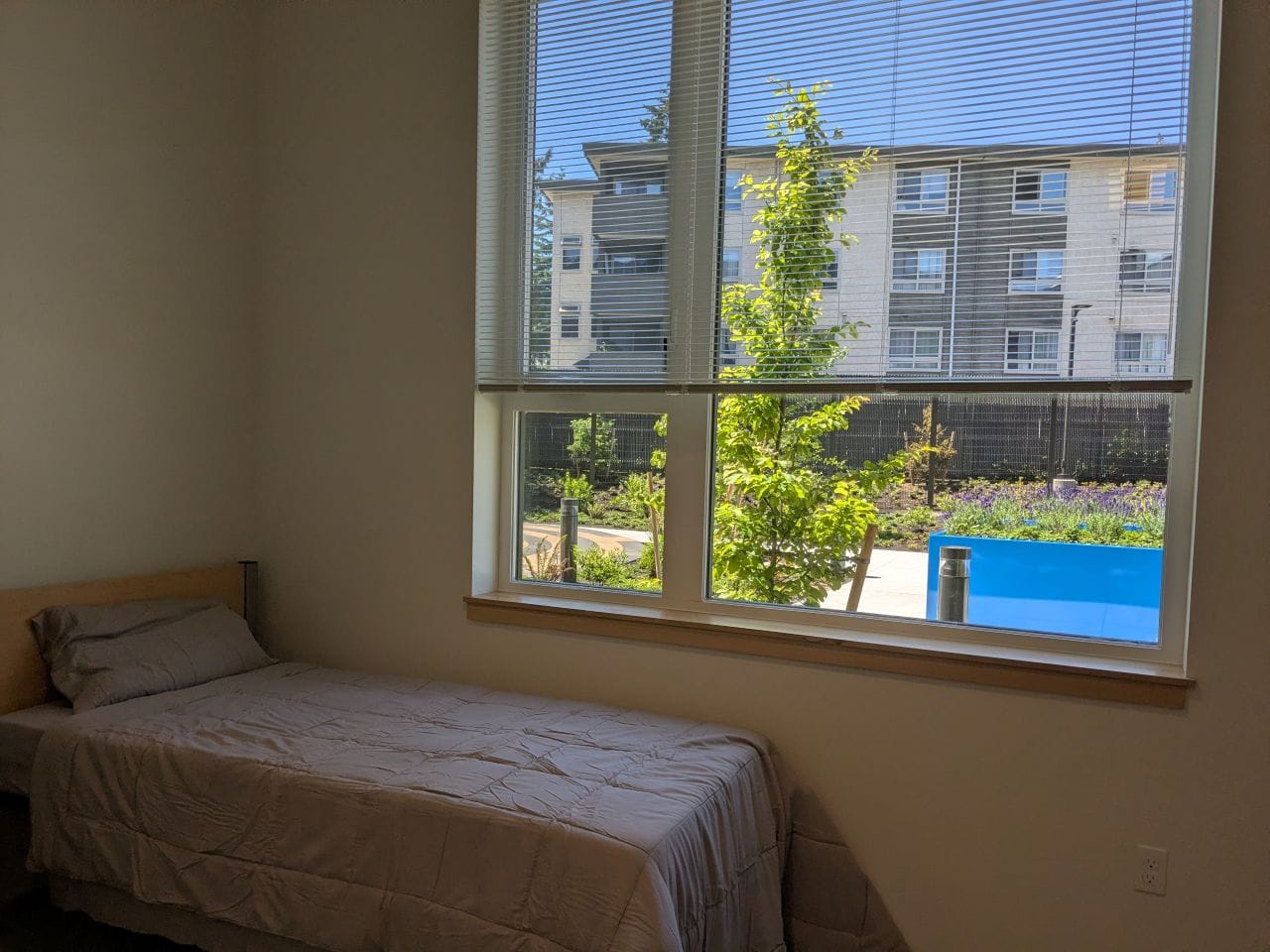
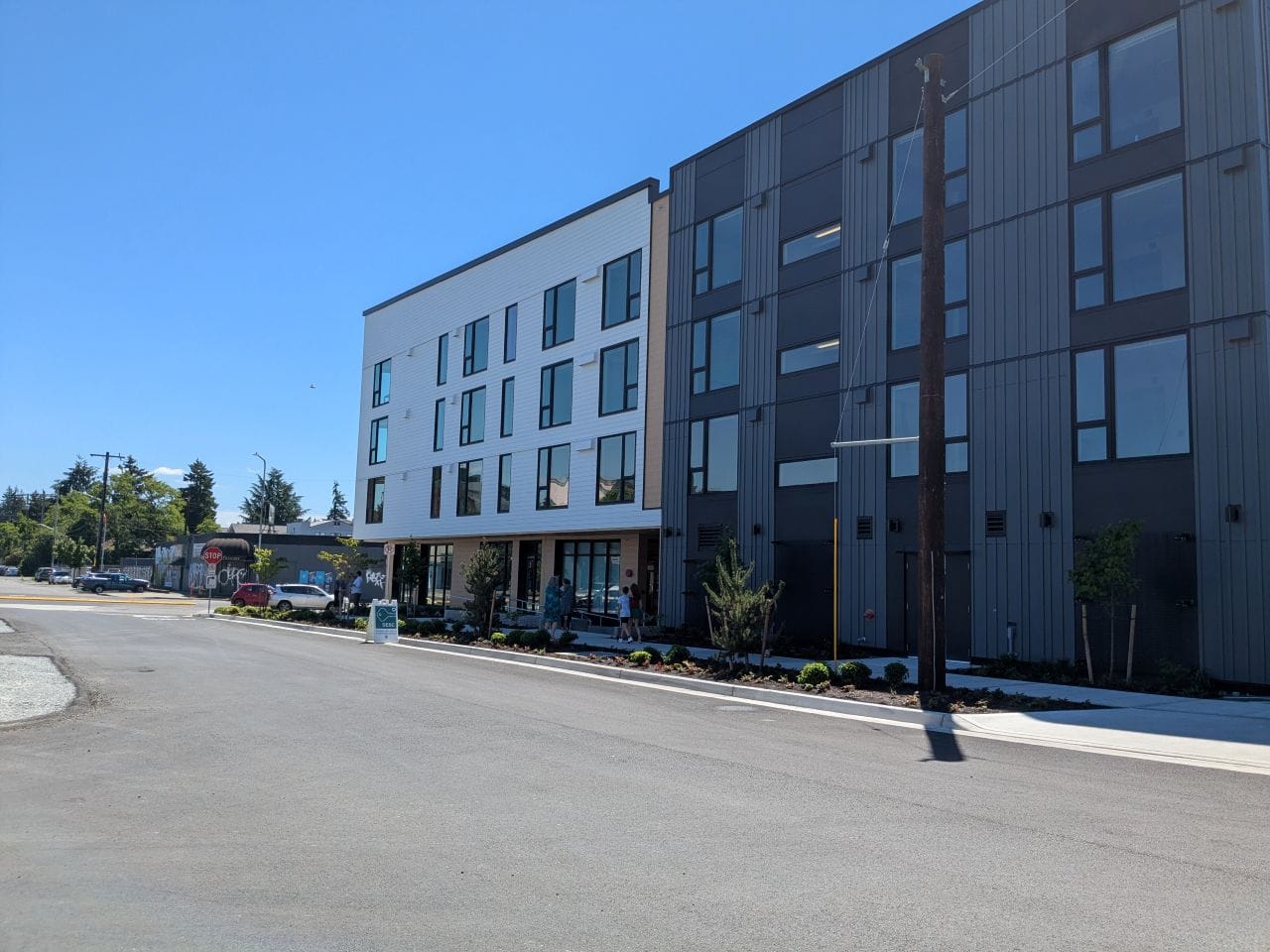
At the same time, Downtown Emergency Service Center (DESC) just celebrated the opening of Birch Grove, their 20th permanent supportive housing location situated in Lake City. Birch Grove features 120 studio units, including 18 units that are ADA-compliant, along with wrap-around services that include behavioral health support and substance use disorder treatment. Each resident will have an on-site staff member assigned to them to help them access services.
Success of the region’s permanent supportive housing ecosystem, be it Health Through Housing or DESC’s buildings, provides counter evidence to the continued insistence from the Trump administration that a “Housing First” approach to homelessness is ineffective.
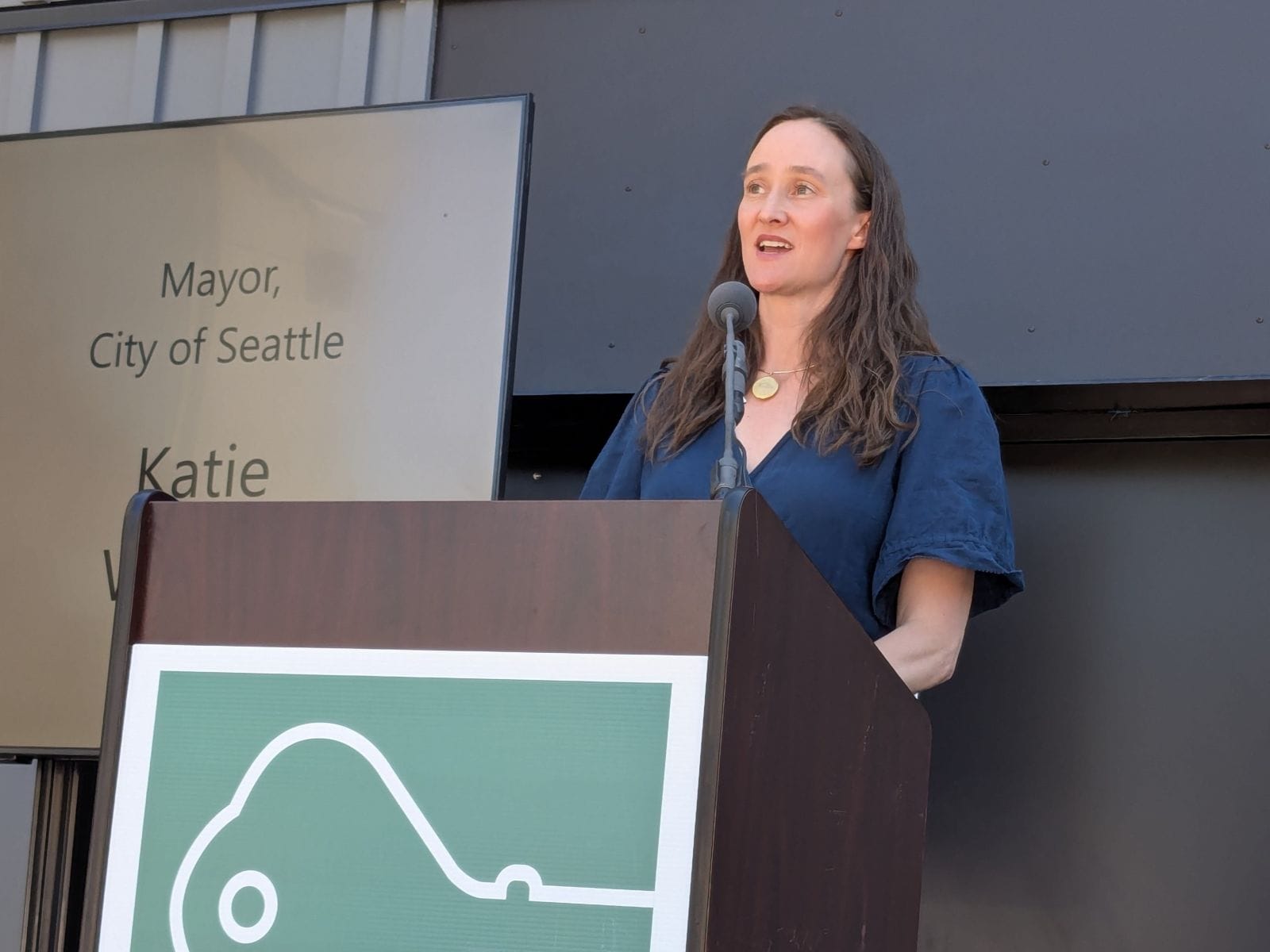
Seattle Mayor Katie Wilson spoke strongly in support of “housing first” at Birch Grove’s opening celebration on Tuesday.
“Why do we build places like this? It's because we know [...] that the solution to homelessness is housing,” said Wilson. “Not someday, not after every box is checked. Housing first, and with that, the support that helps people to stay. And we know this works because the numbers tell us so. We know that 95% of residents at DESC remain housed after one year. 95%: that is one of the highest success rates anywhere in the nation.”
The City of Seattle is providing $4 million per year for Birch Grove’s operating costs.
“Let me say this plainly, if federal funding is ever pulled out from under this work, we will prioritize keeping our city's supportive homes operating,” Wilson said. “We will not let the people who live in these buildings lose the stability that they have fought so hard to find.”
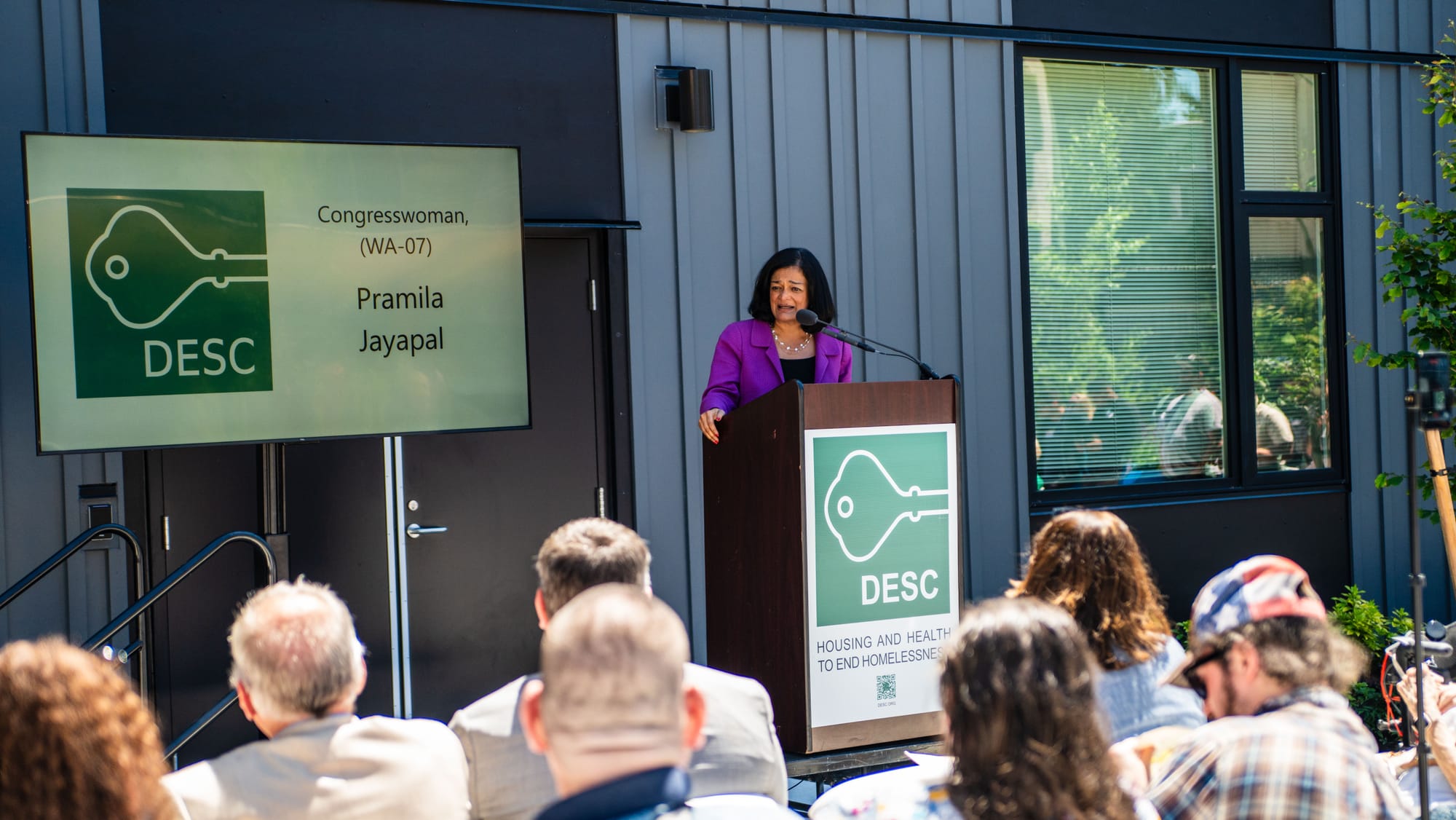
Also attending Birch Grove’s opening ceremony was U.S. Rep. Pramila Jayapal (D - Seattle), who said she was a longtime fan of DESC.
“I have to keep sending the message in Congress and across the country that homelessness is not a personal failure, it is a policy failure, and the only good news about that is that we can fix it,” Jayapal said. “We can fix it with real policies that help promote supportive services for vulnerable people.”
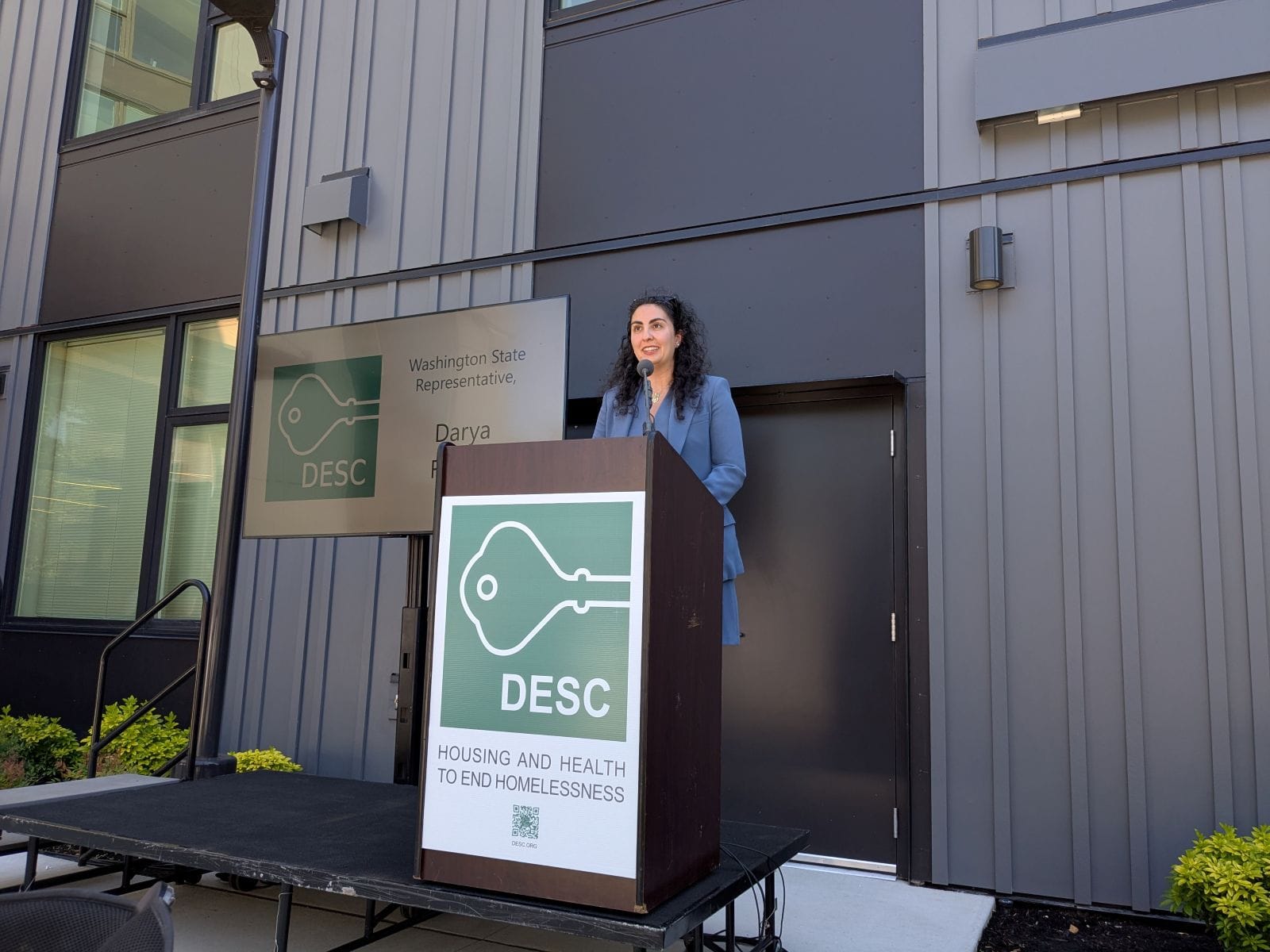
Rep. Darya Farivar (D - Lake City, 46th Legislative District) spoke about how important the opening of Birch Grove is to the Lake City community.
“This investment is especially meaningful for Lake City because it recognizes that when our neighbors are facing crisis, the answer should not be displacement,” Farivar said. “By prioritizing housing for neighbors in crisis, this project sends a powerful message: you belong here, this is your home.”
Breaking the homelessness-jail cycle
DCHS’s new data shows that permanent supportive housing is having a marked impact on breaking the cycle between homelessness and jail bookings. Homeless people are generally more likely to interact with the criminal legal system, usually due to low-level offenses such as trespassing or public drug use. At the same time, people who have history within the criminal legal system can experience housing and job discrimination, which makes it harder to become housed and employed.
Even being in jail for a short period of time can be destabilizing. A study conducted between 2013-2018 found that 30% of people held in jail for four to seven days lost their jobs and nearly half reported experiencing some kind of “material loss.” A different survey performed between 2019 and 2021 found that people who served pre-trial detainment in jail were more than four times (420%) more likely to become unhoused than those who were released.
DCHS’ data analysis found that 81% of individuals who had been booked into jail in the year before their entry into permanent supportive housing saw a reduction in the number of bookings after enrollment.
Jelani Jackson, acting director of DCHS’ Housing and Community Development division, explained that homelessness and jail involvement reinforce each other, creating a cycle that is difficult to exit and leads to chronic homelessness.
“Permanent supportive housing breaks that cycle by removing the primary driver, which is a lack of housing, and the amazing thing about permanent supportive housing is the support,” Jackson told The Urbanist. “When you pair housing with support services, that's the recipe for somebody to experience recovery and start to improve their life and work on all the goals that they have, like improving their healthcare, connecting with the community, re-establishing relationships with friends and family. It's really the foundation that we all need to be successful in this world.”
King County Executive Girmay Zahilay underlined his commitment to breaking that cycle.
"Breaking the cycle of homelessness starts with providing housing," said Zahilay. "Every person deserves the stability of a safe place to call home. This data shows that when people have a stable place to live, they're less likely to cycle through our jail system. That's better for individuals, better for the broader community, and a reminder that housing is one of the most effective investments we can make."
While the data shows a decrease in jail bookings subsequent to enrollment in permanent supportive housing across the board, racial disparities still exist, with larger decreases in jail bookings amongst White and American Indian and Alaskan Native participants. Part of the success in the Indigenous population could be because of Health Through Housing’s three permanent supportive housing buildings run by the Chief Seattle Club that provide culturally relevant services and community-oriented healing.
By contrast, Asian and Hispanic participants see the lowest decreases in jail bookings after enrollment.
“It is important to keep in mind that permanent supportive housing doesn't erase structural disparities that existed before this model is stood up, but it does show how PSH can help with reducing overall involvement in the systems,” Jackson said.
While providing housing and supportive services is a more humane option for elected officials grappling with the homelessness crisis, it can also be cost effective. Jackson said that in 2025, the county estimated that it cost roughly $41,000 to fund one unit of permanent supportive housing for a year. In contrast, during the same year it cost the City of Seattle $386.36 per day to house someone in the King County Jail – a cost that works out to more than $141,000 per year.
“This analysis comes at an important moment,” said Daniel Malone, the executive director of DESC. “The data shows that when people have access to supportive housing with services, they experience greater stability over time. These are outcomes that benefit not only residents, but the broader community as well.”
The benefits of permanent supportive housing
Malone spoke about the evidence showing that permanent supportive housing is achieving a positive impact on the homelessness crisis.
“No homelessness interventions can touch the outcomes that supportive housing has achieved,” Malone said. “Academic research has shown this over and over again, and a lot of that research has been done right here at DESC. Individual stability, reductions in crisis events, and a permanent exit from homelessness are what supportive housing makes happen for people.”

Not only are jail bookings down across the board for residents in the county’s permanent supportive housing facilities, but the new data shows that 93% of Health Through Housing permanent supportive housing residents maintained their housed status in 2025.
“When you invest resources into housing, people choose housing, and they're choosing to stay housed. 93% speaks for itself,” Jackson said. “An overwhelming number of folks want to stay housed. More importantly, when someone is housed, that's a testament to the effectiveness of the model. Our robust network of providers actually are doing the services and serving these residents. [...] All of those resources are driving folks towards their ability to maintain stability.”
Malone explained that people shouldn’t assume that because the number of homeless people is rising, that means permanent supportive housing isn’t working. Instead, he said there just aren’t enough places for people with serious psychiatric conditions to live in our community.
“The data show that people who get housing like this stay housed, and this is a point that the public often gets confused about,” Malone said. “They see homelessness numbers rising, and they assume that nobody is being helped out of homelessness, but the truth is that people escape homelessness all the time, including people that the public thinks are never able to get out of homelessness, such as people with difficult mental illness and substance use disorder conditions.”
The data also continues to show better health outcomes for Health Through Housing residents, who have fewer and shorter stays in the hospital and in emergency rooms. This stabilization is better for individual health while lessening the burden on local hospitals and avoiding costly emergency care.
Permanent supportive housing under threat
Birch Grove is the final permanent supportive housing building DESC currently has plans to open due to federal funding uncertainty. DESC had already bought property for their next permanent supportive housing development, but for now they’re renting out the land to the Low Income Housing Institute (LIHI) for a temporary tiny home village.
Earlier this month, the U.S. Department of Housing and Urban Development (HUD) released a Notice of Funding Opportunity (NOFO) for homelessness interventions that shift about a third of the available dollars for 2027 towards short-term programs and away from the “Housing First” approach that includes permanent supportive housing. Communities will also receive a competitive score that will determine some of the funding allocation.
As a result, millions of dollars of local funding could be at risk, with the Seattle Times reporting that $26 million of the roughly $65 million of federal funding the region receives is at the most risk.
“Federal restrictions and limitations on permanent supportive housing will have devastating impacts in communities and roll back years of progress to bring housing stability to the region,” said Callie Craighead, a spokesperson for the King County Executive’s Office. “In King County, over 4,500 households could lose stable housing or other supports, increasing unsheltered homelessness, with limited access to existing shelter, and reduced homelessness services, and supportive housing.”
Community applications for the federal dollars are due later this summer, and the law requires HUD to make its funding awards by December 1.
“King County is exploring every available option with our local and state partners in the event that federal funding is reduced or eliminated entirely to keep supportive housing available,” Craighead said. “We are also evaluating programs currently supported by other funding sources (for example, the Mental Illness and Drug Dependency Behavioral Health Sales Tax) to determine whether they could qualify for funding. If so, this could free up local resources to sustain supportive housing investments”
Zahilay is also convening a workgroup to explore a new dedicated revenue source for housing in King County.
“This new revenue source could play a critical role to support housing investments and offset the loss of federal funds,” Craighead said.
Malone said that in the past, while there have been evolutions of priorities, changes to funding have been made much more incrementally in order to avoid disrupting existing efforts.
“The federal administration has stated very explicitly that they want to radically change what the money is used for,” Malone told The Urbanist. “This administration appears to be prepared to destabilize a lot of things.”
Malone said it’s not clear what the end result of these changes will be. It’s possible one or more lawsuits may be filed claiming that aspects of the HUD funding competition aren’t legal, which could further muddy the waters. Congress could also potentially choose to take action.
Jayapal said strengthening and expanding HUD’s Continuum of Care and Medicaid that help enable successful supportive permanent housing initiatives remains one of her top priorities.
“Since coming back into office [...] Republicans and the Trump administration have literally worked very, very tirelessly to enact the largest transfer of wealth from poor people to the wealthiest amongst us– to billionaires – in what I call their big bad betrayal bill that they passed last year,” Jayapal said. “That slashed food assistance, it slashed health care for millions of Americans, and they have been doing everything that they can to take away our housing assistance, rental assistance programs, and that's all, by the way, while raising the defense budget to a record-breaking $1.5 trillion, so we've got money for lots of wars, but we don't have money for the health and housing of people here at home. That is absolutely unacceptable, and I think for all of us, what DESC is doing here at this facility, and all of your work, is fighting back against that idea, and saying that is not who we are in Seattle.”
 Doug Trumm
 Amy Sundberg