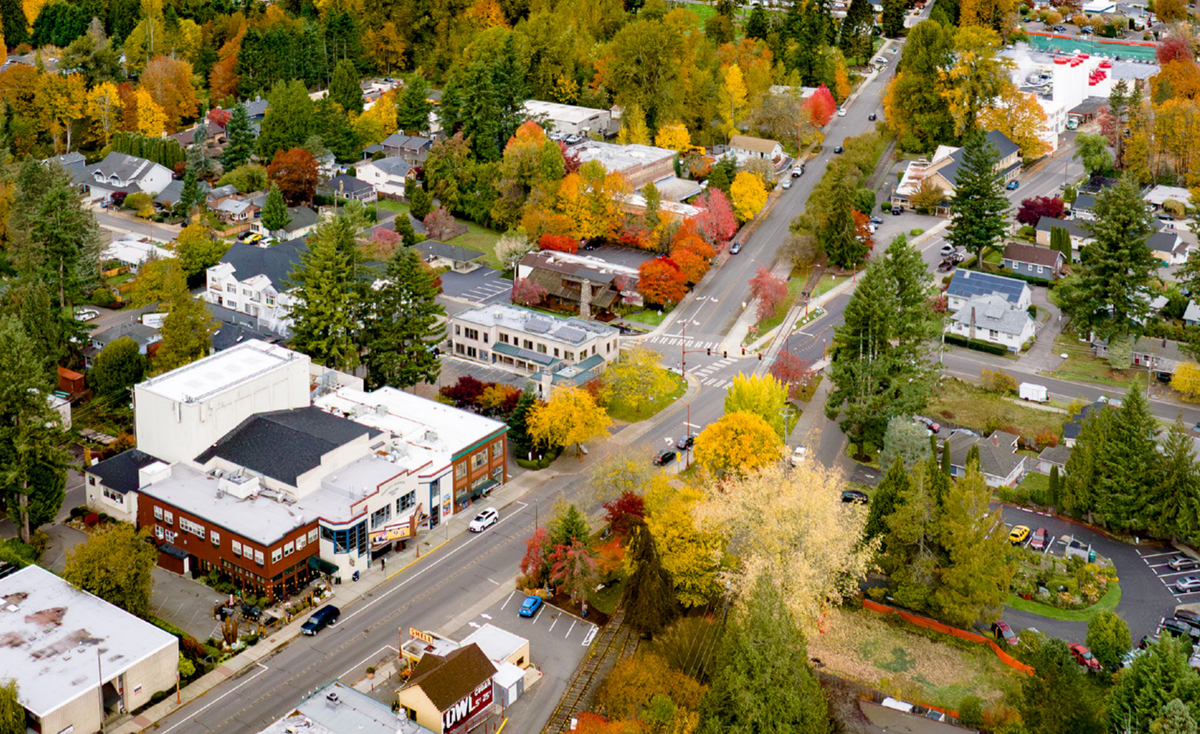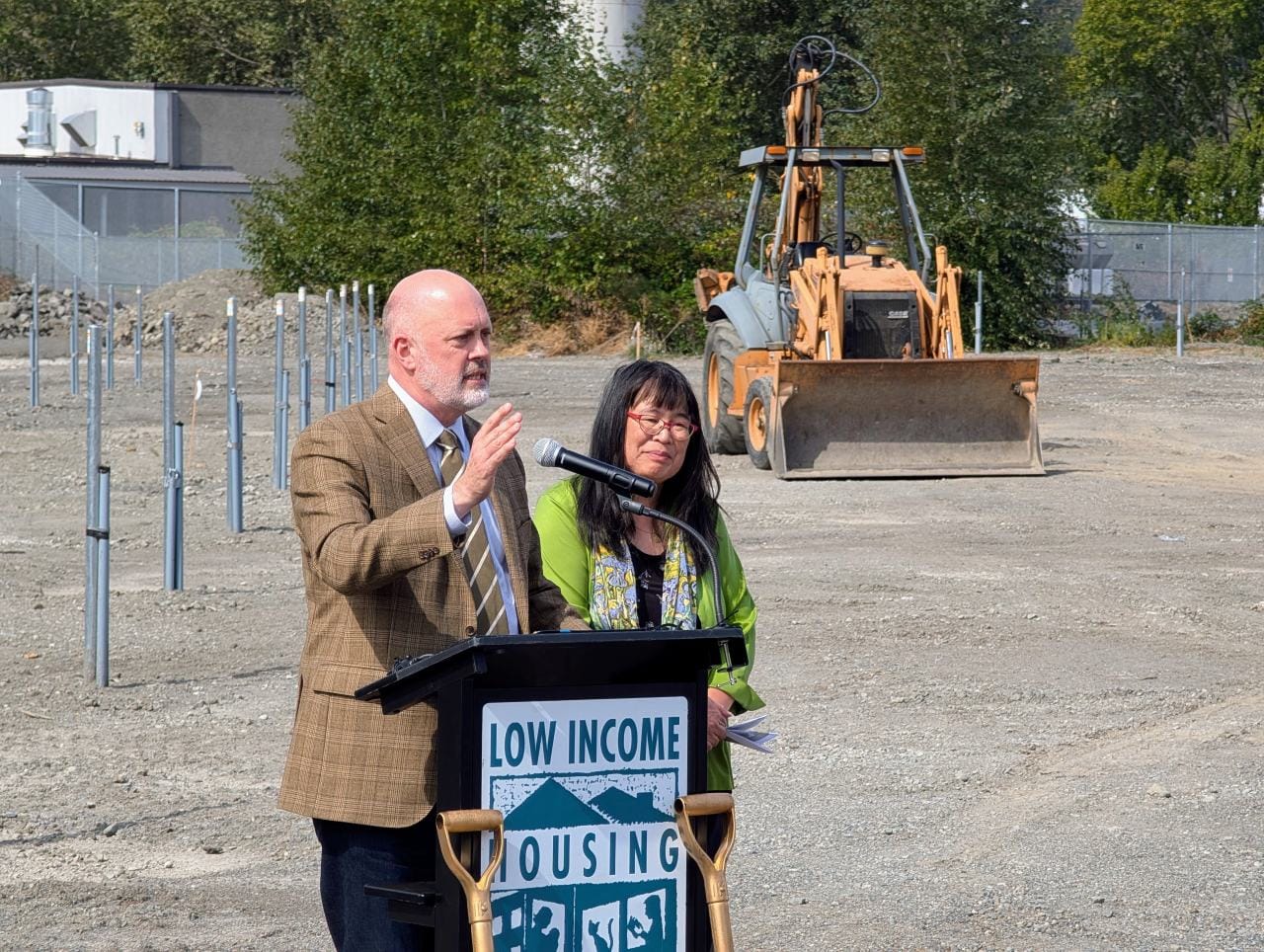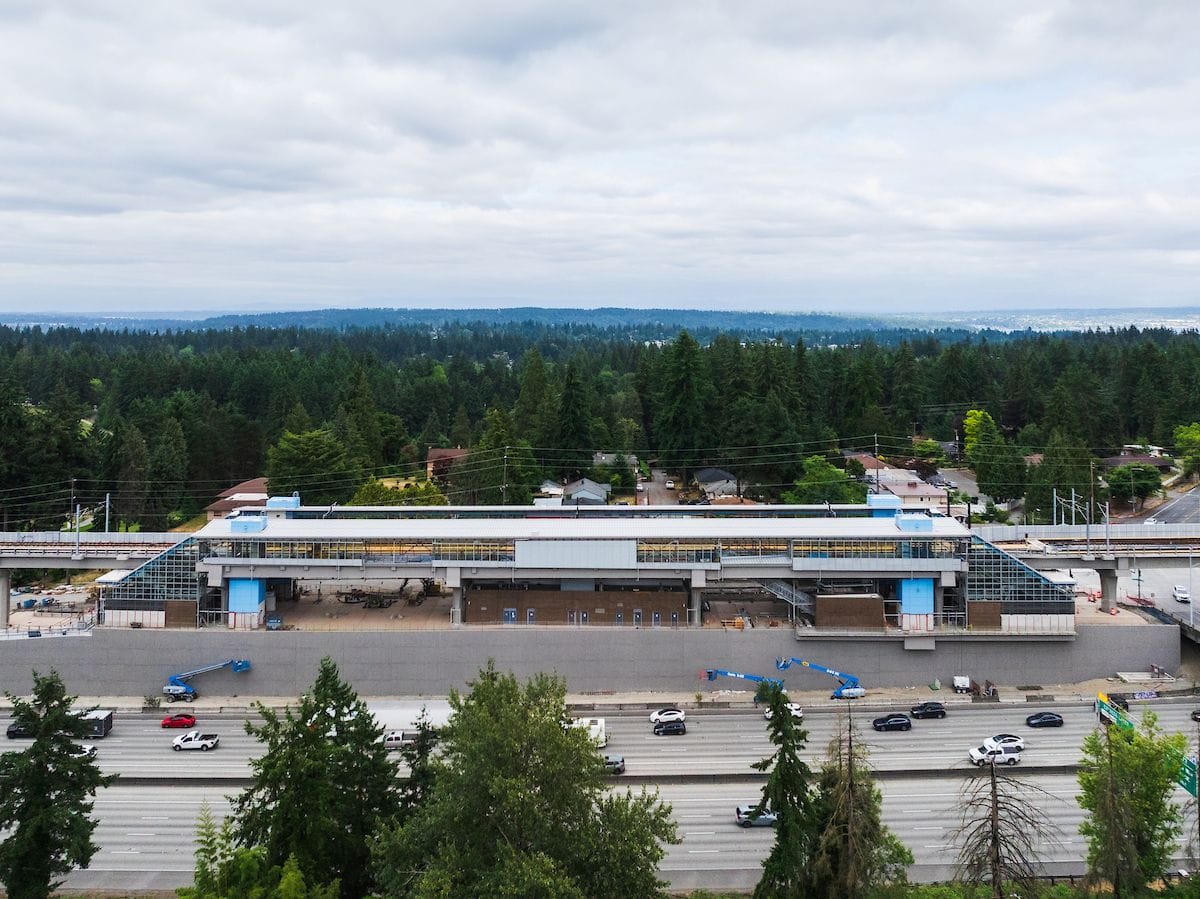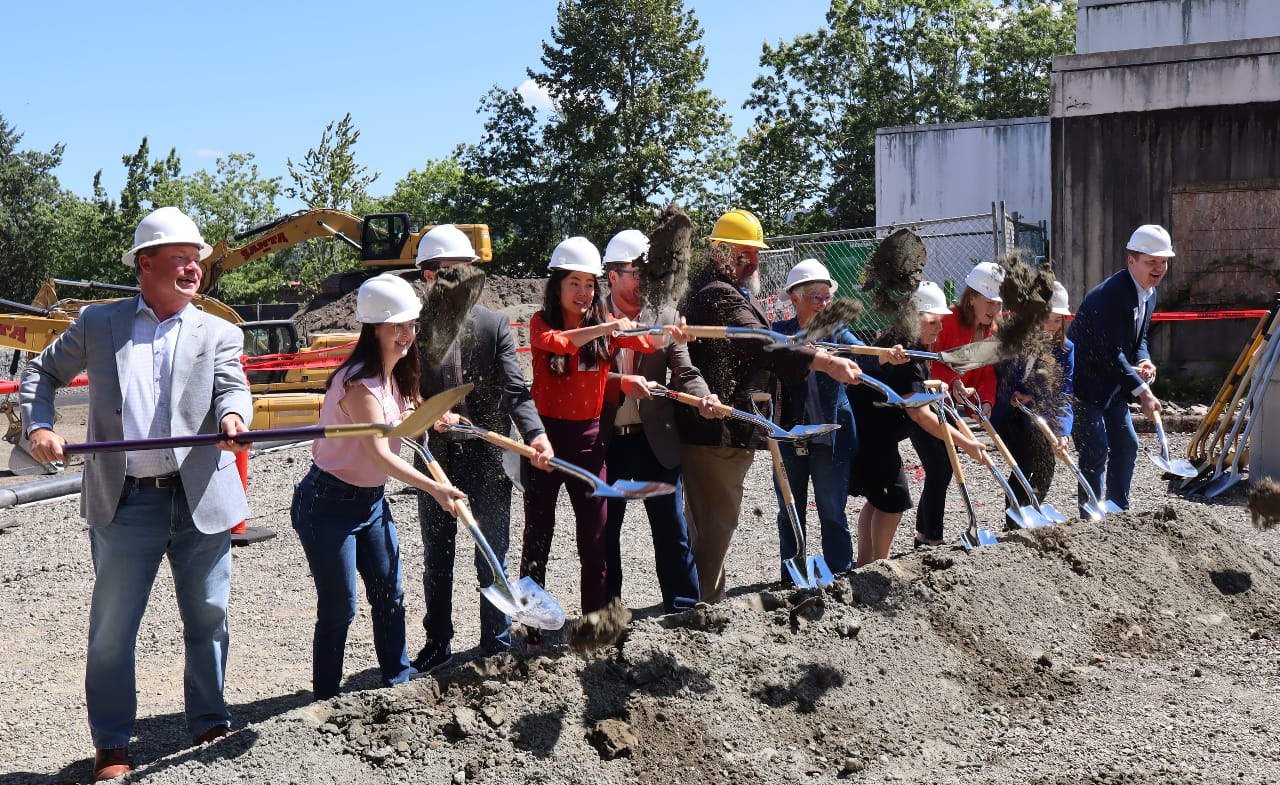
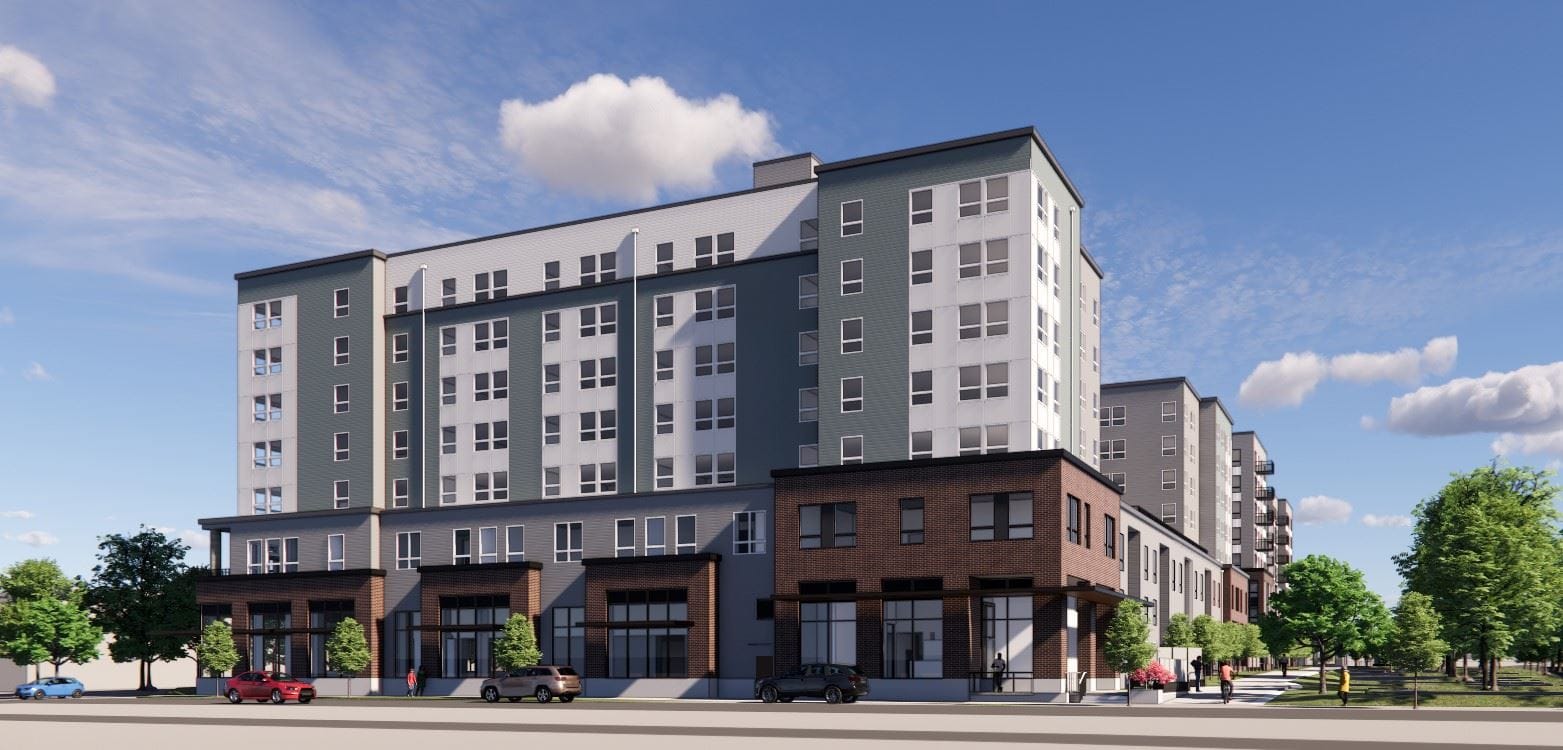
The City of Issaquah and the King County Housing Authority broke ground last week on a transit-oriented development project that will bring 154 affordable homes next door to the Issaquah Transit Center. The dirt-tossing ceremony was a long time in the making, with the idea of building affordable housing on the site first advanced by Issaquah officials in 2016, who had to push back the estimated start of construction numerous times over the intervening decade. Trailhead Apartments, as the project is now called, is set to open its doors to new residents in 2028.
When Issaquah's vision is fully realized, Trailhead will be joined by a market-rate apartment building immediately next door, still in planning. In addition, 10,000 square feet on Trailhead's ground floor will be owned by the City of Issaquah as a human services center. All told, the campus will include more than 350 new homes steps from numerous bus lines and a stone's throw from Issaquah's future light rail station, with a bike trail cutting through the site along with a public plaza.
Homes at Trailhead will be available to residents earning between 40% and 60% of King County's median income, with several units set aside to be operated by Life Enrichment Options (LEO), a local Issaquah non-profit working with individuals with intellectual and developmental disabilities.
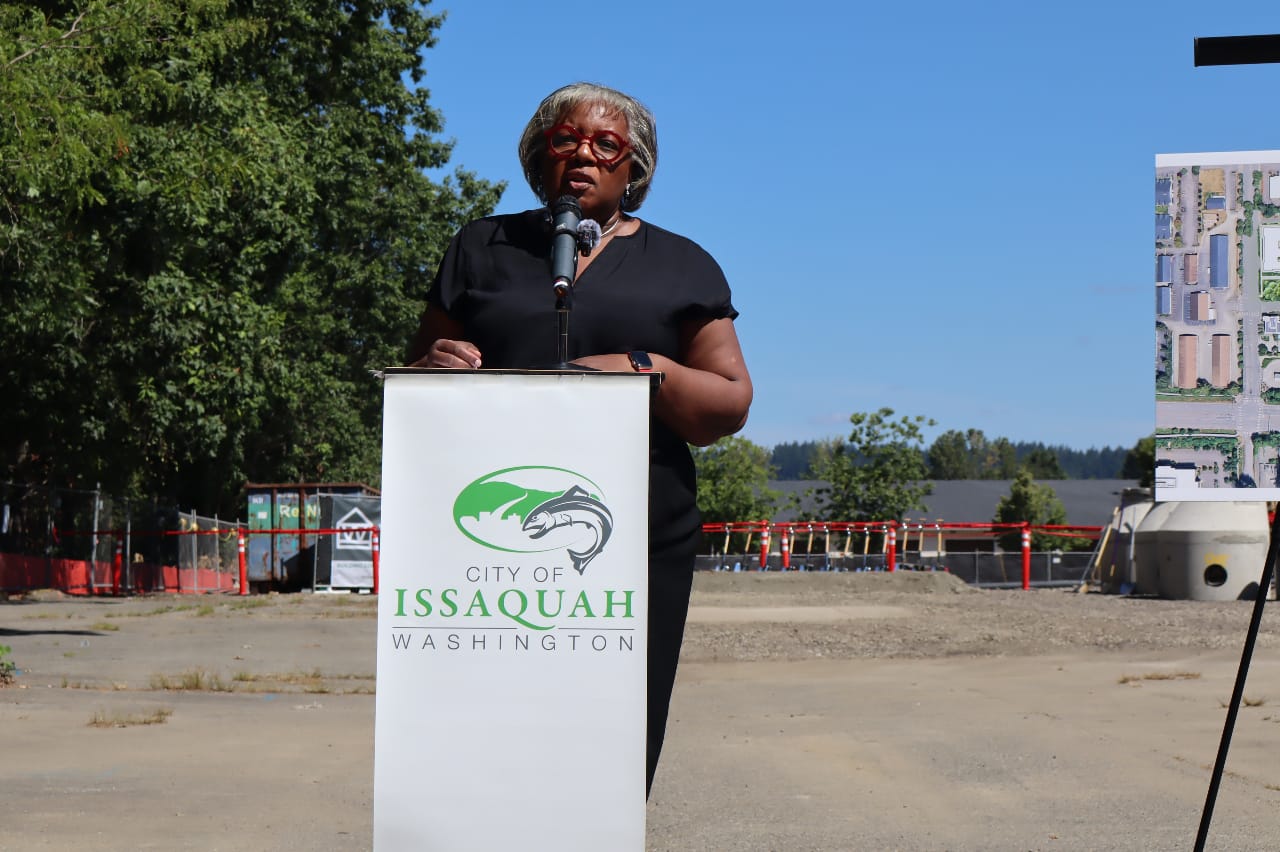
"Ten years ago, long before my tenure, KCHA responded to a [request for proposals] that the City of Issaquah had issued to develop this property, and part of the request, part of the vision for this property, was to develop a housing development in the Issaquah central core, close to the center where not only is there transit, it is transit oriented, but also in terms of access to jobs, as well as other resources," KCHA Executive Director Robin Walls told attendees, thanking staff – many of whom have now moved onto new jobs or retired since working on the project.
Among the reasons that Trailhead Apartments took a full decade to get to construction were numerous issues with acquiring the full site, which required relocating a Lumen service center and cell phone tower. Figuring out how to make the puzzle fit together required acquiring land owned by King County, a property that Lumen ultimately decided they didn't need to move to after transitioning from CenturyLink in 2020 and implementing changes to their service model. Relocating the cell tower was a different story, and after years of negotiations to find a new site, it was ultimately moved onto the park property across the street.
"It took us about five years time to actually get land control and to get the site figured out, even though we had the future TOD site property picked out, to be able to relocate the utility," Issaquah's former deputy city administrator, Andrea Lehner, told The Urbanist last year when the project was still advancing through permitting. "We've done lots of work with them – lots of delays, just because the more partners are on the table, the more variables there are. And so we had made a lot of progress with the prior organization that was CenturyLink, and then when Lumen took over, we had to start from square one, so that a lot of delays because of the partners, but the project wouldn't be happening if it wasn't for those partners."
Issaquah officials also had to find a way to navigate the project through numerous requirements in the city's own land use code that would have added "insurmountable costs." On top of tree retention requirements and transparency requirements for facades facing "natural areas", the most impactful requirement was likely a provision requiring a significant stepback at the building's fifth floor that would have required KCHA to reduce the total number of units that it was providing, and scale back the number of two and three-bedroom units.
Those issues getting the project through permitting ultimately proved to be the canary in the coal mine when it comes to Issaquah's broader land use code, shining some light on factors that have caused building activity in Issaquah to remain tepid, especially compared to nearby cities like Redmond and Bellevue. Many of the requirements that KCHA ran into had been implemented in 2017 and 2018, in the wake of a development moratorium enacted, in part, to ensure that new building projects are an "architectural fit with the community."
"It was actually KCHA coming to us with the request, saying our code was a problem. It was going to cost them an additional million dollars with our setbacks to build it, and we said this is ridiculous, especially since the version they presented to us looked better and was cheaper and wouldn't have sacrificed as many affordable units, so we made that change, but only for the affordable portion of this project," Issaquah Councilmember and former Council President Lindsey Walsh told The Urbanist. "As Mayor [Mark] Mullet came in and a new City Council came in, we really recognized it's not enough to do it on a one project basis, we had to make those similar changes."
Just last month, the Issaquah City Council voted to significantly loosen its stepback and outdoor amenity space requirements, bringing the city's overall regulations more in line with what ended up being necessary to advance the Trailhead project forward. Those two changes were just an early element of a slate of 17 potential development reforms that the city is set to tackle over the next year or so, all intended to make it easier for builders to advance projects within Issaquah.
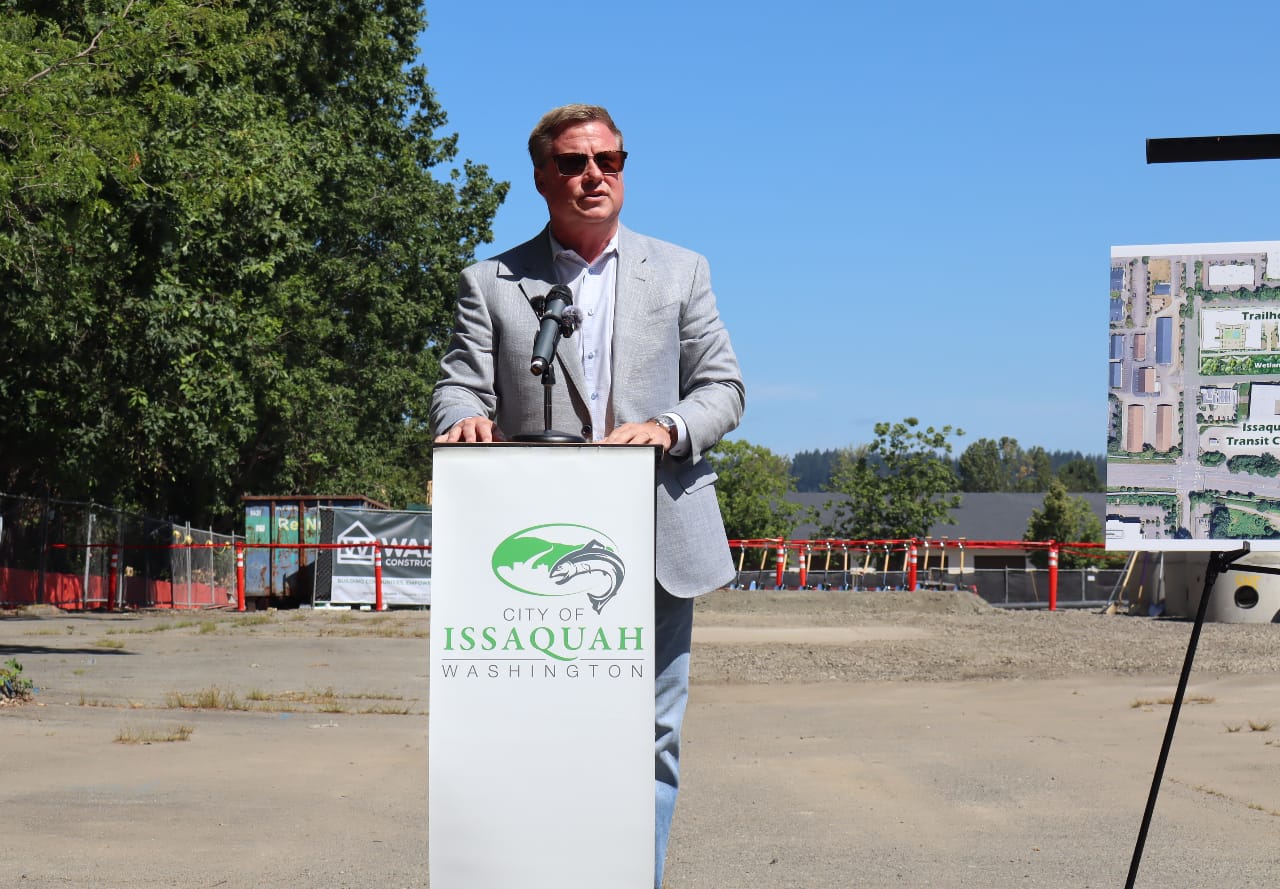
"I think our takeaway from this whole experience was if we're having something in our code that drives up the cost of a project by over a million dollars that doesn't have any noticeable benefit for the Issaquah community, it should be addressed," Mullet, who took office at the beginning of 2026, told The Urbanist. "This is a nonprofit trying to build housing in our community, saying some of your recent code changes are extremely problematic, and so it was kind of a wake-up call."
Even though the unique roadblocks that presented themselves on the Trailhead project are unlikely to pop up in the same way again, it's clear that the entire decade-long saga served as a major learning experience for Issaquah officials who are determined to not repeat history.
"There were specific elements of this that made this project not be a simple A to B straight line," Walsh said. "But it made us realize that if we don't correct the things in our code that make housing more expensive, it means that the next project may never come to our doorstep."
 Ryan Packer
 Ryan Packer