A quiet Queen Anne street has become a battleground between the Seattle Fire Department, residents wanting to park their cars, and the simple laws of geometry, but it looks to be Seattle's own parking regulations that have lost the battle – for now.
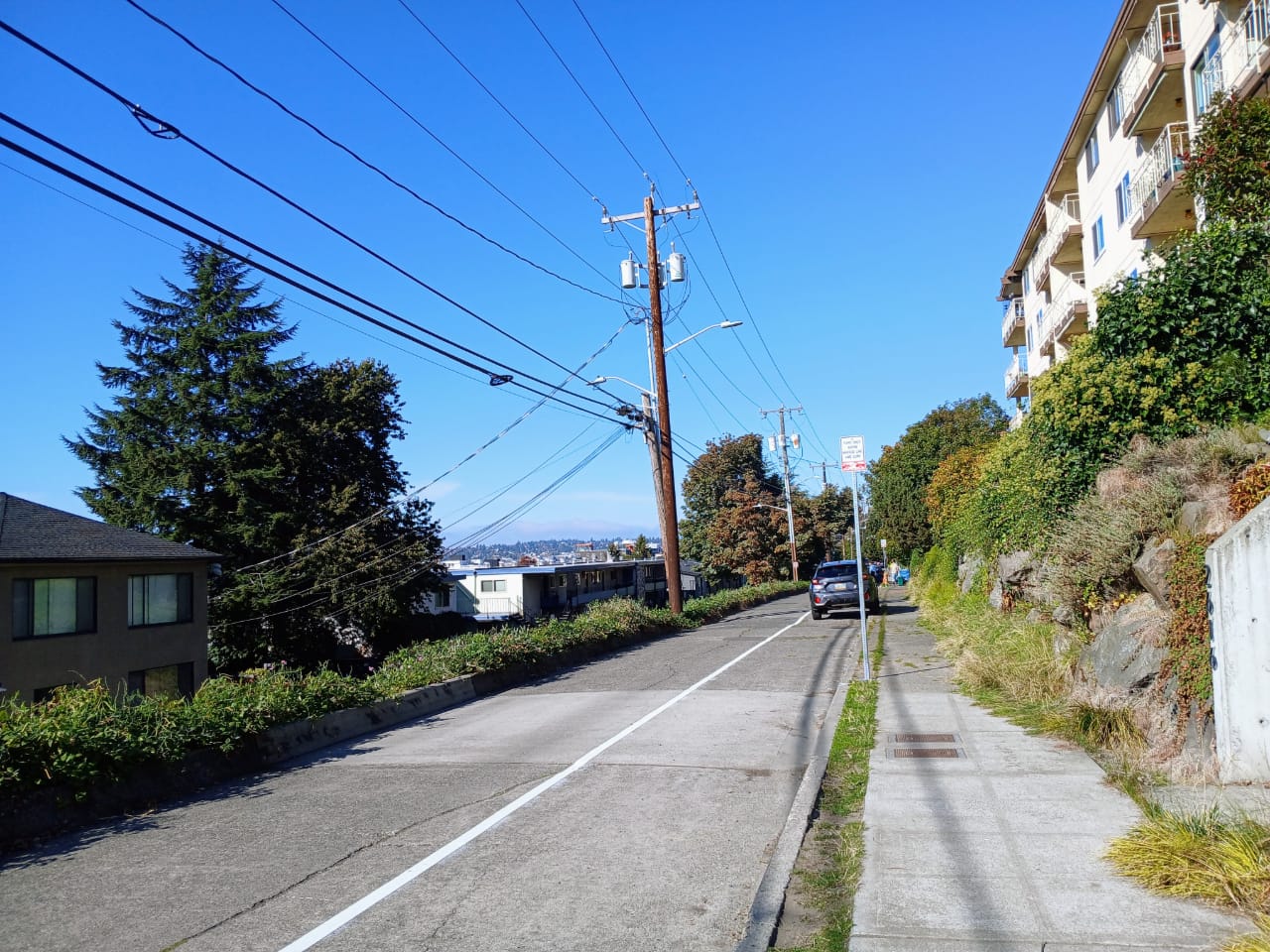
For decades, there's been an intermittent problem along the upper portion of 14th Avenue W, near Interbay along the west slope of Queen Anne Hill. The street is only around 15 feet wide, narrowing to as little as 14 feet and eight inches. With a row of on-street parking for residents, that isn't usually wide enough for a Seattle Fire Department ladder truck to easily pass through, depending on the exact width of the parked cars. Either the fire truck operator needs to inch their way down 14th to ensure no parked cars get hit, or they need to find another route.
Earlier this year, at the fire department's urging, the Seattle Department of Transportation (SDOT) announced that the street would be entering a new era, with on-street parking prohibited to improve Seattle Fire Department (SFD) response times.
"For every minute we are delayed getting to a fire, roughly that fire doubles in size, and so that increases the risk to you all," Seattle Fire Captain Tim Taylor, based out of Greenwood's Station 21, told Queen Anne residents at a community meeting held on the change this May. "When a rig can't get through or has to try to negotiate a very tight space, those are all things that are going to count directly against patient outcomes. That's the reality that we're dealing with."
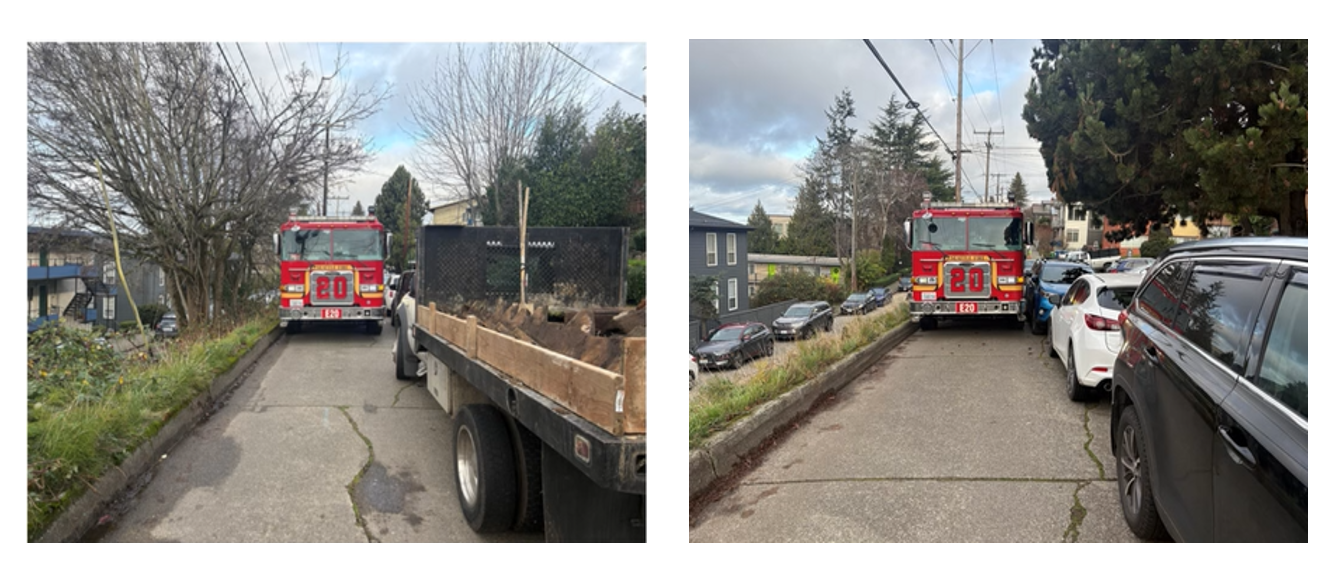
Taylor noted that SFD had responded to these specific 14th Avenue blocks 73 times between the beginning of 2022 and this past March.
"We have six documented times where they took the time to send updates to the battalion chiefs and to leadership saying: 'Hey, we had a significant delay due to vehicles blocking and parking on this block,'" Taylor said. "I can tell you, I run into delays quite often. Just traffic or whatever, I don't often take the time to document it. It has to be pretty important for me to take the time to actually send the documentation that we were delayed on a response."
The idea of making parking adjustments to improve public safety might be expected to be non-controversial, but at the May community meeting, the pushback on the change was intense. Residents along 14th repeatedly pressed city staff on finding another path forward, with things turning so combative that one attendee had to be asked to leave after presenting an obscene hand gesture to city staff.
Though the discussion had been arranged to hear residents' concerns about the new parking restrictions, an expectation was laid out at the top: this adjustment was moving forward.
"I do find that it is very important to state at the beginning, this decision is not going to be changed," Rebecca Duran, executive aide to District 7 Councilmember Bob Kettle, told attendees.
And yet, just a few months later, SDOT announced that the decision had in fact been changed. A six-month pilot will evaluate whether vehicles can remain parked on the street "as long as they fit within the available right of way without interfering with reliable emergency vehicle access." A painted line has been added to the length of the street, with signs directing drivers to only park between the line and the curb.
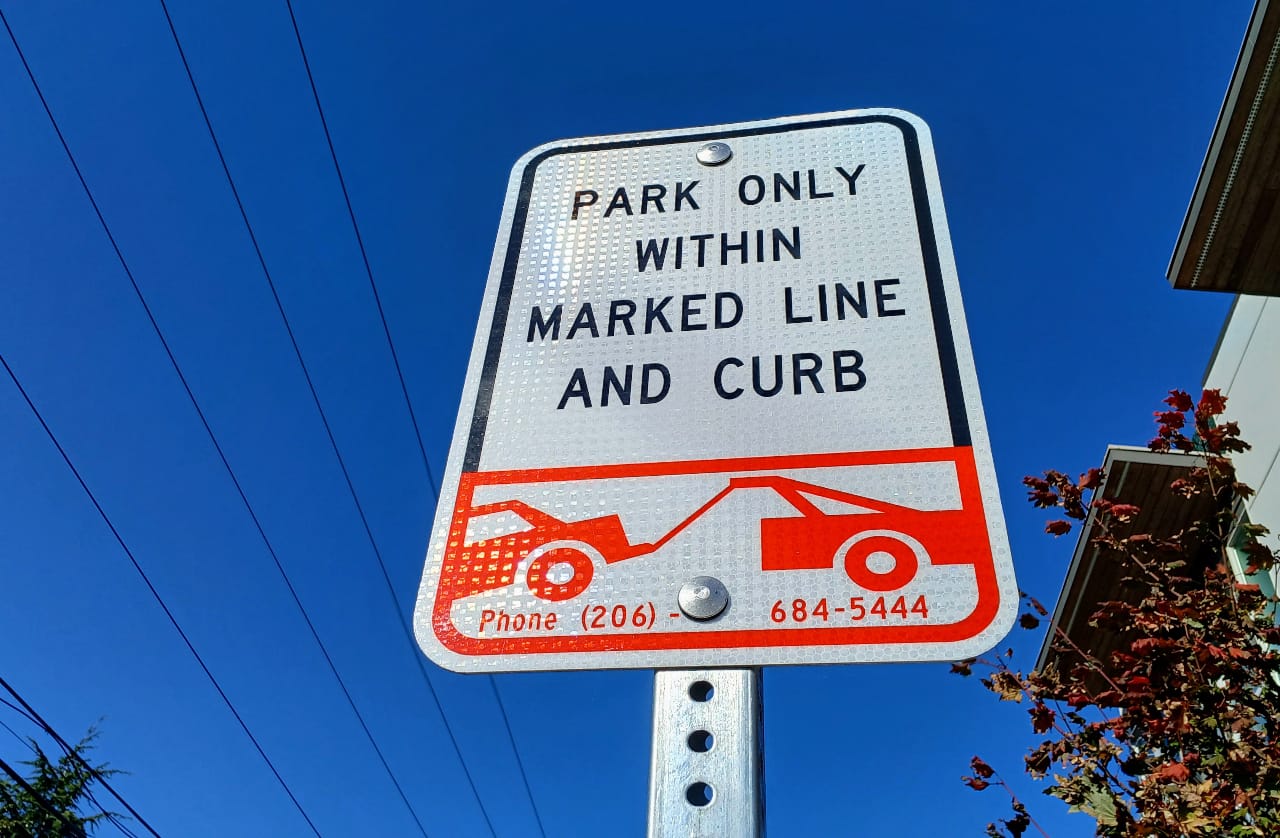
"If your vehicle does not fit the marked area, you can’t park," SDOT's website on the change states. "Together with SFD, we’ll monitor how well the new design supports reliable emergency vehicles’ access. The results will help inform next steps."
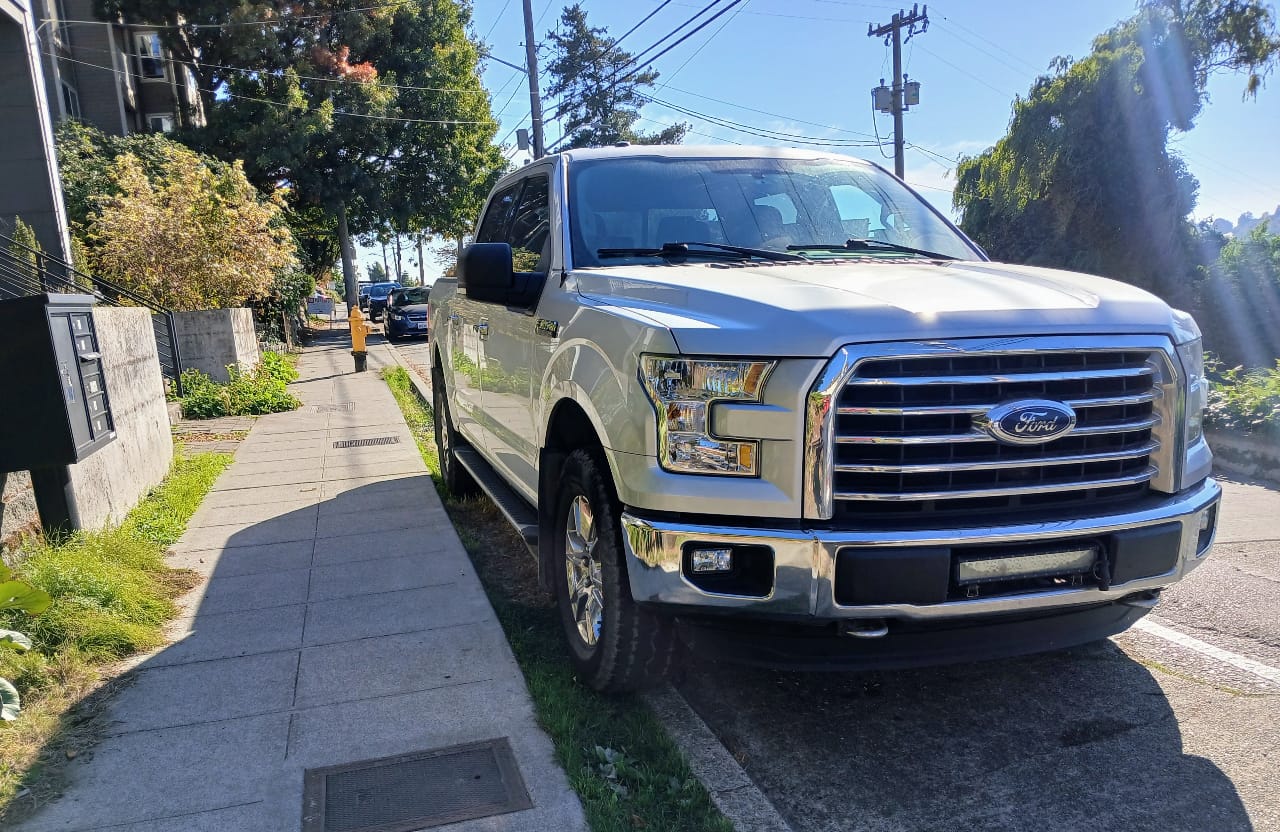
On a recent visit to the street, The Urbanist found parked vehicles that were all within the constraints of the painted line on the street – even if that meant that a significant portion of their vehicle was up on the curb. That's also not allowed under the rules of the pilot, which state vehicles have to be 62 inches wide or less to be able to park on the street.
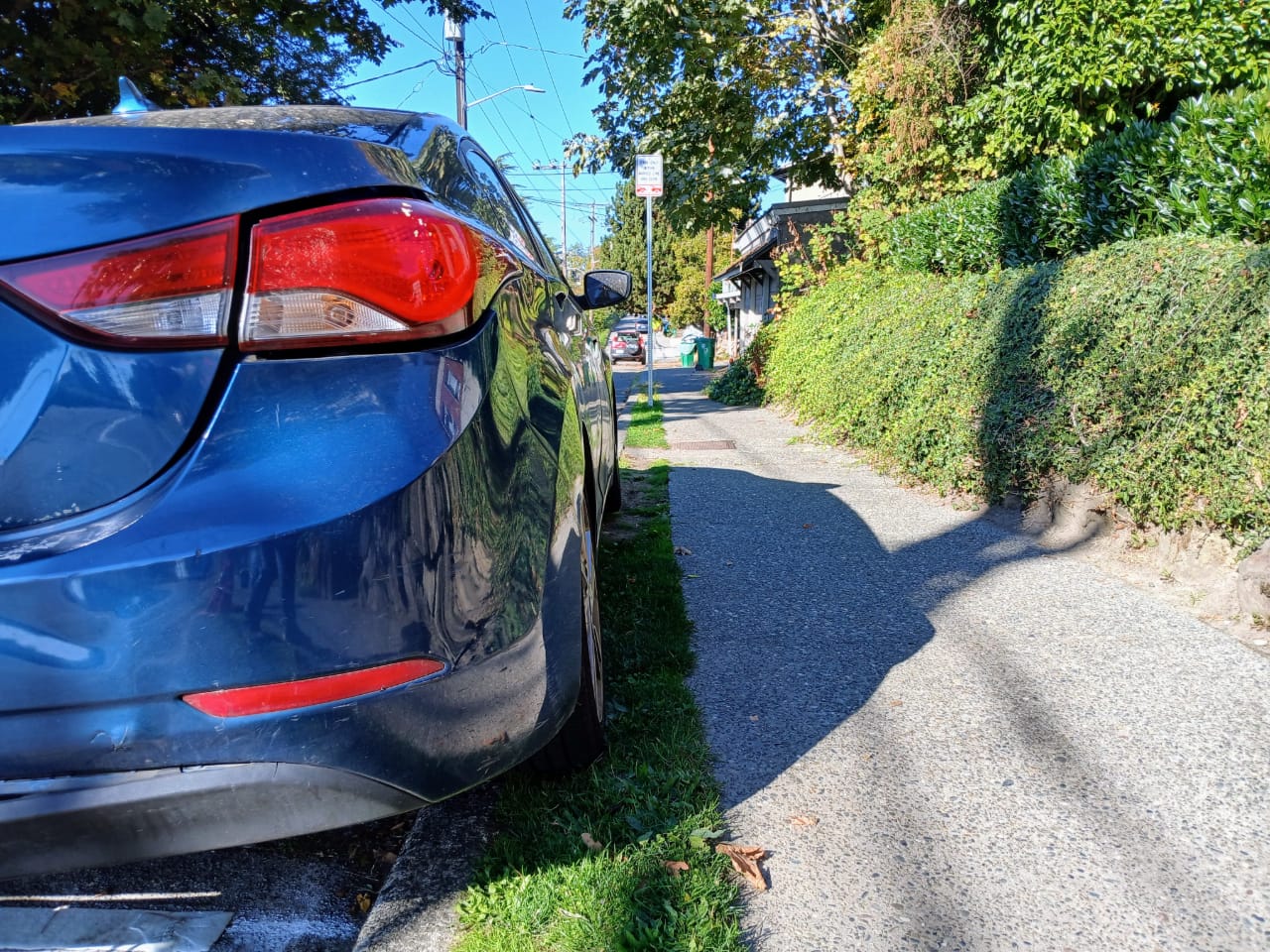
During that May meeting, residents pleaded with the SDOT planner present to essentially grant permission to park on the curb, but were rebuffed.
"The curbs are not actually designed to hold the weight of your vehicle, so you can end up damaging that and the underlaying structure if you park on the wall," SDOT Deputy Transportation Operations Director Matt Beaulieu said that night.
Getting questions answered about how this new parking scheme will be determined to be a success involved a lot of finger pointing within City departments. SDOT referred questions from The Urbanist to the Seattle Fire Department, which then noted that the Seattle Police Department is in charge of parking enforcement.
"Standard parking enforcement practices led by Seattle Police will be in effect. Seattle Fire has no role in enforcement," SFD spokesperson Kim Schmanke wrote. "Seattle Fire will evaluate delays to responses along the route due to access issues and if there were any reported obstructions noted during the non-emergency times."
SPD's parking enforcement division is not as well-resourced as other areas of the police department, with Mayor Katie Wilson recently proposing to eliminate several parking officer positions that had been sitting unfilled for several years. Most of the parking enforcement officer (PEO) resources are focused on areas of the city that have paid parking programs, or in responding to complaints as directed by other officers. With paid parking set to expand to Upper Queen Anne and Alaska Junction, that could mean even less resources for parking enforcement in other areas of the city.
With SFD evaluating response times and SPD maintaining control over enforcement, the pilot appears set up in a way that implicitly condones parking on the curb. But another precedent is potentially being set here, and that concerns SFD's requirements around fire lanes. With some exceptions, Seattle's current fire code requires access roads used by fire department vehicles to have an "unobstructed width" of not less than 20 feet.
But that standard is clearly not being met on 14th Avenue W, which if explicitly acknowledged within City bureaucracy could open the door to more flexible designs elsewhere, clearing a path for greater pedestrianization and traffic calming interventions. In the UK, a fire lane access road is generally only required to be around 12 feet.
"Seattle Fire agreed to this pilot knowing the constraints of the road width and SDOT’s capabilities," Schmanke wrote.
Depending on the way this pilot plays out, the results could have wide-ranging impacts beyond the sleepy confines of 14th Avenue W. For now, drivers will be able to park their cars, regardless of whether doing so involves going up on the curb.
 Ryan Packer