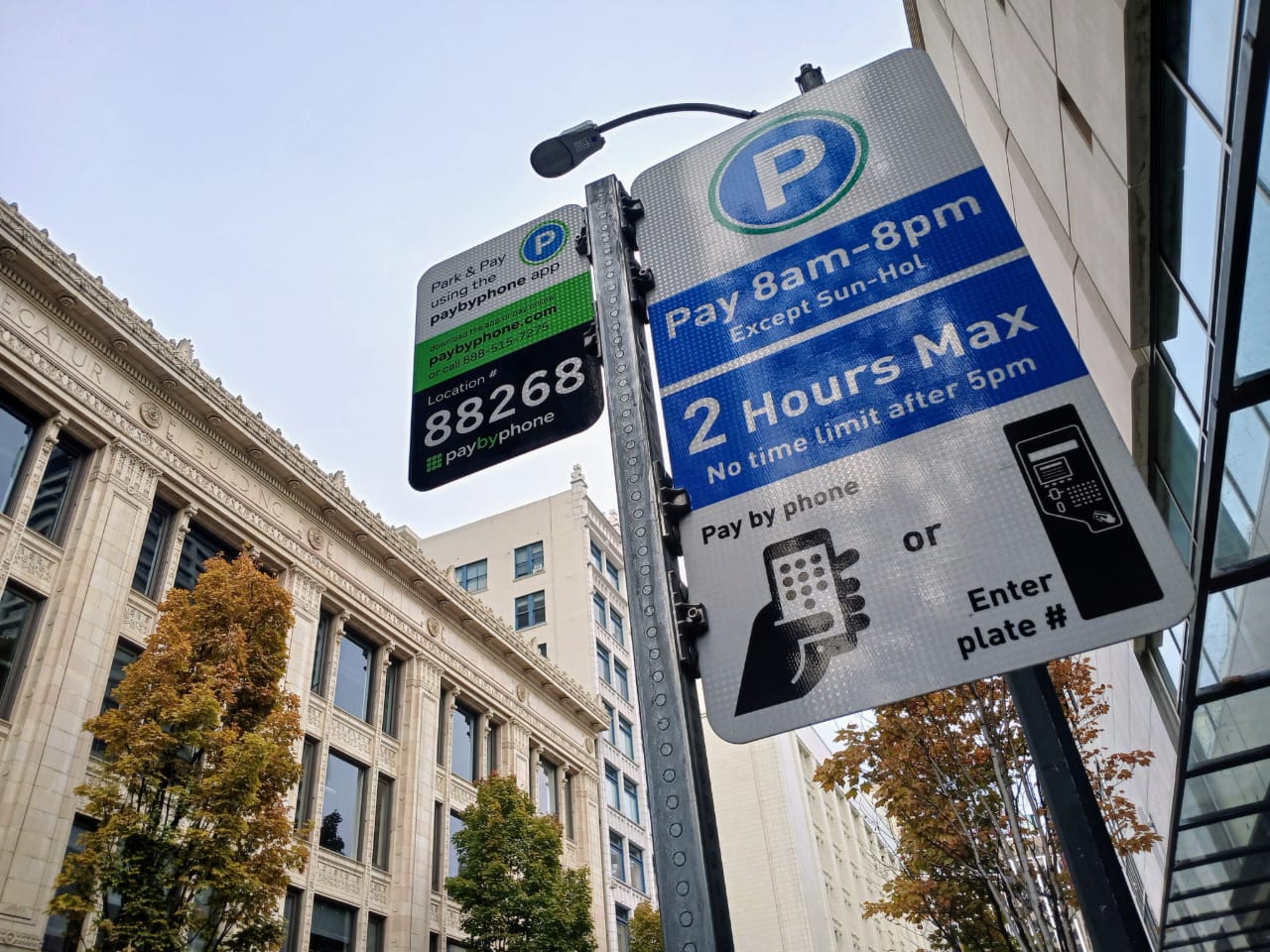
The Seattle Department of Transportation (SDOT) has unveiled proposals that would represent the largest expansion of paid on-street parking in the city at least a decade, impacting the Alaska Junction and Upper Queen Anne business districts. The changes are intended to make it easier to access curbside parking by increasing turnover, but the idea of starting to charge for something that was previously given away for free is already proving contentious among some neighbors and business leaders.
The rollout is being paired with an expansion of dedicated vehicle loading areas, ADA accessible parking, and intersection daylighting.
SDOT's paid parking program is structured around its goal of ensuring that customers in business districts are typically able to find one or two open parking spaces on any given block. The agency calibrates parking rates with the aim of hitting its availability target range: 70% to 85% occupancy.
Twice-annual adjustments in hourly rates up or down to meet that target have been a part of life in Seattle since 2010, as part of the performance-based parking program. Those adjustment generally do not get much attention, but adding paid parking where it doesn't exist is another matter.
After conducting a field study this past April, SDOT found that 26 out of 40 blocks in West Seattle's Alaska Junction were more than 85% full, with 11 blocks out of 22 in Upper Queen Anne also clearing the bar. Several blocks in both neighborhoods were also exceeding 100% occupancy, indicating high demand was leading drivers to park in non-designated areas in ways that could impact pedestrian safety.
SDOT's proposal is to implement hourly rates from $1 to $4 per hour across approximately a dozen blocks in Alaska Junction and eight blocks in Queen Anne, along with an expansion in time-limited free parking later into the evening until 8pm. Additional time-limited load zones are also set to be put in place in both neighborhoods.
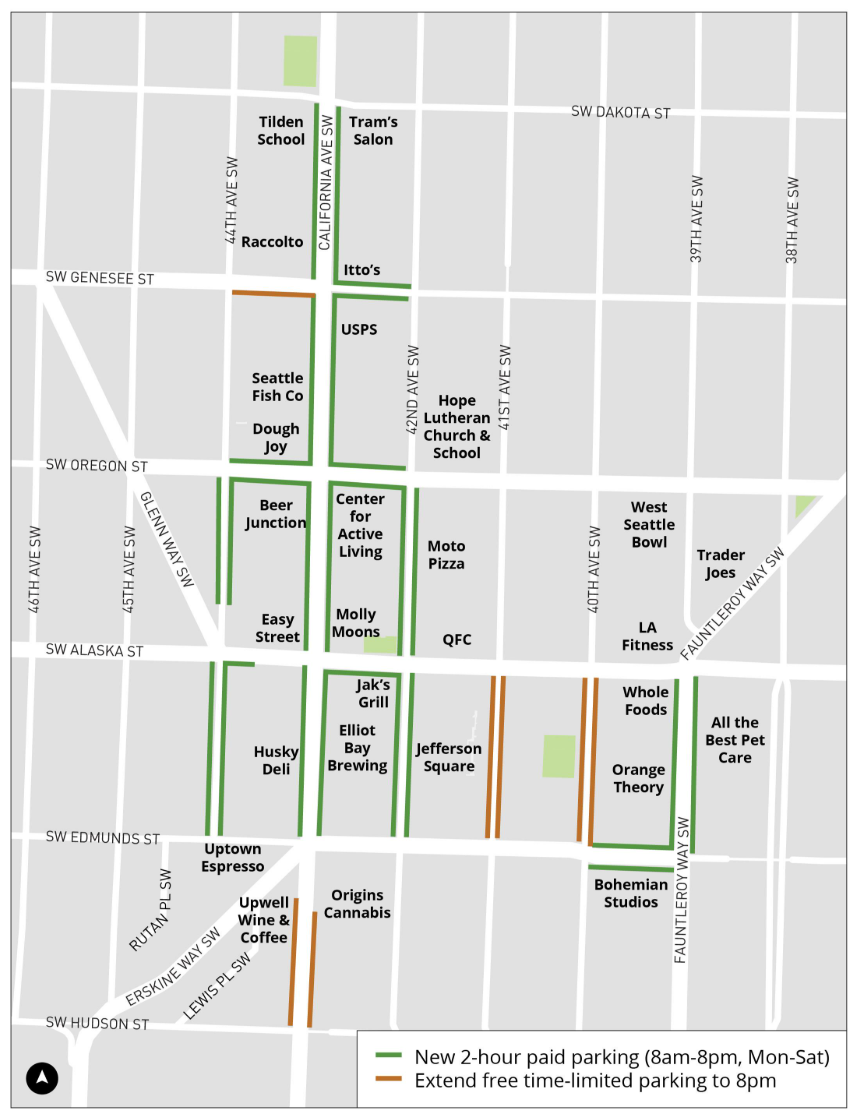
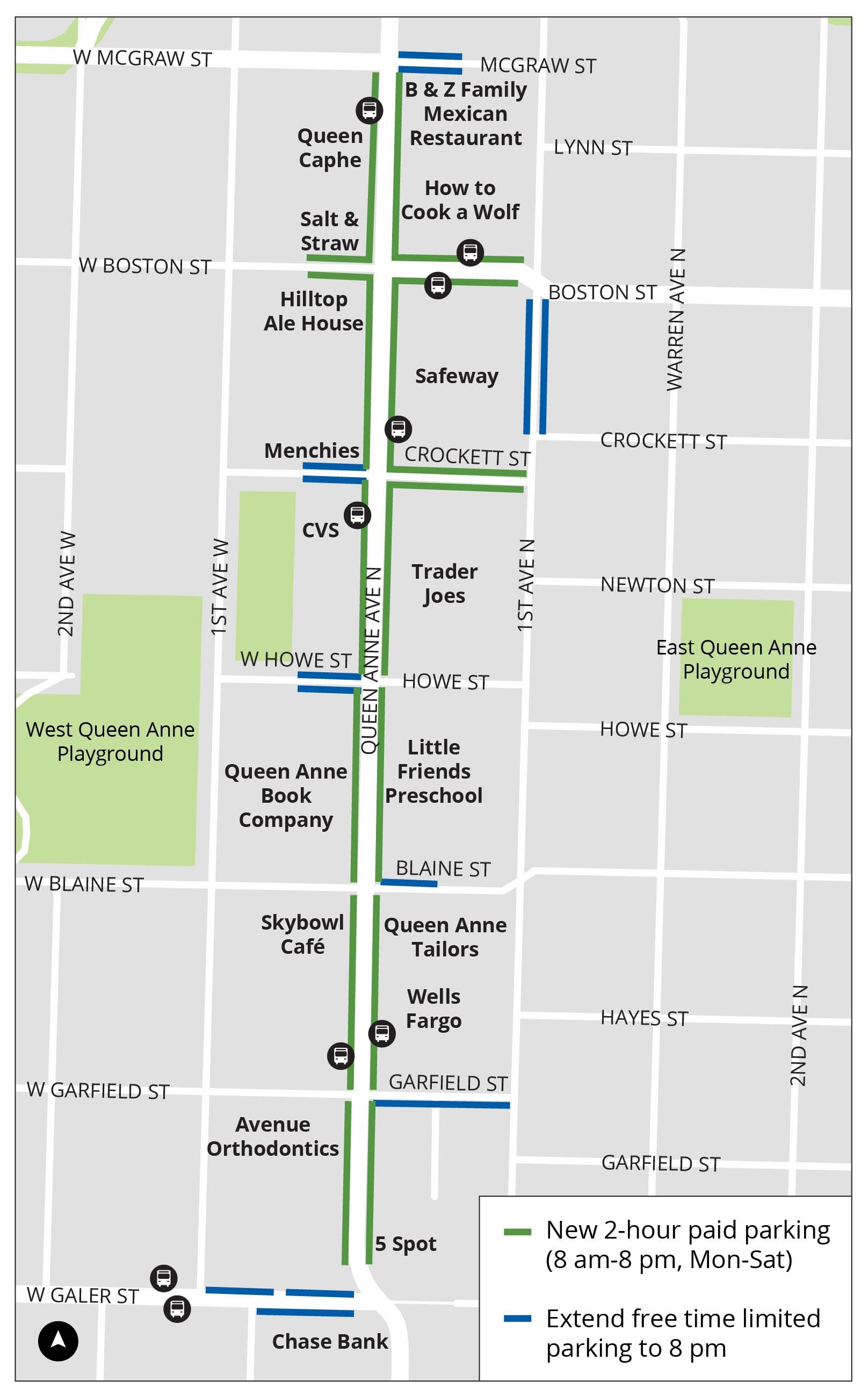
The paid parking proposal would bring hourly rates to around a dozen blocks in Alaska Junction and eight blocks in Upper Queen Anne. (SDOT)
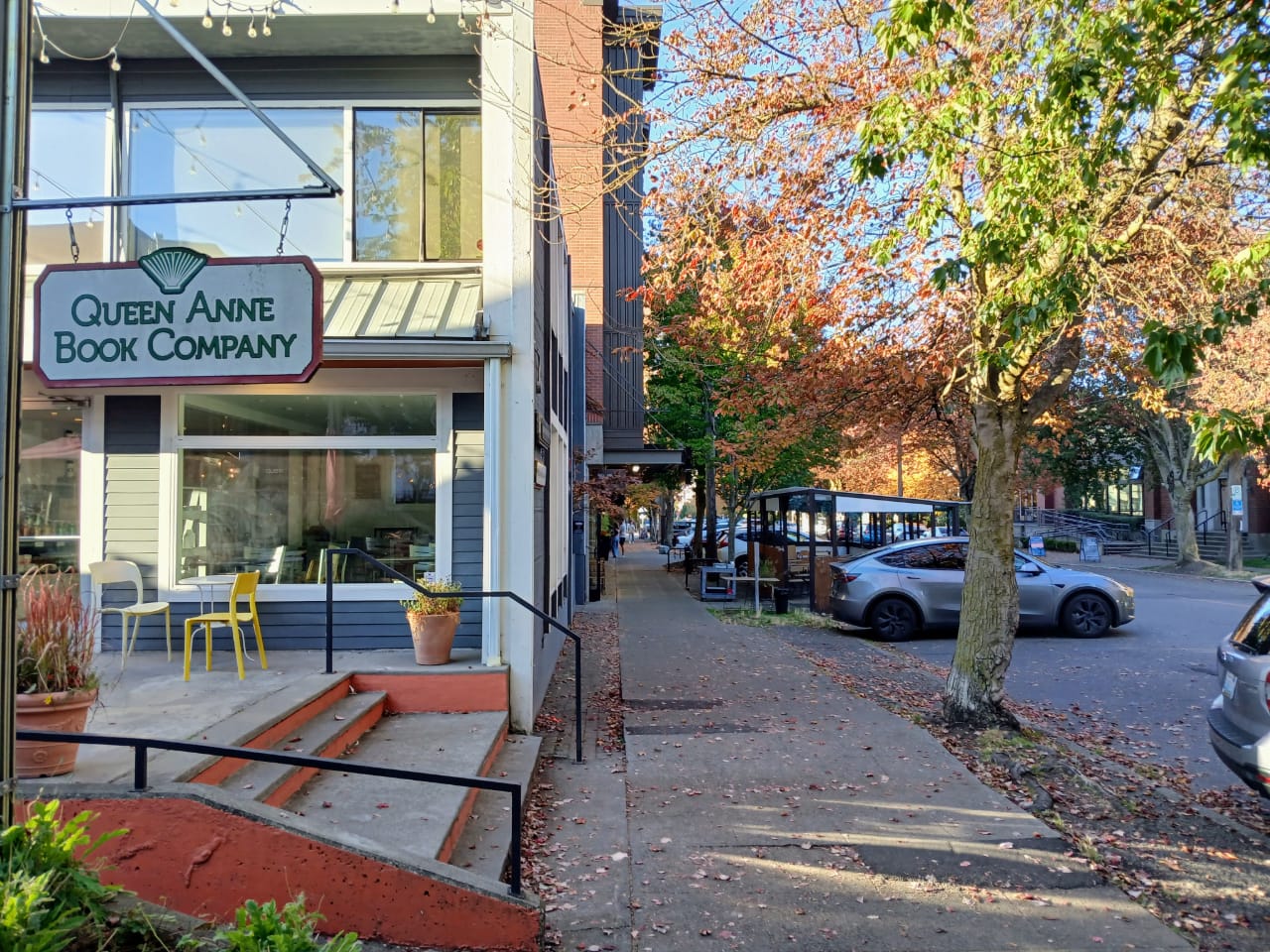
Business owners are already pushing back on SDOT's proposal, at least when it comes to Upper Queen Anne. A September 23 letter signed by an array of business leaders and residents along Queen Anne Avenue asked the department to keep on-street parking free, citing potential negative impacts that could come from adding an "additional barrier" to business access. Signees to the letter included the owners of Queen Anne Book Company, Betty Restaurant, Aluel Cellars, Bounty Kitchen, Stuhlberg's giftshop, and the director of the Queen Anne Farmer's Market.
"The businesses and organizations signing this letter are united in asking the City not to introduce paid parking on Queen Anne Avenue," the letter stated. "Free and accessible street parking is an attractive feature of the Queen Anne business district for visitors, customers, and neighborhood residents. It makes it easier to stop for a meal, run an errand, visit a local shop, attend an appointment, or spend time in the neighborhood. We are concerned that introducing paid parking would diminish that advantage and create an additional barrier to visiting local businesses."
The same letter pushed back on the idea that high occupancy rates at parking stalls in front of Queen Anne businesses do not translate to automatic support for the idea of managing that demand through pricing.
"We also want to be clear that high parking demand along Queen Anne Avenue should not be interpreted as support from the business community for paid parking," it continued. "We support improving parking availability and turnover, but paid parking is not the only tool available. Better enforcement of existing time limits, appropriately located loading zones, short- term pickup spaces, accessible parking, and adjustments to existing parking restrictions should be fully utilized before paid parking is considered."
While a paid parking program is intended to increase access to the curb allowing visitors coming by car to more easily patronize local businesses, data shows that the majority of visitors to either business district are not arriving by car at all. SDOT surveys from earlier this year found that 66% of respondents in Alaska Junction and 61% in Queen Anne arrived by walking, biking, or taking transit. This suggests that business owners could be overrepresenting the number of customers who would be deterred by having parking meters on a street.
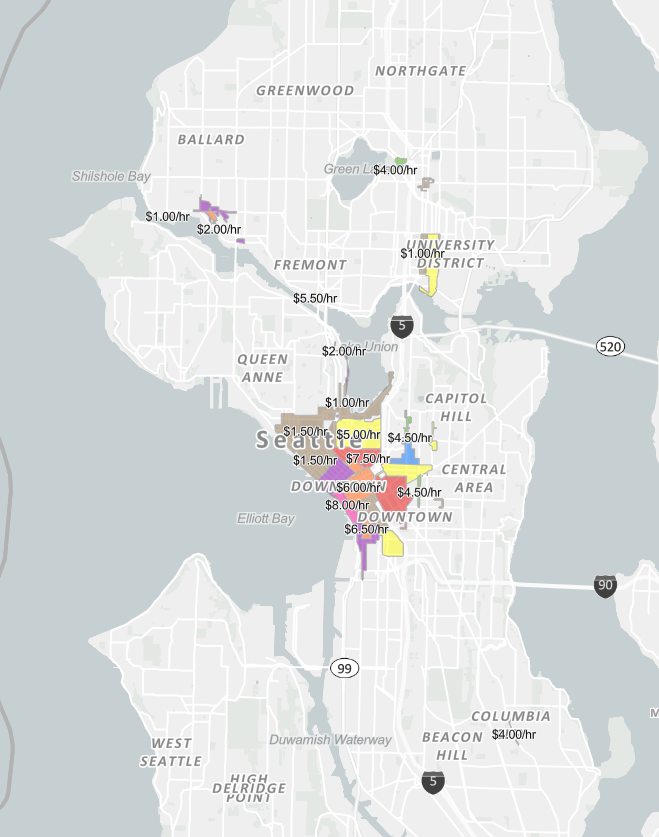
Outside of Seattle's downtown neighborhoods, paid parking programs are relatively rare, with only a few other business districts currently requiring drivers to pay to use public curbspace. Currently just 2% of Seattle streets have parking meters at all, one main reason that a neighborhood-by-neighborhood expansion of the program is likely to be controversial, with business owners used to the way things have been operating for decades.
When it comes to Alaska Junction, paid parking has been a topic that comes up about once a decade, becoming a lightning rod every time. In both 2009 and 2018, SDOT declined to implement parking meters in the neighborhood, citing stall occupancy rates that didn't yet meet the 80% threshold. But parking demand is increasing in the neighborhood, with average parking occupancy in the 5pm hour creeping up from 75% in 2017 to 91% this year.
SDOT is accepting feedback on the parking proposals for both neighborhoods, with any changes set to be implemented in 2027.
 Ryan Packer
 Ryan Packer