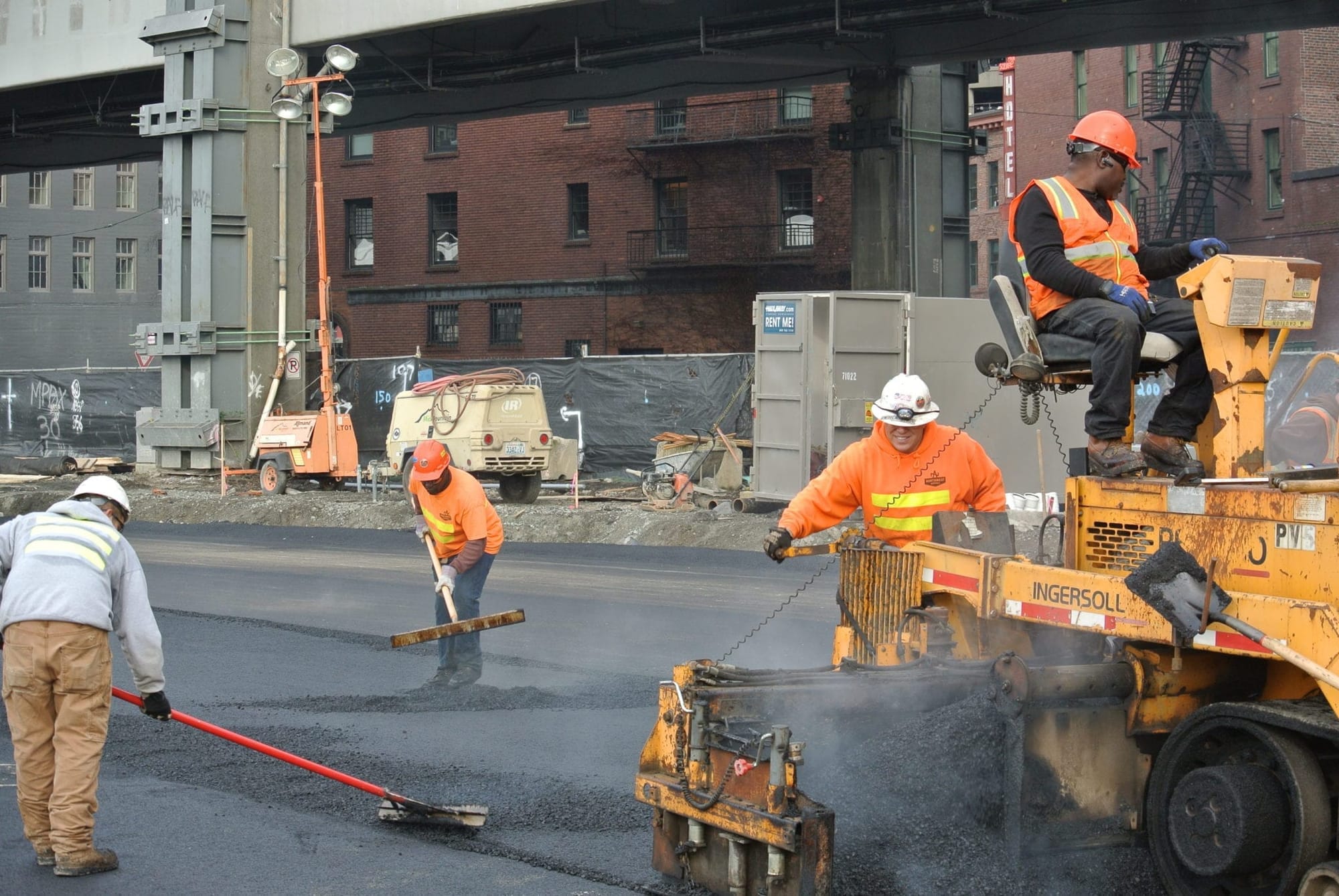
The Seattle Department of Transportation (SDOT) is making "dynamic changes" to its budget for the rest of 2026 all the way through 2028 to sidestep a major looming budget shortfall. Those adjustments are set to cause some painful cuts, and significantly limit the ability of Mayor Katie Wilson's administration to prioritize new transportation projects in the future.
Across the next two years, SDOT's budget is set to take a 4% hit that will impact nearly half of the department's programs, in the hopes of getting things back on a more sustainable path.
The Urbanist's Fall Member Drive is in the home stretch! Support our work, read ad-free, and help us exceed our goal!
The financial issues creeping up on SDOT are impacting the transportation fund, the primary source of transportation funding outside of the $1.55 billion, eight-year transportation levy voters approved in 2024. According to a presentation made to the Seattle City Council's budget committee Monday, SDOT would have been looking at a $113 million deficit in the transportation fund by 2028 without any adjustments.
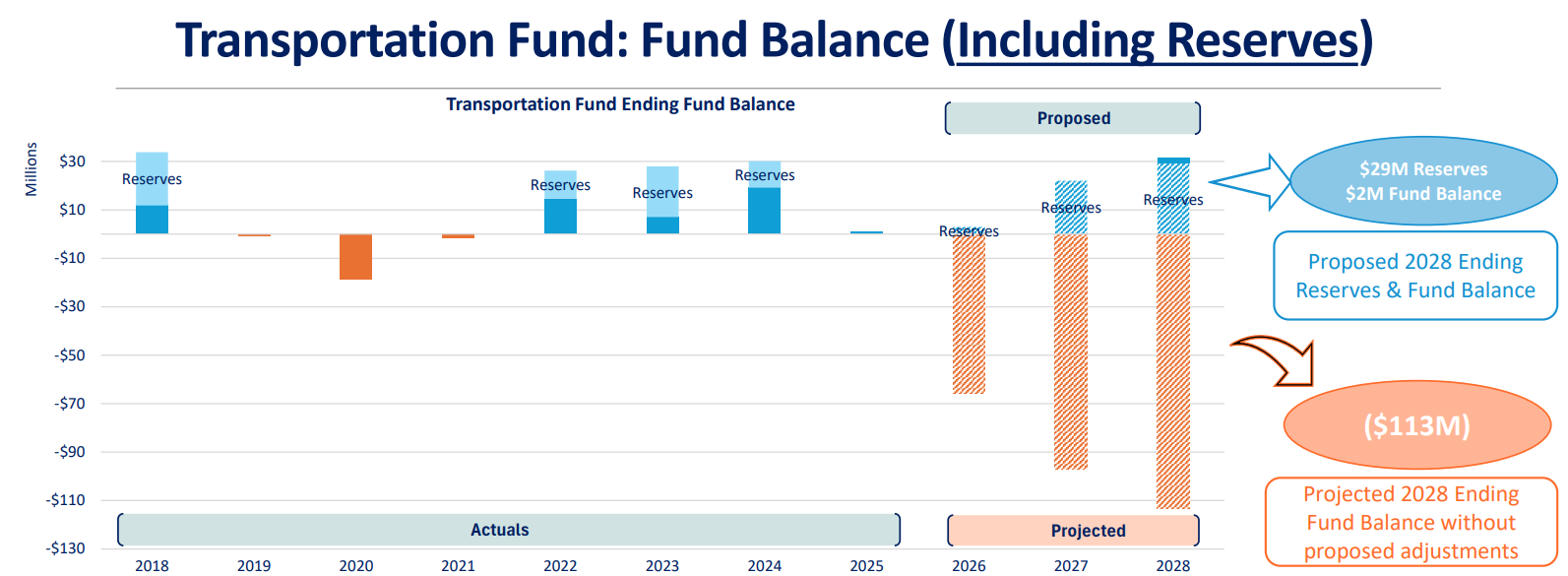
"Our costs have continued to rise while revenues have flattened or declined, resulting in recent budget appropriations outpacing available resources and driving down our fund balances," Kris Castleman, SDOT's Director of Finance & Administration, told councilmembers Monday. "We are at a critical financial inflection point, and targeted intervention is needed now to balance the budget, maintain cash to fund our daily operations, and safeguard our future with a path toward long-term financial stability."
These adjustments to SDOT's budget come as part of Mayor Katie Wilson's $9.1 billion draft budget, unveiled last week. The new mayor's first budget, the package has drawn attention for being more focused on setting the city on a sustainable path, putting the days of continued projected deficits in out years behind it after heavy usage under former Mayor Bruce Harrell.
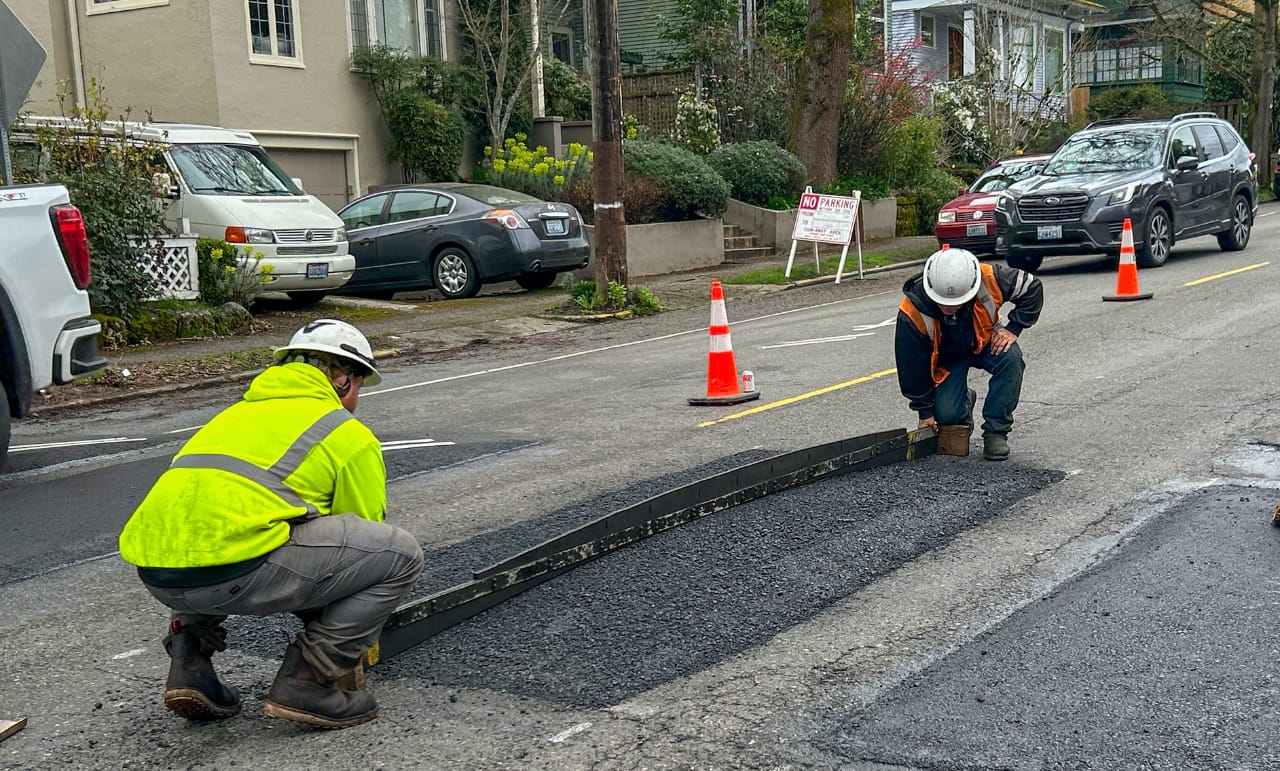
Changes to SDOT's budget already made in 2026 include $56.7 million in reductions, including nearly $14 million in program cuts. Milder winter weather earlier this year allowed the department's emergency services budget to be cut by 56%, and planned maintenance work on the city's traffic signals were moved to 2027, resulting in a 39% cut in that program. But reductions in future years will be more painful, and include cuts to pothole repair and major bridge maintenance projects.
With a reduction in pothole repair funding, SDOT expects to slip closer to its voter-approved target of filling 80% of reported potholes within 72 hours, compared to its nearly 90% rate reported currently. Major repaving work on city arterial streets will rebound to historic levels, despite a boost in maintenance funding from the Seattle Transportation Levy put forward by Harrell and expanded by Council.
2026 adjustments have also included the "abandonment" of years of capital funds that had been carried forward from prior years but didn't get utilized. The practice of carrying funds forward from the prior year after the department wasn't able to spend all of its budget has been one that has been ongoing for years, and has often made it hard to truly understand the department's financial outlook.
The proposed cuts will have some staffing impacts. Out of 1,291 total full-time positions at SDOT, nine positions that are currently unfilled will be permanently eliminated, including three civic engineer positions, three signal electricians, two maintenance laborers, and one traffic sign and signal crew chief. But the department's staff capacity will be largely insulated from cuts – at least for now.
Also insulated from cuts are traffic safety programs, with Acting SDOT Director Angela Brady telling councilmembers that the Vision Zero budget for 2026-2028 is actually set to increase by $1 million across the three years. However, many more projects than just the ones in the Vision Zero program impact safety, and even reductions in the pothole program can impact safety for people who walk and roll on Seattle's streets.
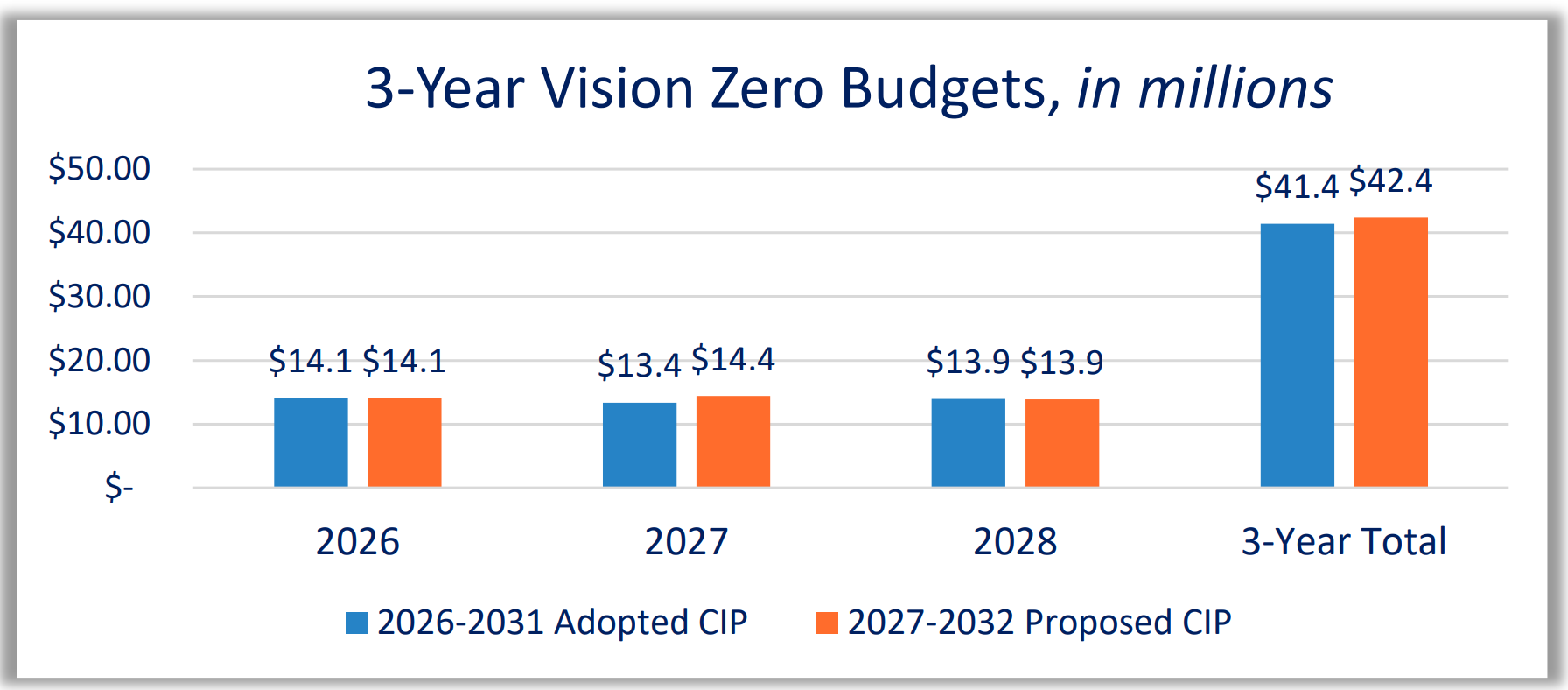
"I want to be clear that street safety and Vision Zero, as a program, remain fully funded in this budget," Brady said. "We know how important this program is to Seattle citizens, our mayor, and our councilmembers."
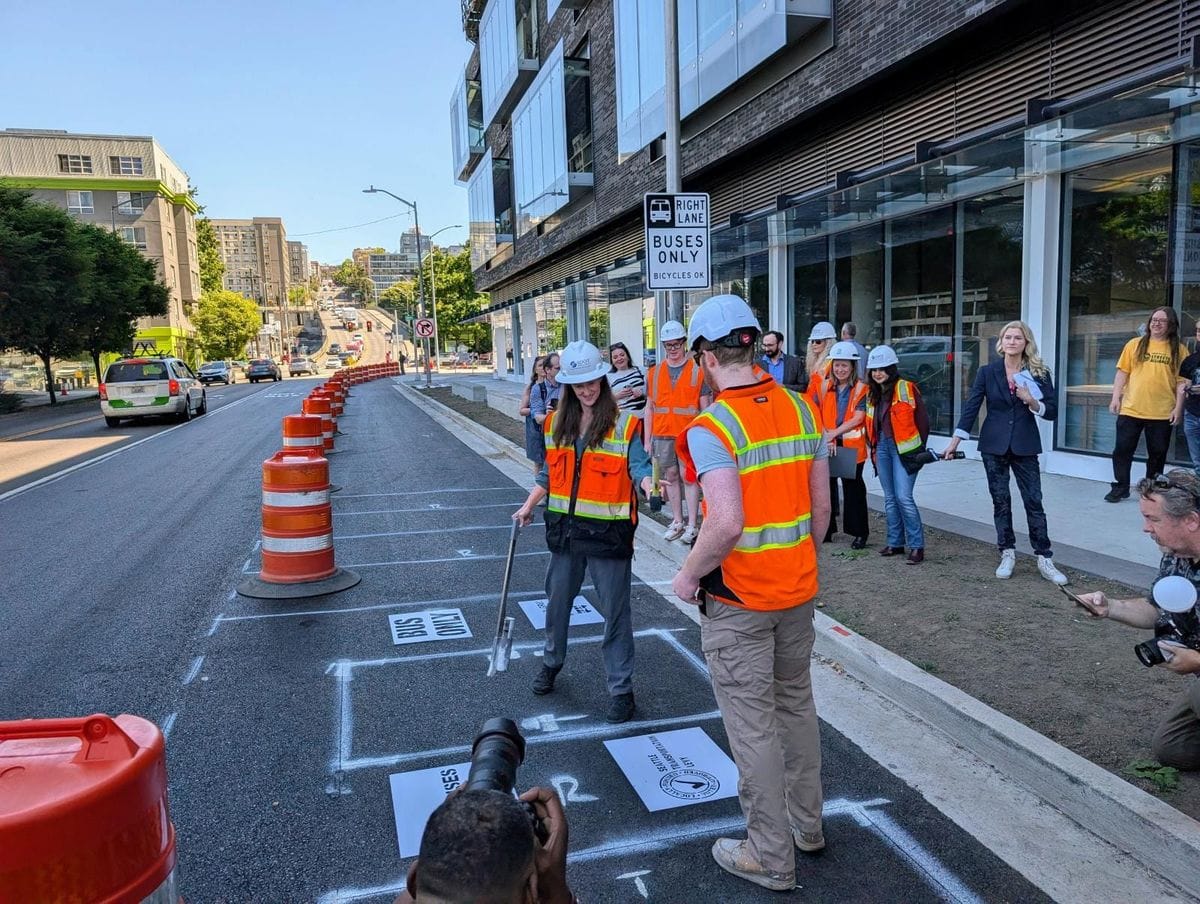
Wilson, in her budget speech last week, also called out transit speed and reliability investments as an area where focus will be maintained, in the wake of the successful implementation of a long-envisioned bus lane on Denny Way for the Route 8. That $5 million project was funded by the 2024 transportation levy.
Additional funds for bus upgrades are included in Wilson's renewal of the Seattle Transit Measure, on the ballot in November.
While more streets are being eyed for bus lanes, those projects aren't moving forward with the alacrity of the mayoral-directed Denny Way project.
Such a dramatic adjustment to scale back programs will absolutely have an impact on the ability for Wilson – and for city councilmembers – to get new projects added to SDOT's workplan.
"We also want to note that today's updates about reductions, limited reserves, and uncertain funding make our overall position to handle new requests less flexible," Castleman said. "New priorities, projects, programs, and policies that are unfunded can present a zero-sum game in this financial environment. So, as we engage with communities, businesses and our elected leadership, folks are likely to hear even more from SDOT about trade-offs."
During Monday's meeting, a question from Councilmember Dionne Foster probed into the issues with the transportation fund, and how this issue has popped up seemingly out of nowhere.
"With the transportation fund, this has been building for several years," City Budget Director Aly Pennucci said. "As a city, we have been hyperfocused on the general fund deficit, and there's been less public conversation about the projected deficit in the transportation fund that was not ideal, but was present in the financial plan that was part of the adopted budget last year, and then the combination of actual expenses, actual revenues, and the automatic carry forward in the capital budget kind of all came to a head."
Wilson's proposed budget for SDOT does pull a few levers in hopes of improving the department's financial picture. It increases the city's Commercial Parking Tax rate from 14.5% to 17%, a move that brings in nearly $10 million per year that will go to both Vision Zero and programs like sign maintenance and urban forestry that would otherwise see steeper cuts.
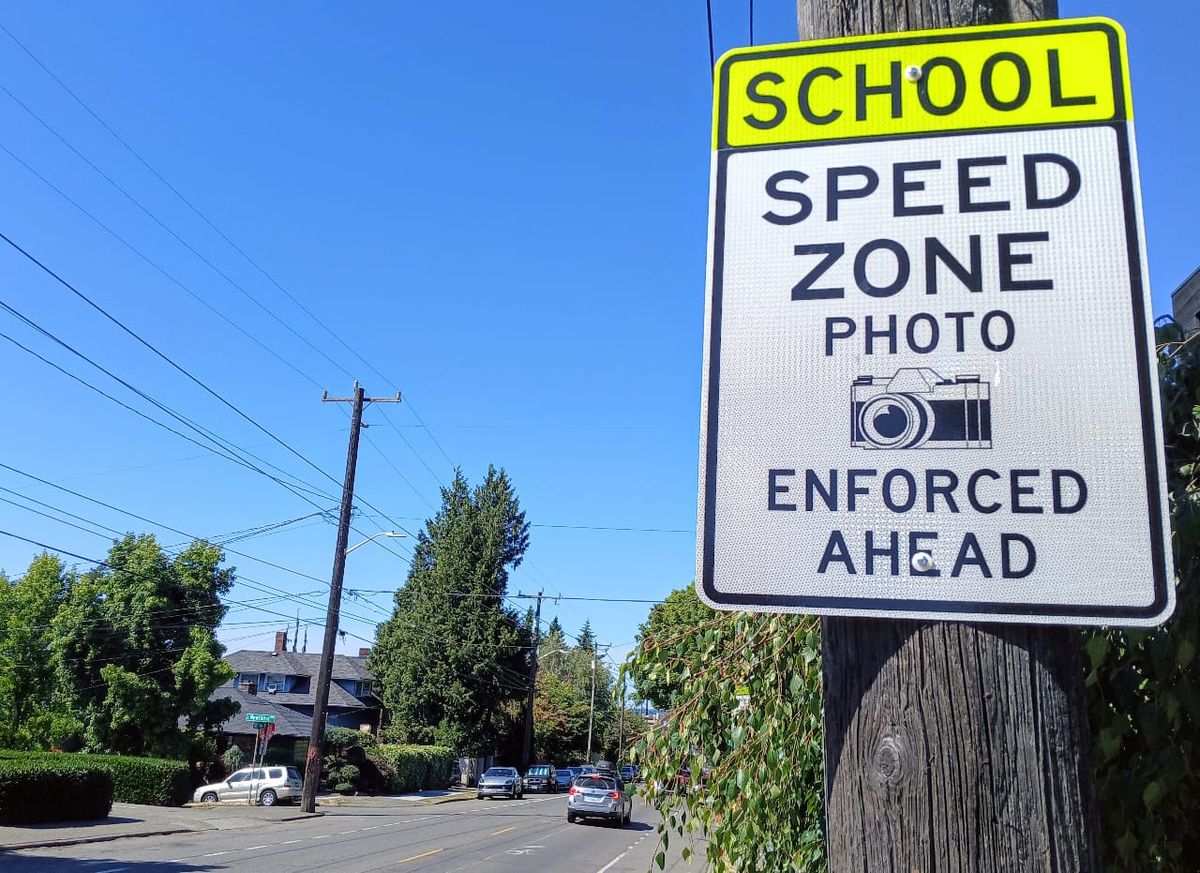
Traffic enforcement cameras are also expected to be a budget lifeline, with an additional $20 million per year by 2028 expected following the expansion of the speed camera program beyond time-limited school zones next year. Pennucci told councilmembers that those projections are conservative, given the fact that SDOT has not yet implemented 24/7 speed cameras on any arterial corridors.
A new 0.1% countywide sales tax for county roads will also benefit SDOT, thanks to a forthcoming pass-through program intended to fund local transportation needs. In June, when the creation of that program was being debated, it nearly included a provision that would have capped Seattle's contributions as the largest city in the county, but that cap was removed after pushing by city leaders and advocates. As a result, $4.7 million a year is set to prevent cuts to SDOT's urban forestry program and some bridge maintenance work.
At Monday's initial discussion of SDOT's budget, councilmembers raised concerns around projects in their districts potentially getting shortchanged, including a lack of ongoing funding for the council-created District Project Fund. A proposal that was spearheaded by transportation chair Rob Saka, that fund provided $7 million in 2025 and 2026 for hand-picked transportation projects in each of the seven council districts, but no ongoing funding for that fund had been identified beyond this year. If the District Project Fund is to continue, it will fall on the council to decide what other line items should be cut from the department's budget.
The hope is that by overhauling SDOT's budget and "right-sizing" program budgets to align with available resources, the department can be put on more stable footing.
"What is especially urgent for us is that our flexible funding sources are becoming even more tightly constrained, and yet they are used for core services and help us to be responsive to emerging needs from both our elected officials and the community," Castleman said. "We're also addressing the very real need to create financial stability for the department."
The Seattle City Council will hold a public hearing on Wilson's draft budget next Tuesday, October 5, at 1 pm and 5 pm.
 Amy Sundberg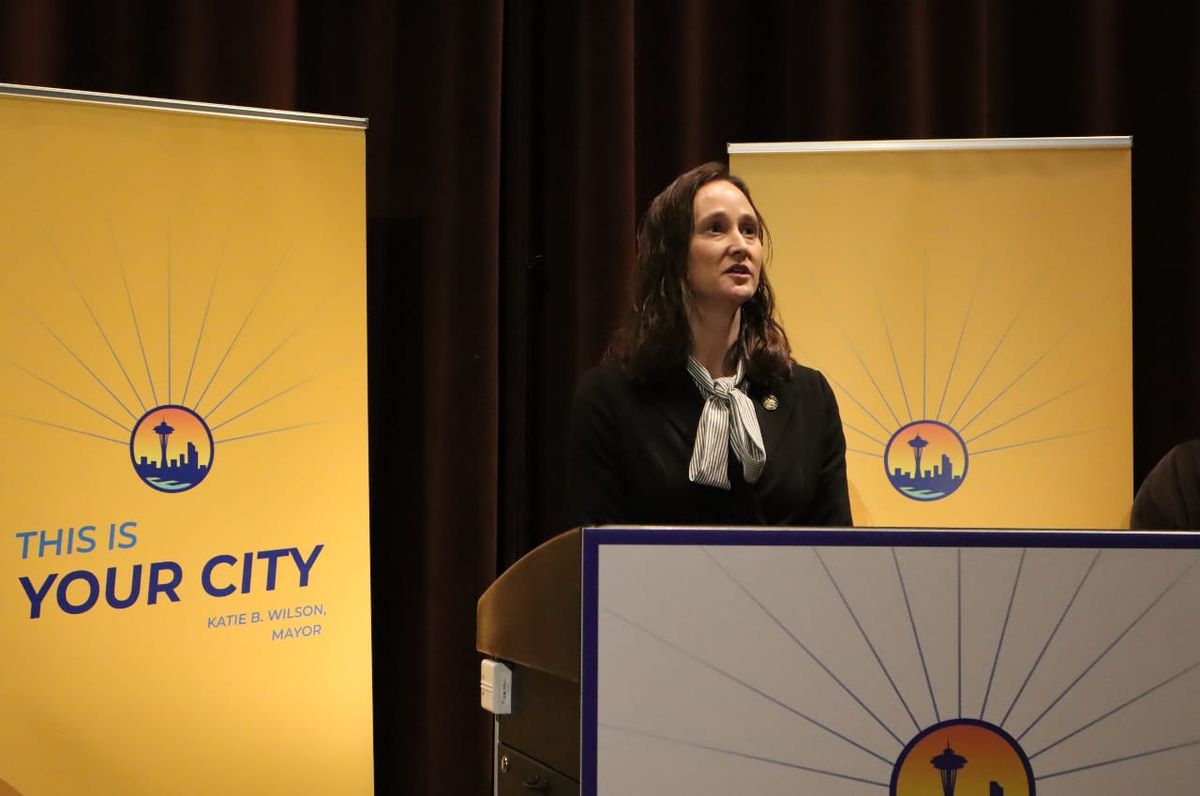
 Ryan Packer