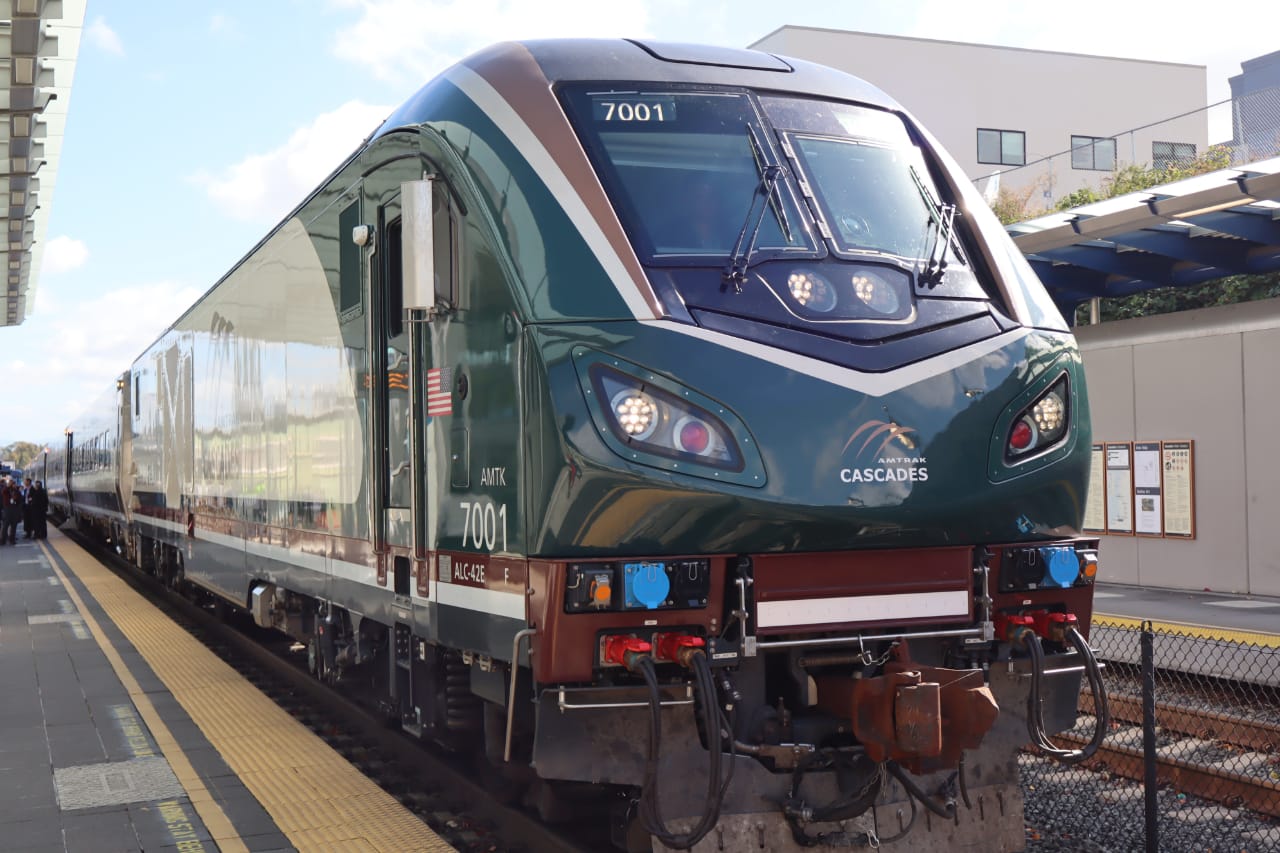
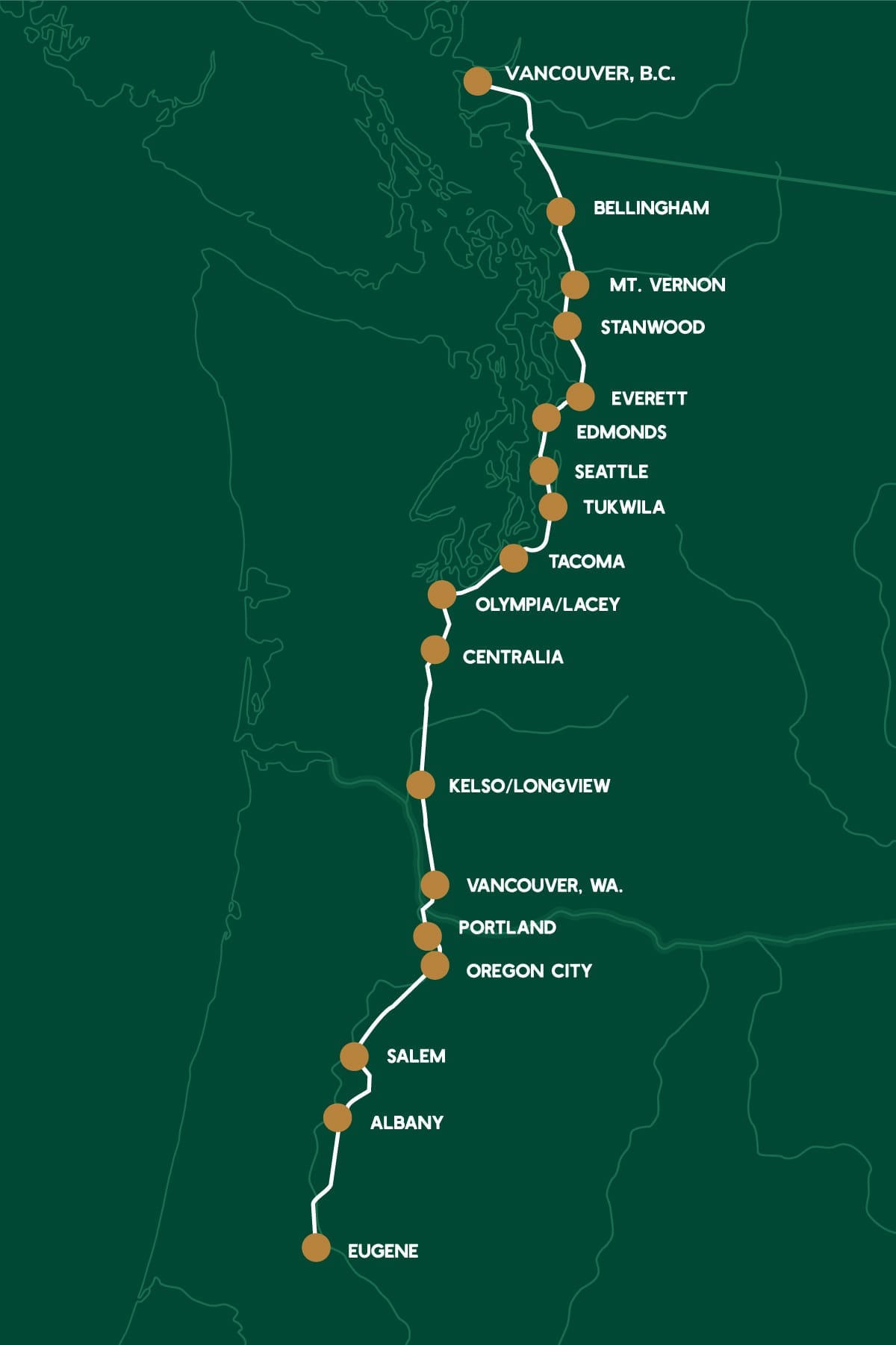
Train riders across the Pacific Northwest are just a few days away from a new era of regional train travel, with the first set of next-generation Airo trains poised to enter service this Wednesday. These shiny train cars and glistening locomotives will ultimately ply the rails on regional routes across the country, but the Amtrak Cascades routes from Vancouver, B.C. to Eugene, Oregon got first dibs, a fact that will bring real benefits on top of bragging rights.
On Saturday, the Washington Department of Transportation (WSDOT) and the Oregon Department of Transportation (ODOT) – which jointly operate the Cascades network – hosted dignitaries at King Street Station for a tour of one of the Airo trains and a ride south. Members of the public are also able to tour one of the trainsets on Sunday, but the free tickets to secure a spot for that tour in Seattle quickly ran out within half a day after their release last week.
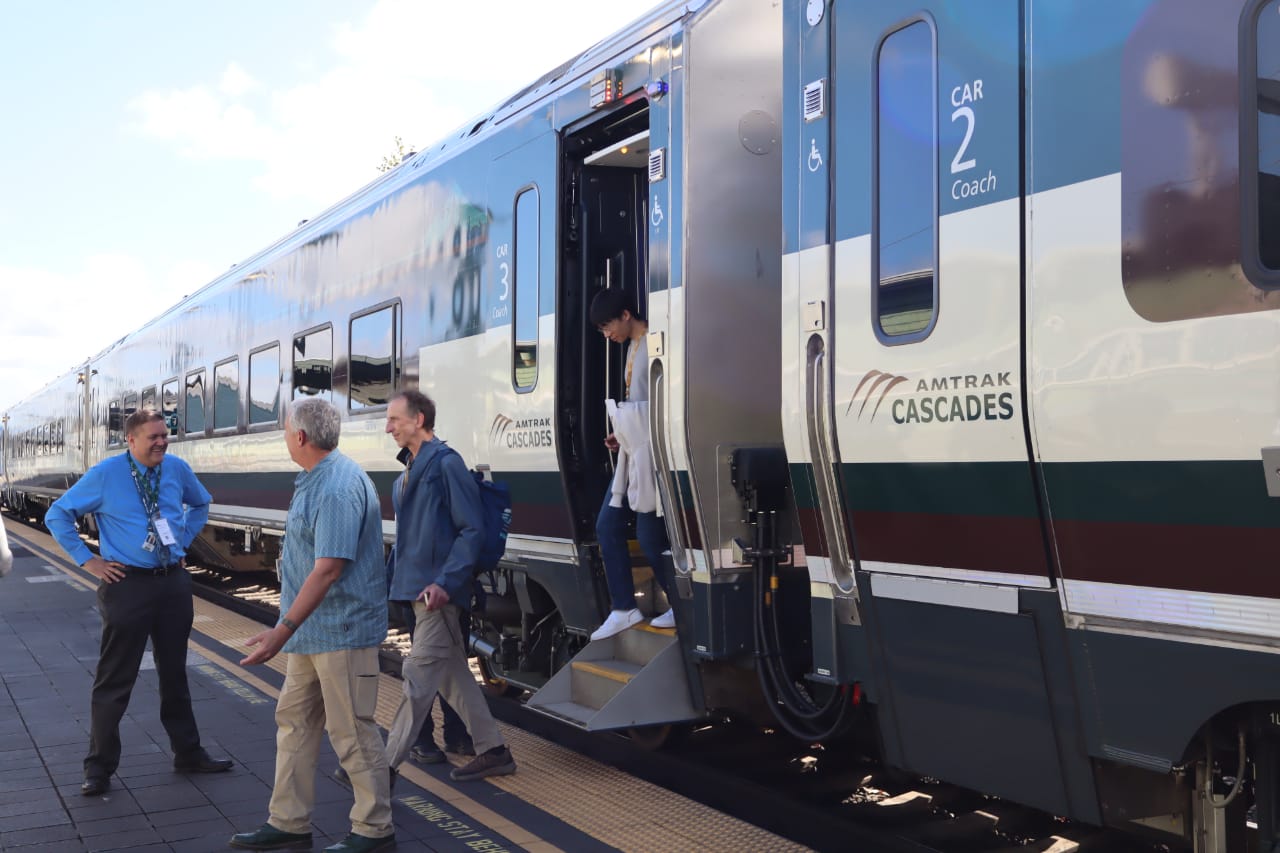
The Airo trains, manufactured by Siemens, have been in development since 2021, funded by the Biden-era Infrastructure Investment and Jobs Act. With 317 seats per train, these new models will give Amtrak Cascades a significant boost in passenger capacity, even if they will not initially enable any additional round trips or allow trains to travel significantly faster.
Though the Airo trains will be able to reach 125 mph on the Northeast Corridor when they go into service there late next year, they remain limited to 79 mph due to the existing rail infrastructure in the Pacific Northwest.
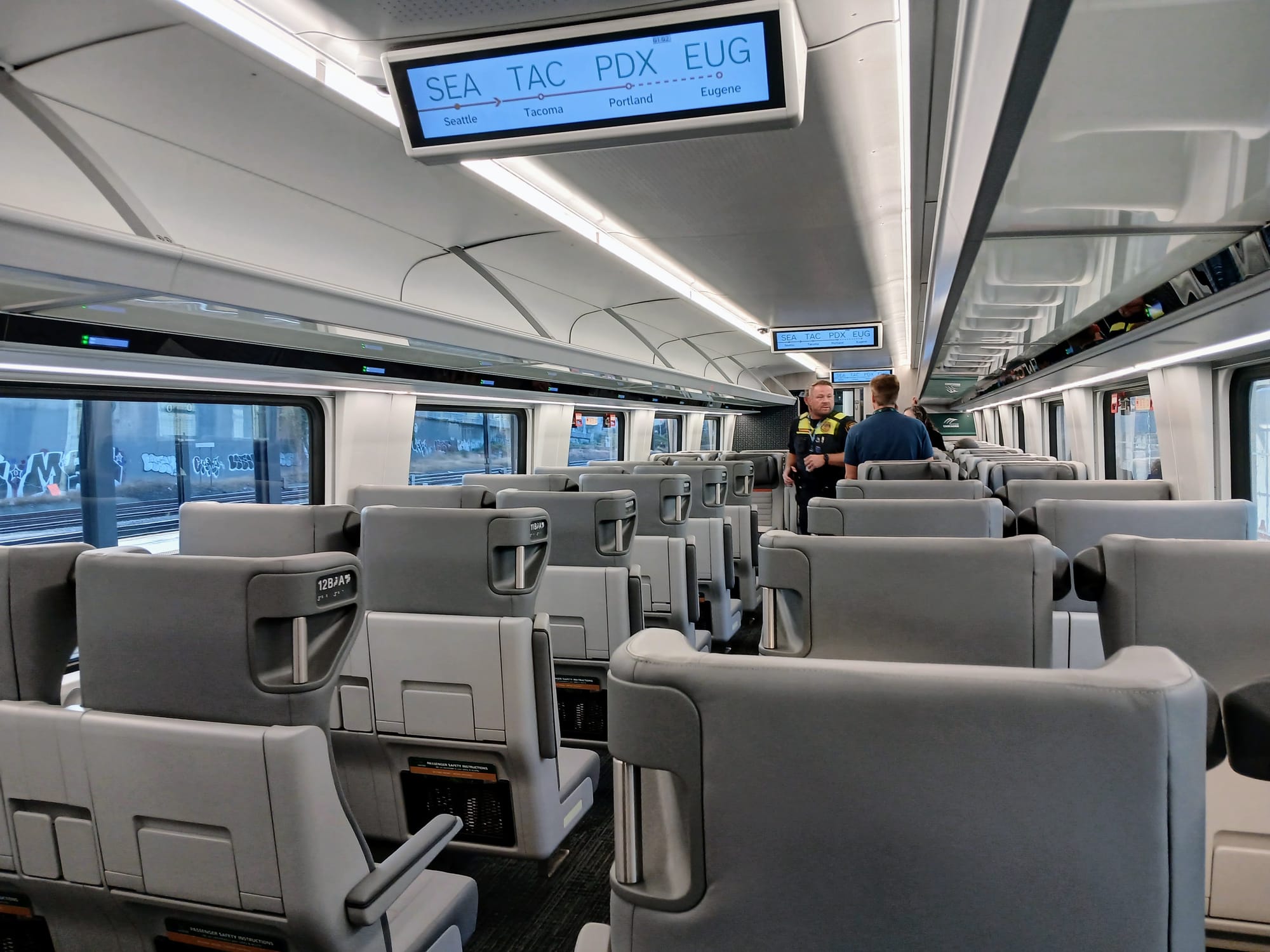
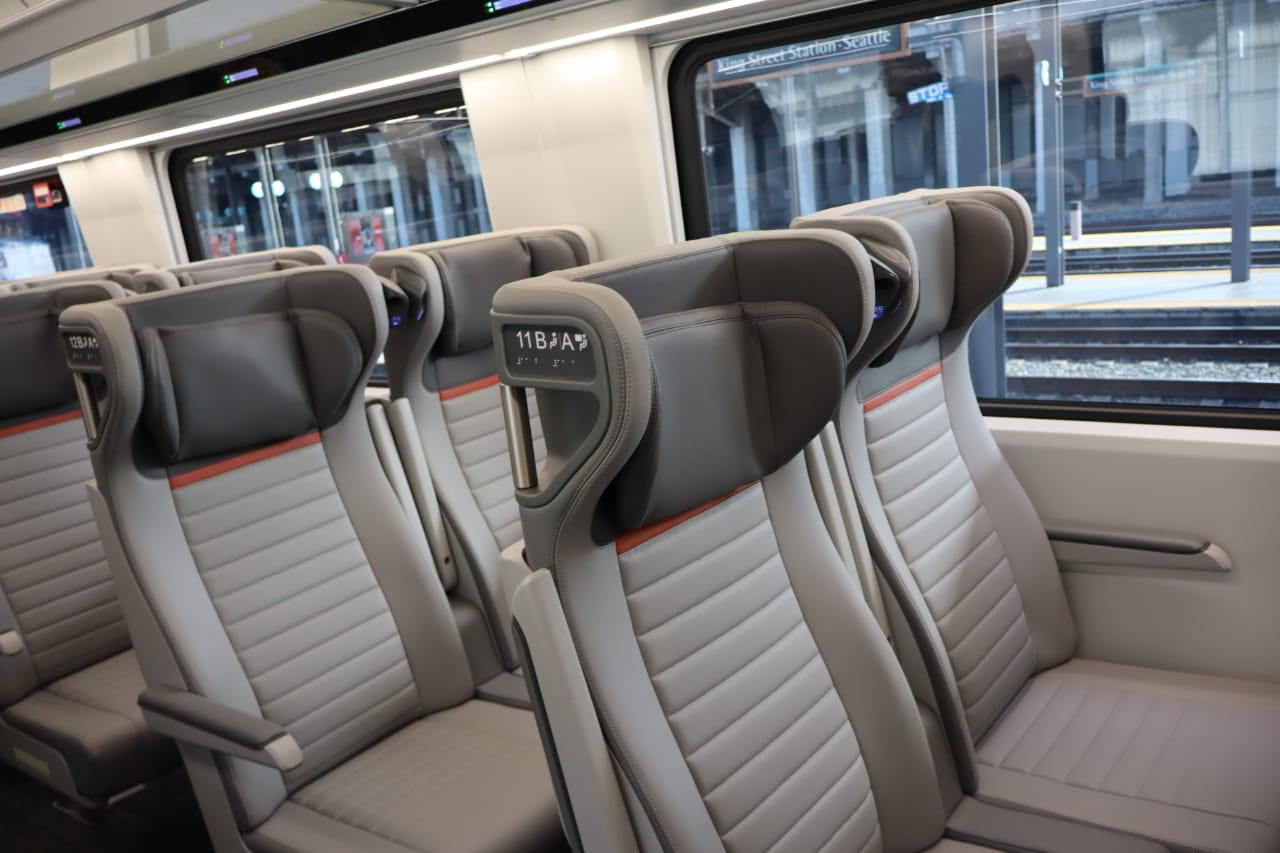
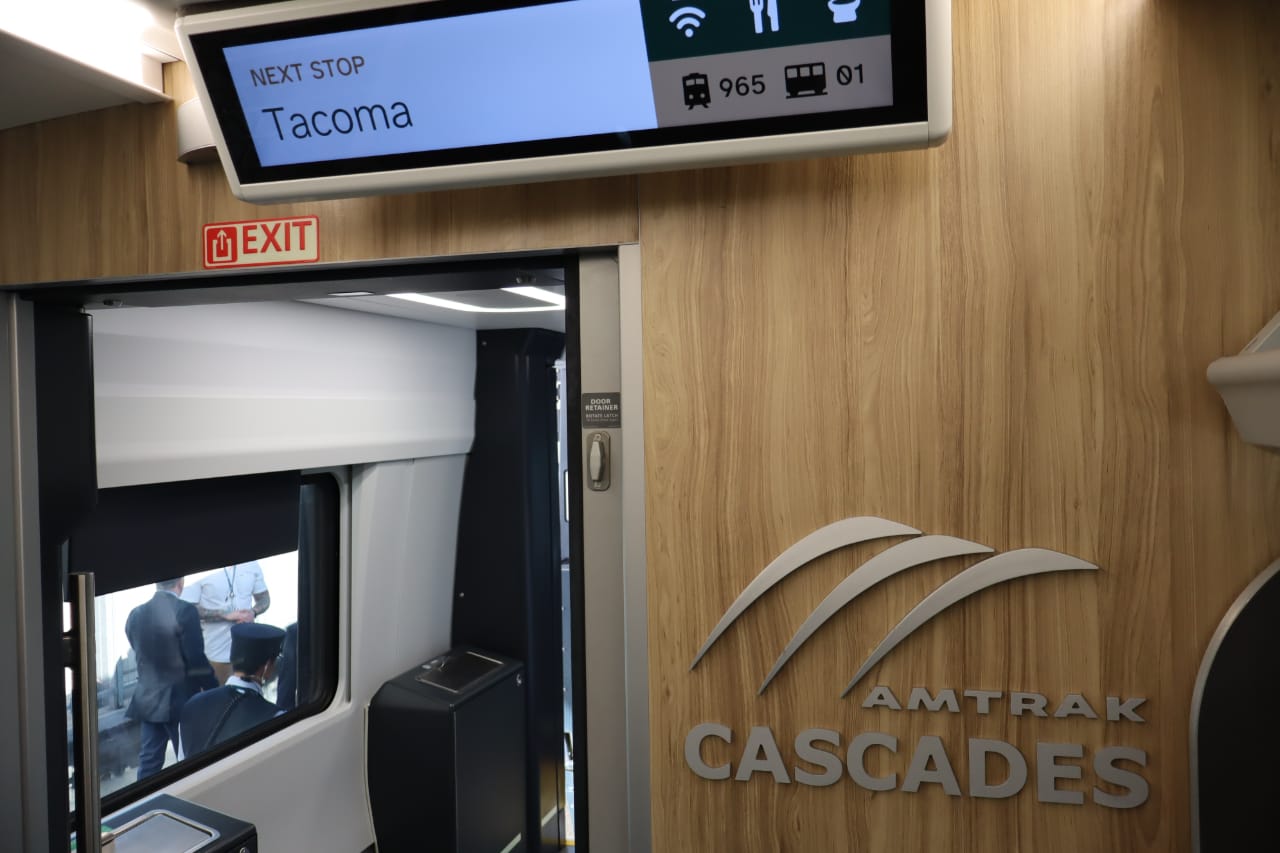
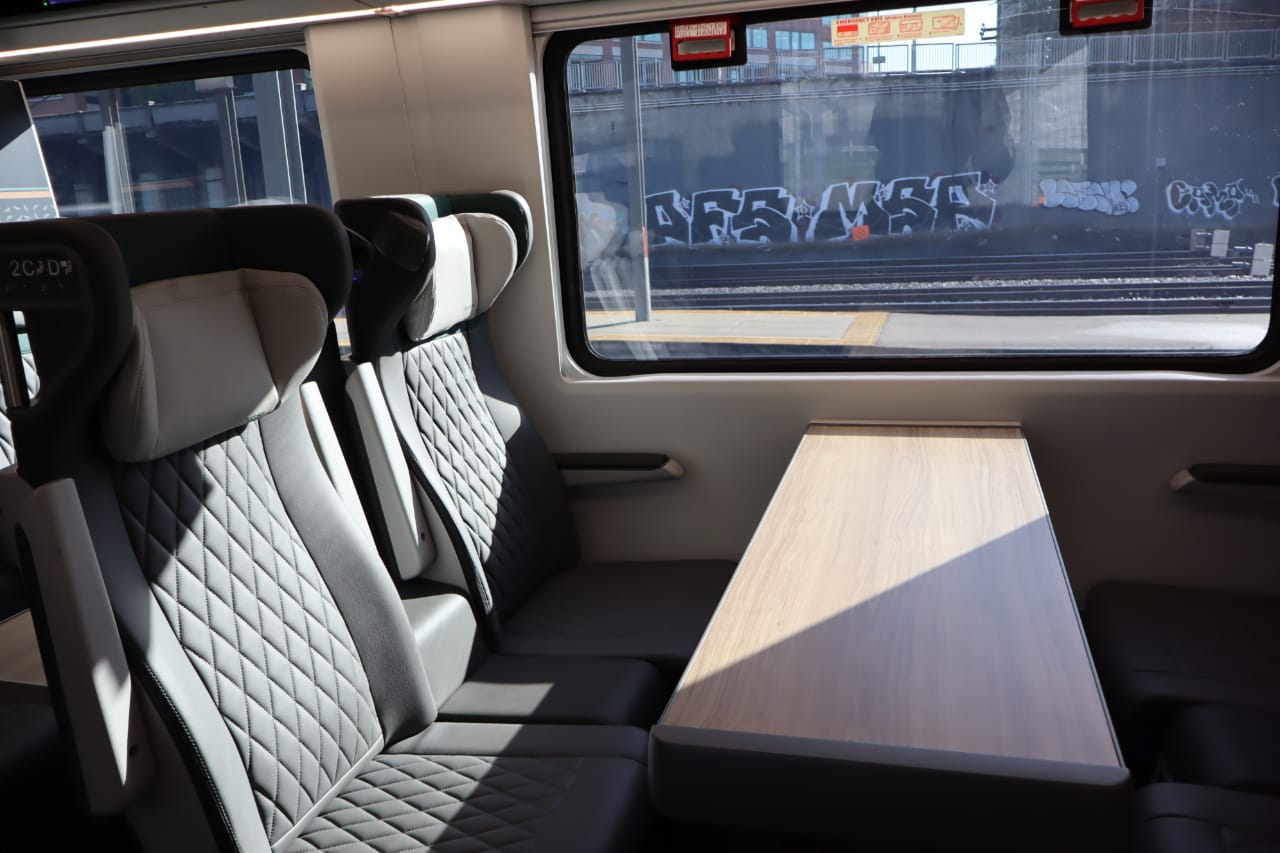
The passenger experience is significantly elevated on the Airos. The cars sport updated ergonomic seats featuring sturdy tray tables with device holders and USB ports – and a headrest-mounted reading light. Screens up and down the cabin cycle through providing destination information, locations for restrooms and the cafe car, and a seating chart that lets newly boarding passengers know which seats are already occupied.
Seat reservations are currently only available in cushy business class, but the trains include the infrastructure that would easily enable Amtrak to make the switch to seat assignments train-wide, ending the unneeded chaos of the Amtrak boarding line.
"The Airo is the cornerstone of Amtrak's broader effort to modernize trains, stations, and infrastructure across the country for a new era of passenger rail," Federal Railroad Administrator (FRA) David Fink said Saturday, illustrating the degree to which the Trump Administration also wants to be seen as a passenger rail champion. "We are building national momentum for future developments of these new sleek trains, beginning in the Northeast Region in late '27, and helping usher in a golden age of rail."
With three trainsets currently ready to roll, riders will be able to catch the Airo trains on the first trip of the day out of King Street in either direction. Train 503 heads south to Eugene at 7:10 am, returning to Seattle as Train 508 at 4:30 pm, while Train 516 starts its journey toward Vancouver, B.C. at 8:30 am and returns as Train 519 at 4:45 pm.
The third trainset currently on hand won't be used for passenger service right away and will stand by as a spare. Airo trains will replace older trains on additional Cascades runs as they complete testing through late winter, with three to four weeks between new each trainset going into service. All of eight of the trains are expected to be in Seattle by the end of the year, providing a big boost in overall capacity, particularly on the highly popular northern route to Vancouver.
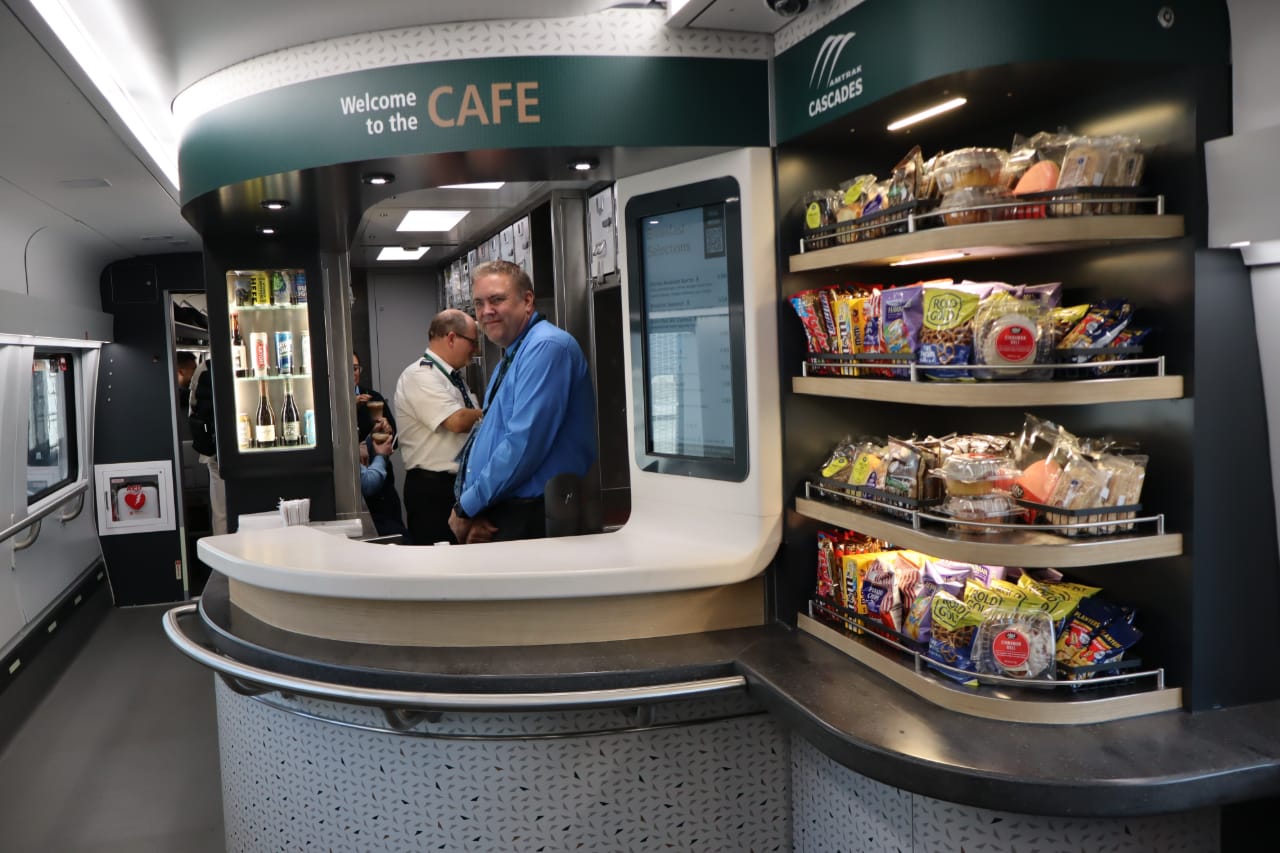
The overhauled cafe car is sure to attract significant attention when the trains launch as well. The food items unique to Amtrak Cascades are still all available, including Alki bakery sandwiches and Ivar's clam chowder. While the booth seating right in the cafe is no longer in place, there are seats set aside in the rest of the cafe car for riders gathering to grab a bite.
The restrooms also got a significant upgrade, with automatic doors and touchless faucets and a selfie-friendly light around the mirror that activates when the door is locked.
Vertical bike racks will allow riders to bring their bikes directly on board with them, with 18 racks per train. Amtrak's online reservation system is still catching up with that additional capacity, officials said this weekend.
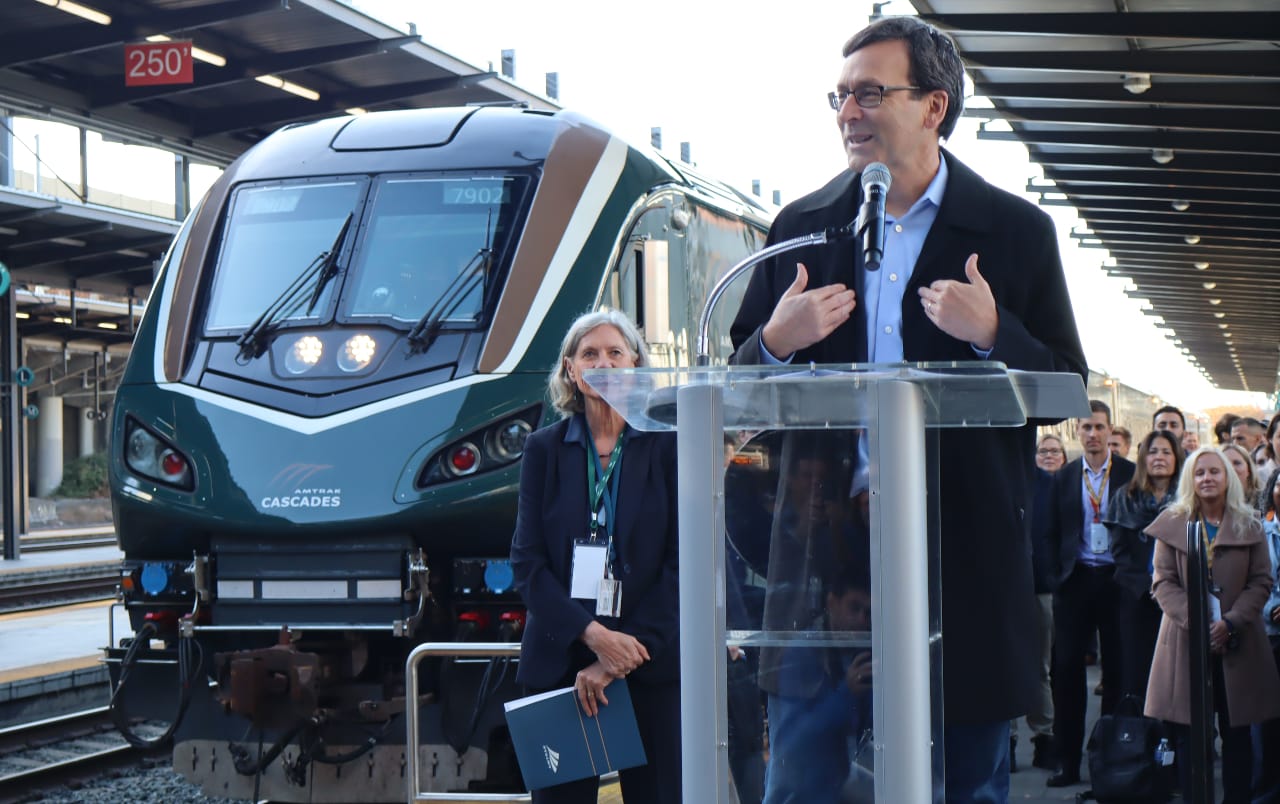
"Washington State has a rich history when it comes to rail travel," Governor Bob Ferguson said. "It's pretty central to who we are as a state and as a region, and throughout the Pacific Northwest. And that perhaps explains why rail travel is so popular here. The Amtrak Cascades corridor has over 1 million riders each year, and demand keeps growing, which is why this is such a huge, huge addition."
Continued improvements on the Cascades network will partly rest on Washington's shoulders. When Ferguson signed House Bill 1837 into law last year, the state committed to a goal of increasing on-time trip performance to 88% by 2035 (it was 61% last year), and ramping up the number of round trips to 14 between Seattle and Portland and five between Seattle and B.C.
That goal will be a tall order, given the state's limited control over BNSF railway, which controls most of the track mileage within the state, and the difficulty convincing legislators to sign onto incremental upgrades to rail infrastructure rather than flashy new projects.
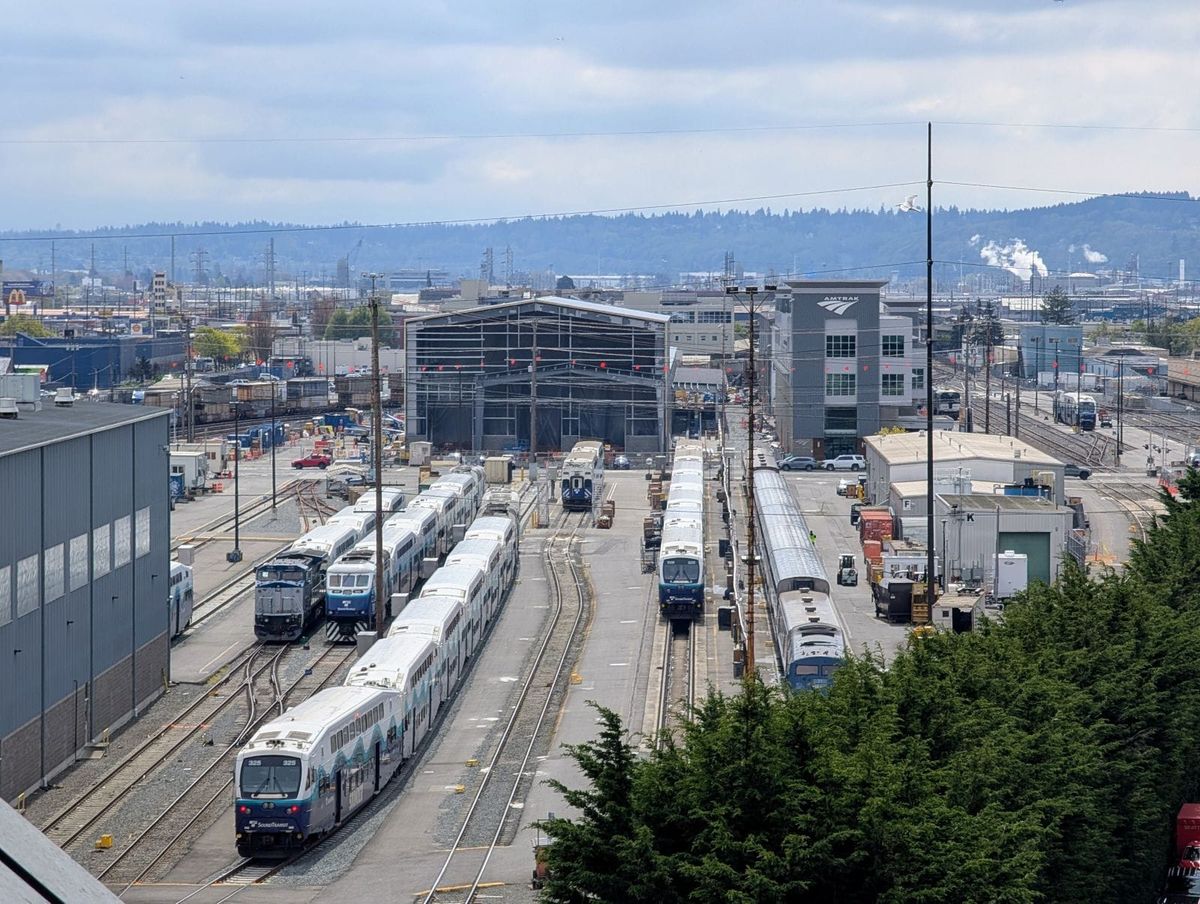
While Amtrak has been showing off the Airo in cities up and down the I-5 corridor, Seattle will be their true home base. A new 100,000-square-foot maintenance facility, also funded by the 2021 infrastructure law, will provide space to be able to maintain these special trains, which have cars that can't be decoupled to perform maintenance work.
"The Airo trainset was developed for today's travelers with a focus on comfort, connectivity and convenience. This train is equipped with numerous accessibility features, such as onboard wheelchair lifts and accessible restrooms for passengers using mobility devices," Fink said. "And it will be a marked change from the Amtrak regionals, where the vestibules are wet when it rains or snowing when it's snowing outside. The trains are all connected together, so no more problems of leaking roofs or wet vestibules."
By next spring, when the Airo train is the only type of trainset ferrying riders up to Vancouver or down to Eugene, riders will likely start to take the new features for granted. But the Airo's arrival in the region is a major deal for rail travel, a signal that even if the trip is a little slower and less reliable than a flight... train riders still deserve nice things as well.
Including much better WiFi.
 Ryan Packer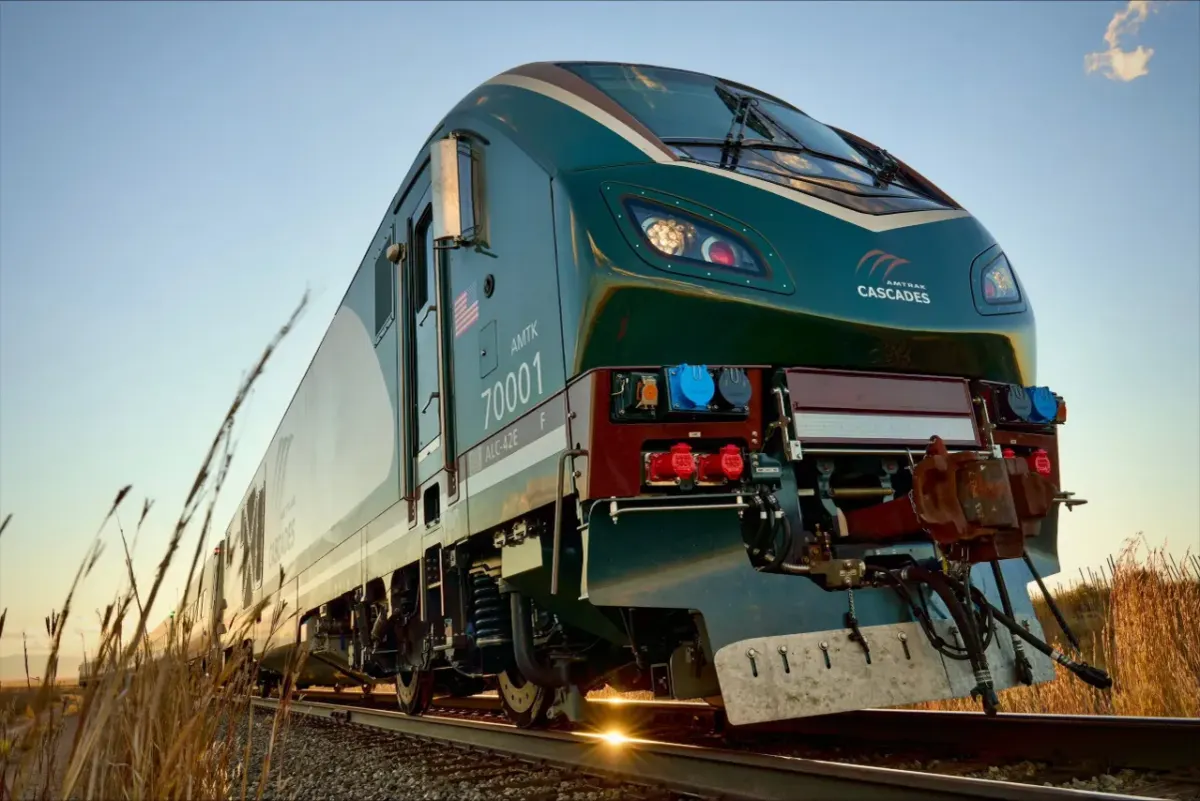
 Doug Trumm