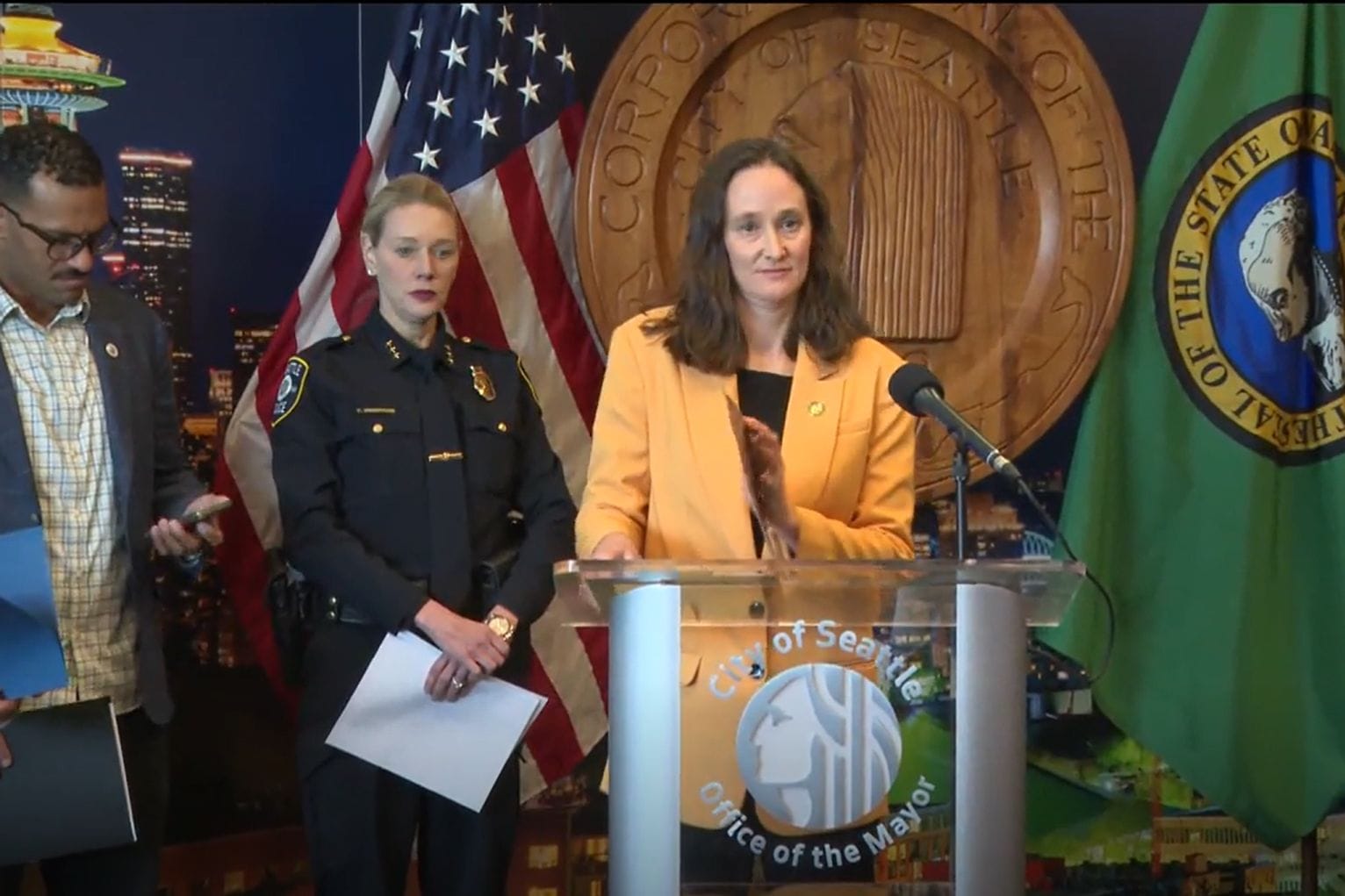
Four members of the Seattle City Council chose to uphold Mayor Katie Wilson’s first veto in her tenure as mayor, with Councilmember Rob Saka flipping his original council vote. Overturning the veto council would have required a two-thirds council majority – six votes.
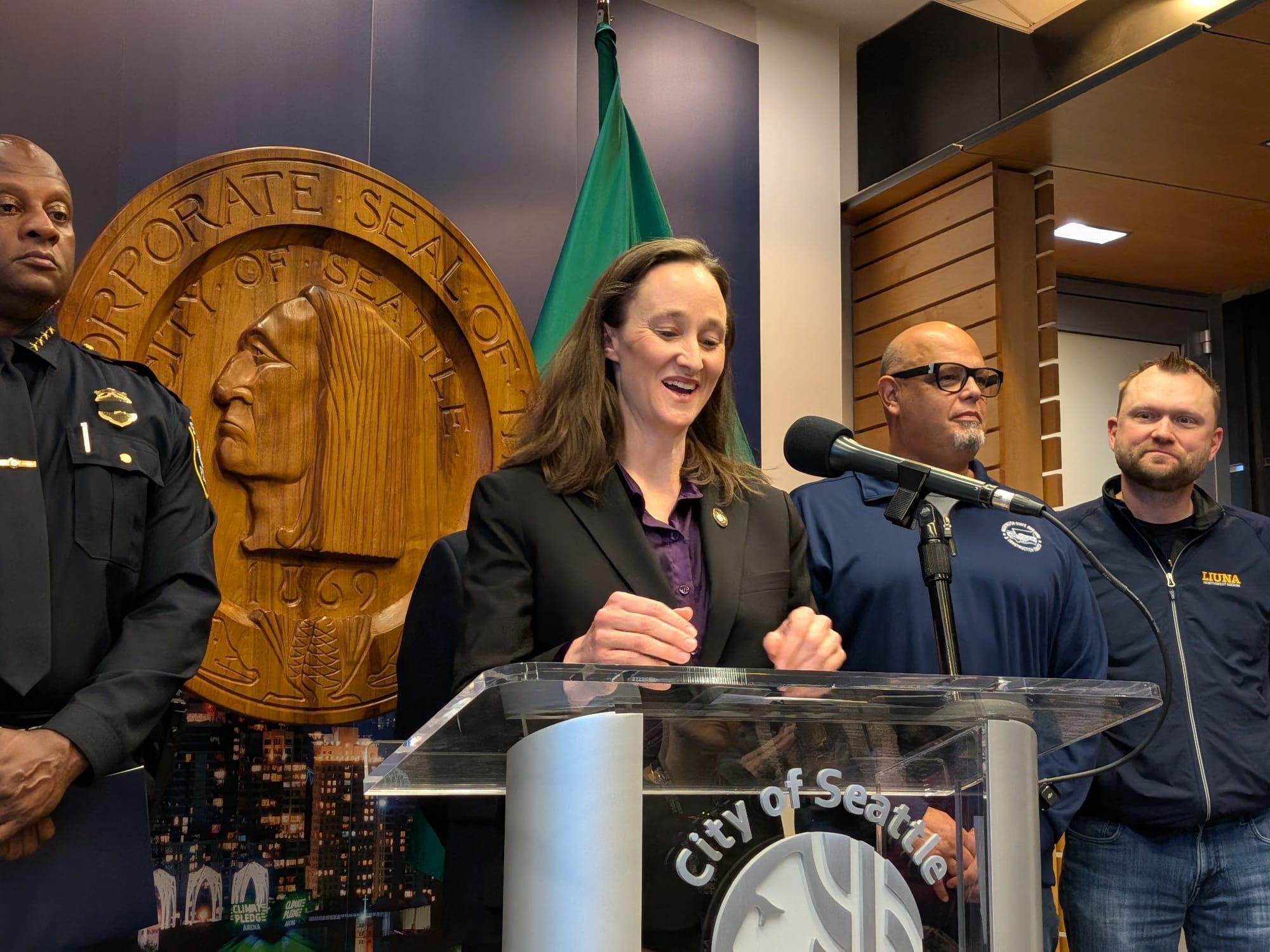
Last week, Wilson held a press conference to announce she was vetoing Councilmember Dan Strauss’s bill that would have instituted a recreational vehicle (RV) permitting program with the goal of ultimately removing all RVs from Seattle’s streets. Councilmember Alexis Mercedes Rinck and Saka flanked Wilson in a show of support.
Wilson signed the other bills in Strauss’s RV package.
“As the Mayor, it is my responsibility to ensure that our city policies and programs are feasible, are a cost-effective use of public resources, and have a reasonable likelihood of achieving their stated goals,” Wilson said at her press conference. “I vetoed this bill because I'm concerned that the permit program outlined in Council Bill 121283 does not meet that threshold, and I wanted to give the council an opportunity to consider an alternative pathway.”
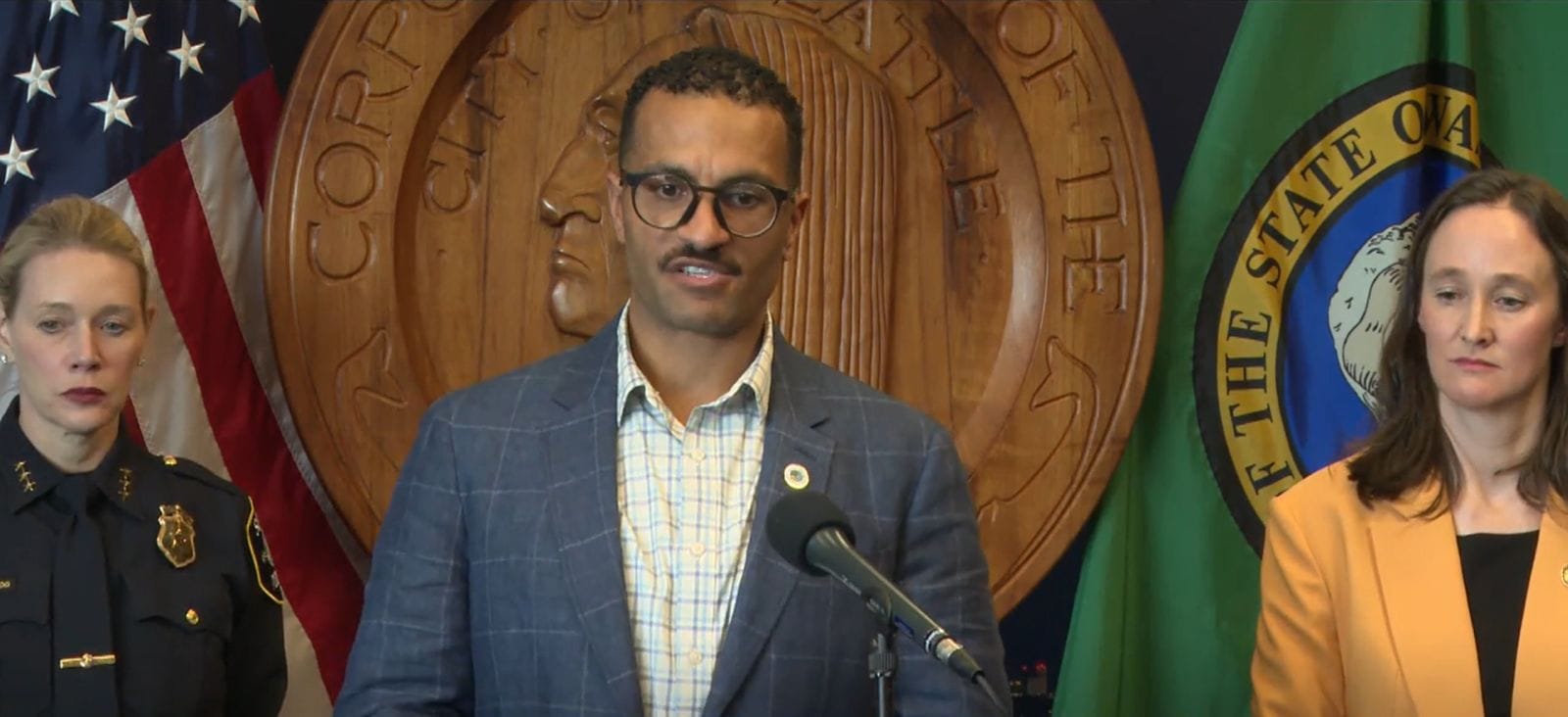
Wilson laid out that alternative pathway for helping people living in their RVs at the press conference and signed an executive order to formalize her intentions. Wilson’s plan involves strengthening outreach and services for people living in RVs, including providing resources for service providers to help connect folks to RV safe lots, shelter options, and other services, to include the opening of Glassyards Commons, a combination of RV safe lot and tiny house village, later this month.
Wilson intends to include RV residents in the citywide by-name list that features in her new strategy for addressing homelessness, and she also expressed interest in learning how RVs are being used, including by those people who aren’t living in them or might be traveling for work, medical care, or in order to do caretaking.
The executive order also forms a working group that will bring together City departments and community partners to focus specifically on the neighborhood impacts and public safety issues that involve RVs in Seattle.

Earlier in the summer, Strauss had introduced a package of legislation he framed as designed to help people living in their RVs. The package included opening a new RV safe lot and providing RV storage for people who were interested in keeping their RVs while trying a housing option, in addition to the restrictive permitting program targeted by the veto, which opponents said would simply increase the number of unhoused people on Seattle’s streets.
Strauss’s permitting program wasn’t set to take effect until April 2027, which he said would give the City time to make any necessary changes.
“This time is incredibly important for understanding what rules have changed, for hearing, digesting, and learning about the concerns that we've heard from some today, to ensure that if we need to change this legislation before the April effective date that we're able to,” Strauss said before the original vote.
The Seattle City Council passed Strauss’s package of legislation on October 20, with the legislation creating the permitting program passing on a 6-3 vote. The three councilmembers from the progressive wing – Councilmembers Dionne Foster, Eddie Lin, and Alexis Mercedes Rinck — voted against the bill. Passing the bill with a 6-3 majority seemed to promise Strauss a veto-proof majority to ensure his proposal became law.
However, the six votes weren’t as firm as Strauss had thought.
Objections to the permitting legislation
Wilson laid out several concerns relating to the RV permitting program that she said ultimately caused her to change her mind on supporting it. The program as described in the legislation would have been complex, involving several departments as well as requiring the hiring of several new positions and containing ongoing enforcement responsibilities. Strauss insisted that the census of people living in RVs be only one time so as to not attract people from other places living in their RVs to Seattle, but such a census would be difficult to undertake while ignoring all future Seattle residents who might end up someday living in an RV.
The potential cost of the program was a concern in Seattle’s current tight budget environment. The City estimated that implementing the permitting program could cost more than $10 million, a number Strauss contested.
Other issues mentioned by Wilson included the legal risk to which the legislation might expose the City, the possibility the program would pull capacity away from other urgent public safety issues, and the risk that the program might actually increase unsheltered homelessness, as some advocates had been contending.
Rinck didn’t mince words in her speech supporting Wilson’s decision to veto.
“I am here today in full support of Mayor Wilson's action. She is vetoing a permit program that is harmful, costly, and impossible to implement, one that won't deliver on what it promises,” Rinck said. “She's issuing an executive order that will actually help move people out of RVs and into shelter and housing while addressing problematic and criminal activity. Seattle residents deserve a government that's honest about what a policy can do and can't do. When we pass a law, they expect it to work. They expect it to be enforceable, and they expect it to be worth what it costs them. A permit program that we can't staff, can't enforce, and can't pay for does not meet that standard.”
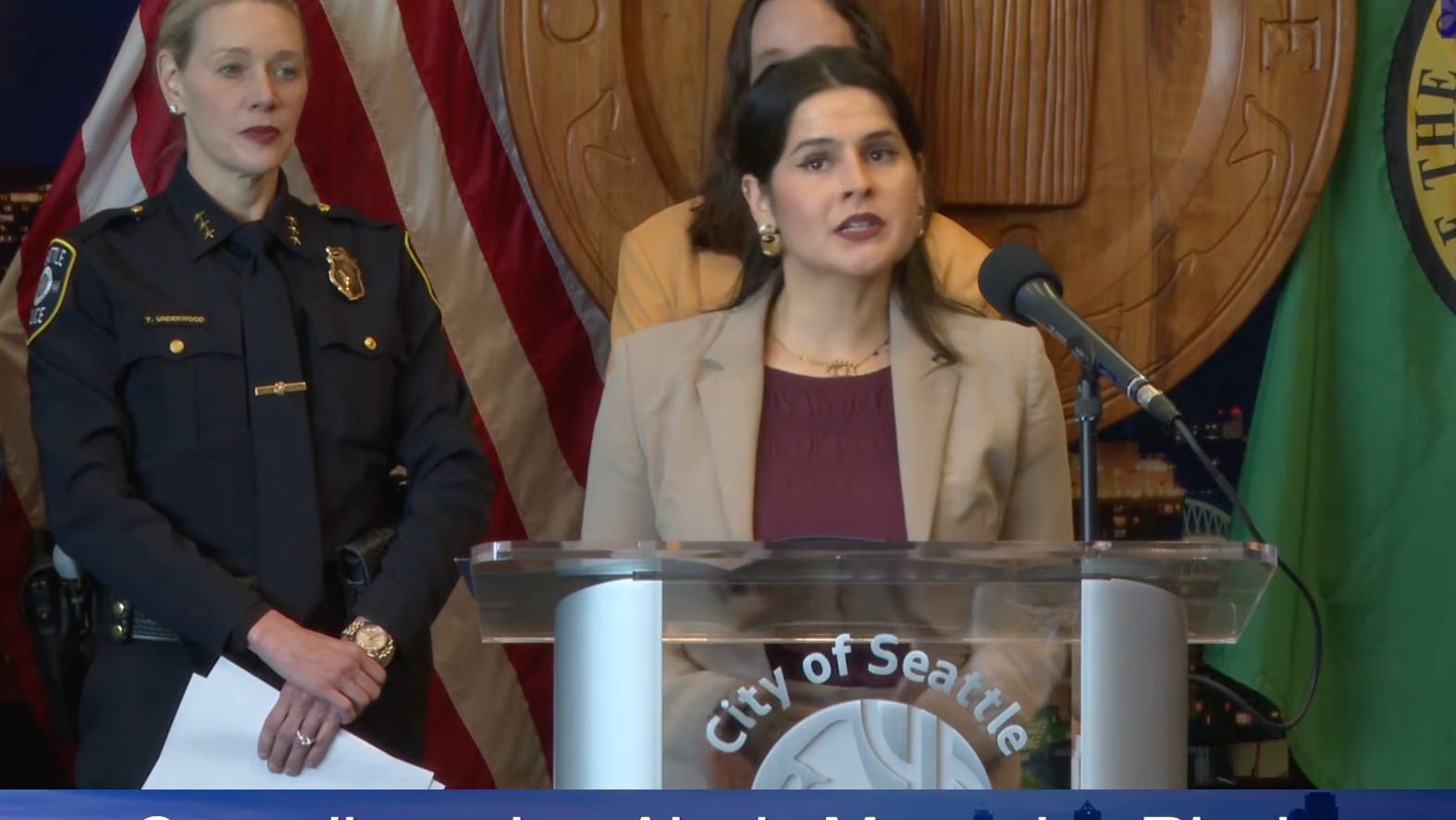
Wilson waited until the last possible day to use her veto power, with Saka changing his mind on his vote at the eleventh hour, demolishing the council’s veto-proof majority.
“I’ve heard from the Mayor about unreasonable expectations, the ability or or lack thereof of our City to actually implement something like this on such an ambitious timeline,” Saka said. “But more importantly, I heard a framework for an alternative proposal, an alternative solution that could potentially be stronger, more effective, [and] bring more people along. That's why I welcome the Mayor's initiative, and believe we should give this process a fair opportunity to succeed.”
Saka said he hadn’t viewed Wilson’s executive order until the night before she announced her veto.
Strauss complained that Wilson had agreed to sign his entire legislative package into law, and that it had been delayed this year because he had put her legislative priorities ahead of his own. Strauss also said that a work group was already a part of his legislation so changes could be made ahead of implementation.
“I feel like [Wilson’s] word has been disingenuous,” Strauss said at a press conference. “There have been a number of times that she's broken the promises that she's made to me or the commitments that she's made to me, and that's why I say I can't trust her word anymore. It's not just one interaction. It's been several, and it's been a pattern over time.”
Wilson told the press, however, that she had simply changed her mind upon receiving more information.
“I was not originally intending to veto this legislation, and before the passage of the legislation, my staff communicated to Councilmember Strauss that I did not have a plan to veto it, which was absolutely true at that time,” Wilson said. “Since then, as my thinking has shifted and I got into more of a posture of considering all options, we were also transparent in communicating that to his office.”
Alison Eisinger, the executive director of the Seattle/King County Coalition on Homelessness, said in a public comment this morning that over 4,700 letters had been sent urging the council to uphold the veto.
“This legislation, this specific piece of legislation of the six brought forward, is a ban,” Eisinger said. “The changes to parking rules and the permit program would have created a draconian ban on hundreds of people who live in the best shelter available to them. Voting to uphold the veto will demonstrate that together with all of us, you're committed to a Seattle where we work together to strengthen our community, resolve problems, and create a better housed future.”
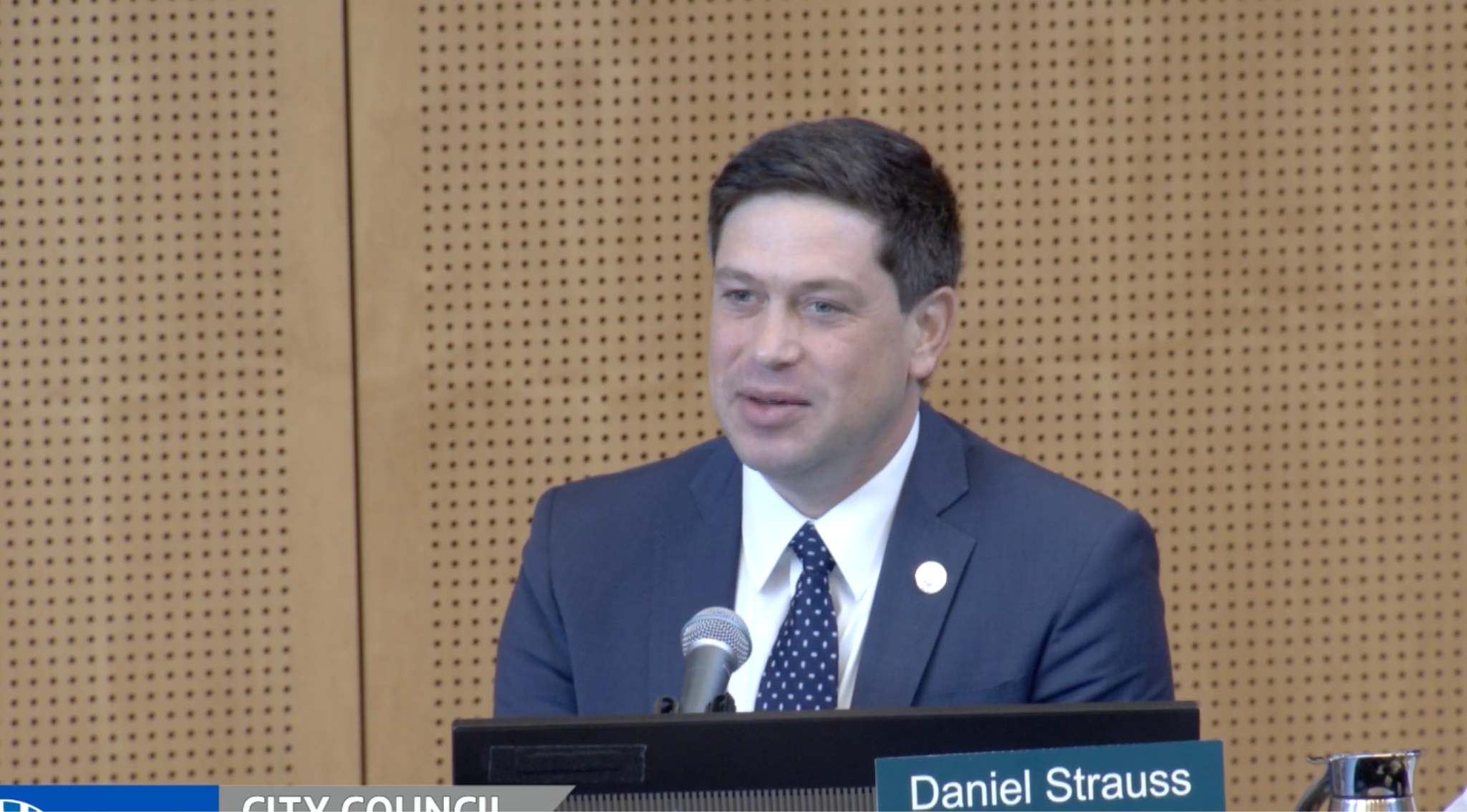
When discussing the council vote on the veto, Strauss said he shared the concerns about the implementation of the RV permitting program, but that his legislation would allow them to get around a table and find solutions. Strauss didn’t explain why he didn’t address more of his own concerns before bringing his legislation forward for council passage.
Saka reiterated his desire to give Wilson’s plan a chance.
“In my view, we need more leaders at all levels of government to humble themselves if and when new information becomes available, and to make the best decision, do the greatest good for the greatest number,” Saka said.
“To say that a vote today to sustain the veto is a vote for a new path is duplicitous, in my opinion, because that report can be provided even before the check and adjust period is halfway over,” Strauss shot back.
Later in the meeting, Councilmember Eddie Lin pointed out this comment might be against council rules.
“I do believe we have a rule about not impugning motives of each other, and I just heard something about intent being duplicitous, and I just want to address that because I do think that it is impugning the motive of one of my colleagues,” Lin said.
“I, too, took some issue with some comments made towards the very end of this conversation, and you know, the Seattle passive aggressive, subtle slights, let's disagree on the merits,” Saka said. “Councilmember Strauss, you have a problem with me? I promise you, I'm not the one. You can take it up with me directly.”
Hollingsworth expressed her disappointment in the performance of the King County Regional Homelessness Authority and explained why she was still voting in support of Strauss’s bill.
“We cannot place all the challenges on Mayor Wilson and this administration. This has been going on for years, for years,” Hollingsworth said. “But I do believe that we have to move beyond intentions and focus on executions. So I do respect folks that come, I do respect that my colleagues have different perspective on this legislation, but I also believe that when we raise concerns about potential harms of a policy, we must equally be willing to confront the harm that is happening under the status quo. That is what's important.”
With the RV permitting program no longer set to move forward, Wilson will be convening her working group to look more closely at issues involving RVs. Strauss said he’ll expect a report from the group by January 15.
Meanwhile, Strauss still has to complete his duties as Budget Chair, with the council set to make their final budget vote on November 20. Strauss complained that upholding this veto will impact that budget plan, requiring changes to his balancing package presented last week.
 Amy Sundberg
 Doug Trumm